REVIEW · TOKYO
Samurai Ninja Museum Asakusa: Samurai Sword Lesson & Tour
Book on GetYourGuide →Operated by GLOBA Inc. · Bookable on GetYourGuide
Two hours, one real sword lesson. In Asakusa, the Samurai Ninja Museum experience turns Tokyo history into something you can wear and practice, starting with the dramatic armor + hakama fit and moving into hands-on katana training.
What I really liked was the balance: you get instruction that works for beginners, then you slow down for a museum tour through samurai and ninja themes. The other big win is the photo moment—there are multiple samurai-themed backdrops built for the kind of pictures you’ll actually keep. One heads-up: the whole program is tightly packed, so if you want extra practice time or a long, quiet museum wander, the 2-hour format can feel a bit short.
In This Review
- Key takeaways before you go
- First Stop in Asakusa: Wearing Samurai Armor (and Getting Photo Ready)
- The Katana Workshop: What You Learn in a Fast, Beginner-Friendly Lesson
- The Samurai and Ninja Museum Tour: What the Walking Part Adds
- Ninja Weapons Trial: The Shuriken-Style Challenge
- Photo Opportunities: Samurai-Themed Backgrounds That Actually Look Good
- Who This Fits Best (and Who Might Want a Different Activity)
- Price and Value: Does $63 Deliver?
- Booking Smart: Timing, Group Options, and What to Expect on Arrival
- Should You Book This Samurai Sword Lesson in Asakusa?
- FAQ
- How long is the Samurai Sword Lesson & Tour?
- What language is the guide?
- What’s included in the experience?
- Is it suitable for kids?
- How big is the group?
- Where does the tour start?
- Is the activity wheelchair accessible?
- Can I cancel or change plans?
Key takeaways before you go
- Gear first, questions second: You suit up with hakama, helmet, and armor before the training starts.
- English instruction with a dojo feel: The sword lesson is led by English-speaking instructors such as Sensei Ryo, and others in the same teaching team.
- A museum tour that adds context: You’re not only there for the sword; you also walk through samurai and ninja displays and explanations.
- Ninja weapons trial is hands-on: Shuriken-style throwing shows up as a fun, low-pressure competition.
- Photo backdrops are part of the experience: Multiple themed scenes make it easy to leave with memorable shots.
- Max group size keeps it manageable: The experience caps at 16 travelers, which helps maintain attention during training.
First Stop in Asakusa: Wearing Samurai Armor (and Getting Photo Ready)
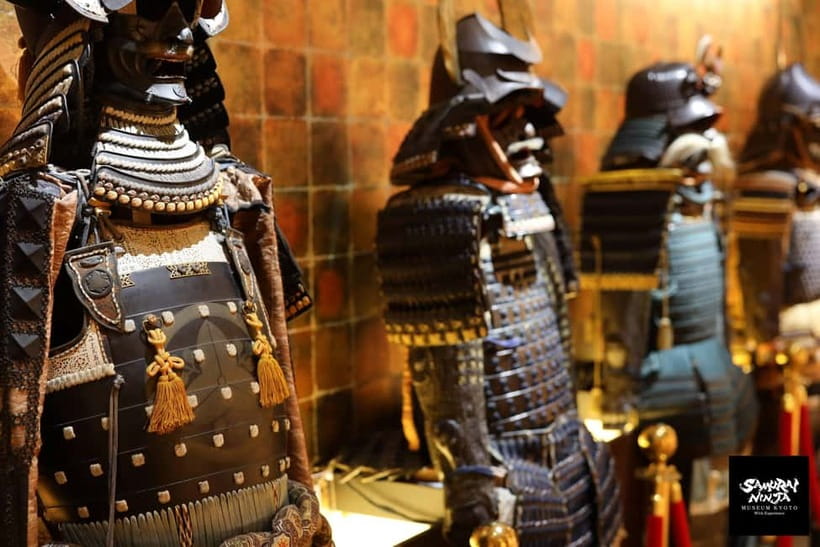
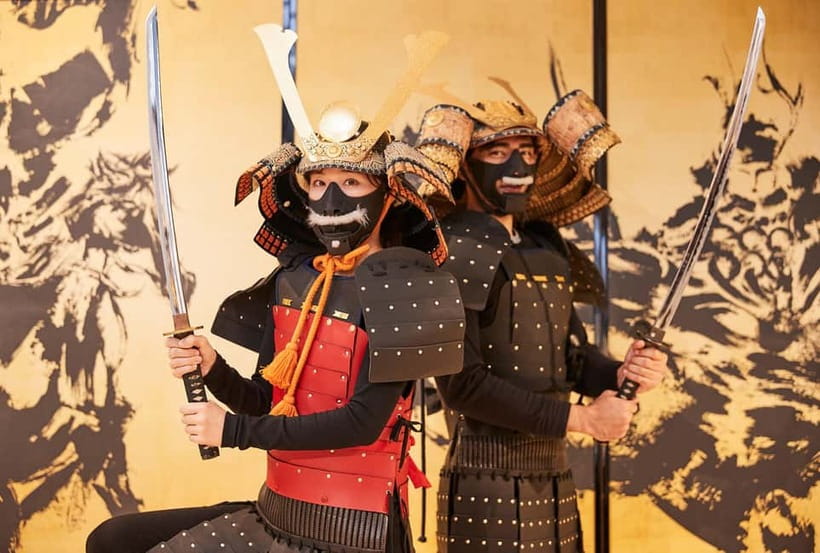
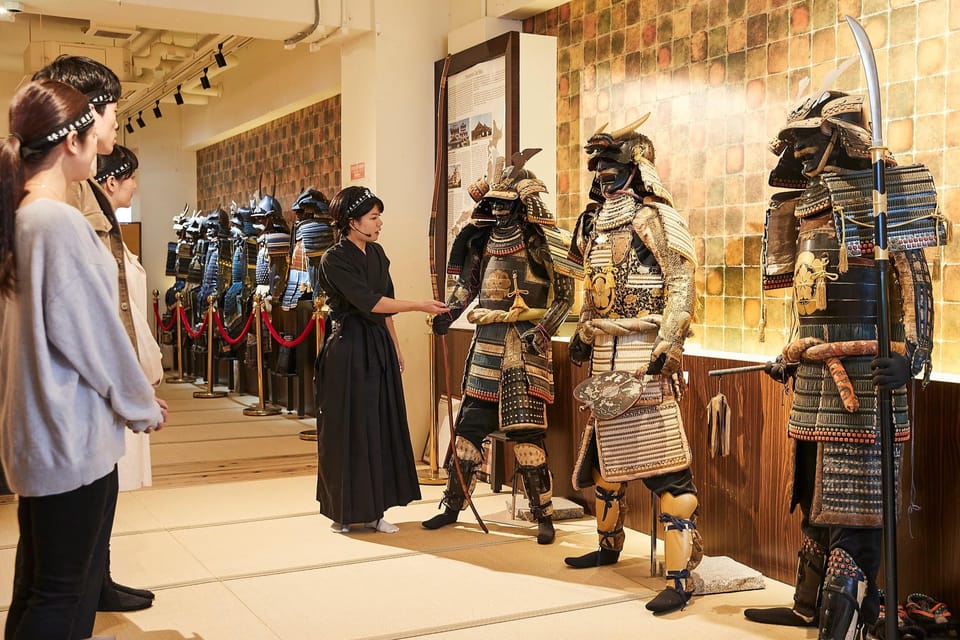
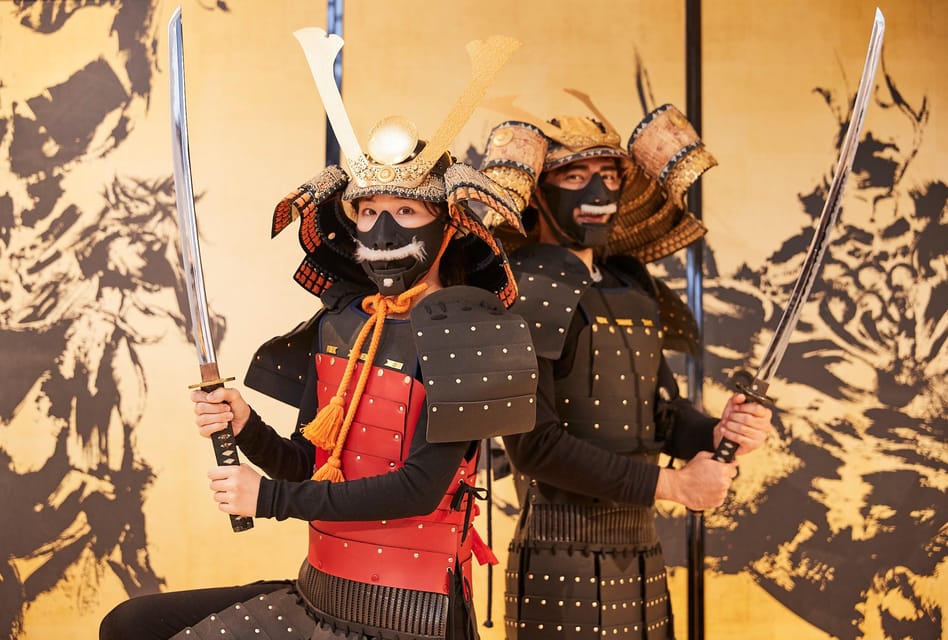
This experience starts with the part most people remember later: you change into costume. You’ll put on a hakama, plus samurai armor and a samurai helmet for the workshop and museum portion. It’s not a costume-only stop either. The goal is to make the training feel real—like you’ve stepped into a role, not just passed through a photo area.
Right away, you’ll notice the flow. People typically line up, get fitted, and move into position for the early photo opportunities. There are themed backgrounds for pictures, and the museum vibe leans into dramatic samurai styling. The result is that even if you’re not sure about swords, you still leave with something visual and fun.
I also appreciate that this isn’t only aimed at kids. Adults tend to enjoy it too, especially because the photo time isn’t separate from the learning. It’s woven in before and after instruction, so you’re not just waiting around.
You can also read our reviews of more museum experiences in Tokyo

The Katana Workshop: What You Learn in a Fast, Beginner-Friendly Lesson
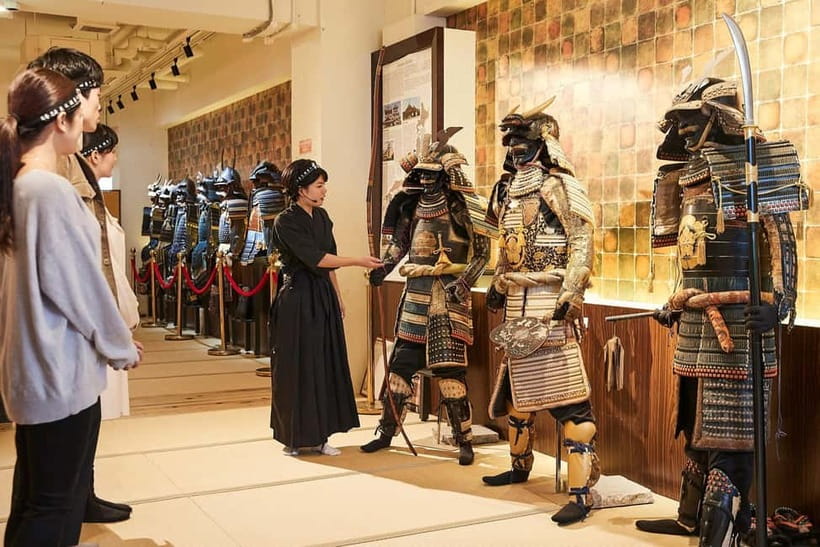
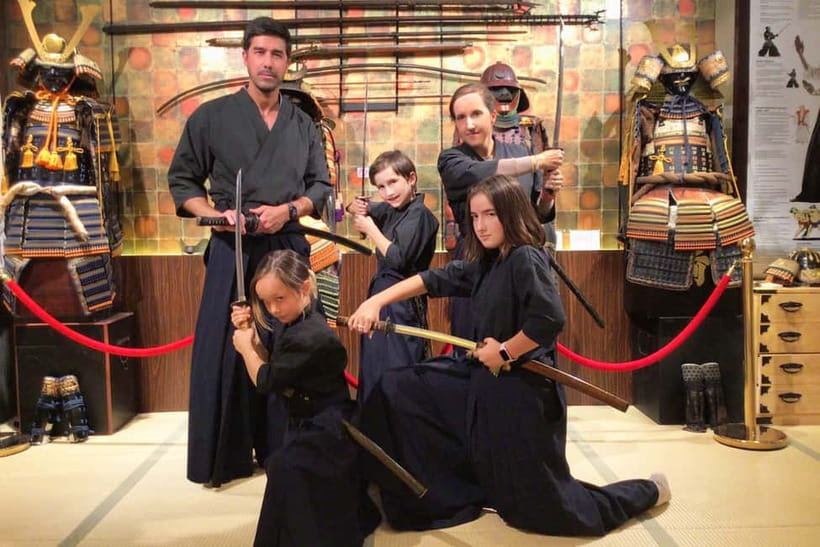
The centerpiece is the samurai sword lesson, guided in English. The tone is respectful and structured, the way a real dojo lesson should feel. You’ll learn how to hold the katana, pick up basic movement patterns, and practice a short set of actions as a group.
A lot of the value here is in how the lesson adapts to beginners. People describe teachers who start with the fundamentals and then help you get through a routine quickly. Names that come up repeatedly include Sensei Ryo, Kenny, and Koki as katana instructors. One detail I’d take seriously if you’re brand new: you don’t need prior coordination. The teaching is built to get you moving correctly without making you feel clumsy.
You should also know that the “real” part is controlled. Several descriptions mention safety-first practice formats using foam or rubber swords for supervised sparring. That matters because it keeps the energy up for families and mixed-age groups, while still letting you feel like you’re part of a training session.
Some sessions include extra fun elements, like a drill routine you can perform after a few attempts, and playful tournament-style moments. The common theme is that you’re not just watching someone demonstrate. You’re actively doing. Even when the session is short, the structure is designed so you get a “before and after” feeling: first you’re learning grips and stance, then you’re executing a simple sequence as a team.
If you’re expecting a long, technical kendo class, you may find it lighter than that. But for the time (2 hours total for the entire program), it’s one of the better formats because the emphasis stays on clear basics and immediate participation.
The Samurai and Ninja Museum Tour: What the Walking Part Adds
After the workshop, you switch gears into the museum tour. This is where the experience stops being pure entertainment and starts giving you story context. You’ll learn about samurai history and ninja themes through museum displays and explanations.
What I like about the tour portion is that it gives shape to what you just practiced. After you’ve put on the armor and handled the sword, you’re better able to connect the equipment and training themes to the bigger picture: how samurai culture formed, how it changed across time, and how ninja stories show up in Japanese popular culture and tradition.
In the experience descriptions, the museum guide style is frequently called out as energetic and engaging. Names that come up include Ren, Momo, Nao, and Leon. You’ll likely hear lively explanations geared for mixed groups, including kids and teens. One practical tip: if you want to get the most out of the tour, keep a few questions ready before you head in. This kind of guide-led setting works best when you ask about what you just saw in armor or heard in the sword lesson.
Space can be tight in some places, so don’t expect a slow, spacious gallery stroll. But tight layout can work to your advantage: you move quickly from one themed area to the next, which helps keep kids focused and keeps adults from getting bored.
Ninja Weapons Trial: The Shuriken-Style Challenge
This is the part that often turns the whole group into a single team—adults, kids, and everyone between. The experience includes a ninja weapons trial, and in many descriptions that translates into shuriken-style throwing at a target.
The best way to describe it is: short, playful, and practical. You get a try at throwing ninja stars toward a set point. Even if you don’t get perfect aim, you’ll feel improvement by the second or third attempt. That’s exactly the kind of activity that makes the whole 2-hour session feel complete—because you don’t leave only with sword memories. You also leave with a ninja moment.
It’s also a good option if someone in your group isn’t that interested in swords but still wants hands-on fun. And if you have teens, they tend to get a kick out of competition vibes, even when it’s family-friendly.
Photo Opportunities: Samurai-Themed Backgrounds That Actually Look Good
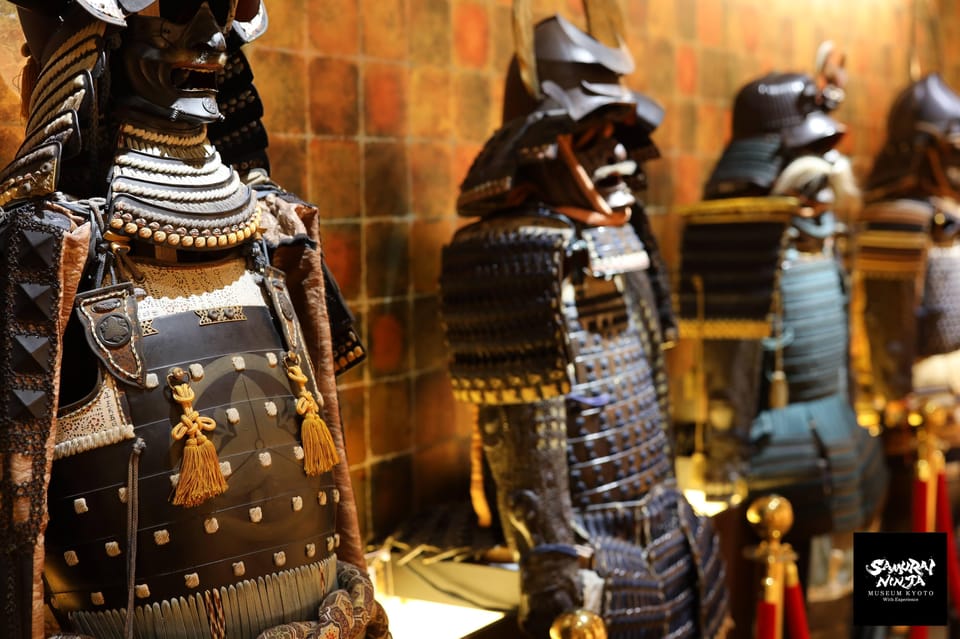
You’ll get themed photo opportunities built into the schedule. The museum setting includes multiple samurai-themed backgrounds where you can pose in full costume. This is where people usually end up spending an extra few minutes, because the armor and helmet make every photo feel cinematic.
I’d plan for this mindset: take the first few pictures quickly, then settle in for the ones you’ll keep. Once everyone relaxes, you’ll get more natural poses. Also, if you’re traveling with kids, you’ll appreciate that photo time isn’t just a quick stop. It’s part of the experience arc, before and after learning.
The result is you’ll walk out with something concrete from Tokyo beyond a souvenir shop bag.
You can also read our reviews of more tours and experiences in Tokyo




Who This Fits Best (and Who Might Want a Different Activity)
This experience works especially well for:
- Families with kids old enough to enjoy a structured activity. Reviews frequently describe enjoyment for children around school age.
- Beginners who want basics taught in plain English, with an instructor who keeps things organized.
- Adults who want something more memorable than a standard museum ticket.
There’s one hard boundary: children under 6 cannot enter the samurai venue. So if you’re traveling with younger kids, you’ll need to plan accordingly.
Group size also matters. With a maximum of 16 travelers, you’ll get a more personal feel than a huge crowd setup. That said, it can still get lively. Some people mention that lots of participants can affect how much everyone finishes each movement sequence, especially if there are small children in the group. Translation: you’ll still learn and have fun, but don’t assume every person will complete every drill exactly at the same pace.
Wheelchair accessibility is listed, so if mobility is part of your planning, you can consider this without guessing. Just note that costume fitting and active practice spaces may still be tighter than you’d expect from a wide studio.
If you’re hoping for a quiet cultural lecture, this is probably not it. It’s a do-and-learn experience with costumes, movement, and photos.
Price and Value: Does $63 Deliver?
At $63 per person for a 2-hour program, the value comes from what’s included, not just the sword lesson itself. You’re paying for:
- Samurai sword lesson
- Use of hakama, samurai helmet, and samurai armor
- Museum tour guidance in English
- Themed photo opportunities
- Ninja weapons trial
That combination is the key. If you tried to recreate it yourself in Tokyo—find instruction, arrange gear, and build in a museum visit—you’d likely spend more time and money. Even if you only care about one piece (like the katana lesson), the other elements help make the whole session feel like a complete package.
The strongest indicator of good value shows up in the rating: 4.8 with 306 reviews. More importantly, the feedback repeatedly points to the teaching quality and the fact that people feel they did something, not just watched something.
Booking Smart: Timing, Group Options, and What to Expect on Arrival
Meeting point can vary by the option you book, so check your confirmation details closely so you’re not wandering in the wrong direction. Also check starting times because the full experience is 2 hours and you’re assigned a schedule slot.
You may see options for private or small groups available, which can help if you’re traveling with friends, want more focused instruction, or prefer less crowd energy during costume and practice.
If you like flexibility, free cancellation up to 24 hours before is offered. There’s also a reserve-and-pay-later option, which can reduce pressure when you’re juggling the rest of your Tokyo plan.
One last practical thought: wear comfortable shoes. You’ll be suited up, taking photos, and moving around during training and the museum walk. Comfort makes it easier to enjoy every step.
Should You Book This Samurai Sword Lesson in Asakusa?
I’d book it if you want a Tokyo experience that’s fun first, then educational, and then memorable in pictures. The format is built for real participation: costume on, basic katana handling, guided history through the museum, then ninja-style throwing. You get a lot of “I did it” moments for one 2-hour block.
Skip it if:
- You’re after deep, technical sword study that takes hours.
- You need a very quiet museum visit without movement or crowd energy.
- You’re traveling with a child under 6 who can’t enter the samurai venue.
If you’re on the fence, go with the crowd-pleasing logic: this is the kind of activity that turns even a beginner into someone who feels like they trained for a day. And in a city full of amazing sights, that’s a rare kind of souvenir—skill and story you carry home.
FAQ
How long is the Samurai Sword Lesson & Tour?
It lasts 2 hours total. Starting times vary, so check availability when you book.
What language is the guide?
The tour includes an English-speaking live guide.
What’s included in the experience?
You get a samurai sword lesson, use of hakama, a samurai helmet, samurai armor, themed photo opportunities, and a ninja weapons trial.
Is it suitable for kids?
It’s described as suitable for families and children, but children under 6 cannot enter the samurai venue.
How big is the group?
The experience has a maximum of 16 travelers.
Where does the tour start?
The meeting point may vary depending on the option you book, so confirm the exact location in your booking details.
Is the activity wheelchair accessible?
Wheelchair accessibility is listed.
Can I cancel or change plans?
Free cancellation is available up to 24 hours in advance for a full refund. There’s also a reserve now & pay later option.
You Might Also Enjoy
 Tokyo: Samurai Experience with a real sword
 Discover Tokyo: 3-Hour Private Guided Photo Walking Tour
![[electric bicycle tour]: 6-hour travel course by electric bicycle Asakusa, Ueno Park, Edo-Tokyo Museum, and Sky Tree. (There is a support car.) - Meeting point, pickup options, and how to plan your arrival](https://e.thetokyoexplorer.com/wp-content/uploads/electric-bicycle-tour-6-hour-travel-course-by-electric-bicycle-asakusa-ueno-park-edo-tokyo-museum-and-sky-tree-there-is-a-support-car-400x266.jpg) [electric bicycle tour]: 6-hour travel course by electric bicycle Asakusa, Ueno Park, Edo-Tokyo Museum, and Sky Tree. (There is a support car.)
[electric bicycle tour]: 6-hour travel course by electric bicycle Asakusa, Ueno Park, Edo-Tokyo Museum, and Sky Tree. (There is a support car.) Tokyo Asakusa: Traditional Kimono Rental Experience at Wargo