REVIEW · TOKYO
Tokyo: Mt. Fuji Tour, Hakone Ropeway, Owakudani, Lake Ashi
Book on GetYourGuide →Operated by TAIHOU CO,LTD · Bookable on GetYourGuide
Fuji views feel like a daily gamble. This packed day trip turns that gamble into a full sightseeing circuit, with Hakone Ropeway panoramas and Owakudani black eggs as two of the best reasons to go. You start in Tokyo, ride out to Hakone, float past Lake Ashi, then circle back through Fuji-area scenery like Oshino Hakkai’s crystal ponds.
The main drawback is simple: Mt. Fuji visibility depends on the weather, and in winter there can be timing quirks like the Lake Ashi Torii gate closure in late December into early February.
In This Review
- Key Things to Know Before You Go
- Catch the Morning Bus and Get Your Bearings Fast
- Hakone Shrine and Lake Ashi’s Torii: The Iconic Photo Stop
- Optional Lake Ashi Pirate Ship Cruise: When It’s Worth Paying Extra
- Hakone Ropeway: Panoramas You Can’t Replicate Easily
- Owakudani Volcanic Valley: The Heat, the Smell, and the Black Eggs
- Lake Yamanaka’s Swan Lake Shore: A Photo Stop That Can Pay Off
- Oshino Hakkai: The Ponds That Reflect Fuji’s Face
- Lunch Timing and What to Pack So the Day Feels Easy
- Price and Logistics: Is About $54 Good Value?
- Guide Quality Makes a Big Difference on a Packed Day
- Who This Tour Fits Best (And Who Should Skip)
- Should You Book This Mt. Fuji and Hakone Day Trip?
- FAQ
- How long is the tour?
- What is included in the price?
- Is the pirate ship cruise included?
- Is lunch included?
- Where do we meet and where do we get dropped off?
- Is Mt. Fuji guaranteed to be visible?
- What happens if the Hakone Ropeway closes?
- Are there language options for the guide?
- What should I bring for the day?
- Is free cancellation available?
Key Things to Know Before You Go
- Hakone Ropeway is included, but it can close for weather or maintenance, with a ticket refund noted if that happens.
- Lake Ashi pirate ship is optional (self-paid around 1700 JPY), and it’s the easiest place to catch sweeping views if skies cooperate.
- Owakudani Volcanic Valley is the geothermal highlight, famous for the boiled black eggs made in volcanic spring water.
- Lunch isn’t included, so pack snacks and plan for the scheduled restaurant break later in the day.
- Time at stops is short by design, so prioritize photos and don’t expect long wandering.
- Torii gate timing matters in winter 2026, since it’s listed as closed from Dec 28 to Feb 10, 2026.
Catch the Morning Bus and Get Your Bearings Fast
This tour is built for one thing: getting out of Tokyo early and back without wasting half your day on trains and transfers. You’ll meet at one of two Tokyo-area pickup points (Tokyo Station or Shinjuku are mentioned), then board a comfortable, air-conditioned bus.
Arrive at least 15 minutes early. Staff in yellow vests help you find the right group fast, because these shared tours can bunch up at popular meeting areas. After you book, the operator sends pickup details the evening before, and it’s smart to check your inbox and spam/junk folder.
One more practical note: the drive time can stretch with peak traffic or weather, and drivers have a daily working-hour limit, so the route may adjust if delays stack up.
You can also read our reviews of more tours and experiences in Tokyo.



Hakone Shrine and Lake Ashi’s Torii: The Iconic Photo Stop
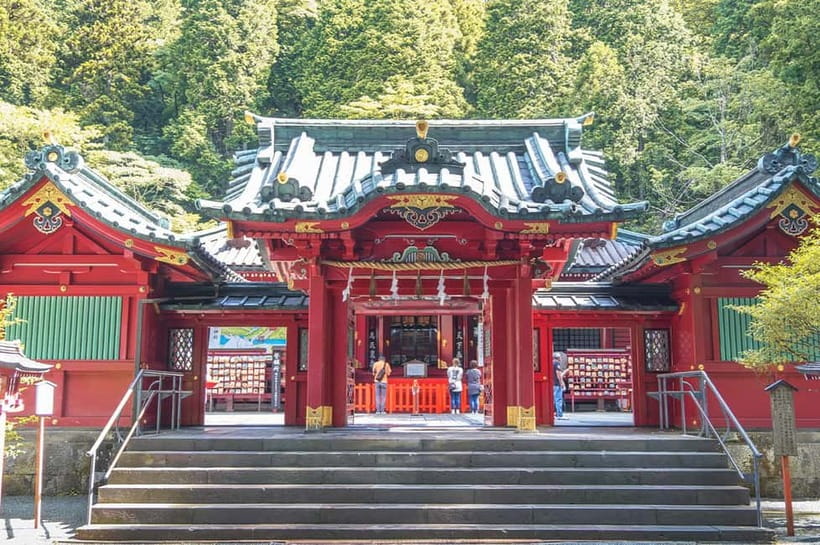
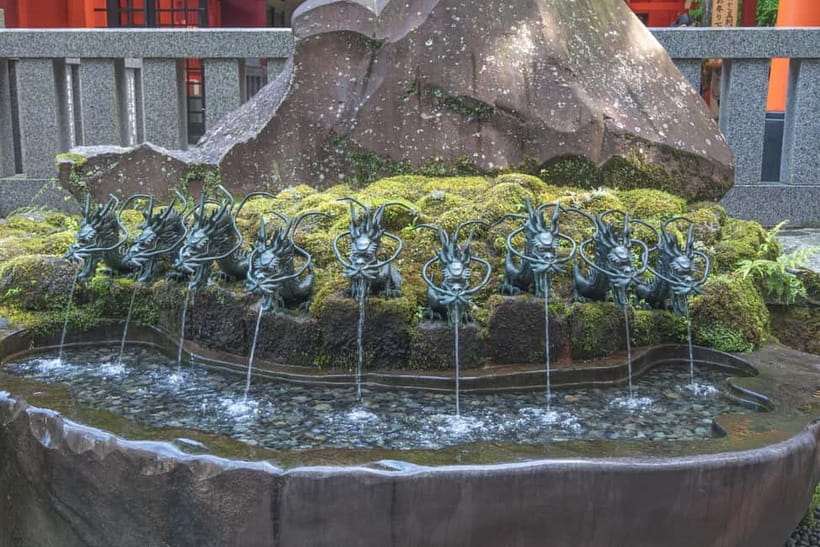
Hakone starts with the Hakone Shrine area, including time to see the sacred grounds and get oriented around Lake Ashi. The shrine is said to have been founded in 757, and the whole place feels calmer than the station areas in Tokyo. Even if you’ve seen shrine photos online, being there in person changes the scale and the mood.
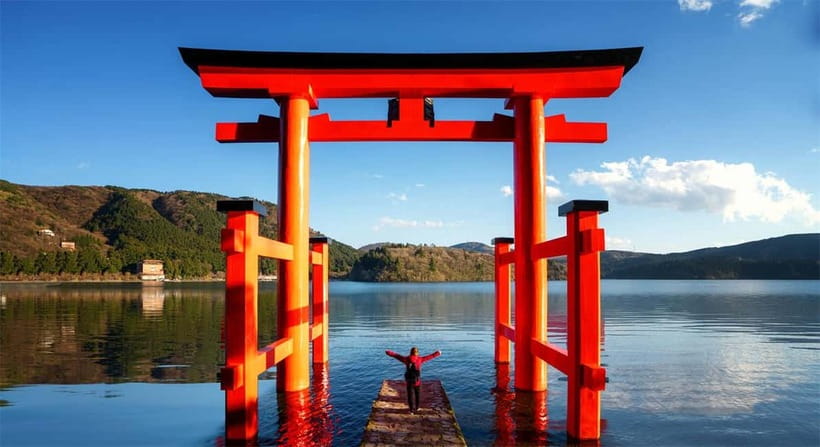
From there you’ll head to Heiwa no Torii on Lake Ashi, the famous red gate that photographers chase for a reason. On clear days, it’s a strong “Japan postcard” moment because the gate sits right over the lake with Fuji often framed in the distance.
Two considerations you should plan for:
- The Torii gate won’t be accessible from Dec 28 to Feb 10, 2026, based on the tour’s note. If you travel during that window, adjust expectations or bring a backup plan for photos.
- Like all Fuji-area viewpoints, fog and cloud cover can mute the whole effect, even when the area itself still looks beautiful.
Optional Lake Ashi Pirate Ship Cruise: When It’s Worth Paying Extra
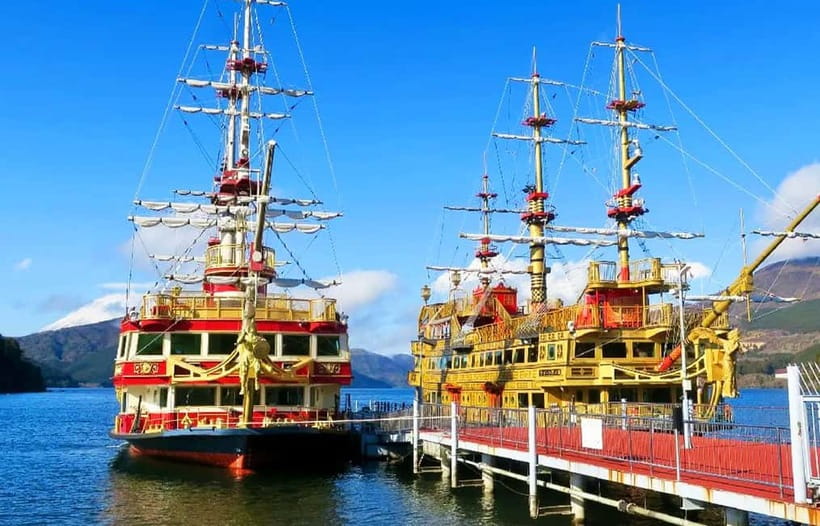
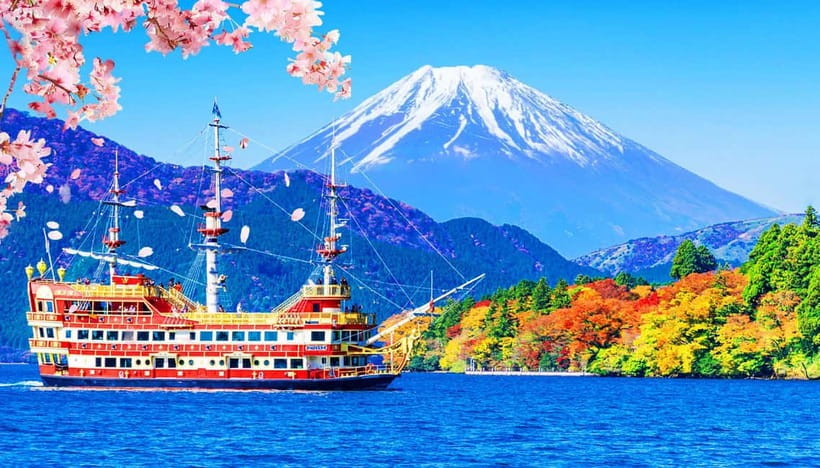
Next comes one of the most fun parts: a pirate ship cruise on Lake Ashi, which you pay for separately (listed around 1700 JPY). If you’re trying to maximize your odds of getting a great view, this is one of the best ways to do it because the boat gives you moving perspective on both the shoreline and the Torii area.
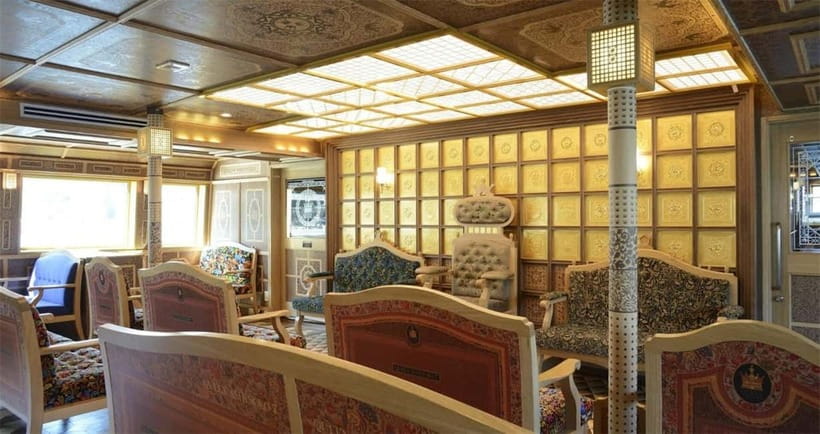
The ships are themed (Royal II, Victory, and Queen Ashinoko), so if the one you get feels a bit like a novelty, that’s normal. The payoff is the same: open water views that can make Fuji look enormous when conditions cooperate.
If crowds are heavy, you may have to be flexible with how you time photos and boarding. A couple of guides are known for keeping groups organized at busy stops like the ropeway and the cruise, but it’s still a shared day trip with shared lines.
If the boat view is poor due to weather, don’t take it personally. The cruise is still a distinct experience on its own, and it’s timed to work with the rest of the day.
Hakone Ropeway: Panoramas You Can’t Replicate Easily
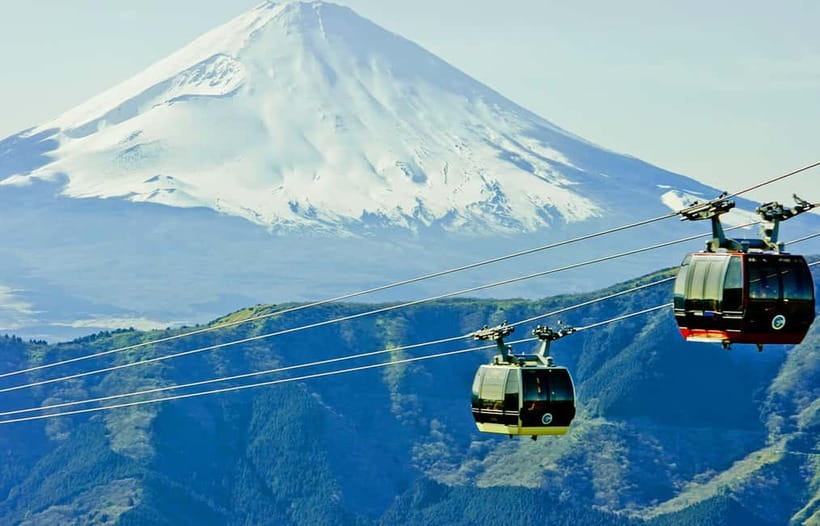
After Lake Ashi, you’ll ride the Hakone Ropeway. This part is included in the tour price, and it’s a big reason the day feels efficient. You’re basically trading Tokyo logistics for elevated views, with a good chance to spot both the lake and Mount Fuji depending on visibility.
The ride also helps spread your day’s “wow moments” out. You’re not stuck with only one scenic stop. With the ropeway, you get that classic sense of altitude and distance, and the lake becomes more geometric from above.
Two practical realities:
- The ropeway may close for bad weather or maintenance. The tour notes that email contact is needed for a refund of 1000 JPY per person if tickets are affected.
- When the queues are long, the key is not to fight the line. Go with the flow and use the waiting time to get your phone camera settings ready.
Owakudani Volcanic Valley: The Heat, the Smell, and the Black Eggs
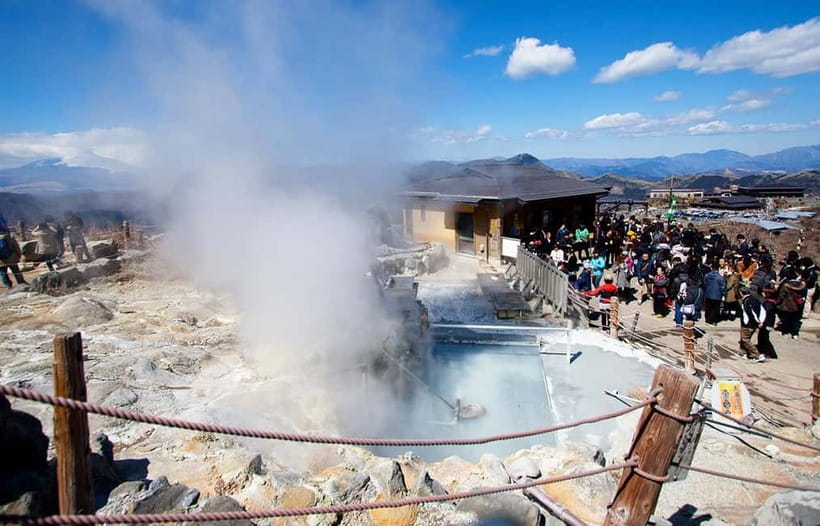
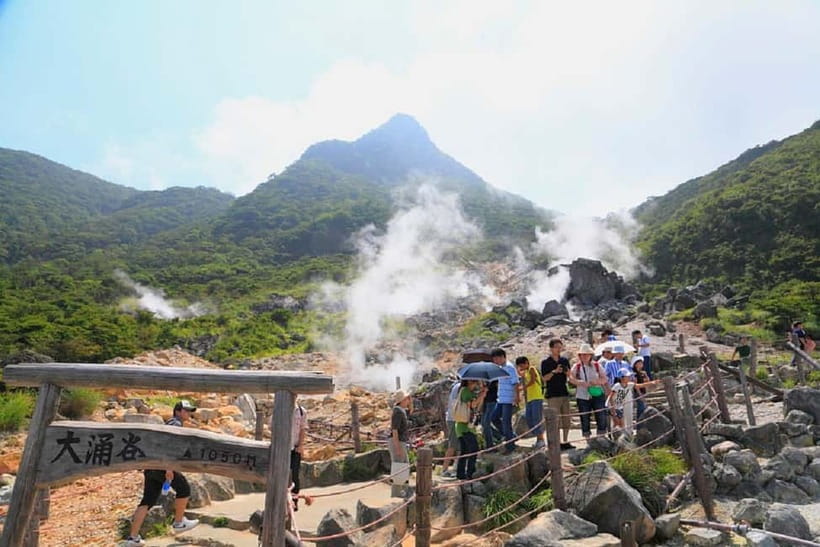
Then you hit the most “science-meets-scenery” stop: Owakudani Volcanic Valley. This geothermal area was shaped after a massive eruption of Mt. Hakone about 4,000 years ago, and you can really feel that the ground is active and alive.
You’ll have guided time here, with enough structure to know what’s worth watching. Expect lots of steam, dramatic rocky views, and that unmistakable volcanic smell. It’s famous for one very specific thing: black eggs boiled in volcanic spring water.
These eggs are a local specialty you’ll see people buying and eating right there. If you’re a food person, treat this as your “must-try” moment. If you’re not, at least watch how it’s done, because it’s part of the experience’s personality.
Because this is an active geothermal area, you’ll want comfortable shoes and a steady pace. The tour is not listed as suitable for people with mobility impairments, and that’s especially relevant on uneven ground.






Lake Yamanaka’s Swan Lake Shore: A Photo Stop That Can Pay Off
After the volcanic heat, the day cools down a bit with a stop at Lake Yamanaka, specifically Swan Lake Shore. This is a photo stop with free time, designed for quick viewing and quick shots with Mount Fuji in the background if the sky cooperates.
Swans here are a big part of why people love this moment. Even when Fuji is faint, the lake still gives you a calm break from the earlier intensity. And when Fuji is clear, the scene can look almost unreal, with the mountains reflecting the “poster” feeling you came for.
One scheduling note: because the tour runs as a tight circuit, you might not have time for extra side activities if earlier stops run long. That’s not a failure of the tour, it’s just how a shared day trip balances multiple sights.
Oshino Hakkai: The Ponds That Reflect Fuji’s Face
To close out the Fuji-area circuit, you’ll visit Oshino Hakkai, a scenic spot with eight crystal-clear ponds. These ponds are fed by Mt. Fuji’s snowmelt, so when visibility is good, you get reflections that make photographers happy.
Oshino is also a good counterbalance to the earlier Hakone stops. Instead of steam and boats, you get still water and small pathways where you can slow down and take photos without rushing the timeline.
You’ll have about 40 minutes here, which is usually enough to:
- see the pond clusters clearly
- take your reflection shots from a couple of angles
- wander at a relaxed pace without feeling stuck
If weather is poor and Fuji isn’t visible, the ponds still make sense. They’re visually interesting even without the mountain in-frame.
Lunch Timing and What to Pack So the Day Feels Easy
Lunch is the one missing ingredient in the included price. The tour explicitly says lunch isn’t included, and that means you should plan for food either by bringing something from home or by buying lunch at an attraction along the way. A scheduled restaurant break is part of the day, but it can come later, so you don’t want to start the morning hungry.
Here’s the smart packing approach:
- snacks for the long middle stretch
- water
- camera
- comfortable shoes
- weather-appropriate layers
Also note the rules: no food in the vehicle and no smoking in the vehicle. That’s normal for Japan tour buses, but it matters if you like snacking while riding.
If you’re traveling with kids or you know you get hangry, pack extra snacks. The best tours feel smooth because you’re not managing hunger in the middle of queues.
Price and Logistics: Is About $54 Good Value?
At around $54 per person, this tour is mostly paying for three things: transportation out of Tokyo, a guided day plan, and included access to Hakone Ropeway (plus parking and ropeway fare).
If you tried to build this yourself, you’d spend time coordinating trains/buses, then still likely face ticket lines at ropeway and popular viewpoints. Here, the value is that you get one working schedule, with a guide translating and timing the stops.
The included transportation is also a real plus: an air-conditioned vehicle, pickup and drop-off at two designated points, and a driver. Add the guide support in English/Japanese/Chinese/Korean, and the day becomes far easier for first-time visitors.
The biggest variable that affects how “worth it” feels is still weather. On a clear day you’ll feel like a genius for choosing this plan. On a cloudy day, you’ll still see real places, but you won’t get guaranteed Fuji drama.
Guide Quality Makes a Big Difference on a Packed Day
A shared tour works only when the guide keeps it organized. This is where the best days shine. Names that show up in strong feedback include Wanting, Jack (Captain Jack), Leonard, Kousei, Tom, Sato, and Andrew.
What I’d take from that pattern is simple: you want a guide who explains timing and helps you understand what you’re looking at. When a guide does that well, every short stop feels more rewarding because you know what matters and where to stand for photos.
Even if the photos don’t perfectly match what you hoped for, the day still works when the guide keeps the group moving and clarifies next steps early.
Who This Tour Fits Best (And Who Should Skip)
This tour is a strong fit if:
- you want a one-day Fuji-area sampler without planning train routes
- you enjoy scenic stops that mix culture, lakes, and geothermal sights
- you’re traveling solo or as a couple and like guided structure
- you’re okay with a long day (it’s about 10 hours)
It’s not a good fit if:
- you have mobility limitations, since the stops involve walking and uneven ground
- you have respiratory issues, because you’ll be in a geothermal area like Owakudani where steam and smells are part of the environment
If you hate crowds, you should know these are popular sites, and shared tours naturally mean lines. The ropeway and pirate cruise areas can be busy, especially in peak seasons.
Should You Book This Mt. Fuji and Hakone Day Trip?
Book it if you want the best odds of seeing Fuji while also getting Hakone’s signature mix: Lake Ashi views, a ropeway ride, the geothermal drama of Owakudani, and the calm reflections of Oshino Hakkai. For many people, it’s the easiest way to turn Tokyo time into a real countryside day.
Think twice (or bring extra flexibility) if your travel dates fall within the Torii gate closure period for 2026, or if your plan can’t handle weather randomness. And because lunch isn’t included, don’t assume the schedule will fully cover meals. Pack snacks and keep your energy steady, and the long day will feel like it flows.
If you want a single, efficient day trip that covers a lot of ground without making you do the logistics math, this is a solid choice.
FAQ
How long is the tour?
The tour duration is listed as 10 hours.
What is included in the price?
The included items are Hakone Ropeway fare, pickup and drop-off at two designated points, air-conditioned vehicle transportation, a multilingual tour guide, a driver, and parking fees.
Is the pirate ship cruise included?
No. The Lake Ashi pirate ship cruise is optional and paid separately (around 1700 JPY).
Is lunch included?
No. Lunch isn’t included. You can bring something, buy lunch at attractions, or eat at a restaurant suggested by the guide.
Where do we meet and where do we get dropped off?
Pickup meeting points vary by option, with Tokyo Station or Shinjuku mentioned, and there are also two drop-off locations listed as Stand T, 東京MODE學園.
Is Mt. Fuji guaranteed to be visible?
No. Mt. Fuji visibility depends on weather and is not guaranteed.
What happens if the Hakone Ropeway closes?
The tour notes that the ropeway may close due to bad weather or maintenance. You can email for a ticket refund of 1000 JPY per person.
Are there language options for the guide?
Yes. The guide is listed as available in Chinese, English, Japanese, and Korean.
What should I bring for the day?
Bring comfortable shoes, a camera, snacks, water, and weather-appropriate clothing.
Is free cancellation available?
Yes. Free cancellation is listed up to 24 hours in advance for a full refund.