REVIEW · TOKYO
Sake Omakase in Tokyo: Guided Tasting by Certified Sommeliers
Book on Viator →Operated by Sake Studio - Sake Tastings by Multilingual Sommeliers · Bookable on Viator
Seven sake flights in two hours beats guessing.
This is a guided sake omakase in central Tokyo with certified sommeliers who teach as they pour, all in a designer room built around a reclaimed Showa-era wood table. You get a tight structure: seven Japan-exclusive selections, served with food in four themed segments, plus plenty of chances to ask questions.
What I like most is the combination of variety and control: seven exclusive sakes with unlimited refills means you can slow down on what clicks and revisit what surprised you. I also love the room setup. The Showa-era table is the focal point, which makes the whole session feel more like a private tasting lesson than a loud bar crawl.
One drawback to consider: this is alcohol-forward, and it’s not recommended if you have an alcohol allergy. If you prefer very small sips, you’ll still want to pace yourself, especially since refills are part of the plan.
In This Review
- Key highlights worth marking on your map
- Why this sake omakase works in Tokyo’s busy reality
- Meeting at Linden House and settling into the tasting room
- What 2 hours feels like with seven sakes and unlimited refills
- The four-course flow: how the menu teaches you, not just feeds you
- Course-to-course expectations (what you’ll notice each round)
- Pairing small bites with sake: why the snacks aren’t just filler
- Sommeliers, languages, and questions you can actually ask
- Price and value: what you’re really paying for at $79.52
- Who should book this Tokyo sake tasting (and who should skip)
- Should you book? My quick decision guide
- FAQ
- How long is the sake omakase tasting in Tokyo?
- How many sakes do I taste, and do refills cost extra?
- What food is included during the tasting?
- What languages do the sommeliers speak during the tasting?
- Is transportation from your hotel included?
- Can I get a full refund if I cancel?
Key highlights worth marking on your map
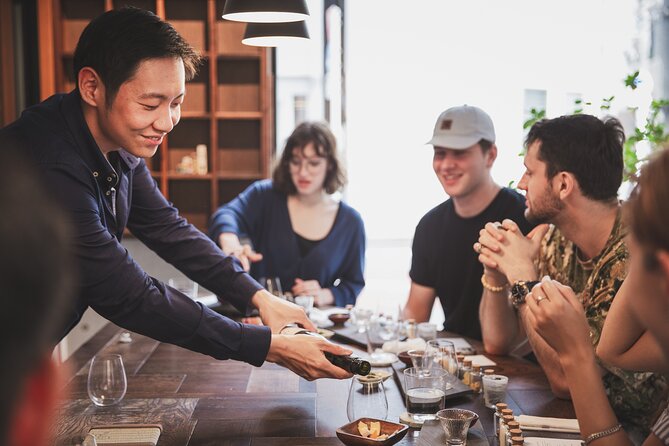
- Seven Japan-exclusive sakes across four themed courses, with unlimited refills
- Multilingual sommeliers guiding in native English (plus Japanese and Chinese)
- Showa-era reclaimed wood table in a thoughtfully designed tasting room
- Practical flavor training using rice comparisons, temperature shifts, spice/herb infusions, and vessel effects
- Food pairings that show up each course, including pickles, cheeses, cured meats, and dessert
- Maximum group size of 6, so questions and explanations actually land
Why this sake omakase works in Tokyo’s busy reality
Tokyo has plenty of sake sampling, but most of it is you-with-a-ticket plus guesswork. This experience is different because it’s built like a lesson. You don’t just drink; you get a guided path through the why behind the taste.
You’ll notice something early: the staff doesn’t treat this like a performance. The sommeliers answer questions and guide you toward what suits your palate best, which makes the tasting feel personal even though the menu is fixed. For me, that balance is the magic.
And yes, the room matters. A tasting seated around a beautiful Showa-era table changes your attention. The setting nudges you to slow down and notice aroma, texture, and finish instead of rushing to the next bottle.
You can also read our reviews of more food & drink experiences in Tokyo



Meeting at Linden House and settling into the tasting room
You’ll meet at Linden House in Kanda Ogawamachi, Chiyoda—right back to that same spot at the end. Plan to arrive a few minutes early so you can get seated without stress. The experience is listed as near public transportation, so you won’t need a complicated taxi plan.
Bring your mobile ticket and keep your phone handy for check-in. Once you’re inside, you’ll be centered at that reclaimed Showa-era wood table, which is really the anchor of the whole experience. It makes it easy for the sommeliers to guide everyone in the small group and keep the pace smooth.
Because the group size is capped at six, you’re not shouting over each other or playing catch-up. You can ask: what am I tasting right now, and what should I expect if I like X?
What 2 hours feels like with seven sakes and unlimited refills
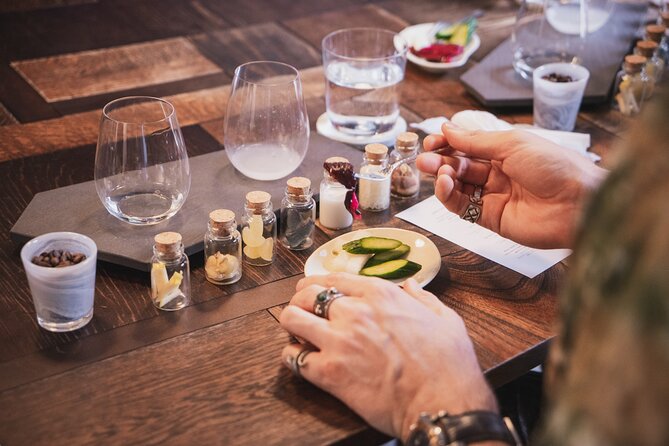
The whole session runs about two hours. That time includes four themed courses, each paired with small bites, plus the tasting progressions and explanations.
You’re getting seven sake varieties across those courses, and refills are unlimited. That sounds simple, but it changes how you taste. You can return to a style you love without ordering another drink, and you can experiment with different tasting notes the way a sommelier would.
The main practical trick: pace your drinking while you’re learning. Unlimited refills are generous, but the best value comes from taking notes and asking questions while the differences are fresh in your head.
The four-course flow: how the menu teaches you, not just feeds you
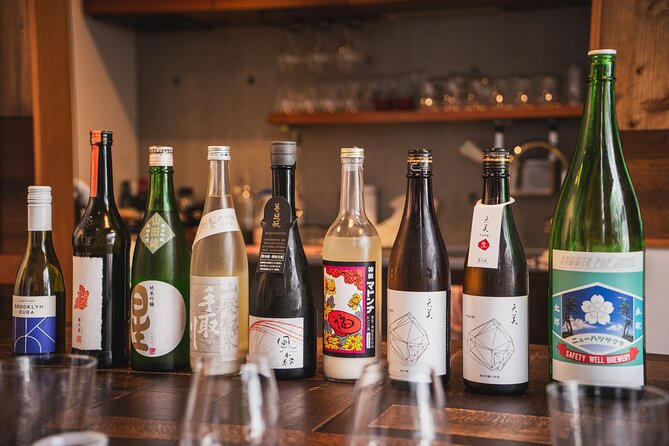
You’ll follow a four-course structure built around themes that help you understand sake beyond labels. Even though you’re drinking multiple sakes, the progression is designed to make comparisons easier.
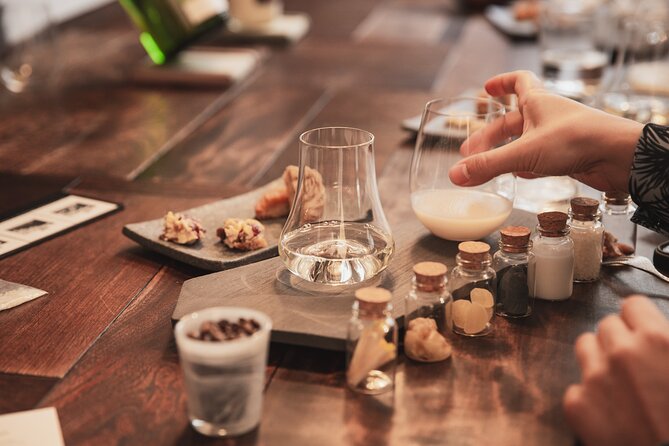
Across the session, you’ll hit key learning modules, including:
- Rice comparison
- Sake at five different temperatures
- Spice and herb infusions
- How the drinking vessel changes taste
Those themes are valuable because they isolate variables. Instead of thinking sake is one taste, you learn it as a set of controllable choices—grain, temperature, flavor additions, and even glass or cup shape.
Course-to-course expectations (what you’ll notice each round)
Each course brings a new set of pours and a new pairing of small bites. You’ll taste sakes in a progression, then get a snack designed to support the flavors you’re tasting.
Here’s what to pay attention to as you move through the courses:
- When you do rice comparisons, focus on how sweetness, acidity, and texture shift even when the overall style sounds similar.
- When you do the temperature ladder, notice how aroma changes first, then how the finish feels on your tongue.
- When you taste spice or herb infusions, treat it like a flavor experiment. What kind of aroma leads the sip, and what lingers after?
- When you experience vessel effects, watch how the same liquid can smell and taste different depending on shape and how it hits your palate.
Even if you don’t memorize every detail, you’ll walk away with a clearer sense of what to look for next time you order sake in Japan.
You can also read our reviews of more guided tours in Tokyo




Pairing small bites with sake: why the snacks aren’t just filler
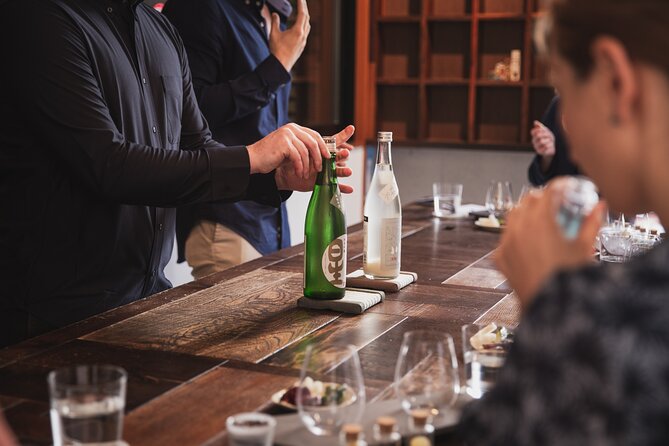
Food is included each course, and the list is specific: pickles, cheeses, cured meats, and dessert. The goal isn’t to overwhelm your palate. It’s to give your taste buds a reset and highlight what each sake is doing.
This is especially useful when you’re tasting seven sakes quickly. Without bites, your palate can get tired and everything starts blending together. With the small bites, you get a cleaner read on acidity, sweetness, and aroma.
You’ll also likely find the pairings help you answer a big personal question: do you like sake with salty foods, with fatty meats, or with something on the sweeter end? That’s the kind of knowledge you can use immediately at dinner.
My practical advice is simple: if you can, eat something light before the session starts. The pairings help, but the pacing includes plenty of tasting. You’ll enjoy the learning more if you’re not starting from a totally empty stomach.
Sommeliers, languages, and questions you can actually ask
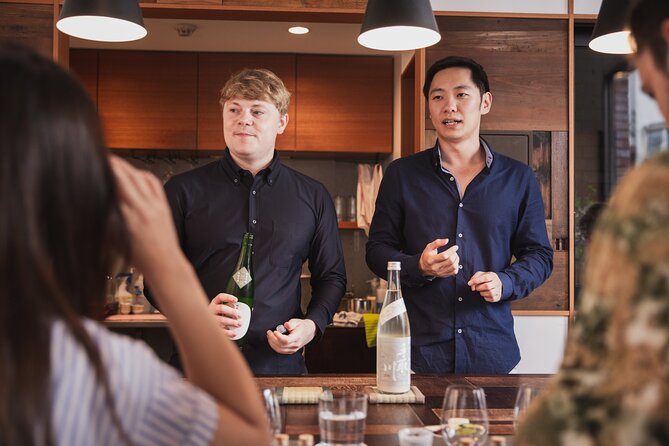
This is hosted by native English-speaking sommeliers with deep industry experience. They’re also multilingual (native English, plus Japanese and Chinese), which matters more than you might think if you want to understand what you like in plain language.
The session is also positioned as part education, part tasting. That shows in how the staff explains differences and lets you steer your attention. You can ask what suits your palate best, not just what’s rare or expensive.
From names shared in past sessions, the guide experience often includes people like Eric, Aaron, Frank, and Phillip. The common thread is a calm, thorough explanation style that makes the technical side feel approachable. If you’re the type who wants to understand brewing and flavor mechanics, you’ll likely feel at home here.
What you should ask during the tasting:
- Which temp version is closest to what I usually like?
- If I enjoy this, what should I order at a restaurant in Tokyo?
- How do rice and temperature change the way this finishes?
Those questions turn the tasting into real travel knowledge, not just a fun night out.
Price and value: what you’re really paying for at $79.52
At $79.52 per person, you’re not just paying for drinks. You’re paying for a structured education session with seven Japan-exclusive sakes, unlimited refills, and snack pairings across four courses.
In practical terms, that matters because:
- The sakes are served as part of a progression, so you learn faster than random sampling.
- Unlimited refills remove the friction of ordering while you’re mid-question.
- The snacks are included every course, which keeps your palate active for comparisons.
- The group size is small, which gives time for explanations and follow-up questions.
You don’t need to be a sake expert. If you’re curious and willing to pay attention for a couple hours, the value is in the coaching and the comparison experience—not in memorizing terms.
Who should book this Tokyo sake tasting (and who should skip)
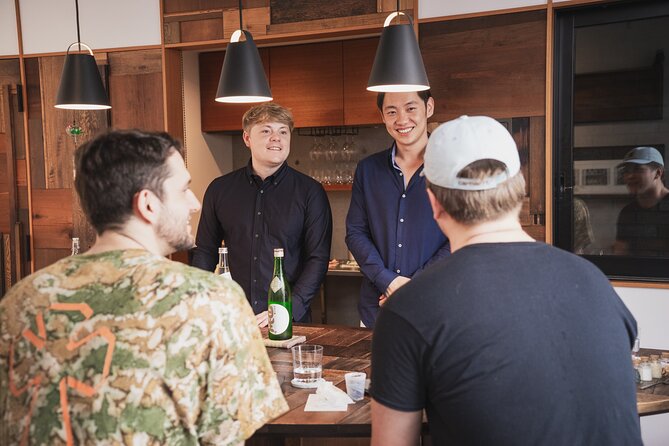
This is best for you if you want more than a drink. You should enjoy it if you like learning flavor details, asking questions, and tasting sake in a controlled way that makes comparisons easy.
You’ll likely get extra value if you:
- Like food and want pairings that teach
- Are curious about how temperature and vessel shape change aroma
- Want a guided way to choose your next favorite sake style
Skip or reconsider if:
- You have an alcohol allergy. The experience isn’t recommended in that case.
- You prefer non-alcohol experiences, since refills are part of the format and the event is alcohol-based.
- You want a fully hands-off experience. This is interactive by design, with sommeliers answering questions.
Should you book? My quick decision guide
If you want a short, high-signal Tokyo experience, I’d book it. The format is tight: seven exclusive sakes, four themed courses, real guidance, and a setting that keeps things calm and focused.
Book this if your main goal is to understand what you like and why. You’ll leave with a better sense of flavor direction, plus practical instincts for ordering sake later.
If you’re sensitive to alcohol or don’t want to drink much, this one may feel like too much. But if you’re game for tasting seven styles and learning in the process, this is one of the smartest ways to spend a couple hours in central Tokyo.
FAQ
How long is the sake omakase tasting in Tokyo?
It runs for about 2 hours.
How many sakes do I taste, and do refills cost extra?
You’ll taste 7 sake varieties served over 4 themed courses, and refills are included (unlimited refills).
What food is included during the tasting?
Small bites are included with each course, such as pickles, cheeses, cured meats, and dessert.
What languages do the sommeliers speak during the tasting?
The hosting sommeliers guide in native English, and they also use Japanese and Chinese.
Is transportation from your hotel included?
No. Transportation to and from attractions, plus hotel pickup and drop-off, are not included.
Can I get a full refund if I cancel?
Yes. Cancellation is free up to 24 hours in advance for a full refund.