REVIEW · TOKYO
Tokyo : Authentic Samurai Experience in a Private Space.
Book on GetYourGuide →Operated by rojicoya · Bookable on GetYourGuide
Samurai fantasy, made hands-on. In Tokyo’s Honshu area, this 90-minute session turns Bushido from a word on a screen into something you practice with your body. I like how it starts with basics and kimono dressing, then moves straight into using a real sword and proper etiquette. The main catch is that it’s not for everyone: if you’re uncomfortable around real-blade edges, say so right away.
Two things I really like: you can feel confident as a beginner because the instructor teaches step-by-step, and you get a real cultural finish with Japanese tea and photo time in an old private house setting. In one account, the host Yukari helped with dressing and took photos/videos, and that personal touch really matters for capturing the moment without rushing. One possible drawback to plan around: it’s a sword experience with real training rules, so it can feel intense if you’re expecting a casual costume show.
Because the group is limited to 3 participants, you get more coaching time and fewer waiting gaps. The format also means you’ll wrap up and disband on the spot, so this works best as a focused block in your day—not something to stretch out between other long plans. If you have mobility limits, are pregnant, or are bringing children under 10, this one isn’t suitable.
In This Review
- The 90-Minute “Samurai in an Old House” Format
- Kimono Dressing and Samurai Etiquette From Zero
- Real Sword Handling: Safety Rules You Actually Need
- Learning the Swing, Then Testing It Against a Real Samurai
- Japanese Tea, Photos in Tatami Rooms, and the Human Touch
- Price: Is $322 Worth 90 Minutes of Sword Training?
- Who This Samurai Experience Fits Best (and Who Might Feel Out of Place)
- Practical Tips Before You Go
- Should You Book This Samurai Experience?
- FAQ
- FAQ
- Where is this samurai experience held?
- How long is the experience?
- What’s the group size?
- What languages are available?
- What’s included in the price?
- Is there a safety rule about the sword?
- Are scooters allowed?
- Who should not book this experience?
- What’s the cancellation and payment setup?
The 90-Minute “Samurai in an Old House” Format
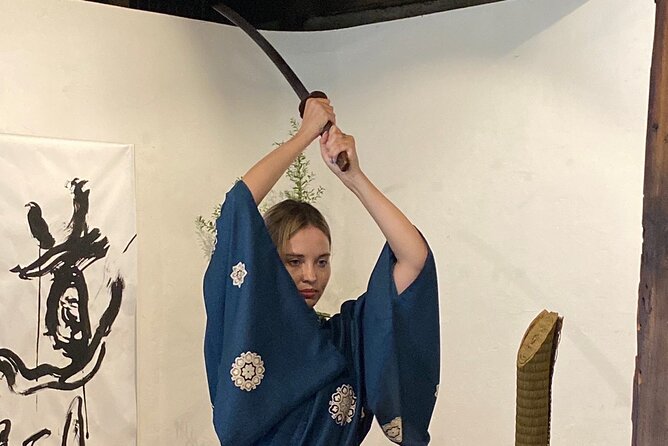
This experience runs for 90 minutes, which is a sweet spot. Long enough to learn real handling basics, but short enough that you’re not stuck for hours with sore arms and a half-formed plan for your next meal.
The setting is an old Japanese private house—think traditional rooms and a quieter, lived-in feel. That matters because the experience isn’t staged in a modern showroom. You’re dressing in kimono and learning etiquette in a space that fits the theme, which makes the whole lesson feel more grounded and less touristy.
And yes, it’s a private-space vibe. The small group size (up to 3) keeps it personal, so the instructor can correct posture and timing without repeating everything ten times. That also helps if there’s a language barrier; the instruction is available in Japanese and English.
Kimono Dressing and Samurai Etiquette From Zero
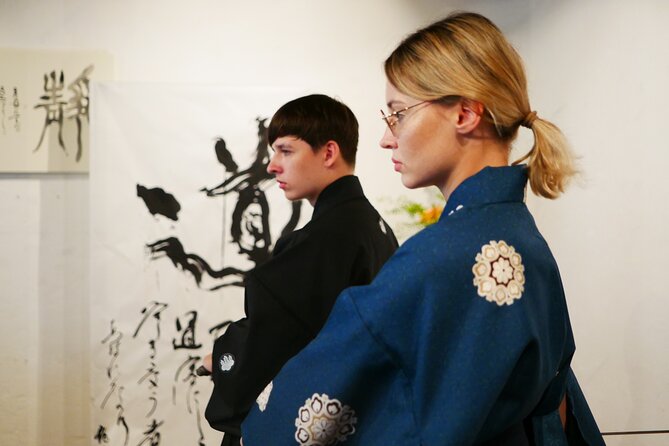
Most “samurai shows” stop at the costume. This one starts earlier—right at dressing. You’ll put on a kimono as part of the experience, then get guided into how a samurai-era person carries themselves. That includes practical etiquette, not just dramatic poses.
From there, the lesson shifts to sword basics: how to handle it safely, how to move, and how to think about the blade as a tool (not a toy). Even if you’ve never held a sword before, the structure is built around beginners being able to follow along and feel at ease.
This is also where the Bushido code earns its keep. You’re not only copying motions; you’re learning the “why” behind them—respectful handling, controlled movement, and discipline in timing. In plain terms: you leave less impressed by your own “cool” and more impressed by how strict the training culture really was.
You can also read our reviews of more private tours in Tokyo



Real Sword Handling: Safety Rules You Actually Need
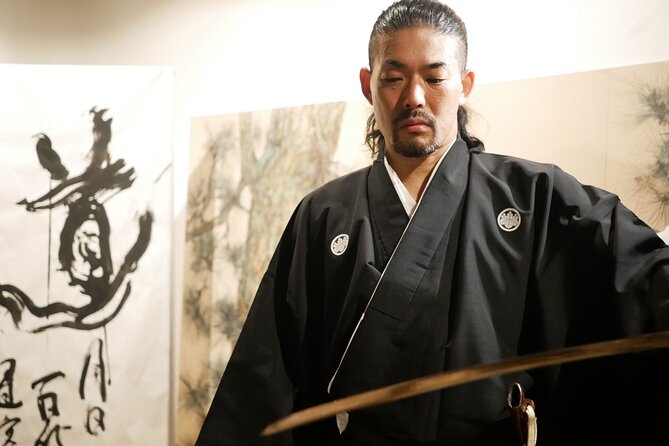
Here’s the good news: you’re taught how to swing and handle a sword in a guided setting. The activity includes a real sword, so you should treat this like training, not a photo op.
Safety is addressed directly before things start. One clear rule: nobody will point the blade at you. And if you don’t like the edge of the blade, you’re asked to tell the team first. That’s not a small detail—it’s how they keep the experience comfortable and controlled.
Because it’s real weapon training, you should listen closely to the instructor’s “don’t do this” list. Even if you’re excited, the best experience comes from restraint: controlled stances, smooth transitions, and stopping when instructed. That’s also why the small group format helps—you get more attention and correction when you slip.
If you’re into the craft of swords, here’s a smart move: ask the instructor if he can show how the sword comes apart and explain the construction. One participant found that extra look at the sword’s parts especially interesting, and the instructor reportedly showed it willingly.
Learning the Swing, Then Testing It Against a Real Samurai
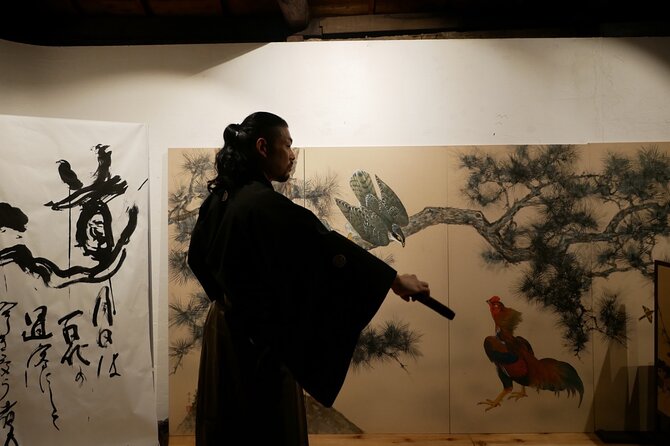
The experience doesn’t end with practice swings. You’ll eventually fight against a real samurai with a sword. This is the thrilling part, but it also explains who this is for.
What you get is guided fencing-style training that tests your timing and reactions. You’re not expected to become a swordsman in 90 minutes. Instead, you’re given the chance to apply what you learned—basic handling, controlled movement, and etiquette—under pressure.
Safety is part of the design. Still, you should go into this expecting physical movement and quick corrections. If you’re the type who wants a calm, hands-off activity, the “fight” segment might feel like too much. On the other hand, if you want the moment where it stops being theoretical, this is it.
Also pay attention to suitability rules. This experience isn’t for pregnant women and isn’t suitable for people with mobility impairments. Children under 10 are also excluded. If any of those apply, you’ll save yourself stress by skipping this one.
Japanese Tea, Photos in Tatami Rooms, and the Human Touch
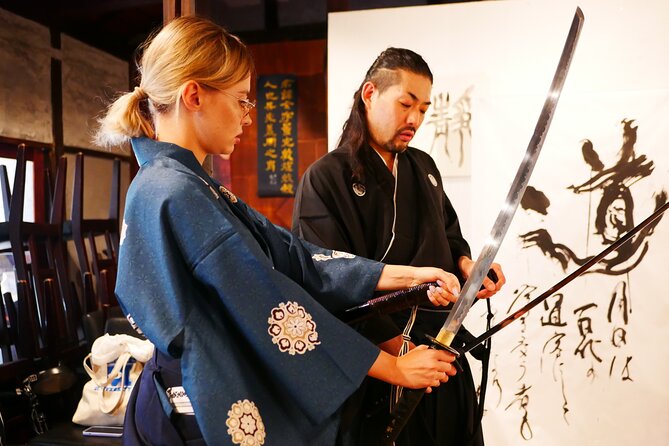
After training, you get to slow down. Japanese tea is served after the session, which is a perfect reset after sword movement and adrenaline.
You’ll also spend time for photos in the traditional house setting. A key point: the environment gives you a “typical Japan” photo vibe without turning it into a theme park. The kimono + old interior backdrop creates a look you can’t recreate at home.
The people running the session make a difference too. In one account, Yukari helped with dressing and took videos/pictures, which means you don’t have to juggle your phone while you’re trying to learn. In another, the instructor was friendly and funny, and instruction was described as easy to follow even with the language barrier—exactly what you want when you’re standing in a place where every second matters.
Price: Is $322 Worth 90 Minutes of Sword Training?
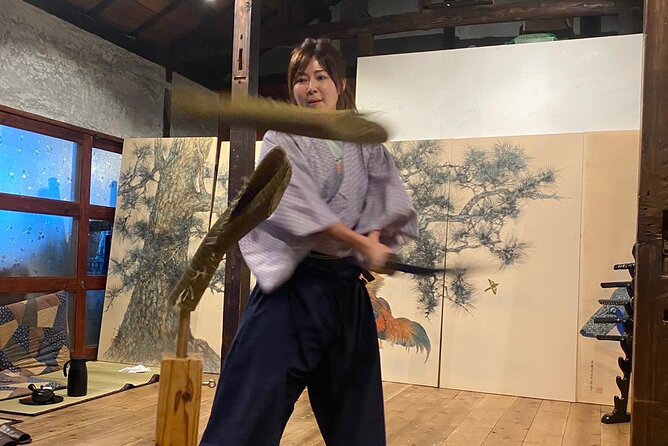
At $322 per person, this isn’t a “cheap activity.” The value comes from what’s included and how it’s delivered.
You’re paying for:
- Kimono dressing
- Instruction in Bushido etiquette from basics
- A real sword experience
- A face-off segment with a real samurai
- Japanese tea
- Learning in an old Japanese house setting
- A small group size capped at 3
That blend is the key. If you compare it to paying separately for a costume session, a culture talk, and a separate hands-on workshop, this is consolidating several experiences into one guided block. The small group also helps justify the cost: more coaching time, fewer people, and a more personal flow.
If you’re purely after photos, you might find cheaper options. But if you want an activity that teaches you how to stand, move, and handle a sword safely—while still giving you a cultural wrap-up with tea and the traditional house—this price starts to make sense.






Who This Samurai Experience Fits Best (and Who Might Feel Out of Place)
This is best for you if:
- You’re curious about samurai culture and want the basics of Bushido
- You want hands-on instruction rather than a performance
- You’ll enjoy a real-blade training feel, with safety rules
- You like small group experiences where the instructor can correct you
It’s also a great option for people with some training background. One participant described being a HEMA practitioner and still having fun with stances and cutting drills, including a tatami cutting highlight. Another mentioned trying cutting from a seated position, which suggests the instructor adjusts within reason to what people can do.
Where it might feel wrong:
- You want something fully passive and low-physical effort
- You can’t follow movement and safety instructions comfortably
- You’re bringing kids under 10 or have mobility limits
Practical Tips Before You Go
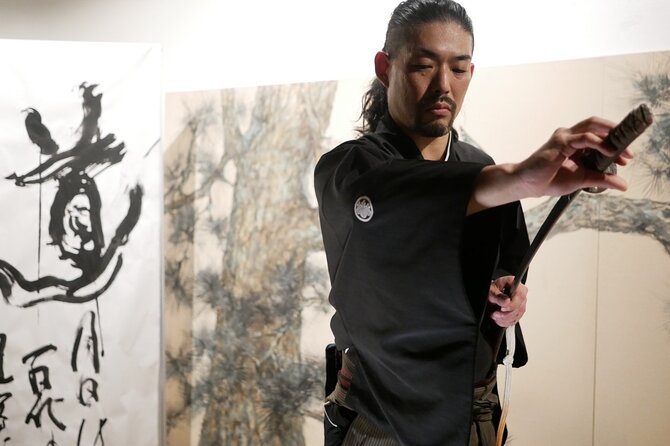
To get the most out of your 90 minutes:
- Wear comfortable clothing underneath your kimono prep. You’ll be moving, and you don’t want to wrestle with buttons.
- Listen to safety instructions like they’re part of the lesson, because they are.
- If you’re worried about the blade edge, speak up early. They explicitly invite you to tell them first if it’s not something you like.
- If sword mechanics are your thing, ask about taking the sword apart and how it’s constructed. It’s a smart question and can add extra meaning to the whole session.
- Keep your day flexible around this time block. You’ll disband on the spot afterward, so plan your next activity with a buffer.
Should You Book This Samurai Experience?
Book it if you want a real, coached samurai training session—not just a costume. The combination of kimono, Bushido etiquette teaching, real sword handling, and a structured challenge with a samurai makes this one of the most complete “samurai in Tokyo” options for people who like to learn by doing.
Skip it if you’re not comfortable with real sword training rules, or if the experience doesn’t fit your health or mobility needs. In particular, the exclusions are clear for pregnant women, mobility impairments, and children under 10.
If you’re on the fence because the price is high, think of what you’re actually buying: guided skill practice, a cultural setting, tea, and personal attention in a group of three. That’s the math behind the value.
FAQ
FAQ
Where is this samurai experience held?
It’s in Honshu, Japan, in Tokyo-area programming for a private-space experience.
How long is the experience?
It lasts 90 minutes.
What’s the group size?
The group is small, limited to 3 participants.
What languages are available?
The instructor speaks Japanese and English.
What’s included in the price?
Included items are the Samurai Experience, a real sword, kimono dressing experience, drinking Japanese tea, and learning in an old Japanese house.
Is there a safety rule about the sword?
Yes. No one will point the blade at you. If you don’t like the edge of the blade, you should tell the team first.
Are scooters allowed?
No, scooters are not allowed.
Who should not book this experience?
It isn’t suitable for pregnant women, people with mobility impairments, or children under 10.
What’s the cancellation and payment setup?
You can cancel up to 24 hours in advance for a full refund, and you can reserve now and pay later (paying nothing today).