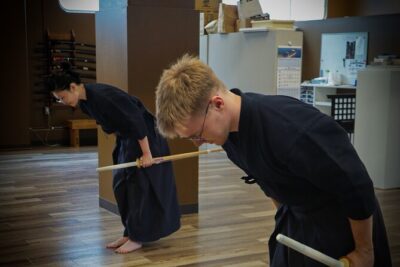
REVIEW · TOKYO
Tokyo Sword Experience – includes Museum Ticket/Ninja Experience
Book on Viator →Operated by Maikoya · Bookable on Viator
This hands-on sword lesson in the Samurai Ninja Museum area turns a history dream into something you actually do, not just watch. You start by dressing in traditional hakama, then get guided iaido-style practice before a safe sword-fight style session. It also comes with a museum visit that adds context (and extra ninja fun) without making you run all over town.
What I like most: you’re not stuck in a lecture. The instructors run step-by-step training, and the whole thing has that serious samurai feel even when you’re laughing with your partner. I also love that you get the included museum portion plus a ninja add-on, so your ticket covers more than just the lesson.
One thing to consider: sessions can feel crowded, with some reviews calling out big groups, photo bottlenecks, and waiting time. If you’re hoping for a super quiet, small-group class, plan a little extra patience.
In This Review
- Key highlights you should care about
- Samurai Ninja Museum meeting point: where the experience starts
- Dressing like a samurai: hakama and photo moments that matter
- Iaido-style basics with replica swords: what you actually learn
- The sword-fight and cutting moment: excitement with real safety boundaries
- Museum stop: small rooms, lots of explanation, and entertaining guides
- Ninja experience: shuriken throwing and the fun side of discipline
- The real cost/value math: why $84.23 can make sense
- Group size, waiting, and photos: the biggest practical trade-off
- Staff and teaching styles: why certain names keep coming up
- Who this is best for (and who should think twice)
- Should you book the Samurai Sword Experience in Tokyo?
- FAQ
- What is included in the Tokyo Sword Experience package?
- Do you use a real samurai sword?
- How long does the experience last?
- Where does the tour start and end?
- Is the museum tour part of this experience?
- Are there age restrictions?
- Is there a limit on group size?
- Do I need to bring printed tickets?
- Is transportation included?
- Can I cancel for a full refund?
- Is this activity physically demanding?
Key highlights you should care about
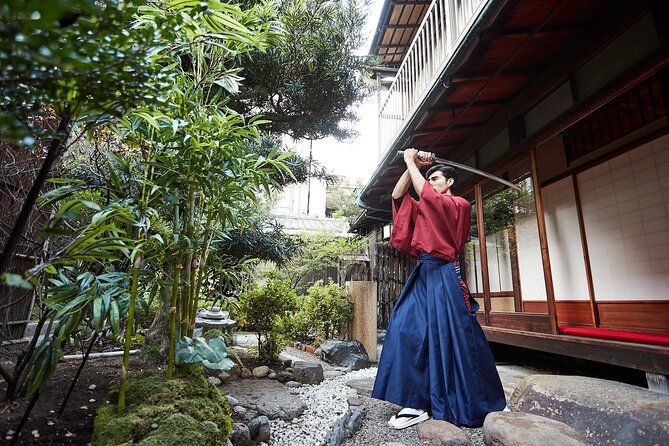
- Hakama first, then training: you start by dressing the part, which makes the movements feel real and focused
- Iaido fundamentals with a replica: you learn safe technique using practice swords before you test yourself
- Museum ticket plus free guided visit: you don’t just enter the building; you get an explanation from guides
- Ninja star throwing: playful but structured, with targets set up for the session
- Staff with memorable personalities: names like Ryo-sensei, Leon, Ren, Koki, Akira, Hector, and Santo come up in reviews for a reason
- Age rules affect participation: kids under 6 can’t enter, and the cutting component can have stricter age limits
Samurai Ninja Museum meeting point: where the experience starts
Your tour begins at Samurai Ninja Museum Asakusa Tokyo, in Nishiasakusa (Taito City). It’s a straightforward start point that’s set up for this kind of activity, and it’s near public transportation—so you can build it into an Asakusa day without stress.
Because you dress on-site, show up a few minutes early. Reviews mention confusion about timing and people arriving before the venue opened, which is understandable when you’re in a new area. If you’re traveling with kids, double-check the start time and age rules before you head over.
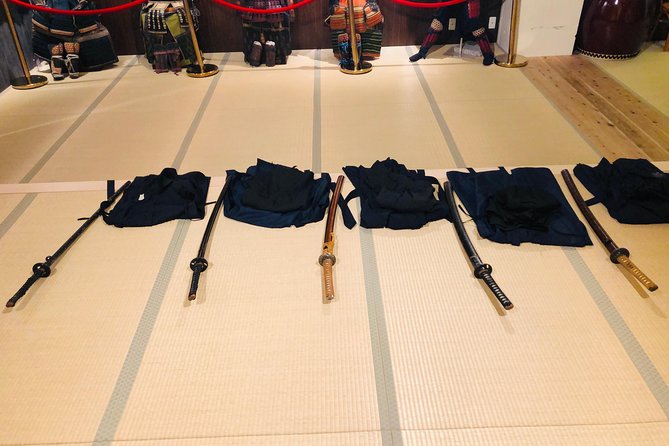
Once you arrive, your first real step is getting into costume. You’ll wear the traditional samurai hakama before the instruction starts, so expect time for dressing, photos, and getting organized before anyone touches a practice sword.
You can also read our reviews of more tours and experiences in Tokyo



Dressing like a samurai: hakama and photo moments that matter
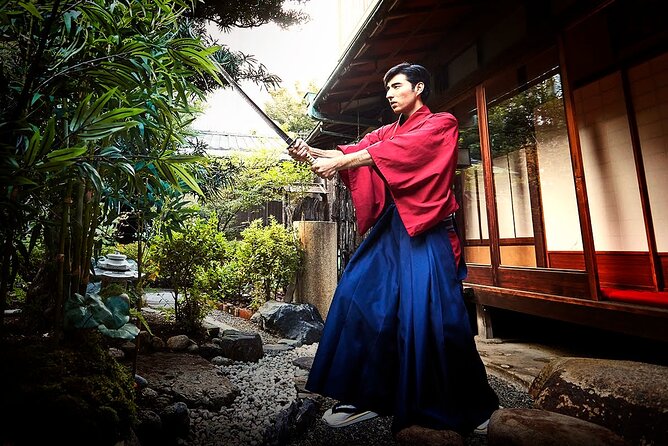
This experience doesn’t start with paperwork or a basic intro. It starts with you dressing the part. That means the hakama isn’t just for show—it sets the tone, and it helps you mentally switch from tourist mode into training mode.
You’ll also have time for posing. Some parts are set up with themed backgrounds and a studio-like feel. The quality of photos can depend on how busy your session is; in a smaller crowd, you’ll likely get more personal attention, and when the room is packed, photo timing can get competitive.
Tip: wear something easy to change out of, and don’t plan on squeezing in another activity right before this. Dressing takes longer than you think, especially if you want a smooth transition into the training part.
Iaido-style basics with replica swords: what you actually learn
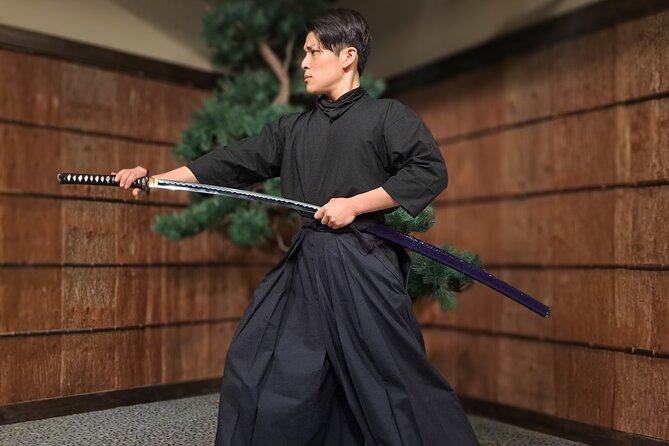
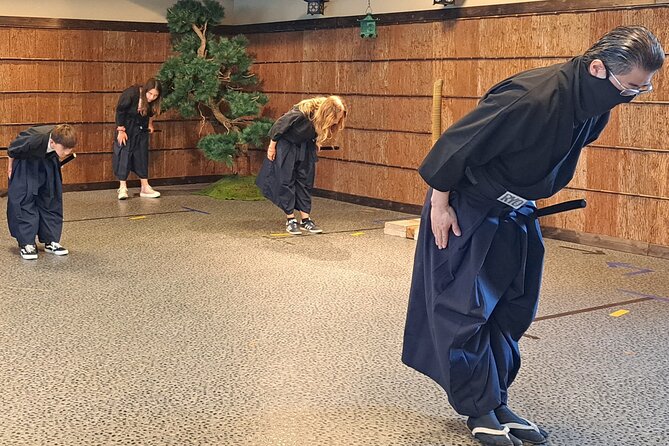
The core of the class is learning iaido techniques with a replica sword. This is the part that most reviews praise because it’s active and structured. You get instruction on the basics, with an instructor correcting your grip, movement, and posture.
The way it’s described in the experience flow matters: it’s not random swinging. It’s step-by-step building, which is why beginners can get meaningful results within the time window. If you’ve never trained with a sword before, this is exactly what you want—clear cues, safety reminders, and progress you can feel.
You may get moments where you practice controlled sequences, and the instructors emphasize precision and discipline. That’s also why the “serious samurai” mood comes through even when you’re surrounded by other people in costume.
What to do to get the best experience:
- Listen for the safety instructions at the start and follow the timing cues closely
- Slow down to match the instructor’s pacing—speed comes later
- If something feels awkward (balance, stance width), ask for quick corrections
The sword-fight and cutting moment: excitement with real safety boundaries
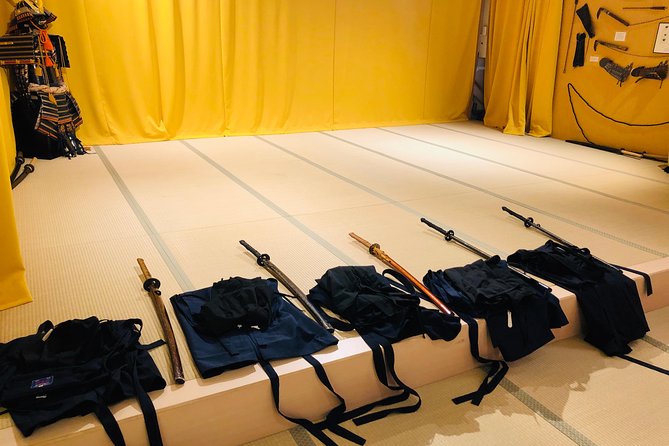
Here’s the honest part: you should not expect a free-for-all or anything dangerous. The experience includes an update noting a Japanese law that bans facilitating or selling activities that involve a real sword, and it explicitly says this activity does not involve using a real sword or a sharp blade.
That said, reviews mention an intense cutting moment and the feeling of holding an older katana, while also noting they used foam or practice equipment in many cases. So the safest way to approach this is to treat it as a structured, instructor-led session with replica or non-sharp practice implements, and to pay attention to exactly what you’re handling during your time slot.
If your main goal is the fantasy of using a real, sharp katana to cut something, come in with caution. Some reviews talk about cutting mats; others are clear that real sharp cutting doesn’t happen. Your best move is to confirm with the staff on arrival what’s included in the cutting component for your exact session.
In practical terms, the payoff is still there: you’re learning a skill-like motion, then getting a chance to attempt a cutting target using the session’s safe equipment. Even when someone misses (and yes, that happens), it’s still one of the most memorable “I did this” moments of the whole day.
Museum stop: small rooms, lots of explanation, and entertaining guides
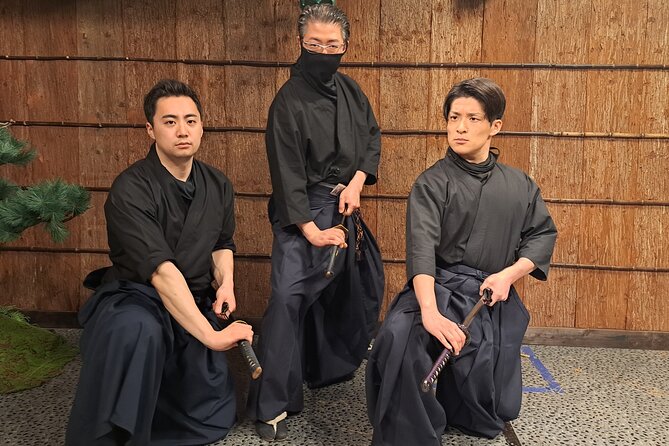
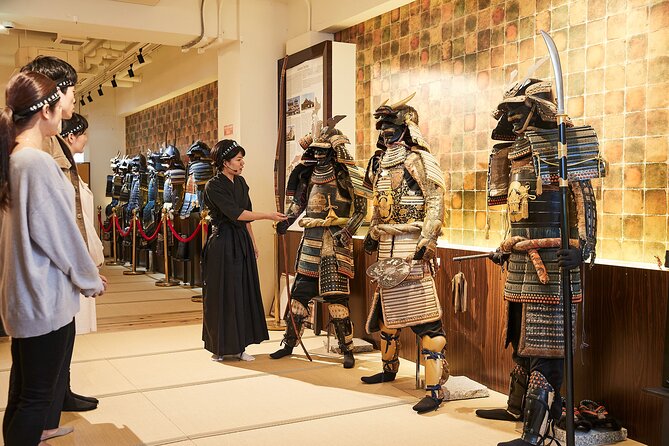
One of the biggest value-adds is that your ticket includes a free guided tour of the samurai and ninja museum. This isn’t described as a huge museum complex; it’s more of a focused visit. Reviews call out that it’s a small setup with a few rooms, which can be great when you want the key story beats without getting lost for hours.
The tour component is what turns the museum from background noise into something you’ll remember. Guides are repeatedly praised—Ren is mentioned for history, and in other sessions, staff like Ren, Koki, and others are credited with making it fun and informative. Some guides are described as funny or very well spoken, which helps a lot when a museum tour involves listening.
A good heads-up: the museum tour can be heavy on talking and light on interactive displays, so it may not be ideal for very young kids who need constant hands-on moments. If you’re bringing a family, consider how your kids handle instruction-heavy experiences.
What you’ll get out of it:
- The role of samurai training and discipline (tying back to what you just practiced)
- Context that makes the sword techniques feel less random
- A bridge into the ninja side of the venue
You can also read our reviews of more museum experiences in Tokyo


Ninja experience: shuriken throwing and the fun side of discipline
After the sword training, you shift gears to ninja-style fun. You’ll get an opportunity to throw plastic ninja stars (shuriken) at polystyrene targets. It’s clearly set up to prevent injury, and that makes it a great break from the more intense sword movements.
Even if the activity sounds silly on paper, reviews repeatedly mention it as enjoyable and part of the overall complete package. It also helps that you’re still in an instructor-guided environment, so it doesn’t feel like a random demo.
If you’re the type of traveler who needs variety in one stop, this is one reason the experience earns so many high ratings. It balances seriousness (sword) with play (ninja stars).
The real cost/value math: why $84.23 can make sense
At $84.23 per person, you’re paying for a combo: costume entry, guided training time, and a museum visit with guided interpretation, plus ninja-star activity. For Tokyo, that’s a sensible bundle, especially because the location is already set up for this.
The value argument isn’t just price—it’s time and convenience. You don’t need transportation between separate venues, and you’re not buying multiple tickets to stitch together the same day. Reviews often mention the experience costs a fraction compared to similar activities, and the inclusion of the museum portion helps justify the total cost.
One caution: the total experience length can run longer than the approximate 1 hour 15 minutes shown. Some reviews describe it as closer to two hours, and there are mentions of waiting around when groups are large. So treat the listed duration as a baseline and plan a buffer in your day.
If you’re deciding between this and another “sword attraction,” compare what’s included:
- Is the museum tour actually guided, or just self-paced entry?
- Do you get instruction time that builds technique, or just quick posing?
- Does the package add ninja and costume elements, or stop after sword demo?
This one clearly aims to hit all three.
Group size, waiting, and photos: the biggest practical trade-off
This experience is rated high overall, but group management shows up in several reviews. Some people mention difficulty taking photos during the busiest phases, and others report large groups and waiting time for individual turns.
Here’s the practical impact:
- If the group is bigger, you’ll spend more time waiting between steps
- The museum can feel crowded, which makes listening harder
- Photo opportunities can become rushed, especially during the early dress-up stage
Also, there’s a mismatch in what maximum group size means depending on booking channel. The experience info mentions a maximum of 4 travelers, but some reviews indicate more people may be in the session due to walk-ups and late arrivals. So don’t assume your session will be empty or private.
How to reduce the stress:
- Choose a time slot that’s less peak if you have that option
- Arrive early so you’re not behind schedule in dressing and check-in
- Keep your phone ready, but don’t bank on perfect photos at peak crowd times
Staff and teaching styles: why certain names keep coming up
One of the best parts of this experience is the staff energy and teaching clarity. Reviews mention instructors like Ryo-sensei teaching kata and running foam-sword sparring with a lot of enthusiasm. Other named staff include Leon (help with dressing and pictures), Ren (museum education), Koki (Samurai moves and ninja-star throwing), Akira, Hector, and Santo.
Even if you don’t recognize the names beforehand, the pattern matters: instruction tends to be hands-on, guided, and correction-based. That’s what makes a beginner feel capable rather than embarrassed.
If English isn’t your strongest skill, you’ll still be able to follow along because technique teaching relies heavily on demonstration and body positioning. One review specifically mentions an instructor speaking fluent English, and the overall tone suggests the team works to keep the class understandable.
Who this is best for (and who should think twice)
This is a great match if:
- You want a hands-on samurai experience that feels like training, not just costume photos
- You like doing multiple things in one location: swords, museum context, and ninja stars
- You’re traveling as a couple, with friends, or as a group that can enjoy the shared fun
It’s a tougher fit if:
- You strongly prefer small groups with lots of personal attention
- You want a guaranteed, hands-on “real sharp katana” moment (the experience update says no real sword/sharp blade)
- You’re bringing very young kids; children under 6 can’t enter the venue
Age limits also seem to affect the cutting participation. One family reported that teenagers weren’t eligible for the cutting portion, and another person was told 18+ eligibility for katana participation. That doesn’t mean every session works the same way, but it does mean you should treat cutting access as rule-based and confirm before you book.
Should you book the Samurai Sword Experience in Tokyo?
Book it if you want your Asakusa day to include a real training-style samurai activity plus a guided museum visit and ninja-star fun, all in one place. The best reviews focus on the teaching, the hands-on practice, and the feeling of stepping into the role with hakama and structured instruction.
Skip or rethink it if your top priority is privacy, quiet pacing, or a guaranteed real sharp sword experience. The experience is designed around safety and replica equipment, and the crowd size can change how smoothly things move—especially during photos and individual turns.
If you do book, my practical advice is simple: confirm the rules for your age group before you arrive, and give yourself a time buffer. With that in place, this becomes a memorable Tokyo experience that feels more like you trained than you watched.
FAQ
What is included in the Tokyo Sword Experience package?
You get posing with swords in front of samurai-themed backgrounds, wearing a hakama, hands-on sword experience with replica equipment, and a free guided visit to the samurai and ninja museum. The experience also includes ninja star throwing.
Do you use a real samurai sword?
The experience update states that this activity does not involve using a real sword or a sharp blade. It includes practice with replica/safe equipment.
How long does the experience last?
The duration is listed as about 1 hour 15 minutes, but some sessions can take longer depending on the flow of the activities and group size.
Where does the tour start and end?
It starts at Samurai Ninja Museum Asakusa Tokyo (1-chōme-8-13 Nishiasakusa, Taito City, Tokyo 111-0035) and ends back at the meeting point.
Is the museum tour part of this experience?
Yes. You receive a free tour of the samurai and ninja museum offered by the guides.
Are there age restrictions?
Children under 6 cannot enter the samurai venue. The cutting/katana participation appears to have additional eligibility rules in some cases, so it’s important to check the rules for your specific group.
Is there a limit on group size?
The experience info states a maximum of 4 travelers, but other participants may still be present in the experience depending on booking and late arrivals.
Do I need to bring printed tickets?
No. The tour offers a mobile ticket, and confirmation is received at booking.
Is transportation included?
Transportation to and from the attractions is not included.
Can I cancel for a full refund?
Yes. Free cancellation is allowed up to 24 hours in advance for a full refund. If you cancel less than 24 hours before the start time, the amount paid is not refunded.
Is this activity physically demanding?
It lists a moderate physical fitness level. It’s an active experience with movement during training, so you should be comfortable standing and following instruction.