REVIEW · TOKYO
Official Street Go Kart Tour Akihabara 2nd
Book on Viator →Operated by Street Kart · Bookable on Viator
Tokyo lets you drive a go-kart downtown. This street-legal tour is built for people who want more than photo stops: you’ll roll past Tokyo Station and through the big-name neighborhoods, dressed up thanks to costume rental, with a guide riding alongside for the safety part.
I especially like how the route strings together Akihabara energy and then lands at Shibuya Crossing. It’s a rare mix of geek-culture streets, classic Tokyo landmarks, and a moment most people only see from the sidewalk—now you approach it from the driver’s seat.
One clear thing to plan for: you must have the International Driving Permit in the right format (plus your physical passport). If you’re missing that, you’re not getting behind the wheel, even if everything else looks perfect.
In This Review
- Quick hits before you go
- Price and what you’re really paying for
- The route: Tokyo Station, Akihabara, then Harajuku and Shibuya
- Stop 1: Tokyo Central Railway Station (Marunouchi)
- Stop 2: Akihabara, the anime and game zone
- The palace area: you drive around it
- Harajuku and Takeshita Street’s changing arch
- Shibuya Crossing (the scramble), up close
- Who the guide is matters more than you think
- Costumes: fun extra, but also a practical layer
- Driving rules in Japan: the International Driving Permit part
- Timing and comfort: why the ride length matters
- Safety and confidence: what to expect once you start
- Best time to go: morning clarity vs evening energy
- Should you book the Official Street Go Kart Tour Akihabara 2nd?
- FAQ
- Do I need an International Driving Permit to drive in Japan?
- Can I use my home country’s driver’s license instead of an International Driving Permit?
- What are the minimum requirements to participate?
- Can non-drivers ride along?
- Where does the tour start?
- How long is the go kart tour?
- What should I wear?
- Are Mario or Nintendo-themed costumes allowed?
Quick hits before you go
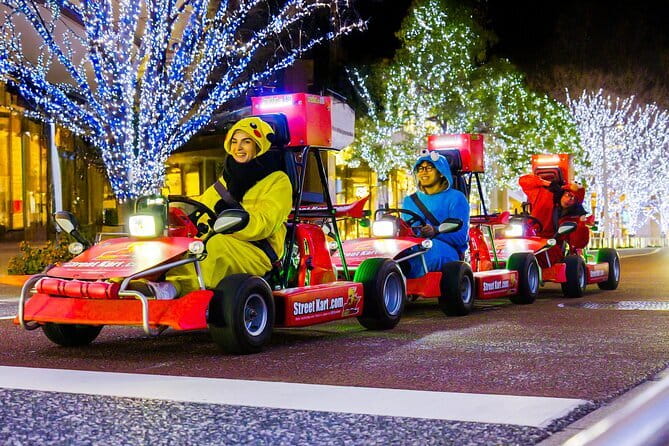
- Street-legal karts, real Tokyo traffic rules: you drive on public roads with a lead guide in the group
- A tight 1 hour 40 minutes to 2 hours: enough time for multiple districts without dragging
- Tokyo Station + Akihabara in the first stretch: you start with iconic scenery, then immediately hit the anime and game zone
- Harajuku details you actually catch: the Takeshita Street entrance arch changes design through the year
- Shibuya Crossing, from the inside lane: you experience the scramble up close, not just on foot
Price and what you’re really paying for
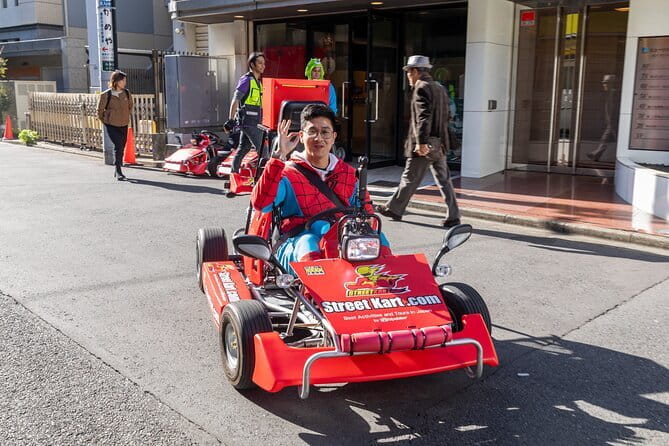
At $62.40 per person for the Official Street Go Kart Tour Akihabara 2nd, the price feels fair once you see what’s included. You’re not just renting a small vehicle—you’re getting kart rental, costume rental, a lead guide in a kart, and fuel surcharge. Add in the fact that this is timed to cover big city sights within a short session, and you’re basically paying for guided, street-level access that would be a hassle to recreate on your own.
What you should treat as extra-cost risk is insurance and tech gear. The tour lists full coverage insurance at ¥1,000 per person as not included. There’s also no action camera rental included, so if you want a POV-style recording you’ll need to plan that separately (some guides and setups offer camera options, but don’t assume it’s in the base package).
If you’re deciding between this and a simpler sightseeing tour, ask yourself one question: do you want motion and costumes as part of the memory? If yes, this is one of the more direct ways to make that happen in central Tokyo.
You can also read our reviews of more tours and experiences in Tokyo.



The route: Tokyo Station, Akihabara, then Harajuku and Shibuya
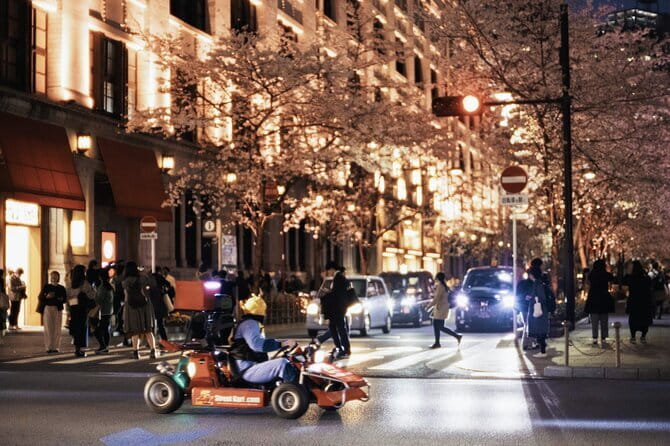
This is a guided city loop built around recognizable Tokyo. The pacing matters too: you’ll be stopping just enough to reset and follow instructions, then you’ll spend most of the time driving.
Stop 1: Tokyo Central Railway Station (Marunouchi)
You start at Tokyo Central Railway Station in the Marunouchi area, famous for its restored red-brick façade. Starting here is smart because it gives you a dramatic “Tokyo card” right away. It also helps you get comfortable with the kart before the more intense, pedestrian-heavy areas kick in.
You should expect a quick setup rhythm—get oriented, confirm you’re ready to drive, and then roll out. This stop is listed as ticket-free on the tour, which means your cost stays tied to the experience itself, not admissions.
Stop 2: Akihabara, the anime and game zone
From Tokyo Station, you move into Akihabara, Tokyo’s anime and game mecca. Driving through this area is different from walking it. On foot, you’re dodging crowds and stopping to read signs. On a kart, you’re still moving, so you get a “scan” of the district’s energy—bright storefronts, game and anime references, and that unmistakable Akihabara vibe that’s hard to package into a single photo.
The possible drawback here is also practical: Akihabara is busy. The guide’s job is to keep you safe and grouped. When traffic and people are dense, your job is simpler—stay calm, follow the handoff points, and don’t try to rush.
The palace area: you drive around it
You won’t drive inside the palace area, but you will drive around it. That matters because it changes what you’re seeing. Instead of “you are in the grounds,” it’s “you’re circling the edge”—still a strong sightline moment, just without the fantasy of crossing gated areas.
This segment is often where the group settles into the ride. You’ve had two strong identity stops already, so this becomes a smooth connector that keeps the tour from feeling like a series of random errands.





Harajuku and Takeshita Street’s changing arch
Next up is Harajuku, the fashion hotspot. The tour notes that the entrance arch to Takeshita Street changes design through the year. That’s the kind of detail you’ll actually notice while you’re driving slowly enough to spot it, not just when you’re trying to frame a quick picture at a standstill.
One thing to keep in mind: Harajuku is visually loud. If you’re wearing a costume and trying to read signage while driving, it’s easy to get overwhelmed. Let the guide set the tempo. Watch the road first, then let the neighborhood details register after.
Shibuya Crossing (the scramble), up close
Finally, you drive through Shibuya Crossing. The world-famous scramble is exactly why people book street-kart tours in the first place. From the driver’s seat, you feel the geometry of the crossing—where foot traffic funnels, where lines form, and how the flow changes when the lights switch.
A practical note: Shibuya is a major pedestrian zone. The guide’s focus here is keeping the group controlled while you pass through the busiest vibe of the day. If you’re nervous anywhere, it’s normal. What helped in similar experiences is clear instruction and constant attention from the lead—some guides like Sam and Khan are specifically praised for safety checks and staying on top of everyone in the group.
Who the guide is matters more than you think
This tour is led by a professional guide, and the guide is in a kart with the group. That’s a big deal. You’re not relying on a lecture while you wander; you’re getting movement plus direction.
In the real-world experience, the best moments tend to be when the guide does three things well:
- gives instructions that you can follow fast
- keeps the group together so nobody gets lost
- takes the experience from nervous to confident
The names that show up in guidance and safety praise include Mads, Sam, Billy, Julian, Khan, and Madz. You don’t need to hunt for a specific person—just know the roles people describe are consistent: clear guidance, watchful pacing, and a lot of energy.
Also, the photo element is part of the value. Some participants mention printed pictures at the end and photo links from the ride. Others mention the guide capturing lots of shots so you’re not constantly fiddling with your phone while driving. Even if you’re a confident driver, that kind of help makes the whole experience feel smoother.
Costumes: fun extra, but also a practical layer
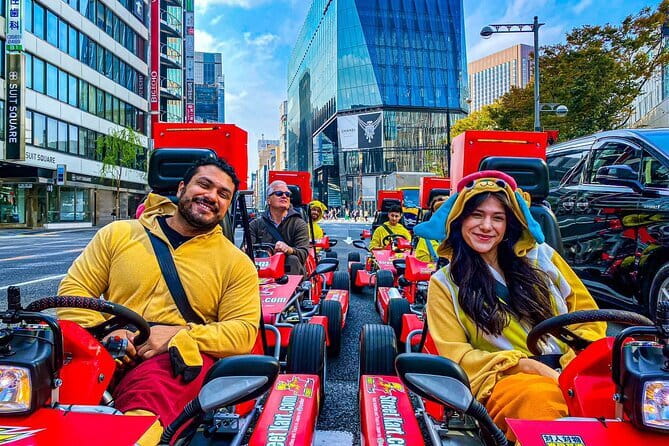
Costumes aren’t just for selfies. They change the vibe of the street drive in a way that feels like cosplay meets motion. You’ll be renting costumes as part of the tour.
Two practical reminders based on the rules you’re given:
- Dress for closed footwear. Skirts or long dresses are not advised.
- Costume themes are restricted by copyright, so you can’t bring or wear Mario or Nintendo-themed costumes.
If you’re someone who plans outfits ahead, this is where you’ll win. Choose comfortable clothing that works with closed-toe shoes. Your costume should look great, but it also has to stay safe and practical while you’re seated and driving.
Driving rules in Japan: the International Driving Permit part
This is the big gatekeeper for the whole experience. To drive in Japan, you need an International Driving Permit issued in the format of the 1949 Geneva Convention by a government-authorized association.
There are a few extra constraints you should treat as non-negotiable:
- Minimum age is 18 years
- You must carry the physical International Driving Permit and your physical passport
- If your country is one of the listed exceptions (including Switzerland, Germany, France, Taiwan, Belgium, or Monaco), you’ll still need the right documentation flow, such as a Japanese translation from the Japan Automobile Federation (JAF)
- Licenses from some countries are not permitted for driving in Japan
If this sounds like paperwork, it is. But it’s also why the driving experience stays orderly. Make sure your documents are valid before you get excited about Shibuya photos.
Also note the kart format: karts are single-seaters only. You can’t treat this like a casual ride-along activity. If you’re not driving, this tour isn’t for that.
Timing and comfort: why the ride length matters
The tour runs about 1 hour 40 minutes to 2 hours. That’s a sweet spot for central Tokyo. Enough time to hit Tokyo Station, Akihabara, Harajuku, and Shibuya Crossing without feeling like you’re stuck in transit all day.
Group size is capped at 6 travelers. That matters for control and comfort. Fewer people means less waiting, less chaos, and a tighter driving formation that’s easier for the guide to manage. It also means the “driver focus” stays high—your job is mostly to listen, follow, and drive steadily.
For physical comfort, the tour asks for a moderate fitness level. In practice, this mostly means you should be able to handle getting suited up, sitting in the kart comfortably, and staying alert for the full time.
Safety and confidence: what to expect once you start

You’ll be driving with other traffic nearby, which understandably makes people nervous in advance. The way the tour is designed helps: you get a professional guide riding alongside and leading the group, and instructions are meant to be clear enough that you can focus on the road.
A couple of safety patterns come up in guide praise:
- guides keep checking the group and watching mirrors or line-up status
- guides adjust pace so nobody feels dropped or rushed
- guides help you feel comfortable before the most intense zones
If you want a simple confidence hack, it’s this: commit to following instructions even when you see something tempting like a dramatic crosswalk or neon storefront. Watch the road first. The sights will still come—just don’t trade safety for excitement.
Best time to go: morning clarity vs evening energy
You can take this tour at different times, and the experience changes with the street vibe. One tip you can use immediately: night rides are often recommended because Tokyo lights make the drive feel unforgettable.
There’s also a practical trade-off. A morning session may have clearer roads, while later times can bring more pedestrians. If you’re still building confidence with the driving concept, you might prefer clearer conditions. If your top goal is atmosphere, aim for evening.
Should you book the Official Street Go Kart Tour Akihabara 2nd?
Book it if you want a Tokyo highlight that’s active, visual, and genuinely different from the usual walk-and-photos day. The combination of street-legal driving, costumes, a lead guide in the group, and major landmarks like Tokyo Station and Shibuya Crossing makes this feel like more than a gimmick. The $62.40 price lands better when you treat it as kart time plus guided access plus costume fun.
Skip it if:
- you don’t have the required International Driving Permit in the correct format
- you’re looking for a ride-along experience (this is single-seat driving only)
- you can’t do closed-toe footwear or have restrictions that make driving gear uncomfortable
If you’re ready to plan the permit piece and you want a story you’ll keep telling, this is a strong pick for Tokyo.
FAQ
Do I need an International Driving Permit to drive in Japan?
Yes. You need an International Driving Permit issued in the format of the 1949 Geneva Convention. You must carry the physical permit and your passport.
Can I use my home country’s driver’s license instead of an International Driving Permit?
No. A special document is required. After booking, you can contact them via the Viator chat with your license-issuing country for further assistance.
What are the minimum requirements to participate?
You must be at least 18 years old and you must hold a valid driver’s license in Japan, along with the required International Driving Permit documentation.
Can non-drivers ride along?
No. The karts are single-seaters only, so all participants must be able to drive.
Where does the tour start?
It starts at STREET KART Akiba 2nd, 4-chōme-16 1F, Chiyoda City, Kanda Sakumachō, Tokyo 101-0025, Japan.
How long is the go kart tour?
The duration is approximately 1 hour 40 minutes to 2 hours.
What should I wear?
Wear closed footwear. Skirts or long dresses are not advised.
Are Mario or Nintendo-themed costumes allowed?
No. Mario- or Nintendo-themed costumes, and clothing or items suggesting those characters, are not permitted due to copyright restrictions.