REVIEW · TOKYO
Ninja Experience (Family Friendly) at Samurai Ninja Museum TOKYO
Book on Viator →Operated by Maikoya · Bookable on Viator
Tokyo turns kids into ninja for an hour. At Samurai Ninja Museum Tokyo, you’ll enjoy dress-up photo moments and an included ninja treasure hunt built for families, with staff guiding you through everything in a fun, easy flow.
Two things I really like: the experience is hands-on (not just watching), and the cost doesn’t nickel-and-dime you for the costume. One thing to plan for is the under-3 rule: children under 3 can enter the venue, but they can’t join the ninja experience.
- Ninja outfit is included, so you skip costume-rental hassles.
- Treasure hunt is part of the ticket, not an add-on game.
- Hands-on training uses a ninja star and other weapons.
- Photo shoot comes with the transformation, in a themed museum setting.
- Small group limits keep it from feeling like a crowded attraction.
- Asakusa location makes this a convenient Tokyo stop with a mobile ticket.
In This Review
- What You’re Really Buying: A One-Hour Ninja Transformation
- How Your 1 Hour 15 Minutes Typically Flows
- Dressing Up in Ninja Gear (And Why It Matters)
- Training With Ninja Tools: Stars, Darts, and More
- The Treasure Hunt Game: Fun for Kids, Not Too Silly for Adults
- Museum Context: Ninja and Samurai History Without the Stuffiness
- Photo Shoot Time: The Point When Everyone Smiles
- Price and Value: About $48 for More Than a Costume
- Group Size, Accessibility, and What Can Affect Your Pace
- Location in Asakusa: A Central Stop That Fits Many Plans
- Should You Book This Ninja Experience?
- FAQ
- How long is the Ninja Experience at Samurai Ninja Museum TOKYO?
- Where does the experience start?
- Is the ninja outfit included?
- What age rules apply for children?
- What kind of physical fitness do you need?
- How large are the groups?
- Is mobile ticketing used, and can I cancel for free?
What You’re Really Buying: A One-Hour Ninja Transformation
This isn’t a lecture. It’s a structured, family-friendly “become a ninja” session where you move from dressing up to games to weapon practice, all within about 1 hour 15 minutes.
What makes it work for families is pacing. Kids get to do things right away, and adults get enough explanation to feel like they’re not just herding toddlers through a costume party. You also get a focused goal: learn a few ninja skills you can show back home, while still soaking up the history behind the stories.
And yes, the ninja outfit is included, which matters in Tokyo. Costume rentals at tourist attractions can quietly add up, so this is a straightforward deal: you pay the ticket price and then you suit up.
How Your 1 Hour 15 Minutes Typically Flows
You’ll start at the Samurai Ninja Museum Asakusa, near the address listed for the meeting point in Nishiasakusa (Taito City). From there, the experience is designed to feel simple: you show up, you get guided, and you loop back to the same starting point when it’s done.
Here’s the rhythm you can expect:
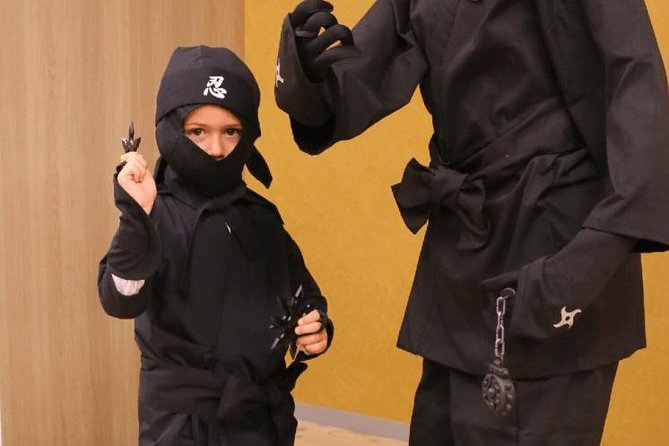
- Transformation first: Staff help you choose and dress in traditional-style ninja attire.
- Museum learning in the middle: You’ll get context about ninja and samurai culture and the kind of tools used for covert missions.
- Action stations: Weapon and game time, with instruction aimed at kids and adults.
- Photo shoot as a payoff: You get to look the part in a themed background that makes the whole thing feel real.
Some parts can happen at more than one spot inside the museum area, but the staff keep the flow clear. The goal is to keep you from wandering around with a schedule in your head.
You can also read our reviews of more museum experiences in Tokyo

Dressing Up in Ninja Gear (And Why It Matters)
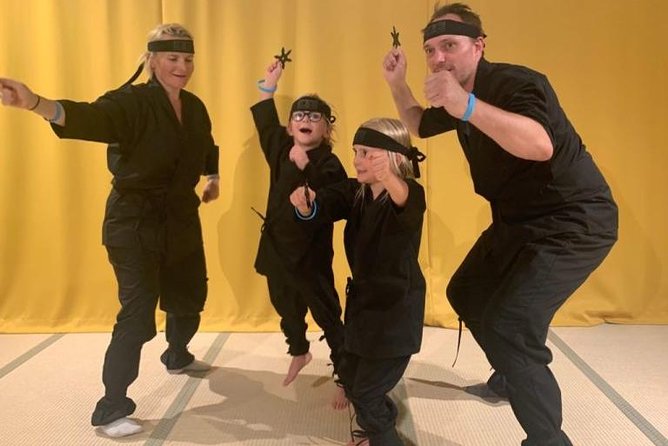
This is one of the biggest wins for families. Kids don’t just watch characters on a screen; they physically become part of the story the moment they put on the outfit.
The setup is also practical: you’re not figuring out sizing alone or spending time chasing costume racks. Staff help you get dressed, and that time matters because it keeps the activity moving for everyone in the group.
For adults, it’s the “instant permission” piece. You’ll stop thinking about how silly you might look and start enjoying how the costume changes the way you play the games. If your kids are ninja-obsessed, this is the moment they’ll remember long after the games.
Training With Ninja Tools: Stars, Darts, and More
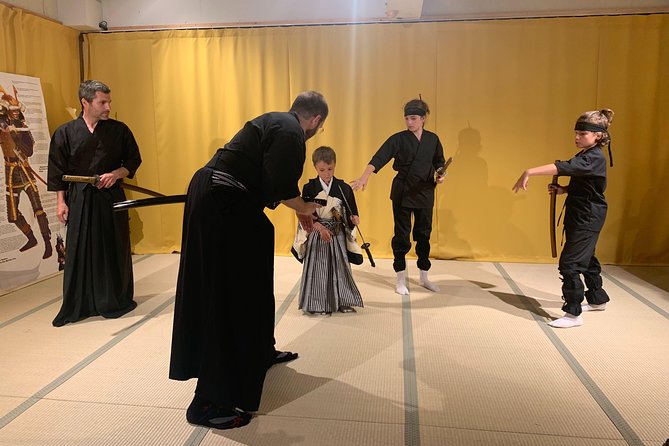
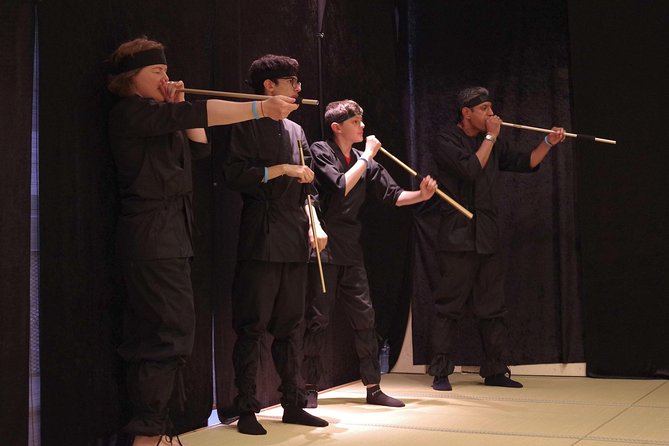
The hands-on portion is where the energy usually spikes. You’ll do ninja training with a ninja star and other weapons/tools, using guidance so you don’t feel lost or unsafe.
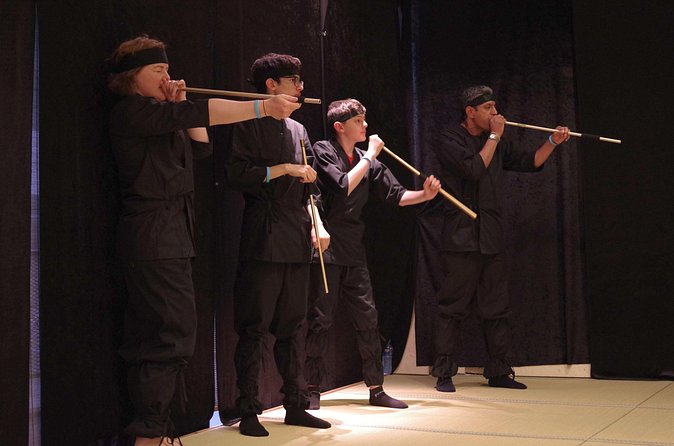
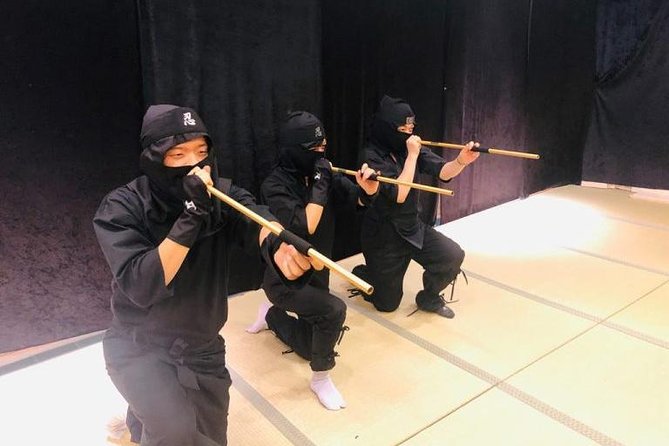
In addition to the ninja star, you may also use equipment like a blow pipe, depending on the session. Many setups include quick, game-like challenges that teach basic handling and technique without turning it into a complicated sport lesson.
A key point for your planning: the experience lists a moderate physical fitness requirement. That doesn’t mean athletic training. It does mean you should be comfortable standing, moving through the activity area, and participating in throw-and-target style games with some coordination.
If you’ve got a kid who gets overwhelmed with big crowds, it’s worth noting that the activity uses small group caps (more on that next). Smaller groups tend to make instruction easier to follow.
The Treasure Hunt Game: Fun for Kids, Not Too Silly for Adults
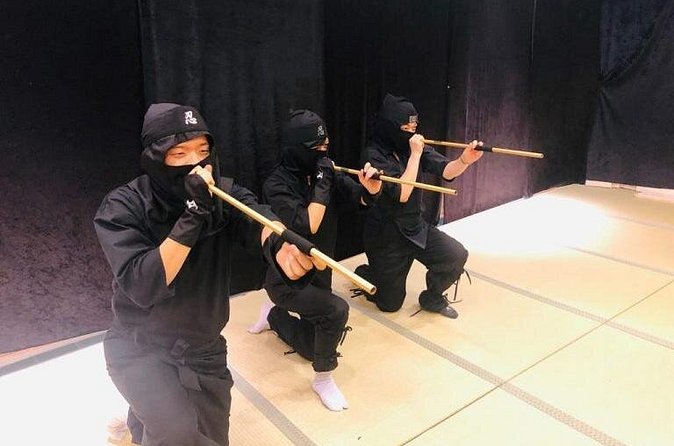
The included ninja treasure hunt is built into the experience, and it’s a smart choice. It turns learning into play, so kids stay focused without needing constant hovering.
It also helps you understand the theme. Instead of memorizing facts, you’re moving through a story: ninja skills, tools, and stealth-style thinking all connect to the game. Adults often end up enjoying this more than they expect because it gives the history a “why,” not just a list of trivia.
And because it’s a hunt, you naturally get momentum. Families with different attention spans can still stay engaged: kids chase clues, and adults can enjoy the explanations while the group keeps moving.
Museum Context: Ninja and Samurai History Without the Stuffiness
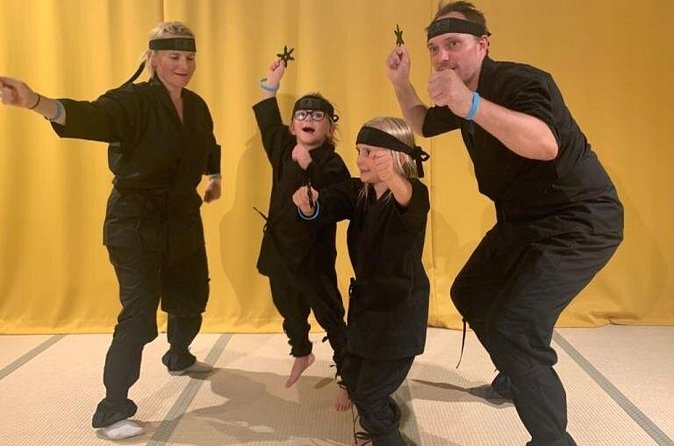
You’ll learn about ninja in Japanese history and folklore, including the idea of training from an early age and the techniques associated with stealth and deception. The museum portion also covers what kinds of tools were used in covert missions.
This part is most valuable if you like context, even when it’s brief. The experience doesn’t pretend to be a full museum tour for hours. But it does give you enough background to make the hands-on training feel connected, not random.
In real terms, what you’ll walk away with is a clearer picture of:
- how ninja stories connect to real practices and tools
- what “ninja weapons” typically means in a historical sense
- how samurai and ninja culture show up in armor, weapons, and museum displays
You’ll also see authentic weapons and armor as part of the overall museum environment, so the learning has something physical to attach to.





Photo Shoot Time: The Point When Everyone Smiles
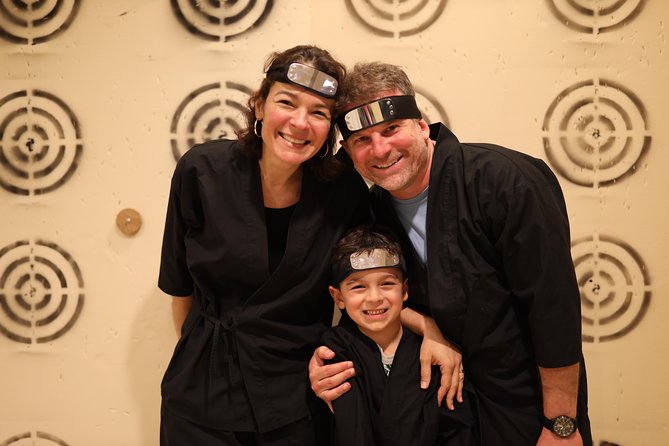
After the training and games, you get a photo shoot in ninja outfit. That’s not just for kids. Even adults who act tough at the start usually end up enjoying the posed moment once they’re actually in the gear.
The background is themed to look like you’ve stepped into a ninja story world. Staff guide you through the shoot so you’re not standing there wondering what to do, which makes the photos feel like part of the experience rather than a rushed add-on.
If you’re the type who forgets to take good photos while traveling with kids, this format helps. You know the timing, you’re already dressed, and you’re in a setup that’s designed for pictures.
Price and Value: About $48 for More Than a Costume
At $47.92 per person, this sits in the “worth it if you want an activity” zone. You’re paying for three things that are usually separate elsewhere:
1) outfit and transformation time
2) a guided, interactive experience with training and games
3) a themed photo shoot
The cost adds up to solid value because the ninja costume rental is included. That’s the kind of detail that can make or break family activities in Tokyo.
Duration also supports the value. With about 1 hour 15 minutes, you’re getting a complete, satisfying arc without losing half a day. That matters if you’re planning a packed itinerary around Tokyo’s distances.
Group Size, Accessibility, and What Can Affect Your Pace
This activity keeps group sizes small. It has a maximum of 20 travelers, and it also notes a smaller limit of 4 travelers for your specific session. In practice, that’s what you want: more attention from staff and less waiting for turns.
Still, do think about group dynamics. One potential downside is that sessions can mix families together. If you prefer a quieter, tightly controlled rhythm for your child, you may want to choose a time when your kid can handle a bit more social buzz.
Also note the under-3 rule: children under 3 can enter the venue but can’t join the ninja experience. If you’re traveling with a young toddler, plan for how the adult will handle the situation while the older child participates.
Location in Asakusa: A Central Stop That Fits Many Plans
Meeting point is the Samurai Ninja Museum Asakusa in Nishiasakusa (Taito City). The experience is listed as being near public transportation, which is huge for families. You don’t want a complicated last-mile hike after you’ve already spent the day walking.
Asakusa also makes sense because it’s an easy neighborhood to pair with other sightseeing. You’ll likely already be in the general area if you’re doing classic Tokyo routes, and the activity ends back at the starting point.
If it’s raining, this is one of those indoor activities that feels built for it. You still get movement and interaction, but you’re not stuck staring at the sky.
Should You Book This Ninja Experience?
Book it if you want a hands-on family activity with a clear payoff: dress up, train, do a treasure hunt, and leave with photos you’ll actually use. It’s also a smart pick if your kid loves ninjas and you want to turn that interest into something real, not just a souvenir run.
Skip it (or rethink timing) if your child is under 3, or if you’re hoping for a calm, private experience with no mixing. Also, if your family prefers deep museum-only time with long reading and minimal participation, this may feel more like a fun action program than a history deep-dive.
If you like practical value, this one is hard to beat. You’re paying for the full package—costume, training, treasure hunt, and photo shoot—in a schedule that fits real travel days.
FAQ
How long is the Ninja Experience at Samurai Ninja Museum TOKYO?
It lasts about 1 hour 15 minutes.
Where does the experience start?
It starts at Samurai Ninja Museum Asakusa Tokyo, 1-chōme-8-13 Nishiasakusa, Taito City, Tokyo 111-0035, Japan.
Is the ninja outfit included?
Yes. You wear a ninja outfit as part of the experience.
What age rules apply for children?
Children under 3 cannot join the ninja experience, though they can enter the venue. Children must be accompanied by an adult.
What kind of physical fitness do you need?
The experience calls for a moderate physical fitness level.
How large are the groups?
The activity has a maximum of 20 travelers, and it also indicates a maximum of 4 travelers.
Is mobile ticketing used, and can I cancel for free?
You’ll receive a mobile ticket. You can cancel for a full refund up to 24 hours in advance.