REVIEW · TOKYO
Tokyo Shinjuku Chopsticks Making Class
Book on Viator →Operated by Traveling Tokyo · Bookable on Viator
Wood shavings turn into chopsticks. In Shinjuku, you shape raw Japanese wood into your own pair using a traditional kanna hand plane, guided step by step by friendly staff like Tom and Yuki. It’s a hands-on, beginner-friendly Tokyo activity that feels more like making something than watching a show.
I love two things most: the real craft time you get (not just standing around), and the way instructors keep the experience approachable even when your first shave isn’t perfect. The workshop also encourages personal touches, like choosing your wood and customizing the finish.
One thing to consider: the class can feel busy at peak hours, and some people found they were nudged toward upgrades like premium wood or engraving. If you want a calmer pace, pick your timing carefully.
In This Review
- Key highlights
- Where Shinjuku Chopstick Craft Starts (and What to Bring Your Brain to)
- The One-Hour Flow: From Raw Stick to Usable Chopsticks
- Why the $20 Price Can Be a Good Deal (and Where Costs Rise)
- Picking Wood in Shinjuku: Free Options vs Premium Choices
- Using the Kanna Hand Plane: The Skill You Actually Remember
- Finishing Steps: Sanding, Oil, and Making It Feel Like a Real Utensil
- What “Busy” Feels Like—and How to Choose Your Time
- Engraving and Premium Upgrades: Optional, Fun, and Easy to Overspend On
- Who Should Book This Chopsticks Workshop in Shinjuku
- A Few Logistics Notes That Save Stress
- Should You Book This Chopsticks Making Class?
- FAQ
- How long is the Tokyo Shinjuku chopsticks making class?
- How much does the experience cost?
- What will I make during the class?
- Do I need prior woodworking experience?
- What tools do you use?
- Can I choose the type of wood?
- Is engraving included?
- Where is the meeting point?
- What happens if I cancel?
Key highlights
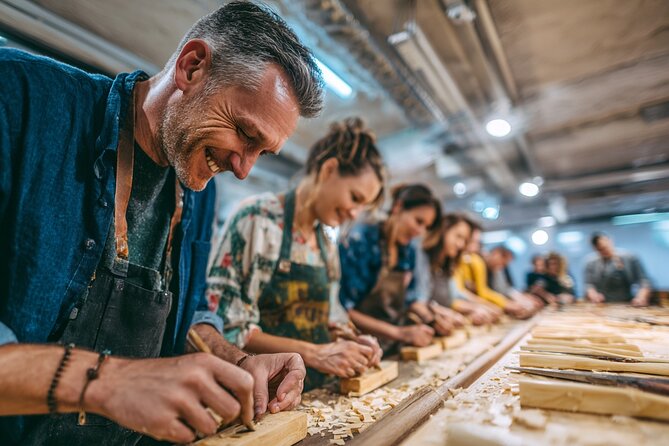
- Traditional kanna hand plane: learn the motions that make Japanese chopstick making feel different
- Wood choice matters: pick from Japanese wood types and enjoy differences in grain, scent, and color
- Beginner-friendly help: instructors speak English well and offer patient, hands-on guidance
- Optional upgrades: premium woods and engraving are available for extra cost
- Keep the shavings: at least one person loved having the cuttings as a cool keepsake
- Limited group size: capped at 32 people, with multiple workstations to support you
Where Shinjuku Chopstick Craft Starts (and What to Bring Your Brain to)
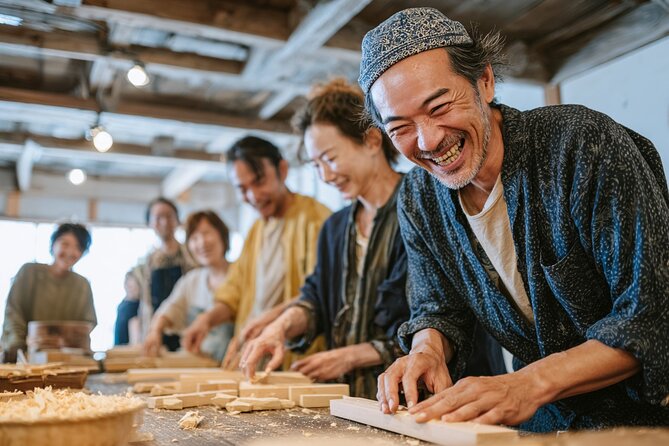
This class is set in Nishishinjuku, with the meeting point at 7-chōme-4-5 Nishishinjuku, Shinjuku City, Tokyo 160-0023. The activity ends back where you started, so you’re not dealing with a complicated route through the city.
You’ll be handed a mobile ticket and you’ll usually get confirmation when you book. The workshop is near public transportation, which is a big deal in Tokyo: you don’t want your first “craft” day to turn into a transit puzzle. With a maximum group size of 32, the room is set up for hands-on work rather than a big lecture.
What you should bring is the right mindset. This is not “watch and clap.” You’re shaping wood, and that takes a little muscle and patience. Some people show up thinking it will be easy right away, then realize the plane demands a steady hand and a rhythm. That’s normal—and part of why the souvenir feels meaningful. When you leave with chopsticks you made yourself, you’ll actually remember the effort, not just the photo.
Also, double-check how you navigate to the meeting address. One review flagged confusion caused by incorrect location info, so I’d treat the street address as your source of truth and use it to steer your app directions.
You can also read our reviews of more tours and experiences in Tokyo


The One-Hour Flow: From Raw Stick to Usable Chopsticks
The class is about 1 hour, but it doesn’t feel like a rushed production line if you manage your timing expectations. Think of it as four chunks: choose, shape, smooth, finish.
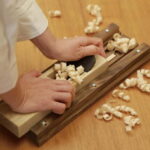
First, you pick your wood. You start with simple wooden sticks and work from rough to polished. The staff guide you through using a traditional Japanese kanna hand plane, which is the core tool for shaping the chopsticks’ surface.
Next comes the hands-on shaping. You’ll shave the wood down, feeling how the grain behaves as you plane. This is where beginners tend to get the most “oh wow” moment. A kanna isn’t random scraping. It’s controlled shaving, and the way you angle and apply pressure affects how clean your cut looks.
Then you’ll move into smoothing: sanding and getting the surface ready. Reviews mention instructions on how to shave, sand, and oil, so the guidance is practical and not just theoretical.
Finally, there’s the finishing stage—adding oil so the wood looks good and feels right. That last step is a classic part of Japanese woodworking. When you take your chopsticks home, the finish is what makes them feel like real utensils, not just carved souvenirs.
For value: you don’t just get a decorative item. You get an experience that teaches physical craft skills in a short window of time.
Why the $20 Price Can Be a Good Deal (and Where Costs Rise)
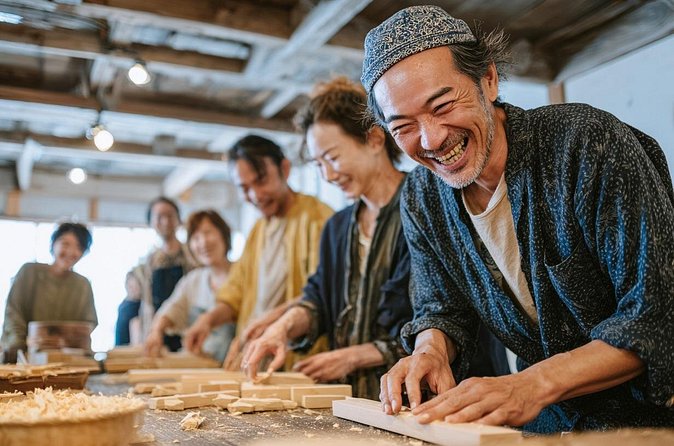
At $20 per person, this workshop is priced like an accessible cultural activity. The best part is what you get for that money: guided use of real tools, a chance to customize your chopsticks, and time to actually make something from start to finish.
But here’s the honest math. The base price doesn’t necessarily cover every enhancement. Your wood options include two types that are free, while premium woods are available for a small upgrade. On top of that, personalization like laser engraving is offered as an extra. One review specifically called out that engraving was 2,000 yen, which gives you a clear idea of where your total could land.
So the value question isn’t “is it cheap or expensive?” It’s “are you the type who will want premium materials and engraving?” If you’re happy sticking to the free wood options and skipping engraving, the $20 class can feel like a steal for a hands-on Tokyo memory.
If you’re tempted by every upgrade, your final spend can drift upward. Some reviews described the experience as fun but less ideal value when they felt pushed toward higher-grade wood or engraving. My practical advice: decide in advance what matters most to you—wood choice, personalization, or keeping total cost simple—and then treat upgrades as optional, not pressure.
Picking Wood in Shinjuku: Free Options vs Premium Choices
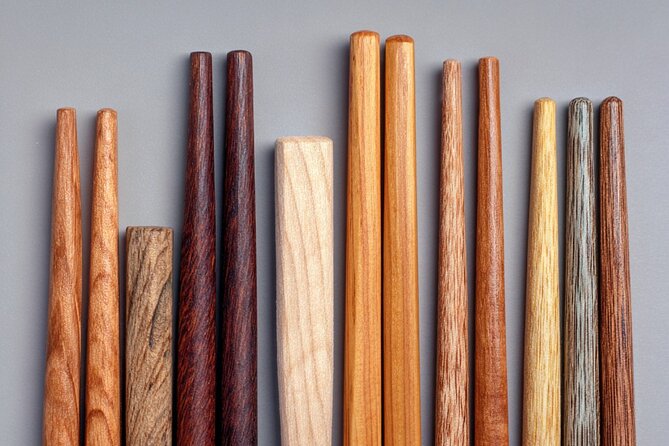
This is one of the most praised parts of the class for a reason: wood choice changes the whole personality of your chopsticks. You’re not buying a generic souvenir—you’re selecting material you’ll feel and see every time you use them.
The workshop offers different types of Japanese wood, each with its own texture, scent, and color. Even if two people select the same style, their final chopsticks can look and feel different once the grain comes through after shaping and finishing.
You also get structure in the choices. Two wood types are included, and premium options are available for an upgrade. I like that this setup lets you participate without feeling locked out, especially if you’re traveling with a group and not everyone wants to add extras.
One warning I’d give (based on the vibe in some reviews): when a room is busy, staff may spend more time steering people toward upgrades. That doesn’t mean you’re being treated unfairly, but it can shift the experience from “choose what you love” to “choose what sells.” You can avoid that by going in with a simple plan: pick from the free woods first, then consider an upgrade only if you truly prefer how it looks and feels.
Using the Kanna Hand Plane: The Skill You Actually Remember
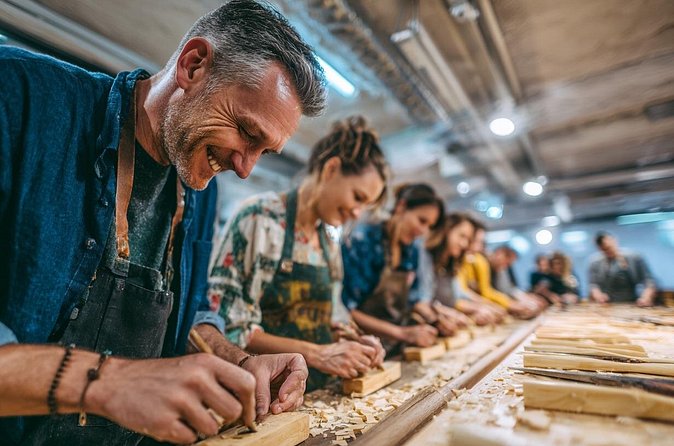
The kanna hand plane is the heart of this class. It’s also why this workshop feels more authentic than craft activities that use only pre-cut parts.
You start with rough sticks and shape them by shaving. That teaches you the feel of the tool—how the plane catches the wood, how the grain responds, and how steady pressure creates cleaner lines. You’ll get guidance so you’re not guessing. But you’ll still do the work.
A big benefit for beginners: instructors are patient and keep the learning curve manageable. Several reviews mentioned staff who spoke English well and helped when the first attempt went sideways. That support is important because if you’re struggling, it’s easy to get frustrated or feel like you’re holding up the group. The workshop’s setup—with multiple helpers and workstations—seems designed to prevent that.
Also, expect a bit of physical effort. One review noted that it takes muscle, especially if you choose wood that’s harder to work with. If you have hand sensitivity, arthritic wrists, or you’re worried about gripping, you might want to pick an easier wood option.
When you’re done, you don’t just get chopsticks. You get an experience that teaches a specific craft motion you can recognize instantly in other Japanese woodworking contexts.






Finishing Steps: Sanding, Oil, and Making It Feel Like a Real Utensil
Shaping is only half the story. The other half is finishing—because chopsticks need to feel smooth in the mouth area and comfortable in the hand.
In this class, you’re guided through sanding and applying oil. Oil finishing is practical, not just cosmetic: it helps protect the wood surface and gives you that warm, finished look.
One thing I like about how the workshop is described is that it treats the class like a process. You’re not rushing from “tool demo” to “take photos.” Instead, you work from raw to refined, and staff check in so you don’t end up with a lumpy surface or uneven shape.
You might also get a fun side benefit: at least one person loved being able to keep the shavings. That’s the kind of tiny detail that makes the workshop feel hands-on, not disposable.
If you’re sensitive to mess: yes, there will be wood particles and shavings. That’s unavoidable with plane work. The room is set up for it, so focus on the joy of making rather than trying to keep everything perfectly clean.
What “Busy” Feels Like—and How to Choose Your Time
Shinjuku is a magnet for tourists, and craft workshops can get packed when multiple groups overlap. The workshop limits group size to 32, but max size still isn’t tiny.
If you’re trying to avoid a hectic feel, aim for calmer timing. One review advised skipping the middle of the day because instructors are limited and can only assist so much when many people are working at once. That matches what I’d expect in any skill-based class: more hands on the table means less one-on-one time.
Still, busy doesn’t automatically mean bad. Other reviews praised the workshop for being organized and efficient, with a setup that uses 4 tables and multiple workstations. With that kind of room design, staff can circulate and help without getting overwhelmed.
My takeaway: if you’re the type who wants slower feedback, pick a time that’s less likely to be peak. If you’re flexible and okay learning while you go, you’ll likely be fine even during busier sessions.
Engraving and Premium Upgrades: Optional, Fun, and Easy to Overspend On
Personalization is available, and it’s a strong add-on because it turns your chopsticks into a memory object with meaning. Engraving is offered as an extra, and one review listed 2,000 yen to engrave.
Premium woods are another upsell path. Two wood types are included for free, but higher-grade wood options cost extra. Some people felt the workshop pushed upgrades, which can impact value if you’re trying to keep travel spending tight.
Here’s my practical approach: think of upgrades like seasoning. They can make the final product more special, but you don’t need them to enjoy the main experience. The core value is shaping the wood with the kanna and learning the finishing steps. If you want engraving, go for it—but decide before you start cutting. That way you’re choosing, not reacting.
Also, consider the physical difficulty factor. Some premium woods may be tougher to work with. If you want an easy, confidence-building class, you might stick to the free woods first.
Who Should Book This Chopsticks Workshop in Shinjuku
This is a great match if you want:
- a hands-on souvenir in Tokyo
- a craft you can feel in your hands, not just observe
- a beginner-friendly activity that doesn’t demand prior skills
It also works well for families and multigenerational groups. Reviews described participation from ages ranging from children to older adults, and they emphasized that instructors were supportive and patient. If your group includes people with different comfort levels, the multiple helpers and workstations help keep everyone involved.
It’s less ideal if you:
- need a quiet, uncrowded environment
- dislike the possibility of optional upsells
- expect a totally effortless experience (because there is muscle work with the plane)
If you’re short on time, the one-hour format is a plus. You can fit it into a day in Shinjuku without burning half your schedule.
A Few Logistics Notes That Save Stress
The activity starts at 7-chōme-4-5 Nishishinjuku and ends back at that point. It’s near public transport, so you should be able to fit it into your Tokyo transit plan.
You’ll get a mobile ticket, and confirmation is received around the time of booking. The class has a max group size of 32, which helps keep the workshop manageable.
Service animals are allowed. (If you have specific needs, it’s still smart to contact the provider ahead of time, but this data says service animals are welcome.)
Finally, if you’re navigating on your phone: use the exact address, not just an approximation. One review described a situation where people ended up at the wrong nearby places due to confusing location info. Don’t let that be your first crafting experience.
Should You Book This Chopsticks Making Class?
I’d book it if you want a real Tokyo craft you can finish in about an hour and take home as something useful. The best parts—guided kanna shaping, clear instruction on shaving/sanding/oiling, and the freedom to choose wood—add up to a souvenir with meaning, not just a store-bought item.
I’d think twice if you’re very cost-sensitive or you hate the idea of optional upgrades like premium wood and laser engraving. The class can feel busy at certain times, so pick your time if you want calmer coaching.
If you’re traveling to Japan for the “I made this” memories, this one fits the bill.
FAQ
How long is the Tokyo Shinjuku chopsticks making class?
The class runs for about 1 hour.
How much does the experience cost?
It costs $20.00 per person.
What will I make during the class?
You’ll craft your own pair of chopsticks from raw wood, then finish them for use.
Do I need prior woodworking experience?
No prior skills are needed. The class is beginner-friendly with guided instruction.
What tools do you use?
You’ll use a traditional Japanese kanna (hand plane) and you’ll also do finishing steps like shaving, sanding, and oiling.
Can I choose the type of wood?
Yes. You can choose from multiple Japanese wood types. Two types are free, and premium woods are available for a small upgrade.
Is engraving included?
Engraving is available as an extra option. One review mentioned it costs 2,000 yen to engrave the chopsticks.
Where is the meeting point?
The start point is 7-chōme-4-5 Nishishinjuku, Shinjuku City, Tokyo 160-0023, Japan, and the activity ends back at the meeting point.
What happens if I cancel?
You can cancel for a full refund up to 24 hours before the experience start time (based on local time). If you cancel within 24 hours, you won’t receive a refund.
![[Seasonal Limited] Mt. Fuji 5th Station &Hot Spring Day Tour - Your day on the road: pickup, drive time, and what to expect from the guide](https://e.thetokyoexplorer.com/wp-content/uploads/seasonal-limited-mt-fuji-5th-station-hot-spring-day-tour-400x225.jpg)