REVIEW · TOKYO
Tokyo Sushi Making Class in Tsukiji with Professional Chef
Book on Viator →Operated by Japan Wonder Travel · Bookable on Viator
Sushi lessons in Tsukiji feel like backstage access. You start in the fish-market zone and then move to a classic Japanese classroom for hands-on making of nigiri and rolled maki, guided by an English host and a sushi master (names you may hear include Yuko and Chef Tanaka).
I love the fish disassembly demo. Watching the chef break down fresh seafood is the fastest way to understand why sushi needs such careful handling. I also love the payoff: you make a lunch you actually eat, including five nigiri and one rolled sushi.
Main catch: the classroom is on the third floor with only stairs. If stairs are a problem, plan accordingly.
In This Review
- Key Things That Make This Tsukiji Sushi Class Worth Your Time
- Tsukiji Fish-Market Stops: Why You Start Before You Cook
- The Third-Floor Classroom and the Fish-Disassembly Moment
- Nigiri and Maki: How the Class Actually Walks You Through It
- Your Market-Fresh Lunch: 5 Nigiri, 1 Roll, Plus Wasabi Details
- Price and Logistics: Does $49.74 Make Sense for What You Get?
- Who Should Book This Tsukiji Sushi-Making Class
- Should You Book This Tsukiji Sushi Class or Skip It?
- FAQ
- How long is the Tokyo Sushi Making Class in Tsukiji?
- What will I make during the class?
- Is lunch included?
- Do I need to know sushi-making basics before I go?
- Who will teach and translate?
- Where is the meeting point?
- Is hotel pickup and drop-off included?
- Is the classroom accessible if I have trouble with stairs?
- Can the class accommodate allergies?
- Do they accommodate kosher or halal requests?
Key Things That Make This Tsukiji Sushi Class Worth Your Time
- Fish disassembly plus knife talk before you start shaping sushi
- English instruction led by a host plus a sushi master who coaches step by step
- You make 6 pieces total: 5 nigiri and 1 rolled sushi
- Market-sourced ingredients with utensils and tableware provided
- Chef-made wasabi and an extra plate while you eat your own
- Small group size with a maximum of 20 travelers
Tsukiji Fish-Market Stops: Why You Start Before You Cook
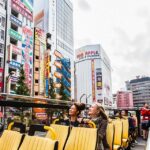
This class is built around the Tsukiji area, so you get the market setting first, not second. The day flows through three linked market zones: Tsukiji Fish Market, Tsukiji Jogai Market, and Tsukiji Nippon Fish Port Market. That order matters because it frames what you’re about to learn: sushi starts with ingredients, not just rice and fish.
Stop by stop, here’s what you’re likely to notice. Tsukiji Fish Market gives you the core fish-market atmosphere. Tsukiji Jogai Market is the outer-market style area, which is usually where you get more of the “food world” feeling around the seafood. Tsukiji Nippon Fish Port Market helps reinforce the supply chain side of the story, so sushi doesn’t feel like it comes from nowhere.
One practical point: you make your own way to the meeting point in Tsukiji, and there’s no hotel pickup. If you’re staying in central Tokyo, give yourself extra buffer time. Market areas can mean more walking and more turns than you expect, even when everything is “near public transportation.”
You can also read our reviews of more tours and experiences in Tokyo



The Third-Floor Classroom and the Fish-Disassembly Moment
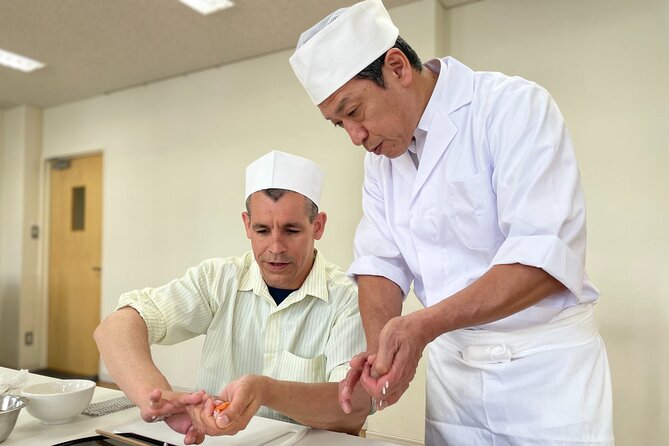
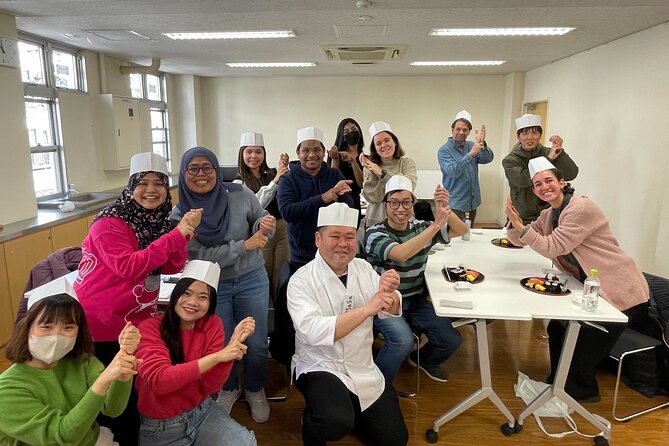
After the market portion, you head to a classroom in a hidden local building in Tsukiji. This is a classic Japanese-style setup, and it’s intimate. The group max is 20, so you’re not competing with a wall of elbows.
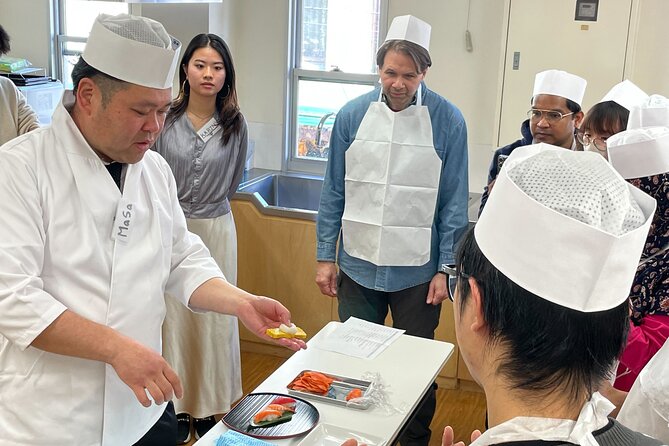
Then comes one of the best parts: a fish disassembly show by the professional sushi chef. This isn’t a vague “look how cool knives are” performance. The chef shows the steps involved in preparing fish for sushi and also explains Japanese knives. That knife explanation is useful even if you never plan to cut raw fish at home. It gives you a reason for the technique, not just a trick.
The teaching team has two layers. There’s an English-speaking host, and there’s the sushi master himself. In the reviews you’ll see the same pattern again and again: the guide handles translation clearly and keeps things moving, while the chef focuses on hands-on instruction. Some sessions are described with names like Yugo as the assistant/translator and Chef Tanaka as the chef, and those roles are part of the structure you should expect.
If you’re wondering what the classroom feels like: expect a working teaching space where you’ll be standing and moving between steps. And yes, that third-floor detail is real. Only stairs. No elevator mentioned.
Nigiri and Maki: How the Class Actually Walks You Through It
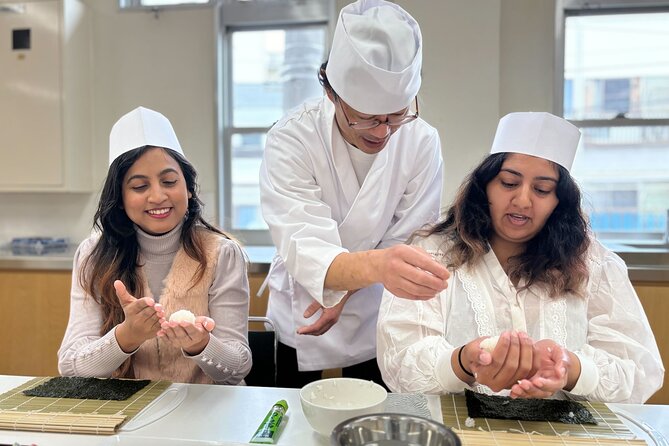
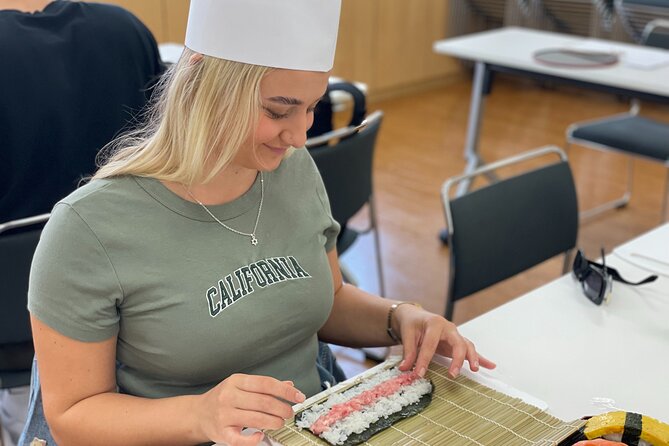
The class doesn’t stay in theory. After watching the disassembly demo and getting the knife orientation, you move into making your own sushi. You’ll learn about what exact sushi is and then practice both nigiri and rolled sushi.
Here’s the value of that format. Nigiri teaches you the balance of rice shape and topping placement. Rolled sushi teaches you timing and consistency in rolling. Doing both in one short session is why this works for most schedules. It’s enough to learn the basics, but not so long that it turns into a full-day cooking school.
Your sushi master teaches you step by step, and utensils and tableware are provided by local shops. That matters because sushi-making depends on the right tools. If you’ve ever tried to learn anything with improvised gear, you know how frustrating it gets. In this class, the tools are handled for you, so you can focus on technique.
It’s also taught with real beginner-friendliness in mind. One recurring theme in participant comments is that the pace is just right, the staff helps with corrections, and it feels doable even if it’s your first sushi-making class. You don’t need advanced knife skills to start. The chef is there to guide your hand, not just your brain.
Your Market-Fresh Lunch: 5 Nigiri, 1 Roll, Plus Wasabi Details
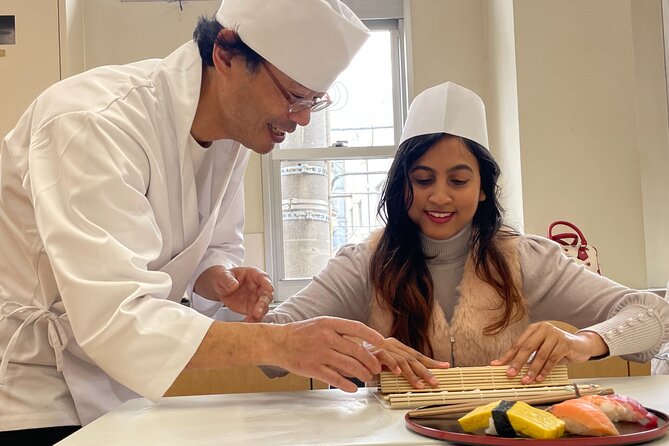
The meal is not an add-on. It’s part of the learning. When you finish, you eat what you made as lunch—your own five nigiri and one rolled sushi.
While you eat, the sushi master prepares another plate. The wasabi is described as fresh, made to match the rest of the experience. That matters because wasabi is one of those flavors that can taste very different depending on how it’s handled. Even if you already like sushi, tasting the chef’s version helps you calibrate what you’re aiming for.
Portion size is also a big deal for value. In 1 hour 30 minutes, you’re not just learning steps; you’re getting a real lunch outcome. And because the ingredients come from the market, the flavors are the point, not a bland classroom substitute.
If you’re coming in hungry, you’re likely to be glad you did. Several participants recommend leaving room so you can enjoy the sushi without feeling too stuffed or too rushed.
Price and Logistics: Does $49.74 Make Sense for What You Get?
At about $49.74 per person for roughly 1 hour 30 minutes, this is priced like a short, structured food workshop with lunch included. The best value signals are the ones that reduce your “extra costs”:
- you get market-fresh ingredients sourced for the class
- you use proper utensils and tableware provided for you
- you eat the sushi you make, so lunch cost is bundled into the price
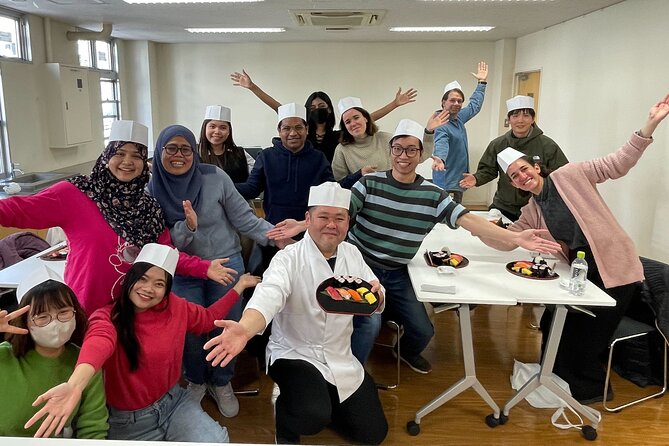
Also, the group stays small (maximum 20). That tends to correlate with better help when you’re shaping nigiri or rolling. Nobody wants to be a bystander in a class that’s all about doing.
Logistics are simple, but not lazy. You handle getting to the meeting point yourself, and the classroom is on the third floor with stairs. If you’re okay with that, the rest is straightforward: this ends back at the meeting point, and you’ll be near public transportation.
One scheduling consideration to note: the session may run beyond the scheduled ending point. If you have an appointment right after, tell the organizers in advance so they can guide you on timing.





Who Should Book This Tsukiji Sushi-Making Class
This is a strong fit if you want a hands-on Tokyo food experience that you can actually repeat at home. The class covers both nigiri and rolled sushi, and the instruction is delivered in English by a host alongside the sushi master’s coaching.
It’s also a good option for families. Some groups describe bringing kids as young as 7 or 8, and say everyone stayed engaged because the work is interactive and the staff helps.
Book it if you:
- like sushi and want to learn what makes it different beyond taste
- prefer short classes that fit into a tight Tokyo schedule
- enjoy market food context, not just a kitchen setting
Think twice if you:
- cannot use stairs (third-floor classroom, only stairs)
- need kosher or halal accommodations (not accommodated)
- have allergies (you can report them, but there’s no guarantee they can fully adjust)
If you’re allergic to anything, send the info when you reserve. The organizers state they will try, but it may not be possible.
Should You Book This Tsukiji Sushi Class or Skip It?
I’d book it if you want the “real deal” mix: Tsukiji market atmosphere plus hands-on nigiri and maki with a professional sushi chef. The structure is tight, the tools are provided, and the lunch is what you make. For the price, that’s the main reason it feels like a good deal.
I’d skip or reconsider if stairs are a hard no for you, or if your dietary needs are kosher or halal. Also, if you’re the type who gets stressed by crowded market areas, plan your arrival timing carefully and give yourself buffer time.
If you’re on the fence, here’s the quick decision rule: if you want to leave with six pieces of sushi you made yourself and a clearer feel for knife work and fish prep, this class fits. If you want a full-day culinary program or you need strict dietary customization, look for something else.
FAQ
How long is the Tokyo Sushi Making Class in Tsukiji?
The class runs for about 1 hour 30 minutes.
What will I make during the class?
You’ll make 5 different nigiri sushi and 1 rolled sushi.
Is lunch included?
Yes. Your handmade sushi serves as your lunch.
Do I need to know sushi-making basics before I go?
No. The class is taught step by step with an English-speaking host and a sushi master.
Who will teach and translate?
An English-speaking host leads along with a professional sushi master. Translation support is part of the experience.
Where is the meeting point?
The start meeting point is 千社額棟4-chōme-16-2 Tsukiji, Chuo City, Tokyo 104-0045, Japan.
Is hotel pickup and drop-off included?
No, hotel pickup and drop-off are not included.
Is the classroom accessible if I have trouble with stairs?
The classroom is on the third floor in a traditional Japanese building and involves stairs only. It’s best for people who have no problems with stairs.
Can the class accommodate allergies?
You should let them know about any allergies when you book. They will try to accommodate, but it may not be possible.
Do they accommodate kosher or halal requests?
No. Kosher requests are not accommodated, and halal and kosher requests are both unfortunately not accommodated.