REVIEW · TOKYO
3-Hour Small-Group Sushi Making Class in Tokyo
Book on Viator →Operated by Cooking Sun · Bookable on Viator
Sushi gets real when your hands are on it. This 3-hour hands-on Cooking Sun class in Tokyo turns sushi into a guided workshop, with ingredients set up for you and English-speaking instruction. You’ll make multiple styles, then sit down and eat what you roll.
I love that it’s taught in a small group, which means you get real check-ins while you shape sushi rice and form rolls. I also love the way the class builds technique step-by-step, starting with key building blocks like tamagoyaki and sushi rice so you can repeat it at home.
One thing to consider: this class uses pre-sliced fish, so you won’t get raw fish cutting instruction. If you’re hoping for full knife skills, you’ll need a different kind of sushi class.
In This Review
- Key highlights at a glance
- A 3-hour sushi lesson that teaches you the steps, not just the look
- Where Cooking Sun Tokyo fits into your Tokyo day
- What you’ll cook: dashi, miso, sushi rice, and tamagoyaki
- The sushi styles you’ll learn and why each one matters
- Nigiri (hand-pressed sushi)
- Inari (sweet tofu pouch sushi)
- Hosomaki (thin roll)
- California roll
- Fish prep, and the hands-on limits you should know
- The meal you earn: miso soup, wasabi, and pickled ginger
- Small-group energy: what it feels like to get direct help
- Price and value: is $72.67 worth it?
- Who should book this sushi class, and who might skip it
- Planning tips to make the class smoother
- Should you book Cooking Sun’s 3-hour sushi class?
- FAQ
- How long is the sushi making class?
- How big is the group?
- Is there a minimum age requirement?
- Does the class include fish cutting?
- What sushi types will I learn to make?
- Is a vegetarian option available?
- What’s included in the price?
- Does this require hotel pickup or drop-off?
- FAQ
- What time does the class start?
- What happens if the class is canceled due to weather?
- Is free cancellation available?
- Do I get a ticket on my phone?
- Where do I meet the instructor?
- Do I need to bring anything?
Key highlights at a glance
- Up to 9 people means you can actually ask questions while you work
- English-friendly teaching keeps the pace comfortable even if your Japanese is zero
- You make the base, including sushi rice and tamagoyaki (not just assembly)
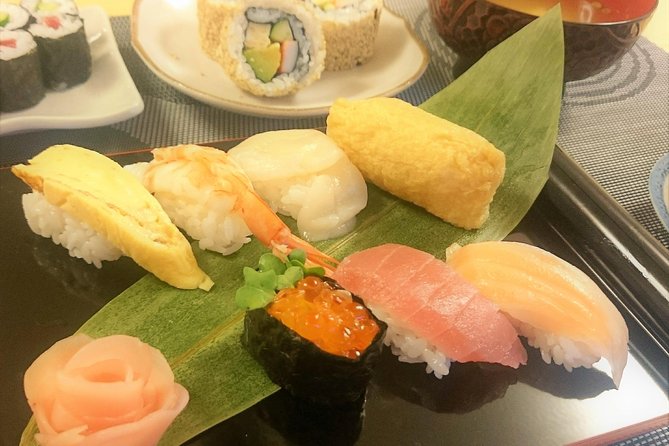
- Multiple sushi styles covered: nigiri, inari, hosomaki, plus California roll
- You finish with a full meal, including miso soup, wasabi, and pickled ginger
- Vegetarian option is available if you request it when booking
A 3-hour sushi lesson that teaches you the steps, not just the look
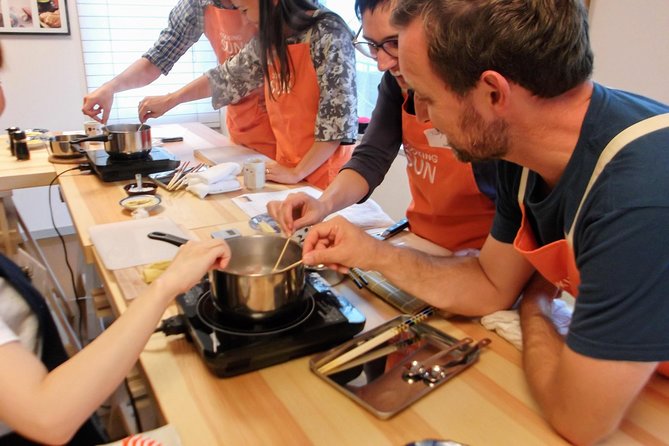
Sushi in Japan can feel like a magic trick: perfect rice, neat shapes, and fish that tastes like it’s from another planet. This class helps you demystify it. The goal isn’t just to copy a pretty roll. It’s to understand what makes sushi hold together and taste right—especially the rice.
You work through the process in a single session, from foundational ingredients to the final bite. That time pressure sounds stressful, but the class format is built for momentum: short explanations, instructor demonstration, then you do the hands-on parts while someone watches your technique.
You’ll also learn sushi as a system. The class starts with ingredients and basic Japanese cooking elements like dashi and miso-style seasonings. From there, you move into rice, toppings, and shaping. Even if you never plan to become a sushi chef, you’ll leave with a repeatable framework.
And yes, you get to eat what you make. That matters, because sushi technique is easier to learn when you can taste the results immediately.
You can also read our reviews of more tours and experiences in Tokyo



Where Cooking Sun Tokyo fits into your Tokyo day
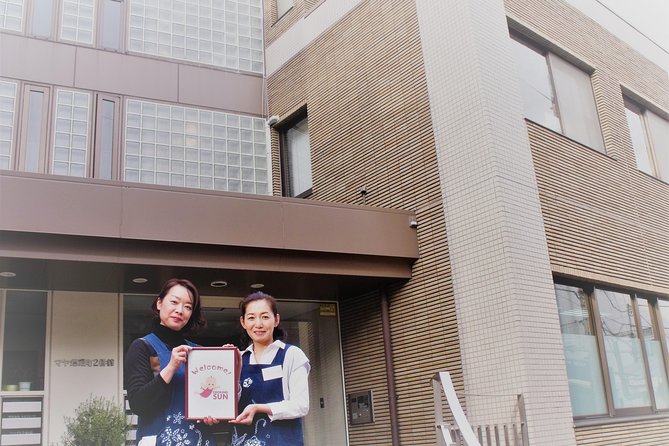
Your meeting point is Cooking Sun Tokyo at 18-39 Shinanomachi, Shinjuku City. It’s listed as near public transportation, and the activity ends back at the same place. So you’re not trying to coordinate taxis or half-day transfers after a class.
What I like about this setup is the “stay focused” factor. Tokyo is loud and busy when you want it to be, but a cooking studio gives you a break from the constant scanning for stations, signage, and crowds. The studio setting is described as clean and well organized, with a calm, residential-area feel rather than something loud right off a main road. That kind of environment helps you learn without feeling rushed.
Timing-wise, the class starts at 1:30 pm and runs about 3 hours. That makes it a solid afternoon plan. It’s also long enough to do real work, not just a quick tasting.
What you’ll cook: dashi, miso, sushi rice, and tamagoyaki
The class has a clear rhythm. First comes an intro to essential Japanese ingredients. You’ll hear about staples like dashi and miso and how they show up in everyday flavor building. This is practical info, not trivia. Once you understand that dashi and miso are flavor anchors, you’ll taste them more clearly in the final meal.
Then you move into rice and filling prep. Sushi rice is one of the most important parts of sushi, and this class treats it that way. You’ll make sushi rice as part of the process, not just accept it as an ingredient handed to you.
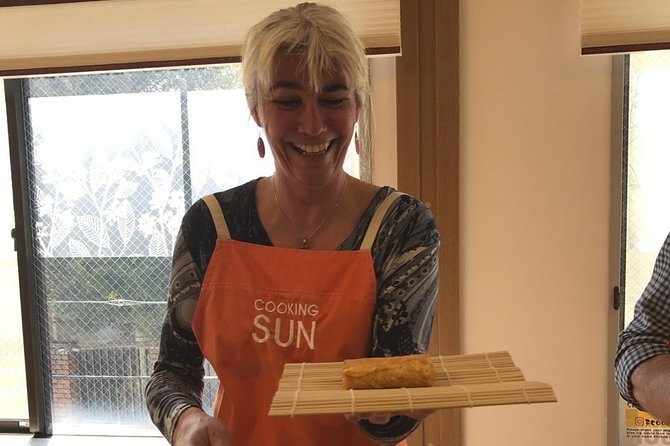
Next is tamagoyaki, the Japanese rolled omelet. You make it and use it as a filling for your sushi later. That’s a smart teaching step. Tamagoyaki gives you a feel for the texture you’ll want in sushi components, and it also teaches you that sushi isn’t only fish. It’s technique plus balance.
Throughout, the instructors guide you with hands-on support. Names that come up in instructor write-ups include Miki, Yuki, Yuca, Yummy, Yuko, and Aya. Across all those names, the consistent theme is clear instruction and patient help while you’re actively shaping and assembling.
The sushi styles you’ll learn and why each one matters
This class is structured around specific sushi types, so you’re not stuck doing one roll over and over. You’ll learn to make:
Nigiri (hand-pressed sushi)
Nigiri is all about proportion. You’re learning how to shape rice and top it in a way that holds together. Even if you don’t press perfectly at first, you’ll quickly understand what texture and pressure should feel like.
For home cooking, nigiri is valuable because it teaches you the “foundation rules.” Once you get comfortable with rice shape and topping placement, you can freestyle later with ingredients you prefer.
You can also read our reviews of more tours and experiences in Tokyo






Inari (sweet tofu pouch sushi)
Inari is sweet, savory, and very different from fish-forward sushi. You’ll work with inari as a recognizable style you can recreate, and it also broadens your idea of what sushi can be.
This is a great inclusion if you want more variety than plain rolls. It’s also often a crowd-pleaser when you host friends later.
Hosomaki (thin roll)
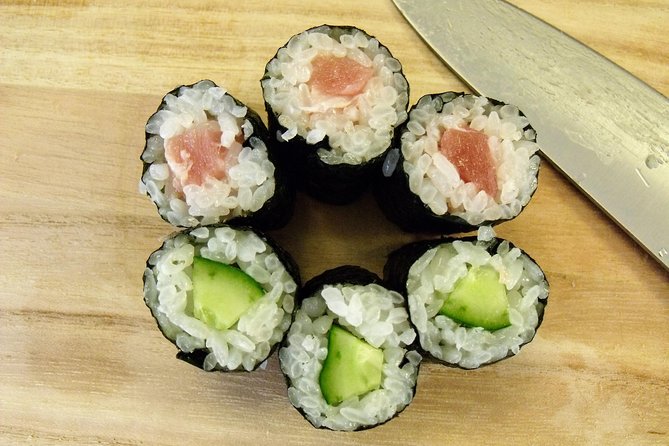
Hosomaki is where rolling technique shows up fast. Thin rolls are less forgiving because there’s less room for mistakes. You’ll learn how to distribute fillings and roll without turning the whole thing into a sticky mess.
Once you can do a hosomaki, thicker rolls feel easier. You’ll understand why some restaurants roll with such consistency.
California roll
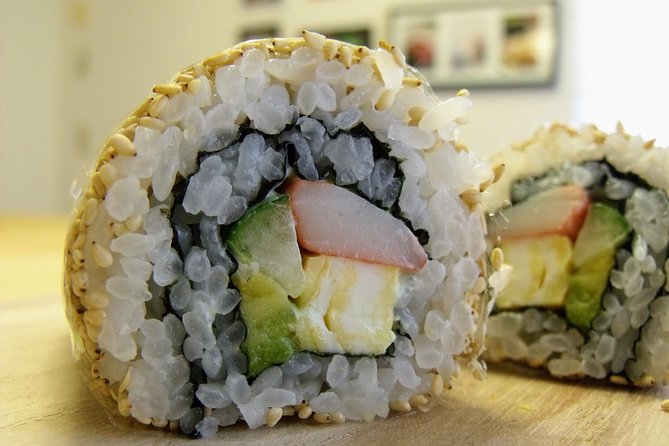
California roll is familiar to many people and a perfect “bridge” roll for first-timers. It’s also a good chance to apply everything you just learned about rice seasoning and rolling control.
Even if California roll isn’t the “most traditional” option in Japan, it’s a practical skill because you can replicate it at home with common ingredients.
Fish prep, and the hands-on limits you should know
This is the part where you need to set expectations. The class uses pre-sliced fish, and it explicitly does not include raw fish cutting instruction. You won’t be learning knife techniques for breaking down seafood.
The upside is that you still get real sushi-making experience: rice, seasoning, shaping, rolling, and assembly. The pace stays friendly for beginners because you’re not also fighting with cutting and filleting skills.
The possible drawback is also clear: if your dream is to learn sushi like a professional with full raw fish prep, this won’t cover that part. One note from feedback is that you shouldn’t expect top-tier fish quality. Still, the class focuses on technique and instruction, and the final meal is built to be satisfying.
If you want a class that’s more about cooking fundamentals and sushi structure than seafood butchery, this fits the bill.
The meal you earn: miso soup, wasabi, and pickled ginger
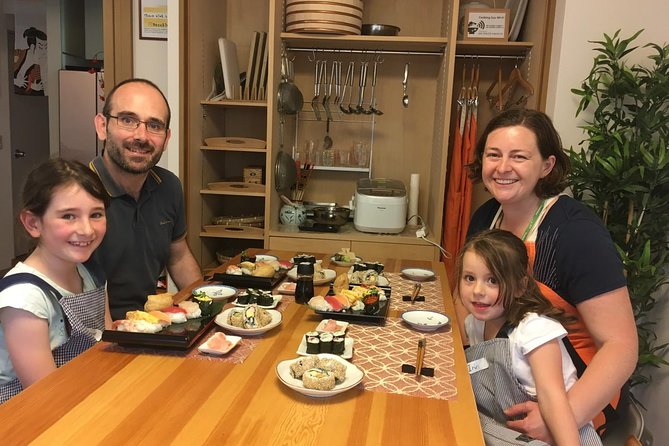
After you finish cooking, you sit down to eat. Included with the meal are miso soup, fresh wasabi, and pickled ginger. That trio matters because it rounds out sushi like it does in Japan—warm broth to start, a spicy punch, and a tangy cleanup between bites.
This is also where the lesson sticks. Sushi rice consistency is one thing when you’re working with it, and another thing when you taste it. The class structure lets you connect technique to flavor immediately.
In some sessions, people come away talking about making several items beyond the headline styles, like tamago (egg) and ebi nigiri. Even when the exact menu varies slightly, the teaching goal stays the same: give you enough variety to understand the range of sushi forms.
Small-group energy: what it feels like to get direct help
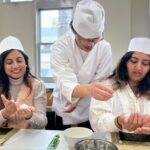
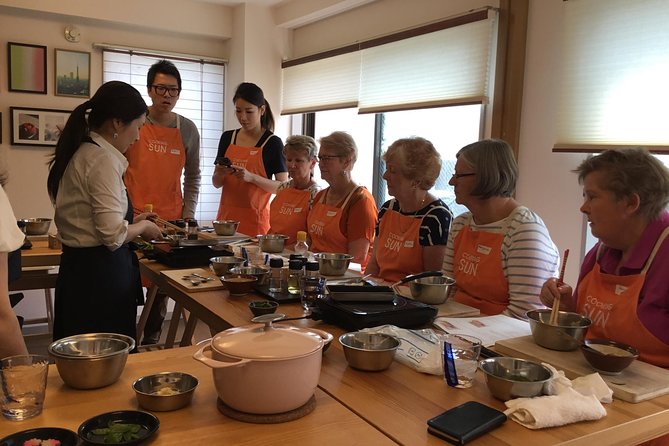
A maximum of 9 people in a class is the difference between learning and just “participating.” In a bigger group, you spend half your time watching. Here, you’re working while someone can check your rice handling and roll tightness.
I like that the instructors can support multiple skill levels. The class includes a minimum age of 6, which makes it workable for families. It’s also fine solo, because the group size stays manageable and you’ll get personal attention even if you’re shy.
English-friendly instruction is a big plus. Sushi has lots of small technique details—how wet your fingers should be, how to distribute fillings, how to press without crushing. If you can’t follow the explanations, you lose the point of the class. Here, the instruction is designed to be understandable, and the pace is kept approachable.
Price and value: is $72.67 worth it?
At $72.67 per person, you’re paying for three things at once: instruction, hands-on ingredients, and a sit-down meal. For Tokyo, that’s a reasonable way to get more than a single-food experience.
What makes the value feel fair is that ingredients and recipes are included, along with apron and towel rental. You’re not just paying for a table and a few bites. You’re paying for time with a teacher while you learn repeatable basics you can use later.
Also, the class is only about 3 hours. That keeps it from becoming a full afternoon commitment that crowds out the rest of your trip. If you like learning through doing, the cost makes sense because you walk out with skills, not only photos.
One more point: classes at this studio tend to book out, so booking ahead (often around 53 days in advance on average) is smart. If you wait until the last minute, you’ll likely find fewer openings.
Who should book this sushi class, and who might skip it
You should book if you want:
- Hands-on instruction in sushi basics, not just a tasting
- A small-group experience in Tokyo where you can ask questions
- A fun activity that ends with a meal you helped make
- Skills you can reuse at home, especially sushi rice and rolling
This class is also a good match if you have limited time. It’s one block in the afternoon, and you don’t need special equipment.
You might skip it if:
- You specifically want sushi knife skills, like cutting raw fish
- You’re only interested in one very specific niche style and don’t care about foundational rice and shaping
If you’re vegetarian, you can request a vegetarian option when booking. That’s the kind of flexibility that makes a cooking class work for more people.
Planning tips to make the class smoother
Come hungry. You’ll work, taste, adjust, and then eat a meal at the end. Wearing comfortable clothes helps because cooking is hands-on, and the kitchen environment can get warm during active prep.
If you’re the type who loves precision, pay attention early to how the instructor treats sushi rice. That’s the hardest part to “fix later,” and it affects everything that comes after it. Once you get the rice right, the roll work becomes much easier.
If you want to take home more than one “how-to,” ask questions while you’re shaping. Most of what you’ll remember is what you practiced, not what you were told in a lecture moment.
Should you book Cooking Sun’s 3-hour sushi class?
In my view, this is an easy yes for anyone who likes food and wants to learn by doing. The biggest strengths are the small group size and the hands-on teaching that covers both flavor foundations and real sushi assembly. You also get enough variety—nigiri, inari, hosomaki, California roll—to make the experience feel like more than one trick.
The main limitation is straightforward: pre-sliced fish means you won’t learn raw fish cutting. If that’s your dream, look elsewhere. If your goal is to understand how sushi is built and to leave with skills you can repeat, Cooking Sun is a strong pick.
If you go, you’ll likely appreciate the calm studio feel, the English support, and the fact that the lesson ends with miso soup, wasabi, and the rolls you made yourself.
FAQ
How long is the sushi making class?
The class lasts about 3 hours.
How big is the group?
The class has a maximum of 9 people.
Is there a minimum age requirement?
The minimum age is 6 years.
Does the class include fish cutting?
No. The class uses pre-sliced fish and does not include raw fish cutting instruction.
What sushi types will I learn to make?
You’ll learn to make nigiri, inari, hosomaki, and California roll.
Is a vegetarian option available?
Yes. A vegetarian option is available if you request it at the time of booking.
What’s included in the price?
The class includes a local English-speaking cooking instructor, recipes and ingredients, plus apron and towel rental.
Does this require hotel pickup or drop-off?
No hotel pickup or drop-off is included. The activity ends back at the meeting point.
FAQ
What time does the class start?
The listed start time is 1:30 pm.
What happens if the class is canceled due to weather?
It requires good weather. If it’s canceled due to poor weather, you’ll be offered a different date or a full refund.
Is free cancellation available?
Yes. You can cancel up to 24 hours in advance for a full refund.
Do I get a ticket on my phone?
Yes, the tour uses a mobile ticket.
Where do I meet the instructor?
You meet at Cooking Sun Tokyo, 18-39 Shinanomachi, Shinjuku City, Tokyo 160-0016.
Do I need to bring anything?
The class provides the ingredients and you get an apron and towel rental, so you mostly just need your curiosity and appetite.