REVIEW · TOKYO
Tokyo Top Highlights 3h Guided E-bike Tour
Book on Viator →Operated by Japan Wonder Travel · Bookable on Viator
Tokyo traffic is stressful. This e-bike tour is a smarter way to see Tokyo up close without spending your whole day walking. You pick one of three circular routes, ride an assisted bike with a helmet and gloves when needed, and return to the same shop in Tsukiji when you’re done.
I especially like the small group size (max 6) because you’re not just herded around. I also love that the tour is built for real sightseeing: multiple stops, guide-led explanations, and an included Japanese snack that keeps your energy steady.
One thing to consider: it’s a shared ride through real streets, so you’ll want moderate fitness and comfort around traffic, and the rules are strict if you’re late or if your kids don’t meet the height/age limits.
In This Review
- Key Things I’d Highlight Before You Go
- Picking the Right Route: City, Bay, or Tokyo Tower
- Tsukiji Start: The Briefing That Sets You Up for an Easier Ride
- E-Bikes in Real Tokyo Streets: What the Ride Feels Like
- Stop-by-Stop: Tokyo City Route for Temples, Gardens, and Tokyo Station
- Tokyo Station (first stop)
- Ningyo-cho Street (doll town + sweets)
- Kiyosumi Teien Japanese Garden
- Tomioka Hachimangu Shrine
- The street-to-temple rhythm
- Stop-by-Stop: Tokyo Bay Route for Skytree Views and Odaiba Energy
- Sumiyoshi Shrine (local-side feel)
- Tsukuda Tendai Jizoson (the easy-to-miss stop)
- Passes that frame your Bay skyline
- Odaiba break at Aqua City
- Gundam Base Tokyo (scale shock)
- Why this route works at night or sunset
- Stop-by-Stop: Tokyo Tower Route for Atago Hills and Hibiya Park Breaks
- Zojo-ji Temple
- Tokyo Tower pass
- Atago Shrine and the hill
- National Diet Building and a snack moment
- Hibiya Park
- What’s Included (and Why It Matters More Than You Think)
- Price and Value: What $63.67 Buys You in Tokyo
- Timing, Weather, and Traffic Reality Checks
- Who Should Book This (and Who Might Want Another Option)
- Should You Book This Tokyo E-Bike Tour?
- FAQ
- How long is the Tokyo Top Highlights e-bike tour?
- Where does the tour start and end?
- Is the ride suitable for beginners?
- What gear is included?
- Are children allowed?
- What if it rains?
- Do they accommodate allergies or vegetarian diets?
Key Things I’d Highlight Before You Go

- Three circular routes so you don’t have to worry about getting lost afterward
- Max 6 riders for a more personal pace (and fewer bike bottlenecks)
- E-bike comfort in motion so you can cover ground without turning your day into a workout
- Included snack plus more planned breaks built into the stops
- Practical gear: helmet, and luggage storage at the shop (knapsack rental available)
- Tour guide names matter here: you may ride with guides like Hiro, Miky, Shinobu, Takuro, FK, or Javi—many guests call out their friendliness and safety focus
Picking the Right Route: City, Bay, or Tokyo Tower
This is a choose-your-own-adventure setup. You’ll select one of three routes that all start and end at the same Tsukiji bike shop area, then follow a guided loop through different parts of Tokyo.
- Tokyo City Route leans classic and local: Tokyo Station’s old-meets-new architecture, streets around Ningyo-cho, a garden break at Kiyosumi Teien, and shrine time at Tomioka Hachimangu. You also pass through Ginza as a quick preview, but you’re not stuck sightseeing through high-end shopping lanes.
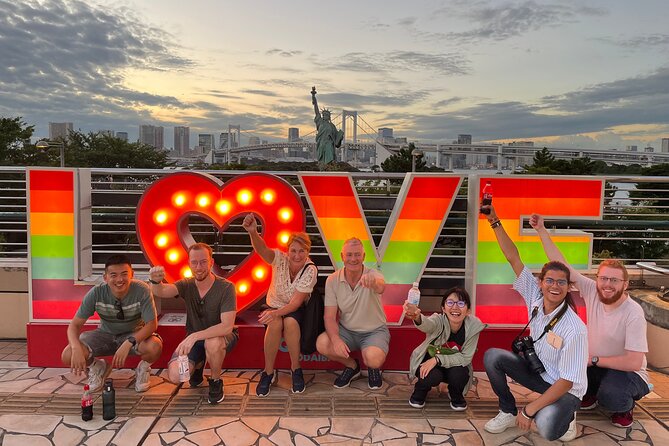
- Tokyo Bay Route is for big skyline moments: views and passes tied to Tokyo Bay, including a look at Tokyo Skytree, teamLab Planets TOKYO from the road, Tokyo Big Sight, and the Gundam area at Odaiba. It’s also the route where the sunset/night energy shows up most strongly.
- Tokyo Tower Route is for landmarks with a story: Zojo-ji Temple, Tokyo Tower itself, the uphill grind to Atago Shrine (made doable by the e-bike), and then the government-and-gardens feel near the National Diet Building and Hibiya Park.
If you’re only in Tokyo for a short time and want variety, I’d choose based on what you want your photos to look like. Want shrines and gardens? Tokyo City. Want skyline and modern Tokyo? Tokyo Bay. Want a mix of iconic views plus a bit of climb? Tokyo Tower.
You can also read our reviews of more cycling tours in Tokyo
Tsukiji Start: The Briefing That Sets You Up for an Easier Ride
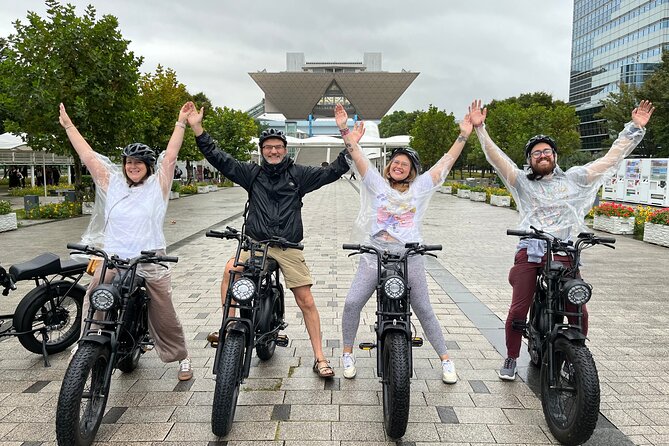
Meet in Tsukiji at 6-chōme-11-5 Tsukiji, Chuo City, Tokyo. The tour starts with a short safety and bike briefing, and the meeting time is 15 minutes before departure.
That briefing matters more than people expect. E-bikes are easy, but you still need to understand how this specific bike handles at low speed, how the group will space out, and what the guide expects when you stop and remount. One review highlighted how the bikes are simple to ride, with no tricky gear changes—so once you’re rolling, it tends to feel more like guided cruising than technical cycling.
Also note the practical stuff:
- If you arrive early, the shop might be closed, but the guide typically shows up about 15 minutes before.
- If you’re late, you can’t join mid-way—the tour is a group flow, not a pick-and-join sightseeing stroll.
E-Bikes in Real Tokyo Streets: What the Ride Feels Like
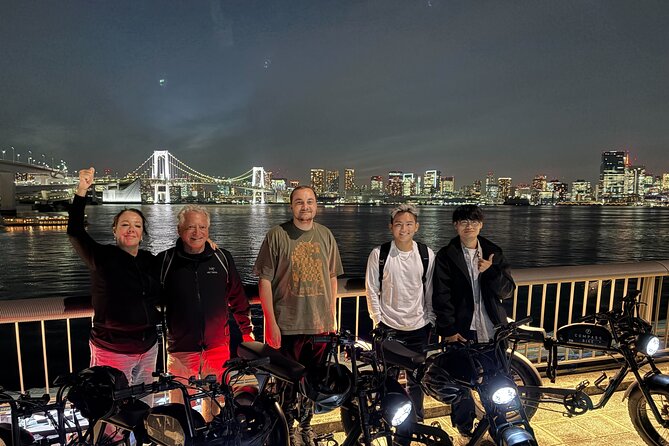
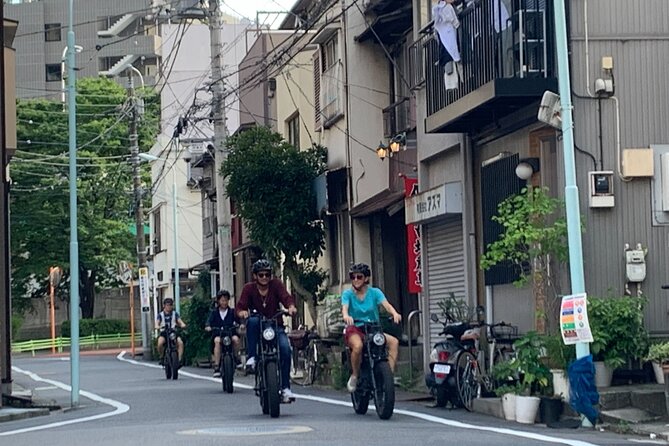
Here’s the trade-off you should understand up front: you are cycling in Tokyo traffic. You’re not on a car-free path.
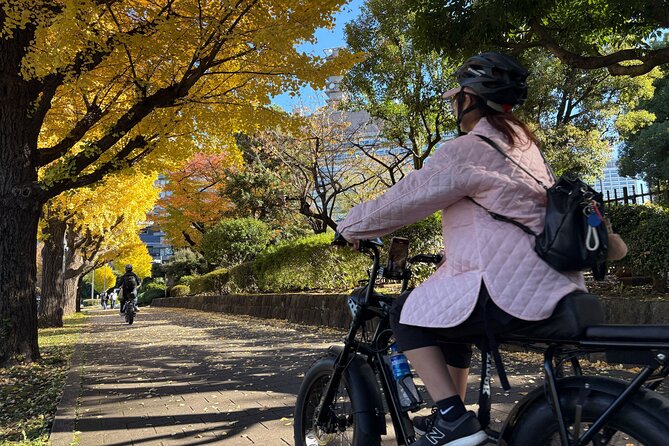
The good news is that the tour is designed for comfort. You get an e-bike, helmet, and (in winter) gloves, plus luggage storage at the shop. That takes the stress out of planning around bags and weather.
How it feels in practice:
- The e-bike assist helps you keep a steady pace without fighting every small hill.
- Stops are frequent enough to break up the ride, so your legs aren’t the limiting factor.
- Guides manage the group spacing, and many guests specifically call out feeling safe and looked after.
That said, safety is the whole point, and it’s worth reading between the lines from guest feedback. One guest reported speed and red-light concerns; the provider response indicates they adjusted the bike to a slower speed mode and reinforced safety standards with the guide team. Translation: if you’re safety-minded, this is the kind of tour where rules and pacing do get taken seriously after feedback.
Stop-by-Stop: Tokyo City Route for Temples, Gardens, and Tokyo Station
This route is the best pick if you want Tokyo that feels both iconic and slightly off the main tourist stamp. It’s also a nice first-time route because it mixes big city structure with quieter neighborhood texture.
Tokyo Station (first stop)
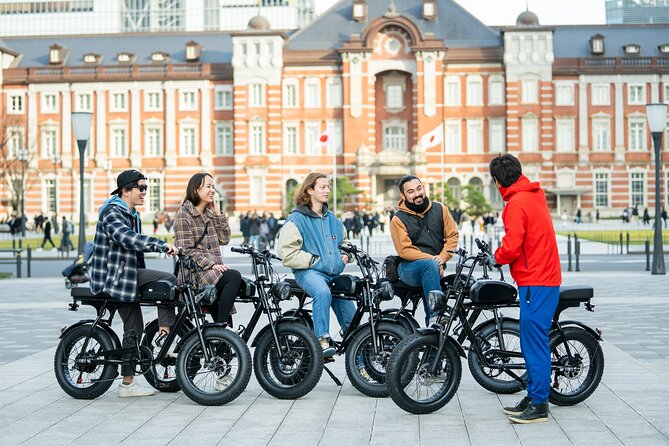
You’ll start with Tokyo Station, a landmark that’s been around since 1914. It’s a great introduction because the building shows a Western-style design mixed with modern surroundings. The stop is short, but it gives you a strong visual anchor for the rest of the ride.
You can also read our reviews of more guided tours in Tokyo

Ningyo-cho Street (doll town + sweets)
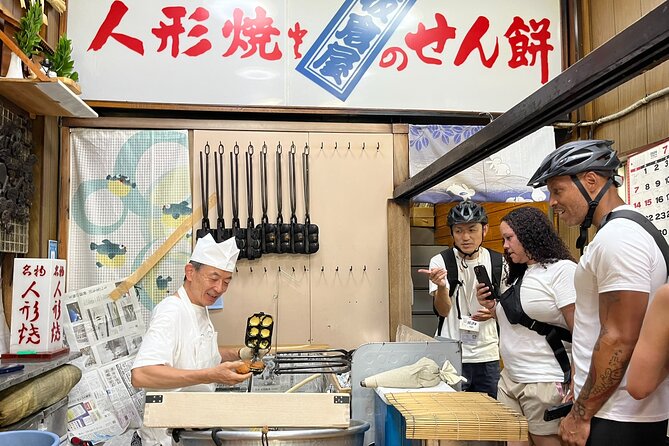
Next up is Ningyo-cho, often associated with doll culture. Even if you don’t see the traditional dolls anymore, the stop is about local flavor—in this case, traditional sweets. If you like to taste your way through neighborhoods, this is the kind of stop that sticks.
Kiyosumi Teien Japanese Garden
Then you’ll reach Kiyosumi Teien, a garden stop with admission included. This is where the pace slows just enough for you to switch from city mode to calm mode. One challenge: gardens can mean walking a bit on foot, so bring a little patience if you usually like “see it, snap it, move on.”
Tomioka Hachimangu Shrine
After the garden, you’ll go to Tomioka Hachimangu, a Shinto shrine tied to Tokyo’s older history. The stop length is longer than the ultra-quick photo moments, which gives you time to look around instead of sprinting.
The street-to-temple rhythm
The best part of this route isn’t any single sight. It’s how the ride strings together different Tokyo moods: station grandeur, street-level local culture, garden quiet, then shrine presence. It feels like a guided orientation to Tokyo rather than a checklist.
Stop-by-Stop: Tokyo Bay Route for Skytree Views and Odaiba Energy
If Tokyo City is your “learn the city” route, Tokyo Bay is your “wow, that looks like Tokyo” option.
This route mixes classic shrines with modern mega-attractions. You’ll also pass some places rather than stopping inside (like teamLab Planets TOKYO), so it works best if you’re happy getting the view from the road.
Sumiyoshi Shrine (local-side feel)
You start bay-route sightseeing with Sumiyoshi Shrine. This is the kind of place that feels more lived-in than stage-managed. You’ll get a quick look at how Tokyo can feel like a local neighborhood even while you’re close to major urban areas.
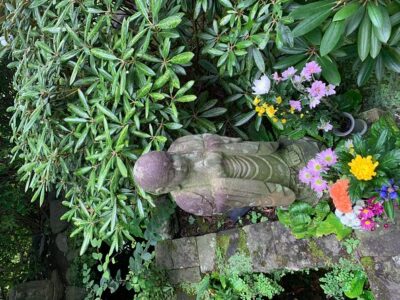
Tsukuda Tendai Jizoson (the easy-to-miss stop)
Next is Tsukuda Tendai Jizoson, described as a hidden spot that you’d probably miss without the guide. These are the stops that make a guided ride worth it: you’re not just hitting famous landmarks; you’re learning how to find meaningful places fast.
Passes that frame your Bay skyline
You’ll pass by Tokyo Skytree and go by the area associated with teamLab Planets TOKYO, plus Tokyo Big Sight. These quick passes are useful if your goal is photo angles and geography, not museum-depth time.
Odaiba break at Aqua City
Then you’ll reach Aqua City Odaiba, where you get a longer break and an included Japanese convenience-style snack picked by your guide. This break is a smart pause point because it lets you reset—snack + rest + re-group—before continuing.
Gundam Base Tokyo (scale shock)
The tour also includes a stop at the Gundam Base Tokyo area, featuring the tall Gundam presence at around 19.7 meters. Even if you’re not a hardcore anime fan, the scale grabs attention.
Why this route works at night or sunset
Tokyo Bay views are often best when the light changes. This route is designed around that timing, so if you’re booking an evening slot, you’ll likely get a stronger “city lights” payoff than a midday ride.
Stop-by-Stop: Tokyo Tower Route for Atago Hills and Hibiya Park Breaks
This route is a crowd-pleaser because it mixes three different types of Tokyo: a major temple, a landmark skyline icon, and a park-and-government zone.
It also includes the most physical moment of the three routes, because Atago Shrine sits on a hilly area.
Zojo-ji Temple
You’ll start at Zojo-ji Temple, linked to the Shogun family. Even with a relatively short stop, the area has gravitas—you feel the historical weight as soon as you get there.
Tokyo Tower pass
You’ll pass the 333-meter Tokyo Tower. It’s one of those sights that looks unreal from a certain angle, and passing it by bike gives you a fresh perspective compared with the usual walking view.
Atago Shrine and the hill
Next is Atago Shrine. You’ll ride up the hilly load, and this is where the e-bike assist earns its keep. One guest specifically noted that the e-bike makes the climb feel more manageable than it would on a regular bike.
National Diet Building and a snack moment
Then comes the National Diet Building area (built 1936). The tour includes time for a traditional snack at/near Hibiya Park, which is a smart way to break up the day.
Hibiya Park
Finally, you’ll end with time in Hibiya Park, known for many kinds of trees and flowers. You park the bike and enjoy the snack here. This ending works because it’s peaceful after the bigger landmark emphasis.
What’s Included (and Why It Matters More Than You Think)
At this price point, the details that reduce friction are the real value.
You get:
- E-bike + helmet
- Gloves in winter
- Luggage storage at the e-bike shop
- Optional knapsack rental for convenience
- An included snack during the ride
That luggage storage piece can save your day. Tokyo is full of places where you’ll want to move freely but also don’t want to carry a heavy backpack the whole time. Leaving it safely at the shop makes the tour feel simpler.
One practical note: the tour cannot accommodate allergies or vegetarianism. If you have dietary restrictions, you’ll need to plan around that before booking.
Price and Value: What $63.67 Buys You in Tokyo
$63.67 for a 3 to 4 hour guided e-bike tour sounds like a splurge until you think about what you’re avoiding.
Walking Tokyo for several hours means:
- more time spent moving between far-apart areas,
- more fatigue (especially in heat),
- and less chance to cover multiple neighborhoods.
This tour buys you distance with control. You get a structured route with multiple stops, and you don’t have to figure out the bike logistics yourself. It’s also a good value compared with private tours, because the group size is capped at 6 travelers, so you still get decent attention from the guide.
In plain terms: I see this as paying for (1) transportation, (2) route planning, and (3) a guide who helps you notice what’s worth noticing.
Timing, Weather, and Traffic Reality Checks
The experience runs roughly 3 to 4 hours, and your finish time can be delayed about 30 minutes due to traffic conditions.
It requires good weather. If it’s canceled because of rain or other reasons, you’ll typically be notified, then offered options like:
- itinerary changes,
- switching to a rental tour,
- switching to a train-based special tour,
- or a refund
That matters for Tokyo because weather can shift fast. If you’re flexible and keep a bit of buffer time in your schedule, this becomes a low-stress plan.
Who Should Book This (and Who Might Want Another Option)
This is a strong fit if you:
- want to see a lot without feeling wiped out,
- like guided explanations and planned stops,
- feel comfortable riding an e-bike on city streets,
- and prefer a small group pace.
It’s a tougher fit if you:
- don’t meet the physical requirements for a moderate fitness level,
- are over the 120kg weight limit,
- or need allergy/vegetarian accommodations (not supported).
There are also strict age and height rules: ages 12 and younger aren’t permitted, and under 147cm aren’t allowed. So if you’re traveling with kids, check this early to avoid disappointment.
Should You Book This Tokyo E-Bike Tour?
My take: book it if you want a quick, guided introduction to Tokyo’s neighborhoods and landmarks with a pace you control. The small-group setup, the included snack, and the fact that you return to the same Tsukiji meeting point make it feel efficient and low-hassle.
I’d think twice if your main goal is off-grid, slow travel where you don’t want any traffic exposure. Also, if your group includes kids, double-check the height and age limits before you lock anything in.
If you do book, pick the route that matches your dream Tokyo:
- City for classic sights + gardens and shrines
- Bay for skyline energy and sunset/night views
- Tokyo Tower for landmark photos plus a hill you can handle on assist
FAQ
How long is the Tokyo Top Highlights e-bike tour?
It runs about 3 to 4 hours, depending on the route and conditions.
Where does the tour start and end?
Both start and end at the e-bike shop area around 6-chōme-11-5 Tsukiji, Chuo City, Tokyo 104-0045. The route is circular.
Is the ride suitable for beginners?
The tour requires moderate physical fitness, but the e-bikes are designed to be easy to ride. You should still feel comfortable cycling on city streets.
What gear is included?
You get an e-bike and helmet. In winter, gloves are provided. There’s also luggage storage at the shop.
Are children allowed?
No. Ages 12 and younger are not permitted, and participants under 147 cm in height are not allowed.
What if it rains?
If the tour can’t be held due to rain or other reasons, you’ll be notified. You’ll be offered options such as an itinerary change, a different tour style using train-based access, or a refund.
Do they accommodate allergies or vegetarian diets?
No. The tour information states they cannot accommodate allergies or vegetarianism.
If you want, tell me which dates and which route (City, Bay, or Tokyo Tower) you’re considering, and I’ll help you choose the best fit for your schedule and interests.