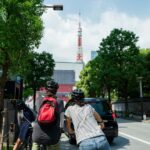
Tokyo on an e-bike turns logistics into fun. You get easy electric-assisted riding plus small-group local guidance, so you cover big sights without feeling like you’re on rails. I love that the route mixes famous landmarks with quieter neighborhood streets, and that guides like Yo and Jenny lean into real context, from station history to temple customs. One thing to weigh: this is still street cycling, so you need confidence riding a bicycle and you should be ready for busy intersections.
Expect a ride that feels like a guided walk with wheels. I like that the shop meet-up is simple (right by Kanda Station) and that the stops are timed for quick photo moments and short explanations, not long tourist-line delays. Possible drawback: in rain or high-heat conditions (Tokyo summer can be brutal), the tour may be canceled or turned back for safety.
In This Review
- Key Things I’d Block Out Time For
- Why Tokyo on an E-Bike Feels Faster Than the Subway
- Price, Value, and What Makes This Worth $63-ish
- Meeting at Cycling Holiday Tokyo: Kanda, Lockers, and Getting Rolling
- From Kanda to Tokyo Station: Business Streets and Old Tokyo Texture
- Imperial Palace Gates and Moat Views: Photos Without the Long Detours
- Ginza Backstreets and Tsukiji Outer Market: Everyday Food Tokyo
- Akihabara and Kappabashi Tool Street: Geek Energy Meets Real-World Craft
- Asakusa and Ryogoku: Temple Customs and Sumo Neighborhood Feel
- How the Guide Keeps It Safe and Actually Fun
- When to Go: Rain, Heat, and What Tokyo Weather Really Means
- Who This Tour Fits Best (and Who Should Skip It)
- Should You Book This Tokyo E-Bike Tour?
- FAQ
- How long is the 3-hour Tokyo e-bike tour?
- Where is the meeting point?
- Is the e-bike and helmet included?
- What else is included besides the bike?
- Do I need to know how to ride a bicycle?
- What are the age and height requirements?
- What do the morning and afternoon routes include?
- Will we ride through backstreets or only big attractions?
- What happens if it rains or the weather is too hot?
- Can I cancel and get a refund?
Key Things I’d Block Out Time For
- Local guide pacing: you stop often for stories, photos, and practical cues so you don’t get lost or overthink routes.
- AM and PM routes differ: morning leans business-core + historic gates + Tsukiji, while afternoon can swing through Akihabara and Asakusa.
- Street-access that trains miss: e-bikes help connect backstreets and short links between areas without crossing Tokyo only by subway.
- Photo-ready, quick stops: Tokyo Station Marunouchi, Otemon Gate views, and Nihonbashi Bridge are built into the timing.
- Safety-first gear and support: helmets, insurance, simple rain gear, and seasonal items like cooling products or winter gloves.
Why Tokyo on an E-Bike Feels Faster Than the Subway
Tokyo is efficient, but it can also feel heavy: crowds, transfers, and constant “where’s the exit?” energy. This tour uses an e-bike so your day moves in a straight line. You can keep up without white-knuckle effort, even when you’re crossing longer distances between neighborhoods.
I also like the style of the guidance. Guides such as Ted, Take, Kazu, Ninja, and Yo show up as friendly, safety-minded leaders who answer questions and keep the group together. The vibe isn’t stiff tour-bus. It’s more like you’re cruising with someone who actually lives here, including little rituals and everyday street logic.
One more practical win: because the tour is about a set 3-hour window, it helps you “map” the city fast. After one ride, you can usually point at areas like Kanda, Ginza backstreets, Tsukiji, Akihabara, and Asakusa and understand how they relate.
You can also read our reviews of more cycling tours in Tokyo
Price, Value, and What Makes This Worth $63-ish
At $63.01 per person for about 3 hours, this is priced like a serious activity, not a casual add-on. The value comes from three things that matter in Tokyo:
First, you’re paying for an English-speaking local guide. That’s the difference between snapping photos and actually understanding why a place matters, from Tokyo Station’s role to what you’re seeing at the Imperial Palace gates.
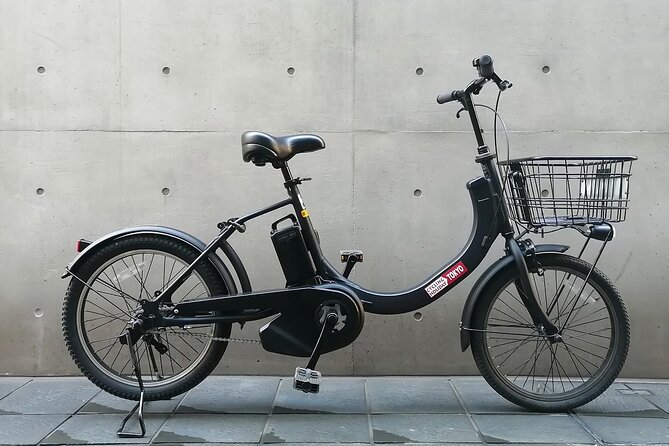
Second, the e-bike rental is included. That changes the math: instead of spending time planning bike logistics or managing your own rentals, you show up, get set, and roll.
Third, the tour helps you avoid the two time-killers in sightseeing: getting lost and getting stuck in slow decision-making. Reviews repeatedly highlight that you see a lot of ground without exhausting yourself.
You’ll still need to budget for food and drinks, since those are self-pay. But the ride itself handles the big transportation problem.
Meeting at Cycling Holiday Tokyo: Kanda, Lockers, and Getting Rolling
The start point is Cycling Holiday Tokyo, near Kanda Station. The shop is about a minute walk from the west exit of JR Kanda Station, and that proximity is huge on arrival day.
Inside, you can use:
- a restroom
- luggage storage (you can leave it during the tour, except valuables)
- a waiting room
That means you can travel lighter. It also helps if you’re arriving with shopping bags or carrying a daypack, since you won’t have to bike with everything bouncing on your back.
You’ll get:
- a rental e-assist bike
- a helmet (put it on)
- English guide
- insurance
- simple rain gear
- simple gloves in winter
- cooling products in summer
Also, a quick reality check: a minimum height of 147 cm (4 ft 8 in) is required, and the minimum age is 12. And if you truly cannot ride a bicycle, the tour isn’t for you. The e-bike helps with effort, but it doesn’t remove the need to pedal, balance, and handle traffic.
From Kanda to Tokyo Station: Business Streets and Old Tokyo Texture
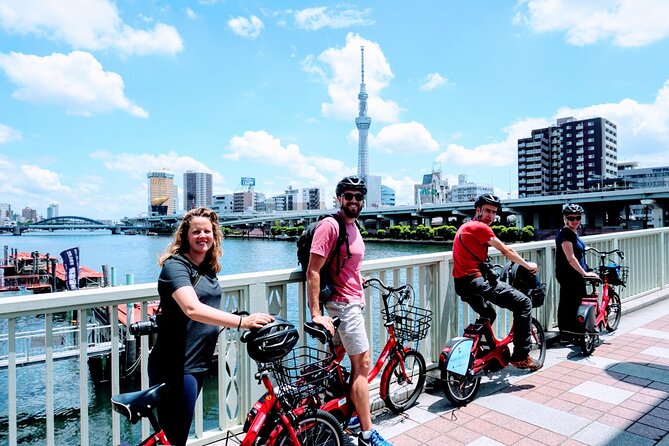
Most Tokyo tours either hit the big postcard spots or they disappear into neighborhoods. This route does both, starting in Kanda—an area that feels like the working heart of downtown.
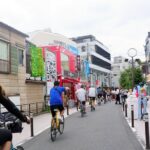
You begin with Kanda, a smaller downtown area where you’ll see lots of compact Japanese-style bar streets. The fun here isn’t one single famous monument. It’s the scale and rhythm: tight streets, local businesses, and a sense of daily life that you don’t get when you only visit the most obvious landmarks.
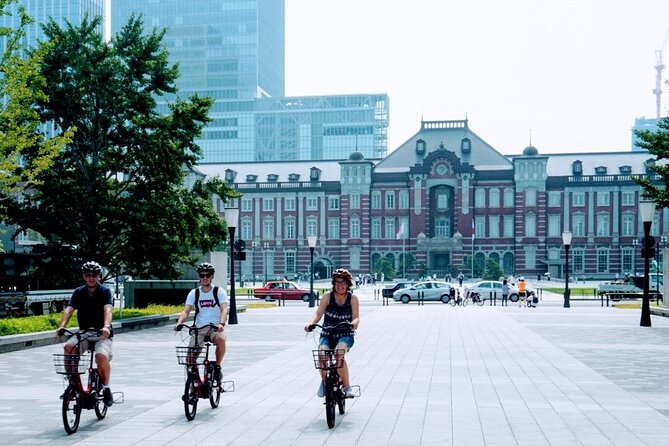
Then you roll into the Tokyo Station Marunouchi area. You’ll look at Tokyo Station’s Marunouchi building from Gyoko-dori Street, and your guide explains the station’s history. Tokyo Station can be impressive even if you’ve never read about it. But the guide makes it more than architecture—you start noticing what the station represents in the city layout.
Photo stop energy is short and purposeful. You’re not spending 45 minutes “finding the perfect angle.” You’re moving, learning, then getting back on the bike.
Imperial Palace Gates and Moat Views: Photos Without the Long Detours
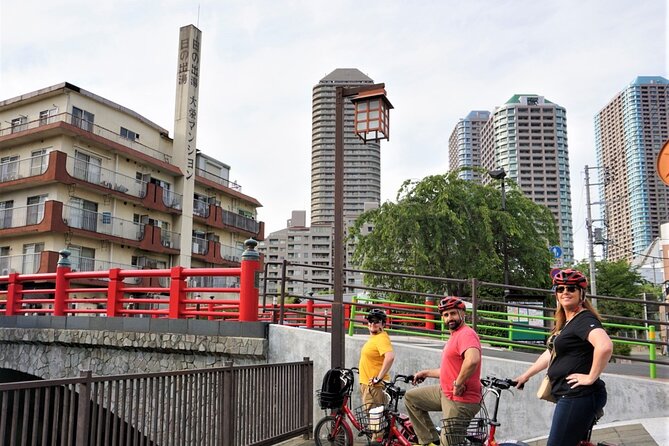
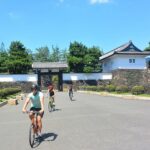
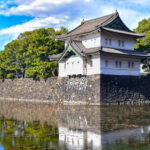
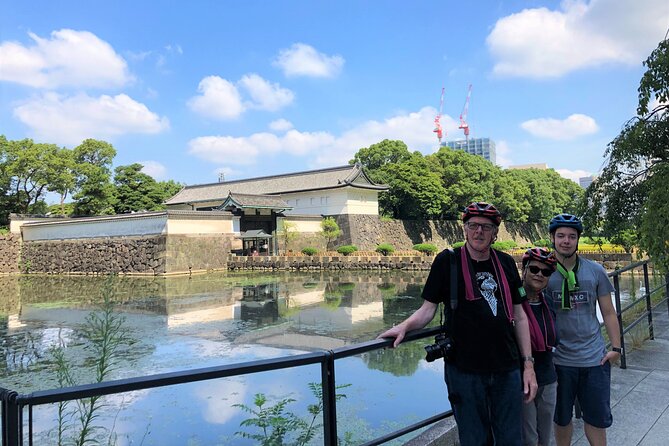
One of the most eye-catching parts is the stop at Kokyo Otemon Gate. From here, you’re looking across the moat toward the Fujimi yagura Tower. It’s the kind of view that works even if you don’t know the terminology—your guide just adds the meaning.
You also pass through major gates, like Sakuradamon. The big value of these stops is that you get close enough to understand the structure, without needing to plan separate transport and timing for each gate.
The Imperial Palace area can be busy at peak times, and it can also be confusing to navigate if you’re walking alone. Doing it by bike with a guide helps you handle the flow without losing time.
You can also read our reviews of more guided tours in Tokyo
Ginza Backstreets and Tsukiji Outer Market: Everyday Food Tokyo
Ginza often gets presented like a runway. But on this tour, you might ride through backstreets of Ginza—or the main streets, depending on situation. That flexibility matters because it helps you keep moving while still getting the feel of luxury-brand streets alongside smaller side-lane passages.
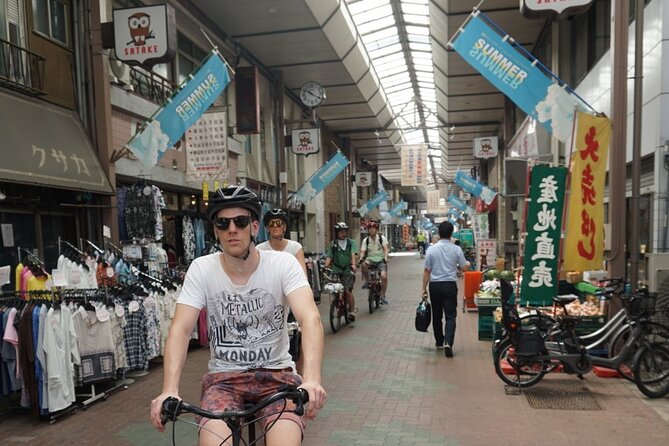
Then comes Tsukiji Outer Market. You spend time among old-style, small food shops along the streets. The focus here is less on a single checklist item and more on atmosphere: you’re seeing how casual Tokyo food culture works at street level.
This is a smart moment for your brain. You’ll recognize ingredients, snacks, and little stalls you might otherwise miss. And because food and drinks are self-pay, you can decide on the spot what looks good rather than committing early.
A practical note: market streets can be crowded on foot. Riding through with the group helps the tour keep a steady pace, but you still want to stay alert and follow your guide’s hand signals.
Akihabara and Kappabashi Tool Street: Geek Energy Meets Real-World Craft
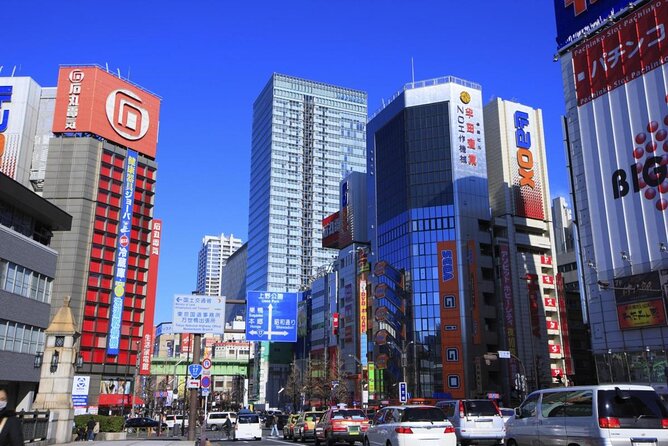
In the afternoon route, Akihabara shows up as a full-on subculture zone. It’s known for youth and geek culture, and you’ll see enough to understand why it’s a magnet for pop culture fans. The good part is that your guide helps you interpret what you’re seeing so it doesn’t feel like you’re just walking past neon screens.
Then the tour often continues to Kappabashi Street (Kappabashi Dogugai), the famous kitchen-tool area. This is where shopping can get serious: professional cooking tools and authentic Japanese knives are part of the scene.
If you like practical souvenirs—things you’ll actually use—this is one of the best stops. Even if you don’t buy, walking through the tool shops gives you a sense of Japanese craftsmanship and how deeply food culture connects to everyday commerce.
Asakusa and Ryogoku: Temple Customs and Sumo Neighborhood Feel
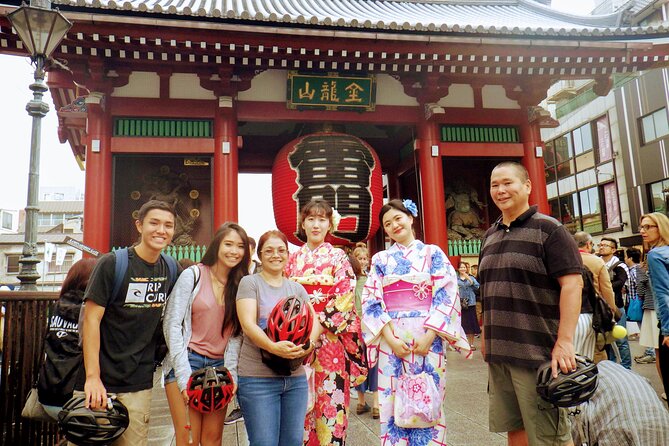
Asakusa is your classic “you really came to Tokyo” stop. You’ll spend time here because it’s famous for its oldest temple in Tokyo. More importantly, the guide often explains temple customs and rituals, which helps you act appropriately instead of just snapping photos while standing where you shouldn’t.
Then there’s Ryogoku, the sumo wrestler area. If you’re lucky, you might meet real sumo wrestlers. Even without an encounter, the area has that strong sports-and-training identity that makes it feel different from surrounding neighborhoods.
The value of including Asakusa and Ryogoku together is contrast. You see spiritual tradition and sporting identity in the same ride cycle, and your guide can connect how those parts of Tokyo coexist.
How the Guide Keeps It Safe and Actually Fun
This tour succeeds or fails based on the guide, and the feedback here is consistently strong. Guides like Yo, Kazu, Take, Ninja, Ted, Jenny, and Yoppi are repeatedly described as:
- friendly and patient
- safety-oriented
- good at keeping the group together
- enthusiastic about sharing history and daily-life context
- quick to answer questions
On an e-bike tour, safety isn’t only helmets. It’s also pacing, lane choices, and how often you pause. Here, you stop regularly for explanations and photo moments, which gives you time to breathe, regroup, and avoid stretching your attention span across too many streets.
If you’re the type who likes to ask questions, this format is ideal. If you’re more quiet, it’s still fine—your guide can keep the group moving without making the tour feel like a lecture.
When to Go: Rain, Heat, and What Tokyo Weather Really Means
Tokyo weather matters here because the tour is outdoors and street-based.
If rain happens, the tour can be canceled. The company checks the forecast the day before to decide. Even if the forecast is sunny, it may still rain, and your guide will decide whether to continue or stop on the way.
Summer (July to August) needs extra caution. The tour uses a heat-stress index (WBGT) as a reference. If conditions are dangerous, departures may be canceled. If conditions become dangerous during the tour, it may be stopped and return to the start point, with a refund if that happens.
So if you’re visiting in peak summer, I’d treat your booking like a weather plan, not a guarantee. Bring towels and sunscreen in summer. In winter, bring warm clothes and gloves.
Who This Tour Fits Best (and Who Should Skip It)
This is a strong fit for you if:
- you want to cover multiple Tokyo neighborhoods in a single morning or afternoon
- you’re okay riding bikes in traffic-like street conditions
- you appreciate context: why places look the way they do, not just where they are
- you want a small-group experience (maximum 6 people)
It might be a poor fit if:
- you cannot ride a bicycle at all
- you’re uncomfortable biking in busy areas, because there are intersections and crowded street segments
- you’re traveling with mobility limitations that make cycling unsafe (the tour requires you to participate on the bike)
For families, it can work well because guides tend to be patient and the pace is managed. One review even points out pre-teens enjoying the ride for the people-interaction side rather than phone-only sightseeing.
Should You Book This Tokyo E-Bike Tour?
If you’re trying to get a feel for Tokyo fast, I’d book this. The combination of e-bike efficiency, frequent guide-led stops, and the mix of Kanda, Imperial Palace area, Tsukiji, Akihabara, Asakusa, and Ryogoku is exactly what makes Tokyo feel navigable instead of overwhelming.
Choose morning if you want business-core viewpoints and historic gates, plus Tsukiji’s market energy. Choose afternoon if you want Akihabara subculture and the shift toward craft and temple-and-sumo neighborhoods.
My decision rule is simple: if you want to spend 3 hours learning Tokyo and covering distance without burning out, this is a smart use of time. Just make sure you’re comfortable riding a bicycle and you plan around weather, especially in summer.
FAQ
How long is the 3-hour Tokyo e-bike tour?
The tour runs for about 3 hours.
Where is the meeting point?
You start at Cycling Holiday Tokyo, near Kanda Station at 3-chōme-8-6 Uchikanda, Chiyoda City, Tokyo.
Is the e-bike and helmet included?
Yes. The rental e-assist bike and helmet are included.
What else is included besides the bike?
The tour includes an English guide, insurance, simple rain gear, and seasonal items like gloves in winter or cooling products in summer. You can also leave luggage (except valuables) with the shop during the tour.
Do I need to know how to ride a bicycle?
Yes. If you cannot ride a bicycle, you can’t join the tour. The e-bike helps, but you still need to be able to bicycle ride.
What are the age and height requirements?
Minimum age is 12. Minimum height is 147 cm (4 ft 8 in).
What do the morning and afternoon routes include?
Morning routes can include areas like Kanda, Tokyo Station Marunouchi area, the Imperial Palace area gates, Tsukiji Outer Market, and other connected streets. Afternoon routes include different stops such as Akihabara, Kappabashi Tool Street, Asakusa, and Ryogoku.
Will we ride through backstreets or only big attractions?
You can expect a mix. The route is designed to connect local streets, and it also includes major sights like the Tokyo Station and Imperial Palace gates.
What happens if it rains or the weather is too hot?
If conditions are poor, the tour may be canceled. The company decides based on the forecast checked the day before. In summer, the tour uses the WBGT heat-stress index; if conditions are dangerous, the tour may be canceled or stopped early, and the fee will be refunded if it returns early due to safety.
Can I cancel and get a refund?
Yes. You can cancel up to 24 hours in advance for a full refund. If you cancel less than 24 hours before the start time, the paid amount is not refunded.