REVIEW · TOKYO
Sumo Wrestlers Morning Practice Tour – Tokyo Sumida District
Book on Viator →Operated by Japan Wonder Travel · Bookable on Viator
Sumo practice feels more human at dawn. This morning tour puts you up close to real training at a Tokyo sumo stable, with a guide who helps you understand sumo rules and cultural etiquette so you don’t accidentally break the vibe. I like that you’re not just watching from far away; you’re learning why the day-to-day rituals matter, including sumo’s Shinto roots and how practice works beyond match day.
The one big catch: there are no chairs. You’ll sit cross-legged on the floor for about 1.5 hours, and you’re expected to stay still and respectful.
In This Review
- Key Highlights You’ll Care About
- Why This Morning Sumo Practice Tour Feels Different Than Match Day
- Price and Value: What $83.23 Buys You
- Getting There: Oshiage Meeting Point and the Skytree-Adjacent Start
- Stop-by-Stop: What Happens During the Practice and How to Prepare
- Stop 1: Oshiage Gathering and Stable Arrival
- Stop 2: Sumida Quiet Viewing for About 1.5 Hours
- Stop 3: Photo Time and Wrap-Up Back Near Skytree
- Etiquette Rules Inside the Stable You’ll Actually Need
- The Guide Experience: Translation, Explanations, and Q&A
- Photos and Video Rules: How to Get What You Want Without Breaking Rules
- Who This Tour Is Perfect For (and Who Should Rethink It)
- Should You Book This Sumo Morning Practice Tour?
Key Highlights You’ll Care About
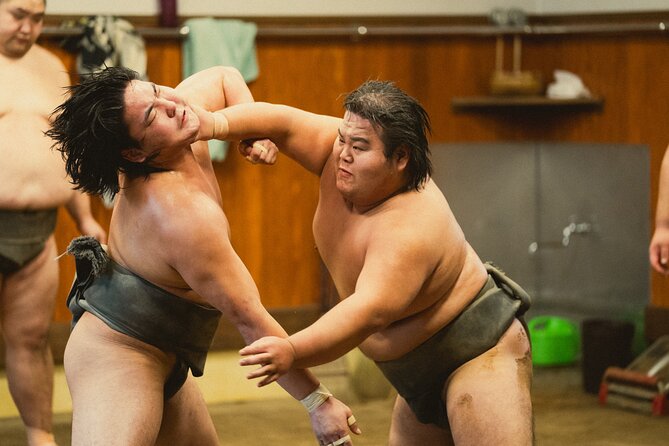
- Up-close morning practice in the Sumida area, not a staged show
- Guide support for English explanations so you avoid cultural missteps
- Quiet, respectful viewing rules that make the experience feel authentic
- Photo time with wrestlers after practice (when the schedule allows)
- Small group size with a maximum of 25 travelers
- Short, focused tour that leaves you time to explore Tokyo afterward
Why This Morning Sumo Practice Tour Feels Different Than Match Day
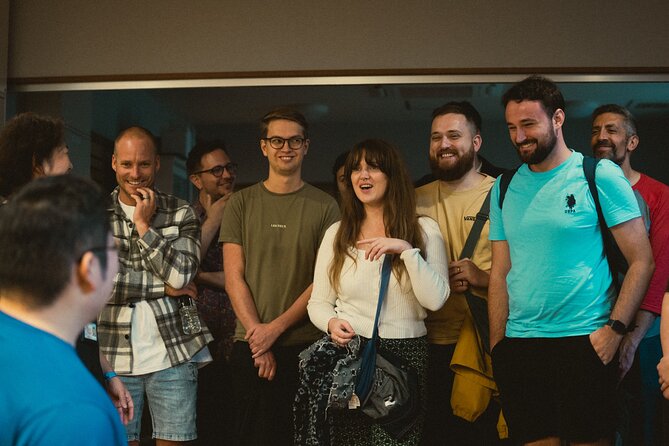
Watching sumo matches is impressive. But morning practice hits a different note: you’re seeing how athletes prepare, not how they perform. This tour is built around training at a Tokyo stable in the Sumida district, so you get a practical education in discipline, routine, and the way wrestlers live inside their world.
A big part of the appeal is that you get help navigating etiquette. Sumo has rules that aren’t obvious if you only know what happens on tournament days. The guide explains history and regulations so the movements make sense, not just look impressive.
And because it runs in the morning, you’re not burning your whole day indoors. You’ll finish back around the Tokyo Skytree area, which makes it easier to roll into sightseeing plans later.
You can also read our reviews of more tours and experiences in Tokyo
Price and Value: What $83.23 Buys You
At $83.23 per person for about 2 hours, the price isn’t cheap, but it’s also not out of line for a small-group, early-start experience with real access. You’re paying for a few key things:
- Guided interpretation, so you understand what you’re watching (history, rules, and what the training is for)
- A stable-area experience where you’re expected to follow strict etiquette, including floor seating and silent observation
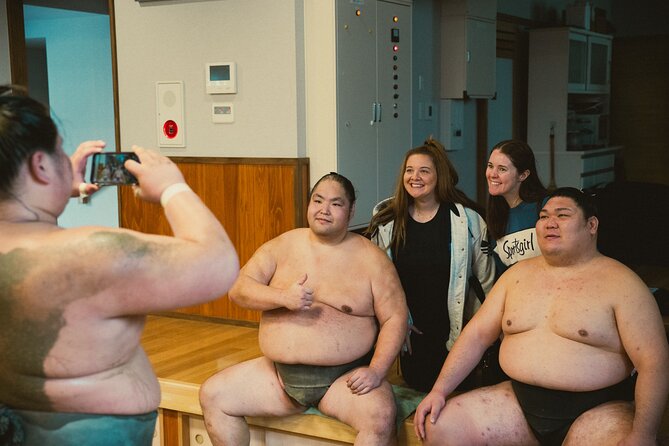
- Photo opportunities after practice, which is usually the part people remember most
- A schedule that returns you near Tokyo Skytree, so you can keep your day efficient
If you’re comparing this to doing sumo as a solo activity, the main “value” is context. You can watch a match and still miss the meaning behind it. Here, the tour aims to give you the why behind the routine.
Getting There: Oshiage Meeting Point and the Skytree-Adjacent Start
You meet at 1-chōme-8-21 Oshiage, Sumida City, Tokyo 131-0045 at 7:30am, and you should be there by 7:10am. The tour leaves at 7:30 sharp, so treat that early time as real. This isn’t a stroll you can drift into.
From the meeting point, there’s about a 15-minute walk to the stable. That’s not long, but it matters because the tour begins early and you’ll spend most of the time sitting on the floor. If rain is in the forecast, bring a towel to wipe your feet on the way over.
The tour is near public transportation, which is helpful since you’re operating on a tight morning schedule. Also, the experience uses a mobile ticket, so make sure your phone is charged.
Stop-by-Stop: What Happens During the Practice and How to Prepare
Stop 1: Oshiage Gathering and Stable Arrival
You start at Oshiage, near the train station area, and your guide leads you toward the sumo stable. This first stretch is about getting organized and setting expectations—especially the etiquette.
Even though the time here is short, it’s worth paying attention. The “rules” part of sumo isn’t optional for this experience. You’re going to hear instructions you’ll need soon: where to sit, what not to do with your feet, and how to behave during practice.





Stop 2: Sumida Quiet Viewing for About 1.5 Hours
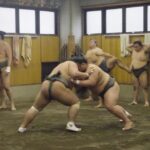
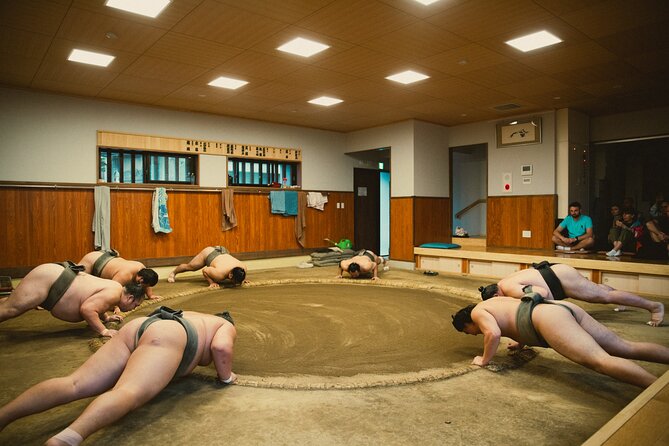
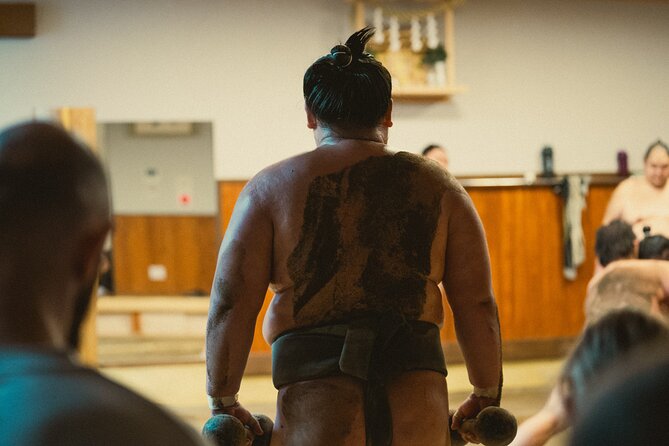
This is the core of the tour. You’ll watch quietly as the wrestlers go through their daily routine. The experience is designed for respectful observation—no standing up, no moving around, and no stretching toward the ring.
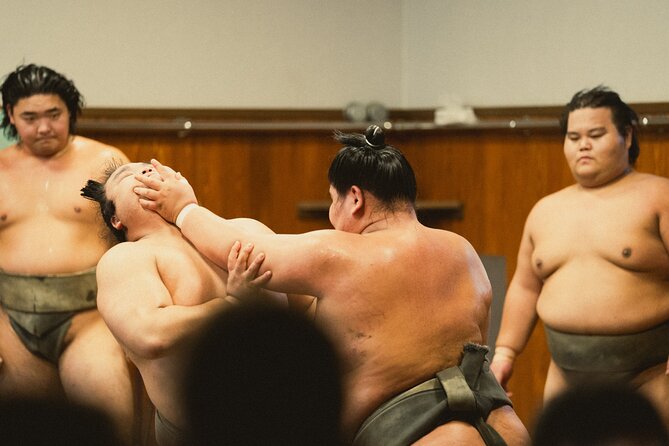
You may be surprised by how much practice can look like technique and preparation rather than full-contact wrestling. That’s normal. This is training, not a tournament broadcast, and that difference is part of what makes it educational.
If you’re hoping for nonstop action, adjust your expectations. Some days include more wrestling moments than others, and practice can also end earlier than planned.
Stop 3: Photo Time and Wrap-Up Back Near Skytree
After the quiet practice, you’ll get a photo with the wrestlers. The tour finishes after that, and it ends back at the meeting point near Tokyo Skytree.
One practical note: practice may end earlier than usual depending on the day, so the tour may be shorter than the standard timing. Build your morning schedule with a little flexibility.
Etiquette Rules Inside the Stable You’ll Actually Need
This is where the tour becomes real. If you follow the rules smoothly, you’ll feel like part of the flow. If you don’t, it can feel awkward fast.
Here are the instructions that matter most:
- No shoes inside: you’ll take them off right when you enter the stable on the raised wooden floor.
- No chairs: you’ll sit cross-legged for about 1.5 hours. If that position won’t work for you, don’t book.
- Don’t stretch toward the ring: it’s considered impolite to show the soles of your feet toward the wrestlers.
- Quiet observation: watch respectfully and stay seated.
- Ring protection rules: don’t step down onto the ring or the sandy ground. The ring is treated as sacred.
- No hats or sunglasses inside the stable.
- Cellphone rules: phones must be on silent. Photos are okay, but without flash and without shutter sound. Videos are allowed, but you can’t upload them to social media platforms.
- Food and smoking are out: no food, no chewing gum or candies, no smoking. Water is okay.
- Modest clothing is required.
A small “traveler win” tip: try to use the restroom before you start. Once you’re inside, you’re expected to follow the stillness rules.
The Guide Experience: Translation, Explanations, and Q&A
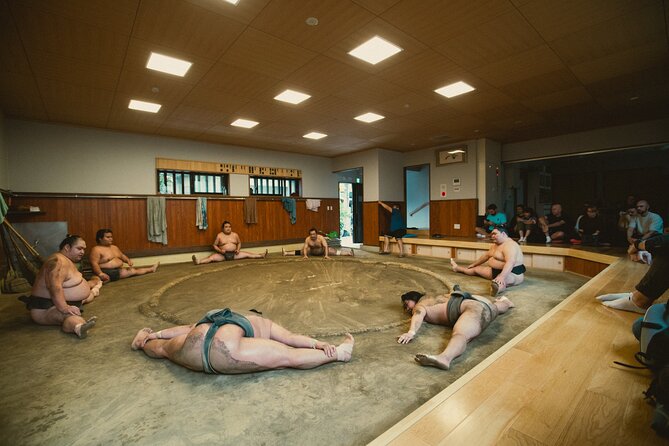
A huge reason people rate this highly is that you’re not left guessing. The guide helps you avoid language barriers and cultural faux pas, and they also explain the sport’s rules and history so you can connect what you see to what it means.
One example from the experience: some guides, like Yuriko (mentioned in one account), were described as patient and knowledgeable. Other accounts also praised strong translation from Japanese to English during the session.
There’s also often time after practice for questions with the stable-side leadership. You may get a chance to speak with the stable manager or master, and that’s where you can ask about training and daily life. One key topic that comes up is diet—what wrestlers eat and why.
Photos and Video Rules: How to Get What You Want Without Breaking Rules
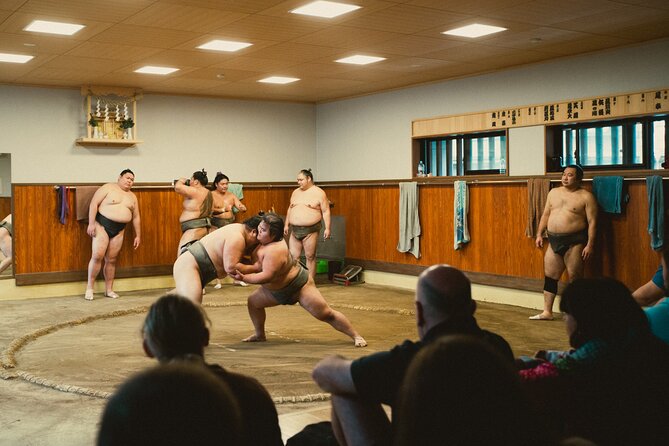
You’ll get photo time after practice, and that’s a highlight for a lot of people. But the stable has restrictions on how you capture images.
- Photos are allowed during the experience, but no flash and no shutter sounds.
- Videos are allowed, but you can’t upload photos or videos to social media platforms.
If you care about filming, plan to keep it respectful and quiet. The goal is documentation, not disruption.
Who This Tour Is Perfect For (and Who Should Rethink It)
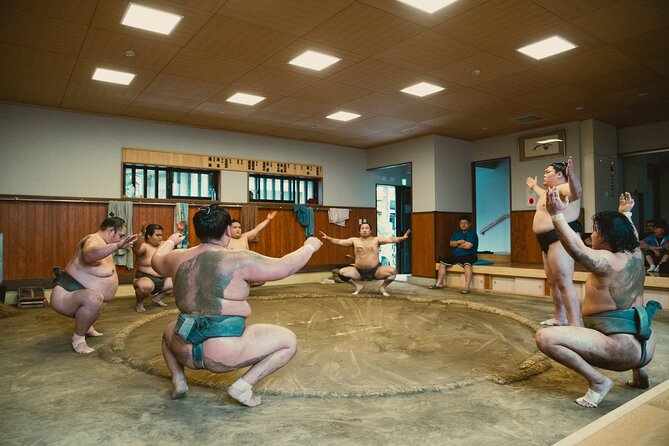
This works best if you want sumo culture, rules, and training context—not just big dramatic moments.
You’ll likely love it if:
- you enjoy cultural experiences with etiquette and clear guidance
- you’re curious about how sumo training works day-to-day
- you’re okay with an early start and a short walking segment
- you want a photo opportunity with wrestlers
- you prefer authentic training atmosphere over entertainment
You may want to skip it if:
- sitting cross-legged for about 1.5 hours with no chairs will be uncomfortable
- you need tournament-style, high-intensity action the whole time
- you’re bringing a child who can’t sit quietly (minimum age is 6, and noisy kids may be asked to leave)
Should You Book This Sumo Morning Practice Tour?
Book it if you’re the type of traveler who likes structure: you want to know what you’re watching, you want to follow local rules correctly, and you want an experience that uses the morning hours well. The combination of quiet ringside viewing, guided explanations, and photo time after practice is the sweet spot.
Don’t book if floor seating is a deal-breaker. And if you’re chasing nonstop full-contact drama like you might see in tournament coverage, set expectations accordingly—this tour is about practice, not performance.
If you can handle the early start and the stillness, this is one of the more respectful, meaningful ways to experience sumo in Tokyo’s Sumida area.