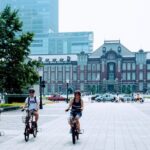
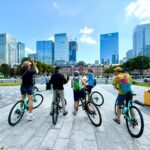
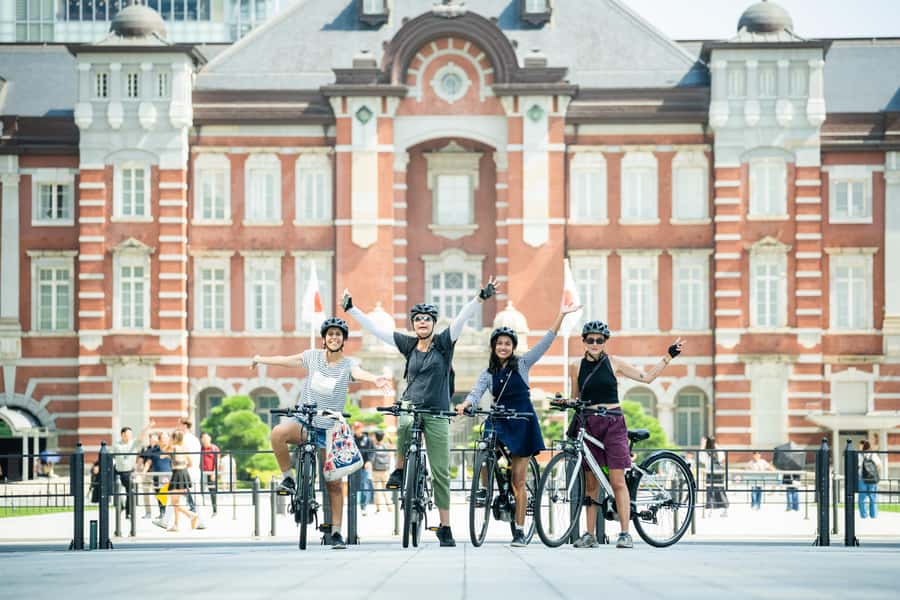
Tokyo by e-bike feels like cheating. You glide past big-name landmarks like Tokyo Station and the Imperial Palace with an English guide, and you also get time for calm breaks like a Japanese garden and a shrine stop plus a traditional snack. One thing to consider: you’re on a bicycle in real Tokyo, so you’ll deal with traffic and shared footpaths with pedestrians.
I like that this tour keeps your legs fresh with assist power, not wishful thinking, so 3 hours doesn’t turn into a workout. You can pick the mood you want: the City Route, the Tokyo Bay sunset-style ride, or the Tokyo Tower route with a bit more hill riding.
In This Review
- Key things that make this tour work well
- How the E-bike Makes 3 Hours Around Tokyo Feel Doable
- Three Routes, Three Different Moods: City, Bay, Tokyo Tower
- Passing Ginza and the Imperial Palace Area Without the Transit Grind
- Tokyo Station and Nihonbashi: Quick Context for a Massive City
- Kiyosumi Japanese Garden: A Break From Speed, With Time to Breathe
- Tomioka Hachimangu Shrine: Finishing With Local Tradition
- Odaiba, Rainbow Bridge, and That Sunset Shift
- Zojo-ji, Tokyo Tower, Atago Shrine, and Hibiya Park
- Riding Etiquette in Tokyo Traffic and Shared Footpaths
- Snack Stops, Photo Moments, and Small Extras That Matter
- Price and Value: Why This Costs $65 and Still Feels Fair
- Who Should Book This Tour, and Who Should Skip It
- Should You Book This 3-Hour Tokyo E-Bike Tour?
- FAQ
- How long is the Tokyo e-bike tour?
- Do I need to pick a route in advance?
- What’s included with the tour?
- What are the meeting and end details?
- Is it suitable for children?
- Are there height and weight limits?
- What if it rains?
- What if I’m late?
Key things that make this tour work well
- Easy e-assist riding for a long city loop so you can cover more ground than walking or buses
- English commentary with named guides such as Shinobu, Hiro, Miki, Yota, Yugo, and Narita
- Stops that aren’t only photo ops including a Japanese garden and temple/shrine time to slow down
- Two big view-chasers depending on route: bridges in Tokyo Bay and the skyline at sunset
- Snack included with a traditional Japanese treat (plus some routes include extra local snack moments)
- Safety and pacing are real priorities with guides who actively manage traffic situations
How the E-bike Makes 3 Hours Around Tokyo Feel Doable
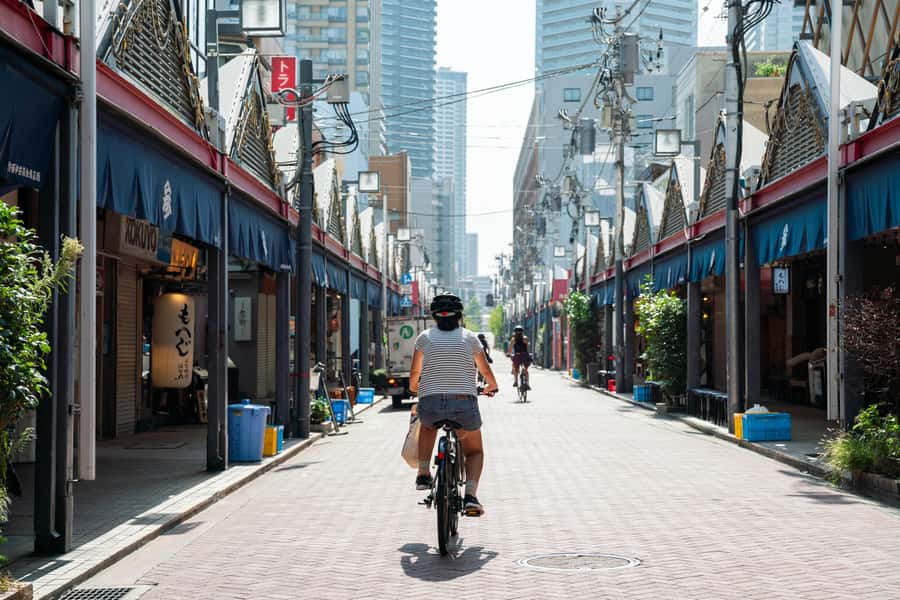
The whole point here is efficiency with less suffering. This is a guided e-bike ride, not a bike rental where you’re left to figure out streets, crossings, and where to stop. You get an e-bike plus a helmet, and they also provide gloves in winter seasons and a small knapsack option. There’s luggage storage too, which matters in Tokyo if you don’t want bags on your back the entire ride.
E-assist is the difference between Tokyo feeling like a city you can conquer and Tokyo feeling like a city that conquers you. The assist power means hills and longer stretches feel manageable, even if you don’t ride often. That shows up in how people describe the experience: bikes feel easy to get the hang of fast, and the ride can be fun instead of exhausting.
Still, it’s not a free pass. You’re biking near real movement—cars, buses, pedestrians, and bikes. If you’re uneasy on two wheels or you don’t like navigating crowded paths, plan to take it slow in the moments where the guide asks you to.
You can also read our reviews of more cycling tours in Tokyo
Three Routes, Three Different Moods: City, Bay, Tokyo Tower
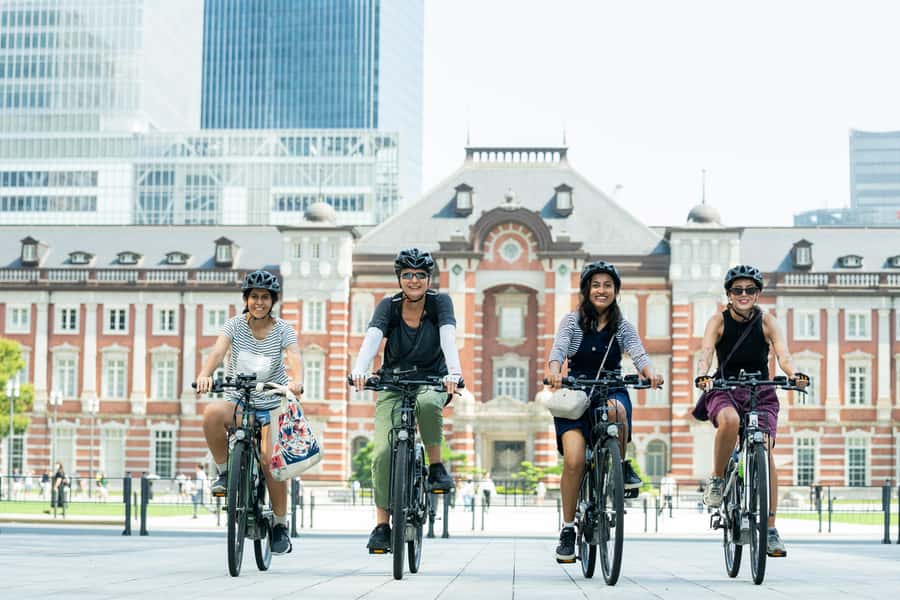
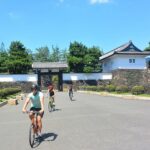
One tour, but three distinct flavors. Which one you choose changes what you see most—shopping streets and history pacing in the City Route, waterfront views and big-city skyline moments on the Bay Route, or classic temples and parks with Tokyo Tower in the Tokyo Tower Route.
City Route (classic landmarks + garden calm)
You pass by Ginza and the Imperial Palace area, then cycle toward Tokyo Station. After a Nihonbashi stop (including a snack break), you’ll ride to Kiyosumi Japanese Garden and finish at Tomioka Hachimangu Shrine. This route is built for mixing “I’m in Tokyo” icons with quieter, slower stops.
Tokyo Bay Route (bridges + sunset/night views)
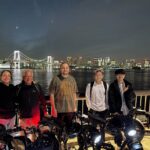
This one leans scenic. You’ll start with Sumiyoshi Shrine, then go to Tsukuda Tendai temple, pass by TeamLab Tokyo and Tokyo Big Site, and see landmarks like the Gundam statue. The Statue of Liberty in Odaiba and Odaiba Aqua City are part of the ride, with Rainbow Bridge passing by along the way. The start time varies by month so you can catch the best light, especially for the sunset and night skyline vibe.
Tokyo Tower Route (temple energy + a hilly feel)
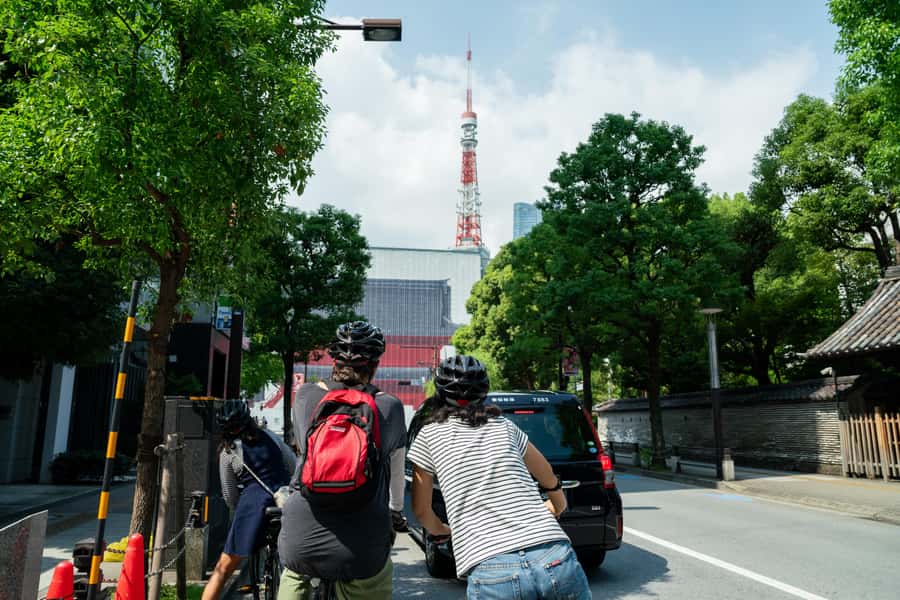
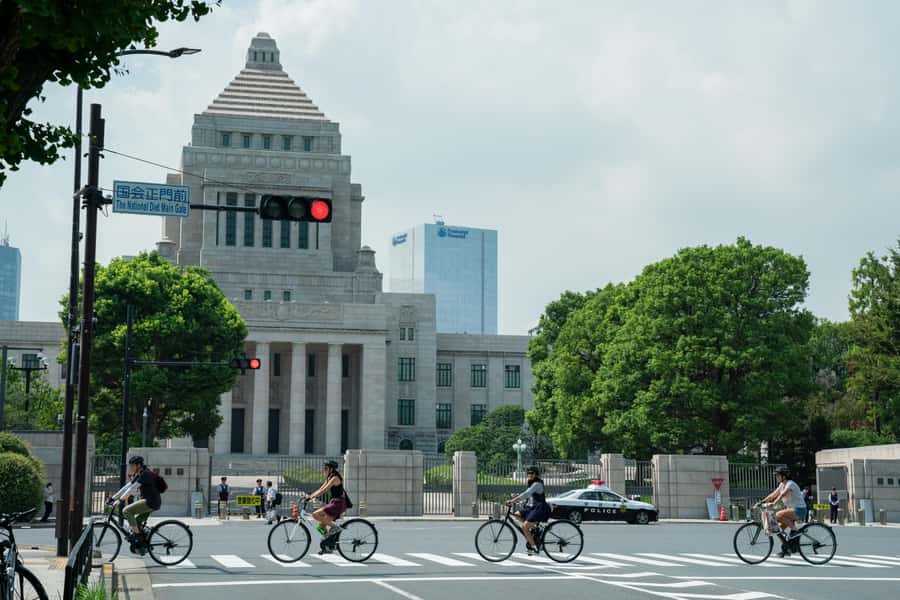
You start at Zojo-ji temple, get a photo spot at Tokyo Tower, then head toward Atago Shrine. There’s a snack stop, then you pass major landmarks like the National Diet Building and the Imperial Palace area before ending at Hibiya Park. Expect more riding around hills, but e-assist helps you keep it comfortable.
Passing Ginza and the Imperial Palace Area Without the Transit Grind
The City Route starts you in the heart of Tokyo’s “big names” area, and it’s smart for first-time visitors. You’re not waiting for multiple trains, and you’re not stuck staring at landmarks from far-away viewpoints.
As you pass through Ginza, it helps you understand where different Tokyo neighborhoods fit together. Then the Imperial Palace area gives you a sense of Tokyo’s older, more formal side. Even if you’re not going deep inside on this route, you still get the scale and the layout—the kind of context that makes later self-guided exploring easier.
A practical bonus: biking lets you see the street-level texture between those major points. Buses can miss that. Walking can take too long. The e-bike puts you in the middle: you move fast enough to cover distance, but not so fast that everything feels like a blur.
Tokyo Station and Nihonbashi: Quick Context for a Massive City
Tokyo Station is one of those places that feels huge even when you only see it from the outside. On this tour, it’s more than a stop to point at. You get the orientation effect—where transit lines cluster, how neighborhoods connect, and how the city flows.
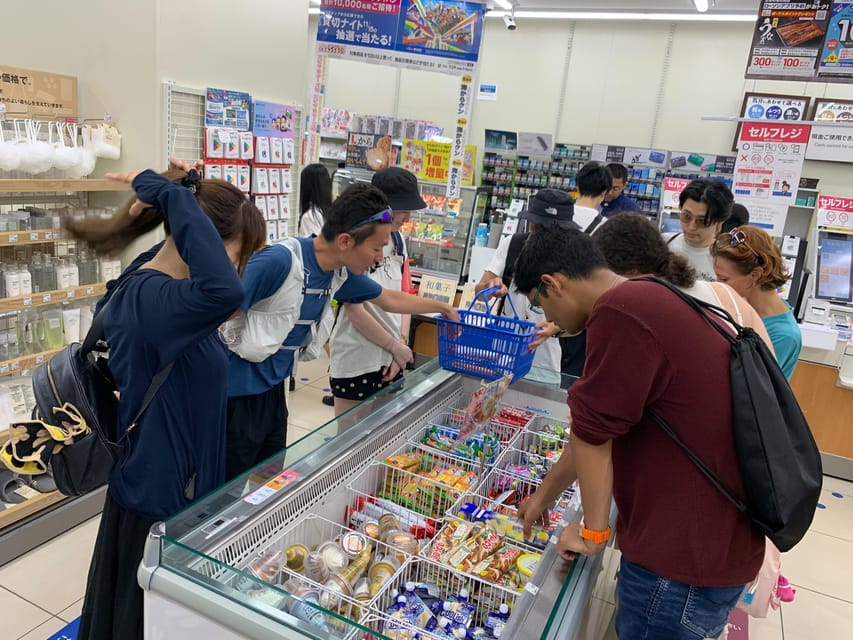
Right after that, you pass by Nihonbashi. This area is often treated like a “between places” stop, but cycling past it gives you better street context than a quick subway transfer. You also get a snack moment here. That’s a small thing, but it keeps momentum. You don’t end up with the common Tokyo problem of going from sight to sight on an empty tank.
Kiyosumi Japanese Garden: A Break From Speed, With Time to Breathe
If you want one stop that changes the tone of the day, it’s the Japanese garden. On the City Route, you’ll reach Kiyosumi Japanese Garden, and you’ll have time to walk and pause. People like this part because it breaks the motion. You ride, you stop, you breathe, then you ride again.
This is also where you get a different kind of Tokyo experience—nature and careful design inside the city. The garden time turns your photos from “I was there” into “this felt calm.” It’s a good move for couples, solo travelers, and anyone who wants more than skyline shots.
For a practical note: even with an e-bike ride, there’s still walking in the garden. If you’re hoping for minimal steps, this isn’t the tour for you. If you can handle short walking breaks, this is one of the best reasons to pick the City Route.
You can also read our reviews of more guided tours in Tokyo

Tomioka Hachimangu Shrine: Finishing With Local Tradition
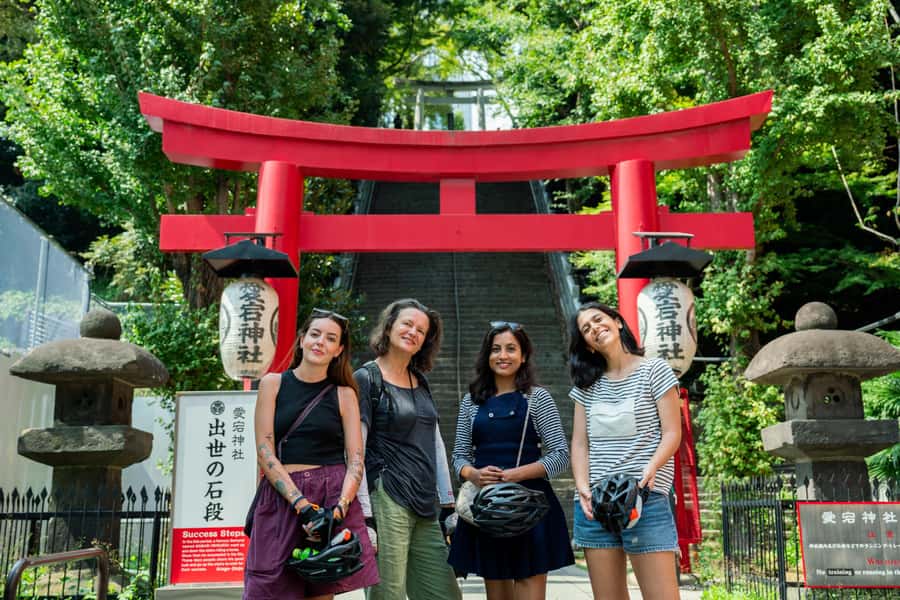
After the garden, the City Route ends at Tomioka Hachimangu Shrine. Shrines add contrast to big-city architecture. They also give you a sense of continuity—Tokyo isn’t only towers and stations.
Shrine time helps you slow down just enough to notice details you might otherwise skip. You’re guided through the area, so you’re not left guessing what you’re looking at. That matters, because Tokyo has a lot of symbols and old-school cues that take a second to “click” if you don’t have context.
This stop is also a good ending point because it isn’t as loud as some central streets. You finish with a quieter memory, not just the final stretch of traffic.
Odaiba, Rainbow Bridge, and That Sunset Shift
On the Bay Route, the bike becomes a front-row seat for Tokyo’s waterfront drama. Bridges, open space around the water, and wide, flat cruising make it feel less stressful than some other parts of the city. People often mention that once they get used to the bike proportions, the ride feels smooth and easy.
What you’re really here for is the view arc: daylight views, then the change into sunset colors, then the night skyline. The tour is timed by month so you can catch the light better than you could by guessing. That’s a big value point. Timing is everything for skyline photos, and guides already handle that planning.
Along the way you’ll pass by TeamLab Tokyo and Tokyo Big Site, then you hit iconic visual moments in Odaiba: the Gundam statue, the Statue of Liberty in Odaiba, and a snack stop at Odaiba Aqua City. Rainbow Bridge passing by caps it with a classic Tokyo Bay shape.
If you love photos and city lights, this is the route to choose. If you prefer quieter streets and calmer “history + garden” rhythm, pick the City Route instead.
Zojo-ji, Tokyo Tower, Atago Shrine, and Hibiya Park
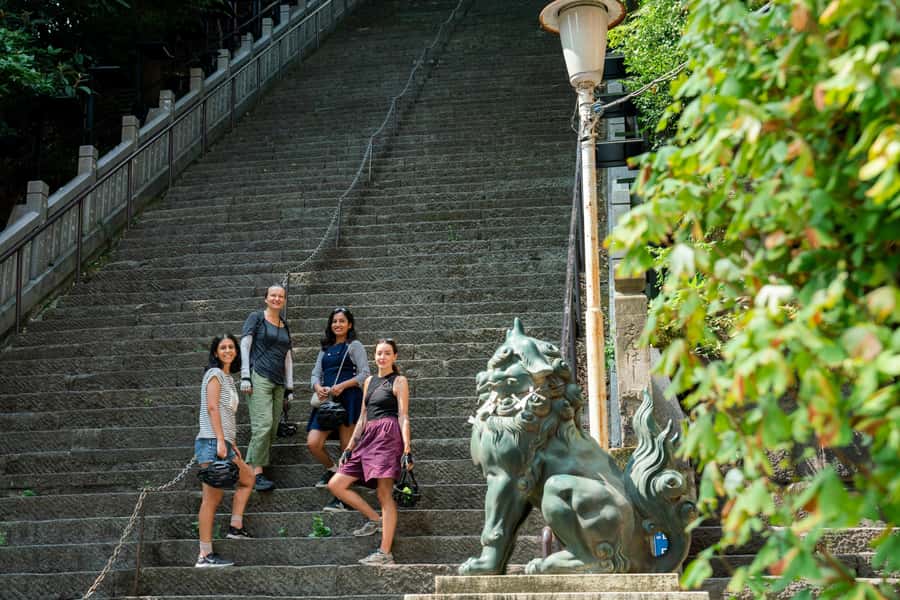
The Tokyo Tower Route leans into contrast: older temples, historic areas, then modern Tokyo icon energy. You start with Zojo-ji temple, which sets a traditional tone early. From there, you get a Tokyo Tower photo spot, which is a clear highlight if you want an iconic shot without spending your whole day chasing viewpoints.
Next comes Atago Shrine, and then you’ll have a snack stop—again, keeping the ride from turning into a nonstop push. You pass the National Diet Building and cycle through toward the Imperial Palace area, then end at Hibiya Park. Even if you don’t go deep into every structure, cycling through these areas gives you better spatial understanding: where power centers sit, where parks interrupt the city, and how Tokyo switches moods block to block.
People also note this route involves more hilly riding. The e-assist helps you handle it, but if you’re very new to bicycles, take the first stretch slowly and let the guide set your pace.
Riding Etiquette in Tokyo Traffic and Shared Footpaths
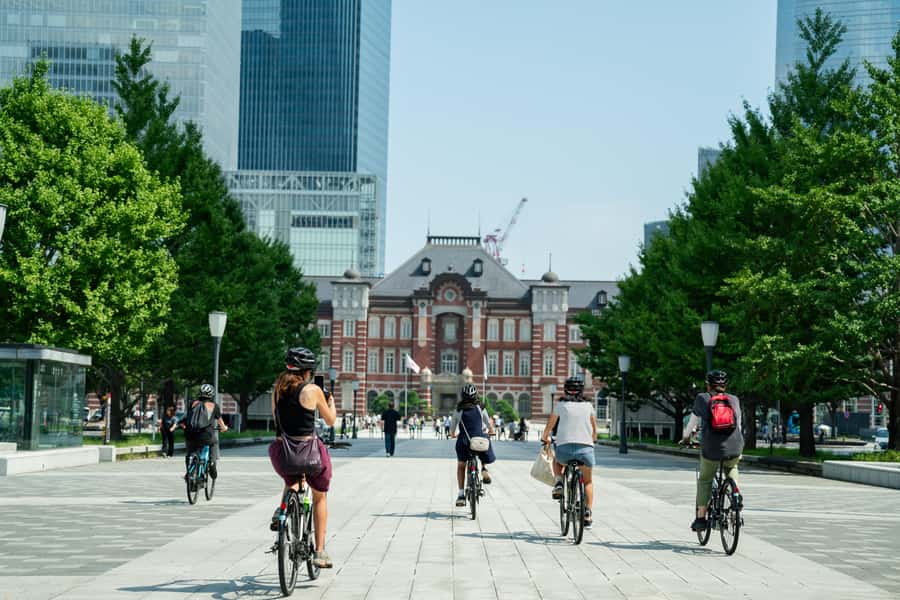
This is the part where you’ll either enjoy biking fully or you’ll spend the whole ride tense. Here’s the honest take based on what’s shared by riders:
- You will ride in places with cars and traffic flow.
- You will sometimes use shared footpaths where pedestrians move unpredictably.
- The group and guide help you stay safe, but you still need awareness and patience.
If you’ve never cycled in a crowded city, treat the first few minutes like training wheels. Follow the guide, keep a steady speed, and don’t fight the crowd. One very common tip: be ready to anticipate people stepping off their line and crossing your path, especially on footpaths.
The good news is that the guides are praised for safety and pacing. Names that come up often include Shinobu, Hiro, Yota, Miki, and others. That doesn’t remove the need for basic street sense, but it does mean you’re not left alone with traffic roulette.
Snack Stops, Photo Moments, and Small Extras That Matter
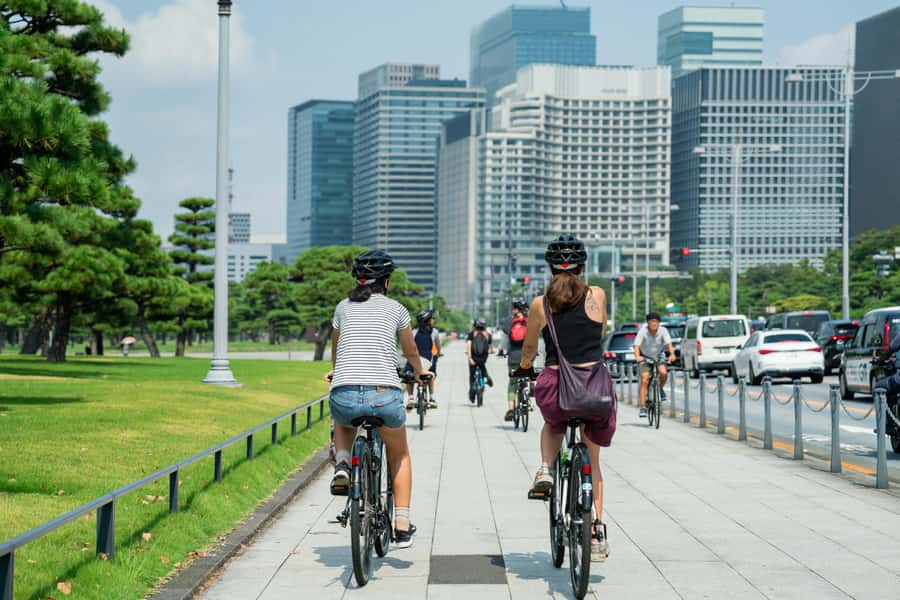
This tour is built around the idea that you should see a lot, but you should also feel the experience. That’s why snack stops show up more than once. You’ll get a traditional Japanese snack included, and you’ll have time for breaks so you don’t only ride.
Photo moments are part of the plan too. Tokyo Tower, for example, has a dedicated photo spot on the Tokyo Tower Route. On Bay Route rides, the best “photo moment” often isn’t one stop—it’s watching how the skyline changes as the sun drops.
In colder months, you may receive gloves. That matters more than it sounds. Chilly hands make a fun ride feel like you’re rushing to escape. Warm hands make you enjoy the scenery longer.
Price and Value: Why This Costs $65 and Still Feels Fair
At $65 per person for a 3-hour guided e-bike tour, you’re paying for time savings plus a guide who can point things out while you ride. You’re also paying for equipment: e-bike rental, helmet, and luggage storage. Add in the included snack and the fact that you’re not cobbling together multiple transport segments, and the value starts to make sense.
This is one of those Tokyo activities that can beat the “see everything but feel rushed” trap. You cover distance efficiently, but you still stop for walking moments like the garden and shrine visits. That blend—movement plus pauses—is hard to recreate on your own without planning and route knowledge.
If you’re comparing to a standard guided bus tour, the e-bike version tends to feel closer and more street-level. If you’re comparing to a walking-only day, the assist power means you can actually reach multiple neighborhoods without turning it into a blister contest.
Who Should Book This Tour, and Who Should Skip It
This tour is a strong match if you:
- want to see major Tokyo landmarks and calmer, slower stops
- like guided context so the city makes sense as you ride
- want an active day that doesn’t punish you physically
It’s also a good “first Tokyo” option because it helps you get oriented fast. It works for repeat visitors too, especially if you pick a Bay Route for skyline and bridge views.
Skip it if you’re not comfortable with biking around a busy city. Also note the restrictions: children under 13 aren’t permitted, and it’s not suitable for people under 147 cm or over 120 kg. It’s also listed as not suitable for pregnant women, people with heart problems, and wheelchair users.
Should You Book This 3-Hour Tokyo E-Bike Tour?
I’d book it if you want Tokyo to feel like a moving city you can understand, not a list of stops you rush through. The best choice depends on your personality: pick the City Route for garden and shrine calm, the Bay Route for bridges and sunset/night skyline, or the Tokyo Tower Route for temple-to-icon contrast.
One last nudge: if you’re anxious about sharing paths with pedestrians or riding near traffic, go in with a calm mindset and expect the guide to manage pacing. When you do that, the e-bike makes the whole thing feel relaxed, fun, and genuinely different from standard sightseeing.
FAQ
How long is the Tokyo e-bike tour?
The experience runs for about 3 hours.
Do I need to pick a route in advance?
Yes. The tour options differ by route, and the stops you see depend on which route you booked.
What’s included with the tour?
Included items are the e-bike rental, a guide, helmet, luggage storage, and a traditional Japanese snack. Winter season gloves are also provided, and a knapsack is available if you need it.
What are the meeting and end details?
You should arrive at the meeting point about 15 minutes before the tour start time for the briefing. The tour ends back at the meeting point.
Is it suitable for children?
Children under 13 are not permitted.
Are there height and weight limits?
Yes. It’s not suitable for participants under 147 cm and not suitable for participants over 120 kg.
What if it rains?
If the tour cannot be held due to rain or other reasons, they will notify you by email on the day before the tour. If weather changes on the day, it may be canceled for safety.
What if I’m late?
Because it’s a group tour, if you’re late you can’t join mid-way. The meeting time is 15 minutes before departure for briefing.