REVIEW · TOKYO
Tokyo: Shibuya Authentic Food Tour & Local Delights
Book on Viator →Operated by With Japan · Bookable on Viator
Shibuya smells like your next meal. This 3-hour, small-group evening Shibuya food tour strings together four local eateries you’d be unlikely to find alone, plus two drinks, right after the day crowds thin out. You’ll walk past Hachiko, cross Shibuya Scramble Crossing, then head into Center-gai and Dogenzaka for real neighborhood dining. What I like most is the built-in dinner plan (you get enough food for a satisfying night out), and the way the guide turns ordinary choices into culture and context—names you’ll see praised include Ryo, Guru, Haru, and Yo.
The main thing to think about: this is not a street-snacks-only crawl. You’ll spend time in sit-down or counter-style spots, and if you’re expecting constant takeaway walking bites, you might find the pacing a touch more structured than you hoped.
In This Review
- Key things to know before you go
- Shibuya at 6 PM: the timing that makes dinner easier
- From Hachiko to Scramble Crossing: how the route sets the tone
- Center-gai izakaya stop: where the night becomes a real meal
- Dogenzaka street time: variety without the tourist traps
- Four tastings that hit the big Tokyo buttons: yakitori, tonkatsu, sushi
- Smoky yakitori: your flavor baseline
- Crispy tonkatsu: the comfort-dinner lesson
- Sushi: the counter skills
- Drinks included: the smart kind of add-on
- The guide factor: why Ryo, Guru, Haru, and Yo keep showing up
- Price and value: what $90 buys in Shibuya
- Who this tour is perfect for (and who might not love it)
- Should you book this Shibuya Authentic Food Tour?
- FAQ
- How long is the Shibuya Authentic Food Tour?
- What does the tour cost?
- Where do you meet and when does it start?
- What’s included in the tour price?
- Are drinks included?
- How many people are in the group?
- Is hotel pickup included?
- What’s the cancellation policy?
Key things to know before you go
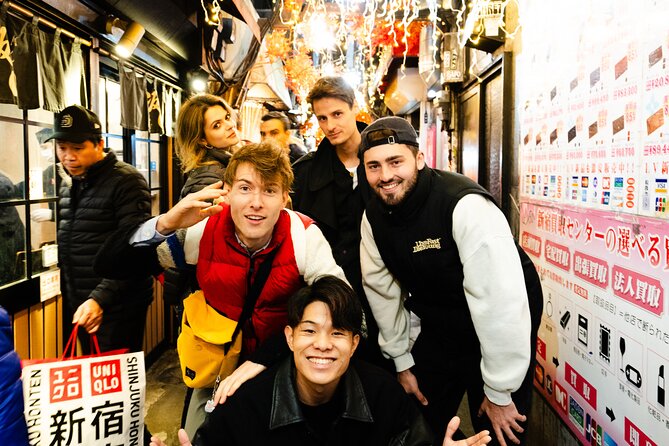
- Four food stops for one set price: enough food to feel like a full local dinner, not a few nibbles
- Two complimentary drinks: alcoholic and non-alcoholic options included
- Shibuya navigation is part of the value: Scramble Crossing, Center-gai alleys, then Dogenzaka
- Tokyo classics in a local sequence: smoky yakitori, crispy tonkatsu, and sushi
- Guides are a big deal: praised for friendliness and making Shibuya’s food culture click
Shibuya at 6 PM: the timing that makes dinner easier
Shibuya is intense at midday. At 6:00 pm, it’s still busy, but it’s more manageable, and the food scene starts feeling like dinner instead of just nightlife. This tour is designed for that sweet spot: you meet at Shibuya Tsutaya Japan (Q Front, B2F-8F area) and set off on foot right away.
You’re also not locked into a long day plan. Three hours is just enough time to eat well, learn a few useful cultural cues, and still have energy to explore on your own after. Since it ends back at the meeting point, you don’t have to play logistics chess before or after dinner.
One more practical win: this is a walking tour. That sounds obvious, but in Tokyo it matters. A guide can get you moving through Shibuya’s maze quickly, so you spend less time hunting and more time eating.
You can also read our reviews of more food & drink experiences in Tokyo


From Hachiko to Scramble Crossing: how the route sets the tone
The tour kicks off with a pass by Hachiko, then you get your bearings crossing Shibuya Scramble Crossing. That moment is big. Even if you’ve seen it in videos, standing there is still a jolt.
Then the route shifts from big landmarks to smaller streets. You head into Center-gai, where the vibe changes from the headline view of Shibuya to the back-street restaurant world: narrow lanes, izakayas, and lots of places that look busy but don’t shout tourist signage.
Center-gai is where I like to start any food evening in Shibuya. The streets feel like they’re built for quick visits—grab something, sit down, talk over drinks, and keep moving. You’ll also spend time where locals of different ages eat, not just one “tour zone.”
Center-gai izakaya stop: where the night becomes a real meal
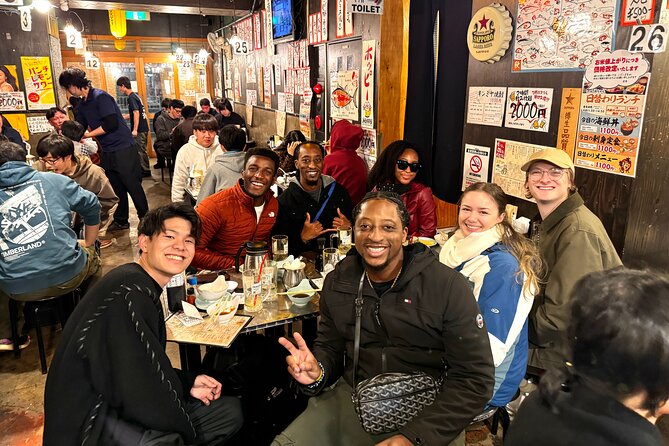
Center-gai is the first neighborhood you dive into. Here, you stop at a local izakaya for one of the admission-ticket-included dining segments. The point isn’t just to eat. It’s to learn how Japanese casual dining works in practice—how meals are ordered, how group dining flows, and how to move from one dish to the next without it feeling chaotic.
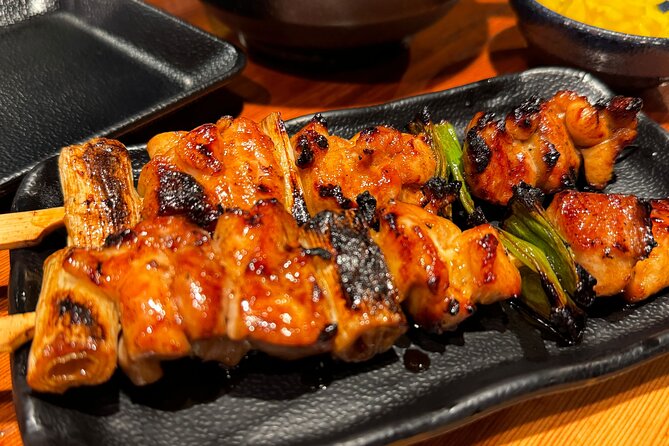
This is also the moment where the tour usually delivers on one of its best promises: giving you smoked and grilled flavors that are hard to replicate on your own. The tour’s food lineup includes smoky yakitori, and that smoky style is exactly the kind of thing you want to understand in its home environment.
If you’re the kind of person who gets picky about ordering, this stop can save you stress later. You can taste first, then learn what to look for when you come back another night.
Dogenzaka street time: variety without the tourist traps
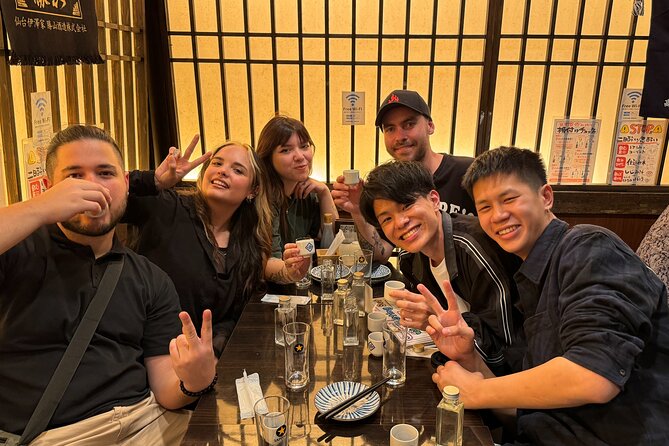
After Center-gai, the route continues to Dogenzaka. Dogenzaka is known for a wide variety of restaurants and izakayas, and it’s popular with locals across age groups. That matters because you get a sense of what normal eating looks like—less performance, more habit.
Dogenzaka also works as a “second wave” of the evening. By now you’ve walked, crossed the main intersections, and settled into the idea that you’re eating in stages. The second major eating segment here helps the tour feel like a proper dinner arc instead of a short snack parade.
This is where the tour structure starts to shine: you’re not just collecting foods. You’re experiencing a Tokyo food rhythm—walk, arrive, order, eat, move, repeat. It’s the kind of pacing that keeps your energy up and your stomach happy.
Four tastings that hit the big Tokyo buttons: yakitori, tonkatsu, sushi
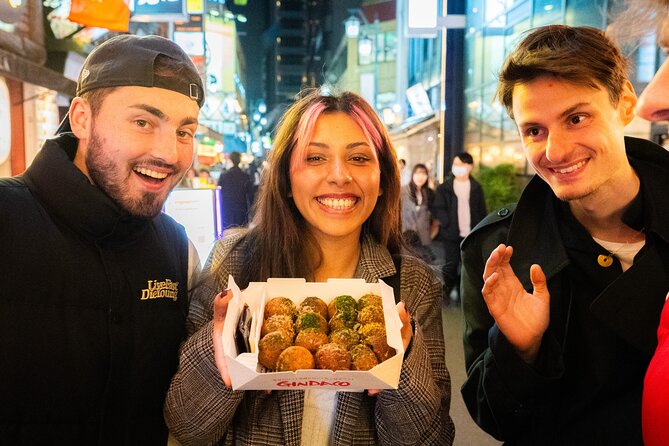
The headline foods are part of the reason this tour sells. You’ll sample smoky yakitori, crispy tonkatsu, and sushi, plus additional local dishes that round out the meal. With four food stops, the tour doesn’t feel like you’re making do. You should leave full enough that you won’t immediately go hunting for more dinner elsewhere.
Here’s how these three staples usually land for you on a Shibuya tour:
You can also read our reviews of more tours and experiences in Tokyo



Smoky yakitori: your flavor baseline
Yakitori is more than grilled meat. It’s technique, seasoning, and timing. When you taste it in Tokyo, you get an immediate baseline for what “good” feels like: char on the outside, juicy inside, and sauces that taste balanced rather than sugary.
Crispy tonkatsu: the comfort-dinner lesson
Tonkatsu is the kind of dish that teaches you something fast: texture matters in Japanese comfort food. Expect crunchy coating, tender pork, and sauces designed to bring the whole bite together. If you’ve ever tried tonkatsu abroad and wondered why it tastes different, this is where you learn the difference quickly.
Sushi: the counter skills
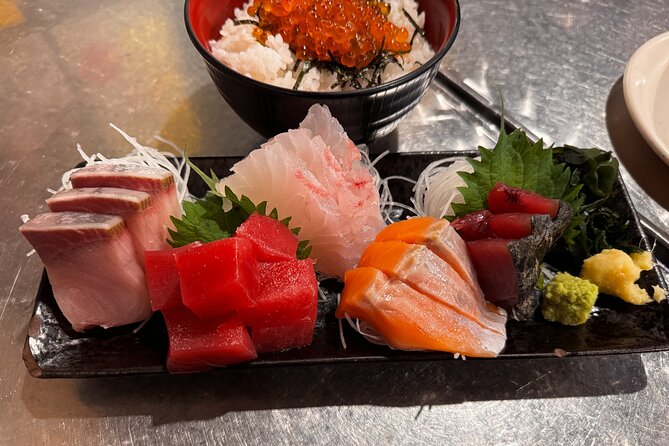
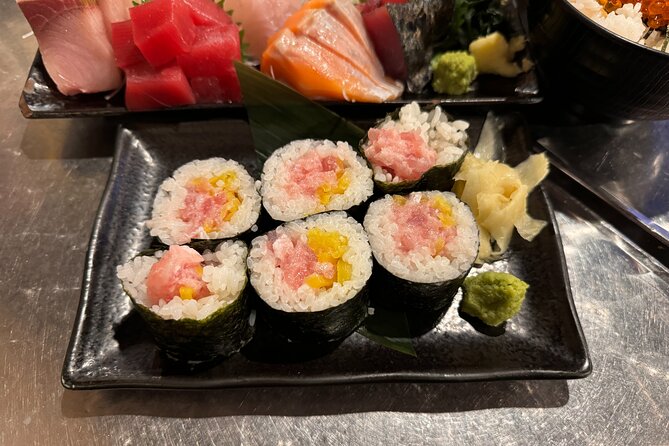
Sushi on a tour is useful because you’re not stuck trying to decode menu language alone. You get the chance to taste styles and pairings that fit what’s commonly served in local spots. It also helps to see how sushi is ordered and served in a setting where locals know what they want.
One practical tip: even with four stops, you’re still walking between places. Wear comfortable shoes and avoid heavy meals earlier that day. You don’t need to fast, but give your stomach room. This tour is designed as your dinner.
Drinks included: the smart kind of add-on
Two complimentary drinks are included, with alcoholic and non-alcoholic options. That’s not a throw-in. It helps you settle into the izakaya culture where meals are social and slow enough to talk.
If you’re drinking alcohol, this is a nice way to get a local feel without having to calculate costs at each stop. If you’re not drinking, the non-alcoholic option keeps the flow smooth—you’re still part of the group toast rhythm.
Just keep in mind you’ll be walking between stops. Take it at a pace that keeps you steady on the streets.
The guide factor: why Ryo, Guru, Haru, and Yo keep showing up
This tour is built around one key idea: the food tastes better when you understand what you’re looking at. The guide’s role is to add context—why a certain place feels local, how ordering works, and what traditions sit behind the dishes.
In the praise you’ll see linked to this tour, guide names like Ryo, Guru, Haru, and Yo come up again and again. What stands out is not just food knowledge. It’s the vibe: friendly, easy to talk to, and capable of guiding a group through a night that can be chaotic if you’re on your own.
A small caution based on past experiences with similar tours in Tokyo: English quality can vary by guide even when the tour is marketed as English-speaking. If you want a lot of back-and-forth conversation, do a quick check on your expectations. You’ll likely get solid explanations either way, but the smoothness of conversation can change.
Price and value: what $90 buys in Shibuya
At $90 per person, this isn’t a budget snack. But it can be good value because you’re paying for four distinct dining stops plus two drinks, guided routing through Shibuya, and enough food to count as a satisfying dinner.
Here’s the math logic I use:
- Four meal segments in Shibuya can add up fast, especially at the kind of places locals actually choose.
- Two drinks included lowers the “hidden cost” part of eating out in Tokyo.
- The guide cuts time and reduces guesswork, especially in areas like Center-gai and Dogenzaka where menus and ordering can feel intimidating.
So if your plan is to eat well in Shibuya anyway—this just packages the best route and keeps you from wandering into the wrong spots.
If you’re the type who wants to pay for one dish, take photos, and move on, then $90 may feel steep. But if you want an evening that already has food lined up and doesn’t require constant menu problem-solving, the price starts to make sense.
Who this tour is perfect for (and who might not love it)
This works best if you:
- are new to Tokyo and want help navigating Shibuya without stress
- want a full dinner plan with yakitori, tonkatsu, and sushi in one night
- prefer small-group pacing (maximum 15 travelers)
- like an evening activity after sightseeing
It may not be ideal if you:
- want mostly walking street food with constant on-the-go bites
- hate the idea of any sit-down or counter-style portions
- need perfect, fluent conversation in every moment (guides can vary)
If you fall into the middle—curious but flexible—this tour is a strong match.
Should you book this Shibuya Authentic Food Tour?
I’d book it if you want Shibuya food the easy way: a guided route, four stops that add up to dinner, and classic Tokyo dishes in a neighborhood that’s hard to navigate well alone.
Skip it if your dream Shibuya night is food only in tiny, take-everywhere portions. This tour is structured like a proper eating plan, not a pure street-food wander.
If you do book, bring comfortable shoes, arrive hungry, and keep an open mind about where the food ends up—Shibuya’s best meals often aren’t the ones screaming for attention from the main street.
FAQ
How long is the Shibuya Authentic Food Tour?
It’s about 3 hours.
What does the tour cost?
It costs $90.00 per person.
Where do you meet and when does it start?
You meet at SHIBUYA TSUTAYAJapan (Q Front area, B2F-8F). The start time is 6:00 pm.
What’s included in the tour price?
You get visits to 4 local food stops, 2 complimentary drinks (alcoholic and non-alcoholic), and an expert English-speaking local guide, plus walking time guidance.
Are drinks included?
Yes. Two complimentary drinks are included.
How many people are in the group?
The tour has a maximum of 15 travelers.
Is hotel pickup included?
No. There is no hotel pickup or drop-off.
What’s the cancellation policy?
Free cancellation is available up to 24 hours before the experience start time for a full refund.