REVIEW · TOKYO
Tokyo Great Cycling Tour
Book on Viator →Operated by 東京グレートサイクリングツアー · Bookable on Viator
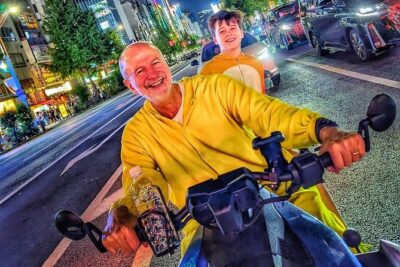
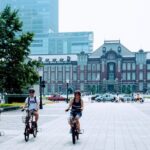
Tokyo by bike beats the walking plan. I love the small-group pace (max 12) and I love that bikes reach corners big sights hide from bus routes. You’ll move through Tokyo like a local, guided with stops at Tsukiji, Zojo-ji, Meiji Jingu, and the Imperial Palace area, with time set aside to actually look and learn as you ride.
The main thing to consider is the moderate fitness level and the fact that you’re cycling for about 6 hours. On very hot days, the plan can change (for example, a picnic may turn into a lunch at an izakaya), and the tour depends on good weather to run smoothly.
In This Review
- Key highlights to know before you go
- Why a Tokyo bike tour beats the usual hit-list
- Getting started near Shinkawa (and what that means for your day)
- Tsukiji Jogai Market: local shopping life after the Inner Market moved
- Zojo-ji Temple: old faith lines up with Tokyo Tower
- High-rise neighborhoods and a cemetery in fashionable Tokyo
- Meiji Jingu Shrine: a calm break in the middle of the city
- Imperial Palace area: seeing power, then rolling onward
- Pacing, safety, and the guide effect (Toshi, Nick, and Naoko)
- Price and value: what $99.49 buys you in real time
- Weather reality: why good conditions matter
- Should you book this Tokyo Great Cycling Tour?
Key highlights to know before you go
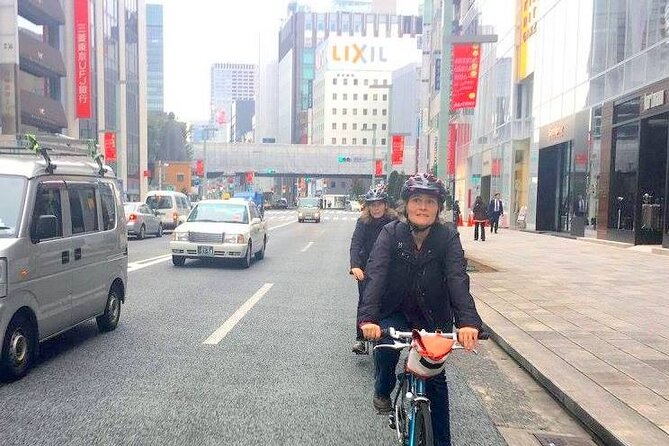
- Small-group max 12 means easier conversation, less crowd pressure, and a more controlled ride
- Bike access gets you into places buses can’t reach
- Tsukiji Jogai Market is still lively even after the Inner Market moved to Toyosu
- Zojo-ji’s contrast view: old temple buildings with Tokyo Tower in the background
- Meiji Jingu shrine time gives you a real pause at one of Tokyo’s most popular Shinto shrines
- Flexible food plan when heat hits, with an izakaya lunch swap reported by the guide team
Why a Tokyo bike tour beats the usual hit-list
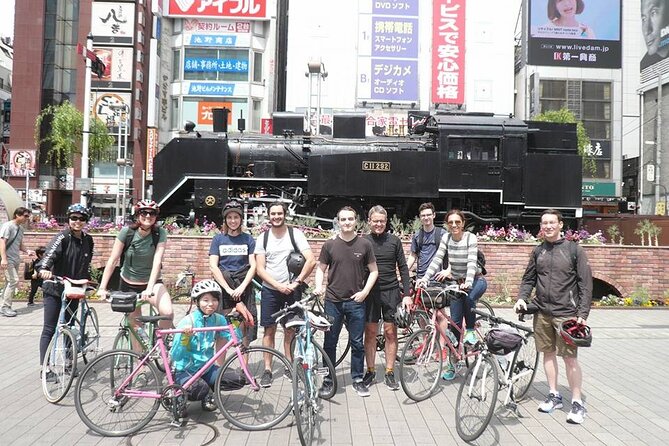
Tokyo is built for walking, sure. But bike travel is how you cover ground without spending your day in transit hell. This tour’s structure is simple: you get a route that strings together major landmarks, then you spend short, focused blocks at each spot instead of rushing between them on foot.
What I like is that it’s not just about checking boxes. The stops are chosen to show Tokyo in layers—market life, temples, shrine grounds, and the political heart of the city—while you’re still in motion. That motion matters. You see the city’s rhythm between sights, including the look of neighborhoods you’d normally only glimpse from a bus window.
It also helps that the group is capped at 12. That changes everything. You’re more likely to feel like you can ask questions, adjust your pace without being left behind, and feel taken care of as you ride. In the reviews, guides like Toshi, Nick, and Naoko are repeatedly named for keeping people safe and comfortable, and that tone matches what you want on a street-level city bike day.
The one “watch-out” is the bike time. If you’re not comfortable riding for stretches at a moderate pace, this won’t feel like a casual stroll. It’s best viewed as an active sightseeing day, not a slow cruise.
You can also read our reviews of more cycling tours in Tokyo
Getting started near Shinkawa (and what that means for your day)
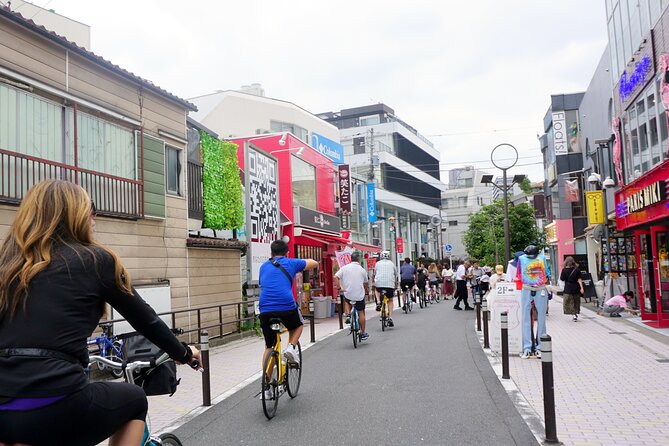
You meet at Tokyo Great Tours in Shinkawa (Chuo City), with the tour starting at 9:00 am and ending back at the meeting point. Meeting earlier is smart here. It buys you more usable daylight and, on some seasons, it helps you dodge the worst of the midday heat.
Being near public transportation also matters. Even if you’re staying in a far neighborhood, you should be able to reach the start without building your whole day around getting there. A bike tour is only as good as your logistics, and this one is designed to be straightforward.
You’ll use a mobile ticket, which is convenient if you like keeping everything on your phone. And because the tour is timed to run for about 6 hours, you can plan the rest of your day with confidence—either dinner nearby or a slower evening in the neighborhood of your hotel.
Finally, the tour is explicitly framed for people with moderate physical fitness. That doesn’t mean you need to be a cyclist. It does mean you should be prepared to ride and keep up for the day’s length.
Tsukiji Jogai Market: local shopping life after the Inner Market moved
The day kicks off at Tsukiji Jogai Market. This area is still busy with local shoppers and visitors even after the famous Inner Market moved to Toyosu. That detail is useful. You’re not just seeing a tourist museum of what used to be. You’re entering a working-feeling market scene where people are still doing everyday things—shopping, browsing, and grabbing snacks or ingredients.
In about 15 minutes, you won’t “experience Tsukiji” in a full-foodie way. But you can get something more valuable: context. You’ll see how this market district functions now, and you’ll likely get local explanations about why Tsukiji remains part of Tokyo’s food story even as the most headline-grabbing portion relocated.
A short stop also keeps the tour moving at a pace that works. Market areas can be hectic. Limiting the time helps you avoid getting stuck in crowds while the rest of the day waits behind you.
If you’re the type of person who wants deep food crawling, you may still want to come back later on your own. But as a first anchor point in your Tokyo week, this stop gives you immediate local texture without stealing hours.
Zojo-ji Temple: old faith lines up with Tokyo Tower
Next up is Zojo-ji Temple, and the stop is only about 15 minutes. That’s the kind of timing that can work really well with biking: you get just enough time to appreciate the setting and take photos without turning the day into a long wait.
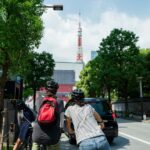
Zojo-ji is known for its traditional Buddhism temple feel—and the best part for many people is the visual contrast. When you look back, you get Tokyo Tower in the background. That juxtaposition is very Tokyo. Old structures sit close to modern skyline icons, and the city doesn’t treat them as separate worlds.
What you’ll likely enjoy most here is how the ride positions you. On foot, you might miss the exact sightline that makes this contrast click. By bike, your guide can place you into the right view with less backtracking.
The possible downside is the time window. If you want to linger for a longer meditation moment, 15 minutes can feel short. But for a cycling day that must cover multiple major sites, it’s a reasonable trade-off.
High-rise neighborhoods and a cemetery in fashionable Tokyo
Between the big name landmarks, the route carries you through the city’s in-between spaces. You’ll pass lots of high-story apartments, expensive office and shopping buildings, and other areas that show Tokyo’s density and vertical living.
This is where a bike tour quietly does you a favor. You’re not just moving from “attraction to attraction.” You’re also seeing how Tokyo looks when it’s not framed as a postcard.
There’s also a stop area that stands out: a cemetery situated in the middle of fashionable areas. That contrast can be surprising if you expect city life to be only neon, commerce, and nightlife. But Tokyo does respect its quieter spaces, even right next to expensive neighborhoods.
Is this the most “wow” stop? For some people, no. But it’s often the most thought-provoking. It helps you understand that Tokyo isn’t only about entertainment and shopping. It’s also about continuity, memory, and how daily life coexists with places for reflection.




Meiji Jingu Shrine: a calm break in the middle of the city
Meiji Jingu Shrine is one of Tokyo’s most popular Shinto shrines, and the stop is about 20 minutes. That extra time versus some of the other stops matters. It gives you room to slow down and notice details, like the transition from city energy to shrine calm.
A 20-minute visit is long enough to get your bearings, walk through the main area at an easy pace, and feel like you weren’t just pushed through. It’s also short enough that you don’t lose your whole afternoon if the weather gets hot or if you’re tired from riding.
What you’ll learn here is usually the bigger-picture meaning of the shrine in Tokyo’s cultural life—something that’s hard to pick up from a quick self-guided stop. On this tour, the guide narration is part of the value: you’re not just seeing buildings and gates, you’re getting context while you travel.
If you’re sensitive to crowds, keep expectations realistic. This is popular for a reason. But because the day is paced as a cycle route with guide-led timing, you should still feel like you’re in control of your experience rather than stuck waiting on random foot traffic.
Imperial Palace area: seeing power, then rolling onward
You’ll visit the Imperial Palace, where the Emperor and Empress live. The time is about 15 minutes. That short window can feel tight if you want to zoom in on architecture and grounds, but it’s actually a smart fit for a biking day.
The value here isn’t a deep museum-style session. It’s getting a sense of where Tokyo’s leadership is centered and understanding why this site matters in the city’s modern identity. Even from what you can access in a brief visit, it helps you connect Tokyo’s cultural landmarks to its political reality.
Fifteen minutes also helps keep the ride smooth at the end of your day. You’ll have enough time to see the area, take photos if you want, and then get back to the bikes without the feeling of a rushed exit.
Pacing, safety, and the guide effect (Toshi, Nick, and Naoko)
A bike tour lives or dies by the guide. Good instruction keeps you relaxed. Bad instruction turns the day into stress.
The guide team is repeatedly praised for caring for people the whole time. Names like Toshi and Nick show up alongside comments about safety and welfare. Naoko is also mentioned with the same theme. That matters because Tokyo streets can be busy, and “fun on a bike” depends on how well the group is managed.
One more detail that stands out: when weather gets brutally hot, the plan can adjust. In one case, the picnic was changed to a lunch at an izakaya. That’s a practical sign of a guide team that watches conditions and makes sensible calls so the day doesn’t fall apart.
You’ll also get help with the practical stuff, like making sure bikes are running smoothly. One review specifically called out that a bike was in good condition. That might sound minor, but on a 6-hour ride, it’s the difference between “comfortable day” and “constant small annoyances.”
Finally, because the group is capped at 12, you’re less likely to get separated into chaos. You can generally keep your position and stay aware of what’s next.
Price and value: what $99.49 buys you in real time
At $99.49 per person for about 6 hours, you’re paying for guided interpretation plus a lot of travel efficiency. The biggest value is that you’re hitting multiple major landmarks while minimizing dead time.
Here’s what makes the math feel fair:
- You visit several big, famous sites in one day: Tsukiji Jogai Market, Zojo-ji, Meiji Jingu, and the Imperial Palace area.
- The tour format uses bikes, so you cover more ground than walking would allow.
- Admission tickets at each listed stop are free, which keeps your spending predictable.
- The small-group cap helps you feel cared for, not processed.
There’s a trade-off, of course. You can’t slow down indefinitely or swap every stop for your personal favorites. It’s a set route with set time blocks. But if you’re in Tokyo for a limited number of days, that structure is exactly what you want.
Also, booking is typically done about 46 days in advance on average, so if your schedule is fixed, don’t wait until the last minute.
Weather reality: why good conditions matter
This tour needs good weather. That isn’t just a comfort issue—it affects whether the ride is safe and enjoyable.
If it’s canceled due to poor weather, you’ll be offered a different date or a full refund. That’s the right kind of flexibility for a cycling plan, because you can’t control heat, rain, or wind.
And even when it runs, hot conditions can change the plan. The izakaya lunch swap is an example of how the day can be adapted to keep you fed and not cooked.
My practical advice: if you know your schedule is tight and you hate the idea of weather risk, keep a backup plan for the same week. If you can be flexible, this style of tour becomes much more rewarding.
Should you book this Tokyo Great Cycling Tour?
Book it if you want a focused “Tokyo highlights with local pacing” day and you’re comfortable riding a bike for a few hours. This is especially good for first-timers who want to see Tsukiji and the major shrine and palace stops without spending half the day trapped in transfers.
Skip it if you’re looking for a super slow, purely leisurely sightseeing day. The moderate fitness requirement is real, and the short stop times mean you won’t get long, unstructured wandering at each landmark.
If you’re trying to decide, here’s the quick test: if biking sounds like your preferred way to see Tokyo, and you like learning as you go—rather than just photographing—this tour is a strong match. The combination of small-group handling, bike reach, and guide names like Toshi, Nick, and Naoko tied to safety and care is exactly the kind of “day works” recipe you want.