REVIEW · TOKYO
Tokyo: Discover the Art of Kintsugi in Ginza
Book on GetYourGuide →Operated by AGARTA Inc. · Bookable on GetYourGuide
Broken ceramics get a second life here. This 90-minute kintsugi workshop in Ginza pairs a hands-on craft with Japan’s idea of honoring imperfections, in a cozy private room just a few minutes from Ginza Station. It’s also an easy cultural detour when your Tokyo days are packed.
I like two things a lot: the step-by-step coaching from instructors such as Tatsu and Teki Sensei, and the fact that you leave with a repaired ceramic souvenir you can actually bring home in your luggage. The only real drawback to keep in mind is that this is a faster, workshop-style version of kintsugi, using synthetic lacquer instead of the traditional month-long process.
Still, if you want a calm, creative hour-and-a-half in central Tokyo, this one is a strong pick—especially for your first kintsugi experience.
In This Review
- Key Points Before You Go
- Why This Ginza Kintsugi Class Fits Real Tokyo Schedules
- Meeting at Cafe AOU Ginza Forest: Getting There Without Stress
- Inside the Private Room: What the Workshop Experience Feels Like
- The Instructor and the Step-by-Step Kintsugi Flow
- Synthetic Lacquer Kintsugi: Fast Results, Practical Crafting
- Choosing Your Piece and Making It Yours
- Take-Home Reality: Packaging, Handling, and Use at Home
- Price and Value: Is $75 Reasonable for Ginza?
- Who Should Book This Kintsugi Workshop (And Who Should Skip)
- Practical Tips and Realistic Expectations
- Should You Book This Kintsugi Workshop in Ginza?
- FAQ
- How long is the kintsugi workshop?
- Where is the meeting point?
- How big is the group?
- What languages are offered during the class?
- Is this workshop using traditional gold lacquer kintsugi?
- Will I take my repaired ceramic home?
- Is the repaired ceramic microwave-safe?
- What’s included in the price?
Key Points Before You Go
- Ginza location in a ground-level café space near Ginza Station, so you’re not commuting across town
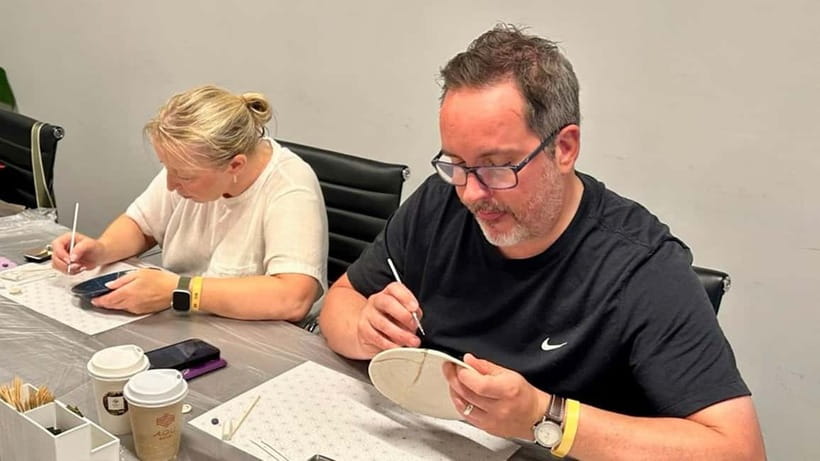
- Small group limited to 8 participants, which helps you get direct attention while you work
- You finish and take home your piece in 90 minutes using synthetic lacquer and metallic powder
- All tools and materials are provided, including a ceramic item to restore
- You get careful packaging to transport your repaired ceramic safely
- English and Japanese instruction, with instructors who share context about Ginza as you go
Why This Ginza Kintsugi Class Fits Real Tokyo Schedules
Tokyo can swallow your day fast. This workshop keeps things simple: you get 90 minutes of focused making, not a half-day commitment. And the location is practical—near Ginza Station, in a room you’ll find without trekking through multiple transit lines.
The craft itself also helps time feel right. Kintsugi isn’t about rushing; it’s about patient, precise repair. In a workshop setting, that mindset is built in. You’re guided through essential steps, then you see your own repair come together while your brain is still fresh from sightseeing.
Value-wise, the $75 price makes more sense when you compare it to the real costs of materials and instruction. You’re not just watching a demo—you’re actively restoring a ceramic piece, keeping it afterward, and getting a teacher’s direction the whole time.
You can also read our reviews of more tours and experiences in Tokyo.



Meeting at Cafe AOU Ginza Forest: Getting There Without Stress
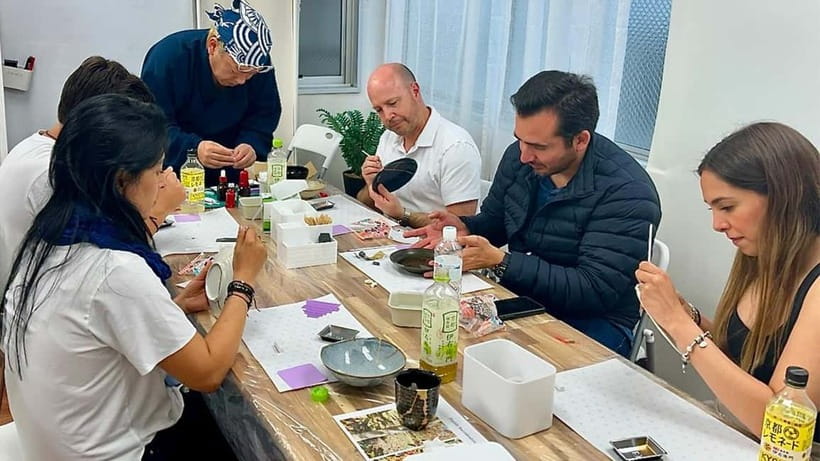
Your meeting point is Cafe AOU Ginza forest, on the ground level of the Daiwa Ginza Building. That’s a nice setup because Ginza is dense and signage can be busy; starting at a named café helps you orient quickly.
One more helpful point: the workshop location can change depending on availability and the number of reservations. If that happens, you’ll get an email one day before with the updated location details. Plan to check your email the day before so you’re not arriving at the wrong door.
Also, there’s no hotel pickup or drop-off, so you’ll want to build in time to reach Ginza Station on your own. The upside is you’re not stuck waiting for a car or timetable—just show up and get to work.
Inside the Private Room: What the Workshop Experience Feels Like
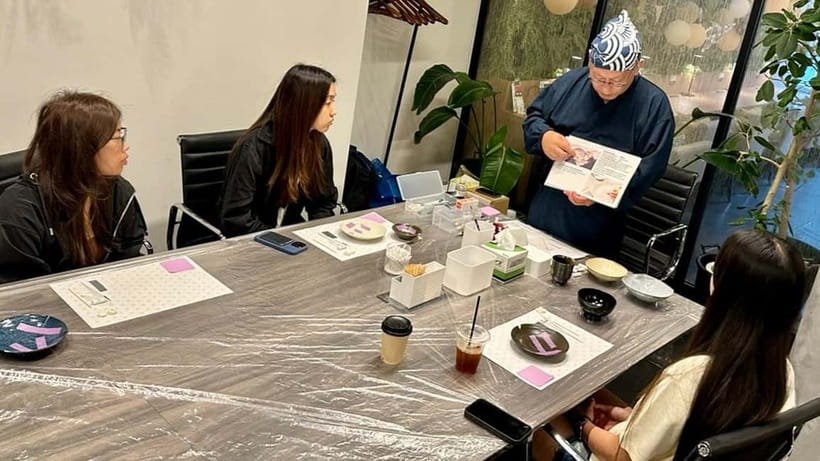
The class happens in a dedicated private room near Ginza Station, tucked away from the bustle of the street outside. That matters more than it sounds. Kintsugi is delicate, and a calmer room helps you focus on line, placement, and careful handling.
You’ll also notice the format is set for small groups. The class is capped at 8 participants, which means your instructor can keep an eye on your progress without you feeling like you’re on your own.
Expect a welcoming start. You’ll be offered a complimentary soft drink, and the instructor will walk you through how the session will flow. In some sessions, you may also be asked to choose among cracked pieces (for example, one participant mentioned a choice between two colored cracked plates), but the key point is that you’re not starting from scratch—you’re given a ceramic item ready for repair.
The Instructor and the Step-by-Step Kintsugi Flow
The workshop is built around a guided sequence, not vague instructions. You’ll follow clear steps from the instructor, with enough pacing to let you actually do the work.
In the real class atmosphere, names come up. I’ve seen instruction led by teachers such as Tatsu and Teki Sensei. Both are described as friendly and supportive, with explanations that keep the process understandable even if you’ve never tried kintsugi before.
Here’s what that coaching typically means for you in practice:
- You get told what to do, then you do it right there in front of the group.
- When something feels tricky—alignment, careful application, or handling a broken edge—you’re able to ask questions and adjust.
- The instructor shares context along the way, including bits of local storytelling tied to Ginza.
One practical note: because the group is small but still includes multiple participants, the session may move at a shared pace. In at least one case, a student noted they wished they had a bit more hands-on time because another participant needed extra help. That’s not a dealbreaker, but it’s good to know the class is still coordinated rather than one-on-one.
Synthetic Lacquer Kintsugi: Fast Results, Practical Crafting
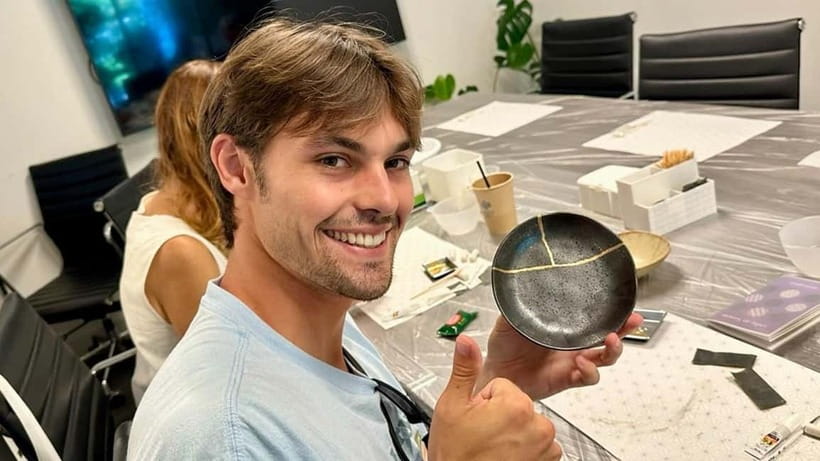
Traditional, authentic kintsugi can take about a month to complete. This workshop uses a workshop-friendly shortcut: synthetic lacquer instead of natural lacquer, and metallic powder as a substitute for gold. The payoff is huge for planning—you finish and take home your repaired piece within 90 minutes.
So what do you actually gain from this version?
- You get the aesthetic idea of kintsugi—repair lines that highlight the fracture—without waiting weeks.
- You learn the essential technique steps in a single sitting.
- You leave with something wearable in your luggage (with packaging), not an unfinished project.
What you don’t get (and shouldn’t expect) is the slower, fully traditional chemistry of authentic kintsugi. If you’re the type who wants the longest possible traditional process, this might feel like a compromise. If your goal is to learn, create, and walk away with a tangible result today, it’s a smart format.






Choosing Your Piece and Making It Yours
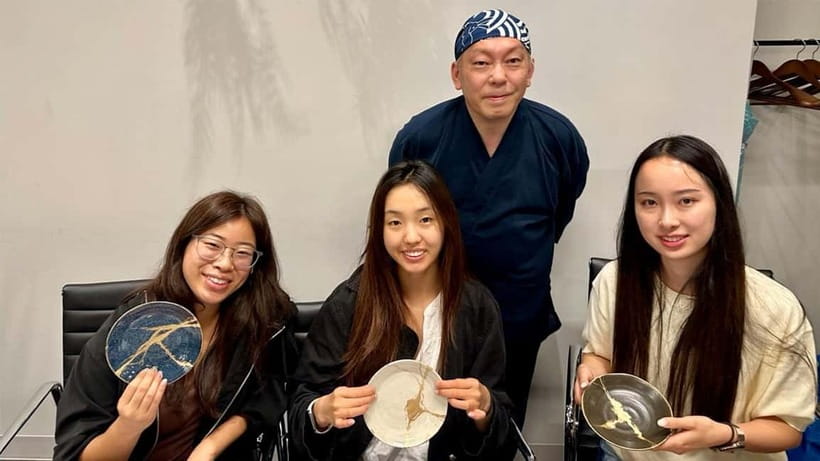
Your ceramic piece is supplied, and you’ll be working directly on that item. Depending on the session, you may get a choice of cracked plate color—one participant specifically mentioned choosing between two colored cracked plates. Either way, the point is that your final repair will look uniquely yours.
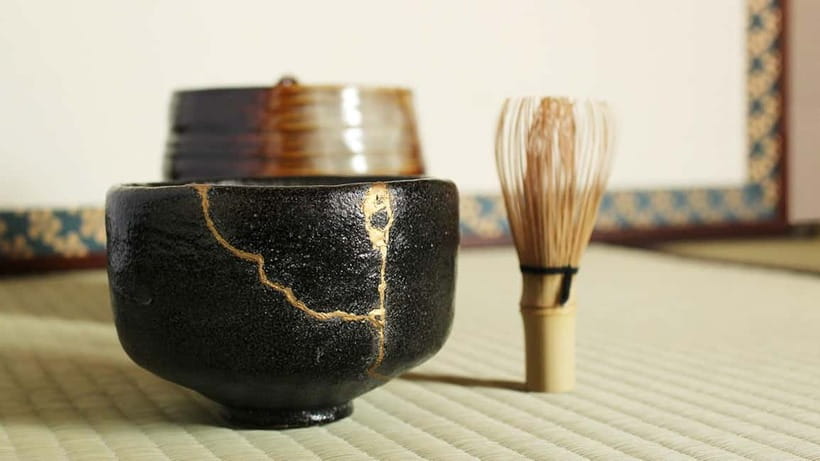
Kintsugi is not about hiding the damage. The materials you apply emphasize where the break happened. That’s the philosophy in your hands: imperfections become part of the design. It’s a shift in mindset, and it’s exactly why this kind of class is worth doing in Tokyo rather than just buying a souvenir.
You’ll likely end up with a piece that feels personal for a reason you can explain later. You didn’t just admire the idea—you practiced it.
Take-Home Reality: Packaging, Handling, and Use at Home
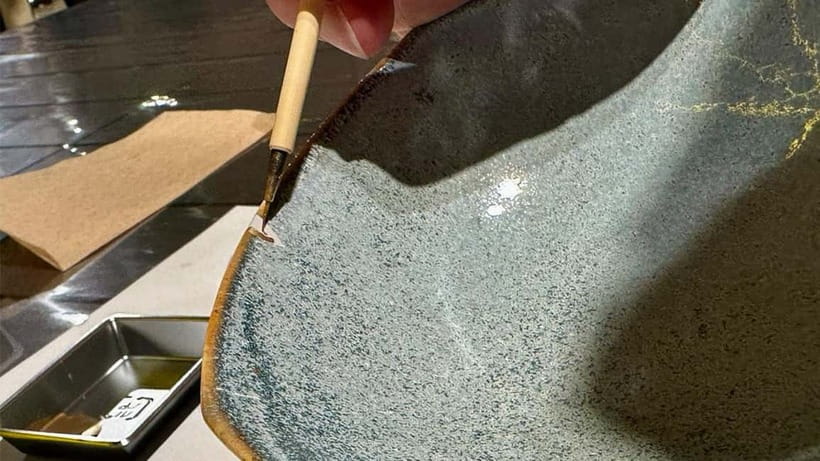
This is where the class earns extra points. You don’t have to improvise your own travel protection. Your repaired ceramic is packaged for safe transport, and multiple people noted being surprised by the quality of the packaging—exactly what you want when you’re carrying a fragile item through Tokyo stations and onto planes.
Once you bring it home, treat it with care. The workshop recommends using the repaired piece for decorative purposes only. And there’s an important safety limit: the repaired item is not microwave-safe, with a risk of ignition.
That doesn’t make it less valuable—it makes it clearer what kind of souvenir you’re bringing home. Think display, shelf presence, or a meaningful gift. It’s an art object made through human hands, not a casual everyday dish.
Price and Value: Is $75 Reasonable for Ginza?
At $75 per person for a 90-minute guided workshop, you’re paying for three things:
- Instruction and supervision from an English/Japanese teacher through the repair steps
- All materials and tools, including the ceramic piece to restore
- A finished take-home outcome, plus packaging to help you travel with it
In a city like Tokyo, paying for materials plus expert guidance isn’t the same as paying for a quick activity where you get little to show afterward. Here, you do the work, and you leave with a tangible piece—something that also has a story attached.
Also, the small group format matters for perceived value. When your group is limited to 8, you’re more likely to get help while you’re still in the middle of the process, not after it’s too late to correct.
Who Should Book This Kintsugi Workshop (And Who Should Skip)
This workshop is a good match if you:
- Want a hands-on craft in central Tokyo without a long day
- Are doing Ginza shopping or sightseeing and want a quieter cultural stop
- Like the idea of making a one-of-a-kind repair piece you can take home
- Prefer instruction in English or Japanese
It’s not suitable for some people based on the activity’s own rules. It’s not recommended for:
- Children under 10
- People with mobility impairments
- People with a cold
- Babies under 1
- People who are hearing-impaired
If you’re unsure, it’s worth checking your situation against those guidelines before you book.
Practical Tips and Realistic Expectations
A few things will help you enjoy the session more:
- Go in expecting a guided class, not total freedom. You’ll have a path to follow, and that structure is part of the benefit.
- Plan to take slow steps with care. Kintsugi is about precision, and rushing makes it harder to get neat results.
- Treat the finished ceramic like a decorative art piece afterward, not cookware. The microwave-safe note is a clear boundary.
And one more expectation to set: you’re doing a fast version of kintsugi. The results are still meaningful, but if you’re comparing it to traditional long-duration kintsugi, you’ll want to judge it on what it is—a well-designed intro workshop that gets you a finished souvenir the same day.
Should You Book This Kintsugi Workshop in Ginza?
I’d book it if you want a high-value, hands-on cultural activity near Ginza Station, with a small group, helpful instruction, and a take-home piece that carries meaning. The fact that you complete the process in 90 minutes using synthetic materials makes it practical for a Tokyo itinerary that doesn’t allow a month-long project.
Skip it if you’re chasing the most traditional, slow-authentic method and you’re strict about that difference. Also skip if any of the listed suitability limits apply to you, especially the cold and hearing-impaired guidance.
If your goal is to learn the basics, make something beautiful, and bring home a story you can actually point to, this is a strong choice.
FAQ
How long is the kintsugi workshop?
The workshop lasts 90 minutes.
Where is the meeting point?
Meet at Cafe AOU Ginza forest, on the ground level of the Daiwa Ginza Building.
How big is the group?
The group is small, limited to 8 participants.
What languages are offered during the class?
The instructor teaches in English and Japanese.
Is this workshop using traditional gold lacquer kintsugi?
No. This workshop uses synthetic lacquer instead of natural lacquer, and metallic powder instead of gold, so you can complete your piece in 90 minutes.
Will I take my repaired ceramic home?
Yes. Participants take home their repaired ceramic piece.
Is the repaired ceramic microwave-safe?
No. The repaired item is not microwave-safe due to risk of ignition.
What’s included in the price?
Included are the 90-minute kintsugi workshop, expert guidance, all necessary tools and materials, a ceramic piece to restore, and a complimentary soft drink.