REVIEW · TOKYO
Tokyo Castle & Imperial PalaceーShogun Walking Tour
Book on Viator →Operated by Local Guide Stars · Bookable on Viator
Samurai walls, without the museum crowds. On this Tokyo Castle & Imperial Palace—Shogun Walking Tour, I like how a small group (up to 10) makes it easy to ask questions while your guide connects the Imperial Palace area to Japan’s shogun-era security system. The story isn’t abstract either: you move gate to gate and turret to watchtower, and the tour frames it all inside Japan’s long imperial timeline.
One caution: the tour is English only, and there’s a real security check to enter the Imperial Palace area, with rules like no knives or alcohol. You’ll also climb steep slopes and stairs, so wear solid shoes. If you’re sensitive to heat, plan for an outdoors-heavy walk that can be long in the sun.
In This Review
- Key things to know before you go
- Price and value: $23.88 for a 2-hour palace walkthrough
- The flow around the Imperial Palace: gates to guardhouses to gardens
- Stop-by-stop: how the Edo defense story plays out
- Sakurada Tatsumi Yagura: a surviving turret with purpose
- Kokyo Otemon Gate: stone walls and heavy gates
- Constable Guardhouse: lower-ranking samurai, real security work
- Hyakunin Bansho Guardhouse: many samurai stationed
- Obansho Guardhouse: higher rank near the inner gate
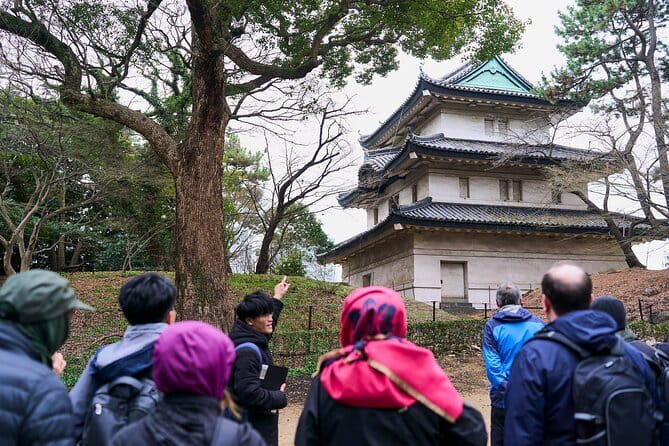
- Fujimi-yagura: the watchtower idea (and why it mattered)
- Kokyo Sannomaru Shozokan: the model that fixes your mental picture
- East Gardens of the Imperial Palace (Edo Castle ruin): where the main tower once stood
- Ninomaru Garden: koi pond calm after the fortifications
- Imperial history that actually lands: shogun power vs imperial legacy
- Guide energy in English: when K, Ai, Tomo, and Keiko set the pace
- Practical tips: security rules, shoes, and a comfort break
- Should you book this Shogun Walking Tour?
Key things to know before you go
- Up to 10 people: enough room to hear details and still feel like a guided stroll.
- Edo Castle security mapped in real space: gates, guardhouses, and watchtowers tied to how the fortress worked.
- Many stops with no admission fee: most sights are free; what you pay for is the expert interpretation and route.
- A model of old Edo Castle: you get scale context at Kokyo Sannomaru Shozokan.
- Traditional gardens with koi: Ninomaru Garden adds calm and a change of pace.
- Mobile ticket: simple entry on your phone, no paper hunt.
Price and value: $23.88 for a 2-hour palace walkthrough
At $23.88 per person for about 2 hours, this tour is priced like a value deal—especially because you’re not paying separate fees for most of the stops. A big part of the cost is the guide’s job: taking an area that can look like just another city park and turning it into a readable map of Edo-era defense.
The “small group” format matters for value too. When there are up to 10 people, you spend less time waiting and more time listening. You also get better chances to ask follow-ups, which is where the whole shogun vs emperor story clicks into place.
If you like structure (and most first-timers do in Tokyo), you’ll appreciate the route. You start at Starbucks Coffee – Kokyo Gaien Wadakura Fountain Park and end back near the same area, finishing by the ginkgo-lined avenue before Tokyo Station—a satisfying walk that doesn’t strand you miles away.
You can also read our reviews of more walking tours in Tokyo


The flow around the Imperial Palace: gates to guardhouses to gardens
This tour moves in a clear loop around the Imperial Palace grounds, with short stops that don’t eat up your attention span. Expect frequent “stop and learn” moments rather than one long lecture.
You’re walking through a belt of Edo-period fortifications that helped shape how power was protected in Tokyo. Even though you won’t see the Emperor’s residence (it’s not open to the public), you will get close to the kinds of spaces that once controlled movement and visibility.
The best part is how the route builds meaning step by step. It starts with surviving turret structures, then moves into massive gates and stone walls, then progresses through guardhouses of different ranks, and finally softens into garden time. That pacing keeps the tour from feeling like only concrete and history text.
Stop-by-stop: how the Edo defense story plays out
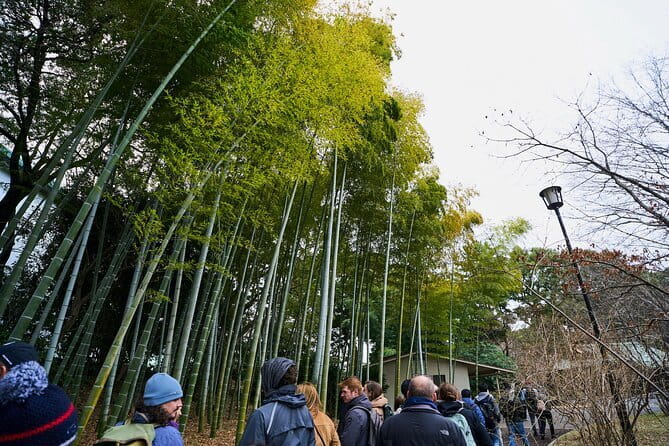
Here’s what you’ll experience as you move through the sites—plus what each one adds to the bigger security picture.
Sakurada Tatsumi Yagura: a surviving turret with purpose
The tour begins at Sakurada Tatsumi Yagura, where you can see a turret from the Edo period. This stop is useful because it’s not just about beauty or age. You get to understand how visibility, height, and positioning supported a defense system that still influences how the area is protected today.
Kokyo Otemon Gate: stone walls and heavy gates
Next comes Kokyo Otemon Gate, with two massive gates and stone walls tied to the original castle layout. This is where you learn how design helped protect the shogun—meaning the placement wasn’t random and the approach paths weren’t meant for casual entry.
Even if you’re only half-paying attention, you’ll feel how substantial the walls and gate structure are. Your guide turns that mass into a story about controlled movement.






Constable Guardhouse: lower-ranking samurai, real security work
At the Constable Guardhouse, you shift from grand gates to smaller operational spaces. You’ll hear about lower-ranking samurai and why this spot mattered—useful context if you’ve only seen samurai as dramatic heroes in movies.
This stop gives depth to the defense system. It’s a reminder that security wasn’t only about famous commanders; it was also routine work staffed by people with specific duties.
Hyakunin Bansho Guardhouse: many samurai stationed
At the Hyakunin Bansho Guardhouse, the focus becomes scale—how many samurai were positioned for duty. It helps if you’ve ever wondered what these groups actually did day to day. Here, the guide links “presence” to practical defense: watch, control access, and respond.
Obansho Guardhouse: higher rank near the inner gate
Moving to Obansho Guardhouse, you’ll talk about samurai of higher rank and their responsibilities. This is where rank stops being a list of titles and becomes part of the building logic: where people stood and what they were expected to handle.
Fujimi-yagura: the watchtower idea (and why it mattered)
At Fujimi-yagura, you’ll look toward the area from an old watchtower. The key here is that “watchtower” is not just a scenic word—it’s about line of sight and early awareness.
If you enjoy seeing how geography creates advantage, this stop is satisfying. You’ll understand why towers and elevated points were treated like serious assets.
Kokyo Sannomaru Shozokan: the model that fixes your mental picture
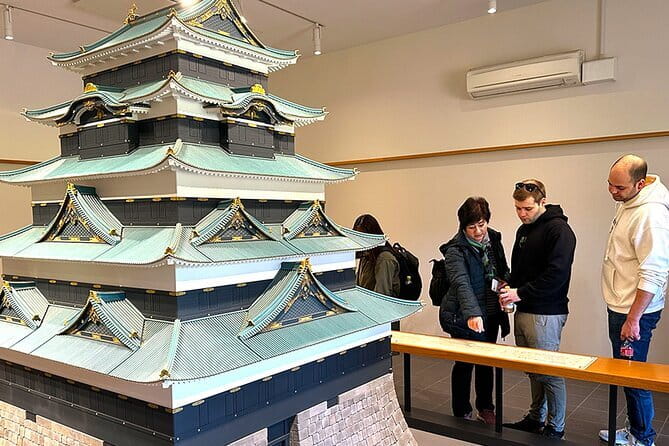
At Kokyo Sannomaru Shozokan, you’ll see a scale model of the former Edo Castle. For many people, this is the mental reset moment: after seeing fragments in real space, you can finally picture the whole machine.
There’s also a souvenir shop with palace-related items. Even if you skip buying, it’s a helpful place to pause before continuing.
East Gardens of the Imperial Palace (Edo Castle ruin): where the main tower once stood
In the East Gardens area, you’ll visit the site tied to the former Edo Castle main tower. Since the tower is no longer standing, you’ll talk about why it disappeared and what remains today.
This stop can feel emotional in a quiet way, because you’re standing on a location that once had a major role in the fortress concept. The guide helps you see it as a position in a system, not just a missing structure.
Ninomaru Garden: koi pond calm after the fortifications
The tour finishes with Ninomaru Garden, including seasonal plants and a pond with koi. This is your decompression moment after gates, stones, and guardhouses.
It also works as a storytelling contrast: defense was one side of Edo Castle life, and peaceful garden spaces were part of the larger environment too. The walk here tends to feel slower and more camera-friendly.
Imperial history that actually lands: shogun power vs imperial legacy
What I like most about this tour is how it keeps two storylines from colliding. You learn about Japan’s long 2,600-year imperial system while also getting the nuts-and-bolts of how shoguns protected authority through Edo-era castle defense.
The Imperial Palace area can be confusing if you only read dates. The guide’s approach makes it easier to place what you’re seeing into the bigger political structure: emperors had symbolic importance, while the shogun era depended heavily on security, staffing, and controlled access.
One of the strongest parts of the experience is how it makes the past feel practical. Instead of only big names, you get guardhouses with roles, gate designs with logic, and watchtower positioning with a job to do.
Guide energy in English: when K, Ai, Tomo, and Keiko set the pace
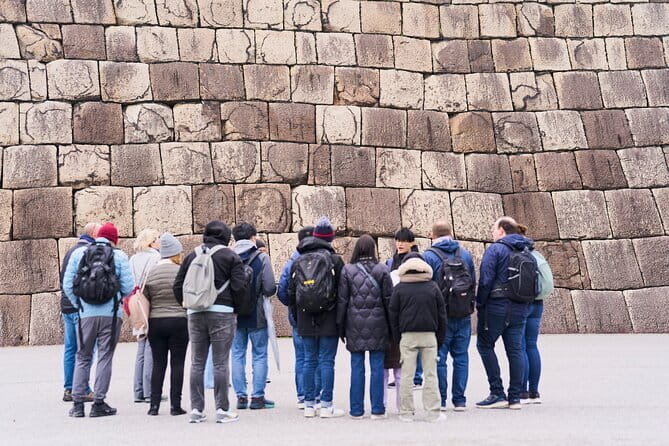
This tour is conducted in English only, with no Japanese language support. If that’s your comfort zone, you’ll be in good shape—especially because the guides described in past experiences tend to be animated and clear.
I also like that the guides bring visuals. In some tours, guides used laminated pictures of old layouts and guard towers, turning the explanation into something you can follow while you stand in the same direction as the old structures. That makes a huge difference in an area where it’s easy to feel lost.
Names that show up again and again include K, Ai, Tomo, Keiko, Anju, and Shin. The common thread: they keep the tour moving, answer questions, and make the history feel connected to the space. One hot-day experience even included sweets and menthol napkins, which sounds like a small touch until you’re the one sweating and trying to keep your feet happy.
Practical tips: security rules, shoes, and a comfort break
Plan for a walk with steep slopes and stairs. Good footwear is not optional here. If your shoes are fine for Tokyo sidewalks but not for uneven stone paths and stairs, swap them in advance.
Bring what you need for sun and fatigue. The tour spends a lot of time outdoors, and I’d rather you show up with water and basic sun protection than test your luck on a bright day. There’s also typically time for a comfort break during the roughly 2-hour route, so you won’t feel trapped the whole time.
Security check basics are straightforward: no knives or alcohol. Also note that the Emperor’s residence isn’t open to the public, so you’ll be viewing from public areas and learning through the surrounding spaces rather than expecting an inside residence tour.
Should you book this Shogun Walking Tour?
Book it if you want:
- A guided way to understand the Imperial Palace grounds and Edo Castle defense design
- A short, structured 2-hour plan that ends near Tokyo Station
- English commentary that ties architecture to how power was protected
Skip it (or rethink) if:
- You don’t do well with English-only tours
- You have limited tolerance for stairs and slopes
- You’re expecting a behind-the-scenes look at private imperial residence areas (those are not open)
At $23.88, in a small group, this tour is a smart use of time in central Tokyo—especially if it’s your first visit and you want the palace area to make sense fast.