REVIEW · TOKYO
Tokyo West-Side Cycling & Food Tour
Book on Viator →Operated by DIG Tokyo Tours · Bookable on Viator
West Tokyo by bike beats the tourist shuffle. This tour mixes backstreet cycling with street snacks and a local lunch, plus a guide who explains everyday life in neighborhoods most visitors skip. You’ll pedal through areas like Nakano, Koenji, and Asagaya, then ride along the Zenpukuji River for a calmer break from the city’s busier feel.
I also love how small the group is, capped at eight. That makes the ride feel social instead of hectic, and it helps you actually ask questions as you go. One thing to consider: you need to be comfortable riding in urban conditions, including narrow, crowded streets and uneven surfaces over about 12–15 km.
In This Review
- Key takeaways before you book
- Why West Tokyo by bike feels more real than big sights
- Meeting at Koenji Station and getting set up quickly
- Riding the backstreets: distance, terrain, and the real commitment
- Street-food snacks that feel like local habit, not a demo
- Lunch in Japan-style places: expect counter energy
- Andy the guide: local context, fast answers, and smart pacing
- Price and value: why $99.49 can make sense
- Who this tour fits best (and who should skip it)
- Should you book this Tokyo West-Side Cycling & Food Tour?
- FAQ
- How long is the Tokyo West-Side Cycling & Food Tour?
- How far do we cycle?
- How big is the group?
- Where does the tour start?
- Is food included?
- Do I need to know how to ride a bicycle?
- Are helmets provided?
- What if it rains?
- What about dietary restrictions or allergies?
- Who is the tour suitable for height-wise?
Key takeaways before you book
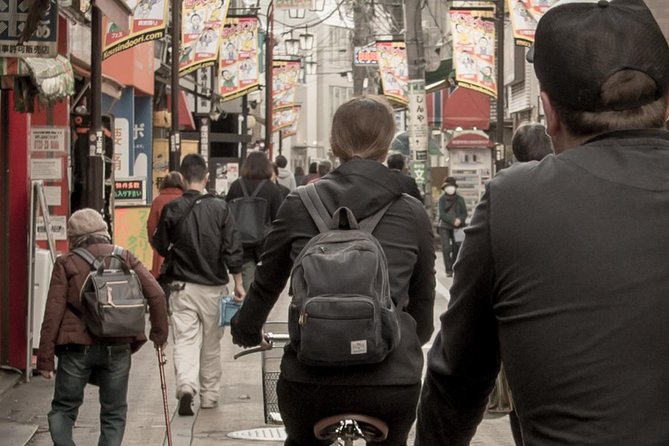
- Rescued mamachari bikes: Japanese-sized bikes with front baskets that can fit a standard backpack.
- Small-group pace: Max 8 riders, so you get real interaction, not just a class field trip.
- Snacks plus lunch: Included street-food stops and a Japanese-style lunch, not just a coffee break.
- West Tokyo neighborhoods: Nakano, Koenji, and Asagaya, with the river ride at Zenpukuji as a breather.
- Safety training moments: You’ll learn local bike-parking systems and do a quick bike-parking practice.
- Guide Andy’s style: Fluent English, lots of local context, and practical answers to your questions.
Why West Tokyo by bike feels more real than big sights
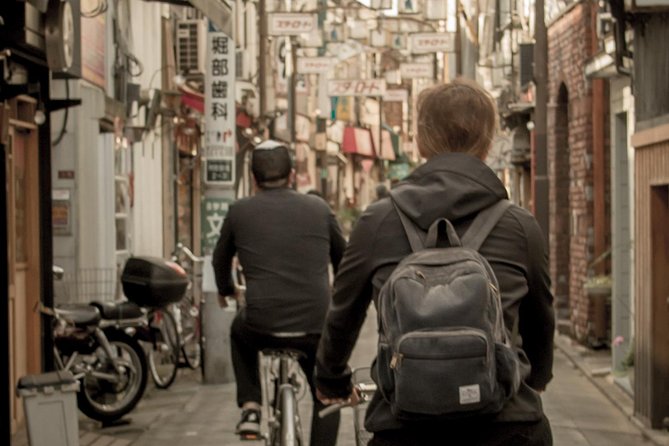
If Tokyo is a menu, most visitor itineraries order the same top items. This ride takes you to the side dishes. You’ll cycle through Nakano, Koenji, and Asagaya—busy enough to feel alive, but far quieter than the Shibuya-Shinjuku crowd—so you get a sense of how daily routines actually look.
The tour also avoids the usual checklist of major monuments. Instead, it focuses on how people move around on bikes, what streets look like up close, and how neighborhoods “work” at street level. One of the best parts is that the ride isn’t only about getting from A to B. You stop for snacks, you walk parts of the route, and you get context from your guide as you go.
And then there’s the Zenpukuji River segment. Even if you’re not a “scenic photos” person, a river ride breaks the rhythm in a good way. It’s the moment you notice you’re in Tokyo, but the day doesn’t feel like a nonstop sprint.
You can also read our reviews of more food & drink experiences in Tokyo


Meeting at Koenji Station and getting set up quickly
The tour starts at Kōenji Station (Suginami City). It’s in an area that’s easy to reach by public transportation, and the meeting-point setup is designed to get you riding without a long pre-tour shuffle.
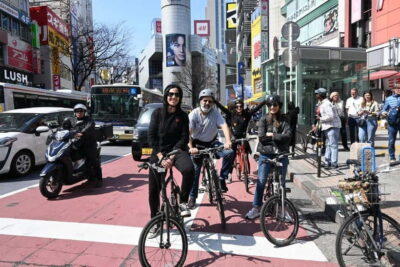
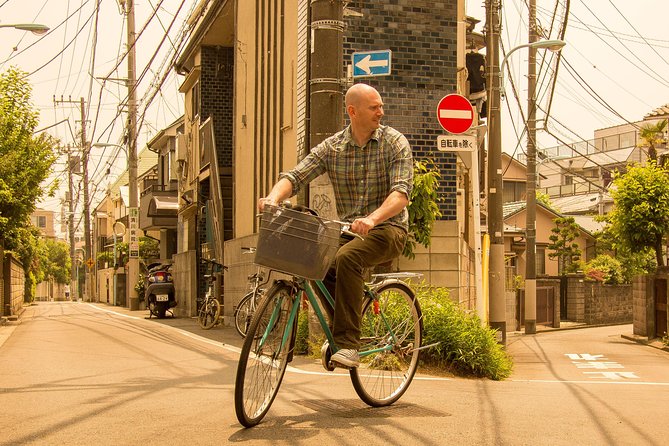
Your bike is a rescued mamachari—the common commuter-style bike you’ll see everywhere in Japan. These bikes are Japanese-sized, with a front basket that can hold a standard backpack. That matters because Tokyo’s streets can feel tightly planned, and having your bag in the basket keeps things simpler and safer than carrying everything by hand.
Helmets can be provided on request, which is worth doing. You’ll also get a taste of how Tokyo handles bikes—especially bike parking. Some guides talk about it. This one practices it. You’ll experience the unique bike-parking systems and do a bike-parking test before you hit the busiest-feeling streets.
There’s also a height note you should check: you’re expected to be over 140 cm to comfortably ride, since these are Japanese-sized bikes.
Riding the backstreets: distance, terrain, and the real commitment
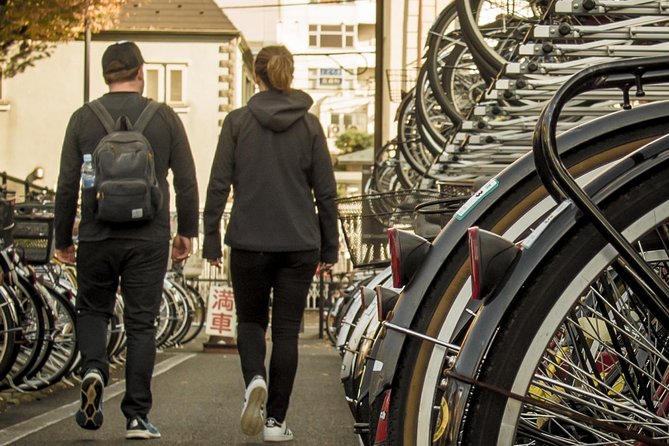
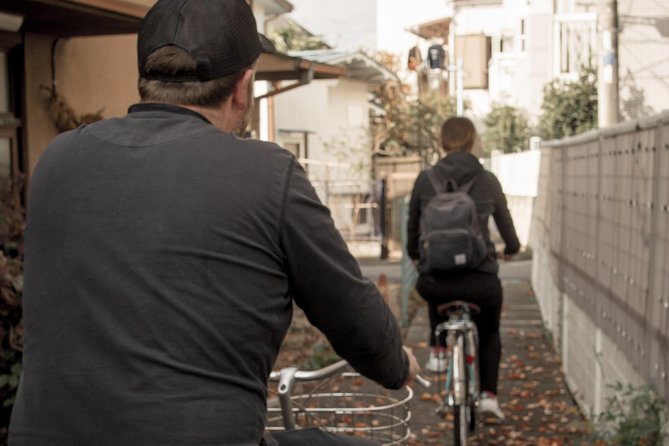
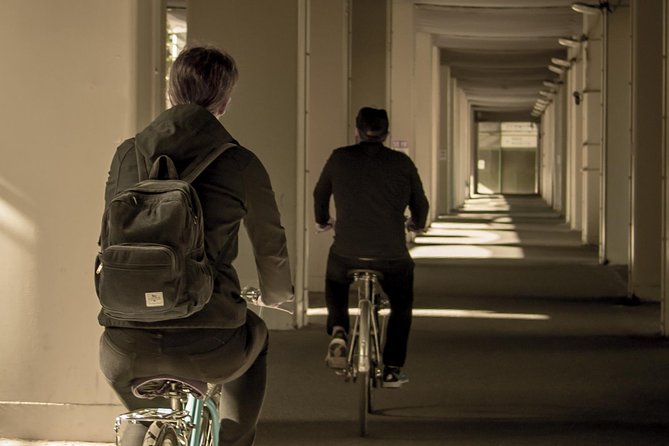
Let’s be honest about the biking part. This isn’t a casual stroll on two wheels. You’ll ride roughly 12–15 km through narrow streets that can be crowded and on uneven surfaces at times. The operator is clear that you should be competent riding in an urban environment.
The good news from real experience: the route is mainly flat, and the pacing includes breaks and walking time. In practice, that usually means you’re challenged by traffic flow and street width—not by big hills. Still, you should feel comfortable threading through tight lanes and sharing space with cyclists and pedestrians.
Expect the bikes to be sometimes creaky or squeaky, but they’re described as immaculately maintained. That’s a big deal for your confidence. You want a bike that’s trustworthy, even if it’s not brand new.
Weather is another practical piece. If it rains, you’ll be given basic ponchos and the ride generally proceeds. That helps you avoid the “we canceled everything” frustration—just bring the mindset that you’re doing an outdoor ride in real Tokyo weather.
Finally, there’s safety coverage for the cycling portion included. But you still need your own travel insurance for broader incidents. It’s the kind of detail that matters once, and you’re glad it’s handled.
Street-food snacks that feel like local habit, not a demo
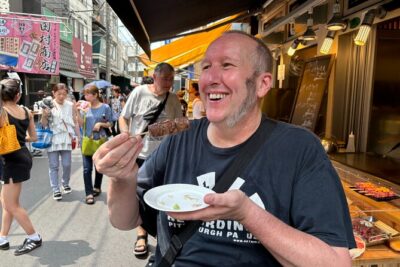
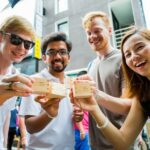
The tour includes a tailored selection of popular local snacks along the way. This is one of the reasons the experience works for food lovers: you’re not only eating, you’re learning where and how locals snack between errands and commutes.
Stops are paced to keep you moving but not rushed. You’ll get snacks and time to reset, and because the group is small, it’s easier to ask your guide what you’re eating and how locals typically order it. Several people highlight that the food choices are things they might not have known about—or might’ve felt intimidated to order alone. That’s real value in Tokyo, where menus can look simple but still hide what’s actually in the dish.
You’ll also be cycling and walking while people around you live their day. That’s the secret sauce. It turns “food tasting” into a window on neighborhood life.
One small caution: Japanese meals often include meat and seafood, and dashi (a common base ingredient) shows up a lot. The tour notes that it can be difficult to cater to personal tastes, dietary requirements, or allergies because local eateries are involved. If you have strict restrictions, you’ll want to think carefully before booking.
Lunch in Japan-style places: expect counter energy
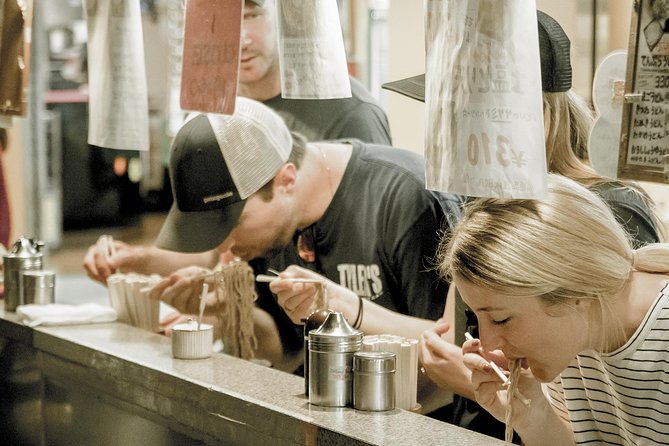
Lunch is included and described as a Japanese-style meal, not a fancy restaurant stop. It’s also timed to match the neighborhood rhythm—your guide leads you through the kind of place where people drop in regularly.
In the practical moments, be ready for typical lunch-counter energy. The tour description even mentions jostling for counter space with salarymen as you refuel. That sounds intense until you realize it’s part of the experience. You’re seeing how working life and food culture overlap in smaller local areas.
You may also notice the tour won’t always hand you a fully customized menu. Dashi and meat/seafood ingredients are common, and because the meal is at local eateries, dietary swaps aren’t guaranteed. That’s not a dealbreaker for most people, but it’s a key factor for anyone with allergies or strict vegetarian needs.
Still, the payoff is that your lunch tastes like the neighborhoods themselves. You leave with a sense of what “normal” looks like in west Tokyo—not just what a tourist brochure says.
You can also read our reviews of more tours and experiences in Tokyo



Andy the guide: local context, fast answers, and smart pacing
This tour is built around your guide, and the name that comes up again and again is Andy. People describe him as friendly, upbeat, and strong with practical explanations. He’s also clearly fluent in English, which matters on a ride like this where you’ll want to ask questions while you’re moving.
What makes his guiding feel useful isn’t just facts. It’s how he ties the street scenes to daily life—things like housing habits, schooling, religion, and how Tokyo culture shows up in the ordinary routines you’d miss walking around alone. If you like travel that feels like it adds context, this is the style.
Pacing also seems intentional. Stops aren’t random. They’re set up so you can recover, snack, and keep the group safe. Some people note you’ll get heads-up on what to expect, plus ongoing guidance that builds confidence—especially for first-time bike tour riders.
One detail I really like: after the tour, Andy sends a follow-up email with details on what you ate and tailored recommendations based on your interests. That kind of post-trip help can turn a short experience into something you keep using after you’re back on your own.
Price and value: why $99.49 can make sense
At $99.49 per person, this isn’t the cheapest thing in Tokyo. But it’s also not “just a ride.” The value comes from several bundled pieces:
- Small-group service (max 8) with an active guide.
- Bike use with mamachari setup, including baskets.
- Included street snacks plus an included local-style lunch.
- A guided route focused on west-side neighborhoods, not landmark queue time.
You’re also spending about 3.5 to 4 hours out in the city. For that length of time, with food included, the price starts to feel more reasonable—especially because Tokyo can be expensive when you’re paying for food and transport separately.
Booking demand is another clue. The tour is often booked about 57 days in advance, which suggests it fills up in popular travel windows. If you’re visiting during peak season or want a specific date, don’t wait.
Who this tour fits best (and who should skip it)
This is a great fit if you:
- Like off-the-beaten-track neighborhoods and want to feel the city from street level.
- Enjoy cycling and feel comfortable on urban streets.
- Want a mix of food and local context, not a checklist of famous sights.
- Appreciate a small group where you can actually talk to the guide. Many families and first-time riders seem to handle it well as long as the height requirement is met and everyone can ride.
You might want to rethink if you:
- Don’t feel comfortable riding through narrow or crowded areas, or on uneven surfaces.
- Have allergies or strict dietary needs. The tour uses local eateries and mentions that catering to specific requirements can be difficult.
- Prefer slow, sightseeing-heavy days with minimal movement. This is an active tour by design.
Also, if you’re planning a jam-packed Tokyo schedule, remember you’ll be out for around half the day and the ride is weather-dependent in the sense that rain can happen (ponchos included).
Should you book this Tokyo West-Side Cycling & Food Tour?
If your goal is to see Tokyo the way locals experience it—by bike, on neighborhood streets, stopping for snacks and a real lunch—then yes, I’d book it. The combination of west-side neighborhoods like Nakano, Koenji, and Asagaya, plus the river ride and the food stops, creates a day that feels both practical and human.
I’d especially consider booking if you’re new to Tokyo and want fast familiarity without spending your entire trip stuck in crowds. A ride like this can give you a mental map and everyday context you can use for the rest of your stay.
Just go in with the right expectations: it’s active cycling. Bring your riding comfort, be ready for local food styles, and plan to enjoy learning about daily life rather than chasing big-ticket landmarks.
FAQ
How long is the Tokyo West-Side Cycling & Food Tour?
It runs about 3 hours 30 minutes, with a rough finishing window of 3.5 to 4 hours depending on group speed and the pace of eating and cycling.
How far do we cycle?
You can expect about 12 to 15 km of cycling, plus some walking during the tour.
How big is the group?
The tour has a maximum group size of 8 travelers.
Where does the tour start?
The meeting point is at Kōenji Station, 4-chōme-48-2 Kōenjiminami, Suginami City, Tokyo 166-0003.
Is food included?
Yes. The tour includes street food snacks and a local-style lunch.
Do I need to know how to ride a bicycle?
Yes, you’re expected to be competent riding a bicycle in an urban environment, including narrow and potentially crowded streets and uneven surfaces.
Are helmets provided?
Helmets can be provided for all participants on request.
What if it rains?
If it rains, basic ponchos are provided and the tour generally proceeds as planned.
What about dietary restrictions or allergies?
Japanese cuisine often includes meat and seafood, and dashi is common. The tour notes that it can be difficult to cater to personal tastes, dietary requirements, and food allergies because it visits typical local eateries.
Who is the tour suitable for height-wise?
You should be over 140 cm (4’7) in height to comfortably ride the bikes.