REVIEW · TOKYO
Small-Group Wagyu Beef and 7 Japanese Dishes Tokyo Cooking Class
Book on Viator →Operated by Cooking Sun · Bookable on Viator
Dashi first. Then Wagyu magic. In this small-group Tokyo class, I like that you’re not watching from the sidelines: you cook a kaiseki-style lunch with dashi at the start and Wagyu as the centerpiece, while English-speaking instructors guide you step by step. I also love the pace and feedback in a group capped at eight, so questions don’t get lost and you actually leave with skills you can use again at home.
One catch to plan for: the Cooking Sun Tokyo meeting place can be a little tricky to locate at first. It’s in a quieter residential area near public transit, so give yourself a few minutes to find the entrance and settle in.
In This Review
- Key Things That Make This Cooking Class Work
- Small-Group Kaiseki-Style Lunch in Shinjuku: What You’re Paying For
- Finding Cooking Sun Tokyo and Getting Oriented Fast
- The Backbone Skill: Making Dashi from Scratch
- Cooking Up to Eight Dishes, Including Tender Wagyu Beef
- A note on how “hands-on” it feels
- Instructor Feedback, Knife Work, and Presentation Tips You Can Use Again
- The Meal Part: Sake, Green Tea, and What It’s Like to Eat Together
- Vegetarian Option and Dietary Notes: Plan Ahead
- Who Should Book This Tokyo Cooking Class (and Who Might Not)
- Should You Book the Small-Group Wagyu and 7 Japanese Dishes Class?
- FAQ
- How long is the Tokyo wagyu cooking class?
- What time does the class start?
- How big is the group?
- Where does the class take place?
- Is instruction available in English?
- What’s included in the class?
- Is hotel pickup or drop-off included?
- Is there a vegetarian option?
- What should I do if I have dietary requirements?
- What is the cancellation policy?
Key Things That Make This Cooking Class Work
- Small group, max eight people, so you get hands-on time instead of passively taking notes
- Dashi-making first, which teaches the backbone flavor of Japanese cooking
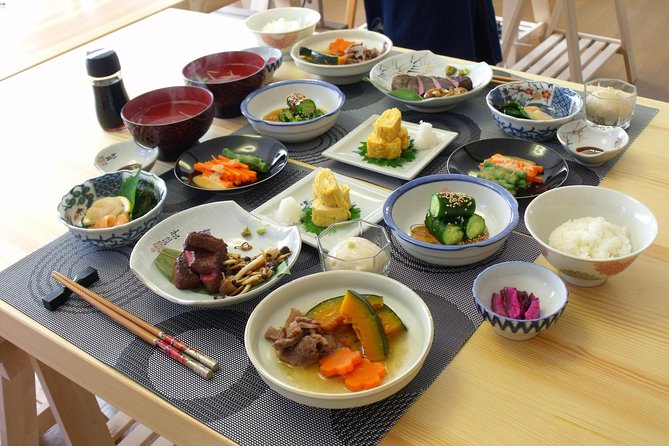
- Wagyu-focused full-course lunch, built from classic and modern techniques
- English instruction with approachable explanations, plus recipe support to take home
- You eat what you cook with sake and green tea at the end
Small-Group Kaiseki-Style Lunch in Shinjuku: What You’re Paying For
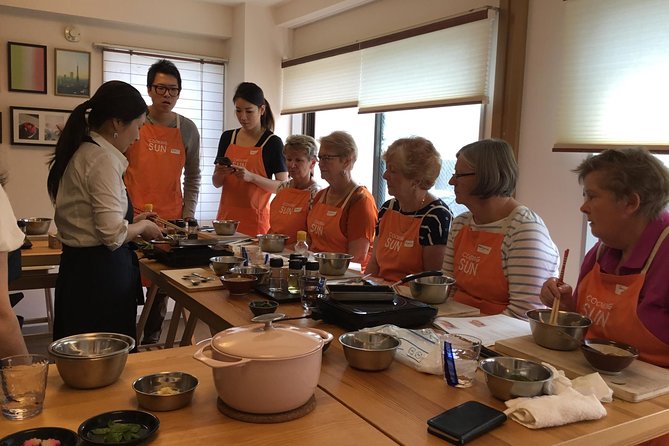
This is a three-hour, morning cooking class in Tokyo (start time is 9:30am) built around a full-course lunch concept. The class title highlights seven dishes, but the experience is described as preparing up to eight dishes, so the “value” here is that you’re getting a lot of cooking for the time—ingredients, prep work, cooking, and then a sit-down meal.
The price is $72.96 per person, and what makes it feel fair is what’s included: ingredients, instructor guidance, and recipe materials, plus an apron and towel. For Tokyo, the real cost is usually the time and hands-on teaching, not just food. If you’ve ever tried to replicate Japanese home cooking on your own, you know dashi and seasoning ratios are where most people stumble. This class helps you build that foundation quickly.
Also, the experience is positioned as kaiseki ryouri cooking—Japanese “haute cuisine,” but taught in a practical, home-cooking way. You’re learning technique and how to assemble dishes, not just following a script.
You can also read our reviews of more cooking classes in Tokyo


Finding Cooking Sun Tokyo and Getting Oriented Fast
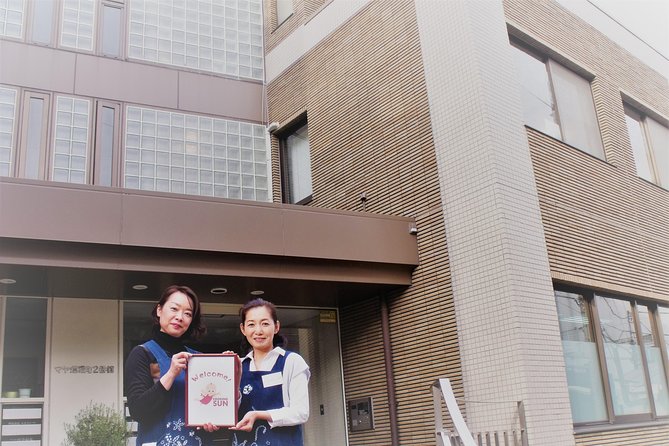
Your meeting point is Cooking Sun Tokyo in the Shinanomachi area of Shinjuku (18-39 Shinanomachi). It’s near public transportation, but it’s not in a loud, obvious shopping corridor. That’s part of the charm, and also why people can waste time hunting for the exact building.
When I’m doing a class like this, I plan two things:
- Arrive early enough to walk around calmly
- Use Google Maps and follow it all the way to the entrance
Once you’re inside, you’ll be set up with what you need. You don’t have to show up with utensils. The studio provides an apron and towel rental, and the ingredients are already there for you to work with.
No hotel pickup or drop-off is included, so you’ll want to rely on local transit or a quick taxi ride.
The Backbone Skill: Making Dashi from Scratch
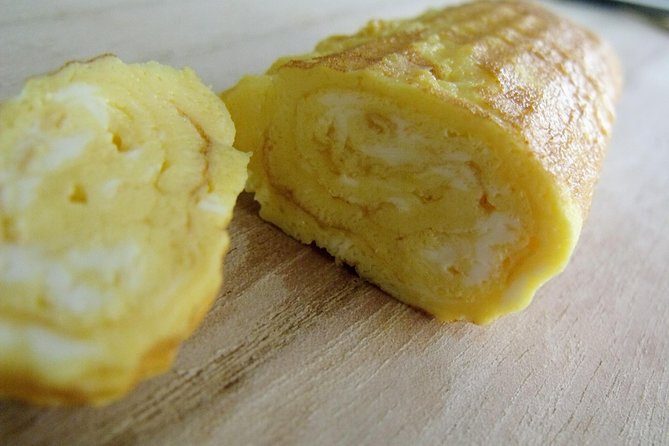
Every class begins with dashi making, which makes this more than just a “cook and eat” activity. Dashi is the fundamental soup stock in Japanese cooking, and understanding it changes how you season almost everything that follows.
Here’s what you’re effectively learning:
- How to approach stock-making as a flavor base, not just “water with stuff”
- How Japanese seasonings build depth in small amounts
- How dashi becomes an ingredient across the menu, not only a soup course
One simple way to think about it: once dashi is right, the rest of the dishes feel more coherent. You get a common thread of flavor across an entire meal, which is exactly what Japanese home cooking does so well.
Your instructor will also explain staple seasonings commonly used in Japanese cuisine. Even if you can’t copy every technique perfectly at home right away, those notes help you stop guessing.
Cooking Up to Eight Dishes, Including Tender Wagyu Beef
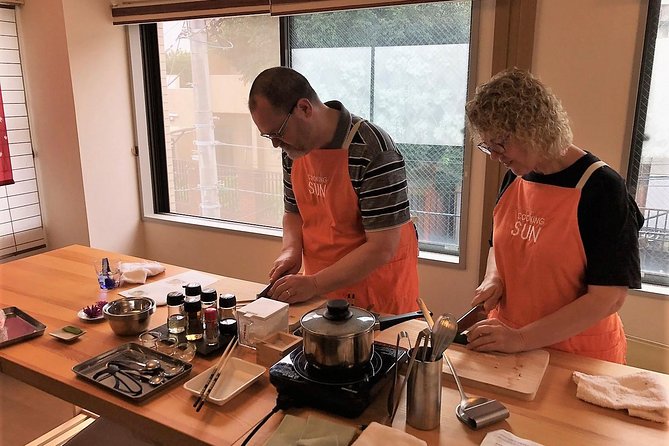
After dashi, you move into the main stretch: cooking a set of Japanese dishes using traditional seasonings, Japanese vegetables, and different cooking methods. The class description says you’ll prepare seven dishes, but also describes up to eight dishes total—so you’ll want to think in “full-course range,” not a single fixed number.
What matters most is how the menu is structured:
- You start with a foundation (dashi)
- You then build appetizers, mains, and finishing courses across the session
- The Wagyu beef becomes the main dish highlight
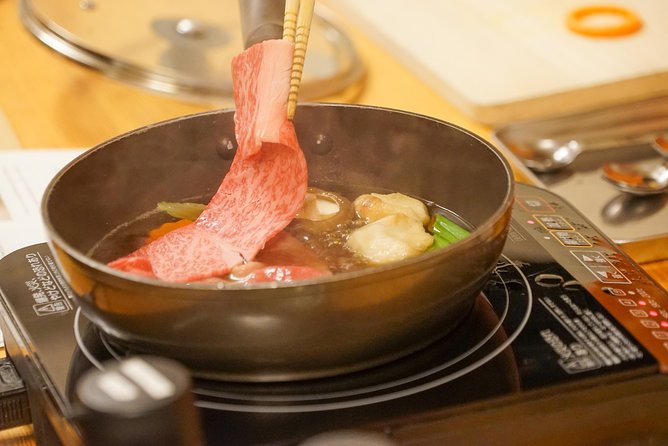
Wagyu is explained in the class as well: Wa means Japan(ese) and gyu means beef. That matters because Wagyu is more than a buzzword. In class, you learn how to handle it so it turns tender and flavorful, not just “expensive meat on a hot pan.”
You’ll also work with Japanese vegetables and classic flavors. Even if some steps are prepped by the staff (which helps keep the class moving), you’re still doing the hands-on work that teaches technique: chopping, mixing, seasoning, cooking, and assembling.
A note on how “hands-on” it feels
The teaching style is designed so you’re never a full-time bystander. You’ll still get your hands working, but you may notice that certain bigger pieces—like making components such as miso soup, rice, or other base items—can be handled by the staff to keep timing smooth. The key is that your skills still build through your own chopping, cooking, and finishing.
You can also read our reviews of more tours and experiences in Tokyo



Instructor Feedback, Knife Work, and Presentation Tips You Can Use Again
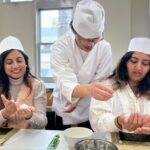
This class shines because you’re taught by friendly, English-speaking locals who can explain in a clear, approachable way. Names that come up include Aya and Hidemi, and other instructors you might meet include Kaori, Megumi, and Yoko. Regardless of who’s teaching your group, the vibe stays practical.
You’ll get feedback on things like:
- How to cut or handle ingredients for the dish you’re making
- How to mix sauces or seasonings correctly
- How to present food so it looks like it belongs on a Japanese lunch table
Presentation sounds cosmetic until you try it. Japanese plates often rely on small choices—where sauce lands, how garnish is placed, and how the dish reads at first glance. That’s part of why a kaiseki-style approach works so well for learning: you’re not only cooking; you’re also assembling.
If you’re worried you’ll be too slow, don’t. The class is paced to teach. The ratio of instructors to students is designed so you can ask questions and get unstuck.
The Meal Part: Sake, Green Tea, and What It’s Like to Eat Together
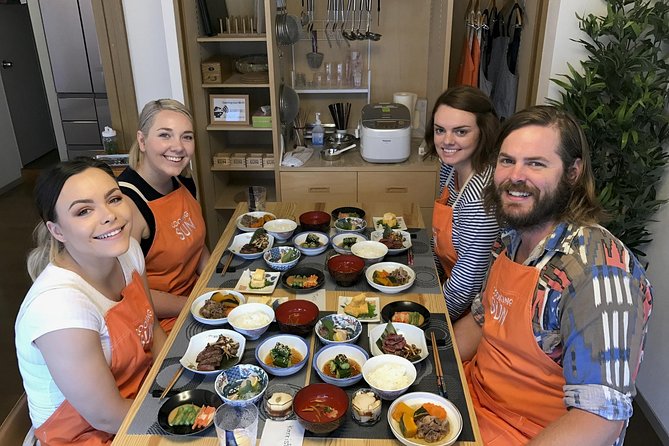
Once cooking finishes, you sit down to eat what you made. The experience includes sake and green tea with your meal, which is a nice way to end the class without feeling like your work is disconnected from the payoff.
What you’re really tasting at the end is:
- How dashi threads through multiple dishes
- How Japanese seasonings balance sweet, salty, and savory
- How Wagyu fits naturally into the meal’s flavor rhythm
This is also when the class feels most fun. You’ll be sharing the table with your small group, talking about which technique you want to repeat later. It’s not a rushed tasting. You get time to enjoy the meal you helped create.
Vegetarian Option and Dietary Notes: Plan Ahead
A vegetarian option is available, but you need to advise at booking if that’s what you want. The class also asks you to provide any specific dietary requirements ahead of time.
From a practical standpoint, I’d treat this as a planning step, not an afterthought. If you have allergies or strong restrictions, send the details during booking so the instructors can plan your menu changes without cutting corners.
Who Should Book This Tokyo Cooking Class (and Who Might Not)
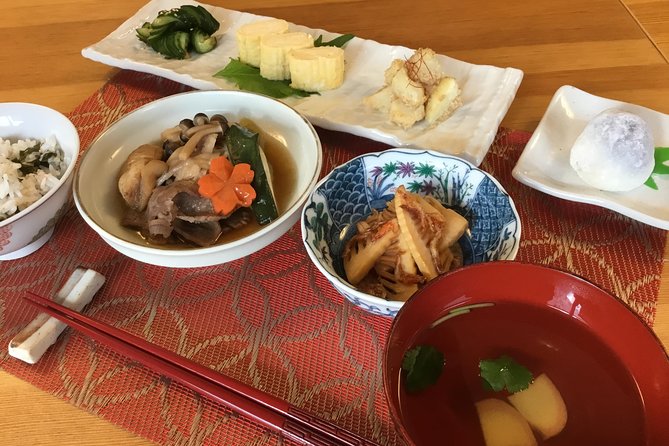
This class is ideal if you want:
- A Tokyo cooking experience that’s truly hands-on
- A strong foundation in Japanese flavor through dashi
- A structured way to learn multiple dishes in a single morning
- A kaiseki-style lunch concept without needing fancy restaurant reservations
It’s also a good fit if you don’t cook much. The class is designed so different skill levels can participate, and instruction is explained in a way that stays doable.
Where it might not be perfect:
- If you dislike any “learning first, eating later” format, you may find the start (dashi and seasoning explanations) requires patience.
- If you hate finding places in quiet neighborhoods, plan extra time to locate Cooking Sun Tokyo.
Should You Book the Small-Group Wagyu and 7 Japanese Dishes Class?
I think you should book this if you want a high-value Tokyo food activity that teaches fundamentals, not just a meal. The combination of small-group attention, a dashi-first curriculum, and a Wagyu-centered lunch gives you both technique and payoff. For the price, you’re getting ingredients, instruction, and recipes, then finishing with sake and green tea.
If you’re on the fence, use this quick checklist:
- Want to learn dashi and Japanese seasoning logic: book it
- Want a lot of cooking for a short time: book it
- Need vegetarian or have dietary limits: book it, but tell them clearly at booking
- Hate wandering to find a building in a residential area: consider arriving early and using navigation
If you want one of those Tokyo memories that turns into real cooking at home, this is the kind of class that can do that.
FAQ
How long is the Tokyo wagyu cooking class?
The class runs for about 3 hours.
What time does the class start?
The start time is 9:30am.
How big is the group?
The class is limited to a maximum of 8 people.
Where does the class take place?
The meeting point is Cooking Sun Tokyo, located at 18-39 Shinanomachi, Shinjuku City, Tokyo 160-0016, Japan. The activity ends back at the meeting point.
Is instruction available in English?
Yes. Instructions are provided in English.
What’s included in the class?
Included are the local cooking instructor, recipes, ingredients, and apron and towel rental.
Is hotel pickup or drop-off included?
No. Hotel pickup and drop-off are not included.
Is there a vegetarian option?
Yes, a vegetarian option is available. You should advise at booking if you need it.
What should I do if I have dietary requirements?
You should advise any specific dietary requirements at the time of booking.
What is the cancellation policy?
You can cancel for a full refund up to 24 hours before the experience’s start time. If you cancel less than 24 hours before, the amount paid is not refunded.