REVIEW · TOKYO
Tokyo: KABUKI, BUNRAKU, etc. presented by National Theatre
Book on GetYourGuide →Operated by National Theatre, Japan · Bookable on GetYourGuide
Kabuki, Bunraku, and friends make one evening fly. I especially like the English audio guide for Kabuki and Bunraku and the fact that the show is designed to be heard without loud speakers. One thing to consider: with programs running up to about three hours, it’s not a quick in-and-out sightseeing stop.
This experience isn’t in Tokyo’s National Theatre building, so the location matters. You’ll watch major traditional performing arts—songs, puppetry, and drama—presented with real discipline, and you’ll get enough English help to follow the main beats even if Japanese isn’t your thing.
In This Review
- Key highlights to look for
- Kabuki and Bunraku in Yokohama: the location you must get right
- What the evening format really feels like
- Kabuki: drama built from music, dance, and big stage language
- Bunraku: puppetry with voice, shamisen, and real intensity
- Hogaku: a music concert anchored to snow melodies
- The English audio guide: helpful context, not a line-by-line script
- Theater etiquette: rules that shape the vibe (for the better)
- Price and value: why $37 can be a bargain for real theater
- Is it worth it for your group and your age range?
- Who this experience suits best
- Book it or skip it: my take
- FAQ
- Where is this performance held?
- What are the nearest train stations?
- How do I enter the theater?
- Is there English help for Kabuki and Bunraku?
- Is there English help for Hogaku?
- Does the audio guide translate every line?
- Can I record video or take photos inside?
- Is the venue wheelchair accessible?
Key highlights to look for
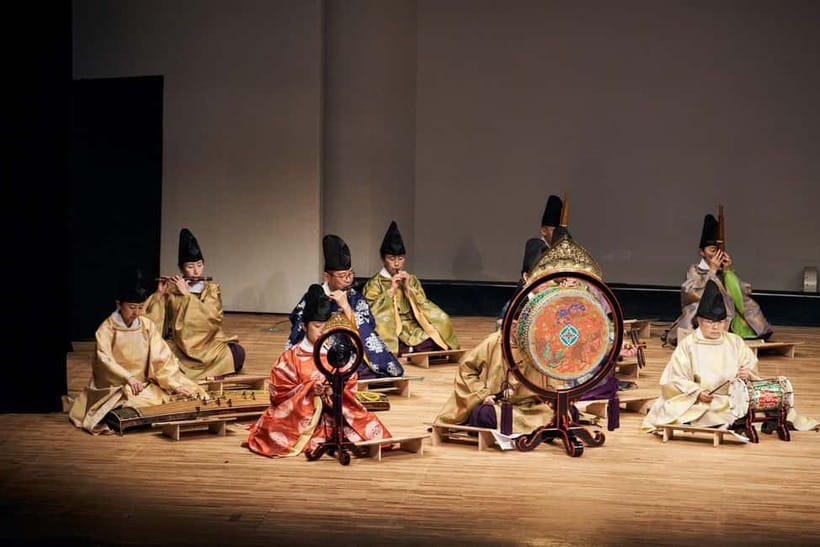
- Authentic stagecraft: top performers using traditional forms that have been handed down for centuries.
- English audio for Kabuki & Bunraku: guidance built for you to follow action and structure, not to drown out the performers.
- Hogaku with free English explanation: paper support designed for traditional music listening, including a snow-themed thread.
- No competing soundtrack: the room is meant for live voices, music, and instruments, not narration blasted through speakers.
- Yokohama venue, not Hanzomon: KAAT Kanagawa Arts Theatre is the key name to get right.
- Strict theater etiquette: no video, no photography, and you’ll be asked to keep things quiet so the art can do its job.
Kabuki and Bunraku in Yokohama: the location you must get right
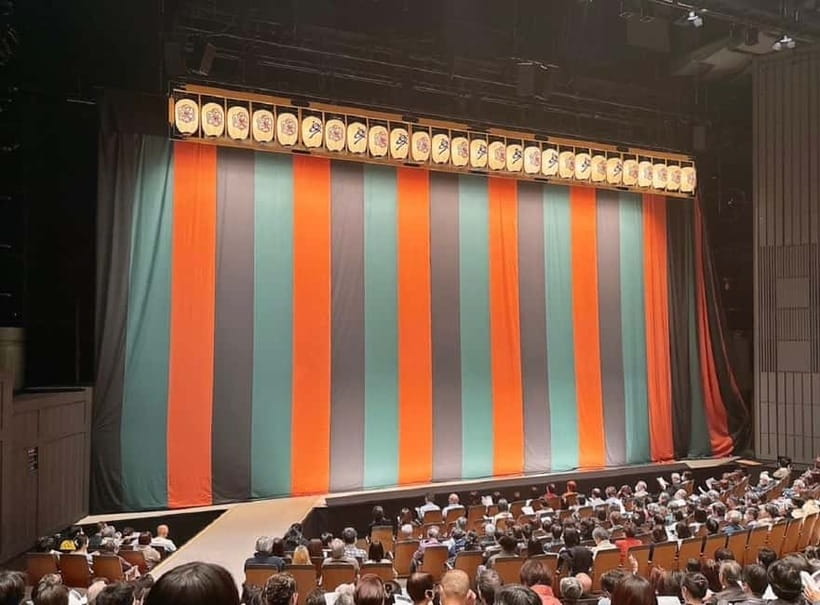
First, the big practical point: this event is in Yokohama, not at the National Theatre (Hanzomon). The program is presented by National Theatre Japan, but the venue changes by date—so don’t rely on the word National Theatre to guide you.
For this specific ticket, the performance is at KAAT Kanagawa Arts Theatre. The easiest station targets are:
- Nihon-ōdōri Station (Minatomirai Line MM05): about a 5-minute walk from Exit 3 or 4
- Motomachi-Chukagai Station (Minatomirai Line MM06): about an 8-minute walk from Exit 1
From Shibuya, you’re looking at roughly 45 minutes by train using the Minatomirai Line. The pacing of Yokohama’s waterfront and arts district is a nice match for a classical show: you get a clean walk to the theater, then you switch modes completely—screens off, phone away, and your attention on voice, music, and movement.
One more logistics detail I’d treat like a checklist: you’ll exchange your GetYourGuide voucher for a theatre ticket at the entrance the day of the performance. Staff will ask for the name used for the reservation.
You can also read our reviews of more tours and experiences in Tokyo.



What the evening format really feels like
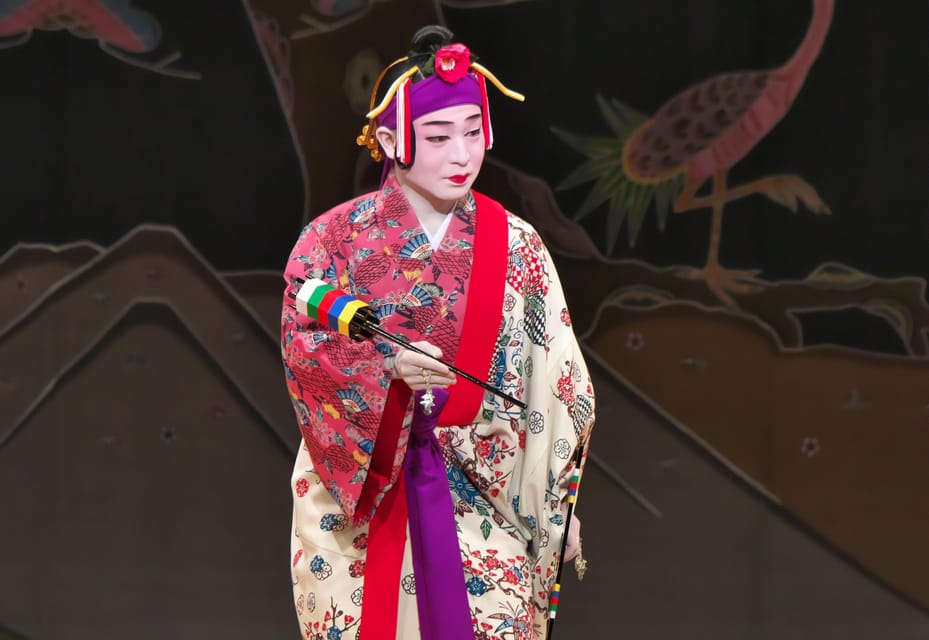
Your timing depends on which program is running, with total duration listed at 75 minutes to 3 hours. That range is real. Some nights feel like a focused story session; others feel closer to a full program evening with multiple segments.
The biggest thing I’d prepare your brain for is pacing. Traditional Japanese performances are rhythmic and intentional. The “plot” might not unfold the way a typical Western play does. Even with English help, you’ll be following patterns: shifts in mood, changes in music, and physical conventions that mean something to performers and regular audiences.
If you like theater but get impatient with slower momentum, this can still work—especially because the English audio guide and/or explanation sheet is there. Just don’t book this when you’re also trying to cram five other stops into the same time window. Give it the attention it asks for.
Kabuki: drama built from music, dance, and big stage language
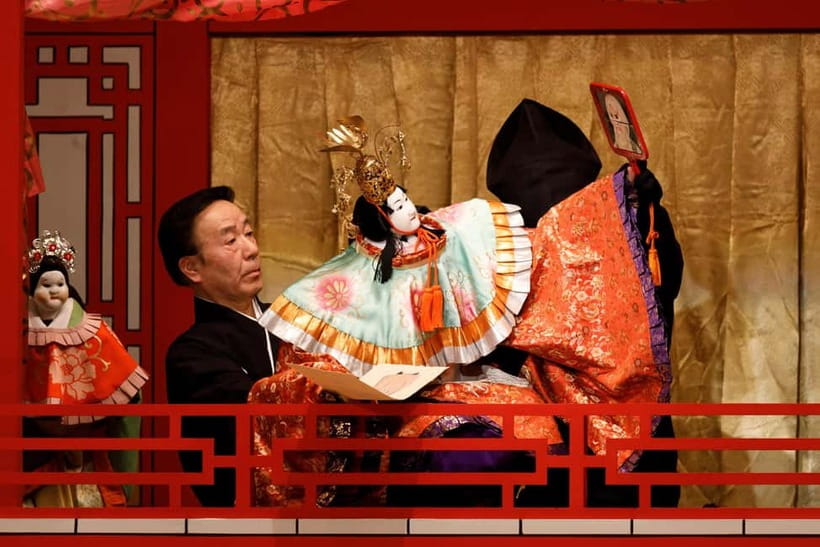
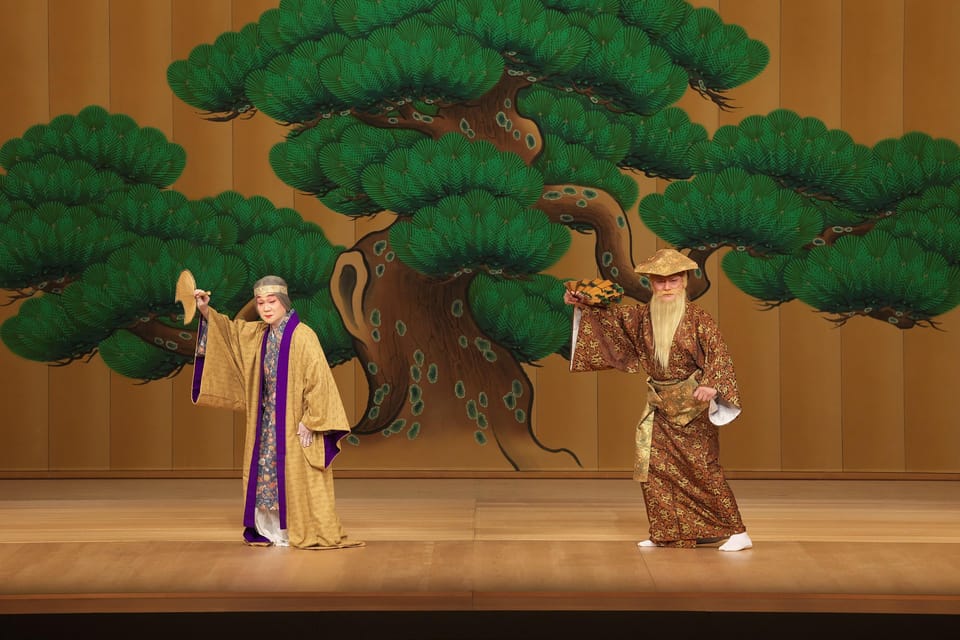
When the program includes Kabuki, you’ll get a dramatic theater style that combines music and dance into storytelling. Kabuki is one of Japan’s most typical traditional arts, and it’s known for stories that move fast emotionally—even if you’re still learning the meaning behind the movements.
Kabuki often uses physical clarity: posture, gestures, and stylized movement that communicate character and turning points. That’s part of what makes Kabuki fun for non-Japanese speakers—because stage language is visible, not hidden behind subtitles alone.
Here’s what matters for your experience: English audio guidance is included for Kabuki. It’s English only, and it’s designed to provide an overview of the main points rather than a literal translation of every line. That approach helps you avoid the worst case: feeling like you’re reading a script while trying to listen to singers and watch actors.
Also, don’t expect a modern theatre “everything wraps up neatly” structure. Some programs can feel like multiple acts with story threads that don’t end like a Hollywood movie. That doesn’t mean it’s unfinished or sloppy. It often means Kabuki is working in traditional form, where episodes and motifs can stand on their own.
Bunraku: puppetry with voice, shamisen, and real intensity
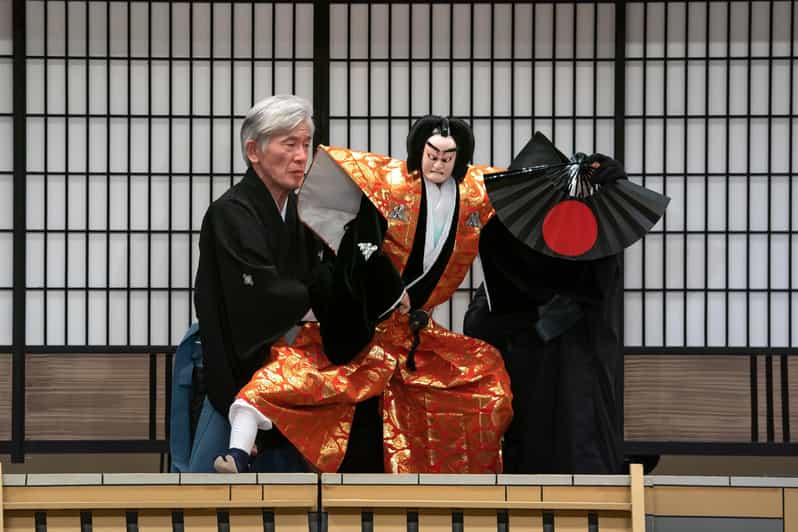
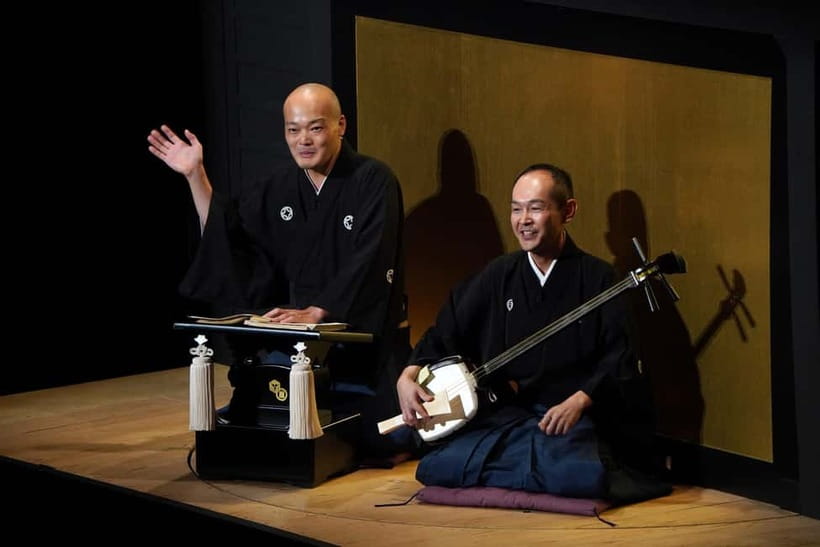
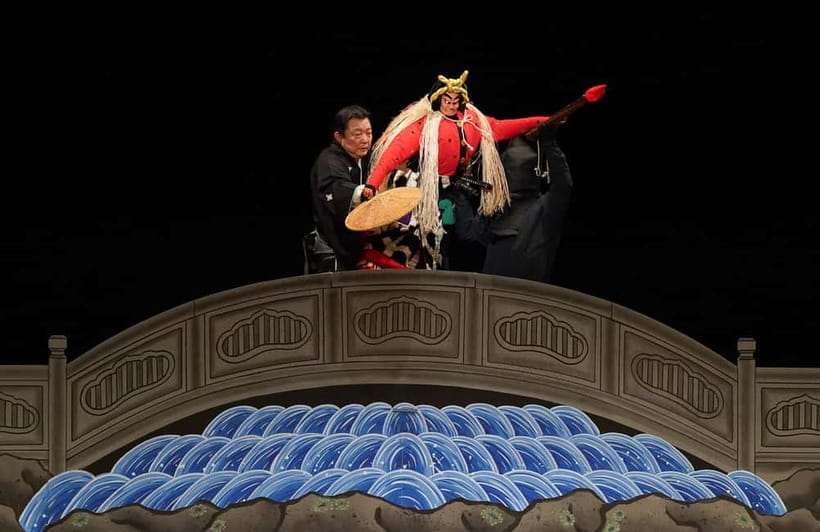
Bunraku is the adult-focused puppet theater form that many people consider one of the most sophisticated styles in the world. In performance, it’s built on tight coordination: a narrator (the voice), shamisen music, and puppets moving with deliberate precision.
What will grab you in Bunraku is the sound and the synchronization. The narrator delivers the story with full voice. The shamisen keeps the emotional tempo. Then the puppets respond—not as “props,” but as characters with controlled motion and expressive timing.
This is another night where the English support matters. The ticket includes an English audio guide for Bunraku as well. Since the audio is an overview, you won’t get every word translated exactly. But you will get enough context to follow:
- what situation the scene is aiming for
- what’s happening physically on stage
- how the music and narration are shaping the emotion
One practical note: the first few minutes can feel like a split-attention task. You’re listening to performers while also listening to narration in English. After a short adjustment period, it usually clicks. If you expect total clarity like dubbing or subtitles, you might feel a little frustrated. If you treat the English as a guide, it works beautifully.
Hogaku: a music concert anchored to snow melodies
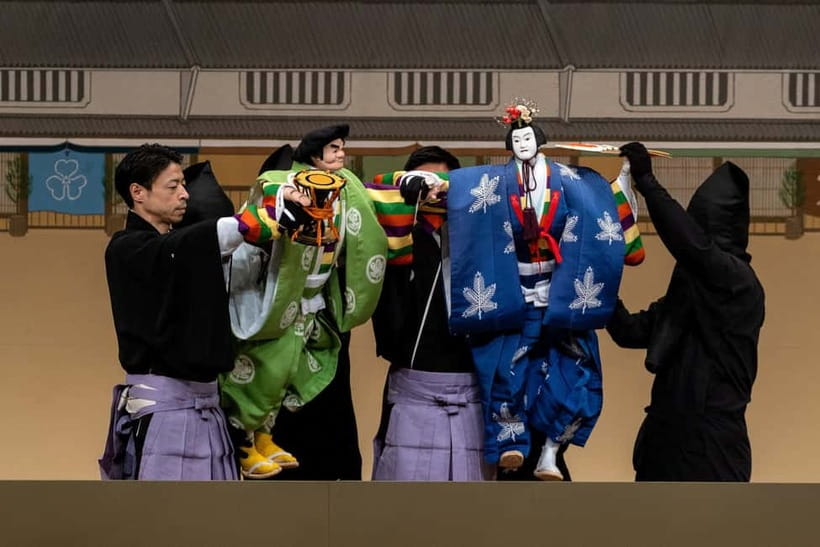
Not every date includes Kabuki or Bunraku. Some nights feature Hogaku, which is traditional Japanese music. The Hogaku program highlighted here focuses on melodies connected to snow—especially the piece symbolized by Yuki no Aikata, tied to a long shamisen interlude in the Jiuta “Yuki.”
The idea is simple: listen for how a specific melody shows up across pieces, shaping the feeling of falling snow scenes. The program description even points you toward “expressive elements” woven into each piece. Translation-wise, you’re not chasing dialogue; you’re chasing musical cues.
And you get support here, too. For Hogaku, you receive a free English explanation sheet. This is useful if you want context without turning your night into a reading assignment. Traditional music often grows on you when you understand what you’re listening for—especially in a short set.
If you’re the kind of person who likes music concerts but needs a little “why this is meaningful” context, Hogaku can be a great fit.






The English audio guide: helpful context, not a line-by-line script
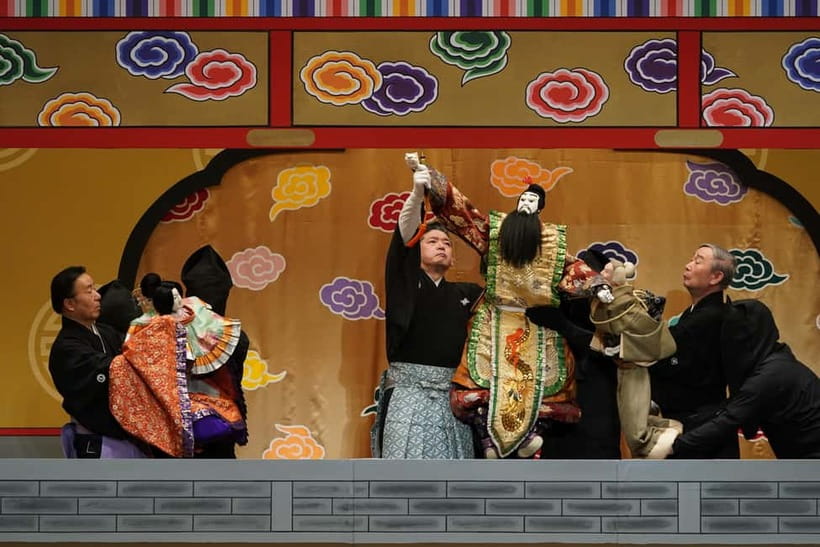
The best way to think about the English support is this: it’s there to help you track the main story and key points, while still letting you enjoy the live voices, acting, and music.
Key details you should know before you go:
- The English audio guide is available for Kabuki and Bunraku.
- It is English only.
- It offers an overview of main points rather than a literal dialogue translation. This matters because it keeps you from missing the performance while reading a translation.
A small but real mental adjustment: at first, it can feel odd hearing translations in one track while simultaneously listening to the performers. Some people find they need a minute to stop trying to match every sound to an English line. Once you stop doing that, the experience becomes easier—because you’re enjoying voice, movement, and music as a layered performance.
Also, you won’t be recording anything. No audio recording is allowed, and video/photo inside isn’t permitted. That keeps the hall quiet and protects the art form from “content mode” distractions.
Theater etiquette: rules that shape the vibe (for the better)
This show has clear conduct rules. Here’s what’s listed as not allowed:
- smoking
- pets (assistance dogs allowed)
- alcohol and drugs
- video recording
- photography inside
- making noise
- audio recording
Those rules might sound strict, but they create the tone you came for: a room where voices and instruments can land cleanly. And because the show aims to be heard without loud speakers, noise control isn’t just “theater policy”—it’s part of the listening design.
One practical tip from experience-style advice: give yourself a few minutes at the start to hear any preliminary explanations before the performance begins. It helps you know what to look for and how to read stage actions.
And for your comfort: if you’re planning a snack or drink plan, keep it simple. Once the show starts, your time is meant to be in your seat and focused.
Price and value: why $37 can be a bargain for real theater
At $37 per person, this kind of ticket can be excellent value if you care about authentic performance rather than a generic cultural show.
Here’s what you’re getting for the money:
- a live theater ticket for classical performing arts
- an English audio guide for Kabuki and Bunraku
- a free English explanation sheet for Hogaku
That combination is the core value. Many cultural performances either:
1) don’t offer English support, or
2) offer something that distracts from the performers.
This set-up is different: the English guidance is meant to support your understanding, not replace the experience. That’s why people with non-Japanese backgrounds often feel like they learned something without turning the evening into homework.
Also, your duration ranges up to about three hours. In theater terms, that’s not a token gesture. It’s a real segment of the day devoted to one of Japan’s major classical traditions.
If you only have a short trip and you’re choosing between “sightseeing number one” and “a real performance,” this is the kind of ticket that gives you an experience you can’t replicate with a photo and a quick stop.
Is it worth it for your group and your age range?
This is best for adults and for older teens who can handle a longer, slower-moving performance evening. Some people don’t enjoy long, slow-paced nights after a travel day. If your group gets restless in theaters, you might want to pair this with a lighter day and build in earlier downtime.
On the other hand, if your group loves theater in any form—music, puppetry, drama, or dance—this can be genuinely memorable. Bunraku especially can surprise people who think puppets are “cute” rather than powerful.
Your comfort with non-literal translation also matters. The audio isn’t line-by-line. So you’re not chasing every sentence; you’re following the performance’s main beats.
If you want to understand costumes and stage meaning, it helps to read a bit about Kabuki or Bunraku beforehand. Even a short background page can reduce confusion and let you enjoy the visuals faster.
Who this experience suits best
This is a strong match if:
- you want authentic Japanese classical performing arts, not a simplified imitation
- you want real performers without being fought by loud stage narration
- you need English support that helps you follow the show
- you’re visiting Tokyo/area but you’re willing to plan a Yokohama evening
It may be a weaker fit if:
- your group expects fast plot progress like a typical Western entertainment format
- you’re sensitive to the idea that the English help is an overview, not a full script translation
- you’re traveling with very young kids who need shorter attention spans (the show can feel lengthy and slow-paced for them)
Book it or skip it: my take
Book this if you want a real night of Japanese classical theater with support that actually helps you understand what you’re seeing. The English audio guide for Kabuki and Bunraku is a major reason this works for non-Japanese speakers, and the Hogaku explanation sheet keeps the music accessible without ruining the listening focus.
Skip it if you’re short on time, hate slower theater pacing, or want a tight, neatly wrapped narrative that moves moment-to-moment with minimal waiting. Also, don’t plan this as an add-on unless you can comfortably handle the full 75 minutes to 3 hours.
One last practical check: confirm the date’s program in the option title, because the content varies. Use Yokohama’s station names to set your navigation, and plan to exchange your voucher for a theatre ticket on arrival.
FAQ
Where is this performance held?
It’s in Yokohama at KAAT Kanagawa Arts Theatre. It is not at the National Theatre building in Hanzomon.
What are the nearest train stations?
The nearest options listed are Nihon-ōdōri Station (MM05) about a 5-minute walk, and Motomachi-Chukagai Station (MM06) about an 8-minute walk.
How do I enter the theater?
You exchange your GetYourGuide ticket/voucher for the theatre’s ticket at the entrance on the day of the performance. Staff will ask for the name used for the reservation.
Is there English help for Kabuki and Bunraku?
Yes. An English audio guide is included for the Kabuki and Bunraku performance, and it’s English only.
Is there English help for Hogaku?
Yes. The Hogaku program includes a free English explanation sheet.
Does the audio guide translate every line?
No. The audio guide provides an overview of the main points rather than a literal translation of the dialogue.
Can I record video or take photos inside?
No. Video recording and photography inside are not allowed, and audio recording is also not allowed.
Is the venue wheelchair accessible?
Yes. The venue is listed as wheelchair accessible. If you need wheelchair-accessible seating, you should contact the provider as soon as possible.