REVIEW · TOKYO
Tokyo Washoku 4-hour Cooking Class: From Market to Table
Book on Viator →Operated by MagicalTrip Inc. · Bookable on Viator
Market to meal is a smart way to learn. I love the supermarket visit with a guide who shows how to pick ingredients, and I love the knife-and-technique practice that makes Japanese cooking feel repeatable at home. One possible drawback: the class can’t guarantee allergy-free cooking, and any dietary needs have to be shared at least a day ahead.
You’ll spend about four hours with a small group (up to 7) in a dedicated cooking studio, and you’ll leave with recipes you can actually use again. If you’re the type who likes to understand the why behind flavor, this format fits.
In This Review
- Key points worth knowing first
- Why this market-to-table washoku class works in Tokyo
- The 10:00am flow: FamilyMart meetup to cooking studio meal
- Supermarket shopping: picking Japanese ingredients like a pro
- Knife skills and technique practice that you can repeat
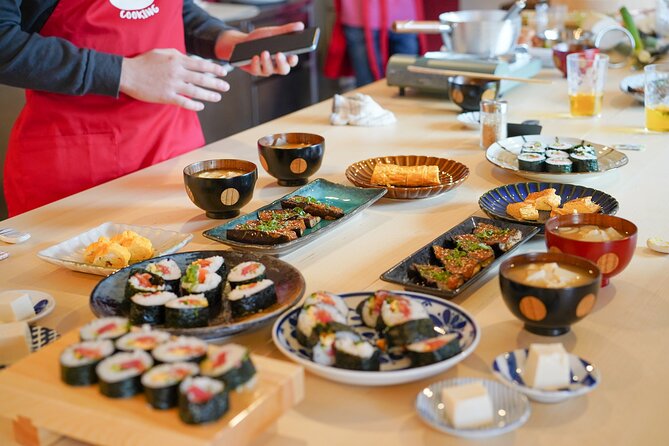
- What you’ll cook: makisushi, miso soup, dashimaki tamago, and nasu dengaku
- Eating in the studio: how the meal and drink pairings fit in
- Take-home recipes: turning class time into real home cooking
- Price and value: is $79.59 a good deal for a Tokyo cooking class?
- Who should book Tokyo Washoku, and who might want to adjust expectations
- Should you book this cooking class?
- FAQ
- Is the class 4 hours long?
- Where do I meet for the Tokyo Washoku class?
- What dishes will I cook?
- Can vegetarians or vegans join?
- What if I can’t eat eggs?
- How big is the group?
Key points worth knowing first
- Real supermarket shopping near Iriya Station: you learn ingredient selection before you cook
- Hands-on knife skills: cutting techniques are part of the lesson, not just background info
- A full set of Japanese home-style dishes: including makisushi, miso soup, dashimaki tamago, and nasu dengaku
- Sake and beer pairings during the meal: you can experiment with drink pairings while you eat
- Small-group teaching (max 7): time for questions and one-on-one help as you work
Why this market-to-table washoku class works in Tokyo
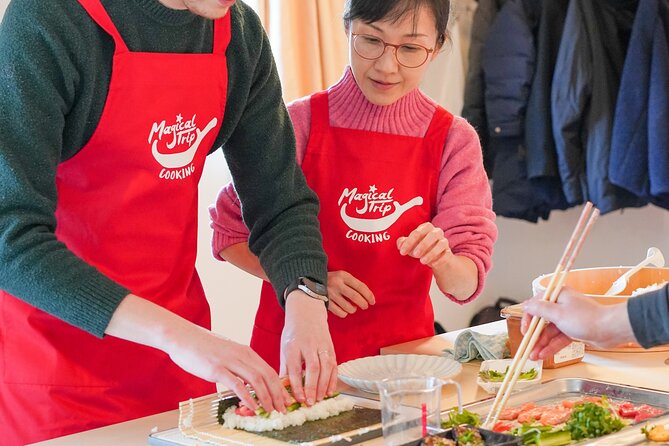
Tokyo has great food everywhere, so it’s easy to treat “eating” like the whole lesson. This class flips that. You start by shopping like a local cook would, then you turn those choices into classic Japanese dishes.
Two things make the experience especially practical. First, the supermarket stop teaches you what to look for in Japanese ingredients, not just what to buy. Second, you practice core techniques—especially knife work—so the cooking doesn’t feel like a magic trick you can’t reproduce.
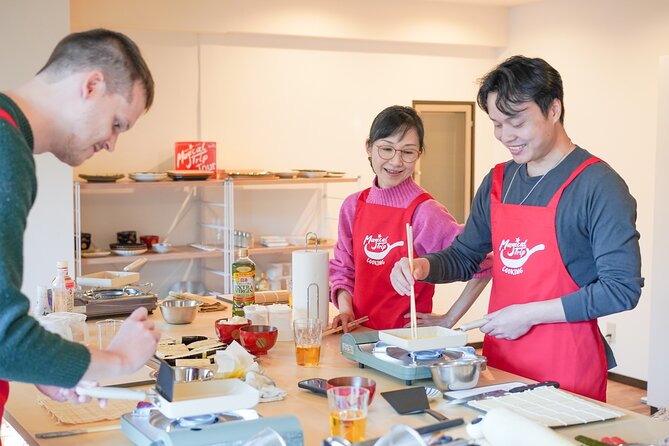
The vibe is also grounded. You’re not touring for photo stops and then rushing through a meal. You’re cooking and asking questions as you go, with instructors such as April, Yuri, Masai, and Alice praised for step-by-step explanations and friendly pacing.
You can also read our reviews of more shopping tours in Tokyo


The 10:00am flow: FamilyMart meetup to cooking studio meal
The class starts at 10:00am at FamilyMart, 2-chōme-1-10 Shitaya, Taito City, Tokyo 110-0004. From there, you head to a local supermarket near Iriya Station with your guide, then move to the cooking studio to cook and eat.
Plan for a steady, hands-on schedule across roughly four hours. You’ll shop, prep, cook, and then sit down to enjoy what you made—plus drink pairings like sake or other options. The tour ends back at the meeting point, so you can continue exploring on your own after.
One timing note that matters: the tour must start on time. If you’re more than 5 minutes late without contacting the group, it can be treated as a cancellation with no refund.
Supermarket shopping: picking Japanese ingredients like a pro
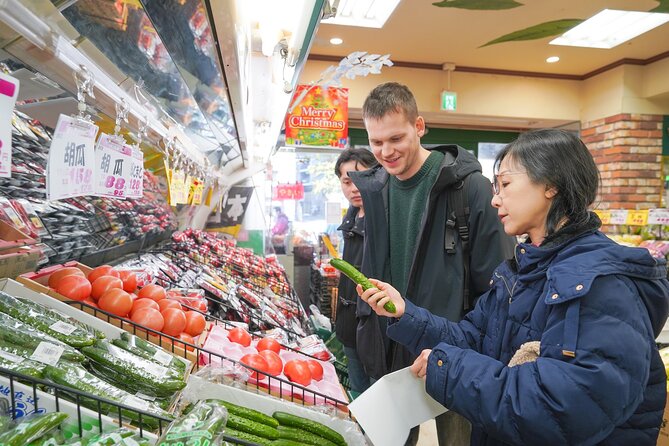
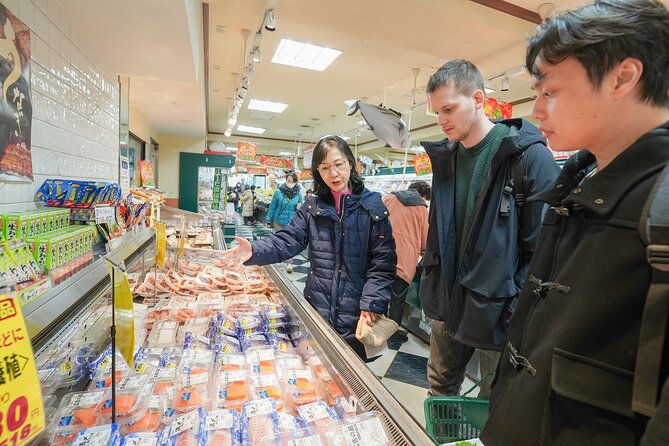
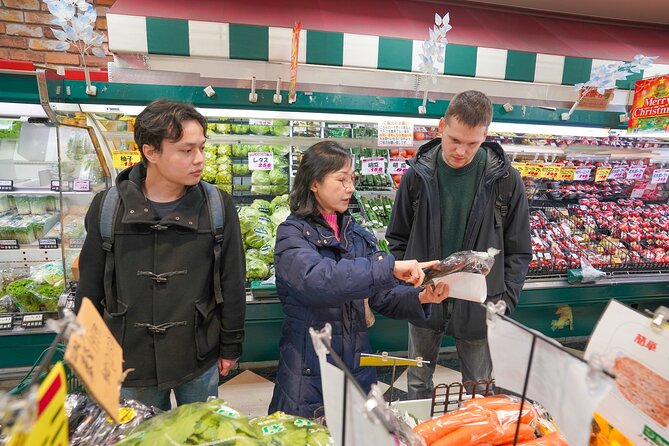
This is the part I think you’ll appreciate most, because you learn grocery logic, not just recipes. Your guide takes you to a local supermarket and shares tips on choosing ingredients for washoku—things like texture, freshness, and the specific ingredients that make a dish taste right.
In Japanese cooking, the ingredients are doing a lot of the work. A bowl of miso soup can taste wildly different depending on which components you buy and how you balance them. In sushi rolls, the rice and seasonings matter, and so does how you handle ingredients while assembling.
I like that the class doesn’t pretend you should buy everything from a fancy specialty store. You’re learning how to make good choices in a regular Tokyo supermarket—exactly what you’ll be doing again when you cook at home.
Knife skills and technique practice that you can repeat
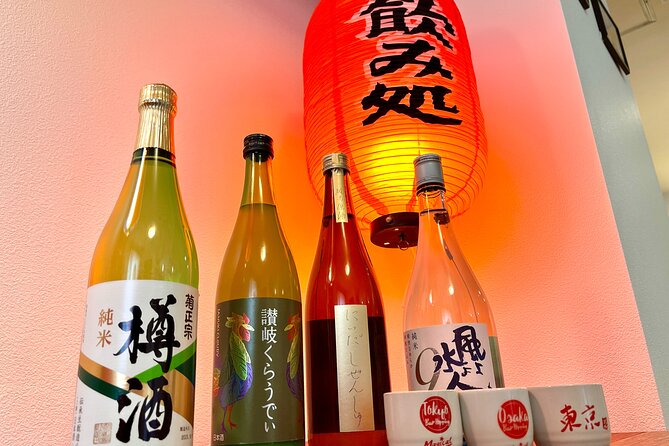
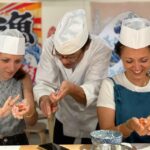
A cooking class gets real when you learn actual technique. Here, you practice traditional Japanese knife and cooking skills while making the dishes. That means you’re not only tasting outcomes—you’re building the motions and methods that create them.
The strong reviews repeatedly point to instructors guiding people through each step with patience and clarity. Guides like Yuri and Minnie are specifically praised for breaking down directions in detail, while April and Suzy are mentioned for encouragement and strong English.
What makes this valuable is the transfer. Once you learn how your guide wants you to cut and prepare, you can apply it to other Japanese recipes you find later. Even if you don’t cook daily, you’ll have a skill set you can reuse.
What you’ll cook: makisushi, miso soup, dashimaki tamago, and nasu dengaku
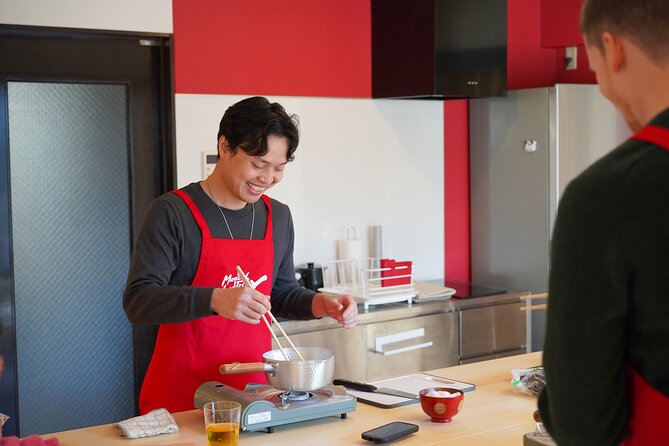
You’ll cook traditional Japanese dishes from scratch, taught in a way that works for a mixed group. Expect to make:
- Makisushi (rolled sushi)
- Miso soup
- Dashimaki tamago (rolled omelet)
- Nasu dengaku (grilled eggplant skewers)
The class overview also mentions making egg rolls as part of the dishes, so you’ll likely get a mix of rolling and stovetop cooking depending on your specific session. The key point is that you aren’t just doing one dish—you’re learning multiple building blocks of washoku.
Here’s why the menu makes sense. These dishes cover several “core” Japanese cooking skills:
- Preparing and handling ingredients for rolls and assembly
- Working with heat carefully for soup and seasoning
- Mastering a technique style like rolled omelets, where timing and consistency matter
- Using grilling methods for eggplant skewers and sauce balance
If you can’t eat eggs, your food selection is reduced from four types to three. If you have dietary needs or allergies, you’ll be asked to inform the operator at least one day in advance, since the tour can’t accommodate day-of changes.
You can also read our reviews of more tours and experiences in Tokyo

Eating in the studio: how the meal and drink pairings fit in
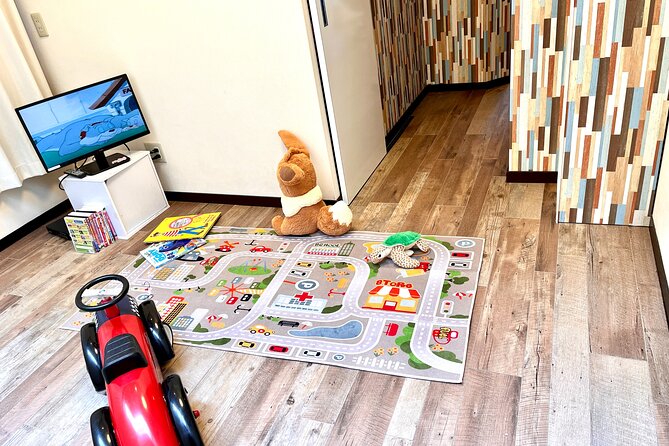
After cooking, you eat together in a dedicated studio. Reviews highlight that the studio is spacious and well set up, which matters because you’ll want enough space to work comfortably during prep.
This part is more than a reward for your effort. It’s when you connect taste to technique. If your miso soup came out too salty or too light, you’ll understand why once you’ve been part of the process. If your rolled sushi doesn’t hold together as expected, you’ll see what adjustment you would make next time.
You’ll also have sake or other drink pairings as part of the experience. Some reviews specifically mention beer and sake tasting during the lesson. That’s a nice extra because it teaches pairing as a concept, not just an afterthought.
Also, use the studio time to ask questions. One review notes being able to ask about Tokyo life, and that kind of conversation is often part of what makes small-group classes feel worth it.
Take-home recipes: turning class time into real home cooking
One reason this class gets strong marks is that you don’t just get a meal and memories. You get recipes for the dishes to take home, so you can repeat the work.
That’s a big deal for value. In many classes, the food tastes great and then you’re stuck trying to remember what you did. Here, you have instructions to recreate your sushi rolls, miso soup, dashimaki tamago, and nasu dengaku.
If you’re traveling and worried you’ll forget the details, recipes help you lock in the learning. If you’re local or returning to Tokyo soon, recipes make this feel less like a one-off activity.
Price and value: is $79.59 a good deal for a Tokyo cooking class?
$79.59 can feel like a splurge, but the value is in what’s included. You’re paying for four hours of guided cooking instruction, multiple dishes made from scratch, recipe handouts, and the supermarket ingredient lesson. You’re also getting a chance to taste your own work, plus sake or other drink pairings.
Compared with the “cook one thing” style classes, this feels more like a full meal training session. Small-group size (max 7) helps too, because you’re more likely to get help while you work. If you’ve ever taken a class where you watch more than you do, this format is built to avoid that problem.
Still, a practical note: this isn’t the cheapest food activity in Tokyo. If you want only a quick bite or a casual snack-and-chat, look for something simpler. But if you want actual skills—shopping choices, knife technique, and washoku methods—this price starts to make sense.
Who should book Tokyo Washoku, and who might want to adjust expectations
This class is a great fit if:
- You want a hands-on Japanese cooking class in Tokyo
- You like learning how ingredients are chosen, not just how dishes are assembled
- You’re interested in practical washoku basics like sushi rolling, miso soup, and egg-based technique
- You want a small-group experience with time for questions
It may be less ideal if you have complex allergies and need guaranteed allergy-free preparation. The class also can’t always substitute at every stop, though they make an effort to compensate elsewhere. Vegan and vegetarian are welcome, but the operator needs dietary requests submitted at least one day before.
If you’re traveling with someone who prefers shopping-free activities, this one might feel too cooking-forward. But for most people who enjoy food, the supermarket stop alone is a strong hook.
Should you book this cooking class?
If your goal is to come away with something useful—skills, recipes, and a better sense of what makes washoku taste right—this is an easy recommendation to make. The strongest moments are the combination of real ingredient shopping, knife technique coaching, and a full meal you cook and eat in the studio.
Book it if you enjoy structured, practical learning and you’re excited to work with classics like makisushi and miso soup. Skip it if your top priority is a purely sightseeing day or if you’re dealing with strict allergy requirements that need guaranteed allergy-free cooking.
FAQ
Is the class 4 hours long?
Yes, the cooking class runs for about four hours.
Where do I meet for the Tokyo Washoku class?
You meet at FamilyMart, 2-chōme-1-10 Shitaya, Taito City, Tokyo 110-0004, Japan.
What dishes will I cook?
You’ll make traditional dishes including makisushi (rolled sushi), miso soup, dashimaki tamago (rolled omelet), and nasu dengaku (grilled eggplant skewers). The overview also mentions egg rolls as part of the dishes.
Can vegetarians or vegans join?
Yes. Vegan and vegetarian are welcome, and the operator arranges ingredients and the cooking process. If you have dietary requests, inform them at least one day before the tour.
What if I can’t eat eggs?
If you cannot eat eggs, your food selection is reduced from four types to three.
How big is the group?
The tour has a maximum of 7 travelers.