REVIEW · TOKYO
Tokyo Tsukiji Fish Market Food and Culture Walking Tour
Book on Viator →Operated by Japan Wonder Travel · Bookable on Viator
Tsukiji is a feast for your senses. This 3-hour walking tour brings food culture to life around the outer market, with stops where you’ll sample classic bites and learn why top chefs shop here.
I love the variety of tastings packed into a short window—think Wagyu beef skewers, fish cakes, dashi soup, green tea, seasonal fruit, and an ending of sushi or a seafood bowl. I also like the way the guide helps you handle the market’s chaos without turning it into random wandering.
One thing to consider: you’ll be on your feet and focused on seafood, and the exact snacks can shift on days when certain stalls are closed (like Wednesdays and Sundays).
In This Review
- Key things to know before you go
- Tsukiji by foot: why the outer market is the real win
- Meeting at Tsukiji Hongan-ji Temple: the most important logistics
- Jogai Market stop: getting the 80-year Tsukiji story while you eat
- Old Tsukiji Market: the snack-and-customs stretch
- Tsukiji Uogashi pass-by: seeing hundreds of fish types, with closures to plan for
- The sushi or seafood bowl finish: what you’ll actually eat
- Food highlights: Wagyu, uni, dashi, matcha-style moments, and fruit
- Price and value: why $99.49 can work for your Tokyo day
- Guide quality matters: how guides like Kiyo, Naz, and Shoko set the tone
- Practical tips: show up ready and you’ll enjoy the whole route
- Should you book this Tsukiji food and culture tour?
- FAQ
- How long is the Tsukiji Fish Market Food and Culture Walking Tour?
- Where do I meet the guide?
- What food is included?
- Is the tour good for vegetarians or people with dietary restrictions?
- What should I wear?
- Is there anything different on Wednesdays or Sundays?
Key things to know before you go
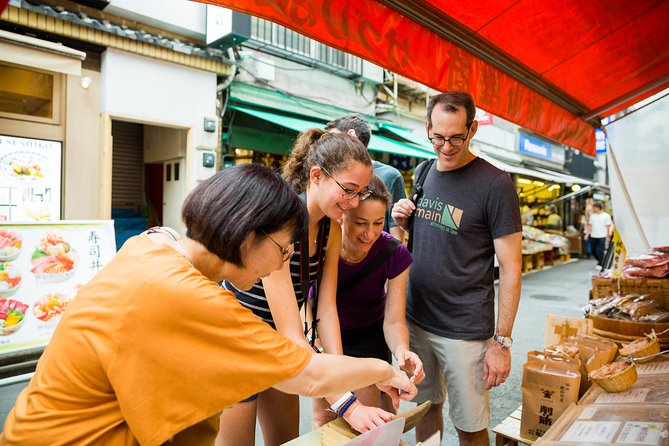
- Meet at Tsukiji Hongan-ji Temple and head in right on time, since the group leaves sharp.
- Outer market first: you’ll get the food-culture vibe where people actually buy ingredients day to day.
- Multiple seafood samples: Wagyu skewers, fish cakes, and often items like Japanese omelette and fruit when shops are open.
- Uogashi pass-by section: you’ll see a mini wholesale area with tons of fish types, but it’s closed on specific days.
- Wrap-up meal: you’ll finish with either sushi or a seafood bowl, depending on the day/time.
- Fish-only experience: if you can’t eat fish, this tour isn’t for you.
Tsukiji by foot: why the outer market is the real win
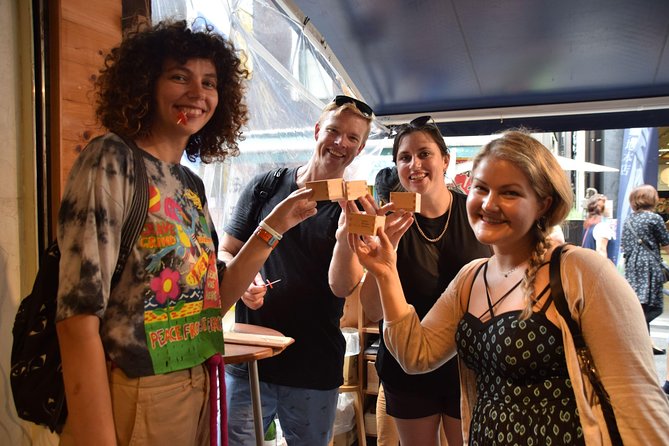
Tsukiji has a reputation that stretches well beyond Tokyo, but the best part for most first-timers is how practical it is. You’re not just sightseeing fish tanks. You’re seeing how ingredients move through daily buying—then tasting the results.
This tour starts in the outer market area and pushes you through multiple stops with a guide who points out what to look for: piles of sea urchin (uni), vendors working with seafood displays, and scenes like bluefin tuna being carved. It’s loud, aromatic, and fast-moving in the way food markets often are, but your guide gives you context so it doesn’t feel like sensory overload.
The upside for you is simple: instead of trying to figure out what’s worth eating across dozens (or hundreds) of stalls, you’re getting a curated path of foods that match the market’s specialties.
And yes, there’s a good chance you’ll cross paths with serious culinary shoppers. The experience is framed around the idea that many top chefs visit daily for fresh ingredients, which makes the place feel less like a theme attraction and more like a working marketplace.
You can also read our reviews of more walking tours in Tokyo


Meeting at Tsukiji Hongan-ji Temple: the most important logistics
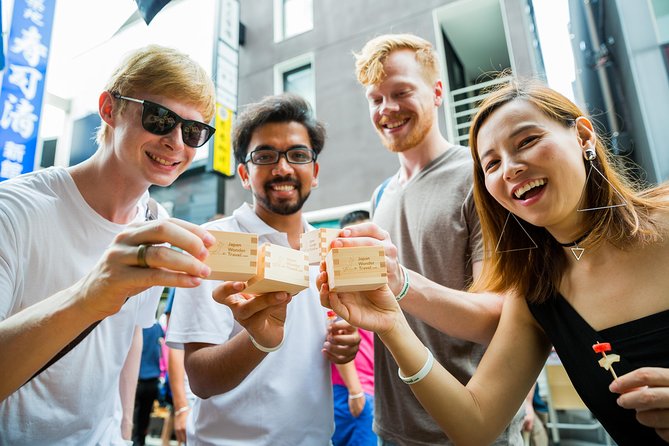
Your meeting point is the main gate of Tsukiji Hongan-ji Temple, and timing matters. The group leaves at the start time sharp, and they won’t wait if you’re late.
Also note this detail: Google Maps can lead you to the back side of the temple. The correct spot is the front side, right by the main gate. When you arrive, take a minute to confirm you’re at the gate area before you start second-guessing yourself.
You’ll also want comfortable walking shoes. This isn’t a sit-and-sip stroll. You’ll be walking inside market lanes and between sections, and you’ll move at a steady pace for a total duration of about 3 hours.
One more practical point: the group size is capped at 20 travelers. That usually means you can hear your guide, move through crowds more easily, and still get time for a bit of shopping if the schedule allows.
Jogai Market stop: getting the 80-year Tsukiji story while you eat
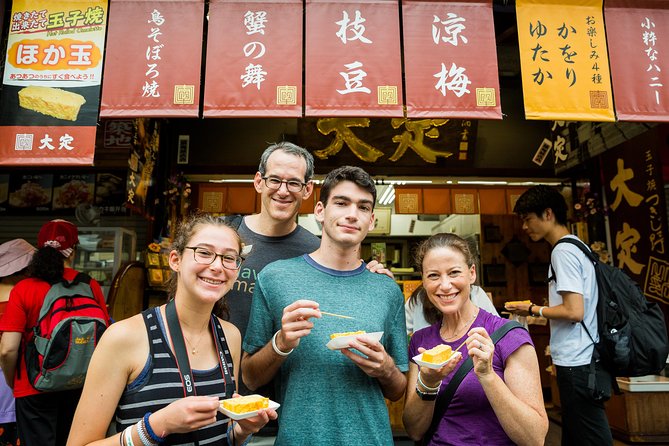
The tour’s first main block is at Tsukiji Jogai Market, where you’ll spend about 1 hour 30 minutes. This is the outer market area that many visitors never quite figure out on their own.
What makes it special is that your guide connects what you’re seeing to how the market works. You’ll learn about Tsukiji’s long-standing role as a major fish market in Japan—often described as an 80-year story—plus why high-end kitchens keep showing up here when they want quality ingredients.
While you walk, you’ll usually get small samples that act like training wheels. Expect classic Japanese flavors such as dashi soup and green tea. Those tastings are not random. They help you read the stalls faster, because you start recognizing the building blocks behind many seafood dishes.
A big sensory moment can be seeing seafood displays up close—uni stacked neatly in boxes, tuna handled by vendors, and other items floating or arranged in ways that look almost too detailed to be real. Your guide’s job is to translate the chaos into meaning, so you know what you’re looking at and why it’s treated like premium food.
Old Tsukiji Market: the snack-and-customs stretch
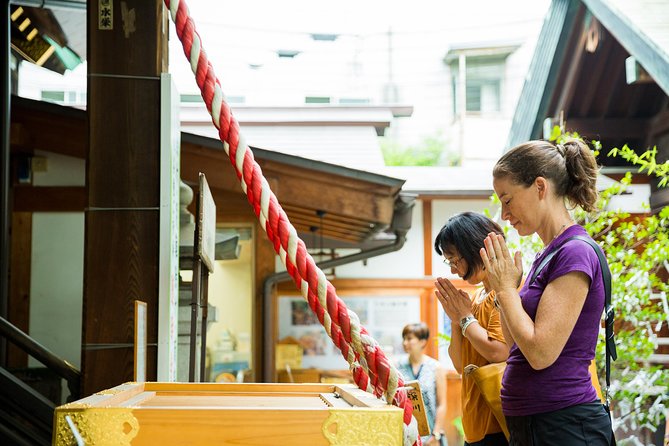
Next comes a shorter stop at the Old Tsukiji Market, around 30 minutes. This part is more about tasting and learning local food culture than about long explanations.
This is the segment where you might see or try items like Japanese omelette and fish cake, plus seasonal fruit. The important caveat is that these snacks depend on whether shops are open that day. On days when certain market operations are closed (including Wednesdays and Sundays, plus other closed market days), some of these items can’t be served.
Even so, the value of this stop is usually in how your guide teaches you to look. You’ll learn what’s typical, how vendors think about freshness, and how people expect certain flavors to show up together. When you get that mindset, Tsukiji becomes more than a place to buy food—it becomes a place to understand why Japanese seafood tastes the way it does.
If you’re the type who likes to leave a market knowing what to order next time, this is the portion that helps the most.
Tsukiji Uogashi pass-by: seeing hundreds of fish types, with closures to plan for
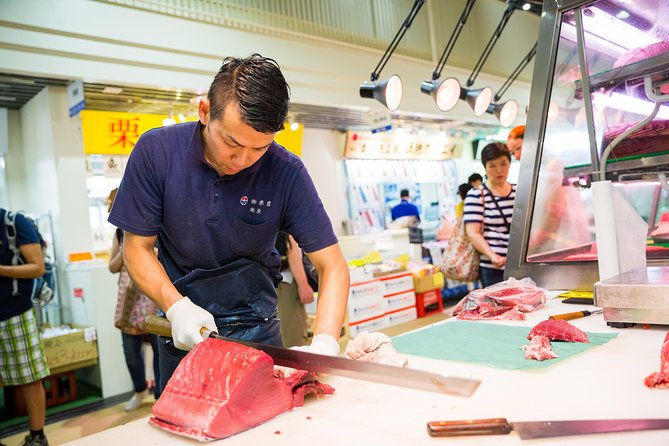
Then you’ll pass by Tsukiji Uogashi, around 30 minutes. The promise here is that you’ll see a mini wholesale market setup with hundreds of fish types. You’re not necessarily “shopping like a buyer” for this portion, but you are getting the visual education.
Two things matter for your planning:
First, this part is closed on Wednesdays, Sundays, and other closed market days. So if your trip lands on one of those days, you should adjust expectations. The tour still runs, but certain items tied to closed shops may not show up.
Second, even when it’s open, it’s a pass-by. Don’t expect it to feel like a long sit-down lesson. Think of it as a guided snapshot of the ingredient world—where seafood categories are on display and you start understanding the sheer variety behind the final dishes you’ll eat later.
If you love seafood and want to connect the dots from raw ingredient to finished bite, this stop is often the “wow, that’s what’s behind everything” moment.
You can also read our reviews of more food & drink experiences in Tokyo




The sushi or seafood bowl finish: what you’ll actually eat
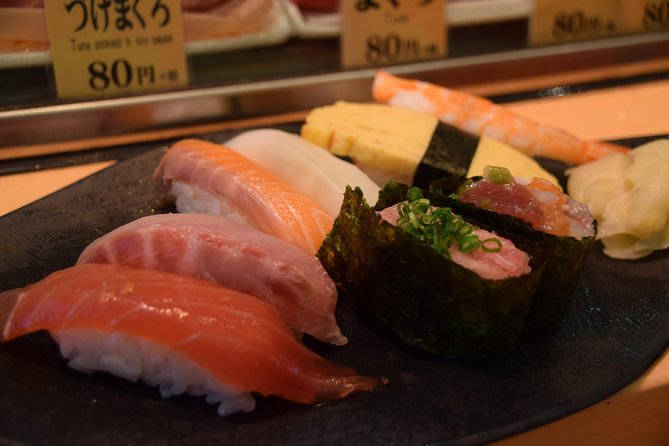
Your tour wraps with the Tsukiji Fish Market tasting meal, about 30 minutes. This is where you get the main payoff: a delicious serving of either a fish bowl or sushi.
Exactly what you eat can vary by day/time, and your schedule determines whether it lands on sushi vs. a seafood bowl. On paper it’s a small time slot, but in practice this is the part that makes the tour feel like more than snacks—especially because lunch and a snack are included overall.
Some of the typical foods connected to this experience include high-grade Wagyu beef skewers, fish cakes, sushi or seafood bowl, and seasonal fruit. You may also see items like pufferfish floating in tanks, but the exact tastings you receive are based on availability and the day’s operations.
One practical tip: come ready to eat, but don’t assume you’ll leave stuffed like you just ate a full restaurant meal. Portions are designed as a market tour sampling style—plus a included lunch/snack—so if you’re very hungry and you skip breakfast, you might wish you hadn’t.
If you’re lucky and your group plan aligns, you may also get extra food moments such as watching preparation or participating in making something like sushi at a restaurant stop. That’s not something to bet your whole trip on, but when it happens, it’s the kind of memory that sticks.
Food highlights: Wagyu, uni, dashi, matcha-style moments, and fruit
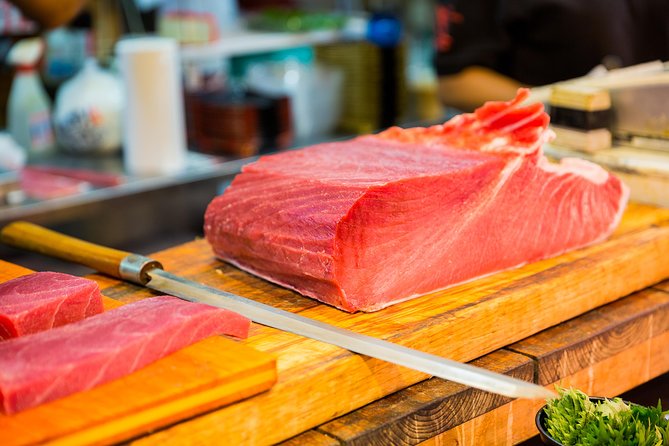
Tsukiji is about seafood first, but the tastings are designed to show you variety, texture, and flavor range.
Here’s what you should look forward to, based on what’s commonly offered in this experience:
- Wagyu beef skewers: a rich contrast to seafood, and a reminder that Japanese “market food” isn’t only raw fish.
- Fish cakes: comforting, savory, and easy to understand as a classic ingredient.
- Dashi soup: a gateway flavor that makes many dishes click, even if you’ve never had it before.
- Green tea (and sometimes matcha-style serving): a cooling reset between seafood-heavy bites.
- Seasonal fruit: a palate cleanser that also shows how Japanese meals balance flavors.
There’s also an “eyes first” category: sea urchin (uni) displays, tuna handling, and other seafood you might only ever see in restaurants elsewhere. Even if you’re not buying anything, you’ll leave with a much sharper sense of what Tsukiji actually sells.
One more detail that matters: this tour does not accommodate vegetarian, halal, gluten-free requests, or allergy-related requests. And if you can’t eat fish, you won’t be able to join. If you fall into those categories, you’ll save time by choosing another Tokyo food tour that matches your needs.
Price and value: why $99.49 can work for your Tokyo day
At $99.49 per person for about 3 hours, this tour can be strong value if you want three things in one go:
1) guided navigation through a tough-to-read market layout,
2) a practical selection of tastings, and
3) context that helps you shop and order later.
The math gets easier when you remember that lunch and snack are included, and market admissions on the stops are free. You’re paying mainly for the guide, the route planning, and the food selection delivered along the way.
If you tried to do Tsukiji solo, you’d likely spend money on random bites that may not be the best version of each item. You’d also lose time figuring out where to go next. Here, you get a path that keeps you moving and eating in the right order.
So the best way to judge value for you: if you’re the kind of traveler who wants to walk into a famous place and understand what to eat, this price is usually fair. If you’re already comfortable ordering seafood confidently and you’d rather spend your time picking your own stalls, you may feel the tour is paying for structure more than food.
Guide quality matters: how guides like Kiyo, Naz, and Shoko set the tone
One theme that shows up again and again with this tour style is that the guide can make the market feel manageable.
Guides named in past groups—like Kiyo, Naz, Miky, Kayoko, Joy, Yuki, Hanako, Mieko, KK, Shoko, Take, Sean, Hedeki, Masa, and Mitch—are described as adding history, helping with food choices, and keeping the pace comfortable.
Here’s what you should be aiming to get from your guide, regardless of who you get:
- Clear English (so you don’t miss the why behind each bite)
- Food explanations tied to what you see in front of you
- A pace that works for a mix of visitors
- Practical shopping tips, especially if you want to bring items home
Some departures even handle special requests when possible—like helping a group find an additional tasting option such as sake. That’s not guaranteed, but the fact that guides sometimes can help you add small extras is a quiet advantage of going guided instead of solo.
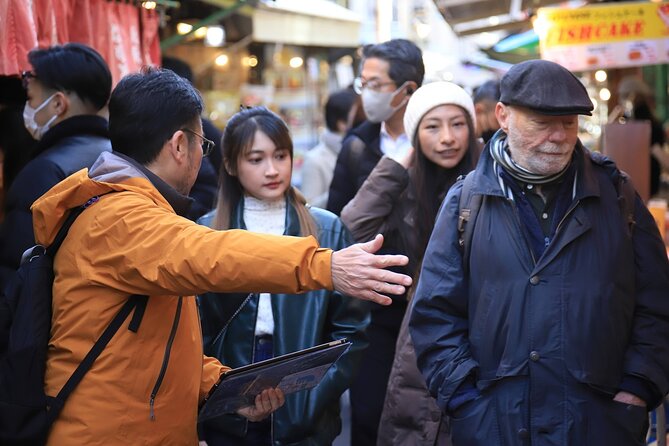
And group size helps. When the group stays small, it’s easier to hear your guide and easier to ask questions like what to buy for later or what to look for in a stall.
Practical tips: show up ready and you’ll enjoy the whole route
If you want the smoothest experience, do these things before you reach the temple gate:
- Arrive early enough to find the front gate of Tsukiji Hongan-ji Temple. Don’t rely on Google Maps blindly.
- Wear walking shoes and plan for constant feet-on-the-ground movement.
- Go with the reality that this is a seafood-focused tour. No fish means no tour.
- Understand that some items can be missing on closed-market days. Wednesdays and Sundays are the big ones to watch.
- Come with a plan for drinks: the minimum drinking age is 20. If you’re under 20, the tour offers another drink instead.
Also, remember the tour is designed to leave on time. In a market like this, missing the start can mean falling out of sync with the tastings and route.
Should you book this Tsukiji food and culture tour?
Book this tour if:
- you want a guided path through Tsukiji instead of guessing your way around,
- you’re excited about seafood and classic Japanese market flavors,
- you like the idea of ending with sushi or a seafood bowl after multiple tastings,
- and you appreciate learning market context while you eat.
Skip it (or choose something else) if:
- you don’t eat fish,
- you need vegetarian/halal/gluten-free or allergy-friendly options,
- or you’re expecting a long, heavy sit-down feast. This is a sampling-and-lunch format, not an all-you-can-eat marathon.
If you land on a Wednesday, Sunday, or another closed market day, be mentally flexible. You may get fewer of certain snacks like omelette, fish cake, and fruit. The best approach is to show up curious, hungry, and ready to learn how Japanese seafood buying actually works.
FAQ
How long is the Tsukiji Fish Market Food and Culture Walking Tour?
The tour lasts about 3 hours.
Where do I meet the guide?
Meet at the main gate of Tsukiji Hongan-ji Temple (front side). The group leaves at the start time sharp.
What food is included?
Lunch and snack are included. Tastings include items such as dashi soup, green tea, Wagyu beef skewers, fish cakes, and seasonal fruit, plus an ending of either sushi or a seafood bowl depending on the day/time.
Is the tour good for vegetarians or people with dietary restrictions?
No. This tour does not accommodate vegetarian, halal, gluten-free requests, or allergy-related requests. If you can’t eat fish, you can’t join.
What should I wear?
Wear comfortable walking shoes. The tour involves a lot of walking.
Is there anything different on Wednesdays or Sundays?
Yes. The fish market (Uogashi wholesaler market) is closed on Wednesdays, Sundays, and other closed market days. On those days, Japanese omelette, fish cake, and fruits cannot be served.