REVIEW · TOKYO
Tokyo Castle & Imperial PalaceーShogun Walking Tour
Book on GetYourGuide →Operated by Local Guide Stars · Bookable on GetYourGuide
Edo Castle’s walls still shape Tokyo. This Imperial Palace and Shogun walking tour connects the samurai age to the daily reality of modern Japan’s most symbolic grounds. You’re walking where power used to be layered thick, then translated into gates, moats, and carefully kept gardens.
I especially love the way the tour makes Edo Castle feel real, not like a flat map lesson. Two highlights for me are the small group size (up to 10) and the guided focus on defenses and how the castle functioned, not just what it looked like. A separate win is the garden time, including the Imperial-admired Japanese garden experience that makes the whole visit calmer than you’d expect.
One thing to plan around: there’s a security check when entering Imperial Palace grounds, with restrictions like no knives or alcohol. If you’re the type who brings random pocket tools or carries a drink, you’ll want to rethink that before you leave the hotel.
In This Review
- Key tour takeaways
- Edo Castle, Now the Imperial Palace: What This Walk Really Covers
- Small-Group Pacing at Kōkyo Gaien (Why Up to 10 People Is a Big Deal)
- Meeting at Starbucks and the Security Check Reality
- Sakurada Tatsumi Yagura: Reading Tokyo’s Castle Geometry
- Ote-Mon Gate: The Feeling of Controlled Entry
- Tokyo Imperial Palace: How an Imperial System Survived 2,600 Years
- Ninomaru Garden: The Emperor-Admired Calm Break
- Edo Castle Ruins and the Defense Mindset That Makes Everything Click
- Imperial Palace East Gardens: Koi Fish, Trees From Across Japan, and Photo Fun
- Price and Value: Is $23 a Good Deal for a 2-Hour Imperial Walk?
- What to Wear and Bring for an Outdoor Palace Day
- Who Should Book This Tour (and Who Might Skip It)
- Should You Book This Tokyo Castle & Imperial Palace Walk?
- FAQ
- Is the tour conducted in English?
- How long is the tour?
- How large is the group?
- Where do we meet?
- Is there a security check at the Imperial Palace?
- Is the tour wheelchair-friendly?
Key tour takeaways
- Up to 10 people keeps the pace thoughtful and question-friendly
- Edo Castle defenses explained so moats and gates make sense on the walk
- 2,600 years of the imperial system framed alongside the shogun era
- Ninomaru Garden stop is treated as the Emperor-admired garden moment
- Miniature palace viewing helps you grasp the former layout quickly
- Koi fish and Japan-wide trees add a sensory break from the history talk
Edo Castle, Now the Imperial Palace: What This Walk Really Covers
This tour is built around a simple idea: Tokyo doesn’t just have history, it has the settings where history happened. Edo Castle was Japan’s biggest fortress, and even though the structures changed over time, the geography still tells stories. You walk through the kinds of spaces that let a guide explain why the castle was hard to crack and how order was maintained during the long samurai period.
What makes this work well is the mix of eras. You start with samurai and the shogun—especially how power was managed through castle defenses and controlled movement. Then you shift to the present reality of the Imperial Palace, where the imperial system is described as continuing for 2,600 years. The result is a timeline you can physically walk.
If you like history that connects to layout—gates, walls, sightlines, and “who controlled what”—you’ll get a lot more out of your photos than the average palace snapshot.
You can also read our reviews of more walking tours in Tokyo


Small-Group Pacing at Kōkyo Gaien (Why Up to 10 People Is a Big Deal)
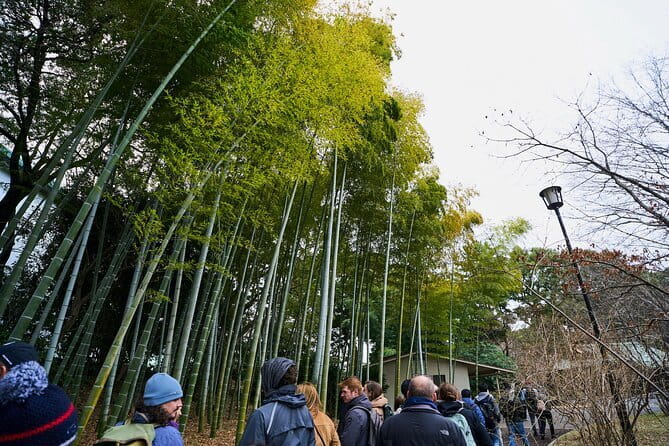
On a big group tour, you feel like you’re watching history through the shoulders of strangers. Here, the group stays small—up to 10 participants—so the guide can slow down when something is confusing and speed up when you’re ready to move.
That matters for the Imperial Palace area because you’re not just strolling. You’re repeatedly stopping for photo moments, then listening to how each place fits into the broader Edo Castle puzzle. When the group stays compact, you can actually keep up with the logic: this gate mattered because of this defense, this garden mattered because of that symbolism and space.
It also helps that the tour is conducted in English only. If you’re an English-speaker, you’ll likely get a clearer thread from stop to stop without having to guess what’s being explained. The flip side is simple: there’s no Japanese language support, so if English isn’t your comfort zone, this won’t be your smoothest option.
Meeting at Starbucks and the Security Check Reality
Your meeting point is straightforward: in front of Starbucks Coffee Kōkyo Gaien, Wadakura Fountain Park Store. The guide meets you holding a sign that says Local Guide Stars. It’s a helpful landmark because the Imperial Palace area can feel a bit like a maze when you’re doing it solo.
Then comes the part you should not treat casually: when you enter Imperial Palace grounds, you’ll hit a security check. The tour information specifically warns not to bring knives or alcohol. I’d treat this like a carry-on rules moment—clean pockets, no surprise tools, and nothing “just in case.”
After that, you’re on foot for a lot of the experience, so the day’s weather matters. This is one of those Tokyo walks where the schedule is light on time for detours, so being prepared helps you enjoy the stops instead of rushing between them.
Sakurada Tatsumi Yagura: Reading Tokyo’s Castle Geometry
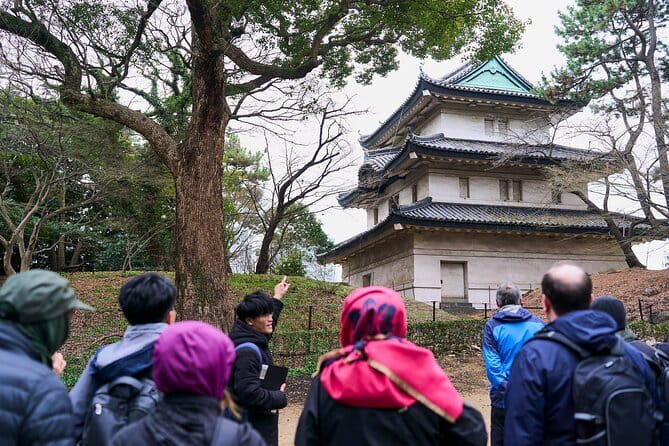
The first named stop is Sakurada Tatsumi Yagura. You’re there for a short stop that blends sightseeing with a quick guided explanation, plus a photo opportunity. Even if the structure looks like a part of the park scenery at first glance, your guide’s job is to show how it fits the bigger castle system.
This is the moment where the tour starts training your eye. Edo Castle wasn’t just a single building; it was an engineered network. A guide pointing out how structures worked together helps you understand why these remnants are placed where they are, and why they still guide how you picture the former fortress.
A good tip for enjoying this stop: take one wide photo from where the guide tells you to stand, then one closer shot. Without that, it’s easy to photograph the detail and miss the function.
Ote-Mon Gate: The Feeling of Controlled Entry
Next is Ote-Mon Gate, another stop focused on photo time plus a guided look. Gates are dramatic in every culture, but here the focus is practical: why this entrance mattered, and how it connected to the defensive mindset of Edo Castle.
As you listen, you start to feel the castle as a system of delays—layers that made attacks harder and gave defenders time to respond. It’s the kind of explanation that makes the later moats and gate descriptions click into place.
If you’ve watched period dramas, you’ll recognize the “grand entry” vibe. What’s different on this tour is the attention to how the gate fits into real defense. It turns set dressing into strategy.






Tokyo Imperial Palace: How an Imperial System Survived 2,600 Years
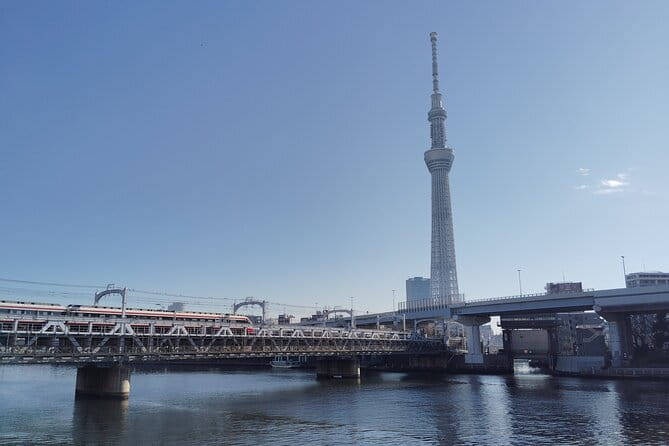
The tour then brings you into the core frame of modern symbolism: the Tokyo Imperial Palace. You’ll have time for another photo stop and guided tour within the grounds.
This is where the tour shifts from “samurai strategy” to “how tradition endured.” The imperial system is presented as continuing for 2,600 years, and the guide’s job is to show how it survived while everything around it changed. That includes the big question for many visitors: how did Japan keep such a long-running institution functioning through wars, political shifts, and new eras?
I like this part because it doesn’t ask you to memorize dates. Instead, it asks you to notice space and continuity. You’re walking where authority is performed through buildings, paths, gates, and controlled access.
Ninomaru Garden: The Emperor-Admired Calm Break
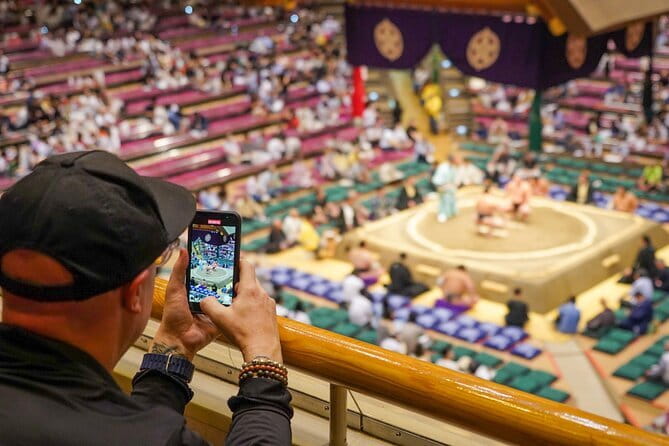
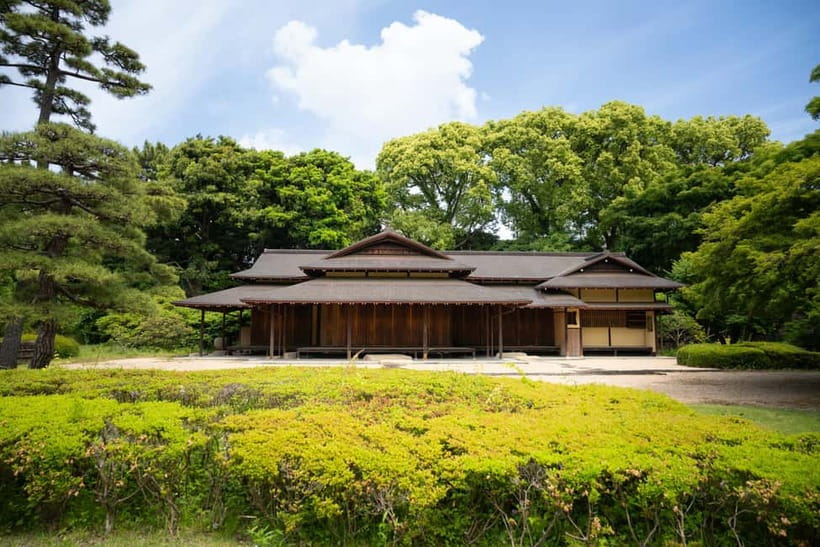
One of the most enjoyable parts of this tour is the transition into Ninomaru Garden. It’s another planned stop with guided context and plenty of viewing time. The highlights describe it as the Japanese garden admired by the Emperor, and that framing changes how you look at the details.
Gardens like this aren’t just pretty. They’re part of how a site communicates restraint, order, and taste. Even if you aren’t a garden expert, you can appreciate how carefully the space is composed.
Also, this is a relief valve after the fortress-energy talk. Edo Castle defenses are about pressure and control; the garden is about pause. If you time your photos right—standing where the guide tells you—you’ll capture the kind of layered perspective that looks great even on a phone.
Edo Castle Ruins and the Defense Mindset That Makes Everything Click
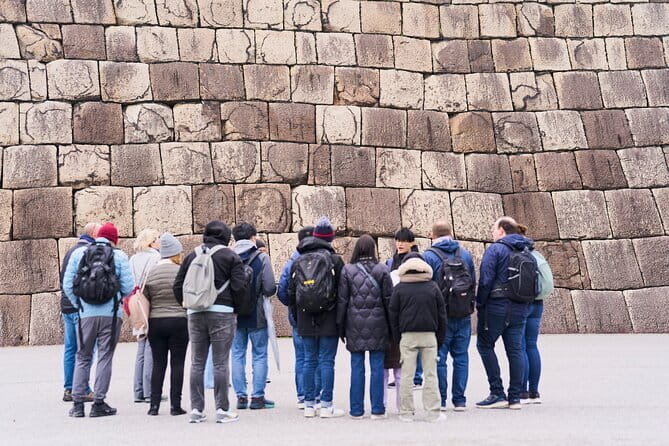
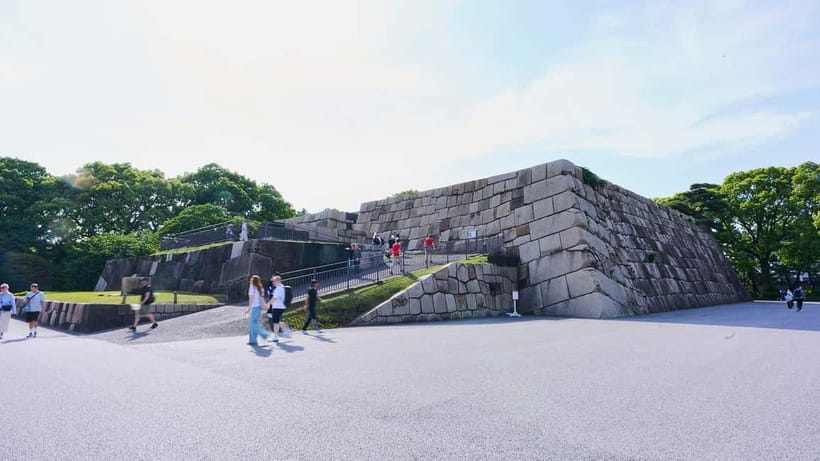
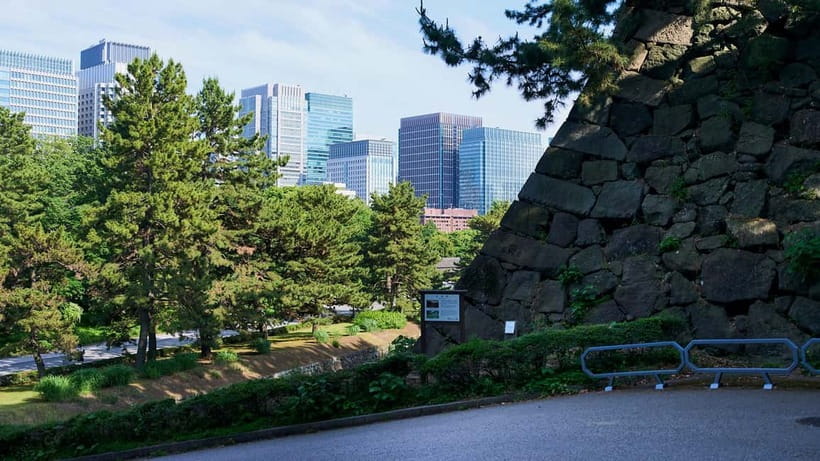
Then you hit Edo Castle Ruins, a shorter stop that’s still guided. This is where you’re asked to connect the dots between what you’ve seen already and what you’re seeing now.
The tour explains how Edo Castle defenses made it nearly impenetrable, and how the castle played a key role in sustaining the peaceful samurai era lasting 260 years. That’s a big claim, but your guide’s explanations focus on why a castle like this changes behavior: it discourages easy assaults, slows chaos, and supports long-term stability.
This is where the tour is most “useful.” Without guidance, ruins can look like random stonework and leftover structure. With the defense context, you start imagining movement paths, chokepoints, and the logic behind layered protection.
If you’re the type who likes to understand what you’re looking at, this section is worth paying attention to closely rather than treating it like a quick photo break.
Imperial Palace East Gardens: Koi Fish, Trees From Across Japan, and Photo Fun
The last major stop area is the Imperial Palace East Gardens. You’ll get more guided walking time and photo opportunities, and this is one of the tour’s more sensory moments.
Your included experience highlights special koi fish and diverse trees from across Japan. That matters because it breaks the tour out of “lecture mode.” You can look at history through stone and gates, then shift to the living, breathing details of water and greenery.
This is also where panoramic views tend to land well for photos. The gardens provide angles that feel less like street photography and more like composed travel postcards—without you needing to be a photography expert.
One practical thought: plan to slow down a bit during this final area. If you rush, you miss the chance to enjoy the garden rhythm that the guide is setting up for you.
Price and Value: Is $23 a Good Deal for a 2-Hour Imperial Walk?
At $23 per person for 2 hours, this is priced like a value-focused guided experience rather than a premium museum ticket day. You’re paying for a live English guide, time inside the Imperial Palace grounds and eastern garden, and guided interpretation that helps you understand why the space matters.
The value really comes from what’s hard to DIY. Trying to connect Edo Castle defenses to the current palace layout without guidance is doable, but it takes time and effort. Here, the guide does the stitching for you: gates, moats, remnants, and how all of it supported control and stability.
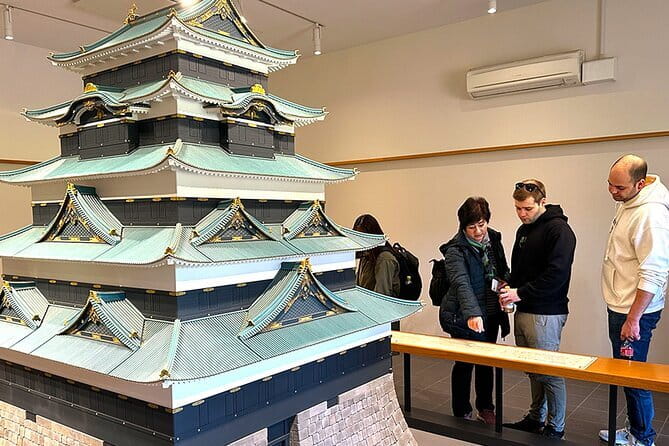
Also, the tour includes a miniature structure of the former palace. That’s a smart teaching tool. It gives you a “big picture” model that makes the walking stops easier to decode. If you’re the kind of person who wants your first palace visit to feel coherent, that included element adds real value.
For me, the best way to judge the price is simple: if you want a guided explanation of what you’re seeing for roughly two hours, this sits in a very reasonable zone for Tokyo.
What to Wear and Bring for an Outdoor Palace Day
This is a walking tour with a major chunk outdoors. Dress for the day’s weather rather than for comfort at your hotel. If it’s hot, choose breathable layers. If it’s cool, bring a light jacket you can tolerate for extended walking.
Because photography is encouraged, bring a camera or a phone with enough storage. The tour includes multiple photo stops, and the guide will point out where a better angle makes a difference.
Wheelchairs are available and can be used within Imperial Palace grounds, but the information also notes there are some slopes and areas where guests will need to walk or go down on foot. If mobility is a concern, you’ll want to plan based on how comfortable you are with short sections of uneven movement.
Who Should Book This Tour (and Who Might Skip It)
You should book this tour if you want to understand Tokyo’s history through the actual bones of Edo Castle and the modern Imperial Palace grounds. It’s especially good for people who enjoyed samurai-era storytelling, or anyone who likes a guided path where each stop has a clear reason to exist.
It also suits solo travelers who want a small group experience with room for questions, and couples who want a relaxed pace without getting lost in complicated self-guided interpretation.
You might consider skipping if you don’t feel comfortable with English-only guiding, or if security rules and outdoor walking are a hassle for you. Also, if you’re expecting to see every monumental palace building up close, this tour is more about grounds, gates, gardens, ruins, and interpretation than a full inside-the-building marathon.
Should You Book This Tokyo Castle & Imperial Palace Walk?
If you like your history practical—stone, gates, moats, and meaning—this is an easy yes. The small group size, the 2,600-year imperial system framing beside the shogun and Edo Castle defense story, and the time in Ninomaru Garden make it a well-balanced day segment.
Book it when you want your Imperial Palace visit to feel guided and connected, not just pretty and vague. Skip it if you need a Japanese-language guide or you prefer fully indoor, low-walking sightseeing.
If you’re on the fence, here’s my rule of thumb: if two hours with a guide answering real questions sounds like your kind of travel, this tour fits.
FAQ
Is the tour conducted in English?
Yes. The tour is English only, and Japanese language support is not available.
How long is the tour?
The duration is 2 hours.
How large is the group?
It’s a small group limited to up to 10 participants.
Where do we meet?
Meet in front of Starbucks Coffee Kōkyo Gaien, Wadakura Fountain Park Store at 3-1 Kōkyo Gaien, Chiyoda City, Tokyo.
Is there a security check at the Imperial Palace?
Yes. There is a security check when entering the Imperial Palace, and you should not bring knives or alcohol.
Is the tour wheelchair-friendly?
Wheelchairs are available and can be used within Imperial Palace grounds, but there are some slopes and areas where guests may still need to walk or go down on foot.