REVIEW · TOKYO
Tokyo: Asakusa Walking Tour with Sensoji Temple Visit
Book on GetYourGuide →Operated by Localized Walking & Food Tours · Bookable on GetYourGuide
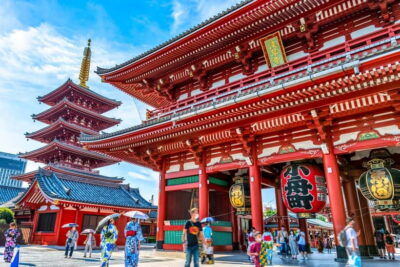
If you want old Tokyo in one tight loop, this Asakusa Walking Tour hits it fast. I love that you start right at the Kaminarimon Thunder Gate, then move through lanes where faith and everyday street life are right next to each other. I also like how the guide’s stories make the sights make sense, from the temple’s role as a long-standing Buddhist sanctuary to the street-food and craft rhythms of Nakamise.
The only catch: this is a standing-and-walking morning. If you’re sensitive to crowds or slow pacing, you’ll want to plan your energy (and your footwear) accordingly.
In This Review
- What I think you’ll feel on the ground
- Key moments that make this tour worth it
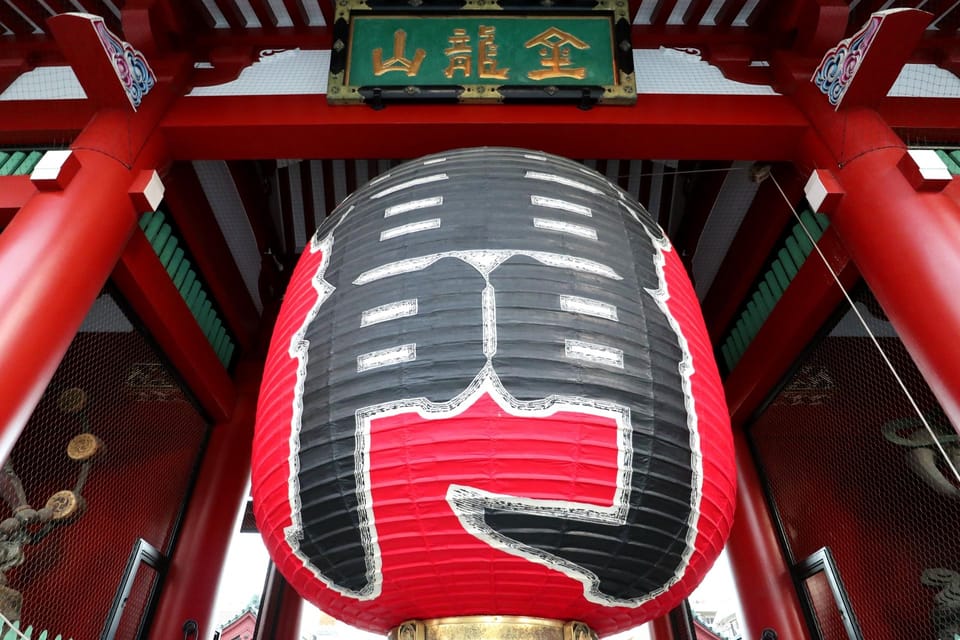
- Start at Kaminarimon: the Thunder Gate moment
- Sensō-ji Temple: photos, incense, and etiquette that matters
- What to look for during the temple visit
- A realistic note about crowds
- Nakamise Street: shopping lane with real meaning
- What you can do with the time
- Asakusa Shrine stop: a quick balance point
- Hoppy Street and Shin-Nakamise: get beyond the main drag
- Finishing at Azuma Bridge: good for regrouping
- Price and value: why $22 can work
- Who this tour fits best
- Timing, what to wear, and how to stay comfortable
- A note on guide styles (and why that matters)
- Should you book the Asakusa walking tour with Sensoji visit?
- FAQ
- FAQ
- How long is the tour?
- What does it cost?
- Where do I meet the guide?
- Where does the tour end?
- Is the tour guided in English?
- What stops and sights are included?
- Do we get time to explore at Sensō-ji?
- Is the tour wheelchair accessible?
- Can I cancel for a refund?
- Is there a reserve now, pay later option?
What I think you’ll feel on the ground
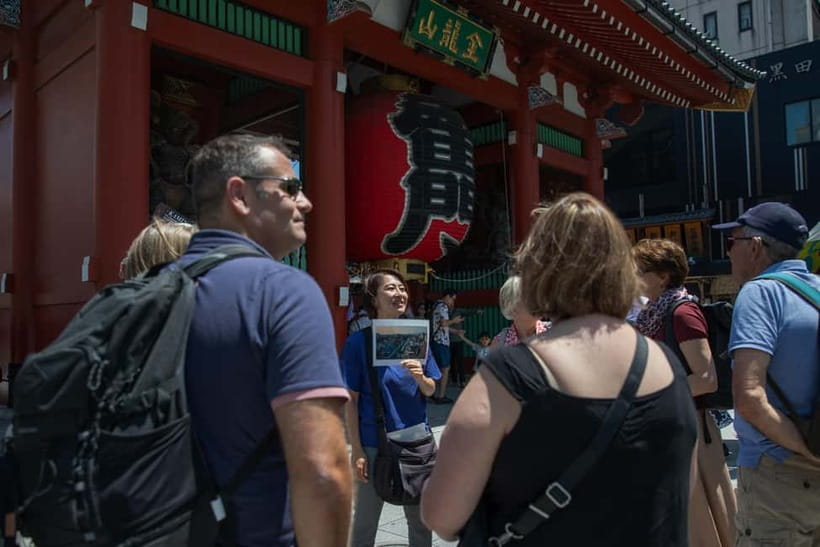
Asakusa can feel loud and chaotic at first—until someone connects the dots. With an English-speaking guide, you get a calm walkthrough of what you’re seeing and why it matters, plus practical time to look around and take photos.
People consistently praise guides like Aya, Keiko, and Loc for clear English, patience with questions, and a light sense of humor that keeps the group moving without feeling rushed.
Key moments that make this tour worth it
- Kaminarimon first: You see the Thunder Gate up close and learn what it signals about the area.
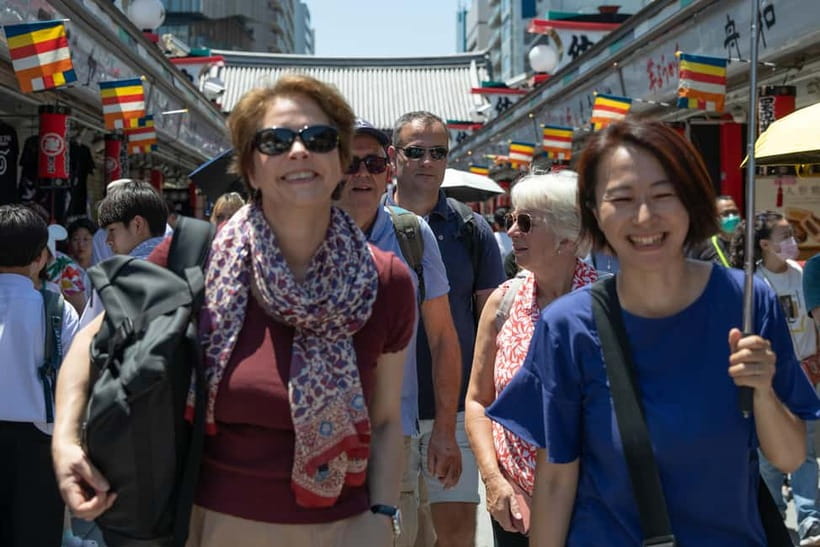
- Nakamise Street on purpose: You walk one of Tokyo’s classic shopping lanes with context, not just browsing.
- Sensō-ji with incense rituals: The temple visit includes details that make the experience feel real, not touristy.
- Asakusa Shrine stop: A quick, meaningful photo-and-visit moment that balances the Buddhist focus.
- Hoppy Street and Shin-Nakamise: You get extra street variety beyond the main crowds.
- Finish at Azuma Bridge: The endpoint is in the river-area zone, handy for continuing your day.
You can also read our reviews of more walking tours in Tokyo


Start at Kaminarimon: the Thunder Gate moment
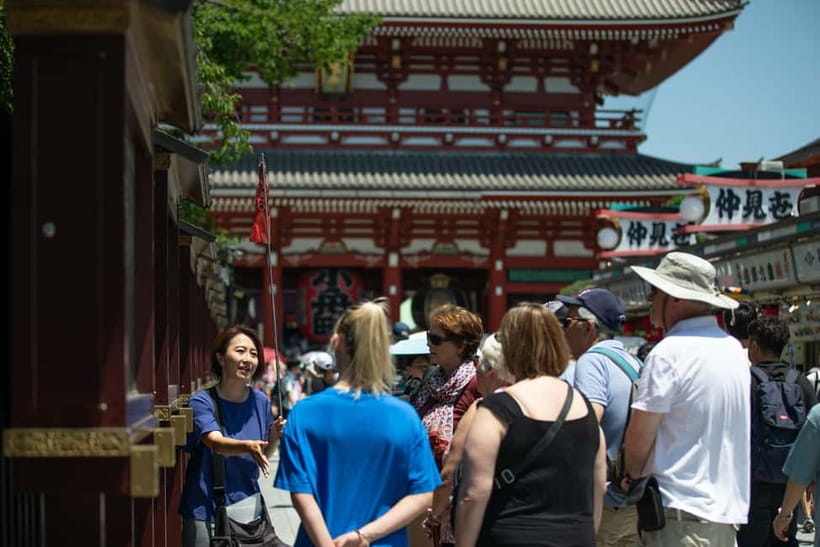
Your tour begins at the Kaminarimon Gate. The guide waits in front of it on the left side, near the Tokiwado Kaminari-okoshi Honpo shop. Look for the sign. Then take a second to orient yourself—this entrance is a landmark, but the surrounding streets can swirl fast.
What I like about starting here is the immediate payoff. You’re not meeting the guide and walking “toward something.” You’re meeting the guide and staring at the thing. The Kaminarimon is the dramatic entrance that frames your first temple impressions, and it gives you a visual anchor for everything you’ll hear next.
Practical tip: be ready to move when the group moves. The tour notes that the guide can’t keep other guests waiting for late arrivals—so show up early enough to calm your brain before you meet the sign holder.
Sensō-ji Temple: photos, incense, and etiquette that matters
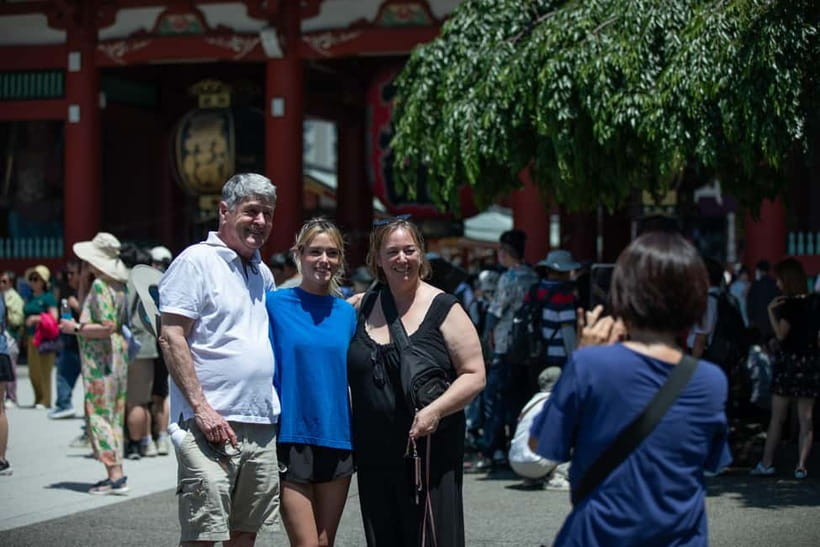
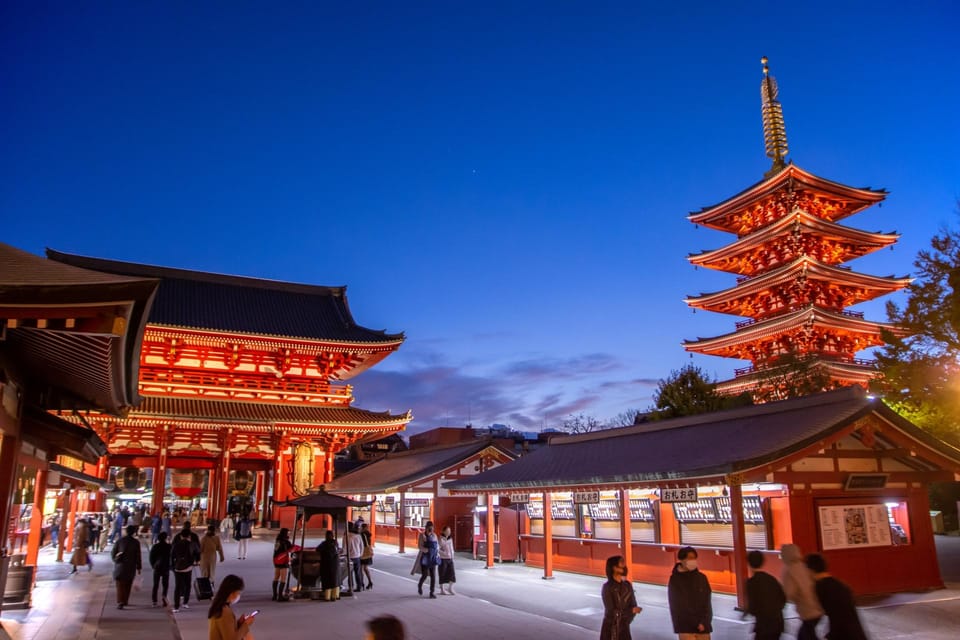
Sensō-ji (also known as Asakusa Kannon) is the centerpiece. You’ll do a photo stop, then a guided visit, with time built in to explore on your own.
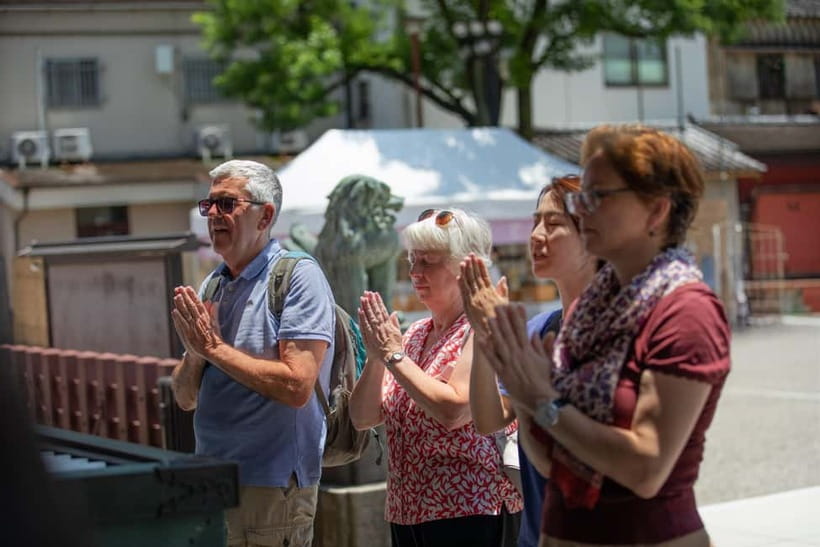
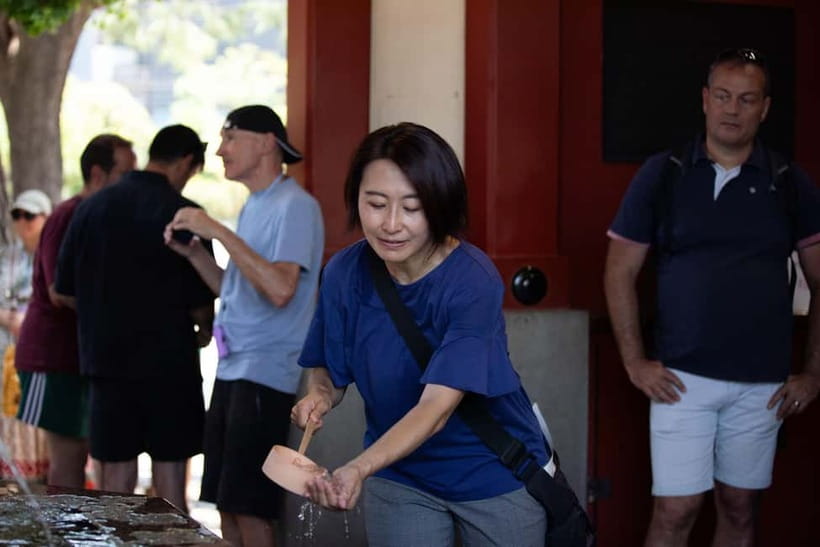
The biggest “feel” of Sensō-ji isn’t just the scale—it’s the ritual details. The tour includes incense-burning rituals, which is one of those experiences that’s hard to replicate on your own because you might not know what you’re looking at or what the moment means. With a guide, you can watch with understanding and still participate in a respectful way.
What to look for during the temple visit
You’ll have time to notice the finer points: the temple setting, the atmosphere around the incense area, and the flow of people moving through the grounds. Even if you’re not religious yourself, it helps to understand that this is an active spiritual site with rules of behavior.
Also, this is where the guide’s storytelling becomes most useful. People love Sensō-ji, but the “so what” is the part you shouldn’t miss. The guide ties the building and traditions to the temple’s long-standing role in Tokyo.
A realistic note about crowds
Sensō-ji sits in the middle of a highly visited area. You can expect busy foot traffic, especially around the approach and main open areas. The tour pacing helps here: you’re not just wandering into the busiest spots without a plan.




Nakamise Street: shopping lane with real meaning
After the main gate and temple visit, you head to Nakamise Shopping Street. This is one of Japan’s older shopping streets, and it’s more interesting when you know what you’re looking for.
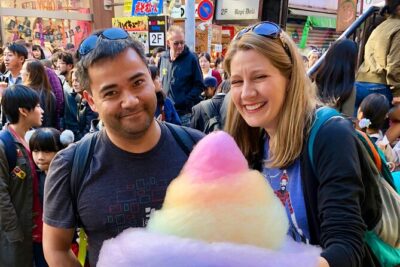
A guided walk through Nakamise changes the way you shop (even if you don’t buy much). You’ll see traditional craft shops and food stalls, and the guide provides context so it’s not just sensory overload. You’ll also get a guided segment that helps you identify what’s traditional versus what’s just common tourist inventory.
What you can do with the time
This is a good place to:
- browse for small souvenirs you’ll actually use
- snack as you go (but don’t blow your appetite right before lunch)
- look for traditional sweets and snack foods sold in classic styles
Keep your expectations grounded: Nakamise is popular. If you’re hoping for quiet corners and empty aisles, you’ll want a different kind of Tokyo day. But if you want the classic “street life” energy paired with cultural context, Nakamise delivers.
Asakusa Shrine stop: a quick balance point
You’ll also visit Asakusa Shrine for a photo stop and guided visit. This works as a balance after the Buddhist focus of Sensō-ji.
Why this matters: Asakusa isn’t a one-religion theme park. Seeing the shrine adds texture to your understanding of how spiritual life shows up around Tokyo. Even if your time here is shorter than at Sensō-ji, it helps you notice differences in atmosphere and design.
Photo tip: plan for the fact that angles that look great on your first try might be blocked by foot traffic. The guide’s timing helps you grab photos without sprinting.
Hoppy Street and Shin-Nakamise: get beyond the main drag
Next comes Hoppy Street, followed by Shin-Nakamise Shopping Street (浅草新仲見世商店街). These stops are the reason I think this tour is stronger than the simplest “temple and done” plan.
You already know Nakamise is popular. The extra lanes give you variety—less of a single-track experience, more of a neighborhood feel. You’ll still see shops and street energy, but with less pressure than the hottest bottlenecks.
Hoppy Street in particular is a nice shift in tone. It’s the kind of place that feels more local, with everyday crowd patterns rather than only souvenir-shopping lines. If you like wandering, this part makes the walk feel like a route through Asakusa rather than a checklist.
Finishing at Azuma Bridge: good for regrouping
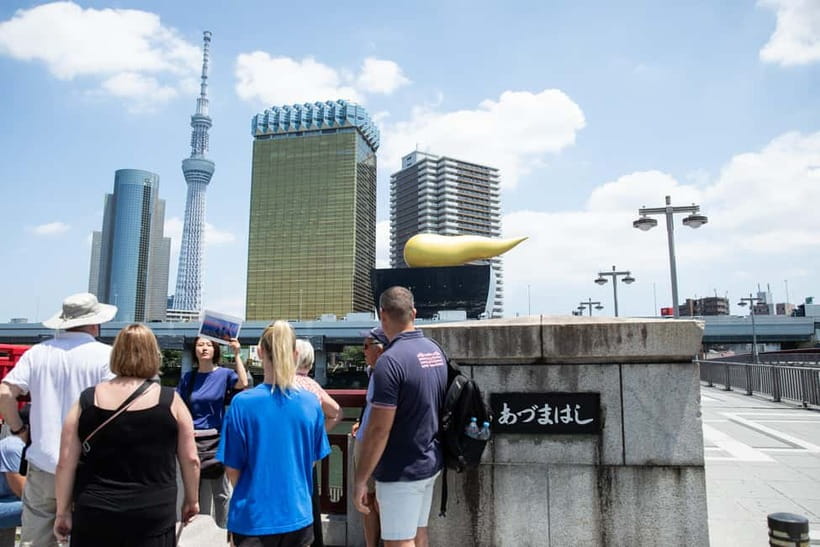
The tour finishes at Azuma Bridge. Ending near the river-area zone is convenient because it gives you an easy next move: you can keep exploring, grab lunch nearby, or simply take a breather after concentrated temple-and-street walking.
This endpoint also tends to help with transition. When a tour ends “back where you started,” you’re often mentally stuck in the same spot. Finishing here gives you a fresh sense of space and helps your day feel larger than two hours.
Price and value: why $22 can work
At about $22 per person for a ~2-hour walking tour, the value comes from what you avoid: confusion.
Without a guide, you can still see Kaminarimon, Sensō-ji, and Nakamise. But the missing pieces are exactly what turn a sight into a story—what the Thunder Gate represents, what certain rituals are about, and which street details are worth your attention. The guide also helps you keep the route efficient so you don’t waste time backtracking through Asakusa’s tight streets.
I also see strong praise in the feedback patterns for guide quality—people mention excellent English, clear explanations, and helpful tips for what to do next. That matters because you’re not just paying for walking. You’re paying to understand.
Who this tour fits best
This tour is a great fit if:
- you want a fast introduction to Asakusa that doesn’t require planning every detail
- you like temples and street life, and you want context for both
- you’re traveling with kids or teens who benefit from questions being answered and pace being managed (multiple guides are praised for handling families well)
It may be less ideal if:
- you need lots of downtime or step-free pacing throughout
- you dislike crowds and tight spaces around major landmarks
Timing, what to wear, and how to stay comfortable
It’s a walking tour with short guided segments and stops. That means comfort is half the experience.
- Wear shoes you can walk in for two hours without drama.
- Bring water, especially on warmer days.
- If you’re taking photos, keep your phone accessible, but don’t stop the group—move to a side spot when possible.
Also, consider starting your day with this tour. It’s a smart way to get your bearings fast, so later you can browse and snack without feeling lost.
A note on guide styles (and why that matters)
In the feedback, specific guide names come up again and again. People highlight guides like Aya, Keiko, Hiroko, Polina/Polina, and Loc for different strengths: clear explanations, patience, humor, and good pacing. Some also mention extra practical help like pointing out places to eat after the tour.
That last bit is worth paying attention to. If a guide can recommend what to try for lunch or where to go next, your two hours turn into a better day—not just a better walk.
Should you book the Asakusa walking tour with Sensoji visit?
I’d book it if you want a structured introduction to Asakusa that covers the big hits without turning into a rushed sprint. The route is short enough to fit cleanly into a Tokyo day, and the guided explanations give you a reason to care about what you’re seeing—especially around Sensō-ji and the ritual areas.
I’d skip or rethink it if you strongly prefer quiet exploration, or if you want complete freedom to wander at your own speed from start to finish. In that case, you might be happier doing a self-guided loop.
But if you’re the kind of traveler who likes learning while walking—this is a solid, practical way to experience Asakusa.
FAQ
FAQ
How long is the tour?
The tour lasts 2 hours.
What does it cost?
It costs $22 per person.
Where do I meet the guide?
Meet in front of the Kaminarimon Gate on the left side, near the Tokiwado Kaminari-okoshi Honpo shop. The guide will hold a sign.
Where does the tour end?
The tour finishes at Azuma Bridge.
Is the tour guided in English?
Yes, the live tour guide speaks English.
What stops and sights are included?
You’ll visit Kaminarimon, Nakamise Shopping Street, Sensō-ji Temple (including photo stops and free time), Asakusa Shrine, Hoppy Street, and Shin-Nakamise Shopping Street.
Do we get time to explore at Sensō-ji?
Yes. There’s free time at Sensō-ji for about 30 minutes.
Is the tour wheelchair accessible?
Yes, the tour is wheelchair accessible.
Can I cancel for a refund?
Yes. You can cancel up to 24 hours in advance for a full refund.
Is there a reserve now, pay later option?
Yes. You can reserve now and pay later.