REVIEW · TOKYO
Tokyo Sumo Morning Practice Tour at Stable
Book on Viator →Operated by Japan Wonder Travel · Bookable on Viator
Sumo practice at dawn feels surprisingly human. This Tokyo tour gives you real access to a local sumo stable, where you watch wrestlers work through morning training and learn how the rituals connect to Shinto traditions and the sport’s tournament world. Guides such as Seiji, Noriko, and Cameo are praised for turning what looks like chaos into a clear, step-by-step story.
The best part is how close and active the session feels, not like a staged show. You also get guidance on what you’re watching so you can follow the purpose behind each exchange. One thing to consider: the experience relies on headsets, and a small number of people found the audio quality hard to hear clearly.
In This Review
- Key things to know before you go
- A Tokyo stable at 7:45am: what you’re really signing up for
- Ryogoku Station Gallery: the short briefing that makes the whole session click
- Inside the stable: watching training quietly, and why the rules are strict
- Morning practice vs. tournament day: why this feels different
- The tournament calendar lesson you’ll use later
- Headsets, commentary, and the “follow along” problem
- Etiquette checklist: how to avoid the common mistakes
- Price and value: is $83.57 a fair deal?
- Who should book this stable tour (and who might skip it)
- If you go: practical tips to get the best view
- Should you book this Tokyo sumo morning practice tour?
- FAQ
- What time do I meet my guide?
- How long is the tour?
- Where is the tour located?
- What’s the group size?
- What’s the minimum age?
- Is a mobile ticket provided?
- Can I take photos or videos?
- Are phones and cameras restricted?
- Can I eat or drink during the practice?
- Are there any special rules inside the ring area?
- FAQ
- Is there air conditioning inside the stable?
- What if I need to use the restroom before the tour?
- Can I leave the stable and come back?
Key things to know before you go
- Small group, focused viewing: capped at 20 people, with seats set up so you can see the action close to the training area.
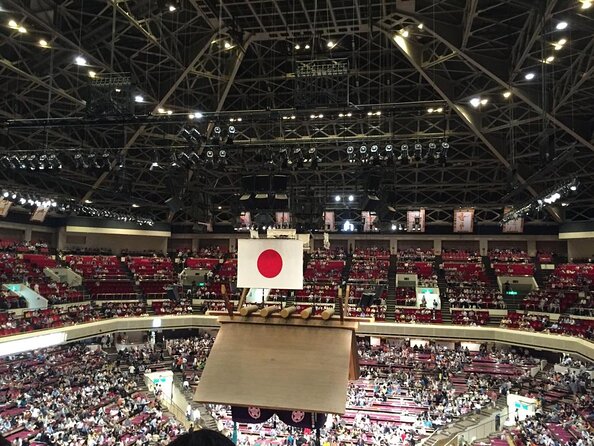
- Morning routine, not tournament ceremony: you watch training and repeated bouts, which can feel more direct than what you see during a formal tournament day.
- Guides explain the rules and rankings: you’ll get context on sumo traditions and the six annual Grand Tournaments (including Tokyo’s three).
- Photo time after practice: many departures include a short photo opportunity at the end (format can be brief).
- Quiet, respectful etiquette matters: no stepping into the ring area, and keep behavior non-disruptive so the wrestlers can focus.
- Summer heat note: there’s no air conditioning, and you’ll be allowed water/sports drinks during summer months inside the stable.
A Tokyo stable at 7:45am: what you’re really signing up for
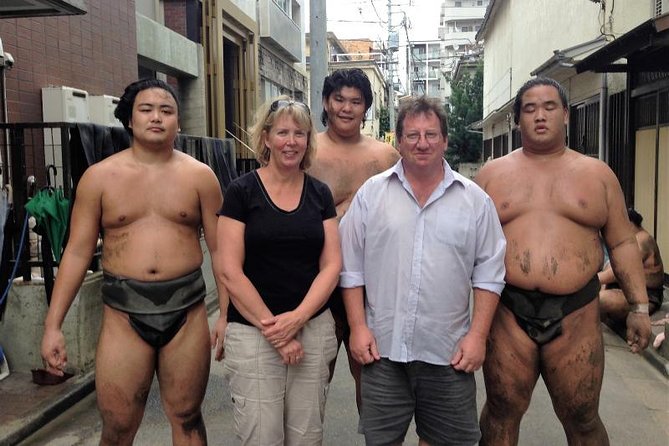
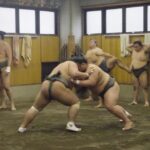
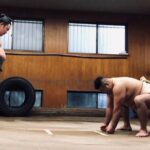
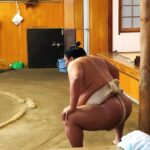
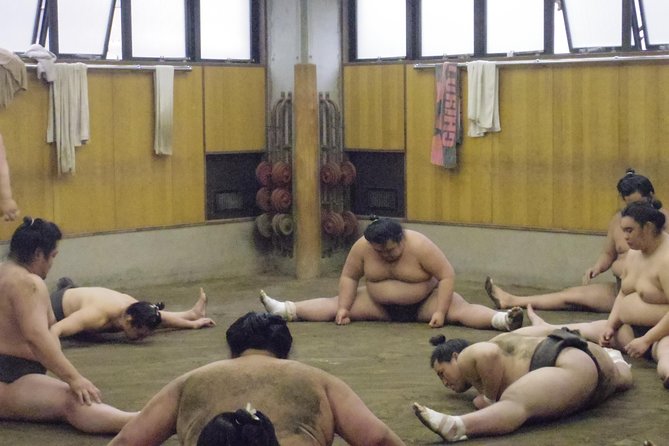
If your idea of sumo is TV bouts and crisp tournament ceremonies, this morning practice tour changes the picture fast. You’re there when the stable day starts moving: wrestlers warm up, work through drills, and spar repeatedly, all under the steady rules of stable life. It feels less like a performance and more like you’ve arrived for a real job.
The value here is the combination. First, you’re not just watching. You’re learning what you’re seeing, with a guide who explains the traditions, the purpose behind routines, and how the tournament system fits together. Second, the small group size keeps things calmer than big sightseeing crowds. When you’re close to the ring area, you notice details you’d never catch from a TV camera.
This is also a good way to build real context for sumo on TV later. When you understand where a wrestler’s focus is going next—especially around the tournament calendar—those matches stop feeling like random spectacle and start feeling like ranking-driven momentum.
You can also read our reviews of more tours and experiences in Tokyo
Ryogoku Station Gallery: the short briefing that makes the whole session click
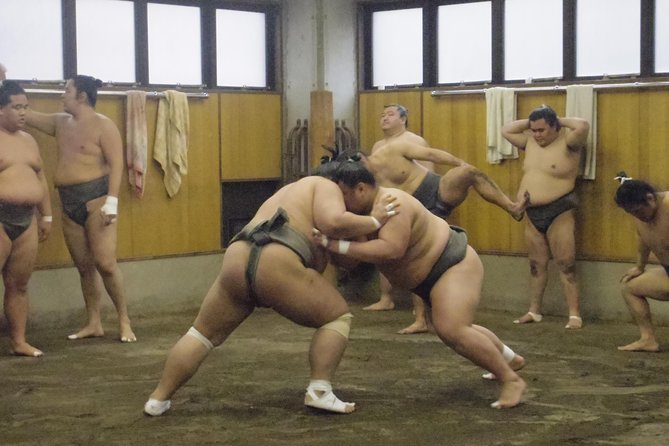
Your day begins at 7:45am near Ryogoku Station Gallery. You meet your guide first, then you head toward the stable. This early start is not about suffering for the sake of it. It’s timed so you’re in position before training is in full swing.
In this first stretch, you get the grounding story of sumo: where it connects to Shinto traditions and how the sport’s roots preserve old rituals even as it functions today as a major spectator sport. You’ll also get the tournament framework in plain terms, including the key fact that Japan has six annual Grand Tournaments, each held for 15 days. Tokyo hosts three of them, while Osaka, Nagoya, and Fukuoka each host one.
Why this briefing matters: without it, a stable session can look like lots of pushing and sudden bouts. With it, you start spotting structure—what seems like random action turns into routine, practice, and strategy.
Inside the stable: watching training quietly, and why the rules are strict
Once you’re seated in the stable, the tour becomes a respectful viewing experience. Your main job is to watch. Quiet behavior is part of the etiquette here, and the tour rules are very clear: you’re expected to keep still, avoid stepping into the sacred ring or the sandy area, and don’t stretch your legs toward the ring or show the soles of your feet.
Photos are allowed, but with limits. You can take pictures without flash and without shutter sounds, and videos aren’t allowed. Cellphones must be on silent. Eating and drinking are not allowed during the tour—though in summer months, you can have water and sports drinks inside the stable because Tokyo heat can be intense and there’s no air conditioning.
Also note the seating style. Some groups report sitting on stools rather than mats, which affects how your viewpoint feels. If you want the best lines of sight, arriving early at the meeting point helps, since some spots can be reserved for sponsors or special arrangements.
One more practical point: once you leave the stable, you can’t re-enter. So if you need the restroom, do it before you arrive at the meeting area.
Morning practice vs. tournament day: why this feels different
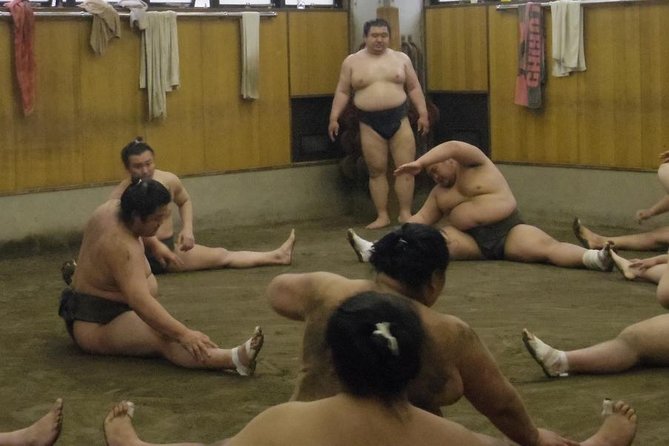
A tournament is full ceremony: ring announcements, formal pacing, and the overall rhythm of competition day. Morning practice is different. Here, the training goal is repetition and improvement. You can end up watching a long stretch of intense exchanges without the same ceremony overhead.
That’s why so many people love this kind of stable visit. You’re not waiting for the big moment—you’re watching the work that creates it. The wrestling can look more raw, more focused on technique adjustments, and more like athletes building their edge hour by hour.
Some practice sessions also seem to run longer depending on what happens that morning. For example, an unexpected stable sponsor appearance has been associated with extra wrestling time. The main takeaway for you: expect a session that follows the stable’s flow, not a rigid show script.
The tournament calendar lesson you’ll use later
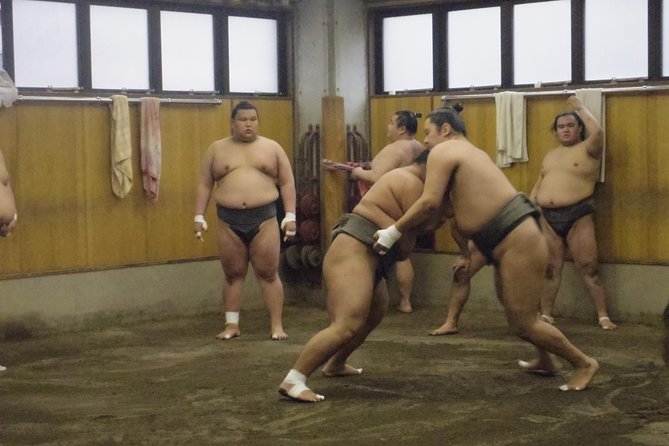
The six annual Grand Tournaments are more than trivia. They’re the map behind everything you watch in sumo media. During the tour, you learn that each tournament runs for 15 days and that Tokyo holds three of them each year. Osaka, Nagoya, and Fukuoka host the other three.
When you know this, a sumo broadcast becomes easier to follow. You start recognizing where momentum is building, how a wrestler’s current form matters, and why timing within the year can affect match pressure.
It also helps you decide what to watch while you’re in Japan. Even if you’re not planning to attend a tournament in person, this kind of context makes TV viewing feel smarter and less like guessing.






Headsets, commentary, and the “follow along” problem
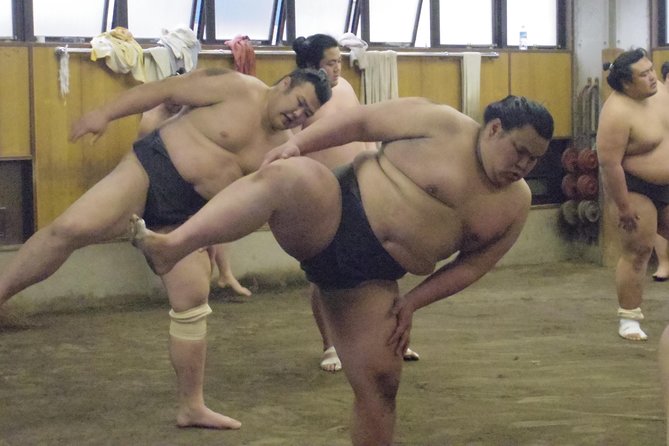
A big part of the experience is the running commentary—often delivered through headsets—so you can understand what’s happening during practice. People praised this format because it helps you connect movements to meaning and learn why routines matter.
That said, there’s one caution that comes up in feedback: audio can be distracting or hard to hear for some people, depending on headset quality and your seat position. If you’re sensitive to low audio clarity, plan to bring a willingness to focus with your eyes too. The physical action is the star here, and the guide’s explanations act like translation.
Tip that helps either way: when the wrestlers move into a new phase of training, watch first for patterns, then let the commentary catch up. You’ll keep your attention from splitting as much.
Etiquette checklist: how to avoid the common mistakes
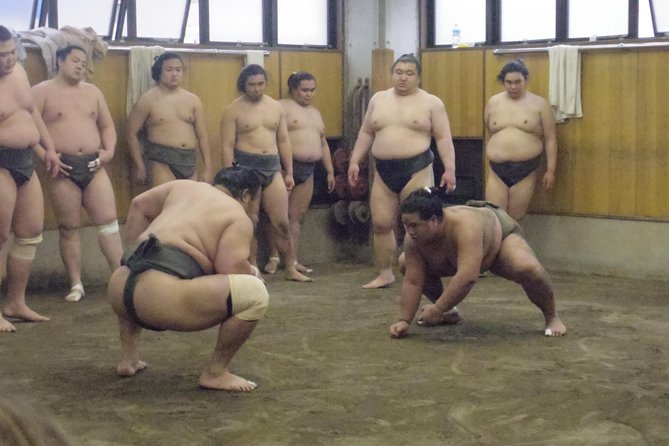
Sumo etiquette inside a stable isn’t complicated, but it’s strict. Here’s what you should remember so you don’t accidentally break the mood:
- Stay off the ring and sandy practice area. It’s treated as sacred space.
- Don’t point or stretch legs toward the ring. Showing soles is considered impolite.
- Watch quietly and respectfully. It’s not the time for side conversations.
- Don’t leave mid-practice if you can help it.
- Phones on silent and keep them out of the way.
- No flash, no videos, no unauthorized photo use.
If you want a smooth experience, arrive early, keep your camera settings simple, and let the guide handle the timing. One more detail: hats and sunglasses aren’t allowed inside the stable.
Price and value: is $83.57 a fair deal?
At about $83.57 per person for roughly two hours, you’re paying for three things: private access to a stable session, a guide to interpret what you’re seeing, and a small-group setup designed for viewing. If you compare it to more scripted sumo experiences, this tends to feel like better value because you’re seeing real practice rather than a polished show structure.
That said, value depends on your goal. If you only care about sumo as spectacle and want short, camera-friendly action, you might feel the session runs at a calmer pace. But if you’re trying to understand how wrestlers train, why traditions matter, and how the tournament system works, it’s money well spent.
The strong rating signal here—high recommendation percentage and an average around 4.8—matches what the tour is built to deliver: authentic, close-in observation with explanation.
Who should book this stable tour (and who might skip it)
This is a great fit if:
- you want authentic behind-the-scenes access rather than a performance format
- you enjoy learning how tradition connects to sport
- you’ll watch sumo on TV afterward and want better context
- you like small group experiences with quiet focus
You might consider a different sumo option if:
- headset audio quality is a big concern for you
- you dislike sitting quietly through explanations
- your schedule can’t handle an early morning start
Also, since the minimum age is 12 years old (kids 11 and under can’t enter the stable), this tends to work best for families with older kids who can follow etiquette rules for a respectful viewing setting.
If you go: practical tips to get the best view
- Arrive early at the meeting point. Better seating often means better lines of sight, and some front areas may be reserved.
- Use the restroom before you arrive. Once you’re inside, you’ll be on the stable schedule.
- Plan for heat. No air conditioning in the stable, and summer can be intense. Bring an ice pack or cold towel if you run hot.
- Pack for silent viewing. No hats, no sunglasses, phone on silent, and keep your camera ready without fuss.
- Be prepared to stay until the end. The tour emphasizes not leaving mid-session.
Should you book this Tokyo sumo morning practice tour?
Book it if you want the real sumo training rhythm and you like being taught how to watch. The combination of stable access, small group pacing, and the tournament-and-tradition explanation makes it more than just a close-up viewing moment.
Skip it if you’re hoping for a flexible, interactive crowd experience or if you strongly rely on crystal-clear audio to enjoy guided content. In that case, weigh how you feel about headset commentary and fixed etiquette rules.
If your goal is to leave Tokyo with a sharper understanding of sumo—why wrestlers do what they do, and how the year’s tournaments shape their path—this morning stable visit is one of the most practical ways to get it.
FAQ
What time do I meet my guide?
You meet at 7:45am near Ryogoku Station Gallery before heading to the sumo stable.
How long is the tour?
The tour lasts about 2 hours (with about 15 minutes at the first stop and about 1 hour 30 minutes inside the stable).
Where is the tour located?
It’s in Tokyo, with the first meeting point at Ryogoku Station Gallery and the practice viewing at the stable area near Ryogoku.
What’s the group size?
The tour has a maximum of 20 travelers.
What’s the minimum age?
The minimum age is 12 years old. Kids 11 and under cannot enter the stable.
Is a mobile ticket provided?
Yes, it’s listed as a mobile ticket.
Can I take photos or videos?
Photos are allowed without flash and without flash/shutter sounds. Videos are not allowed.
Are phones and cameras restricted?
Cellphones must be on silent. Follow the photography rules and avoid any behavior that could disrupt the wrestlers.
Can I eat or drink during the practice?
Eating and drinking are not allowed. In summer months, water and sports drinks are allowed inside the stable.
Are there any special rules inside the ring area?
Yes. Do not step onto the ring or the sandy ground area, and don’t stretch your legs toward the ring.
FAQ
Is there air conditioning inside the stable?
No. The stable does not have air conditioning, and you should plan for Tokyo heat in summer.
What if I need to use the restroom before the tour?
Use the restroom before arriving at the meeting point. The tour notes this for a reason, since you’ll be on the stable schedule afterward.
Can I leave the stable and come back?
No. Once you leave the sumo stable, you cannot re-enter.