REVIEW · TOKYO
Tokyo Sushi Making Experience & Japanese Cooking Class
Book on Viator →Operated by Tokyo Sushi Making Experience & Japanese Cooking Class · Bookable on Viator
Sushi skills in 90 minutes, no guesswork. I love the tight small-group setup, and I like that you’ll actually make maki, temari, and nigiri with friendly, hands-on help. One heads-up: water, juice, and any alcoholic drinks are not included and need to be ordered separately.
You’ll start in Shinbashi (Minato City) with a short look at sushi history and culture, then get guided instruction on the art and etiquette behind each bite. If you want the extra-authentic touch, you can add sake or shochu—just remember Japan’s legal drinking age is 20, so bring valid ID if you plan to drink.
In This Review
- Key Points You’ll Care About
- Tokyo Sushi Class Basics: What You Actually Make in 90 Minutes
- Small-Group Energy in Shinbashi: Getting Good Help
- The Sushi History and Etiquette Part: More Than Just Rolling Rice
- Maki, Temari, Nigiri: How the Skills Connect
- Maki sushi: the roll-and-structure skill
- Temari sushi: shaping practice with personality
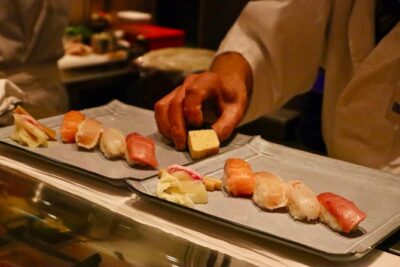
- Nigiri: the precision moment
- Fresh Ingredients You’ll Actually Work With
- Optional Sake or Shochu: Adding Atmosphere, Not Confusion
- What’s Included in the $59.46 Price (and What Isn’t)
- The Photo Moment: Why It’s Worth More Than a Quick Snapshot
- When Weather and Group Size Affect Your Day
- Who This Sushi Making Class Is Best For
- Should You Book This Tokyo Sushi Making Experience?
- FAQ
- How much does the Tokyo sushi making class cost?
- How long is the experience?
- What types of sushi will I learn to make?
- Are drinks included in the price?
- Is there an age limit for alcohol?
- How many people are in the group?
- Where does the class meet?
- Can I cancel if the weather is bad?
Key Points You’ll Care About
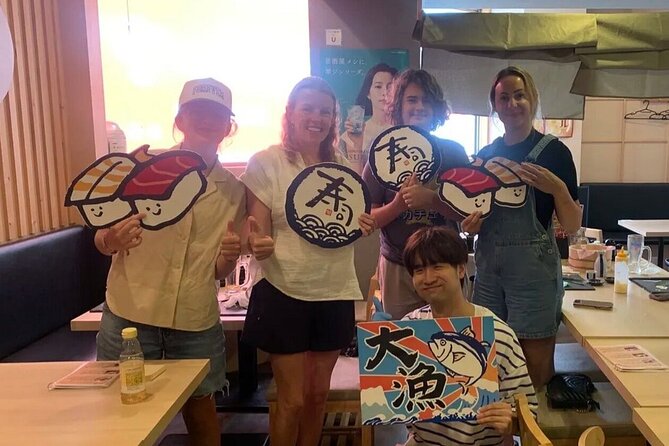
- Make three sushi styles: maki, temari, and nigiri, not just one
- English-first instruction with staff fluent in English and Chinese
- Small group, max 15 people, so questions don’t vanish into the crowd
- Fresh ingredients like tuna, salmon, squid, and flying fish roe
- Optional sake or shochu to match the occasion (with ID rules)
- Commemorative photos included, so you leave with more than just rice on your hands
Tokyo Sushi Class Basics: What You Actually Make in 90 Minutes
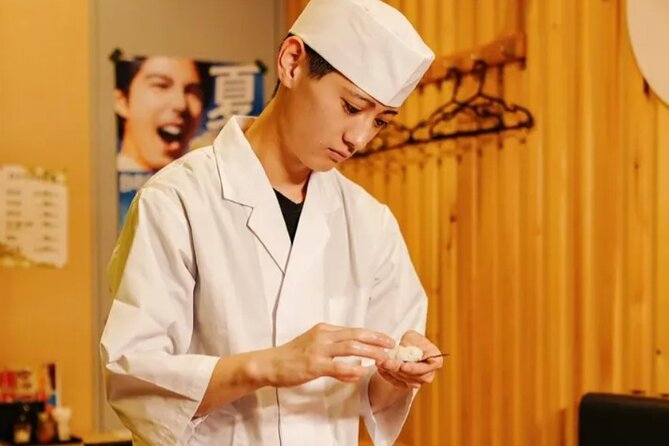
This is a fast, practical Tokyo cooking class built around learning by doing. In about 1 hour 30 minutes, you’ll move through sushi basics you can repeat at home: how maki rolls come together, how temari-style bites are shaped, and how nigiri is formed. It’s not a long, slow workshop. It’s designed to get you making food quickly, with guidance right next to you.
The real value here is that you’re not just watching someone else work. You’re the one rolling, shaping, and presenting your sushi for photos and for eating. That matters in Tokyo, where it’s easy to spend time looking at food and hard to get real “I can do this” skills. Here, you go home with a memory plus a technique.
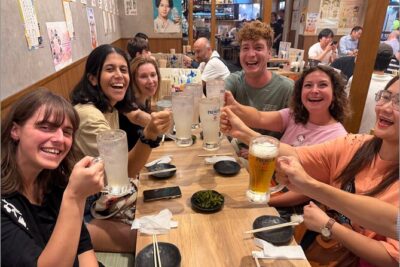
And yes, the class includes snacks made as part of the session—maki sushi and temari sushi, with ingredients like tuna, salmon, squid, and more. You’ll also savor your creations alongside a small group of like-minded people (up to 15 total).
You can also read our reviews of more cooking classes in Tokyo


Small-Group Energy in Shinbashi: Getting Good Help
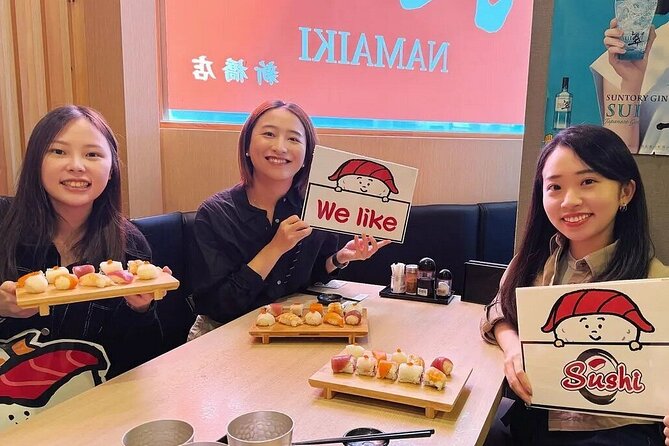
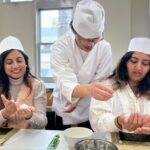
The class keeps things intimate, with a maximum of 15 travelers. That’s a big deal for a sushi lesson because you’ll need quick checks: how you place ingredients, how you shape, and how you handle the rice. In a larger group, these moments get rushed. In this size, you’re more likely to get the kind of correction that sticks.
Language support is also a comfort. The staff are fluent in English, and they can also assist in Traditional Chinese and Simplified Chinese. If your Japanese is limited, you don’t need to worry about silence or confusion. You can focus on the technique instead of playing charades.
You’ll meet at S-PLAZA Yayo i i n Shinbashi in Minato City (2-chōme, 15-10). It’s near public transportation, which is exactly what you want in Tokyo—show up calmly, not frantic.
The Sushi History and Etiquette Part: More Than Just Rolling Rice
Before you start shaping anything, you’ll get sushi history and culture explained in English-speaking instruction. You’ll also hear about the art and etiquette behind each bite. That section is short, but it gives meaning to what you’re doing.
Why that matters: sushi isn’t only ingredients. It’s also presentation and respect for the bite. If you learn the etiquette too late—after you’ve been eating sushi on autopilot—it’s easy to miss the reason behind certain habits. This class gives you the “why” while the food is still fresh in your mind.
The etiquette piece is especially useful if you plan to eat sushi again later in Tokyo. You’ll feel less like you’re guessing. You’ll know what to pay attention to, and you’ll feel more confident ordering or trying different styles.
Maki, Temari, Nigiri: How the Skills Connect
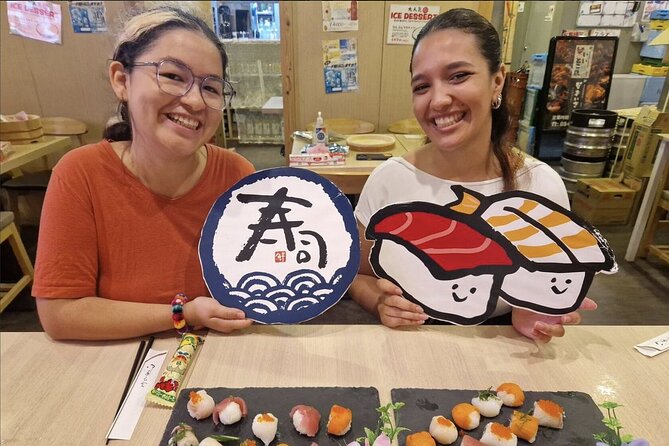
This is the heart of the experience. You’ll learn multiple sushi forms, which is a smart way to get real technique rather than a one-trick outcome.
Maki sushi: the roll-and-structure skill
Maki sushi teaches you structure: keeping the shape, distributing fillings, and rolling with control. It’s the sushi style most people recognize, and it’s also one of the easiest places to feel progress quickly. Even if you’ve never rolled anything before, the class format is set up so you’re doing it step by step.
You can also read our reviews of more tours and experiences in Tokyo



Temari sushi: shaping practice with personality
Temari sushi is about shaping and presentation. Instead of rolling, you shape compact bites—often with a focus on how it looks as much as how it tastes. This is a nice break from maki because it uses different hand motions and a different kind of patience.
It also tends to be visually satisfying for photos, which matters since commemorative pictures are part of the experience.
Nigiri: the precision moment
Nigiri is where you learn about balancing proportions and forming a bite-sized piece that looks right. It can feel “fussy” at first, but that’s exactly why it’s valuable. By practicing nigiri in a guided class, you’re learning the method, not just copying a restaurant plate.
Together, these three styles give you a fuller picture of sushi-making than you’d get from watching a single demonstration.
Fresh Ingredients You’ll Actually Work With
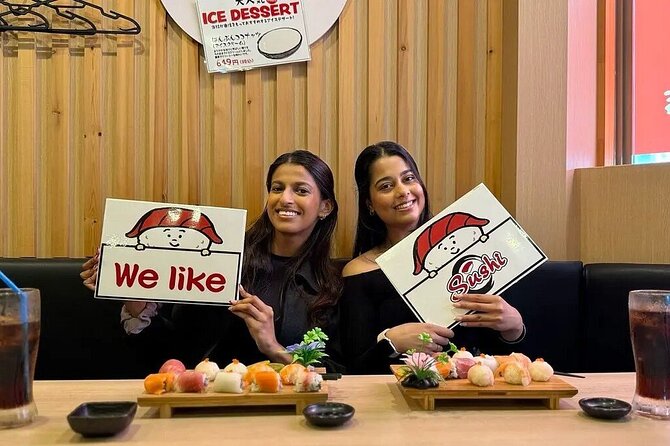
You’ll work with fresh ingredients such as tuna, salmon, and flying fish roe. Depending on the component, you’ll also see items like squid and other maki/temari fillings listed for the snacks included in the class.
I like this ingredient mix because it covers flavors most visitors can relate to. You get seafood-forward choices without the class becoming too complicated or intimidating. And since you’re hands-on, you’re not only tasting at the end—you’re actively combining and shaping what you’ll eat.
One practical note: the class is structured around making and eating the products during the session, so you won’t need to plan dinner afterward. You’ll leave fed, with a clear sense of how the ingredients behave once they’re inside sushi forms.
Optional Sake or Shochu: Adding Atmosphere, Not Confusion
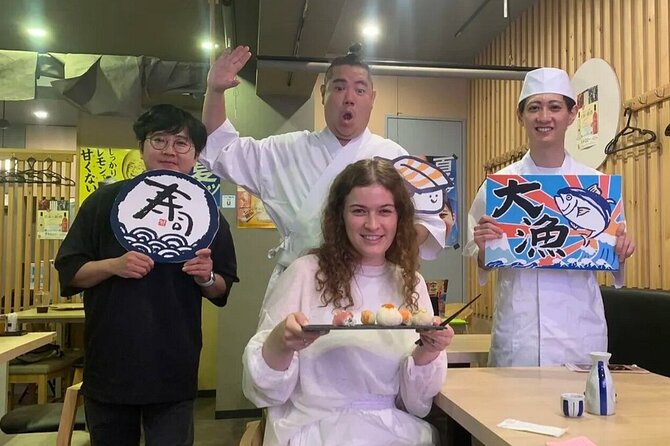
If you want the full Japanese meal vibe, you can add sake or shochu. This is positioned as an optional choice for a more authentic experience.
Here’s the key practical detail: alcoholic beverages are not automatically included. Bottled water, juice, and alcoholic drinks need to be ordered separately. If you’re budgeting, plan for that.
And if you do drink, Japan’s legal drinking age is 20. The class asks you to bring a valid form of identification that proves your age. Even if you’re used to different rules at home, it’s worth treating this as strict.
If you’re traveling with someone under 20, no problem—just don’t plan on ordering alcohol, and you can still enjoy the sushi-making and photos.
What’s Included in the $59.46 Price (and What Isn’t)
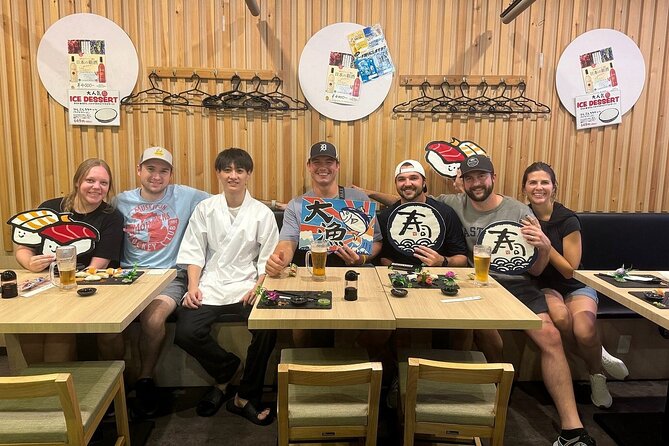
At $59.46 per person, this feels like good value for a hands-on cooking class in Tokyo—especially because you’re getting:
- Instruction in making sushi (not just watching)
- Snacks tied to what you make (maki and temari)
- Fresh ingredients (like tuna, salmon, squid, flying fish roe)
- Commemorative photos
- English/Chinese support in a small group
What’s not included matters because it affects your final total. Bottled water, juice, and alcoholic beverages are not included, and you’d need to order them separately. So if you plan to add sake or shochu, budget for that up front.
Also, the class is around 1 hour 30 minutes, so you’re not paying for a half-day block. You’re paying for a concentrated skill session with real output: multiple sushi styles you can eat and remember.
The Photo Moment: Why It’s Worth More Than a Quick Snapshot
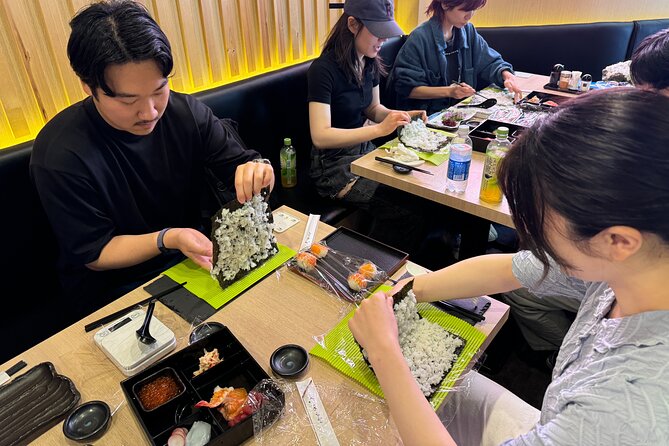
You’ll take away commemorative photos, and the staff help you with taking them. This matters because sushi-making is messy in the best way—rice sticks, fingers get a little sticky, and you’re focused on technique. If you’re trying to photograph it yourself, you’ll spend half the time stepping away.
In this class, you get help capturing your final creations. That turns your efforts into something you can actually remember later, not just “a blur while I rolled things.”
When Weather and Group Size Affect Your Day
The experience requires good weather. If it’s canceled due to poor weather, you’ll be offered a different date or a full refund. It’s not the kind of plan where you assume it will run no matter what.
The class also has a minimum number of travelers. If it doesn’t meet that minimum, you’ll be offered a different date/experience or a full refund. This is typical for small-group classes, and it’s one reason booking with some flexibility helps.
Good news: cancellation is free up to 24 hours before the experience start time, so you’re not locked in with zero room to breathe.
Who This Sushi Making Class Is Best For
This class is a strong fit if you want a concrete Tokyo food skill in a short time. You don’t need special prep, and the classroom staff will guide you through the process without requiring you to bring anything.
It’s also a smart choice for:
- First-time sushi fans who want more confidence for later restaurant meals
- People who learn best by doing, not by reading
- Families, since the experience is eligible for ages 4 and up
- Travelers who like social meals with a small group while learning at the same time
One more practical point: the hosts are described as friendly and patient, which is a big deal if you’re traveling with kids. Sushi is one of those foods where impatience shows up fast. Patient instruction helps everyone stay calm and actually enjoy the process.
Should You Book This Tokyo Sushi Making Experience?
I’d book it if you want a hands-on Tokyo experience that turns into real skills. The combination of multiple sushi styles (maki, temari, nigiri), fresh ingredients you work with, small-group instruction, and commemorative photos makes it feel like more than a simple activity. It’s a skill session with an edible payoff.
I would skip it if your idea of a class is mostly tasting with minimal hands-on shaping, or if you’re hoping drinks are included in the price. Alcohol is optional and not covered, so your final cost can rise if you add sake or shochu.
If you’re in Tokyo and you want to leave with both technique and a great story, this one hits the sweet spot.
FAQ
How much does the Tokyo sushi making class cost?
It costs $59.46 per person.
How long is the experience?
The duration is about 1 hour 30 minutes.
What types of sushi will I learn to make?
You’ll learn how to make maki, temari, and nigiri.
Are drinks included in the price?
Bottled water, juice, and alcoholic beverages are not included. You can order drinks separately, including sake or shochu as an option.
Is there an age limit for alcohol?
Yes. The legal drinking age in Japan is 20, and you’ll need valid ID to prove your age if you plan to drink.
How many people are in the group?
The class has a maximum of 15 travelers.
Where does the class meet?
The meeting point is in Shinbashi, Minato City, Tokyo, at Japan, 105-0004 Tokyo, Minato City, Shinbashi, 2-chōme1510 S-PLAZA弥生Ⅱ, and the activity ends back at the same location.
Can I cancel if the weather is bad?
You can cancel for free up to 24 hours before the experience starts for a full refund. If it’s canceled due to poor weather, you’ll be offered a different date or a full refund.