REVIEW · TOKYO
Inside Tokyo’s Kitchen: Tsukiji Market, Food & Culture Tour
Book on Viator →Operated by Intrepid Urban Adventures - Japan · Bookable on Viator
Tsukiji can overwhelm fast. This 3-hour small-group walk through the outer market pairs fresh food tastings with a calmer look at Kabuki and Inari shrine culture, all with a guide to keep you on track. I especially like that you get a food plan that does not rely on you figuring out the market on your own, plus you end with a quieter shrine stop instead of just sprinting for the next bite.
One consideration: the tour includes snacks and tastings, not full meals, and while vegetarian and vegan options exist, the choices are limited. Also, based on past experiences, a tasting might sometimes be pre-made rather than assembled at a stall right in front of you, depending on what is available that morning.
In This Review
- Key Things You’ll Notice on This Tsukiji Tour
- Tsukiji Feels Like a Maze, So Go With a Plan
- Meeting at Kabukiza: Kabuki Inari Shrine First
- The Outer Tsukiji Market: Snacks, Sushi, and Wagashi in Narrow Alleys
- What you can realistically expect to taste
- Why the route matters more than the checklist
- Shrines Are Not Side Quests Here: Namiyoke Inari Shrine and a Calm Finish
- What You Learn (Besides How Good Sushi Tastes)
- Price and Value: Does $83.35 Make Sense?
- Timing, Shoes, and Getting There Without Stress
- Vegetarian and Vegan Notes: Helpful, But Not a Full Swap
- Who Should Book This Tour
- Should You Book This Tsukiji Tour?
- FAQ
- Where does the tour start?
- What time does the tour begin?
- How long is the tour?
- How big is the group?
- What food is included?
- Is the tour good for vegetarians or vegans?
- Does the tour include shrine visits?
- Where does the tour end?
- What should I wear?
- Is this tour child-friendly?
Key Things You’ll Notice on This Tsukiji Tour
- Small group size (max 6) keeps the pace human and helps you ask questions
- Kabuki Inari Shrine at Kabukiza gives context before you hit the food alleys
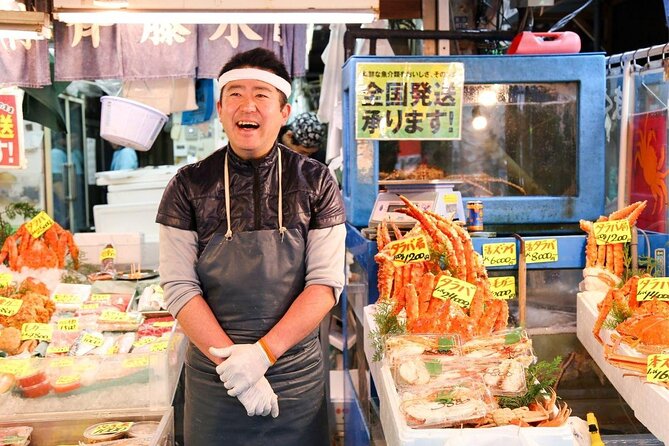
- Two hours in the Tsukiji outer market focused on seafood, snacks, and wagashi sweets
- Inari shrine calm at the end at Namiyoke Inari, then an easy walk to Tsukiji Station
- Guides like Mihari, Yuri, Aya, Shino, and Koz have a strong track record for detail and care
Tsukiji Feels Like a Maze, So Go With a Plan
Tsukiji is famous. It is also packed, confusing, and easy to miss the best moment of the day. What I like about this tour model is simple: you get a short, structured route with a guide, so you do not lose time hunting for the tastiest stalls or trying to translate signs while people squeeze past you.
You are also not trying to do the whole market. Instead, you get a focused taste of the outer Tsukiji scene and a little culture around it. That matters because the outer market is where many visitors get their first real feel for how Tokyo eats, shops, and snacks.
You can also read our reviews of more food & drink experiences in Tokyo



Meeting at Kabukiza: Kabuki Inari Shrine First
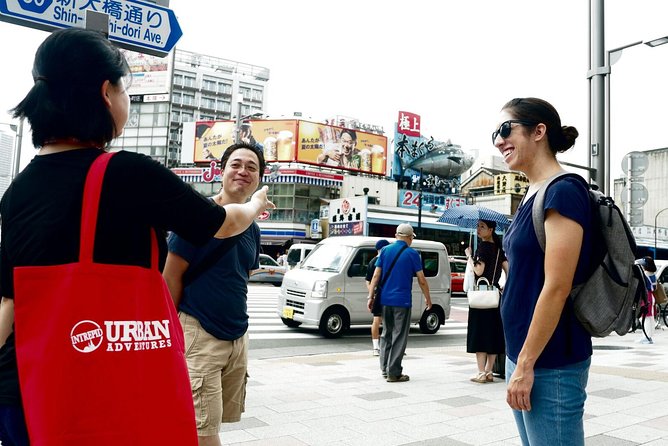
The tour starts at 8:00 am at Kabuki Inari Shrine, right by Kabukiza in Ginza. This is a smart opening move. You begin with something you can actually understand quickly: the Kabuki world and the Inari shrine right there by the theatre.
At this stop, you spend about 10 minutes looking at Kabuki-za architecture and learning about Kabuki, Japan’s mix of drama and dance. Admission here is free, and the timing works well because you are not yet tired from walking. It is a good reset before the food corridor starts doing what it does best: moving fast.
If you are a first-time visitor, this also helps you build mental context. Kabuki is not separate from food culture. It is part of the same larger Tokyo habit of ritual, performance, and tradition.
The Outer Tsukiji Market: Snacks, Sushi, and Wagashi in Narrow Alleys
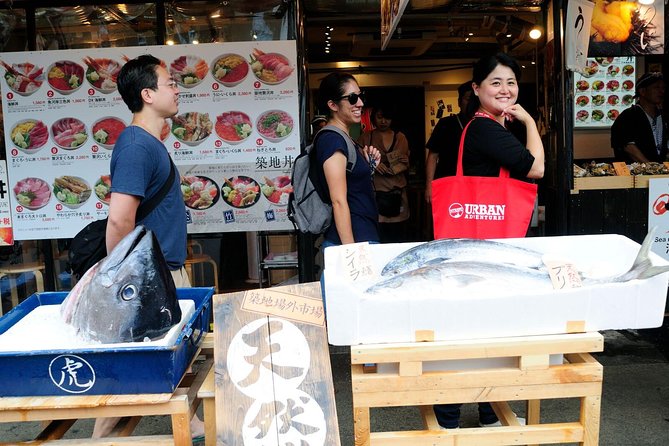
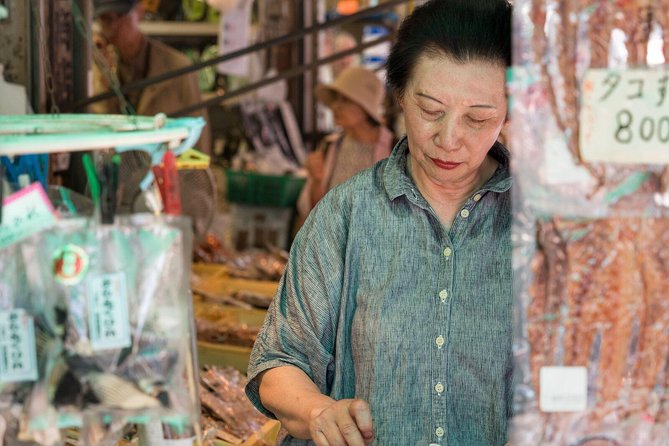
After the shrine, you head into the outer market for about 2 hours of walking and tasting. You will move through narrow lanes where seafood, vegetables, and snack stalls line up close enough that you can smell what you are about to eat.
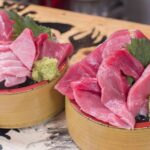
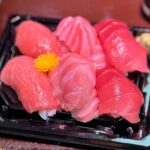
This is the main event. The tour includes fresh sushi, Japanese snacks, and kawaii-style wagashi sweets. In practice, that means you are not just buying one item and calling it a day. You get a variety of bites that let you compare textures and styles: savory vs. sweet, hot vs. room-temperature, and the way wagashi sits in your mouth compared to Western desserts.
What you can realistically expect to taste
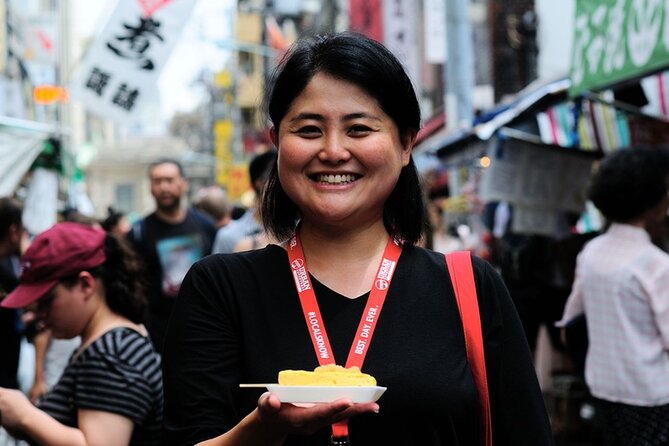
The exact lineup can vary day to day, but past groups have mentioned items like sashimi and tuna nigiri, eel roll, tamagoyaki (omelette), and fish cake (satsumaage). Some groups also reported extra treats such as dried anchovies or sweet rice balls. You might even see a large tuna being processed into sushi if the morning rhythm lines up.
Why the route matters more than the checklist
The outer market is not just a place to eat. It is a place to watch. You learn what kind of stalls exist, why some foods show up as small handheld bites, and how snack culture works when people are shopping quickly.
A few guides have also gone beyond the basics. One memorable example from past tours: Yuri purchased real wasabi and even brought along a wasabi tool so you could grind it and taste it with sushi. That kind of detail is why I think a guide is worth it here. You get the story behind the flavors, not just the flavors themselves.
You can also read our reviews of more tours and experiences in Tokyo



Shrines Are Not Side Quests Here: Namiyoke Inari Shrine and a Calm Finish
The tour ends near Tsukiji Fish Market, close to Tsukiji Station (Hibiya Line). You visit Namiyoke Inari Shrine for about 10 minutes, and it is a noticeable change of pace from the food alleys.
You are there for the tranquil atmosphere and the shrine’s history, and it gives you a moment to slow down after eating. Then it is a short walk to the nearest station. For a morning tour, this matters because you do not want to finish feeling rushed and stuck.
This is also a helpful cultural anchor. Inari shrines show up all over Japan, often tied to local worship around trade and food. When you pair that context with Tsukiji’s food focus, the whole place makes more sense.
What You Learn (Besides How Good Sushi Tastes)
A good food tour teaches you how to read a destination. This one uses tastings to help you understand Tokyo food culture as you walk.
Here are the kinds of lessons that come through, based on what guides are known for in these tours:
- How Japanese food is structured for movement. You see why small bites matter in a market setting.
- How wagashi differs from Western sweets. You taste the texture and sweetness level, and you notice how presentation fits the moment.
- How guidance removes language friction. The tour description promises translation support, so you are not left guessing what you are eating.
- How to spot quality without playing detective. Instead of scanning reviews all morning, you follow a route built for sampling.
One more thing: several guides have been praised for being genuinely attentive and for making sure your group leaves satisfied. That is not a guarantee, of course, but it is a strong pattern in the feedback.
Price and Value: Does $83.35 Make Sense?
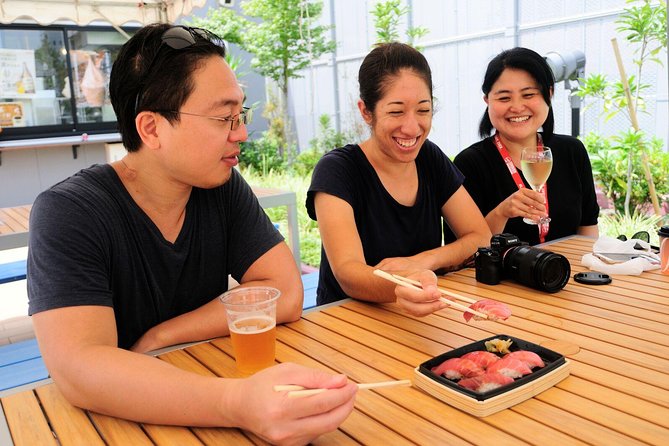
At $83.35 per person for about 3 hours, you should look at what you are really buying: time, selection, and confidence.
If you try to DIY Tsukiji outer market, you can burn a lot of minutes figuring out where to go and what is best to taste. A small-group tour with a plan reduces that guesswork. With a maximum of 6 travelers, you are also less likely to get swept up in a crowd and missed by your guide.
You should also factor what is included:
- Fresh sushi
- Local snacks
- Wagashi sweets
- A guided walk through the outer market
- Shrines at Kabuki Inari and Namiyoke Inari
What is not included is drinks and any extra food you want beyond the tastings, plus tips for your guide. For me, that is a fair trade: you pay for the curated food set, then you keep control of your own beverage and appetite afterward.
Timing, Shoes, and Getting There Without Stress
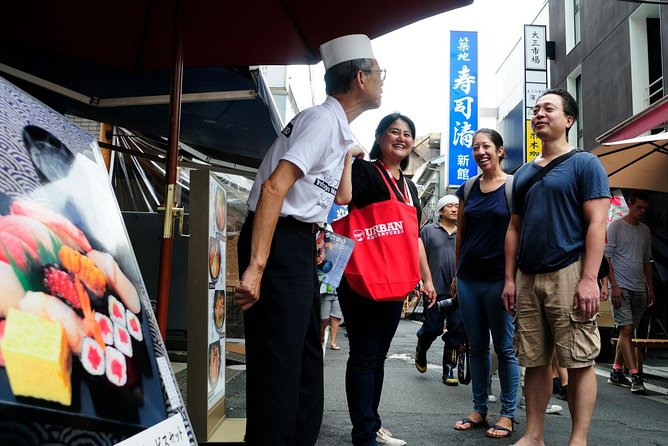
This tour starts at 8:00 am. Morning is usually the best time for a market experience, and early timing is also easier for crowds and heat.
Wear closed-toe shoes. The note about inner market floors being wet is not the time to wear fashion sneakers. This is a walking tour, and a slip would be a sad way to start your Tokyo day.
Also, do yourself a favor and arrive a little early at the meeting point by Kabuki Inari Shrine near Kabukiza. One past group reported trouble finding the meetup spot after getting turned around, and being late became a problem. You do not need panic—just give yourself time to get oriented before the group gathers.
Vegetarian and Vegan Notes: Helpful, But Not a Full Swap
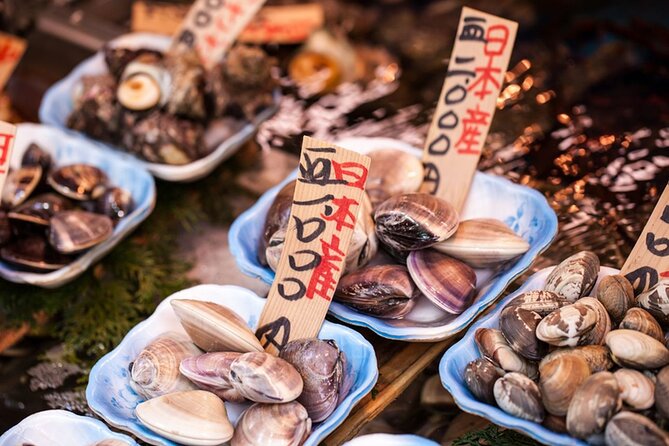
Vegetarian and vegan options are available, but the selection is described as limited. So if you eat only plant-based foods and have strict preferences, plan to treat this as a guided snack tour rather than a guarantee of a wide menu.
My advice: message your dietary needs ahead of time if that is offered during booking. Then go in with flexibility. You will likely get some tastings, but the tour’s core identity is seafood-anchored market sampling.
Who Should Book This Tour
This is a strong fit if:
- You want a guided Tsukiji outer market experience without the stress of figuring everything out
- You care about food culture, not just eating as fast as possible
- You like tours that include a cultural stop (Kabuki theatre area and two Inari shrine visits)
- You want small-group attention and an easier pace
It may be less ideal if:
- You expect a full sit-down meal with unlimited food
- You need a very wide vegetarian/vegan menu with lots of variety
- You dislike walking in crowded, narrow lanes
Should You Book This Tsukiji Tour?
Yes, I think you should book it if you are visiting Tokyo for the first time and you want Tsukiji without the chaos tax. The small group size, the practical route, and the mix of outer market tastings plus shrine context add up to solid value for the money.
If you are the type who hates being rushed, this one’s structure helps. If you are picky about food or strictly plant-based, confirm your options early and set expectations for limited choices. And if you want the best shot at the most memorable market moments, aim to be on time and start with the energy of a morning person.
In short: this is a smart way to taste Tsukiji and understand it, without turning your day into a scavenger hunt.
FAQ
Where does the tour start?
It starts at Kabuki Inari Shrine at 4 Chome-12 Ginza, Chuo City, Tokyo 104-0061, Japan. The meeting is in front of the shrine at Kabukiza.
What time does the tour begin?
The start time is 8:00 am.
How long is the tour?
The tour lasts about 3 hours.
How big is the group?
The tour is limited to a maximum of 6 travelers.
What food is included?
You’ll savor freshly made sushi, local snacks, and wagashi sweets. Drinks and additional food are not included.
Is the tour good for vegetarians or vegans?
Vegetarian and vegan options are available, but the food selection is limited.
Does the tour include shrine visits?
Yes. You visit Kabuki Inari Shrine at the start and Namiyoke Inari Shrine near the end.
Where does the tour end?
The tour ends near Tsukiji Fish Market, accessible from Tsukiji Station on the Hibiya Tokyo Metro Line, followed by a short 10-minute walk to the nearest station.
What should I wear?
Wear closed-toe shoes since inner market floors can be wet. Sneakers are recommended.
Is this tour child-friendly?
Yes, it is child-friendly. Children under 6 can join for free.