REVIEW · TOKYO
Ramen and Gyoza Cooking Class in Tokyo
Book on Viator →Operated by 九条tokyo · Bookable on Viator
Ramen tastes better when you make it. This hands-on ramen and gyoza cooking class in Yanaka turns Tokyo’s comfort foods into a real skill, with a short history chat that helps you spot the differences between styles of ramen you’ll see around Japan. I especially like that you learn the logic behind miso broth and toppings, not just a single recipe, and that you also make three kinds of gyoza. One thing to consider: with just about 1 hour 30 minutes, you’ll master a few core dishes, not every ramen variation under the sun.
The experience is built for a relaxed meal-house vibe in a Japanese-style setting. You’ll be in a private setup for your group, and communication is supported with a translator when needed, which matters if your Japanese is still in the “menu guessing” phase.
In This Review
- Key things that make this class worth your time
- Yanaka’s ramen-and-gyoza class feels like real Tokyo cooking
- What you’ll cook: miso ramen plus three gyoza styles
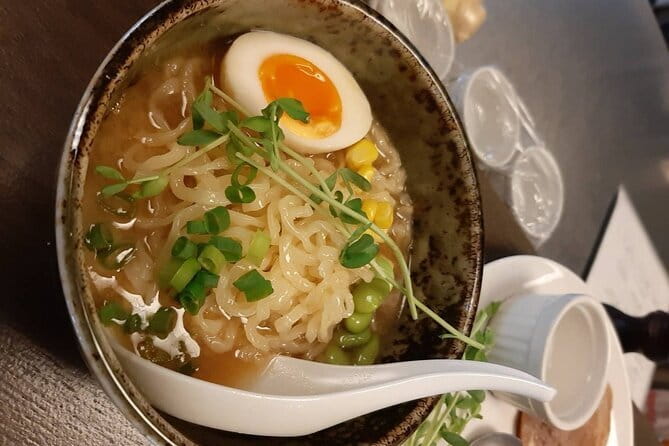
- Miso ramen: broth first, then toppings
- Gyoza: regular, cheese, and kimchi
- You’ll be eating what you make
- How the mini history turns cooking into a ramen guide
- Vegan-friendly broth: how they make it work
- Where it fits in your Tokyo day: Yanaka near Ueno and Nippori
- Timing that makes sense
- Price and value: why $91.76 can be fair here
- Hosts, communication, and the calm “do this with me” vibe
- Practical tips so you get more out of the class
- Who should book this ramen and gyoza class (and who might pass)
- Should you book it?
- FAQ
- Where does the class meet in Tokyo?
- What time does the class start?
- How long is the cooking class?
- How much does the experience cost?
- Is this a private experience?
- Is the experience available for vegans?
- What dishes do you make during the class?
- What kind of broth is used for miso ramen?
- How soon will I get confirmation after booking?
- Is there a cancellation window?
Key things that make this class worth your time
- Miso ramen with kelp + chicken or scallops (and a vegan kelp + vegetable version)
- Three gyoza styles: regular fried, cheese, and kimchi
- A mini history lecture that connects ramen and dumplings to Japanese food culture
- Yanaka location near Ueno and Nippori, so it fits nicely into a sightseeing day
- Private, group-only format plus a mobile ticket for smoother arrival
Yanaka’s ramen-and-gyoza class feels like real Tokyo cooking
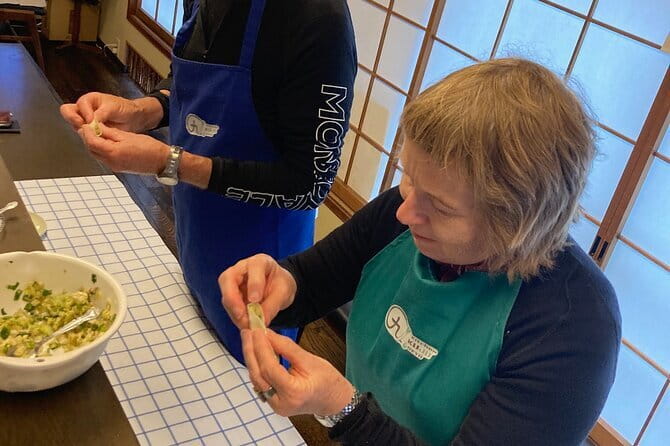
If you’ve ever watched someone make gyoza and thought, I could never fold those, this is the class that helps you stop worrying. The host, Sioji (sometimes written Shoji in messages), runs the session with clear steps and a patient pace. You’re not thrown into a complicated food-robot mode; you’re taught the method, then guided while you do it.
I like that the setting is comfortable and flexible. The tour is described as welcoming for different group types, from adults to families with children. That usually means the pace is humane—more learn-and-cook than watch-and-hope.
The other big plus is that the food isn’t treated like a novelty. Ramen and gyoza are treated like part of Japan’s daily food culture, which is exactly how you want to experience them if you’re actually traveling through Tokyo—not just checking boxes.
You can also read our reviews of more cooking classes in Tokyo


What you’ll cook: miso ramen plus three gyoza styles
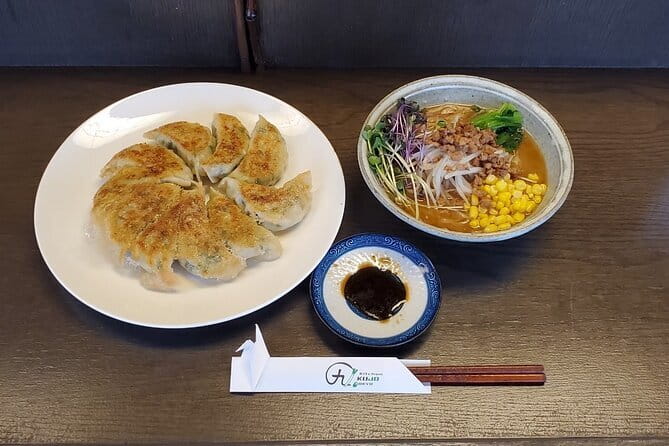
This class is built around two stars: miso ramen and gyoza, made together with guidance throughout.
Miso ramen: broth first, then toppings
You’ll make a miso ramen with an original soup and enjoy it with toppings. The broth base is one of the key learning points:
- For non-vegans: broth made from kelp and chicken or scallops (you’ll see how those choices shape flavor)
- For vegans: miso ramen with broth made from kelp and vegetables
That matters for you because ramen in Japan is not one thing. It’s a family of choices—noodle texture, broth depth, saltiness, and the way toppings balance the bowl. Once you understand the broth logic, you can read restaurant menus in a more confident way during the rest of your trip.
Gyoza: regular, cheese, and kimchi
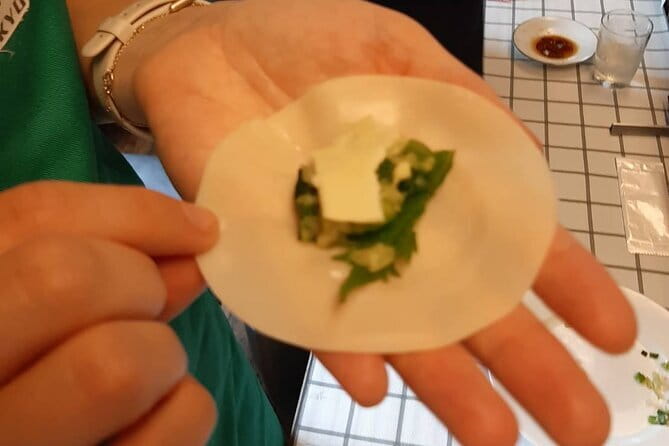
You’ll make three types of Japanese-style fried dumplings:
- regular fried dumplings
- cheese dumplings
- kimchi dumplings
This setup is smart. Regular gyoza teaches the classic pattern, while cheese and kimchi show how Japanese dumpling culture plays with flavors. You’ll walk away with multiple variations you can repeat at home without needing to invent everything yourself.
You’ll be eating what you make
The class includes time to enjoy the ramen with toppings. Since ramen and gyoza are part of the cooking and then part of the meal, you’re not just leaving with recipes—you’re leaving with the results.
You can also read our reviews of more tours and experiences in Tokyo




How the mini history turns cooking into a ramen guide
This isn’t only a recipe workshop. It includes a brief lecture on the history and development of ramen and gyoza—how they evolved once they came into Japan and how they split into different regional styles.
Here’s why that’s practical for you: once you learn what makes one ramen style different from another (broth type, noodle style, and the role of toppings), Japan stops being a blur of bowls. You start noticing patterns. You begin to ask the right questions at restaurants, like what kind of broth direction you’re being offered and why one place tastes richer or lighter than another.
The class framing is also helpful because it treats ramen differences as something you can actually use while traveling. You get the ideas first, then you cook your own bowl using a specific miso base.
Vegan-friendly broth: how they make it work
If you’re vegan (or cooking for someone who is), this class is clearly set up for you. The tour specifically notes vegan miso ramen using kelp and vegetables for broth.
In a lot of food experiences, vegan versions are an afterthought. Here, the broth foundation is part of the lesson. That gives you something you can remember later when you’re looking at menus in Tokyo—because broth choice is what often determines whether a bowl is satisfying or just sad.
Also, because you’re learning a ramen method, not just receiving a substitution, you’ll feel more confident ordering (and understanding) vegan-friendly ramen options during the rest of your trip.
Where it fits in your Tokyo day: Yanaka near Ueno and Nippori
The meeting point is in Yanaka, Taito City, near Ueno Station or Nippori. If you’re staying in central Tokyo, this neighborhood is a nice change of pace: calmer streets, more old-school atmosphere, and an easy pairing with Ueno-area sightseeing.
The start time is 11:00 am, and the experience ends back at the meeting point. That means you’re not trying to connect to another train right after class without time to breathe.
Timing that makes sense
The duration is about 1 hour 30 minutes. For a cooking class, that’s a realistic slot: enough time to learn, cook, and enjoy your food, but short enough to keep your day from collapsing into a long activity grind.
Price and value: why $91.76 can be fair here

At $91.76 per person, this isn’t the cheapest way to eat in Tokyo. So you should ask: what are you paying for?
You’re paying for:
- Hands-on instruction for ramen and gyoza (not just a demo)
- Multiple dish types (miso ramen plus three dumplings)
- Mini history context that helps you use what you learned the rest of your trip
- A private, group-only setup, so you’re not squeezed into a large shared class
- Vegan ramen option with a broth build that’s part of the lesson
In other words, you’re paying for something closer to a cooking workshop than a simple meal. If you want to take home skills you can use later—especially ramen-broth logic—this price can feel fair.
One caution: because it’s private and has a minimum of 2 people, it’s most sensible when you’re booking with at least one other person (friend, partner, or small family unit).
Hosts, communication, and the calm “do this with me” vibe

The class is run by Sioji (Shoji) with support from a translator to help communication when needed. That shows up in the experience style: the instruction isn’t stuck behind language barriers, and the host can keep things moving without leaving you behind.
I also like the way the class is described as patient and friendly. Cooking is one of those activities where stress ruins the fun. When the host keeps the steps simple and guides you through, you’re more likely to walk out feeling confident instead of overwhelmed.
Practical tips so you get more out of the class
You’ll get the most out of it if you show up ready to cook and ask smart questions. A few ways to do that:
- Decide your ramen priorities before you start. Do you like richer bowls or lighter ones? When you learn broth logic, that choice becomes easier to apply later.
- Pay attention to broth texture and flavor shifts. Even if you don’t memorize exact amounts, noticing what changes flavor will help you replicate it at home.
- Taste each gyoza style as its own thing. Regular, cheese, and kimchi dumplings aren’t just variations; each has a different flavor job.
- Bring a small notebook or notes app. Since you’ll likely want to repeat these at home, write down what you liked most right after you finish eating.
Who should book this ramen and gyoza class (and who might pass)

This class is a great fit if you:
- want a hands-on food skill (not only restaurant tasting)
- care about learning the “why” behind Japanese dishes, especially ramen
- are traveling with someone who wants a fun, non-intimidating cooking activity
- need a vegan option that’s built into the broth and method
You might pass if you:
- already know you only want a quick meal and don’t care about cooking technique or history
- need a very long class format (this one is about 1 hour 30 minutes)
- are booking solo and don’t meet the minimum of 2 people requirement
Should you book it?
Yes, if your travel style includes learning your food, not just eating it. The combination of miso ramen broth instruction, three gyoza types, and a short history lecture makes this class feel useful even after you fly home. If you’re vegan, the fact that vegan ramen has a real broth plan instead of a vague swap is a strong reason to choose it.
FAQ
Where does the class meet in Tokyo?
It meets at Yanaka in Taito City: Japan, 110-0001 Tokyo, Taito City, Yanaka, 1-chōme 2-10 (谷中スペース).
What time does the class start?
The start time is 11:00 am.
How long is the cooking class?
The duration is about 1 hour 30 minutes.
How much does the experience cost?
The price is $91.76 per person.
Is this a private experience?
Yes. It’s private, so only your group participates.
Is the experience available for vegans?
Yes. Vegan participants make miso ramen using broth made from kelp and vegetables.
What dishes do you make during the class?
You make miso ramen and gyoza, including three types of fried dumplings: regular, cheese, and kimchi.
What kind of broth is used for miso ramen?
For non-vegans, the broth is made from kelp and chicken or scallops. For vegans, it’s kelp and vegetables.
How soon will I get confirmation after booking?
Confirmation is received within 48 hours of booking, subject to availability.
Is there a cancellation window?
Yes. You can cancel for a full refund if you cancel up to 24 hours in advance of the experience start time. If you cancel less than 24 hours before, the amount paid is not refunded.