REVIEW · TOKYO
Tokyo Wagyu Culinary Tour Cooking Culture and Tasting
Book on Viator →Operated by emc · Bookable on Viator
Wagyu gets personal in this Tokyo cooking class. You start with a seasonal welcome drink, then go straight into hands-on cooking and a butchery-led look at how different Wagyu cuts behave on a pan. It is the kind of lesson that turns fancy beef into practical skills you can actually use.
I also liked how the group stays small, so guidance feels close and specific, and the local instructor Mike shares helpful Tokyo food ideas along the way. The main catch is the price at $920 for about two hours, so it is best if you want to cook and eat, not only sample.
In This Review
- Key highlights worth your time
- Wagyu skills you can use, not just Wagyu pictures
- Where the tour starts in Oshiage, and what that means for timing
- The seasonal welcome drink and why it matters
- Wagyu origins and grading: the map behind the meat
- Sirloin vs tenderloin: learning cuts by purpose
- The butchery demonstration: how preparation changes cooking
- Cooking demo and practice: heat control is the whole game
- Tasting what you made, with beverage pairings
- Wagyu in Japanese culture: what you take home
- Price and value: $920 for 2 hours, where the money goes
- Who should book this Wagyu class
- Should you book Tokyo Wagyu Culinary Tour Cooking Culture and Tasting?
- FAQ
- FAQ
- How long is the Tokyo Wagyu cooking tour?
- Where does the tour start?
- How many people are in the group?
- Will the tour accommodate dietary restrictions?
- What happens during the tasting?
- What is the cancellation policy?
Key highlights worth your time
- Seasonal welcome drink that sets the tone before the Wagyu lesson starts
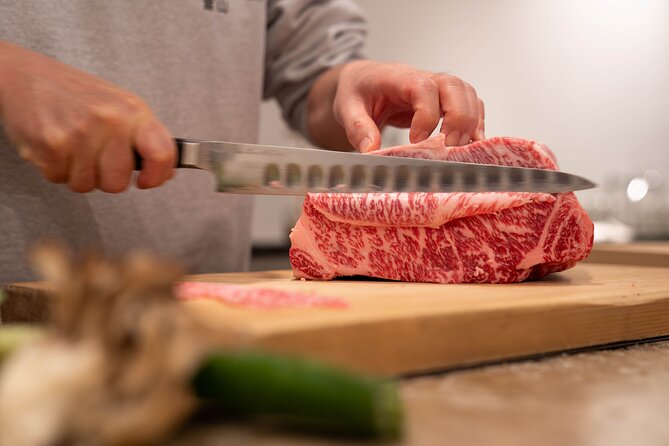
- Cut-by-cut training covering what sirloin and tenderloin are best for
- Butchery demonstration so you understand how the meat is prepared for cooking
- Temperature and timing practice so you do not overcook precious Wagyu
- Cook-and-taste format with beverage pairings that match the beef
- Small group (max 6) for easier questions and closer coaching
Wagyu skills you can use, not just Wagyu pictures
This class is built around a simple goal: help you tell Wagyu apart, handle the meat well, and cook it with control. The lesson is not just about luxury; it is about technique—heat management, seasoning choices, and timing—so you can repeat results at home.
I like that it treats Wagyu like craft work. You learn why different cuts need different treatment, instead of relying on vague advice like cook it quickly and hope for the best.
And because it is interactive, you are not stuck as a spectator. You will be tasting what you cook, which makes the whole training sink in fast.
You can also read our reviews of more food & drink experiences in Tokyo


Where the tour starts in Oshiage, and what that means for timing
The experience meets at 3-chōme-25-17 Oshiage, Sumida City, Tokyo 131-0045, Japan. It ends back at the same meeting point, so you do not have to plan a second transfer to get home.
The total time is about 2 hours. That is short, which is both a plus and a minus: a plus if you want a tight plan during a busy Tokyo day, a minus if you are hoping for a long, slow deep-dive into Japanese beef culture.
You get a mobile ticket, and confirmation comes at booking time. If you are deciding last-minute, this kind of ticket setup is usually easier for your day-of routine.
The seasonal welcome drink and why it matters
Before you touch meat, you start with a welcome drink inspired by the flavors of the season in Japan. This is not just a nice extra. It sets your palate and gets you thinking in Japanese seasonal terms, which comes up again when you learn how ingredients and care connect to taste.
It also makes the start feel like a proper class, not a rushed demo. You arrive, get settled, and then the Wagyu section begins.
Wagyu origins and grading: the map behind the meat
Next, you get an introduction to Wagyu beef, including where it comes from and what makes it special. More importantly, you learn how Wagyu is graded.
This part is valuable because grading changes what you should expect and how you should cook. Even if you never buy top-tier beef back home, grading teaches you how quality signals show up in flavor and texture—and why technique still matters.
If you have only eaten steak at restaurants, this lesson helps you decode the ordering process. You start to see how choices in quality and cut lead to different results.
Sirloin vs tenderloin: learning cuts by purpose
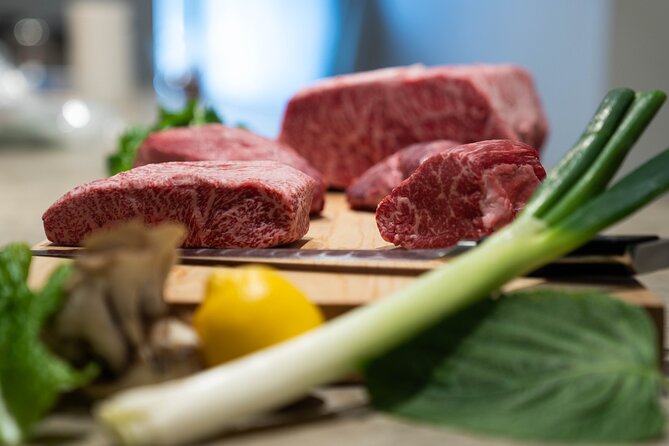
After the basics, you go through several Wagyu cuts, including sirloin and tenderloin. The tour explains how each cut is used and what sets it apart.
This is where you start thinking like a cook. Instead of treating Wagyu as one thing, you learn that each cut has its own expectations—fat distribution, texture, and how it responds to heat.
Watching the differences explained can save you money later too. If you understand which cut fits the kind of experience you want, you are less likely to overpay for a cut that is not actually right for your cooking style.
You can also read our reviews of more cooking classes in Tokyo



The butchery demonstration: how preparation changes cooking
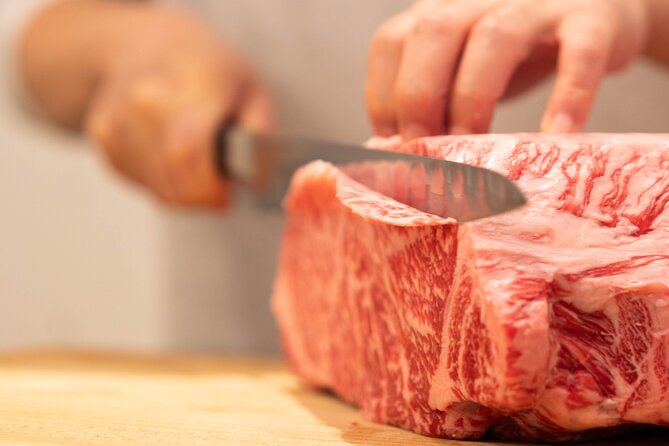
You then watch a butchery demonstration showing how the cuts are prepared for cooking. This is one of the most practical segments, because it connects theory to reality.
Even without getting lost in technical details, you pick up the idea that the meat is handled with intent. What happens before the steak hits the heat affects how it cooks afterward.
It also gives you a better sense of portioning and slice thickness. When you cook later yourself, you are not guessing as blindly.
Cooking demo and practice: heat control is the whole game
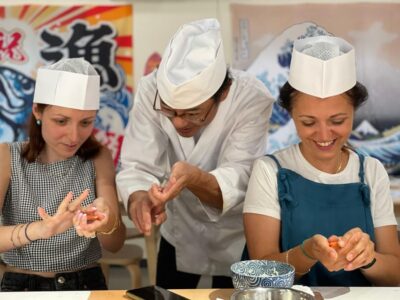
Then you move into cooking. The class focuses on proper ways to cook Wagyu, including temperature control and timing. You also practice seasoning methods, because Wagyu does not mean no-sense seasoning—it means you need balance.
The key lesson is heat control. Wagyu is prized, but it is also easy to mess up if the temperature runs away or you overcook out of habit. This tour makes you slow down and cook with attention.
In your own cooking practice, you learn by doing with chefs’ help. That coaching matters because small adjustments—timing a minute differently, controlling heat, and choosing how to season—are what separate a decent steak from one that tastes like the beef was respected.
Tasting what you made, with beverage pairings
When your cooking is done, you taste the dishes you cooked. Your meal also comes with beverages paired to complement Wagyu’s flavor.
This is where the technique lesson clicks. You taste the result and can connect it to what you did—heat, timing, and seasoning. If you have ever wondered why one steak tastes buttery and another tastes flat, this is the moment you learn the difference directly.
Also, the pairing concept is helpful. Even if you never copy the exact beverage at home, it teaches you that the drink choice affects how you experience fat, tenderness, and richness.
Wagyu in Japanese culture: what you take home
To wrap up, you talk about Wagyu’s role in Japanese culture. The point here is not just to collect trivia. It helps explain why the care behind slicing and cooking matters so much in Japan.
You leave with practical tips for cooking Wagyu at home. That means you can take the training beyond this one meal and apply it to future purchases and future dinners.
If you like Tokyo experiences that teach real-life skills, this lands well. You do not just eat well; you learn something you can repeat.
Price and value: $920 for 2 hours, where the money goes
Let’s talk money clearly. At $920 for about two hours, this is not a casual splurge. It is expensive compared to many Tokyo food tours, but it is also structured like a premium cooking class: small group size (max 6), a local instructor, welcome drink, Wagyu grading and cut instruction, a butchery demonstration, chef-led cooking practice, and then tastings with beverage pairings.
So the value depends on your goal.
- If you want to cook and taste multiple Wagyu cuts with coaching, the price starts to make sense.
- If your main goal is to eat Wagyu once with no interest in learning technique, you could find cheaper ways to sample beef in Tokyo.
My best advice: treat this as an investment in skill, not just food. If you are excited to learn heat control, timing, and how cuts differ, you will feel like $920 bought real education.
Who should book this Wagyu class
This is a great fit if you:
- Enjoy hands-on cooking lessons and want to learn heat control and timing
- Like Tokyo culture that you can taste and use, not just observe
- Plan to cook steak at home and want more than generic advice
It is less ideal if you:
- Want a long sightseeing-style tour (this one is tightly focused and about learning)
- Are only looking for a passive tasting experience
- Have diet limits that restrict beef heavily (the tour says they can accommodate dietary restrictions if you let them know, but the core experience centers on Wagyu)
The group limit of 6 also makes it a calmer choice. You should be able to ask questions and get help while cooking, instead of waiting for a big crowd.
Should you book Tokyo Wagyu Culinary Tour Cooking Culture and Tasting?
If you like the idea of cooking with guidance—especially learning temperature control and tasting what you cooked—book it. The class format is built to teach, not just feed you.
Before you say yes, decide this: are you the type who wants to come home with repeatable steak skills? If yes, the price feels more justified. If you only want a one-time luxury meal, you might prefer a less expensive Wagyu tasting or restaurant experience.
FAQ
FAQ
How long is the Tokyo Wagyu cooking tour?
The experience lasts about 2 hours.
Where does the tour start?
It starts at 3-chōme-25-17 Oshiage, Sumida City, Tokyo 131-0045, Japan, and ends back at the meeting point.
How many people are in the group?
This activity has a maximum of 6 travelers.
Will the tour accommodate dietary restrictions?
If you have dietary restrictions, you should let the organizers know so they can accommodate you.
What happens during the tasting?
After cooking, you taste the dishes you made, and they are paired with beverages that complement Wagyu’s flavor.
What is the cancellation policy?
You can cancel for free up to 24 hours in advance for a full refund. If you cancel less than 24 hours before the experience’s start time, you do not receive a refund. Cut-off times are based on local time.