REVIEW · TOKYO
Tokyo: Private Tsukiji Street Food & Sake with Local Guide
Book on GetYourGuide →Operated by Alva Japan Tours🇯🇵 · Bookable on GetYourGuide
Tsukiji can feel chaotic. This 2-hour private food-and-sake walk turns that crowd energy into something you can actually taste, with street food and sake done the right way. I especially like the way it pairs charcoal-grilled wagyu with fluffy tamagoyaki, then cools things down with chilled teas and Edo-style bites.
Then it earns its place at the end: a guided sake tasting that compares multiple types and lands on a special pour with baby scallops. One thing to consider: you may want to confirm what’s covered versus what you’ll buy on your own in the market, since the tour includes specific items and additional snacks aren’t bundled.
In This Review
- Key things I’d watch for
- Tsukiji Hongwan-ji: the temple start that changes how you see the area
- Tsukiji Outer Market in 100 minutes: how you eat well without getting lost
- Tea tasting and Edo-style bites: black beans, peanuts, and dashi in context
- Sake with baby scallops: a sommelier-led flight you can actually compare
- What’s included in the $99, and what will cost extra
- Time on your feet: how the 2-hour format feels in Tsukiji
- Practical tips before you meet your guide at Tsukiji Hongwan-ji
- Should you book this Tsukiji street food and sake tour?
- FAQ
- How long is the Tsukiji private street food and sake tour?
- Where does the tour start?
- Is the tour guided in English?
- What food is included?
- Is sake tasting included?
- Do I need ID for the sake tasting?
- Is transportation included?
- Do I need cash?
- What happens if it rains?
- What are the cancellation and payment options?
Key things I’d watch for
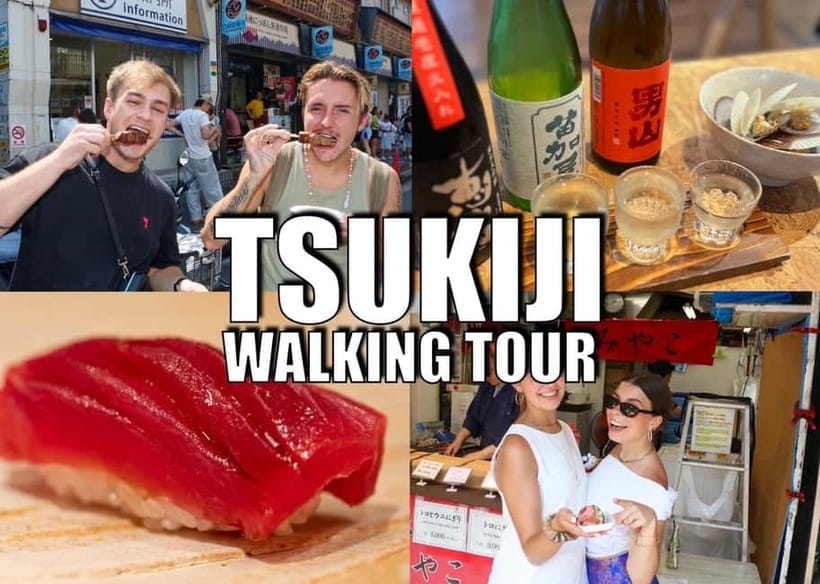
- Wagyu skewer + tamagoyaki are included, so you’re not gambling on the best stall
- Chilled tea, plus black beans, peanuts, and dashi give you real Edo-style context
- A certified sake sommelier flight with scallops makes the tasting practical, not random
- English and Japanese bilingual guidance helps you handle stalls fast
- Temple stop at Tsukiji Hongwan-ji adds meaning before you hit the food maze
Tsukiji Hongwan-ji: the temple start that changes how you see the area
Your tour begins at Tsukiji Hongwan-ji, a temple stop that’s more than just a photo moment. The architecture description you’ll get here is unusual on first glance, mixing ancient Indian-style stone influences with a distinctly Japanese Buddhist spirit. You’ll also notice details like intricate animal carvings and stained glass, which is a nice contrast to the wooden temple vibe many people expect in Japan.
The guide also gives you the backstory behind the temple’s reconstruction after a major fire during the Meiji era. That matters because Tsukiji isn’t only about fish and food. It’s also about layers of history, and starting with that perspective helps the rest of the walk feel less like random snacking and more like a coherent neighborhood story.
This is a short stop by design. You’ll have time to look and listen without turning the day into a museum crawl. Wear shoes you don’t mind walking in, because even the “quick” parts in Tsukiji add up.
You can also read our reviews of more food & drink experiences in Tokyo



Tsukiji Outer Market in 100 minutes: how you eat well without getting lost
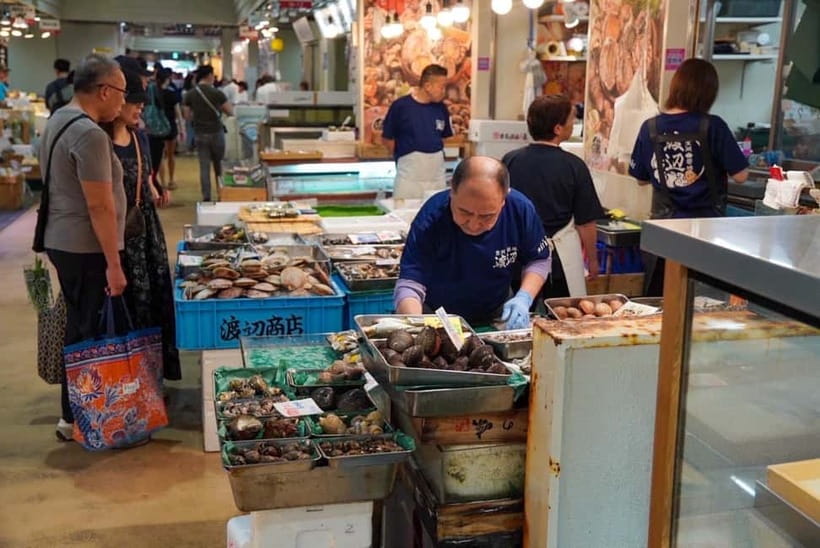
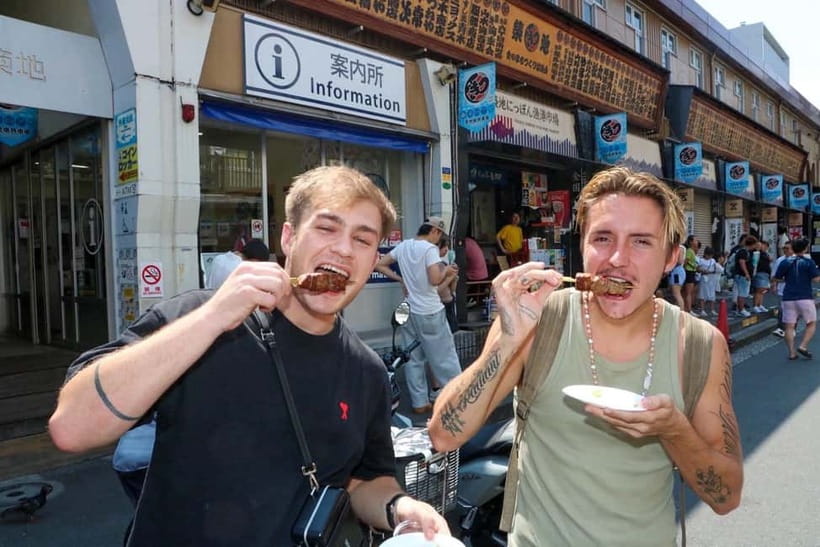
The heart of the experience is the Tsukiji Outer Market walk. Expect tight lanes, seafood smells, and constant motion. What you’re buying with a private guide isn’t just translation. It’s decision-making help: which stall to approach first, when to order, and how to avoid wasting time in dead ends.
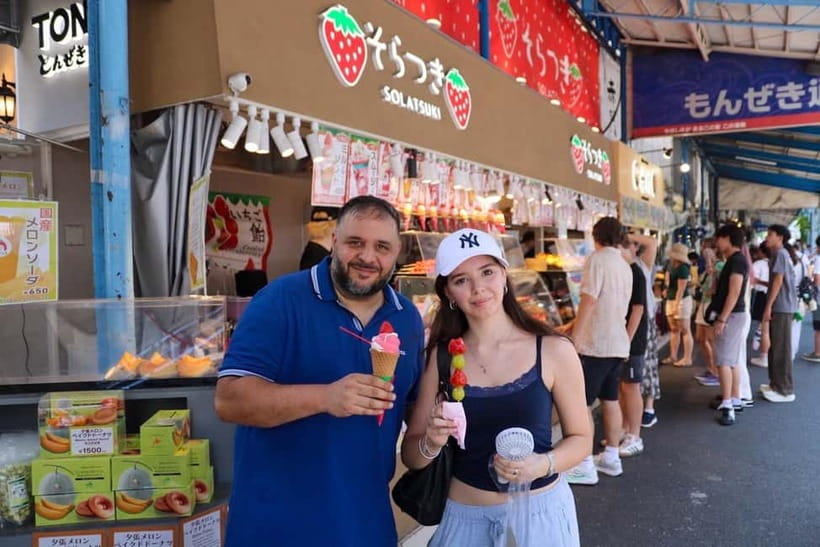
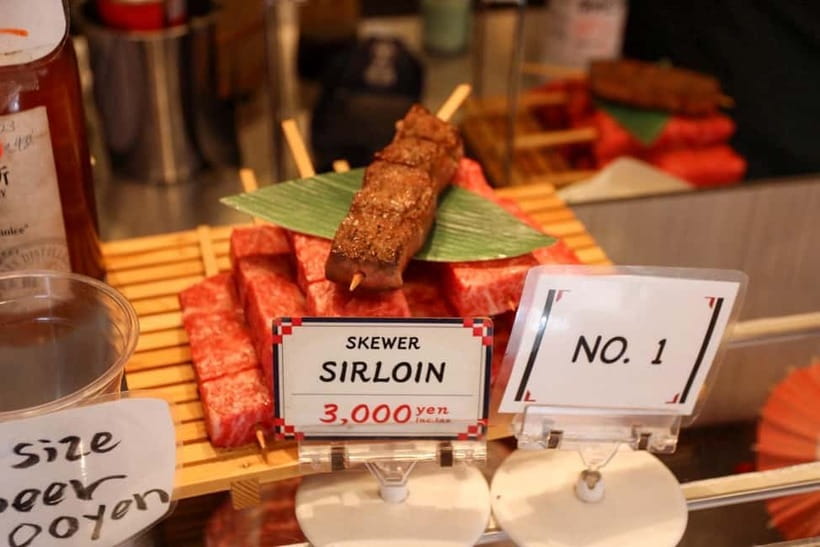
The included tastings here are built around two classic hits. First comes a charcoal-grilled wagyu skewer, where the focus is on flavor and texture right away. Then you’ll get tamagoyaki, the neatly rolled Japanese omelet that’s fluffy and often flavored with dashi. The guide’s job is to keep you moving so you can actually taste, not just stand in line.
A big advantage in this style of tour is that you skip the guesswork. Market eating can be confusing even when you know what you want, because stalls differ in portion size, language, and how they handle orders. With bilingual support, you spend your energy eating.
There’s one practical caution, though. In one case, the guide did not clearly separate what was free as part of the tour from what might be available for purchase at other stalls. That’s an easy fix on your end: ask at the start which stops are included and which items are extra. Then you can browse without second-guessing your wallet.
Tea tasting and Edo-style bites: black beans, peanuts, and dashi in context
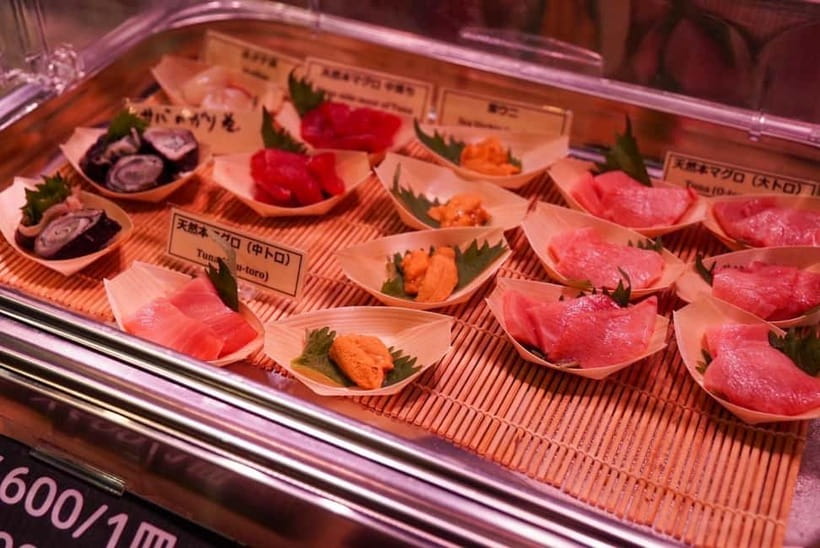
After the market hits, the pace shifts to something calmer. This part is where you get to slow down long enough to notice what makes Edo-style food work: balance, saltiness, and that umami base you keep running into—dashi.
You’ll sample chilled Japanese tea at a traditional-style shop, which is a smart reset after warm grilled items. Then comes the Edo-focused tasting set: black beans, peanuts, and dashi broth. The point isn’t just tasting three things. It’s understanding why they fit together as a counterpoint to seafood and meat.
Dashi is the backbone ingredient that shows up across Japanese cooking, but it’s easy to treat as an abstract concept if you haven’t tasted it in a simple, guided format. By sampling it here, you get a clearer sense of what it brings: savory depth without heavy weight. The beans and peanuts add crunch and earthiness, so the flavors don’t all blur into one seafood-salt wave.
I like this stop because it gives your brain a break. Tsukiji is sensory overload by design. This segment helps you remember what you ate earlier, instead of just thinking, Everything tasted good.
Sake with baby scallops: a sommelier-led flight you can actually compare
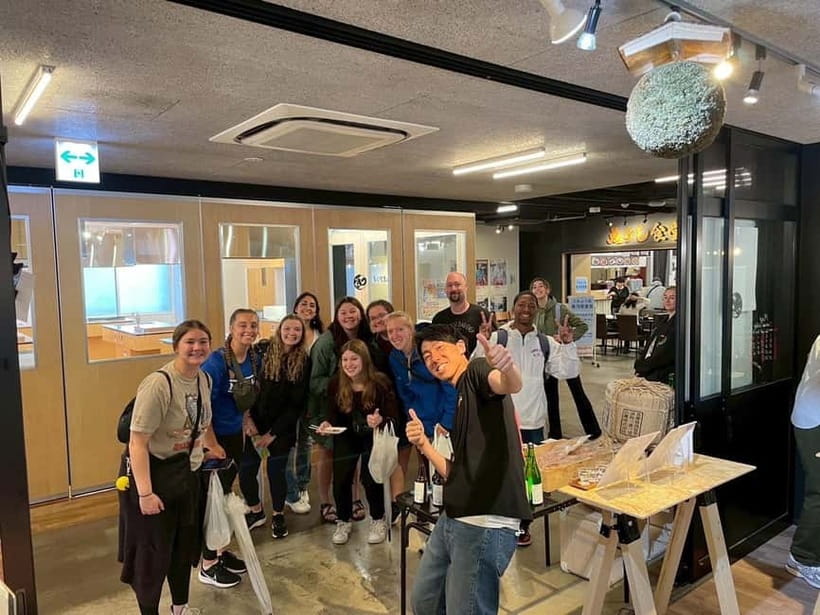
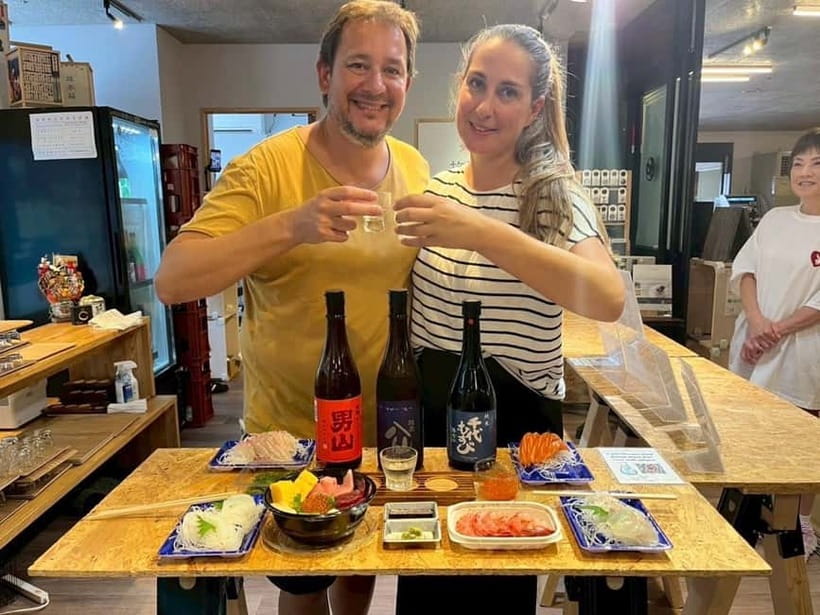
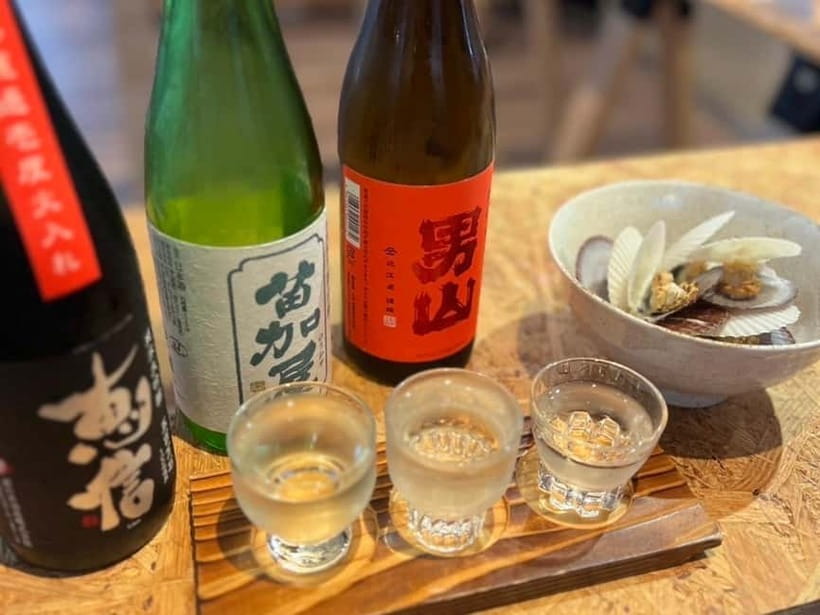
The finale is the most educational part, and it’s built around a tasting format. You’ll end with a guided sake session led by a certified sake sommelier. That’s key. Random tastings can feel like sip-swallow-repeat. A real structure makes you taste differences instead of just alcohol.
You’ll compare three types of sake plus one special selection. Then you’ll pair it with sake-steamed baby scallops. This pairing does two useful things. It shows you how sake changes with sweetness, acidity, or richness, and it gives the scallops a chance to taste like more than a side dish.
The sommelier-style guidance helps you learn what you’re noticing. Even if you don’t plan to become a sake expert, you’ll leave with a sense of what to order later when you’re choosing among dozens of bottles. I also appreciate that the tasting is short enough to stay fun, while still being structured enough to feel worth your time.
One more practical note: sake tasting requires ID in Japan. The legal drinking age is 20, so bring a valid government ID. If you’re not sure you have the right document, check before you go so you don’t lose part of the experience.
What’s included in the $99, and what will cost extra
For $99 per person, this tour covers a very specific set of things, and that’s why the value works. You get the wagyu skewer and tamagoyaki portion, plus the tea tasting and the Edo-style samples (black beans, peanuts, and dashi broth). You also get the full guided sake flight with baby scallops.
That matters because Tsukiji can easily add up. If you arrive with a plan to “just try a few things,” you often end up spending more than you expected. Here, you at least know the core tastings are already paid for, which reduces the mental load while you’re standing in a busy market.
What is not included is any additional food or drinks you choose to buy. That includes extra snacks at stalls and drinks beyond what’s part of the scheduled tastings. Also not included: transportation to and from the meeting point. So if you’re coming from elsewhere in Tokyo, plan your route ahead.
My advice: treat the included tastings as your anchor meal. Then browse if you want, but keep your spending decisions intentional. If you’re the type who loves wandering and sampling everything, you’ll still have options, but you’ll want to control the add-ons.
You can also read our reviews of more tours and experiences in Tokyo



Time on your feet: how the 2-hour format feels in Tsukiji
This is a short tour. About 2 hours is the headline, and the structure reflects that. You’re not meant to “slow travel” through Tsukiji. You’re meant to get smart, good tastings in a tight window.
The flow goes like this: a temple photo stop and guided look, then the market walk where the included food happens, then the tea/Edo-style sampling, and finally the sake flight. The pacing can feel busy, but that’s normal for this area. The benefit of a guided route is that you’re not spending most of that time trying to figure out where to go next.
Group size isn’t listed, but one key detail from the experience format is that private can sometimes feel very personal. If you’re sensitive to crowds or want focused attention, this is the kind of tour where your guide can adjust speed and ordering to match you.
Comfort note: wear shoes that handle uneven walkways and constant motion. Even when parts are indoor or covered, Tsukiji still involves real walking.
Practical tips before you meet your guide at Tsukiji Hongwan-ji
Your meeting point is Tsukiji Hongwan-ji (浄土真宗本願寺派築地本願寺). The guide will be in front of the main gate holding a smartphone displaying AlvaJapan, so it’s usually easy to spot the right person.
If you want the tasting to go smoothly, bring your ID for the sake portion. Also remember Japan’s drinking age is 20, so plan accordingly if you’re traveling as a younger group.
Cash is recommended for any extra snacks or shopping. The tour reduces the need for spending during tastings, but you’ll probably want to buy something small if you see a product you love. Having some cash makes that decision friction-free.
Dietary restrictions are worth flagging early. The tour includes tastings, and the guide can tailor what you eat to your preferences, which is exactly what you want in a market where not everything is easy to translate. If you have allergies or specific restrictions, say them clearly at the start so the guide can steer you correctly.
Rain or shine is also handled. The stops are mostly covered or indoor, which helps, but you’ll still want a light rain layer just in case you hit open-air stretches.
Should you book this Tsukiji street food and sake tour?
Book it if you want a fast, guided path through Tsukiji with included tastings that feel deliberate. This is great for first-timers who don’t want to spend the trip’s best market hours guessing what to order. It’s also a good choice if you like learning while eating, because you get both Edo-style food context and a structured sake comparison.
Skip it or choose another option if you’re the kind of traveler who wants total freedom to roam stalls and build your own menu. Even though extra purchases are allowed, this tour centers on specific included items, so it’s less about unlimited sampling and more about getting the right core bites done well.
If you decide to book, do one simple thing that makes a big difference: ask which foods in the market are covered and which are add-ons. Then you can browse confidently, enjoy the tastings fully, and avoid any awkward money surprises mid-walk.
FAQ
How long is the Tsukiji private street food and sake tour?
It lasts about 2 hours, with walking involved.
Where does the tour start?
The meeting point is at Tsukiji Hongwan-ji (浄土真宗本願寺派築地本願寺). Your guide will be in front of the main gate holding a smartphone displaying AlvaJapan.
Is the tour guided in English?
Yes. The guide provides English and Japanese support.
What food is included?
The tour includes 1 wagyu skewer and 1 tamagoyaki portion, plus tea tasting and samples of black beans, peanuts, and dashi broth.
Is sake tasting included?
Yes. You’ll get a guided sake tasting flight with 3 types of sake plus 1 special selection, paired with baby scallops.
Do I need ID for the sake tasting?
Yes. ID is required for sake tasting, and the legal drinking age in Japan is 20.
Is transportation included?
No. Transportation to and from the meeting point isn’t included.
Do I need cash?
Cash is recommended for any extra snacks or shopping beyond what’s included.
What happens if it rains?
The tour runs rain or shine, with stops that are mostly covered or indoor.
What are the cancellation and payment options?
You can cancel up to 24 hours in advance for a full refund. There is also a reserve now & pay later option.