REVIEW · TOKYO
Tokyo: Sumo Morning Training Visit
Book on GetYourGuide →Operated by H.I.S. Co Ltd(TIC) · Bookable on GetYourGuide
Sumo feels different when it’s not behind a barrier. This Tokyo morning visit takes you into a real stable, where active pro wrestlers train right in front of you, ending with a group picture.
I especially like the up-close look at the intensity—warm-ups, drills, and the physical grind that you never really see from tournament seats—and the fact that it’s not a staged show.
One real consideration: you’ll sit on the floor and stay quiet for a long stretch, and the session can be short during big tournament weeks, so it’s not guaranteed to look like a full bout.
In This Review
- Key takeaways before you go
- Tokyo Sumo Morning Training: why this feels so real
- The 60-minute plan (and why it can run shorter or longer)
- Checking in, getting inside, and how the guide actually helps
- What you’ll see on the mat: drills, pushing, and real intensity
- Floor seating: your back will file a complaint
- The group picture: don’t miss it by leaving early
- Photos and phone rules (what’s allowed, what’s not)
- Price and value: is $77 a good use of your time?
- Optional hotel transfer: helpful, but know the limits
- Who should book this Sumo training visit?
- Quick tips so your morning goes smoothly
- Should you book this Tokyo Sumo Morning Training Visit?
Key takeaways before you go
- Real stable access: You watch active wrestlers training, not performances meant for crowds.
- Group photo at the end: If you leave early, you won’t get the picture.
- Short on tournament weeks: Training can drop to about 30 minutes during the Tokyo Grand Sumo events.
- Rules are strict: No flash, phones on silent, hats and sunglasses off, and loud talk isn’t allowed.
- Floor seating is part of the deal: Bring patience, and if you need a seat, arrange it ahead of time.
Tokyo Sumo Morning Training: why this feels so real
Watching sumo from a distance is one thing. Watching it while the wrestlers are actually working is another. This visit puts you inside the stable environment where training drills, warm-ups, and partner work take center stage. You see how controlled the work is, how quickly bodies move, and how seriously everyone takes practice.
I also like that it feels direct and practical. You’re not here for a concert-style production. You’re here to witness keiko-style training from very close range, then step into a quick end-of-session photo moment with the wrestlers.
The best part for many people is the sense of respect around the activity. The rules keep things quiet—so when you hear a loud impact or see a sudden change in intensity, it lands. That’s the difference between a show and actual training.
You can also read our reviews of more tours and experiences in Tokyo
The 60-minute plan (and why it can run shorter or longer)
The experience is listed as 1 hour, and in many cases training lasts around that mark. But Tokyo has a rhythm. During the Tokyo Grand Sumo Tournaments (January, May, and September), training sessions can be only about 30 minutes. No refunds are given for the shorter time, so if your main goal is lots of action, check what week you’re traveling.
Outside tournament weeks, you should still expect something longer than “just a quick visit.” Reviews mention sessions running past the hour and lasting up to about 2 hours at times. In other words: plan your morning like this is your main event, not an activity you’ll easily squeeze between other plans.
Schedule changes are also possible depending on the wrestlers’ condition. That’s normal in a training environment. The key is to keep expectations flexible and treat the day like a practice session you get to watch—not a fixed timeline you can control.
Checking in, getting inside, and how the guide actually helps
Before you even arrive, the operator sets expectations the right way: you’ll get a separate email about 3 days before with the actual stable name, meeting place, and time. The meeting point shown on Google Maps may be different, so don’t trust a quick glance at your phone. Follow the confirmed details in your email and your voucher.
Check-in starts at the meeting time. If you arrive early, don’t ring the doorbell or enter on your own. You’re entering the stable only with the guide, and the staff keep the process orderly to respect the wrestlers and the training space.
Here’s the honest practical point: the “guide” support can vary. Some visits focus mainly on ticking names off and handing rules, while others provide better communication. English is listed as available, but some people reported miscommunications when the English level wasn’t great. So I’d treat it as: you’re getting help to follow the rules and get set up, not a full lecture.
What you’ll see on the mat: drills, pushing, and real intensity
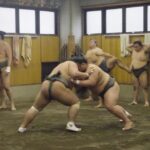
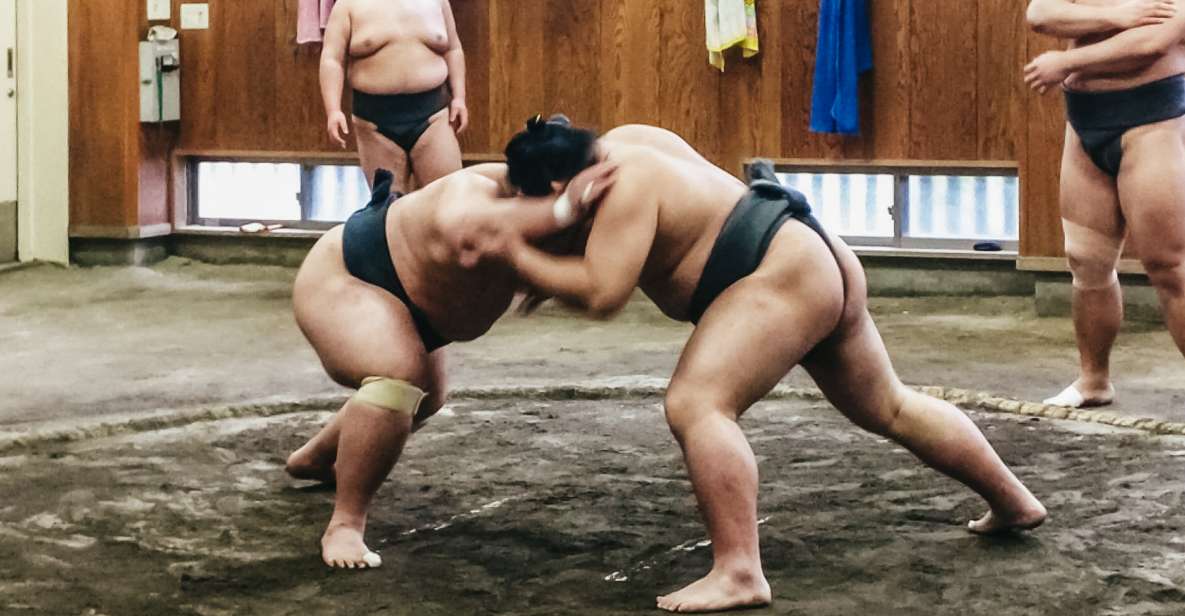
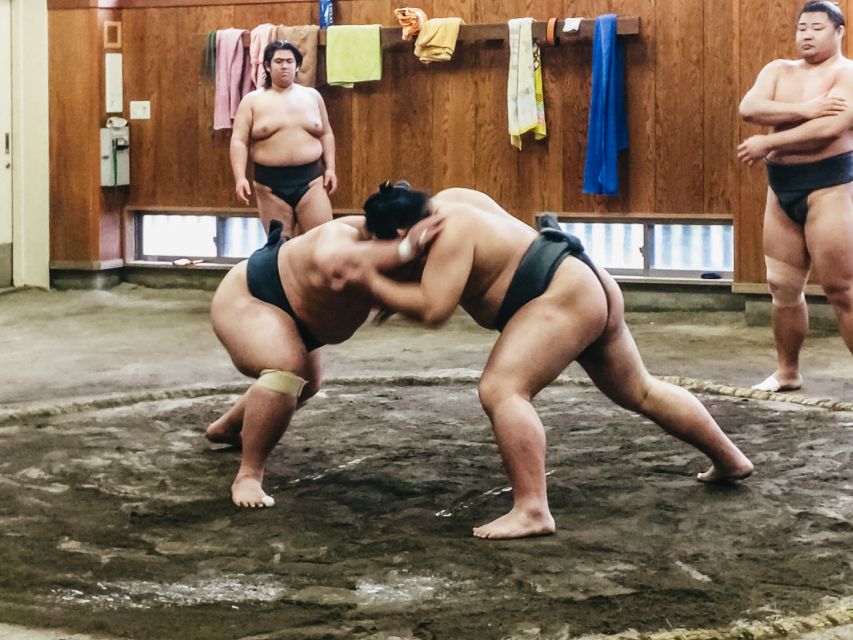
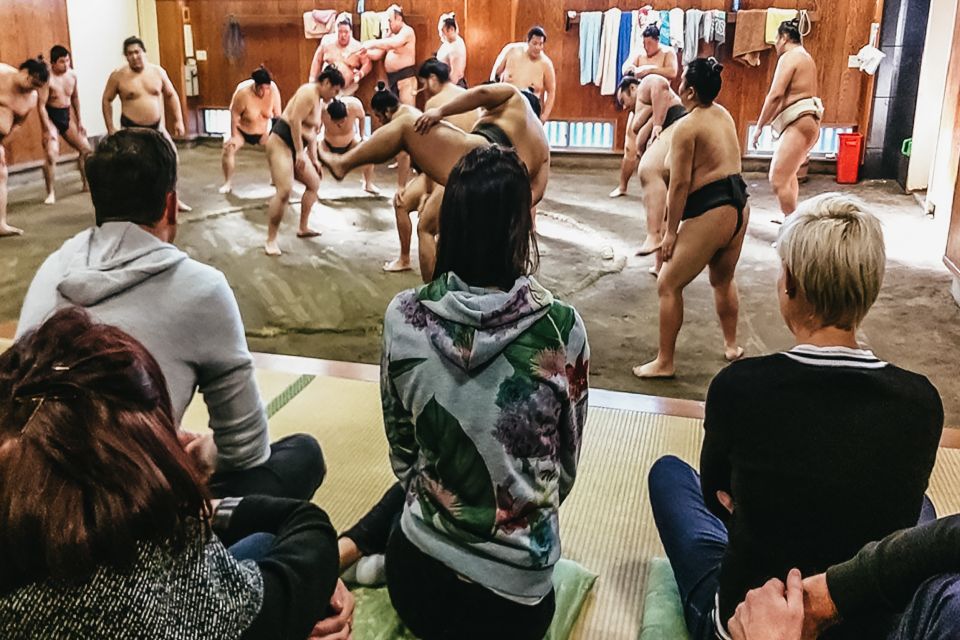
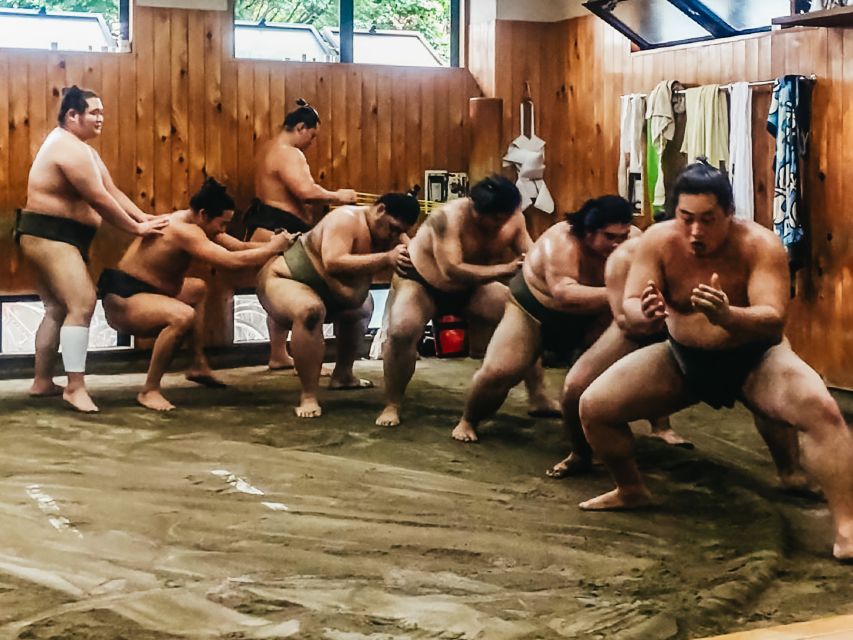
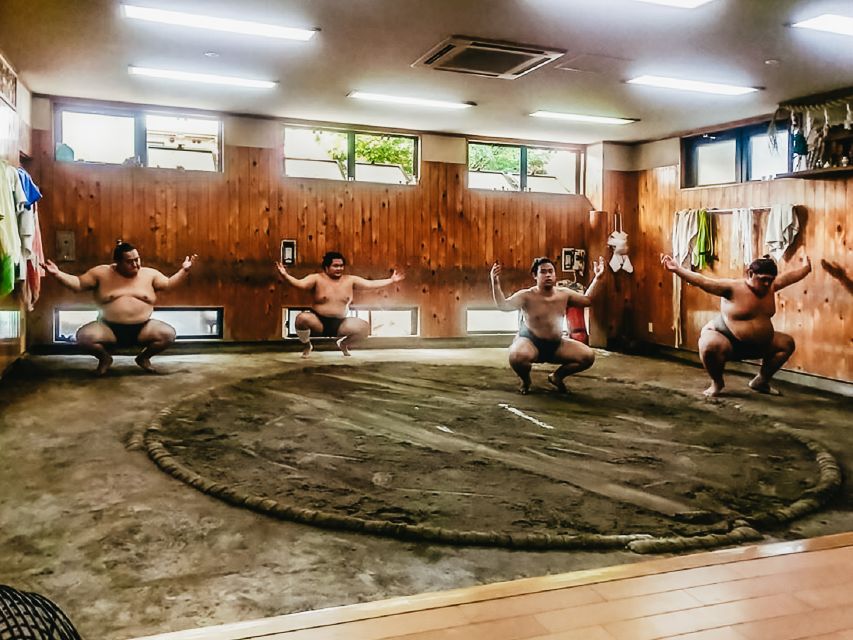
Once you’re inside, your job is mostly to sit, watch, and stay quiet. You’ll typically observe the structured training flow: warm-ups, drills, and partner work. Reviews highlight the physical effort—sweat, power, and quick bursts of movement—that makes sumo feel more athletic than ceremonial.
A few specific things show up again and again:
- Wrestlers go through warm-up routines and drills up close.
- You can see pushing and practice bouts across the clay area (you may hear the term dohyo used).
- The intensity can feel surprisingly immediate, even though the whole thing is still “practice,” not a tournament match.
One big reality check: this is a training session, not guaranteed tournament-style competition. In tournament weeks, you may see less time overall, which can mean fewer dramatic moments. If you specifically want to watch bouts, you may need a separate tournament ticket. This visit is best when your goal is proximity, routine, and how training actually looks.
Floor seating: your back will file a complaint
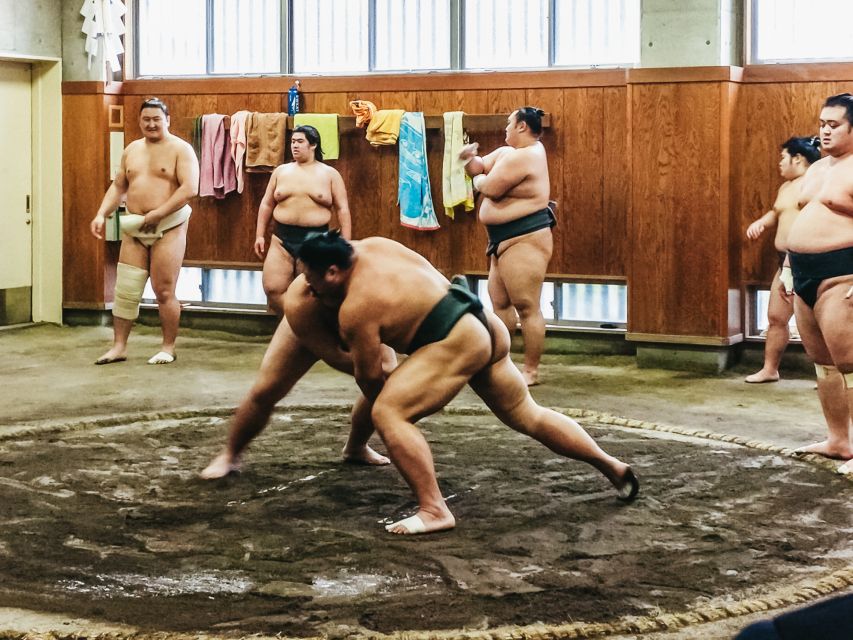
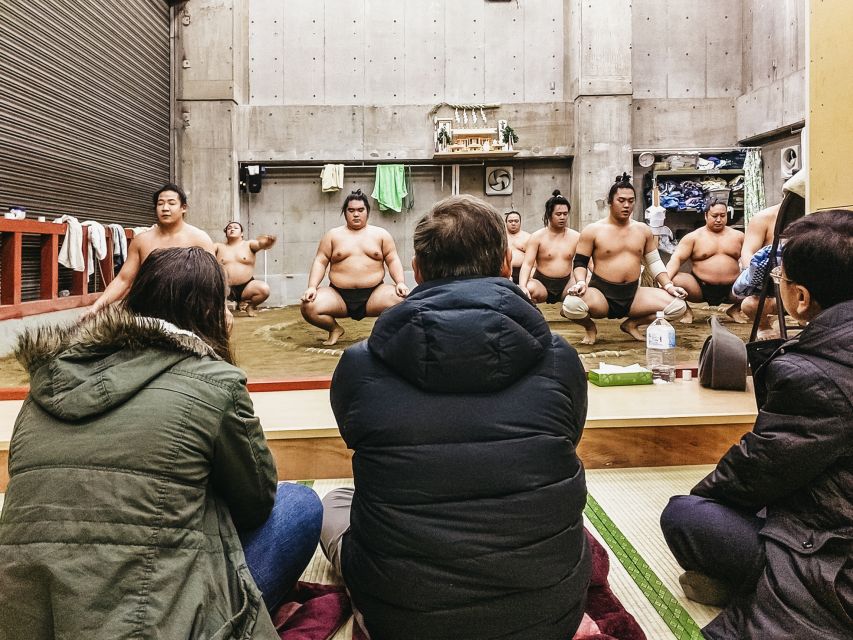
This is where you plan smart, because it’s not optional. You sit for a long period in a stable environment, and you’re expected to stay still. Reviews mention people needing to sit quietly without the usual comforts—no loud noise, phones silent, and limited chances to move around.
If you have knee issues, plan around it. One review specifically suggests that extra seating needs to be arranged in advance. So if you need accommodation, contact the operator early rather than hoping for the best on the day.
Also note the behavior expectations: talking loudly and making noises is prohibited. Phones must be in silent mode. Flash photography is forbidden, and video is only allowed with prior permission. These rules keep the focus on training and prevent distractions.
One more tip that helps: aim to arrive on time for the check-in window. If your spot is determined by arrival and seating arrangement, being late can mean you end up farther back—where views and photos can be harder.






The group picture: don’t miss it by leaving early
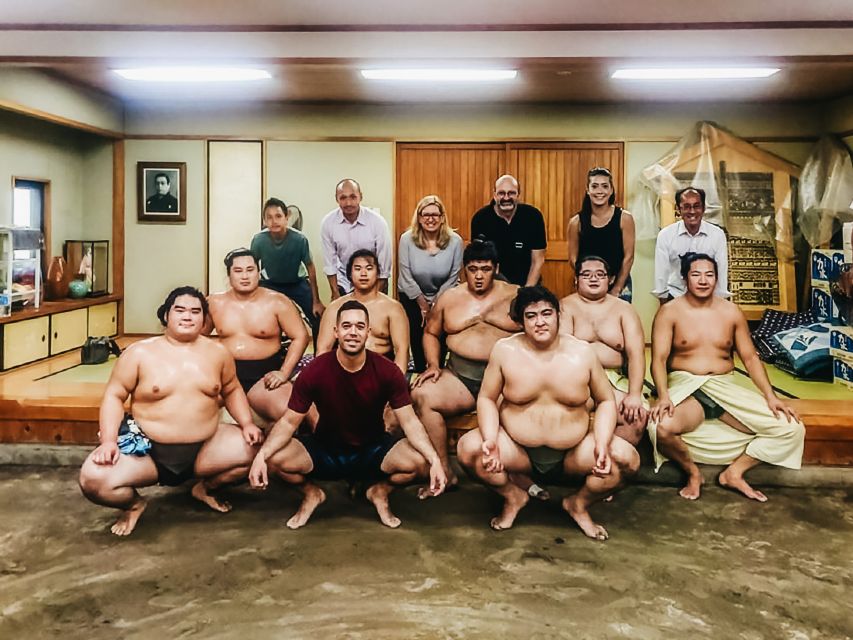
The visit ends with a group picture with the sumo wrestlers. But it’s tied to staying for the end. If you leave earlier, you won’t receive the group picture.
That detail sounds obvious, but it matters. People sometimes get an early sense that they’ve seen enough, especially during shorter sessions. If the photo moment is part of why you booked, treat it like the finish line and plan not to cut out.
In practice, the photo is a highlight for many visitors because it’s a rare chance to interact at the end of a disciplined training day. You’ll want to be ready and settled when the moment comes.
Photos and phone rules (what’s allowed, what’s not)
The rules are pretty straightforward:
- No flash photography
- Phones must be switched into silent mode
- Videos may be taken only with prior permission
- Hats and sunglasses are not allowed
These restrictions aren’t there to be annoying. They keep the stable environment calm and respectful. So bring your best camera habits: turn off flash, and don’t assume you can film freely just because you’re outdoors during a pause. When in doubt, follow the guide’s cues.
If you care about photos, sit where you can see clearly from your spot. Some people reported that seats in the last row can block the view. That’s why arriving on time matters.
Price and value: is $77 a good use of your time?
At $77 per person, this isn’t the cheapest way to experience sumo in Tokyo, but it can be strong value for the right mindset. You’re paying for access to a real working stable and close viewing, plus the group picture.
Whether it’s worth it depends on what you want:
- If you want proximity and authenticity—seeing training up close—this often feels like a clear win.
- If you expected a full-length “show” with lots of bouts, you may feel disappointed, especially during tournament weeks when the training time can be shorter.
Some people also compared the value to tournament tickets. Their takeaway: if you’re in Tokyo during a tournament and your top goal is actual competition, tournament tickets can deliver a better payoff for the cost. This stable visit is still worth it, but choose it as an access-and-training experience, not a substitute for match day.
Optional hotel transfer: helpful, but know the limits
Hotel pickup and drop-off aren’t included by default. You can choose an optional one-way transfer. If you do, it must be within Tokyo’s 23 wards, and the vehicle capacity is limited to a maximum of 4 passengers.
Two practical notes:
- Drivers are Japanese-speaking and do not speak English.
- Pick-ups can’t use hotels without a front desk.
This option can reduce stress, especially in the morning when the meeting point is not simply the Google address. Still, the key logistical advantage comes from the same thing: your meeting details come by email, and you should follow them closely.
Who should book this Sumo training visit?
This visit fits best if you:
- Want a close-up, real training look at professional wrestlers
- Prefer quiet, focused cultural experiences over big stage productions
- Don’t mind long floor seating and staying composed
It’s less ideal if you:
- Need lots of explanations throughout the session (support can be minimal, and some people wanted a short intro to the rituals and gestures)
- Have strong mobility or knee issues and can’t do floor seating
- Are visiting during a tournament week and are expecting a long training schedule with many bouts
Quick tips so your morning goes smoothly
- Follow your email and voucher for the correct stable and meeting time. Don’t trust the Google pin.
- Arrive on time so you’re not stuck with a worse seat.
- Bring a face mask or protective covering (this is required).
- Avoid hats and sunglasses.
- Plan for silence: phones on silent, no loud talk, no flash, and only permitted video.
- If you need seating arrangements for knees, ask ahead of time.
- Stay until the group picture moment if you want that photo.
Should you book this Tokyo Sumo Morning Training Visit?
I think it’s a smart booking when your goal is authenticity and proximity. For a moderate price, you get access to a working stable, you watch training up close, and you end with a group photo—exactly the kind of Tokyo experience that feels personal rather than performative.
Book it if you can handle quiet rules and floor seating, and if you’re okay with the fact that the session length depends on the calendar. If you’re coming during a tournament week and your main goal is match-style action, you might do better pairing this with tournament viewing—or choosing tournament tickets first.
If your priorities are discipline, craft, and seeing sumo as training, not spectacle, then this is a strong fit.