REVIEW · TOKYO
Tokyo Sumo Experience: Chanko & Mochi with a Former Pro
Book on GetYourGuide →Operated by Japanticket Inc. · Bookable on GetYourGuide
Ryogoku sumo feels close enough to hear. You’ll sit around the dohyo and get the full stable-style routine: chanko nabe, sumo training, and mochi you make and eat. I especially like how the chanko flavor is supervised by sumo wrestlers and how you get real participation time, not just watching. One heads-up: seats are assigned, and standard seating isn’t great for holding a child on your lap.
This is a 2-hour, entertaining sumo experience with an English/Japanese instructor—more laughs and participation than serious morning training. If you’re a sumo fan or you want a Japan activity that feels different from food tours and shrines, this is a strong pick.
In This Review
- Key things I’d plan for
- Ryogoku Sumo Night: Why This Feels More Real Than a Typical Show
- Getting There From Ryogoku Station: Simple Walk, Easy Setup
- How the Program Fits Together Around the Dohyo
- Seating reality check (important)
- Chanko Nabe in Ryogoku: What You’ll Eat and Why It Matters
- Sumo Training and Wrestling: Your Turn on the Ring
- What you’ll actually do
- Photography and posture tips
- Mochi Pounding and Mochi Making: From Tradition to Dessert
- Why this part works for kids and adults
- Who This Is Best For (And Who Should Skip)
- Price and Value: What $103 Really Buys
- Tips to Make Your Two Hours Go Smoothly
- Should You Book This Tokyo Sumo + Mochi Experience?
- FAQ
- How long is the Tokyo sumo experience?
- Where do I meet for the experience?
- Is there food included?
- Can I request vegetarian, vegan, or gluten-free meals?
- Can the experience provide halal meals?
- Are seats assigned, or can I choose where I sit?
- Is it safe to sit in standard seats while holding a child on your lap?
- Is this activity wheelchair accessible?
- What should I bring, and what’s not allowed?
Key things I’d plan for
- Ryogoku location: You’ll start near Ryogoku Station, in the heart of sumo country.
- Chanko nabe meal: A hot pot you eat while supervised by sumo wrestlers from an actual stable.
- On-the-mat participation: You try sumo on the ring with help from former pros.
- Mochi pounding + making: You get your hands in the traditional process and end with dessert.
- Interactive MC energy: The program encourages audience participation for adults and kids.
- Diet options with notice: Vegetarian/vegan and gluten-free can be arranged if requested at least two days ahead.
Ryogoku Sumo Night: Why This Feels More Real Than a Typical Show
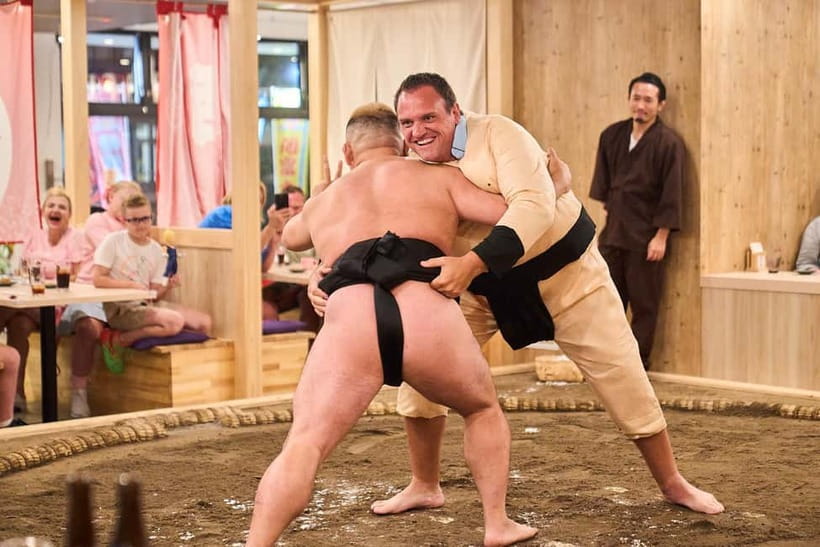
Tokyo has plenty of sumo options, but this one hits a useful sweet spot. You’re not only watching from the stands—you’re in the action zone around the dohyo, eating a stable-style meal, then stepping onto the ring yourself.
What makes it work is the rhythm. You’ll go from watching powerful techniques up close, to tasting chanko nabe while the wrestlers supervise, to doing playful training drills. Even the mochi segment doesn’t feel like a random add-on; it connects directly to Japanese food culture and the sumo world, since wrestlers eat to fuel training.
The mood is also very clear: this is designed as an entertaining experience for both adults and children, not a strict training session tour. If you want intense, quiet discipline, you might prefer a different kind of sumo activity. If you want close-up fun with real instruction, you’re in the right place.
You can also read our reviews of more tours and experiences in Tokyo.



Getting There From Ryogoku Station: Simple Walk, Easy Setup
Your meeting point is on the first floor of the store, a short walk from Ryogoku Station. Look for the large sumo wrestler sign and flags. It helps to arrive a few minutes early, because it can be a bit tricky to spot on the first try.
Why this matters: you’ll want to settle in before the session starts. And since seating is assigned by the venue, you’ll want to get there early enough to avoid rushing when you’re trying to take photos and get comfortable.
How the Program Fits Together Around the Dohyo
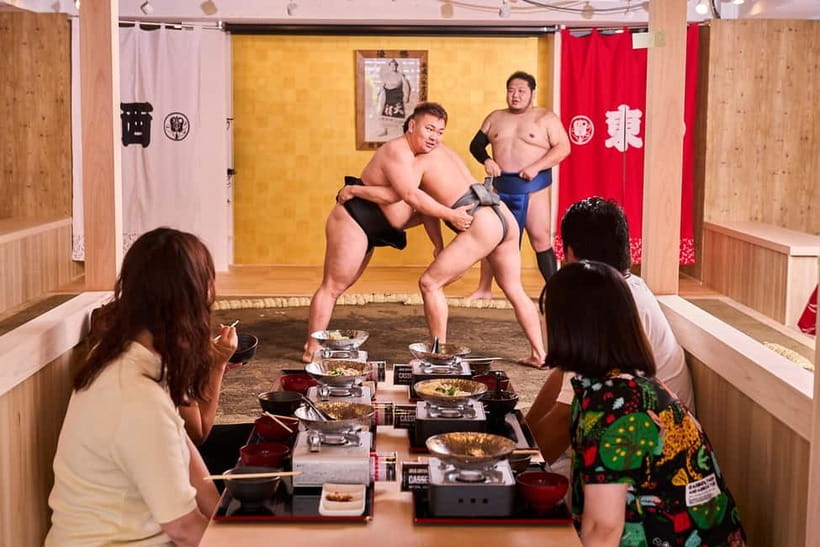
Expect to sit around the dohyo and watch sumo right in front of you. This is the key “wow” factor. Those movements aren’t movies on a screen—they’re physical, loud in a way you don’t get from broadcasts, and close enough that you notice the stance details.
From there, the tour blends three parts:
- a meal segment (chanko nabe),
- demonstrations and hands-on practice (sumo techniques and wrestling),
- and a dessert segment (mochi pounding and mochi making).
You’ll also have time to interact with the instructors and wrestlers. Reviews repeatedly mention the hosts and wrestlers encouraging audience participation, and that the energy stays light. In plain terms: you’re not sitting there politely for two hours. You’re doing.
Seating reality check (important)
Seat locations are assigned by the venue. You can’t request specific seats. Also, standard seating can be dangerous if you’re holding a child on your lap. If that applies to your group, reserve the box seats option (they’re designed to be safer; up to six people can sit there).
Chanko Nabe in Ryogoku: What You’ll Eat and Why It Matters
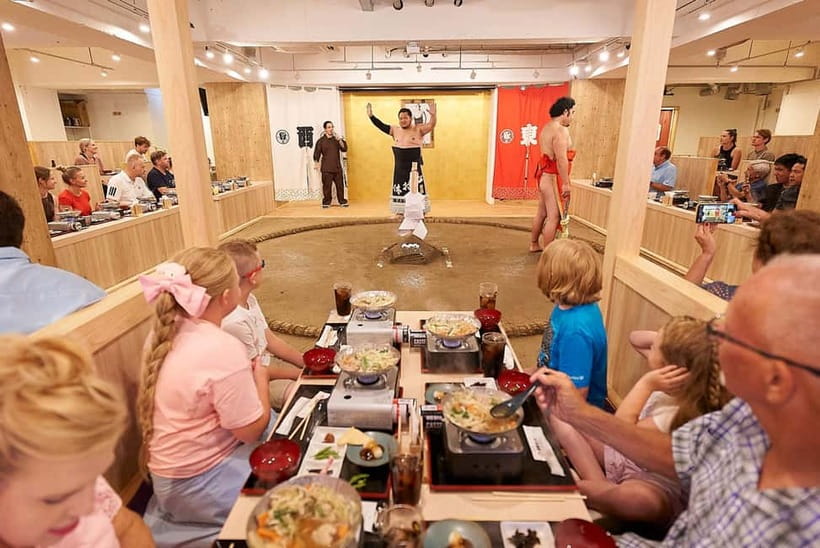
Chanko nabe is the headline meal for a reason. It’s hearty hot pot food built around nutrition—exactly the kind of thing that fits the sumo lifestyle. Here, you eat it while supervised by sumo wrestlers from an actual stable, so it doesn’t feel like a generic tourist meal.
The best part is the timing. You’re seated and watching action nearby, then you eat something warm and filling. It turns the experience from a performance into a real slice of daily rhythm: training, food, and tradition all in one block of time.
Taste notes to expect (no surprises, just comfort food):
- deep savory flavor from the hot pot,
- filling vegetables and ingredients that keep you comfortable through the later activities,
- and a meal that’s meant to support serious physical work.
If you have food needs: vegetarian and vegan meals and gluten-free can be provided if you notify at least two days before your reservation. Halal meals can’t be provided, but you’re allowed to bring your own food. That last part is worth remembering if you’re traveling with dietary restrictions.
One more practical detail: some guests mention a complimentary sour plum drink, and that it may not work for everyone (for example, alcohol allergy). If you’re sensitive, be ready to skip it.



Sumo Training and Wrestling: Your Turn on the Ring
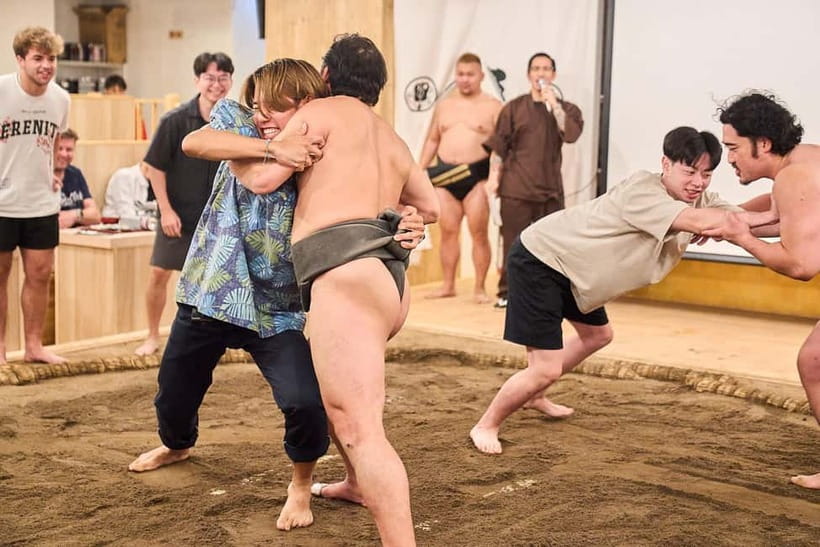
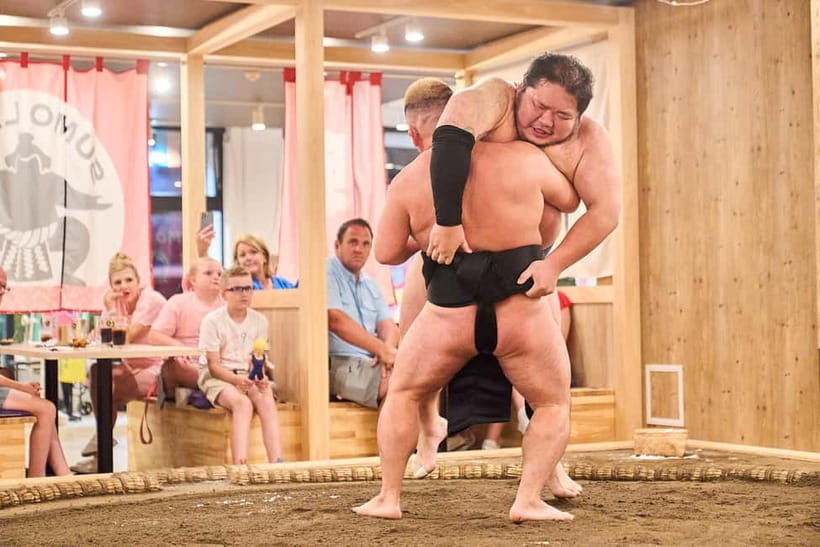
This is the part that turns a food-and-show evening into something you’ll remember. You’ll learn sumo techniques and then try wrestling on the dohyo with the wrestlers on the mat.
Even if you’re not athletic, don’t overthink it. The format is interactive and built for participation. Reviews describe moments that are funny and energetic, with lots of encouragement. You’re not being tested like a professional—you’re being coached through basic body mechanics and the vibe of sumo.
What you’ll actually do
Based on the experience description and what guests highlight, you can expect:
- demonstrations of sumo techniques,
- short practice moments for audience participation,
- and at least one chance to try sumo wrestling yourself.
Some sessions include multiple wrestling rounds before you jump in, so plan to watch first, then participate when invited.
Photography and posture tips
Bring your camera (it’s specifically recommended). When you’re on the mat, move deliberately and listen carefully to instructions. If you’re wearing anything slippery, switch to shoes or clothes with good grip and comfort in mind. Comfortable clothes are the safe call.
Mochi Pounding and Mochi Making: From Tradition to Dessert
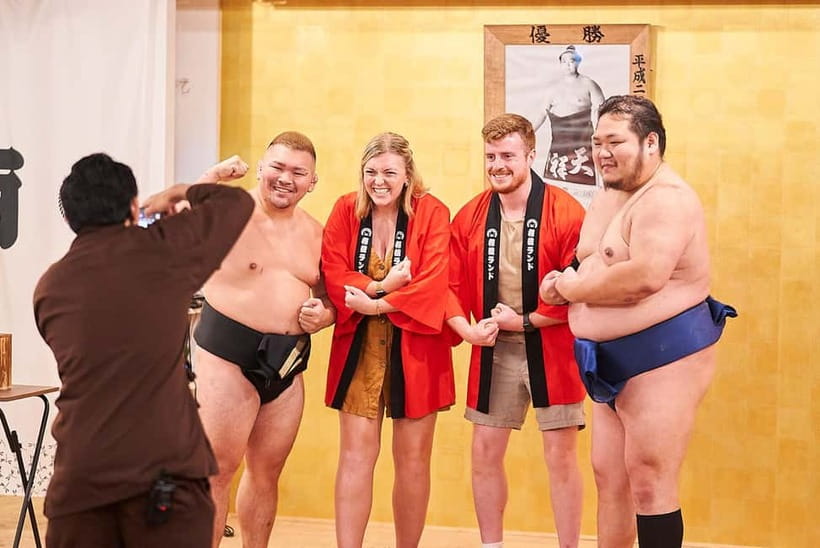
If there’s a single segment that feels both silly and satisfying, it’s mochi. You’ll pound mochi with the wrestlers and then enjoy sweet mochi as dessert.
And it’s not just one step. There’s a mochi pounding demonstration where you learn about the traditional process. Then you get the hands-on making experience, which is where the whole thing becomes memorable. You’ll see the transformation from basic ingredients into something chewy and sweet—then you eat your reward immediately.
Why this part works for kids and adults
Kids tend to love the hands-on pounding. Adults often love the cultural lesson: you’re learning a craft that’s tied to Japanese tradition and everyday celebrations. Everyone gets the same payoff, which is why reviews are so consistent about this being a highlight.
Who This Is Best For (And Who Should Skip)
This tour is built for broad appeal. It’s interactive, not stiff, and it works for both adults and kids. Reviews repeatedly mention kids enjoying wrestling and mochi making, and adults enjoying the food plus the close-up sumo action.
You’ll likely be happiest if you:
- want a sumo experience you can actually participate in,
- enjoy hands-on activities more than passive sightseeing,
- like food that’s tied to the culture you’re seeing (not just eaten next to it),
- travel with a mixed group (some people will want wrestling, others want food and dessert).
You should think twice if you:
- use a wheelchair (this experience isn’t suitable for wheelchair users),
- need special seating for lap children (standard seats can be unsafe for that, so choose box seats instead),
- expect a quiet, serious training-only tour.
Price and Value: What $103 Really Buys
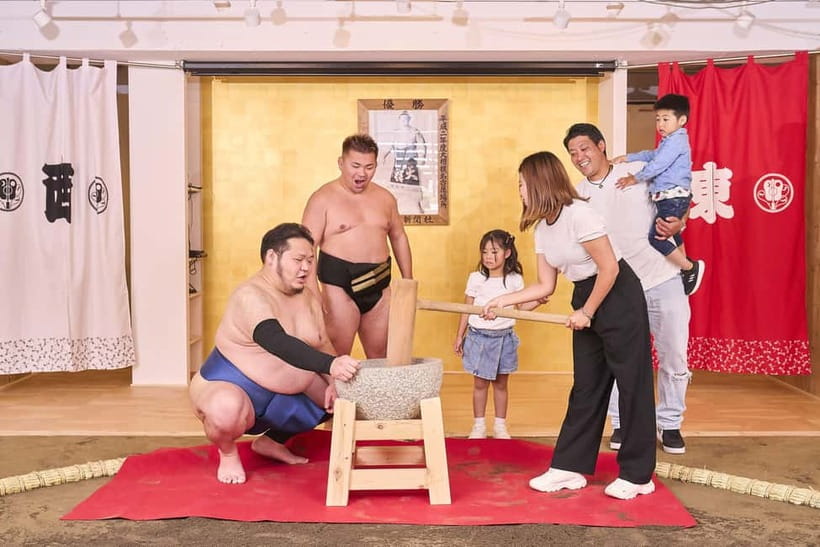
$103 per person isn’t cheap, so I look at what you’re getting rather than just the number.
In this package, you’re paying for:
- a close-up dynamic sumo experience in Ryogoku,
- a real meal: chanko nabe,
- multiple hands-on activities: sumo trying time plus mochi pounding/making,
- instruction in English or Japanese.
The value logic is simple: you’re not just buying a seat for a show. You’re buying participation, a meal, and a dessert craft. If you compare that to paying for separate food and separate activities, this tends to feel more balanced.
Also, the presence of former pros matters. Even without names listed, the whole tone of the session is “coached participation,” not “spectator entertainment.”
Tips to Make Your Two Hours Go Smoothly
Here’s how to make the experience feel effortless once you arrive.
Arrive early. Even the helpful hosts can’t fix a late start if you’re trying to find the storefront. Give yourself extra time near Ryogoku Station so you can settle in calmly.
Wear comfortable clothes. You’ll be moving for mochi and sumo participation. Comfort beats fashion for this one.
Bring a camera. You’ll want photos of the dohyo, the hands-on activities, and your mochi results.
Plan around assigned seating. Don’t rely on being able to swap positions. If you’re traveling with a child you’d normally hold on your lap, consider box seats for safety.
Watch the drink details if needed. If alcohol is an issue for you, be prepared to skip any complimentary sour plum drink.
Should You Book This Tokyo Sumo + Mochi Experience?
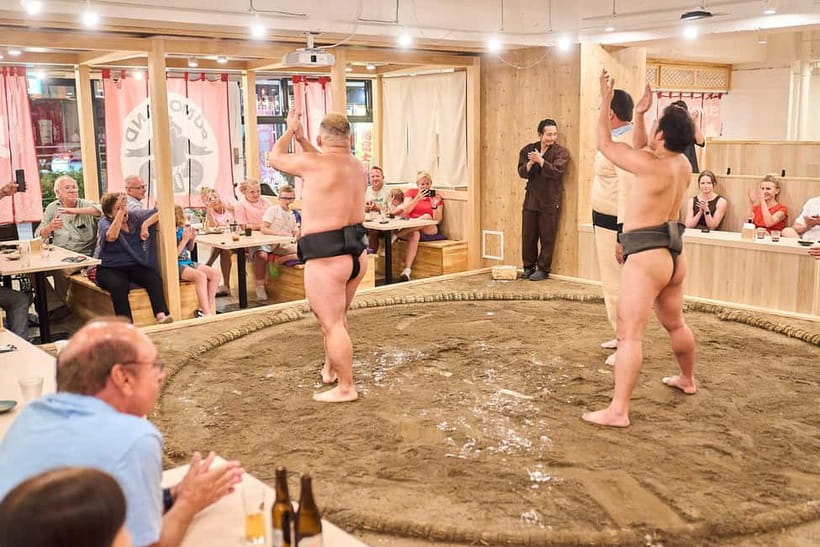
Book it if you want a sumo night that feels personal. This is one of those Tokyo activities where the food isn’t just lunch—it’s part of the cultural loop. You’ll eat chanko nabe under wrestler supervision, then try sumo yourself, then make and eat mochi. That mix is hard to beat for a 2-hour time slot.
Skip it if your top priority is strict, professional training atmosphere. This is entertainment-focused. You’ll still learn and you’ll still feel the power up close, but the format is designed for fun and audience participation.
If you’re unsure, ask yourself one question: do you want to do something, or do you want to watch? If you’re leaning toward doing, this is a very strong yes.
FAQ
How long is the Tokyo sumo experience?
It lasts 2 hours.
Where do I meet for the experience?
You meet at the store on the first floor, a short walk from Ryogoku Station. The location is marked by a large sumo wrestler sign and flags.
Is there food included?
Yes. You’ll have chanko nabe (hot pot) during the experience, and you’ll enjoy sweet mochi for dessert.
Can I request vegetarian, vegan, or gluten-free meals?
Yes. Vegetarian and vegan meals and gluten-free can be provided if you notify the provider at least two days before your reservation date.
Can the experience provide halal meals?
Halal meals cannot be provided, but you’re allowed to bring your own food.
Are seats assigned, or can I choose where I sit?
Seat locations are assigned by the venue. You can’t choose or request specific seats.
Is it safe to sit in standard seats while holding a child on your lap?
The venue notes that it can be dangerous to sit while holding a child on your lap in standard seats. Box seats are designed to be safer, with seating for up to six people.
Is this activity wheelchair accessible?
No. It is not suitable for wheelchair users.
What should I bring, and what’s not allowed?
Bring a camera and comfortable clothes. Smoking is not allowed.