REVIEW · TOKYO
Tokyo: A Half-Day Trip Bus Tour in the Morning
Book on GetYourGuide →Operated by Hato Bus Co., Ltd. · Bookable on GetYourGuide
Small time, big Tokyo hits. This half-day hybrid bus tour lines up three classic stops in a smart order, so you spend less time figuring out trains and more time looking up at Tokyo. I especially like the English-speaking, nationally certified guides and the efficient pacing that still leaves breathing room for photos and wandering.
You also get a solid sweep of Tokyo’s contrasts: imperial-era calm at the Imperial Palace outer area, skyline drama from Tokyo Tower, and historic temple energy in Asakusa. One drawback to know up front: entry inside the Imperial Palace isn’t included, and the whole experience still requires a few steps when boarding and leaving the bus.
In This Review
- Key Points You’ll Actually Care About
- Why This Morning Half-Day Bus Tour Works So Well
- Getting to the Bus: Shinjuku and Tokyo Station Start Options
- Imperial Palace Outer Area and Nijubashi Bridge: What You’ll See (and What You Won’t)
- Tokyo Tower Main Observatory: Views You Can Use on a Half-Day
- Sensō-ji in Asakusa: Temple Meaning + Nakamise Street Time
- Guide Quality and Group Pace: Where the Experience Really Lands
- Transport, Comfort, and Weather Reality
- Price and Value: Is $40 Really a Good Deal?
- What to Watch For Before You Go
- Should You Book This Morning Tokyo Highlights Tour?
- FAQ
- How long is the Tokyo half-day bus tour?
- What are the included sightseeing stops?
- Is entry into the Imperial Palace itself included?
- How much free time do I get at Tokyo Tower and Sensō-ji?
- Is the tour guide available in English?
- Where do I meet the tour?
- Is hotel pickup or drop-off included?
- Is the tour wheelchair accessible?
- Can children join for free?
Key Points You’ll Actually Care About
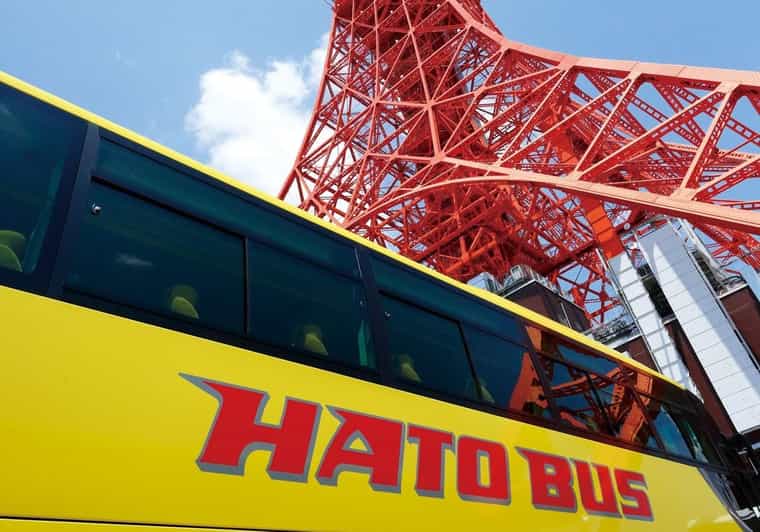
- Hybrid-bus comfort with AC: you’re moved between sights without the constant train stress
- Nijubashi Bridge + Imperial Palace outer garden: you see the famous area even without palace entry
- Tokyo Tower main observatory: built-in time to look for Mount Fuji on clear days
- Sensō-ji + Nakamise shopping street: guided context first, then free time to explore
- Small-ish groups in practice: some schedules run around 20 people, which helps the pace feel manageable
- English guides who teach more than facts: some guides share practical phrases or fun cultural pointers
Why This Morning Half-Day Bus Tour Works So Well
Tokyo is huge. Even when you know what you want to see, the time cost can hurt—transfers, walking, crowds, and the simple fact that each stop has its own mood. This tour is built to solve that problem with a focused route in about four hours, using an eco-friendly hybrid bus to connect three of the most recognizable landmarks in the city.
I like that the itinerary has a clear purpose. Imperial Palace area is your history-and-symbols stop, Tokyo Tower is your skyline stop, and Sensō-ji in Asakusa gives you temples plus street-level atmosphere. You’ll get the big visuals without needing a full day of planning.
Another practical win: the route is designed to feel efficient. You’re not stuck in transit for hours, and the tour keeps to a schedule with photo moments and guided time. That matters on a first visit, or anytime you only have a half day and still want a “I saw the icons” day.
You can also read our reviews of more tours and experiences in Tokyo



Getting to the Bus: Shinjuku and Tokyo Station Start Options
The departure point is set up for easy access. You’ll start from the Hato Bus Tokyo office in one of two options: Hato Bus SHINJUKU STATION EAST EXIT or the Hato bus Tokyo office. In the included details, it also notes departure point is tied to Shinjuku Station and Tokyo Station, so this tour generally aims to work for travelers staying in central areas.
Plan for simple logistics, but arrive a bit early. In Japan, meeting points are straightforward, yet the crowd around major stations can slow you down. If you’re coming from a hotel, make sure you’ve got enough buffer time to find the exact exit and the meeting spot.
You’ll also want to note the accessibility reality: the tour is wheelchair accessible, but it says you’ll need to navigate a few steps when getting on and off the bus. If you use a wheelchair or mobility aid, I’d treat this as an important detail and plan accordingly for smoother boarding.
Imperial Palace Outer Area and Nijubashi Bridge: What You’ll See (and What You Won’t)
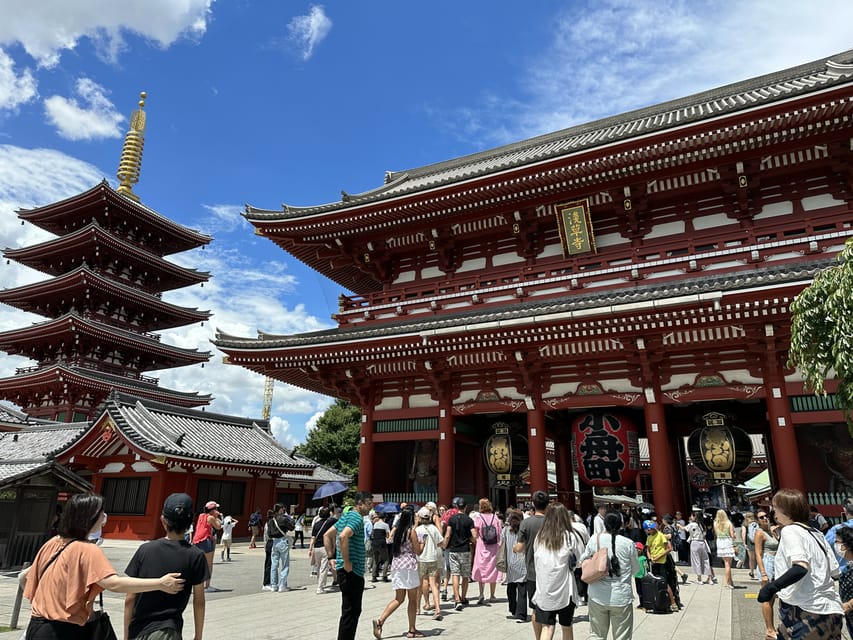
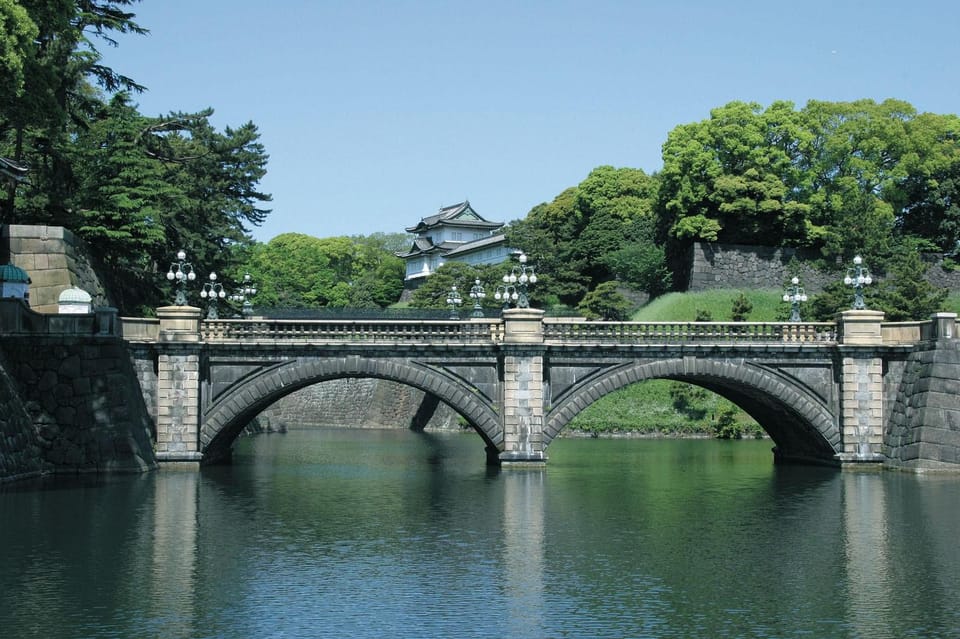
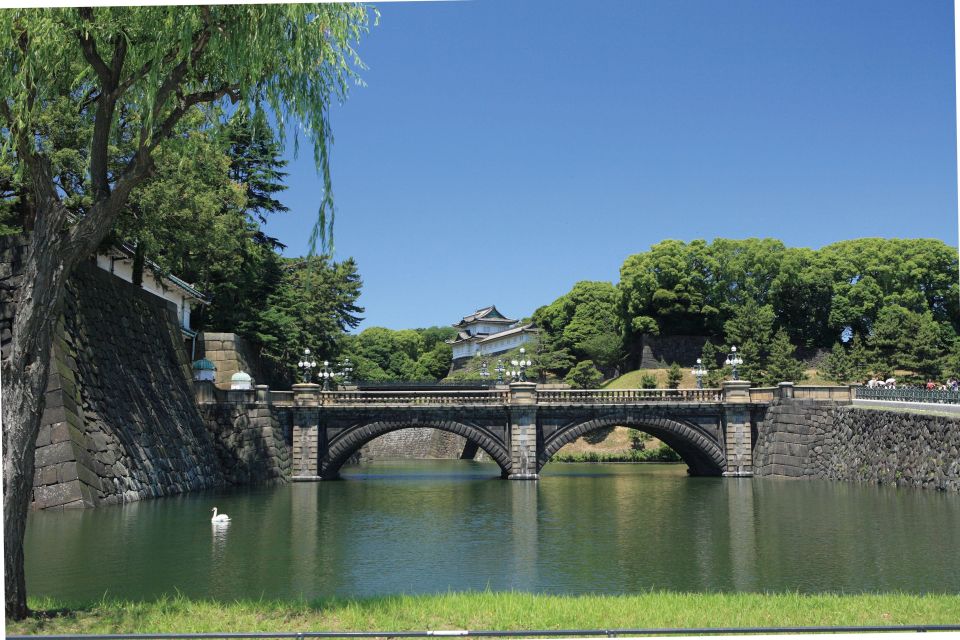
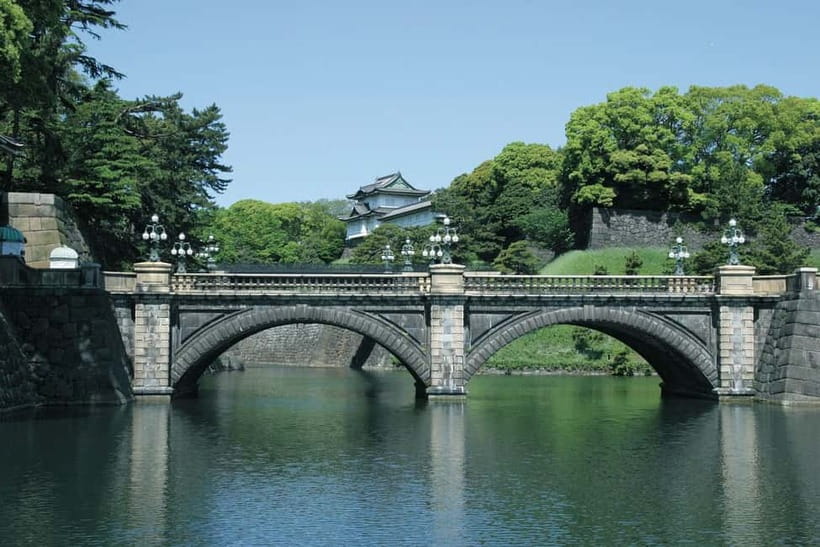
The day starts with a photo stop and walk around the Imperial Palace Outer Area, including the Nijubashi Bridge area. The tour also points out a statue of Masashige Kusunoki and time around the surrounding historic space.
Here’s the good part: even without entering the palace grounds, this stop gives you the look and feeling of Japan’s imperial center. The outer garden and the surrounding architecture are what most people come to photograph. You’re seeing the setting, the symbolism, and the classic water-and-bridge view.
What’s not included is palace entry itself. The tour specifically says entry into the Imperial Palace is not permitted, and that the East Gardens are not included either. So if your personal goal is to go through interior grounds or gardens, you’ll need another plan. But if your goal is exterior views and context, this stop hits the mark.
Time-wise, you get about 40 minutes here for photos and walking. That’s just enough to take in the main sightlines without turning it into a marathon. It also sets you up well for the rest of the day, because it slows the pace early and gives you a historical anchor before moving on to more modern Tokyo icons.
Tokyo Tower Main Observatory: Views You Can Use on a Half-Day
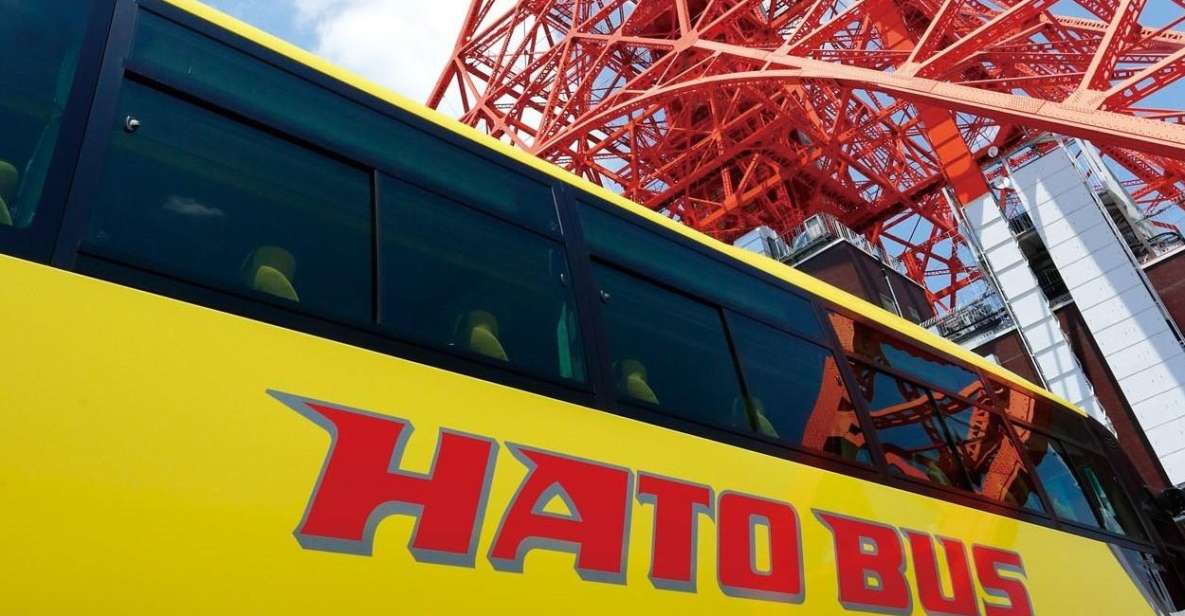
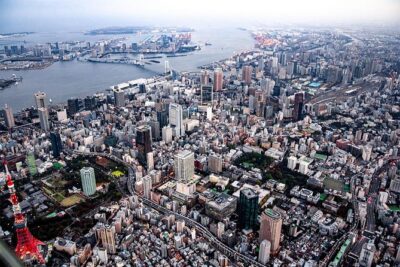
Next up is Tokyo Tower, one of those places that looks familiar even if it’s your first time seeing it in person. The schedule includes a visit plus free time and sightseeing on the way, with about 40 minutes total time at the stop.
The big reason people love this stop is the vertical perspective. The tour notes views from about 150 meters above the ground, and it adds that you might spot Mount Fuji on clear weather. That’s not guaranteed, but it’s the kind of conditional win that’s worth waiting for.
What I find smart about including Tokyo Tower in this route: it gives you “orientation.” After Sensō-ji later, Tokyo can feel like a maze of neighborhoods. Tokyo Tower helps you reset with a broader sense of where you are in the city—where the major districts are laid out and how Tokyo spreads.
The only real drawback here is what you might expect from a famous viewpoint: crowds and busy circulation. The tour doesn’t promise a quiet experience, so if you’re someone who hates lines, keep your expectations realistic and focus on the view rather than the experience of getting there.
Sensō-ji in Asakusa: Temple Meaning + Nakamise Street Time
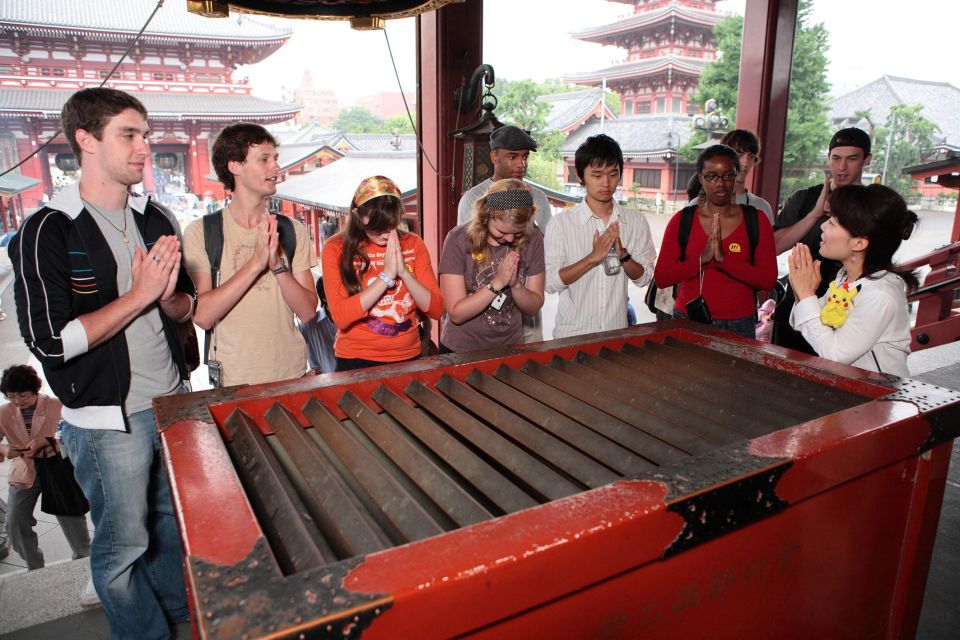
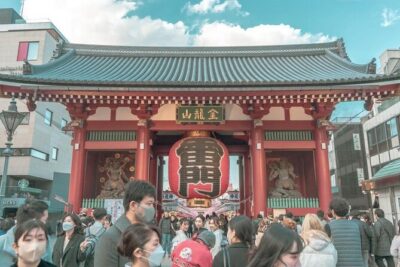
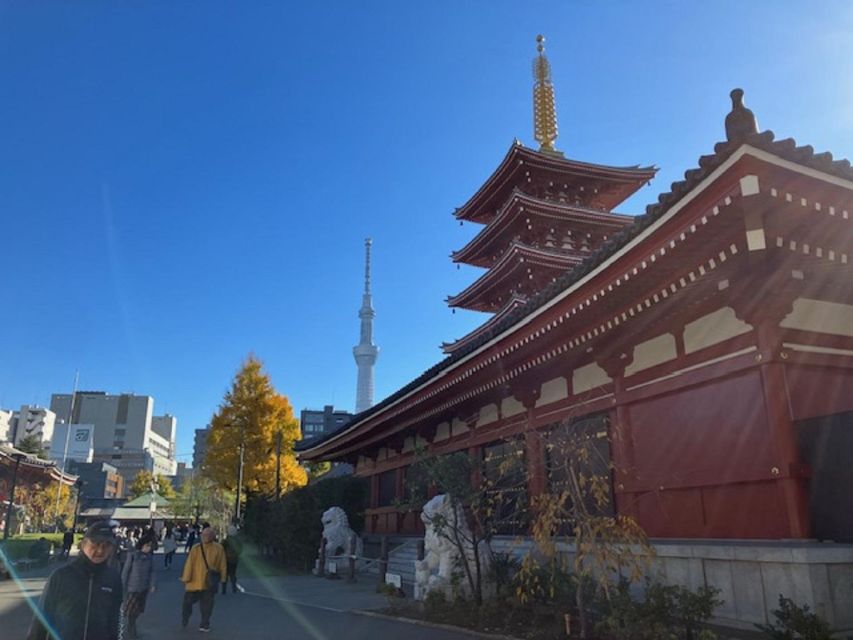
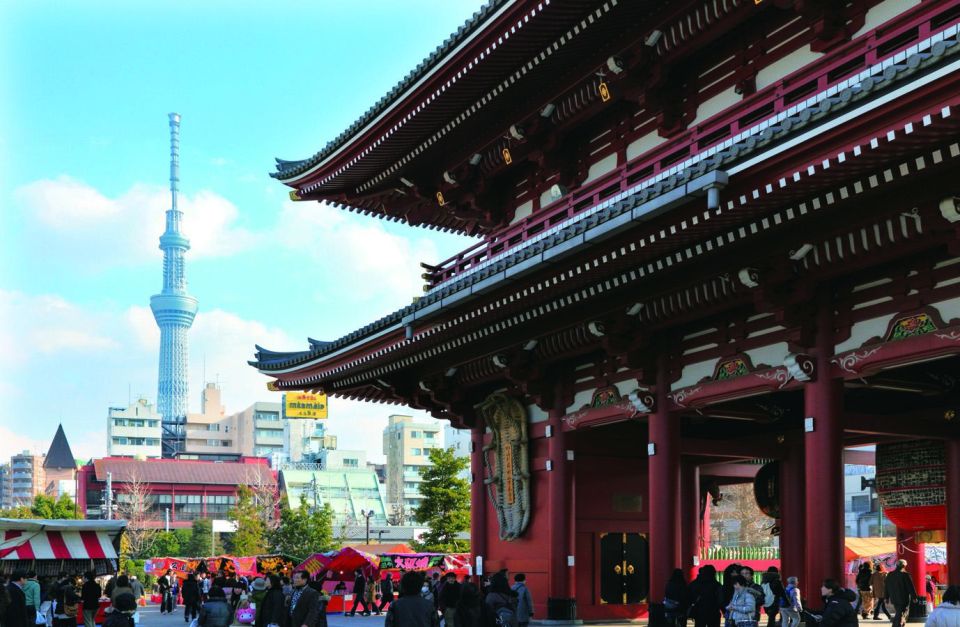
Then the tour heads to Asakusa for Sensō-ji, Tokyo’s oldest temple. This is where the day shifts from landmark sightseeing to street culture and spiritual atmosphere.
You’ll get a photo stop and a guided visit, and then you’ll have free time to explore on your own. The schedule includes about 1 hour here, with guided explanation plus time to browse. Part of the complex includes the Nakamise shopping street, listed as about 200 meters long, packed with traditional snacks and souvenirs.
This is one of the best parts of the tour because you’re not stuck only with your guide’s narration or only with shopping. The structure is: learn the basic meaning and craftsmanship first, then walk and decide what you want to do next. That keeps the visit from feeling like a checklist.
Practical note: shopping and snacks are at your own expense. One helpful detail from real-world experience is that Nakamise is often mostly cash-based, so bring some yen if you plan to buy food or small souvenirs. Even if you use a card sometimes, cash still reduces friction.
If you want to capture the best photos, go a little slower during your free time. Sensō-ji can look overwhelming at first, but once you settle into the rhythm of the area, you’ll find great angles and people-watching scenes.
You can also read our reviews of more tours and experiences in Tokyo



Guide Quality and Group Pace: Where the Experience Really Lands
A tour like this lives or dies by the guide. This one pairs you with a professional licensed English-speaking guide, and the guide style really affects how much you take away in just four hours.
Different guides were noted by name, and the pattern is consistent: they explain what you’re looking at and help you understand the cultural context. Some guides shared extra touches, like teaching Japanese phrases during the ride or doing a fun on-bus moment such as putting on a kimono and obi as part of storytelling. You may even learn greeting basics, depending on who’s leading your day.
I also like the way the tour handles time on the ground. The pacing isn’t so aggressive that you lose the chance to breathe, but it’s also not so slow that you waste daylight. The itinerary’s built to get you from spot to spot without constant rethinking.
Group size seems to stay reasonable in practice. One traveler described it as probably around 20 people. That’s important because it helps you move together, hear the guide, and still keep your personal space when you want to pause for photos.
Transport, Comfort, and Weather Reality
The transport is a major selling point. It’s an eco-friendly hybrid bus, and AC can be a lifesaver on hot days. One reviewer specifically called out the bus AC being nice in August, which is exactly the kind of comfort that makes a half day feel easier instead of tiring.
You’ll still do some walking at each stop, and you should expect the flow of crowds at famous places. Also, Tokyo Tower and Sensō-ji can be busy, so build mental patience into your plan.
Weather matters too. Tokyo Tower can be magical on clear days, and the tour notes the chance to spot Mount Fuji if conditions allow. Even if you don’t see it, you still get the city view option, which is the core reason for the tower stop.
Price and Value: Is $40 Really a Good Deal?

At around $40 per person for roughly four hours, this is the kind of value-based tour that works best when you want efficiency, not just “transport plus entry.”
Here’s what you’re getting value for:
- You’re paying for an English-speaking guide to connect the dots between three major sights.
- Entrance fees are included for the stops.
- You’re not paying for private taxi hops or spending your limited time navigating trains and transfers.
- The schedule includes photo time, guided time, and then free time so you get both context and control.
If you already have a full day and you like designing your own route, you can always DIY. But if you’re tight on time, or you want your first visit to Tokyo to feel smoother, this is priced like a “make the day easy” option.
One small caution: hotel pickup isn’t included. So the best value comes when you can reach Shinjuku Station or the Hato Bus meeting options without trouble.
What to Watch For Before You Go
Before you book, check these real-world points:
- Imperial Palace entry isn’t included, and the East Gardens aren’t part of this tour.
- The experience involves a few steps when getting on and off the bus, even though the tour is wheelchair accessible.
- Children under 6 can travel free, but seats are not provided.
- You’ll need to manage what you’ll do with free time at Sensō-ji and Tokyo Tower—if you want snacks or souvenirs, plan to spend some money.
- You should also be mindful of crowd timing at the temple and tower.
Name entry also has a strict detail: you need to enter your first and last name within 20 characters. Middle name can be omitted if needed. If you’ve got a long surname, double-check this so your booking doesn’t fail.
Should You Book This Morning Tokyo Highlights Tour?
I’d book this if:
- You want a first-day orientation to Tokyo’s most recognizable sights.
- You’d rather pay for guidance and timing than gamble your half day on trains.
- You like structured free time—guided explanations, then your own walking and photos.
I wouldn’t book it if:
- Your top priority is entering the Imperial Palace interior or specific gardens beyond the outer area.
- You hate crowds at iconic viewpoints and prefer quiet, neighborhood-based touring.
- You’re expecting hotel pickup; you’ll need to get yourself to the meeting point.
If you’re in that sweet spot—short on time but craving big Tokyo landmarks—this morning half-day route is a smart, low-stress way to make it happen.
FAQ
How long is the Tokyo half-day bus tour?
The tour runs about 4 hours (listed as 270 minutes).
What are the included sightseeing stops?
You visit the Imperial Palace Outer Area (Nijubashi Bridge area), Tokyo Tower, and Asakusa’s Sensō-ji.
Is entry into the Imperial Palace itself included?
No. You can enjoy the historic surroundings from the outer area, but entry into the Imperial Palace is not permitted.
How much free time do I get at Tokyo Tower and Sensō-ji?
Tokyo Tower includes free time during the stop (about 40 minutes total). Sensō-ji includes guided time plus free time for exploring and shopping (about 1 hour total).
Is the tour guide available in English?
Yes, the tour is conducted in English with an English-speaking guide.
Where do I meet the tour?
The meeting point can vary by option. Common starting points are Hato Bus SHINJUKU STATION EAST EXIT and the Hato bus Tokyo office.
Is hotel pickup or drop-off included?
No. Hotel pickup and drop-off are not included.
Is the tour wheelchair accessible?
It is listed as wheelchair accessible, but you should expect a few steps when getting on and off the bus.
Can children join for free?
Children aged 0 to under 6 can travel for free, but seats are not provided.