REVIEW · TOKYO
Tokyo Imperial Palace with Kagurazaka Alley Tour
Book on Viator →Operated by Japan Wonder Travel · Bookable on Viator
Cobbled alleys meet royal grounds. This Tokyo Imperial Palace with Kagurazaka Alley Tour strings together big-city landmarks and quieter Edo-era streets, so you get more than postcard Tokyo in just 3 hours 30 minutes, 9:00 am start to a Kagurazaka finish. You’ll move from Tokyo Station’s commuter heartbeat to the Imperial Palace area and then into Kagurazaka’s cobbled backstreets where the old Tokyo feeling still lingers.
I really like two things here. First, the guide explanations land in a practical way, not just dates and facts—one guide named Sho helped make palace history feel human, and another guide named Aya also focused on details like architectural symbolism and group photo moments. Second, the group stays small (max 8), which makes it easier to ask questions and keep the pace relaxed instead of rushing like you’re on a conveyor belt.
One possible drawback: the Imperial Palace buildings are not open, so you’re mainly seeing the palace grounds, gardens, and surrounding features from outside. Also, it’s a walking tour, so plan for weather and comfortable shoes.
In This Review
- Key things that make this tour worth your time
- Starting at Tokyo’s rhythm: Shin-Marunouchi and Tokyo Station
- Imperial Palace grounds: what you can see (and why it still matters)
- Tokyo Daijingu Shrine in Kanda: a Shinto pause in the middle of the story
- Kagurazaka: cobblestones, old alleys, and Edo-era echoes
- Edo Castle connections: Ushigome Mitsuke and reading Tokyo’s map
- Nippon Budokan: a 1964 landmark with martial arts energy
- The guide’s role: why the explanations feel worth the money
- Walking time, comfort, and best timing
- Price and value: is $52.84 worth it?
- Who should book this tour (and who might skip it)
- Should you book the Tokyo Imperial Palace with Kagurazaka Alley Tour?
- FAQ
- How long is the Tokyo Imperial Palace with Kagurazaka Alley Tour?
- What does the tour cost?
- How many people are in the group?
- What’s included in the route?
- Is there an admission fee at the stops?
- Where do you meet and where does the tour end?
- Is the Imperial Palace open for viewing inside?
Key things that make this tour worth your time
- Small-group pace (up to 8 people) keeps the walk conversational
- Tokyo Station + Imperial Palace gives you both a modern hub and a ceremonial center
- Kagurazaka backstreets include places tied to Edo-period life
- Shrine stop at Tokyo Daijingu adds a Shinto layer beyond the palace story
- Guides explain visible details like architectural symbols (fish on roofs came up in one tour)
Starting at Tokyo’s rhythm: Shin-Marunouchi and Tokyo Station
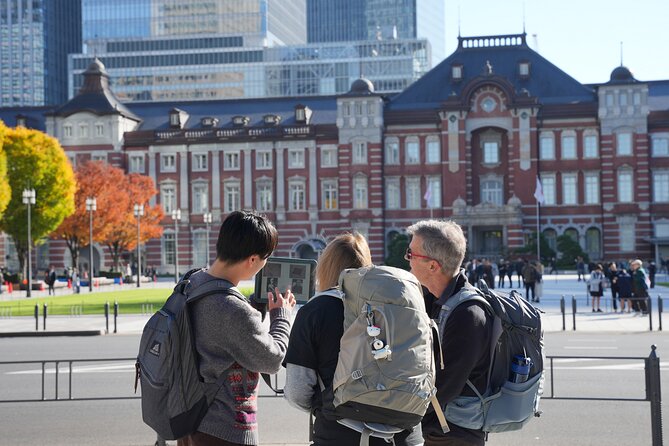
You meet at the Shin-Marunouchi Building in the Marunouchi area, then the tour swings into Tokyo Station. Even if you’ve already walked through the station once, having it as the first anchor stop works. Tokyo Station can feel like a landmark you pass through, but on this tour it becomes a reference point: a place to understand how Tokyo organizes big movement, from local trains to long-distance services.
What I like about starting here is the “reset.” You get your bearings early, and the guide can frame what comes next—especially the contrast between Tokyo’s high-powered present and the palace-area history that shaped the city’s cultural center.
Practical tip: Tokyo Station is huge and easy to get disoriented in. If you’re even slightly unsure about transit flow, beginning with a guided walk through it helps you stop guessing.
You can also read our reviews of more tours and experiences in Tokyo.



Imperial Palace grounds: what you can see (and why it still matters)
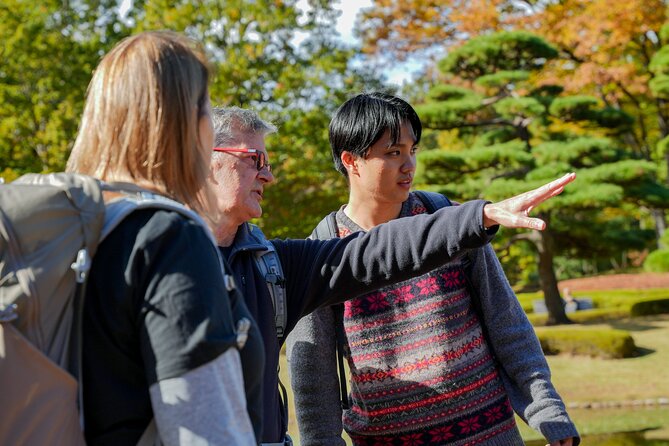
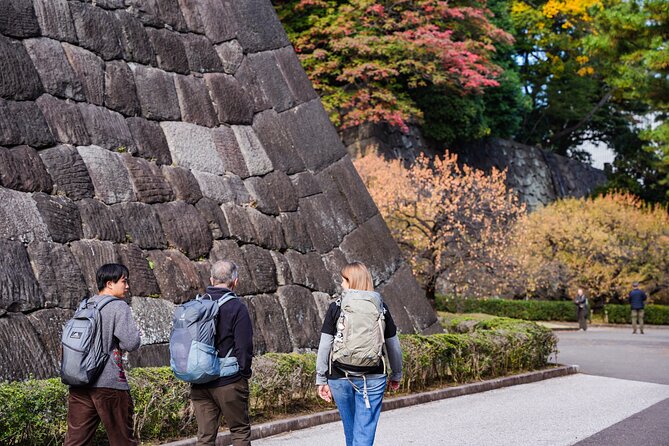
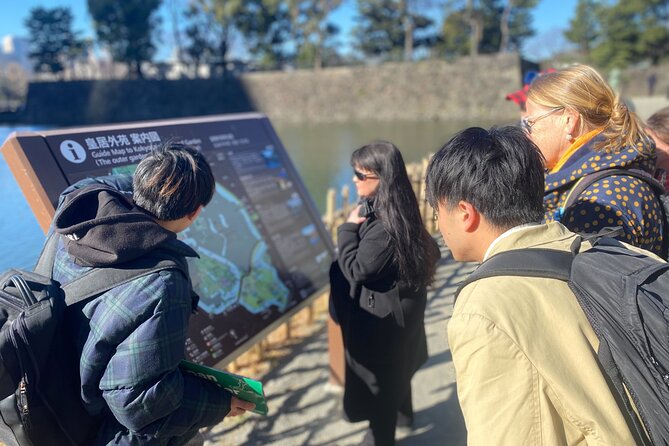
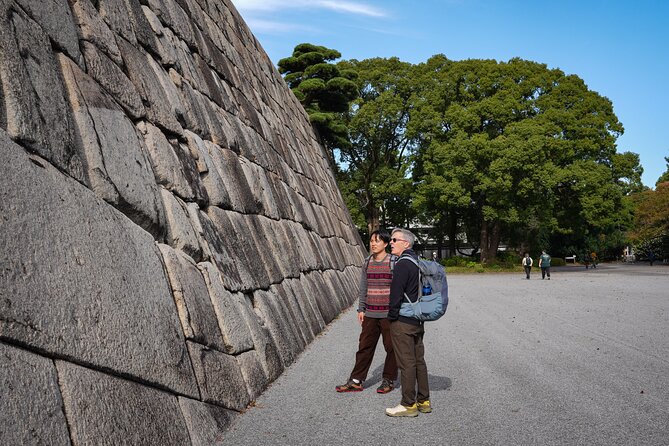
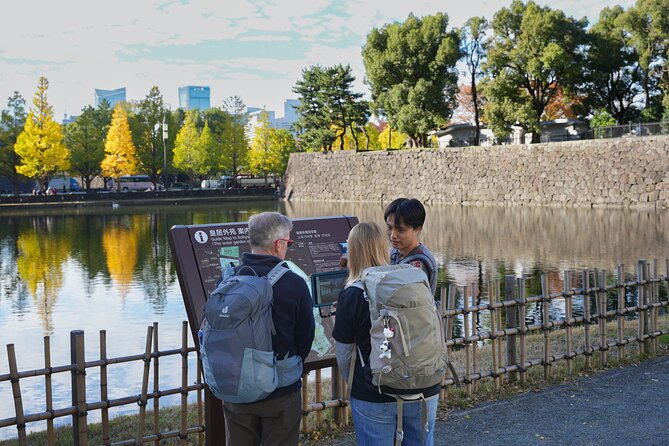
The Imperial Palace area is the emotional core of this tour, even though the palace itself isn’t open for typical interior viewing. Instead, you focus on the parts that do matter for visitors: the moats, gardens, and broad park spaces around the palace complex.
This approach works because the palace in Tokyo isn’t just a building. It’s an idea made physical—through walls, water barriers, and garden design that signal order and hierarchy. When your guide points out symbolism in rooflines, structures, or visible decorative elements, you start reading the space like architecture, not just scenery. One review mentioned explanations of the fish on roofs, which is exactly the kind of “wait, I notice that” moment that makes the grounds click.
Plan for time here. You’ll have a solid block around 55 minutes, which is long enough to slow down, look around, and not just snap photos while walking past.
Possible consideration: if your main goal is indoor palace rooms, this tour won’t match that. If your goal is to understand the setting and meaning around the palace, you’ll be in the right place.
Tokyo Daijingu Shrine in Kanda: a Shinto pause in the middle of the story
After the palace area, you shift to Tokyo Daijingu Shrine in the Kanda district. This stop is only about 15 minutes, but it’s not filler. It’s a useful change of gears: the tour moves from imperial-era space and national symbolism into a Shinto site dedicated to Amaterasu, the sun goddess, plus the spirits of the imperial family.
In my view, that short shrine segment makes the walking tour feel more complete. Tokyo’s history doesn’t live in one lane. You see how religious culture and imperial identity overlap in the city’s physical geography.
What to expect: you’re not getting a long formal visit, so come in with an attitude of quick observation. If you’re the type who notices small details—inscriptions, offerings, the layout of the grounds—you’ll get more out of this stop.
Kagurazaka: cobblestones, old alleys, and Edo-era echoes
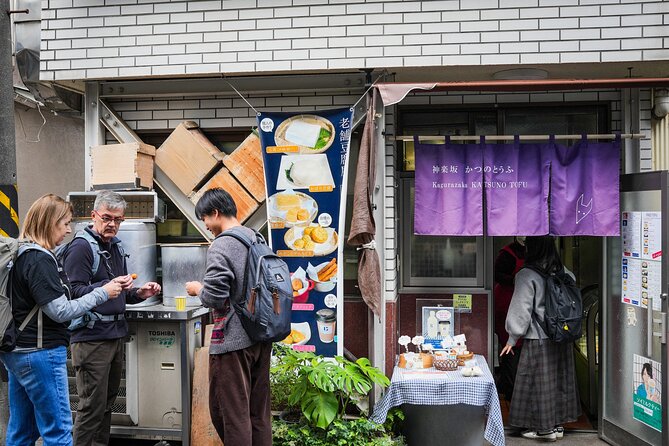
Then comes the part many people come to Tokyo for but rarely experience this way: Kagurazaka. This neighborhood is known for mixing old and new Tokyo, and the tour leans into what made Kagurazaka famous in earlier centuries, including its roots as a geisha district.
You’ll spend about 30 minutes in Kagurazaka on the main stop, but the value is really in the alley walking. The tour includes several lanes and micro-areas that each feel different even when they’re close together:
- Geisha Alley in Kagurazaka: a narrow street with a nostalgic feel, where traditional teahouses and the old-town atmosphere stay front and center.
- Hyogo Yokocho: a tight alley lined with small eateries and traditional shops. It’s more about everyday warmth than big sights.
- Kakurenbo Yokocho: another smaller, quieter alley with bars and small places, giving you a sense of Kagurazaka after the tourist crowds fade.
This is where you start understanding why the tour is worth paying for. Anyone can walk Kagurazaka on their own, sure. But with a guide, you get the meaning of what you’re seeing—how these lanes connect to Edo-period life and the Tokugawa Shogunate era, instead of just wandering around like you’re window-shopping.
Tip for your own experience: slow down in the alleys. The streets are narrow and easy to rush through. If you rush, you miss the feeling.
Edo Castle connections: Ushigome Mitsuke and reading Tokyo’s map
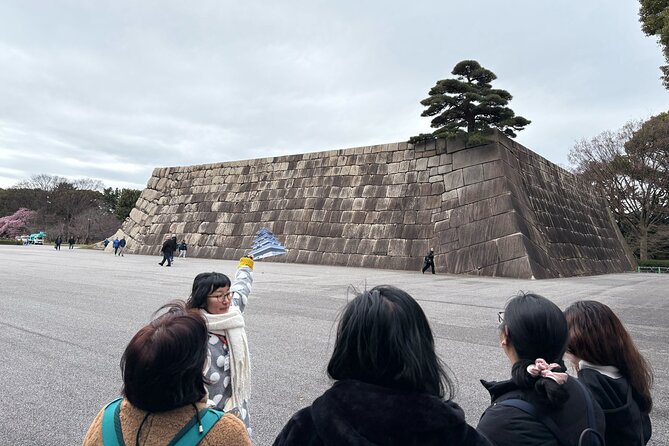
Even inside modern Tokyo, you can still find remnants that point back to the Edo Castle system. The tour includes Ushigome Mitsuke, one of the gates of Edo Castle’s outer defenses. The gate itself no longer exists, but the location and story help you connect what you see today to a defensive city plan from the Edo period.
Why this matters: Tokyo’s famous sights are often labeled in ways that don’t explain their function. A gate area isn’t just a photo spot. It’s part of a system—routes, protection, and boundaries—that shaped how people moved and lived.
This kind of stop is also a mental shortcut for future travel. Once you’ve heard how Edo Castle’s defensive structure influenced the map, you start noticing similar patterns elsewhere in Tokyo.





Nippon Budokan: a 1964 landmark with martial arts energy
The itinerary also brings you past Nippon Budokan, the famous indoor arena in Kitanomaru Park. It was built in 1964 for martial arts events during the Tokyo Olympics, and today it hosts a wide range of events.
This stop adds a different flavor to the tour. You’re not stuck in the Edo past the whole time. You get one more layer of Tokyo’s identity—how the city built world-stage culture in the 20th century.
I liked this contrast because it reinforces a key point: Tokyo history isn’t only ancient. It’s layered. Imperial symbolism, Shinto devotion, and modern public life exist in the same day’s walking route.
The guide’s role: why the explanations feel worth the money
This is one of the tours where the guide makes a noticeable difference. You’re not just following directions; you’re getting guided interpretation.
From the feedback I was able to absorb, guides on this tour tend to do three things well:
- Connect visible details (like architectural elements) to meaning
- Answer questions without making you feel rushed
- Keep the group comfortable while stopping often enough to understand what you’re looking at
The names Sho and Aya came up in praised experiences, and both were described as enthusiastic and able to link cultural history to what’s physically in front of you. One tour also mentioned a guide mixing Buddhist tradition with architecture during a sunny day with blossoms at the palace. That’s a good example of how timing changes what you notice, and how a guide can turn a seasonal moment into story fuel.
If you’re the type who likes to understand what you see—especially the “why”—you’ll appreciate the way this tour is structured around explanation, not just sightseeing.
Walking time, comfort, and best timing
The total duration is about 3 hours 30 minutes, and it’s a walking itinerary. That means you should dress like you’re going to walk Tokyo, not like you’re on a museum bench.
My practical advice:
- Wear comfortable shoes with grip (cobblestone and alley streets can be uneven)
- Bring a light layer for early-morning wind, especially since the tour starts at 9:00 am
- If you’re visiting in a season with flowers, your guide may point out plant details around the palace area, and it can add a pleasant extra dimension to the garden stops
Also, because it’s max 8 people, the group tends to move at a pace that feels calmer than typical big bus tours. Still, it’s not a sit-and-stroll. You’ll be on your feet.
Price and value: is $52.84 worth it?
At $52.84 per person, you’re paying for more than a route. You’re paying for:
- A guided connection between Tokyo Station, Imperial Palace grounds, a shrine, and Kagurazaka’s alleys
- Interpretation you’d struggle to assemble on your own, especially the Edo-period connections
- A small-group format that makes Q&A realistic
- A mobile ticket, which reduces the hassle of printed paperwork
Is it cheaper than DIY transit and walking? Sure—free entry at several stops makes self-guided trips possible. But DIY usually leaves you with a familiar problem: you know where to go, yet you don’t always know what you’re looking at. This tour’s value sits exactly there.
One more note: this kind of tour is booked fairly ahead of time on average (around 42 days). If you’re traveling in peak weeks, you’ll save stress by booking earlier rather than gambling.
Who should book this tour (and who might skip it)
This fits best if you:
- Want to see Imperial Palace grounds without needing to research every symbol first
- Care about Edo-era connections and how Tokyo’s layout developed
- Like small groups and a guide who answers questions
- Prefer walking through neighborhoods rather than only major sightseeing blocks
You might skip it if:
- Your top priority is interior palace access (this tour focuses on areas that are available)
- You dislike walking for 3+ hours even at a relaxed pace
- You prefer fully independent exploring with no guide interpretation
Should you book the Tokyo Imperial Palace with Kagurazaka Alley Tour?
I’d book it if you want a Tokyo day that feels both official and intimate. You get the palace-area setting, then a Shinto stop, then Kagurazaka alleys that show a quieter side of the city. With a max of 8 people, the experience stays personal enough that explanations actually register.
If you’re on a short trip and you want value from your morning—starting at Tokyo Station, ending in Kagurazaka, and walking through places that most first-timers miss—this is a strong pick. Just go in knowing you’re seeing the palace grounds, not the palace interior.
FAQ
How long is the Tokyo Imperial Palace with Kagurazaka Alley Tour?
It lasts about 3 hours 30 minutes.
What does the tour cost?
The price is $52.84 per person.
How many people are in the group?
The tour has a maximum of 8 travelers.
What’s included in the route?
You’ll visit Tokyo Station, the Imperial Palace area, Tokyo Daijingu Shrine, and Kagurazaka, including alley areas such as Geisha Alley, Hyogo Yokocho, and Kakurenbo Yokocho.
Is there an admission fee at the stops?
The stops listed include free admission tickets, and the Imperial Palace area is described as having free admission for the included visit.
Where do you meet and where does the tour end?
You start at Shin-Marunouchi Building (Marunouchi, Chiyoda City) and end at Kagurazaka (Shinjuku City) near the main street of Kagurazaka.
Is the Imperial Palace open for viewing inside?
The tour information indicates the palace itself is not open for typical public viewing, so you should expect to see the palace area and surroundings rather than interior rooms.