REVIEW · TOKYO
Samurai Experience – Learn Bushido through Kendo, in Tokyo
Book on Viator →Operated by Kendo Spirit · Bookable on Viator
Sword training in Tokyo, minus the tourist fluff. Step into a working dojo and learn Bushido through kendo, a discipline still practiced the same way in modern Japan. You swap passive sightseeing for hands-on movement, with an emphasis on focus, posture, and timing taught by an active practitioner.
I love that you do more than watch: you hold and swing a shinai and get feedback on your strikes. I also love the human side of it—Daichi focuses on mind as much as motion, so the session feels purposeful, not just physical exercise.
The one possible drawback is that this is real training. Even with slow, careful instruction and a beginner-friendly setup, you should expect to move your body, wear a uniform, and participate in drills.
Up to 8 people, so you get actual attention
Daichi (19 years of kendo) teaches the basics the way it’s practiced
You get full kendo attire + shinai rental, no gear needed
A photographer captures photos and videos that get emailed afterward
You end with an exciting match/duel moment
Beginner-friendly: over 90% of participants start with no experience
In This Review
- Why Learn Bushido Through Kendo in Tokyo
- Daichi and the Dojo: A Real Training Room, Not a Performance
- Your 2-Hour Flow: Uniforms, Basics, Then the Duel
- Gear, Photos, and What to Bring for a Smooth Session
- Price and Value: What $132 Really Covers
- Who This Is Best For (And Who Should Reconsider)
- FAQs About Samurai Experience: Learn Bushido Through Kendo in Tokyo
- FAQ
- How long is the kendo session?
- Where is the meeting point?
- Do I need any kendo experience?
- I don’t speak Japanese. Will that be a problem?
- What should I bring?
- What’s included with the equipment?
- Are photos and videos included?
- How big is the group?
- Are snacks provided?
- Should You Book This Kendo Dojo Session?
Why Learn Bushido Through Kendo in Tokyo
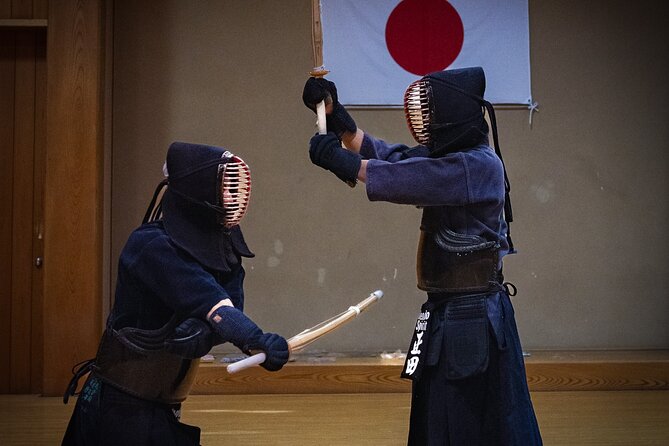
Tokyo is packed with culture that you can see from a distance. This experience flips the script. Instead of standing around, you train your body and your judgment the way kendo asks you to—under controlled pressure and with attention to discipline.
Kendo is often described as the way of the sword, but the key for you as a traveler is what it teaches while you’re doing it: posture that stays stable, timing that doesn’t rely on luck, and focus that doesn’t disappear the second someone asks a question in English. The Bushido angle matters too. You’re not just learning a sport. You’re learning how modern practitioners connect physical technique to an attitude—calm mind, respect for opponents, and self-control when things get intense.
If you’re the type who likes experiences you can repeat later, this is one of the better directions in Tokyo. You walk away with skills you can practice in a basic form, even if you never go pro.
Daichi and the Dojo: A Real Training Room, Not a Performance
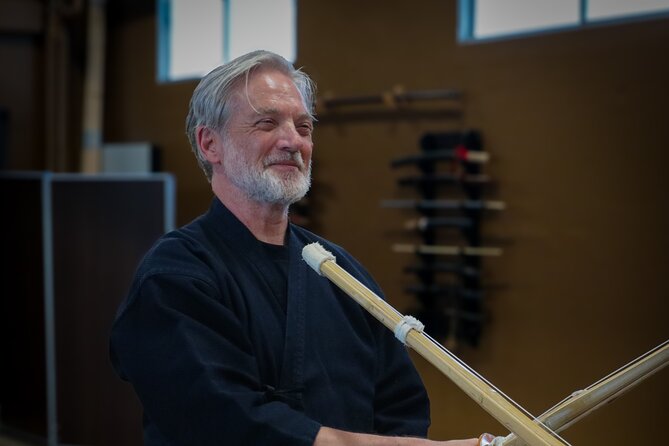
The biggest reason this works is the environment. You train inside a genuine Japanese dojo where local practitioners hone their sword skills. That matters because dojo culture is part of the lesson. You feel the seriousness of training, even though the experience is set up for first-timers.
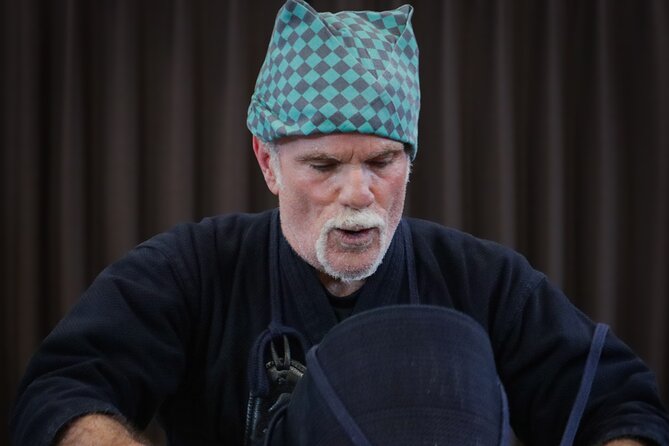
Instruction is led by Daichi, who has 19 years of kendo training and teaches as an active practitioner. He’s also set up for visitors: he speaks fluent English and has overseas work experience. One review highlighted that the instructors maintain attention to both technique and mindset, and another mentioned the balance of spirit, sword, and body. In plain terms, that’s what you’ll feel here: lots of correction, lots of encouragement, and a clear sense that this is real practice.
You may also work with additional instructors and assistants during the session. In one case, the duo of Daichi and Makoto was mentioned, and other participants noted support from assistants in the training area. Even if you’re nervous at the start, that extra pair of eyes helps you get unstuck fast.
You can also read our reviews of more tours and experiences in Tokyo.



Your 2-Hour Flow: Uniforms, Basics, Then the Duel
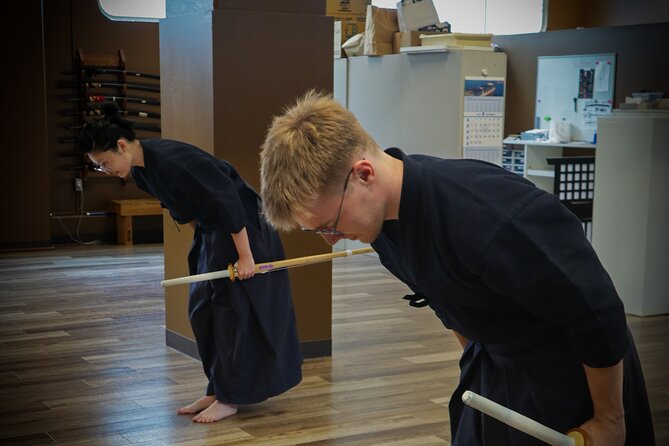
This experience runs about 2 hours, and it’s designed to move at a beginner pace. The structure is simple, and that’s a compliment—because kendo is technical, you don’t want a rushed demo.
Here’s what the session is built around:
Start with gear and stance. You’ll be given kendo attire rental plus a bamboo sword (shinai) rental. You also get T-shirts and pants to wear under the uniform, so you’re not trying to cobble together a cosplay setup. Expect a slow start focused on how to stand, how to hold, and how to move with control.
Learn technique you can repeat. You’ll practice the basics step by step. One participant said the instruction covers the fundamentals up until you can swing the shinai and deliver strong strikes. Another mentioned footwork feeling similar to what they already knew from taekwondo. That tells you the teaching doesn’t assume athleticism, but it does assume you’ll pay attention and try.
Train the mind part too. Multiple reviews point to spirit and mental discipline, not just physical movement. Kendo uses breath and vocal energy (often tied to what practitioners call kiai), and you’ll be coached to bring that focus into your strikes and movement. Even if you’re new, you’ll likely feel how quickly attention tightens once you’re doing it right.
Finish with a controlled battle/duel moment. The end is the fun part: a match or duel that’s exciting without being chaotic. People specifically mentioned the battle at the end and how it felt powerful and rewarding. This is where your technique suddenly has context—you’re not just swinging in the air; you’re responding.
Gear, Photos, and What to Bring for a Smooth Session
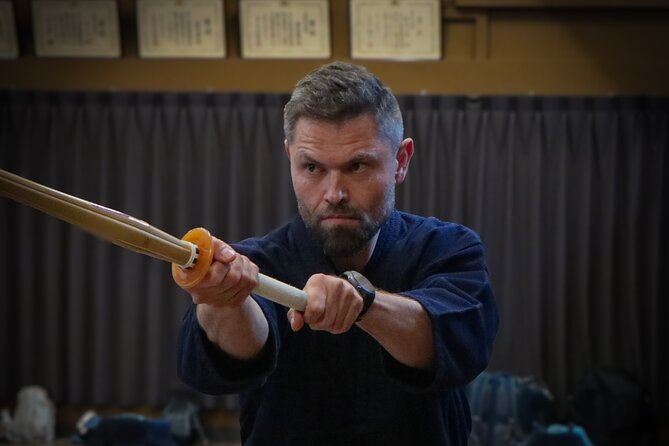
The practical details here are unusually traveler-friendly.
Included gear:
- Kendo attire rental
- Bamboo sword (shinai) rental
- Japanese cultural experience tools rental
- Bottled water
- Souvenir
- Guide
You don’t need to bring equipment. You also don’t need to bring clothing for the kendo uniform setup beyond being ready to wear what’s provided. The key detail: they provide T-shirts and pants to wear under the kendo uniform, so you can focus on just showing up.
Photos and videos:
- Yes, a photographer takes photos and videos during the session.
- The data gets sent to you by email after the experience.
One small note for your day: snacks aren’t included. Bottled water is provided, so hydration is covered, but plan your timing so you’re not hungry afterward. If you’re doing other sightseeing later that afternoon, eat before you go.
Meeting point:
You’ll meet at Japan, 103-0024 Tokyo, Chuo City, Nihonbashikobunachō, 29 Sec 日本橋ビル (start time is 10:00 am). The meeting point is noted as near public transportation, which is helpful because you’ll likely want an easy route for a morning session.
And yes, you’ll have a mobile ticket, which makes last-minute phone access the only thing you really need to worry about.
Price and Value: What $132 Really Covers
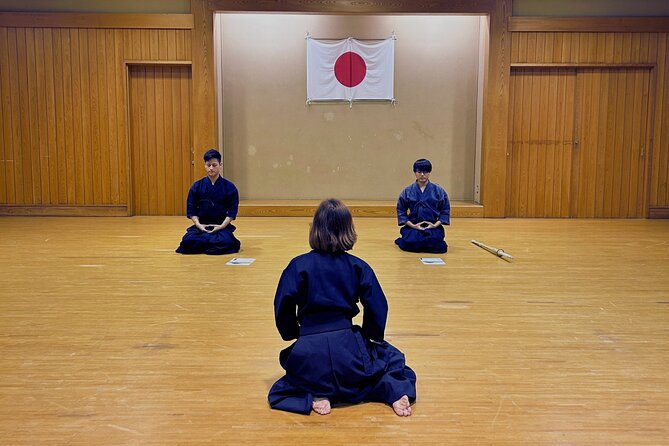
At $132.14 per person for about 2 hours, the value comes from what you’re getting, not just the headline duration.
You’re paying for:
- Access to a real dojo training environment
- Instruction from an active kendo teacher (Daichi)
- A beginner-friendly teaching pace
- Gear rental (full attire and shinai)
- Bottled water and a souvenir
- A guide to handle the flow so you’re not guessing
- Photos and videos, delivered by email
When you compare that to the cost of a typical activity that’s mostly observation, the difference is obvious. Here, you’re using equipment, learning technique, and getting coaching feedback. The session is small too: max 8 travelers. A larger class often means less personal correction; a smaller one means you’ll spend more time fixing your stance and swing instead of waiting your turn.
One more value point: the experience is designed for people with no martial arts experience. The information provided states over 90% of participants are beginners, and most travelers can participate. That reduces the risk that you’ll feel lost.
If you like flexible plans, the experience also includes free cancellation up to 24 hours before the start time. That doesn’t make it a bargain, but it does make it a safer yes if your Tokyo schedule is still moving around.
Who This Is Best For (And Who Should Reconsider)
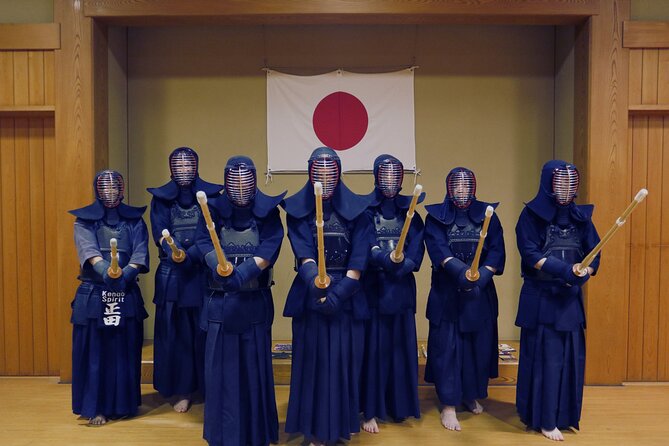
This is a strong fit if you:
- Want a hands-on cultural experience that still feels rooted in real local practice
- Like physical activities but are new to martial arts
- Want to learn how discipline shows up in posture, timing, and mindset
- Enjoy structured lessons you can carry home as practice habits
It’s also family-friendly. One review specifically mentioned a 12-year-old training with a parent, and the experience was described as authentic and well taught. So if you’re traveling with someone curious and willing to participate, this can work well.
Who might reconsider:
If you have mobility limitations or injuries that make basic stances and controlled movements difficult, you should think carefully. This isn’t described as a passive demonstration. Even with beginner pace and slow teaching, you’ll be actively training in a dojo setting.
Another small consideration is timing. Starting at 10:00 am means you’ll want energy early in the day. If mornings are a struggle, pair it with calmer sightseeing afterward.






FAQs About Samurai Experience: Learn Bushido Through Kendo in Tokyo
FAQ
How long is the kendo session?
It runs for about 2 hours.
Where is the meeting point?
The meeting point is at Japan, 103-0024 Tokyo, Chuo City, Nihonbashikobunachō, 29 Sec日本橋ビル.
Do I need any kendo experience?
No. The experience is beginner-friendly, and over 90% of participants are described as beginners.
I don’t speak Japanese. Will that be a problem?
No. Your instructor, Daichi, has overseas work experience and speaks fluent English.
What should I bring?
Nothing at all is required. T-shirts and pants to wear under the kendo uniform are provided.
What’s included with the equipment?
You’ll receive kendo attire rental and a bamboo sword (shinai) rental.
Are photos and videos included?
Yes. A photographer takes both photos and videos, and you’ll receive the data by email after the experience.
How big is the group?
The session has a maximum of 8 travelers.
Are snacks provided?
Snacks are not included.
Should You Book This Kendo Dojo Session?
I’d book it if you want a Tokyo experience that mixes culture and physical learning in a way you can actually remember with your body. This is one of those activities that makes the words Bushido and discipline feel practical, not academic. Between the small group size, the English-speaking instruction from Daichi, the included gear rental, and the hands-on finish with a duel, it’s priced like a true training class—not a quick photo stop.
Skip it if you’re looking for something purely observational or if you know you won’t be able to do basic movement in a uniform setting. In that case, you’d probably be happier with a calmer cultural activity.
If you’re on the fence, here’s a useful rule: if you like learning by doing, and you want your Tokyo trip to include at least one moment that feels like training rather than watching, this is a very solid yes.