REVIEW · TOKYO
Tokyo: Robot Piloting Attraction Ticket
Book on GetYourGuide →Operated by MOVeLOT.,inc · Bookable on GetYourGuide
Giant robots meet your hands in Tokyo. This short, story-driven attraction has you blasting alien targets in VR, programming the robot launch, and then taking control of a real human-piloted mech prototype. It’s science plus manga-style drama, done in a real research-and-development space in Ryogoku.
I especially love the hands-on robot piloting portion and the fact that this is the only facility in Japan where you can actually pilot a robot. The hosts lean hard into the story, but the controls and explanations stay practical, with guides like Tomo and Atsu bringing real enthusiasm for how the systems work.
One thing to plan around: the robot is still a prototype, with legs removed and only arm movement and blaster shooting available right now. That’s the trade-off for being early to the future.
In This Review
- Key highlights worth your time
- Robot Base Lab in Ryogoku: what you’re really buying
- The 50-minute flow: VR blasters, laptop launch coding, then ASTRO control
- Photo stop and safety briefing (your warm-up)
- VR shooting games: train your reflexes
- Programming the launch: where the story meets the logic
- Pilot experience: the real robot moment
- Pilot mode for ASTRO: arms-only controls and other key reality checks
- What “easy to control” really means
- Safety rules that affect your experience
- Why the alien-invasion story actually helps (not just distracts)
- Where it is, and how to arrive without rushing
- Who should book this robot piloting ticket (and who should skip)
- It’s a great fit if you like
- It’s not suitable for
- Price and value: $32 for VR plus a real, human-piloted mech
- Practical tips so your 10 minutes feel like 30
- Should you book this Tokyo robot piloting experience?
- FAQ
- How long is the Tokyo Robot Piloting attraction ticket?
- How much time do I get to pilot the robot?
- Where do I check in?
- What languages are used during the experience?
- What’s included with the ticket?
- What can I control on the robot prototype right now?
- Are there any size or weight limits?
- Who should not book this experience?
- What should I bring with me?
- Do I need insurance?
Key highlights worth your time
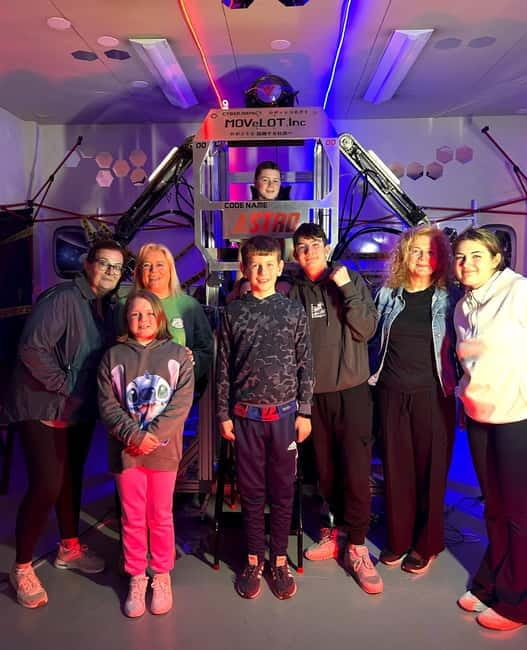
- Real human-piloted robot experience: you operate a prototype, not just watch.
- VR shooting games: aliens, blasters, and quick game-style action before you step into the cockpit.
- Program the robot launch: you set controls on a laptop as part of the storyline.
- Small group flow (max 4): more personalized coaching, especially during the limited pilot window.
- Prototype-meets-craft energy: the hosts share the dreams and lessons behind the tech.
- Ryogoku location that’s easy to reach: a short walk from Toei Ryogoku and JR Ryogoku stations.
Robot Base Lab in Ryogoku: what you’re really buying
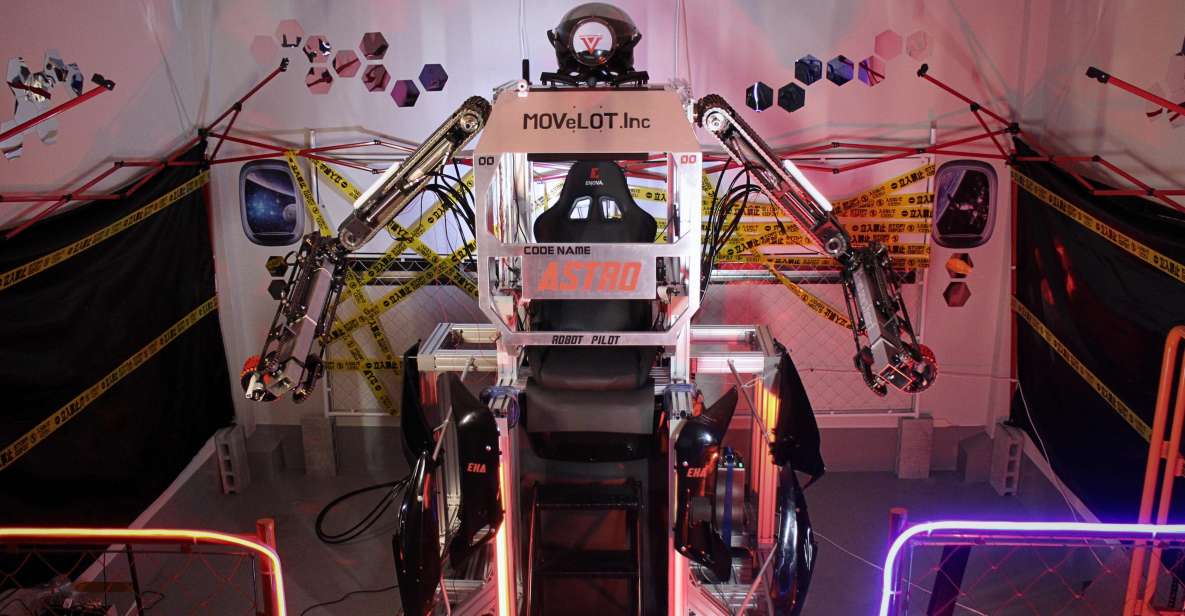
This isn’t a museum stop where you wander and smile. You’re paying for a 50-minute, staged experience that mixes play with real engineering. The payoff is simple: you get time in a real lab setup, you learn how the system thinks, and you leave with the feeling that robotics can be fun and human-sized.
At $32 per person, the math works best if you like interactive tech. You’re not just doing one activity. The ticket bundles VR shooting, programming the launch, and robot piloting, all guided in English or Japanese. Compared with paying separately for VR and a workshop, it’s a tidy package for Tokyo.
Also, the setting matters. The check-in is at MOVeLOT, Inc. (Robot Base / MOVeLOT株式会社) in Ryogoku, a part of Tokyo that’s not as tourist-stuffed as the center. If you’ve been chasing Gundam-style experiences, this one lands because it’s focused on the future, not just the look.
You can also read our reviews of more tours and experiences in Tokyo



The 50-minute flow: VR blasters, laptop launch coding, then ASTRO control
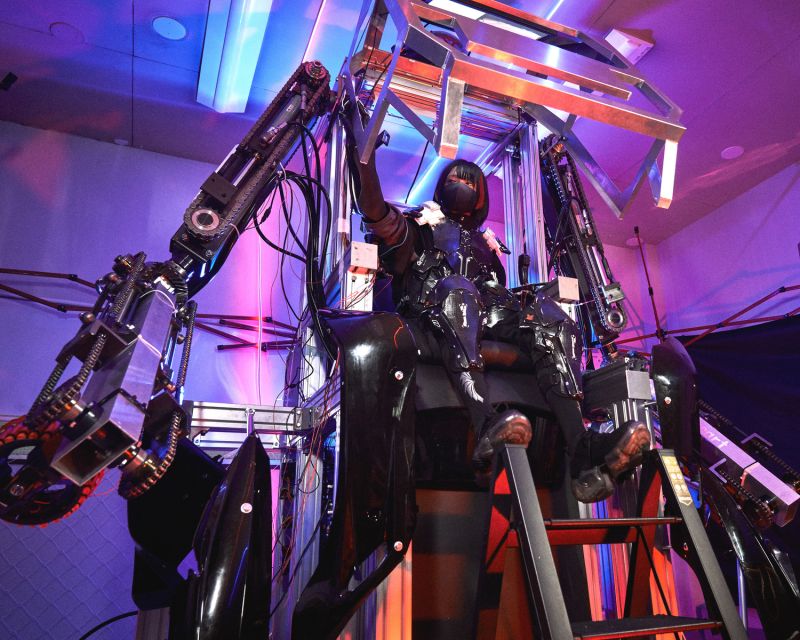
The schedule feels tight on purpose. You show up, get set up, and the team moves you through each phase without long downtime. That keeps the energy high, but it also means you should arrive a few minutes early and keep your brain ready to follow instructions.
Photo stop and safety briefing (your warm-up)
The early segment is a photo stop plus a safety briefing (this part runs about an hour total in the experience timeline). Don’t treat it like paperwork. This is where you get oriented to how the lab works, what you’re allowed to do, and what you’ll be operating next.
This matters because your piloting time is limited to around 10 minutes per person, and delays can steal seconds from that moment. The staff will guide you, and they’re strict about it for a reason: it’s a prototype space with tight room geometry.
VR shooting games: train your reflexes
Then comes the VR portion: shooting games that put you in an arcade-like role, but with real control literacy. Reviews from tech and VR fans point to the same pattern: if you can play VR at home, you’ll adapt fast. It’s not about being a gamer. It’s about learning how aiming, triggers, and timing feel in a headset.
If you tend to get motion-sick, you might want to go in cautiously. The data here doesn’t spell out comfort settings, so it’s smart to consider your personal tolerance. If VR is already part of your routine, you’re likely fine.
Programming the launch: where the story meets the logic
Next, you program the robot launch. You do this on a laptop, using controls tied to the experience’s storyline. It’s a “do it yourself” moment, and that’s why it lands: you’re not only pushing buttons during the final piloting segment—you’re participating in how the robot behaves.
Some visitors also describe a build-style component similar to LEGO Technic, where you put together pieces and connect them to programming controls. The attraction clearly has a maker mindset, not just a sci-fi theater vibe.





Pilot experience: the real robot moment
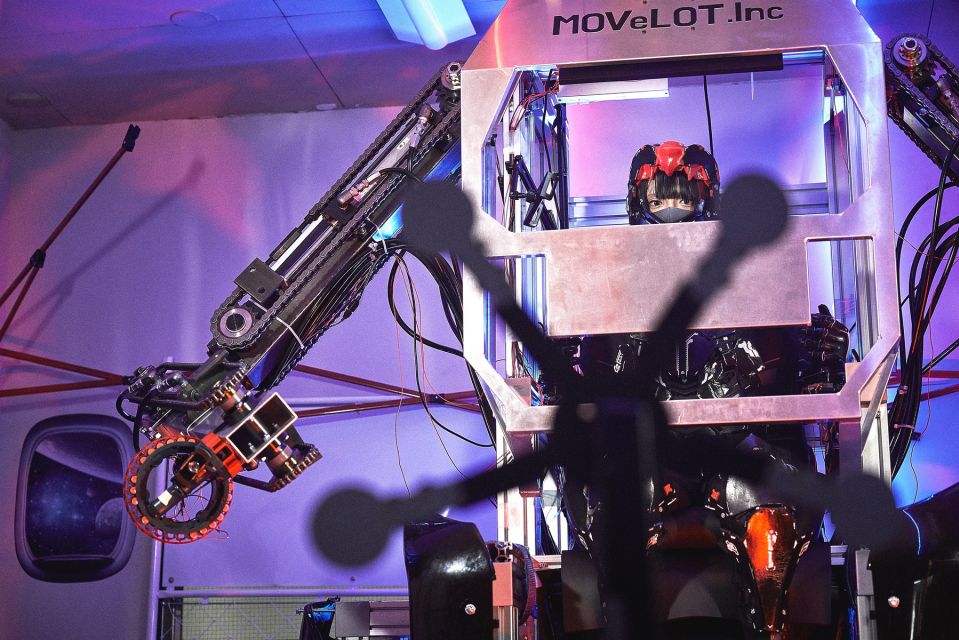
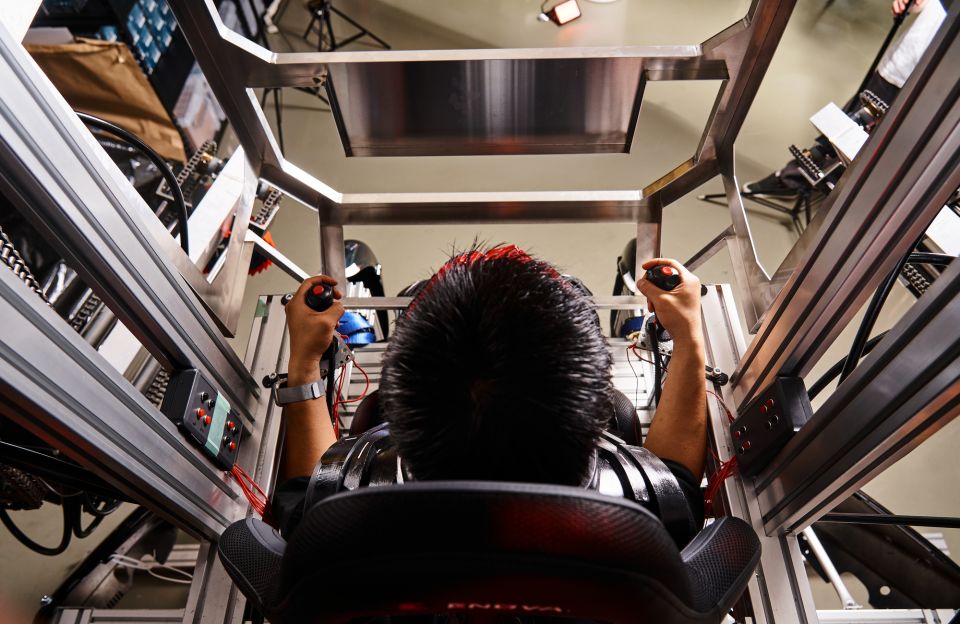
Finally, you step into the robot prototype ASTRO. You’ll be shown what you can control and how to move safely. You’re in a simplified “pilot’s chair” setup, with the robot configured for the lab environment (including the prototype layout changes mentioned below).
You’ll feel the difference immediately: VR is reactive and frictionless; the real robot has physical constraints and requires you to stay aware of your surroundings. It’s a great reality check. It also makes the experience more memorable than a purely virtual game.
Pilot mode for ASTRO: arms-only controls and other key reality checks
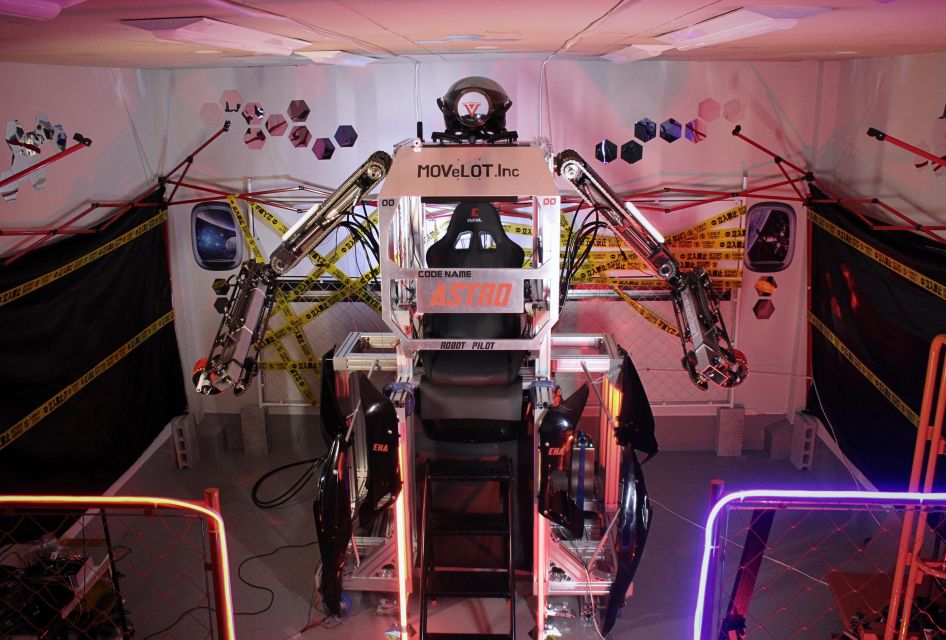
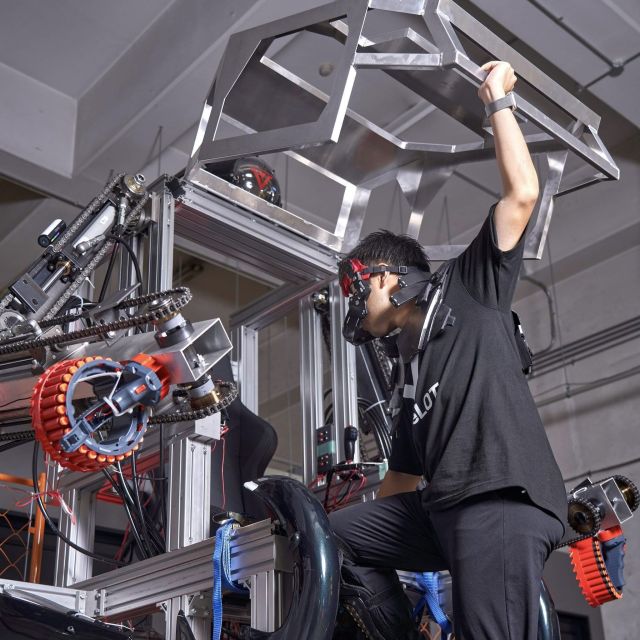
The attraction is honest about one big limitation: the robot is still in the first phase of development. That means you don’t get full movement. The legs are removed so the robot fits in the lab, and visitors can currently move arms and shoot the blasters.
So, if you came hoping for full-body walking or dramatic stomping like a movie mech, adjust your expectations. You’re piloting the parts that exist today, and that can actually be satisfying. You’ll focus on aiming, timing, and control accuracy—skills you can feel right away.
What “easy to control” really means
A recurring theme from feedback is that the robot is super easy to control. That doesn’t mean it’s automatic. It means the experience is designed so you don’t need a mechanical engineering degree to participate. Staff guidance plays a big role here, and it’s one reason people mention how smooth the session feels.
Safety rules that affect your experience
Because you’re moving within a lab space, you’ll want to pay attention to where you place your body and how you operate your controls. The room is described as a bit small, and staff will steer you to avoid collisions or knocking things over.
Also, there’s a specific insurance requirement: visitors must have overseas insurance in case of injury. That’s a big practical detail. If your travel coverage doesn’t include overseas medical insurance, sort that out before you go.
Why the alien-invasion story actually helps (not just distracts)
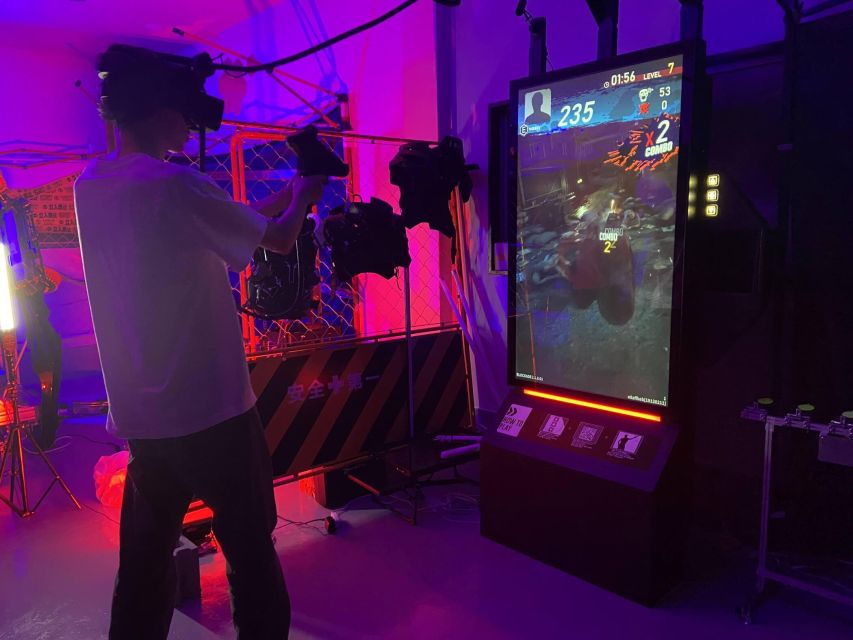
This attraction doesn’t just slap a sci-fi coat on top of VR. The storyline is part of how you learn the tech. You’re asked to protect the base from alien invaders, eliminate unidentified life forms around the hangar, and then complete your mission by activating and piloting robots.
That kind of framing does three useful things:
- It gives your actions a clear purpose, so it’s easier to remember the sequence.
- It turns “instructions” into “mission steps,” which reduces the awkwardness of first-time tech.
- It makes the prototype limitations feel less like a letdown and more like a snapshot of what’s being built right now.
You’ll also hear stories and dreams from the developers. That’s a big deal for anyone who likes robotics beyond the final gadget. People connected to the project come across as proud of the progress and excited about what comes next.
Guides like Tomo show up in feedback as especially welcoming and motivating. Atsu also gets mentioned as part of the friendly, helpful team. That matters in a hands-on activity. You don’t want a cold instructor; you want a guide who helps you succeed quickly.
Where it is, and how to arrive without rushing
Check-in is at MOVeLOT, Inc., at the Robot Base / MOVeLOT株式会社. It’s about a 7-minute walk from Toei Ryogoku Station (Oedo Line), A3 exit, and about a 13-minute walk from JR Ryogoku Station.
Two practical notes:
- Don’t plan to arrive right at the start time. The experience says the time slot can’t be extended for late arrivals.
- There isn’t a big sit-down waiting area on site. Plan to hang nearby until you’re called, or grab coffee in the area.
If you’re traveling around Tokyo that day, build in buffer time. Ryogoku is easy to reach, but you don’t want to sprint with a headset and a safety briefing about to begin.
Who should book this robot piloting ticket (and who should skip)
This one is built for a wide range of interests: VR fans, tech people, anime and robot lovers, and anyone who likes doing instead of watching.
It’s a great fit if you like
- VR action that’s more controlled than chaotic
- robotics and mechatronics explanations in plain language
- “you operate it” experiences where your actions matter
- sci-fi storytelling that keeps the tech steps coherent
It’s not suitable for
The attraction lists several clear limits. Skip this if you are:
- bringing children under 11
- pregnant
- anyone with mobility impairments
- under 3 ft 6 in (110 cm)
- over 220 lbs (100 kg)
It’s not personal. It’s about the robot setup, the prototype space, and safe operation.
Price and value: $32 for VR plus a real, human-piloted mech
Tokyo pricing can get wild fast. This ticket stays reasonable because it bundles multiple stages that other places often charge for separately.
Here’s where the value comes from:
- 50 minutes total with structured activities, not a long waiting game
- VR shooting included, so you get action whether you’re a robot person or not
- Programming included, so you don’t just push buttons at the end
- Robot piloting included, and that’s the hard-to-find part
The biggest “value factor” is the uniqueness: piloting a human-piloted robot prototype in Japan. If you’re a Gundam or robot fan, you’re paying for access. If you’re more of a VR fan, you’re paying for something that turns into a real-world control challenge.
Also, the group size is limited to 4 participants. That helps you get coaching during the most important parts, especially the actual piloting window.
Practical tips so your 10 minutes feel like 30
You’re going to get about 10 minutes per person for the robot piloting. That’s short. So make it count.
1) Wear comfortable shoes
You’ll be moving around a lab space and standing during briefing. No “nice but stiff” shoes.
2) Bring your passport or ID
Check-in requires it.
3) Bring drinks
The activity runs about 50 minutes. Keep yourself comfortable.
4) Follow staff guidance closely
The robot prototype is controlled in a specific way, and the room setup matters. If staff says move here, move here.
5) Arrive early
Time slots can’t be extended for late arrivals, and there’s limited waiting comfort.
6) Accept the prototype reality
You’re piloting arms and shooting blasters right now. That isn’t a flaw in the experience. It’s the point: you’re seeing the early stage of a real project.
Should you book this Tokyo robot piloting experience?
Book it if you want Tokyo tech that actually puts you in the driver’s seat. This is one of those rare activities where the sci-fi story leads to real control, not just a photo op. At $32 with VR + programming + robot piloting, the value is strong, and the small group setup keeps it friendly.
Skip it only if the prototype limitations will bug you. The legs are removed, and your control is currently arms and blasters. If you need full locomotion mech action, you might feel restrained. If you’re okay with piloting a prototype and learning how the system works, you’ll likely have a memorable hour.
FAQ
How long is the Tokyo Robot Piloting attraction ticket?
The duration is 50 minutes total.
How much time do I get to pilot the robot?
The piloting experience lasts about 10 minutes per person.
Where do I check in?
You check in with staff at MOVeLOT, Inc. (Robot Base / MOVeLOT株式会社). It’s about a 7-minute walk from Toei Ryogoku Station A3 exit, and about a 13-minute walk from JR Ryogoku Station.
What languages are used during the experience?
The instructor supports English and Japanese.
What’s included with the ticket?
It includes a 50-minute ticket to a robotics development facility, VR shooting games, programming the launch of the robot, and the robot pilot experience.
What can I control on the robot prototype right now?
The robot is still a prototype in phase one. You can move the arms and shoot the blasters at this time.
Are there any size or weight limits?
Yes. It’s not suitable for people under 110 cm, and not for people over 220 lbs (100 kg).
Who should not book this experience?
It’s listed as not suitable for children under 11, pregnant women, and people with mobility impairments.
What should I bring with me?
Bring a passport or ID card, comfortable shoes, and drinks.
Do I need insurance?
Yes. Even with safety measures taken, visitors must have overseas insurance in case of injury.