REVIEW · TOKYO
Tokyo 6hr Private Tour with Government-Licensed Guide
Book on Viator →Operated by Japan Guide Agency · Bookable on Viator
Tokyo without the stress is possible. This private tour uses a government-licensed guide to help you stitch together a 6-hour day around the neighborhoods you actually care about.
I like that it stays private (only your group), so you are not stuck in a one-size-fits-all parade.
I love the control you get: you can choose 3–4 sights from a menu, then let the guide handle efficient routes. I also like the mix you can build, from traditional Tokyo like Senso-ji to modern icons like Shibuya Scramble and Hachiko.
The trade-off is simple: it is a walking + public-transit day, and meals plus many entrances cost extra. If you pick too many stops that require waiting time, it can feel rushed.
In This Review
- Key highlights to zero in on
- A Tokyo 6-hour plan that you actually control
- Price and value: what $155.86 buys you
- Walking tour logistics: pickup on foot and lots of subway time
- Asakusa and Senso-ji: old downtown atmosphere in one anchor stop
- Imperial Palace grounds: what you see, and what you skip
- Shinjuku Gyoen and Meiji Jingu: two types of calm breaks
- Shinjuku Gyoen National Garden
- Meiji Jingu Shrine
- Shibuya Scramble, Hachiko, and Harajuku Takeshita Street
- Tsukiji Fish Market: food focus without the guessing
- Tokyo gardens and museums: Koishikawa, Hama Rikyu, Rikugien, Ueno, and more
- Koishikawa Korakuen Garden
- Hama Rikyu Gardens
- Rikugien Garden
- Ueno Park
- Tokyo National Museum
- Akihabara, Odaiba, Tokyo Tower, and Golden Gai for that modern-city contrast
- Akihabara
- Odaiba
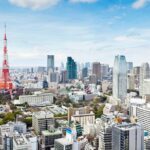
- Tokyo Tower
- Shinjuku Golden Gai
- Nezu, Yanaka, Shibamata, and Gotokuji: smaller stops that add character
- Nezu (and Yanaka)
- Shibamata
- Gotokuji Temple and maneki-neko
- How guides can change your day: examples from the field
- Tips to get the smoothest 6 hours out of Tokyo
- Should you book this private Tokyo day?
- FAQ
- How many places will we visit in a 6-hour tour?
- Is the Imperial Palace inside included?
- Is this a walking tour?
- Do meals cost extra?
- Are entrance fees included?
- Do I need to pay for public transportation?
- Can I combine this with another tour group?
- Is this tour private?
- Can I cancel for a full refund?
Key highlights to zero in on
- Government-licensed guide in English who handles directions, timing, and on-the-ground context
- Pick 3–4 sites from a larger menu, so your day matches your interests
- Major Tokyo icons and calmer breaks like parks and shrines, not just crowded streets
- Public transport confidence plus practical tips like keeping yen ready (and having a transit card can help)
- Some big attractions are partial (Imperial Palace inside is not included; Tokyo Tower top deck is not included)
- Guide-led pacing that can be customized, with strong results when you choose fewer stops
A Tokyo 6-hour plan that you actually control
Tokyo is huge. The fastest way to waste a day is guessing routes, missing the right entrance, or losing time when the vibe changes block to block. This tour is designed to prevent that by combining a local, government-licensed guide with a customizable set of stops.
In practice, what you get is a day where your guide works like a translator for the city. You spend less mental energy figuring out where you are, and more energy understanding what you are seeing. That matters in Tokyo, where a short ride can still turn into a long walk if you do not know the best exits.
You can also read our reviews of more guided tours in Tokyo
Price and value: what $155.86 buys you
At $155.86 per person for about 6 hours, you are not paying for a bus ride. You are paying for a human with city routing skills and local context, plus the efficiency of having someone else manage the flow between neighborhoods.
This is good value when:
- you want to hit a few high-impact places without getting lost
- you care about history and culture, not just selfies
- you want help using trains and stations without turning your day into a map study session
It may not feel like value if:
- you plan to skip most explanations and only want photos
- you already know Tokyo subway routes well and you have a flexible, low-stress itinerary
- you expect entrances and meals to be included (they are not)
Also note what the tour includes and what it does not. The guide’s entry fees are covered only for sights listed under What to expect. Everything else—plus lunch and personal expenses—falls outside the price.
Walking tour logistics: pickup on foot and lots of subway time
This is not a car tour. There is no private vehicle, and you cannot combine multiple tour groups. Pickup is on foot, meaning you meet your guide within a designated area rather than being collected curbside in a vehicle.
You should expect:
- walking between stops
- using public transportation (so your day depends on train schedules and station navigation)
- carrying some cash for transit when needed (the tour specifically notes having yen available)
One small but real advantage: since the tour is private, your guide can adjust the pace to your group. Some guides are especially good at timing, rain handling, and keeping your moves efficient between stations.
Asakusa and Senso-ji: old downtown atmosphere in one anchor stop
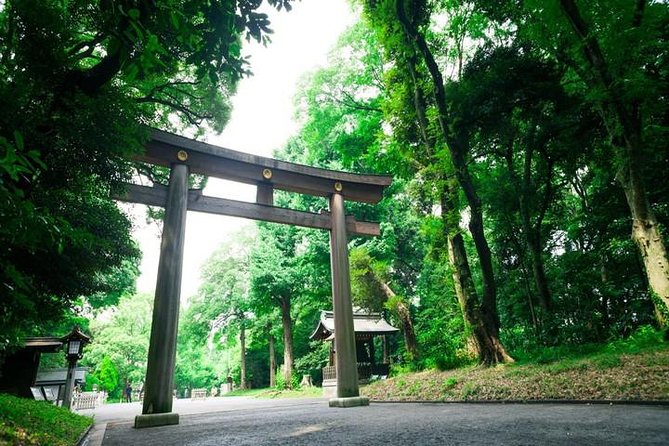
Asakusa is the center of Tokyo’s shitamachi, often described as low city, where older Tokyo energy still hangs around. If you pick Asakusa, your anchor is Senso-ji, one of Tokyo’s most colorful and popular temples.
Why this stop works on a first Tokyo day:
- it gives you an immediate sense of the city’s older identity before you jump into neon Tokyo
- it is easy to remember visually—then everything else you do feels clearer by comparison
A practical consideration: if you choose a “market time” style day, plan for crowd movement. You will likely spend your time moving through people and making quick decisions. If you want slow strolling, pick fewer stops for the day.
Imperial Palace grounds: what you see, and what you skip
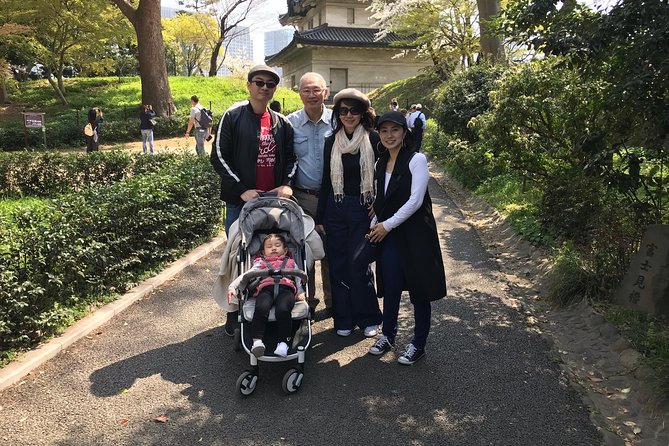
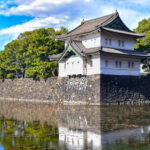
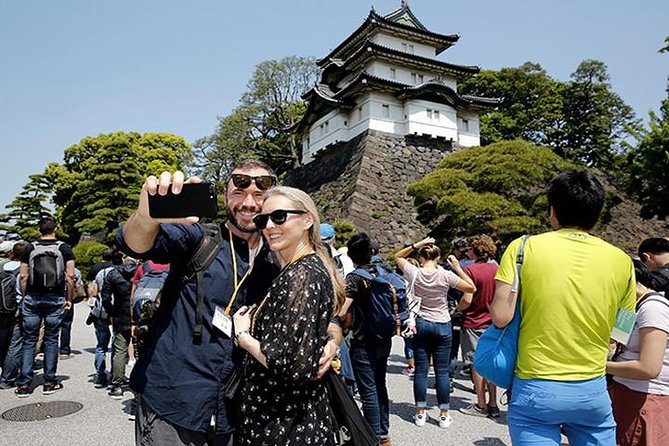
The Imperial Palace is located on the former site of Edo Castle, with a park area surrounded by moats and massive stone walls. For this tour, you get the grounds, but you do not get access to the inside of the Imperial Palace.
That’s still worth it for most visitors because:
- you get the big historical framing—Edo-era roots—without needing an inside entry
- the setting is visually strong, even when you are only exploring the outer areas
If your top priority is being inside the palace complex, then this is a mismatch. But if your goal is to understand how Tokyo’s power shifted over time and to see the monumental scale, this works well.
You can also read our reviews of more private tours in Tokyo


Shinjuku Gyoen and Meiji Jingu: two types of calm breaks
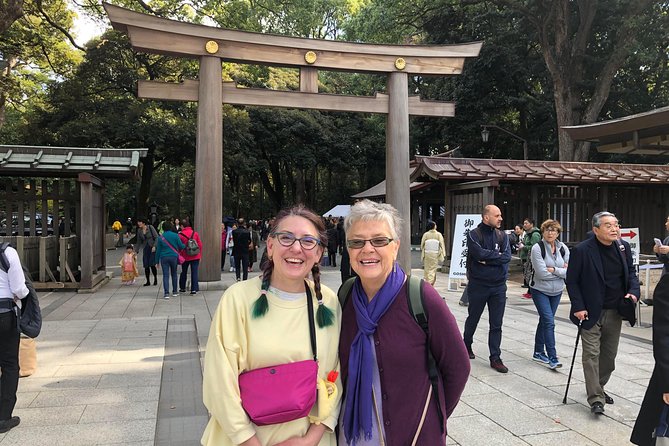
If your Tokyo day needs oxygen breaks, this tour’s park and shrine options are a smart way to balance the chaos.
Shinjuku Gyoen National Garden
Shinjuku Gyoen is one of Tokyo’s largest and most popular parks. You will enjoy spacious lawns, walking paths, and calmer scenery near Shinjuku Station. It is a great reset button if your earlier stop is crowded or if you are arriving with jet lag.
Drawback to plan for: parks can steal time if you want lingering photos and slow walks. This tour is built around choosing 3–4 sites, so if you add a long park block, keep the rest of your picks lighter.
Meiji Jingu Shrine
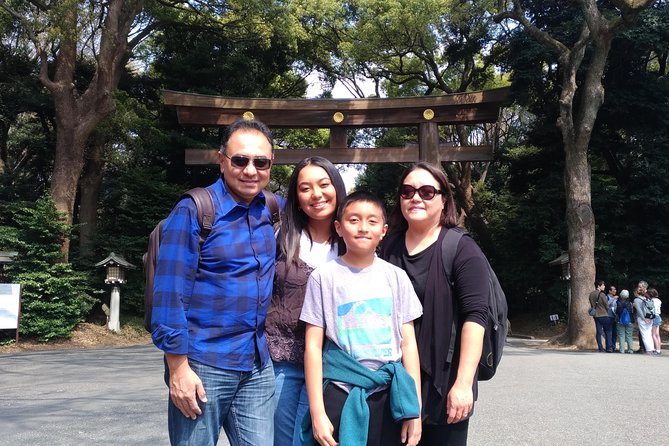
Meiji Shrine is dedicated to the deified spirits of Emperor Meiji and his consort Empress Shoken, located next to the busy Harajuku area on the JR Yamanote Line. Even if you have seen plenty of shrine gates in photos, this one lands because of the connection to a very specific imperial story.
One bonus when you go with a strong guide: you can learn how to do shrine and temple etiquette properly. In one example, a guide named May taught visitors the traditional way to enter shrines and how to pay respects, plus it helped people feel less awkward while doing the steps.
Shibuya Scramble, Hachiko, and Harajuku Takeshita Street
Shibuya Scramble is one of the busiest crossings in the world. Locals call it Shibuya scramble, and it is also associated with Hachiko, the beloved dog statue. If you want modern Tokyo in a single pulse-check, this is it.
Then you can mix in Harajuku’s teenage fashion energy via Takeshita Street. Harajuku is centered around the area around Harajuku Station between Shinjuku and Shibuya on the Yamanote Line, and it is known for extreme teen fashion styles.
How to make this pairing work:
- if you like people-watching, pair Shibuya with Harajuku and plan to move fast
- if you prefer quiet, limit yourself to one of these two modern stops and spend more time at a park or garden
A consideration from real-world pacing: market and crowd areas can feel like you are moving at a clip. If you tend to get annoyed when you cannot linger, pick fewer stops that involve lots of standing time.
Tsukiji Fish Market: food focus without the guessing
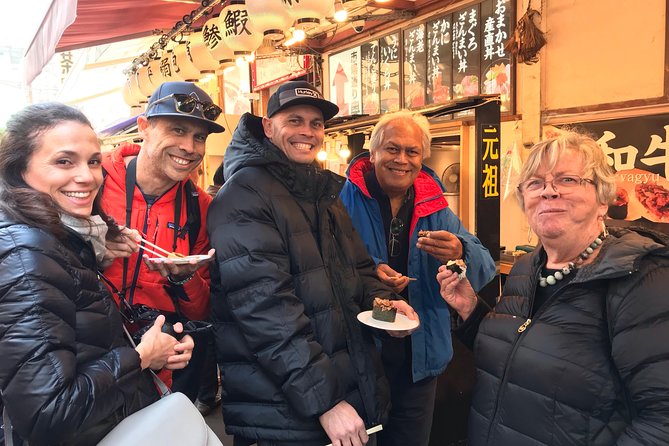
Tsukiji is the old fish market of Japan. It is known for a lot of delicious, unique food choices, with locals and tourists coming for what is there to eat.
This stop is ideal if:
- you want a Tokyo food-first experience without trying to build a food route yourself
- you are curious about how Tokyo’s daily life shows up in places you would not walk into alone
A key practical point: meals and entrance fees are extra, so decide ahead of time whether you want to treat Tsukiji as a quick snack stop or a real meal plan. Some guides have customized days around food. For example, a guide named Lily customized a Tsukiji-focused day and even planned restaurant-style eating as part of the flow.
Tokyo gardens and museums: Koishikawa, Hama Rikyu, Rikugien, Ueno, and more
Not every Tokyo day has to be neon and crowds. This tour includes several garden-and-culture options that work well when you want variety.
Here are the standouts you can choose from:
Koishikawa Korakuen Garden
Koishikawa Korakuen is one of Tokyo’s oldest and best Japanese gardens. It was built in the early Edo Period (1600–1867) at the Tokyo residence of the Mito branch of the ruling family. If you want historical context tied to a physical place, this is a strong pick.
Hama Rikyu Gardens
Hama Rikyu is a garden alongside Tokyo Bay, with seawater ponds that change level with the tides, plus a teahouse. This one is good when you want Tokyo water scenery without going all the way to a full-day bay plan.
Rikugien Garden
Rikugien is often considered Tokyo’s most beautiful Japanese garden alongside Koishikawa Korakuen. It was built around 1700 for the 5th Tokugawa Shogun, and the name relates to six poems.
Ueno Park
Ueno Park is huge in variety: about half a dozen museums, a zoo, a Toshogu Shrine, and Shinobazu Pond. It is also Tokyo’s most notorious cherry blossom party spot.
This is a smart stop if:
- your group wants a flexible area where you can keep walking without committing to one single ticketed attraction
Tokyo National Museum
Tokyo National Museum is the oldest and largest of Japan’s top-level national museums. If your group loves artifacts and you want one indoor anchor, this is where you spend more of your time standing, walking halls, and focusing on exhibits.
A pacing tip: since you choose only 3–4 sites, pick one “ticket time” stop max if you do not want the day to feel like a checklist. Otherwise you will be paying in time, not money.
Akihabara, Odaiba, Tokyo Tower, and Golden Gai for that modern-city contrast
One of the best parts of Tokyo is that different styles live in different blocks. These options give you that contrast quickly.
Akihabara
Akihabara, also called Akiba, is famous for electronics shops and has gained recognition as a center for Japanese pop culture. If you want the tech-meets-fandom side of Tokyo, it is one of the easiest modern stops to understand just by walking its streets.
Odaiba
Odaiba is a shopping and entertainment district on a man-made island in Tokyo Bay. It originated as small fort islands, and daiba literally means fort. It is a good pick when you want a different Tokyo feel: more planned and bay-adjacent.
Tokyo Tower
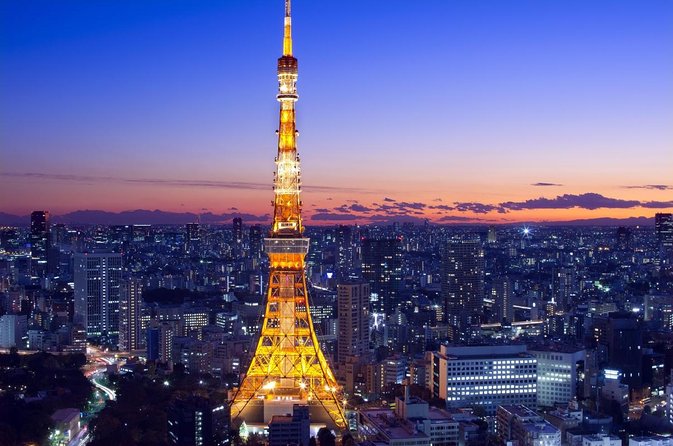
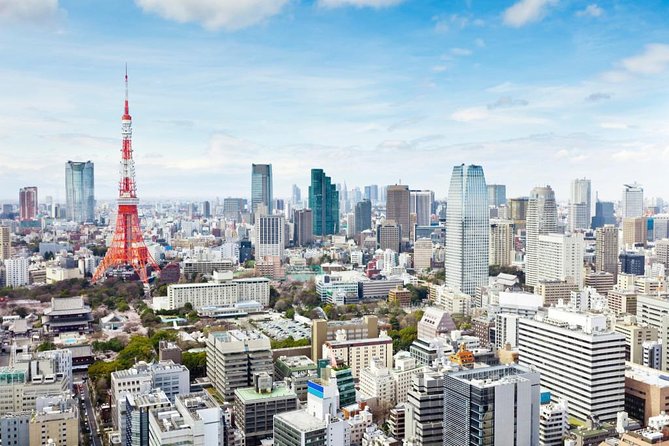
Tokyo Tower is described as a retro cute symbol of Tokyo for a generation and is seen in anime backgrounds. The tour includes only up to the main deck. The top deck is not included.
That is important because you might be planning your photo stops around the tower. If you want the very top views, this tour will not satisfy that ticket requirement.
Shinjuku Golden Gai
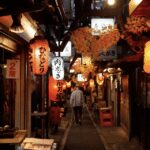
Golden Gai is a compact nightlife area that started around 1950 when a black market moved, and eating and drinking establishments appeared. If you want a slice of Tokyo’s older alley bar culture, this is a unique stop that feels different from big shopping zones.
Nezu, Yanaka, Shibamata, and Gotokuji: smaller stops that add character
These choices are great when your group wants Tokyo that feels less like a theme park.
Nezu (and Yanaka)
Nezu and Yanaka are neighborhoods that make up shitamachi, Tokyo’s old downtown. They retained last-century charm because they miraculously avoided major damage during world wars and natural disasters.
Shibamata
Shibamata is on Tokyo’s eastern end near the Edogawa River. The point here is old-school charm from that older, less central side of the city.
Gotokuji Temple and maneki-neko
Gotokuji Temple is said to be the birthplace of the maneki-neko, the luck-inviting cat figurine. If your group likes silly-fun Tokyo legends with real place names, this is the kind of stop that becomes a story you remember later.
How guides can change your day: examples from the field
A good guide is not just directions. It is how the day feels.
Some of the strongest patterns from guide experiences include:
- Guides who tailor the itinerary based on what your group wants to see, instead of forcing a fixed script
- English that is clear enough to ask questions freely
- Practical tips that reduce stress with trains and station navigation
- Etiquette coaching so shrine and temple visits feel respectful and not confusing
For example:
- Toshiro helped visitors with subway use tips.
- An handled requests beyond sightseeing, like helping with train tickets to Narita.
- Atsushi kept humor and structure during a cold, rainy day, which matters in a city where weather changes fast.
- Lance managed timing and stayed attentive, including using visuals to make points easier to follow.
- Koba offered thoughtful small touches like coins for shrines and explained what to do during visits.
Tips to get the smoothest 6 hours out of Tokyo
Here are smart, practical moves that match how the tour actually runs:
- Wear shoes that forgive walking. This is a walking tour, and you will use public transit in between.
- Carry yen for transit. The tour specifically tells you to have yen available.
- If you use transit cards, having one ready can help you move faster through stations.
- Choose your 3–4 stops early. If you want time to linger, do not stack too many crowd-heavy sites in one day.
- Think about your pace. A park stop can slow you down in a good way, but it should replace another stop, not pile onto an already packed day.
Should you book this private Tokyo day?
Book this tour if you want:
- a government-licensed guide and a day plan built around your interests
- a practical first look at Tokyo icons like Asakusa, Shibuya Scramble, and Meiji Jingu, without getting lost
- efficient public-transit routing and explanations that help you understand what you are seeing
Skip it (or adjust your expectations) if:
- you want a fully self-directed day with no guidance and you already know Tokyo station navigation well
- you expect lunch and entrance tickets to be included
- you specifically need Imperial Palace inside access or Tokyo Tower top deck, since those are not included
If you pick 3–4 stops that fit your mood—one “wow” modern stop, one traditional anchor, and one calmer garden or shrine—you will likely leave Tokyo with better bearings and fewer regrets.
FAQ
How many places will we visit in a 6-hour tour?
You choose 3 to 4 sites from the available options. The time at each stop can vary based on what you pick.
Is the Imperial Palace inside included?
No. The tour covers the Imperial Palace grounds, but it does not include access to the inside of the Imperial Palace.
Is this a walking tour?
Yes. It is a walking tour, and pickup is on foot. You meet your guide within a designated area.
Do meals cost extra?
Yes. Meals are not included, and the tour notes that meals cost extra.
Are entrance fees included?
Entrance fees can be extra. Guide entry fees are only covered for sights listed under the What to expect section, while other entrance fees are not included.
Do I need to pay for public transportation?
Transportation fees are not included. You will likely use public transportation during the day.
Can I combine this with another tour group?
No. You cannot combine multiple tour groups.
Is this tour private?
Yes. It is private to your group only.
Can I cancel for a full refund?
Yes. Free cancellation is available up to 24 hours in advance of the experience start time for a full refund. If you cancel less than 24 hours before, the amount paid is not refunded.