REVIEW · TOKYO
Asakusa: A Big-picture History Walk to Know Japan
Book on GetYourGuide →Operated by Arumachi, Inc. · Bookable on GetYourGuide
Asakusa can explain Japan fast. This 2-hour history walk turns the usual gate-and-temple stroll into big-picture context for modern Japan, with the Sumida River as your timeline. I like how the guide ties each place to a clear “why it matters” story, not just what to photograph. You’ll come away feeling like you can decode Japanese culture on the spot.
My second favorite part is the way Buddhism and Shinto are explained in plain, visual terms before you face the gates and halls. One thing to consider: it’s a moderate-walking tour and not set up for mobility impairments, so wear good shoes and plan on being on your feet.
In This Review
- Key highlights at a glance
- A 2-hour Asakusa history loop from isolation to reopening
- Where you meet: Exit 4, Ginza Line, and a practical landmark
- Starting on the Sumida River pier: Japan’s closed-door era, in context
- The Asakusa culture center stop: Buddhism and Shinto before the gates
- Kaminarimon gate: the dragon meaning flip you won’t forget
- Nakamise Shopping Street: vajra charms, snacks, and ukiyo-e’s Western path
- Hōzōmon Gate: the 1000-year Japan-Europe mindset comparison
- Sensō-ji: oldest Buddhist temple, plus prayer that actually makes sense
- Asakusa Shrine next door: one grounds, two traditions for 1,000 years
- Price, pacing, and whether 2 hours is enough
- Who this tour fits best
- The guides: friendly, flexible, and built for engagement
- Should you book this Asakusa big-picture history walk?
- FAQ
- How long is the tour?
- What does it cost?
- Where do I meet the group?
- What’s included in the price?
- Do I need hotel pickup?
- Will the tour run in bad weather?
- Is it okay for kids and mobility needs?
Key highlights at a glance
- Sumida River framing that links Japan’s isolation to reopening to the world
- Clear Buddhism vs Shinto primer that makes the temples feel understandable, not mysterious
- Dragon symbolism comparison that shows how cultural meaning can flip side-to-side
- Nakamise Street + ukiyo-e impact from Asakusa to Europe’s art scene
- 1000-year mindset connections between Japan and Europe, explained at a key gate
- One grounds, two traditions at Sensō-ji and Asakusa Shrine—shared worship space for over a millennium
A 2-hour Asakusa history loop from isolation to reopening
This tour is built around a simple idea: if you learn the right “connections,” Asakusa stops being just sightseeing. In two hours, you’ll link politics, religion, art, and even cross-cultural symbolism into a story you can actually remember. It’s the kind of walk that helps you spot patterns rather than collect trivia.
The best value here is not the number of stops. It’s how each stop functions like a chapter opener—your guide keeps pulling you forward. You start with Japan’s big turning points, then you move into what people believed, how they prayed, and how their art traveled outward.
You can also read our reviews of more walking tours in Tokyo


Where you meet: Exit 4, Ginza Line, and a practical landmark
Meeting point matters in Asakusa. This starts outside Exit 4 of Asakusa Station (Ginza Line), right next to a Burger King. If you’re arriving by subway, plan a quick buffer so you’re not hunting the entrance while your group is already assembling.
There’s no hotel pickup or drop-off. So you’ll want to think of this as a “meet locally, then walk” experience. Once you’re in the flow, the route is tight and focused.
Starting on the Sumida River pier: Japan’s closed-door era, in context
The tour begins near the Sumida River at the Asakusa pier. That location is smart because the river is a natural “boundary” in Japan’s story—trade routes, contact, and later, the feeling of being pulled toward the outside world.
Your guide explains why the Edo shogunate kept Japan sealed for over 200 years. You’ll also hear why the Netherlands had a special permission to trade when other routes were restricted. Then the story turns: with the arrival of Admiral Perry, Japan faced pressure to reopen, and the guide connects that shock to what you can still recognize in Tokyo.
A standout moment is the modern comparison your guide draws: references to Odaiba’s former gun batteries and a Statue of Liberty replica looking out toward the Pacific. You’re not just learning history in the abstract—you’re learning it in a way that makes current Tokyo feel less random.
The Asakusa culture center stop: Buddhism and Shinto before the gates
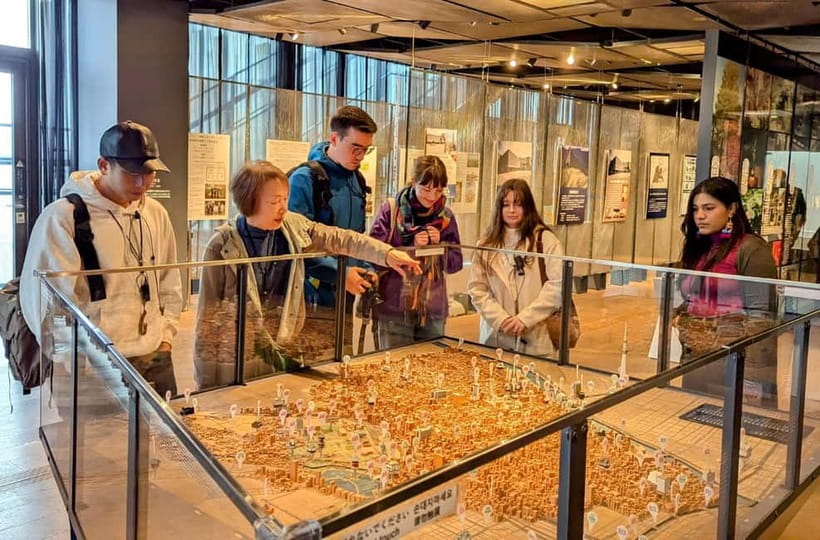
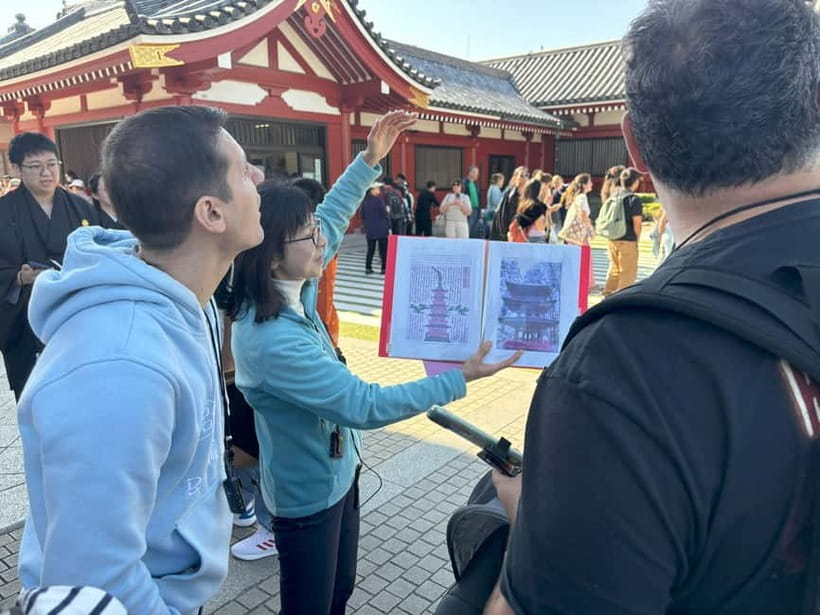
Before you hit the famous temple and shrine areas, you get a short grounding at the Asakusa Culture Tourist Information Center. This is where the guide makes the two major Japanese religions feel less like a confusing label on postcards.
You’ll get a clear introduction to Buddhism and Shinto, setting up what you’re going to see next. That matters because the religious “signals” in Asakusa—symbols, architecture cues, and prayer behavior—make far more sense when you know what to look for.
This is also where you start learning the language of meaning. Your guide uses clear, visual explanations so you can connect symbols you’ll see on the way to what they represent in daily life and ceremony.
Kaminarimon gate: the dragon meaning flip you won’t forget
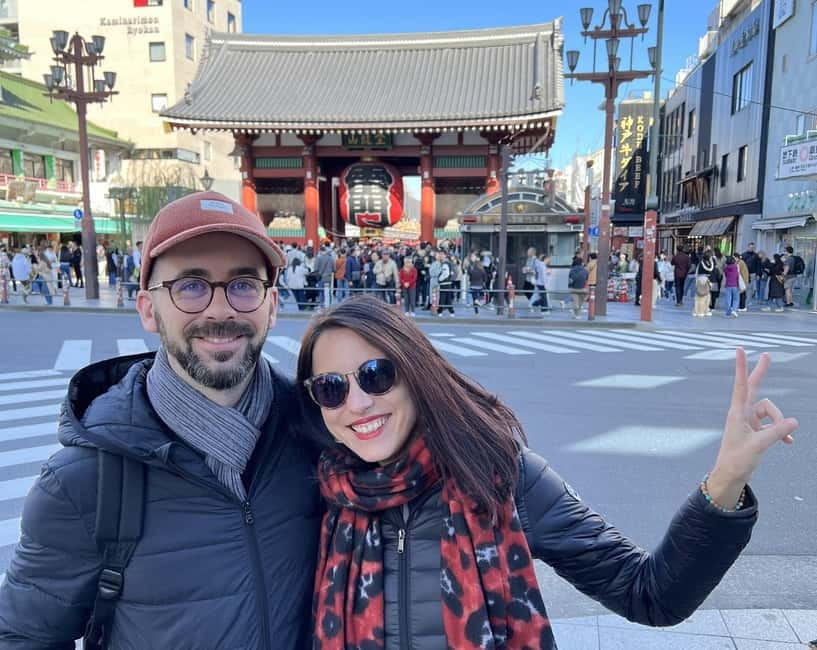
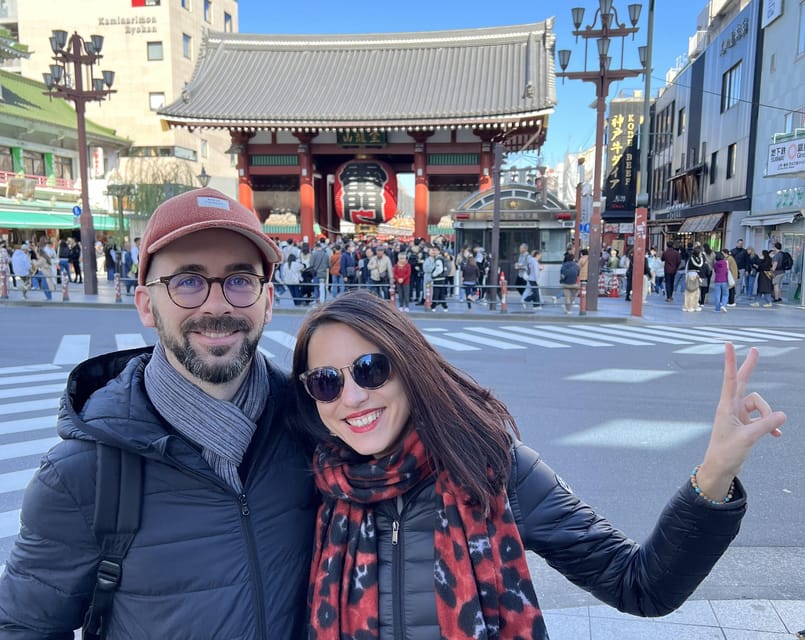
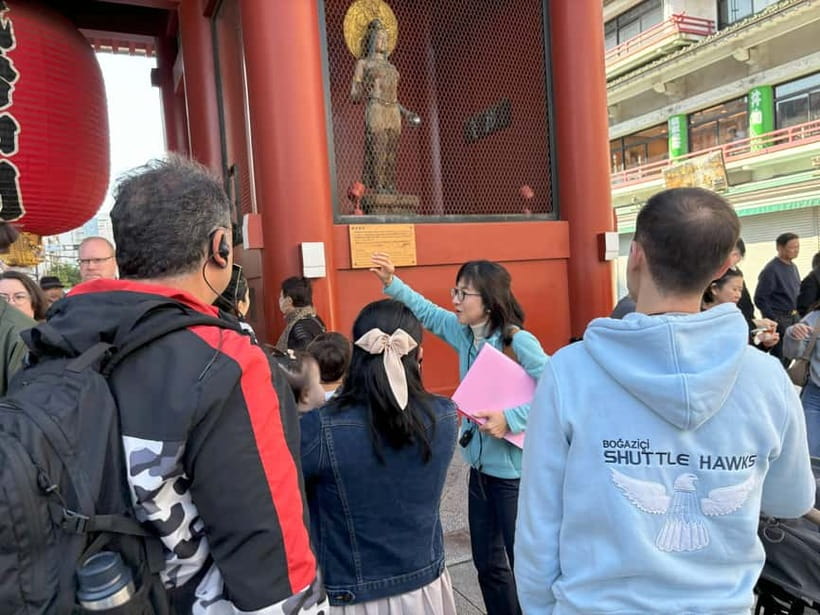
Next up is Kaminarimon (Thunder Gate). This gate is instantly recognizable, but the tour helps you read it. The guide highlights the contrast between Japanese and Western dragons, including how the dragon’s role in Japanese symbolism goes in a different direction than what many people expect from European imagery.
It’s a quick stop, but it’s one of those “mind shift” moments. You realize symbols aren’t universal. They’re shaped by culture—by the stories a society chooses to attach to power, protection, danger, or blessing.
You can also read our reviews of more historical tours in Tokyo



Nakamise Shopping Street: vajra charms, snacks, and ukiyo-e’s Western path
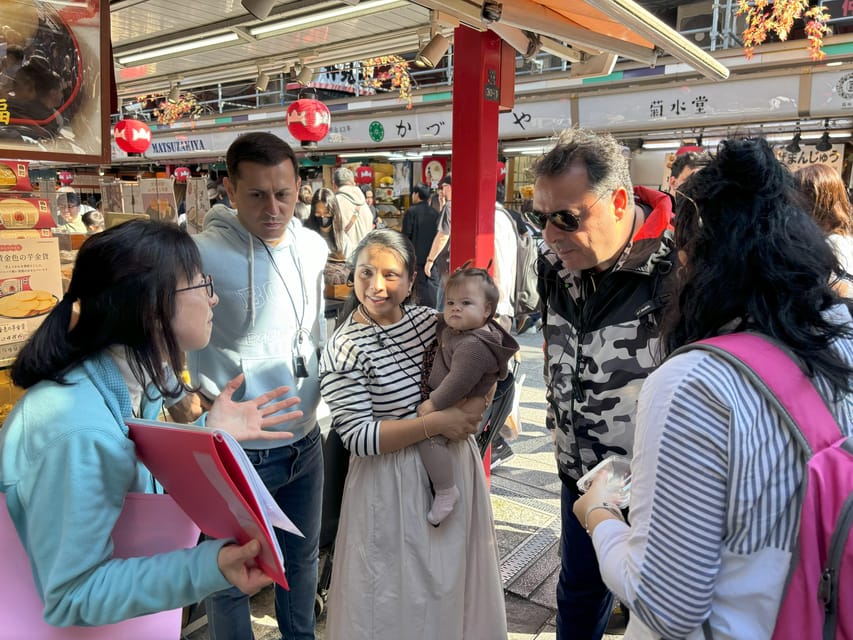
Nakamise Street is where the tour gets more hands-on. You’ll stroll one of Asakusa’s oldest shopping lanes while your guide points out specific religious imagery, including the vajra (tokko) and other Buddhist symbols.
The tour also includes traditional snack tastings, which is a smart way to keep energy up during the walk. Even if you don’t buy anything, the tastings help you slow down and pay attention to what’s around you instead of rushing from gate to gate.
Then comes a bigger historical thread: your guide connects ukiyo-e woodblock prints to their impact in Europe. You’ll learn how these prints reached Western audiences and inspired Western Impressionist painters. It’s not the typical “Japan influenced art” line; your guide frames it as a real chain of transmission—showing you how something made locally can reshape taste across oceans.
Hōzōmon Gate: the 1000-year Japan-Europe mindset comparison
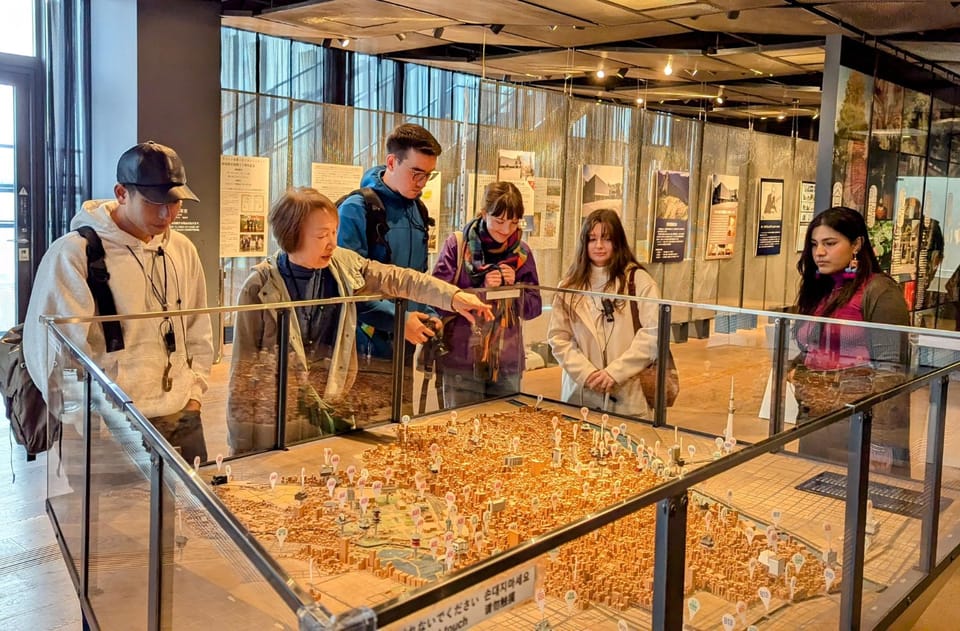
At the Hōzōmon Gate, the tour makes a bold comparison. You’ll hear a surprising truth: people in Japan and in the West shared similar ways of thinking around a thousand years ago.
This is where the tour shifts from “What is this place?” to “How did humans think back then?” You’re not asked to accept a slogan. The guide uses specific visual and symbolic comparisons to explain the parallel, which is the main reason this stop feels memorable instead of just scenic.
Even if you’re not a history person, this is where you’ll start feeling the logic of the walk. It’s not random jumping. It’s a guided attempt to show you the long arc of human meaning-making.
Sensō-ji: oldest Buddhist temple, plus prayer that actually makes sense
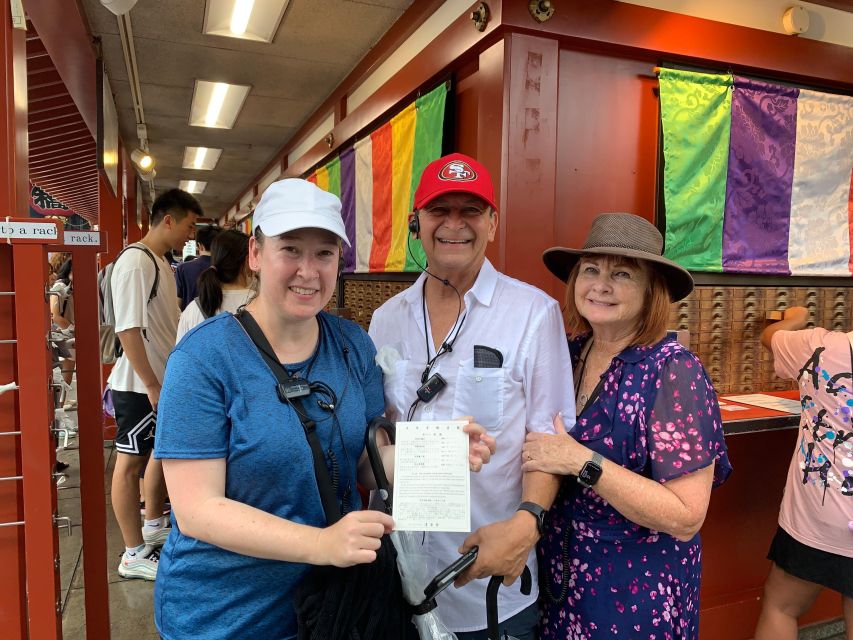
Sensō-ji Temple is the big centerpiece. The tour frames it as Japan’s oldest Buddhist temple and uses it as another comparison point with medieval Europe—again, not just for drama, but to help you understand how belief systems traveled and transformed.
One practical benefit: your guide explains the difference in prayer between Buddhism and Shinto. That’s huge in a place like Sensō-ji, where you’ll see multiple actions and offerings and might wonder what they mean.
Also, the tour emphasizes respectful behavior. If you’re unsure how to move through temple space—when to pause, where to look, how to behave—the guide makes it feel straightforward. You’ll leave knowing what you did was appropriate, not accidental.
Asakusa Shrine next door: one grounds, two traditions for 1,000 years
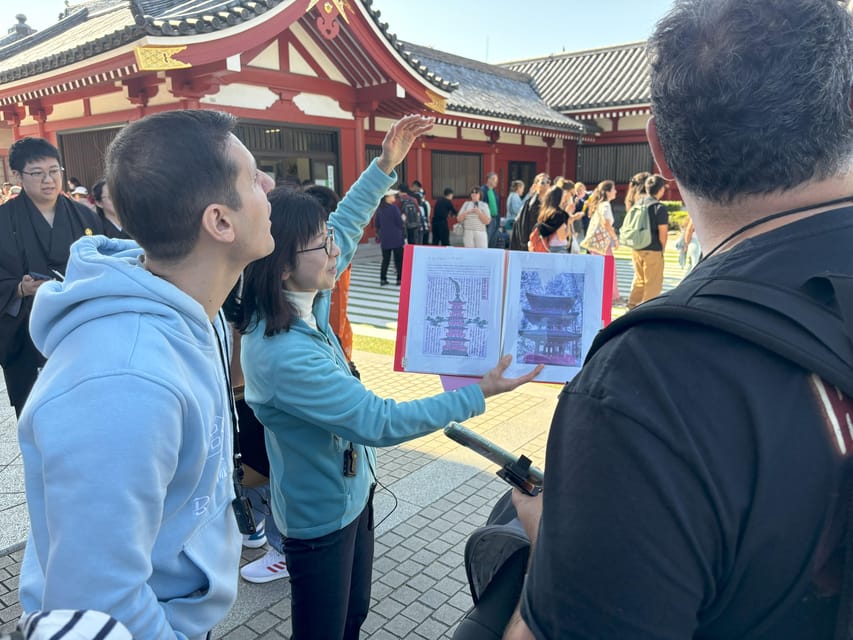
The tour ends at Asakusa Shrine, where one of the most eye-opening ideas comes to life. Your guide explains the peaceful coexistence of Shinto and Buddhism on the same grounds, worshippers included, over a long span of time—about a millennium.
This isn’t just an interesting fact. It’s the tour’s emotional payoff. You’ve spent the morning learning the structure of beliefs, the meanings of symbols, and how Japanese culture interacted with the outside world. Then you finish with a real-life example of coexistence you can stand inside and see.
It also gives you a new lens on what you’ve been viewing. Instead of treating temples and shrines as separate tourism “products,” you start seeing the continuity—how communities lived with more than one framework for meaning.
Price, pacing, and whether 2 hours is enough
At $58 per person for a 2-hour guided walk, the value depends on what you want.
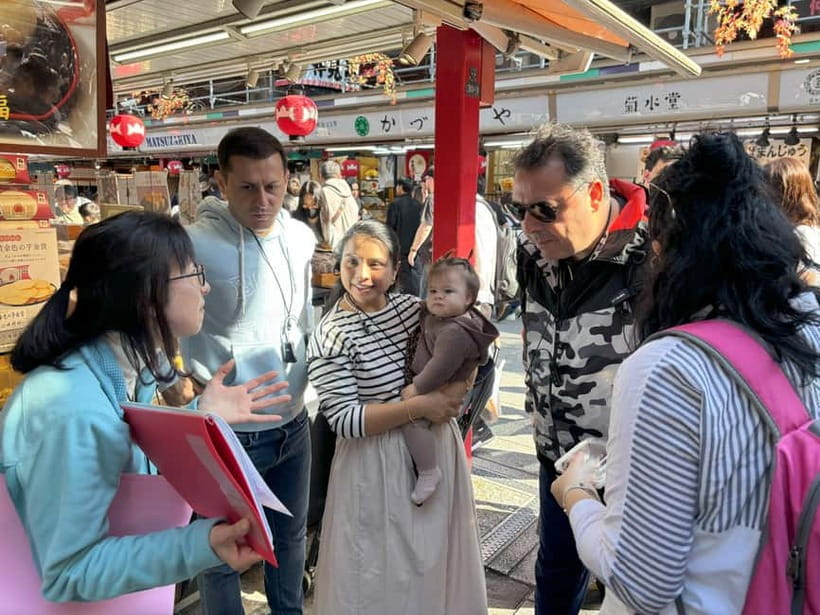
If you only want photos, it’s probably not your best use of money. But if you want understanding—why these gates exist, why religious roles look the way they do, why art traveled the way it did—this price can feel fair. You’re paying for an expert guide, plus headsets for groups of 3 or more so you can hear clearly, plus traditional snack tastings.
The pacing is short and focused: multiple stops, quick explanations, then a move on. It’s ideal for a first-timer in Asakusa who wants context fast. It’s less ideal if you want long unstructured wandering or deep time in one single temple hall.
Who this tour fits best
This works best if you:
- Want a big-picture overview without reading a dozen guidebooks
- Like connections between religion, symbols, and art
- Enjoy walking at a moderate pace on city streets
It’s also a decent pick for kids, since children under 6 can join free and families are welcome. In some cases, your guide may even use a fun activity around the temple area—like a fortune-telling style moment—so younger minds have something interactive to grab.
One caution: it’s not suitable for people with mobility impairments, based on the walking portion of the tour.
The guides: friendly, flexible, and built for engagement
From the guide experience shared by past participants, the common thread is engagement. Names that come up include Choco, Sachi, Amy, Yoko, Yasu, and Kay—and the pattern is the same: guides explain clearly, answer questions, and adapt when the area is extra lively.
For example, when the timing aligns with Sanja Matsuri, you may see mikoshi-related action in the neighborhood, and your guide can help you interpret what you’re seeing instead of just watching from the sidewalk. If you travel with children, a guide’s willingness to keep the story moving can make the whole thing feel less like a lecture and more like a guided exploration.
Should you book this Asakusa big-picture history walk?
Book it if you want to understand Japan quickly, without turning your day into homework. This tour is strongest when you care about meaning: how isolation became reopening, how two religions can share space, and how Japanese art ideas traveled into European classrooms and galleries.
Skip it if you’re the type who prefers slow temple time with no schedule, or if your walking stamina is limited. Also, if you already know a lot about Japanese religious symbolism and Edo-era history, you might feel the explanations are more of a helpful framework than brand-new information.
If you’re in Asakusa for a first visit, though, this is a smart use of a half-day. You’ll get a compact story that makes what you see next in Tokyo feel connected.
FAQ
How long is the tour?
The tour lasts 2 hours.
What does it cost?
The price is $58 per person.
Where do I meet the group?
Meet in front of a Burger King restaurant next to Exit 4 of Asakusa subway station (Ginza Line). Step outside when you reach Exit 4.
What’s included in the price?
Included are a certified English-speaking guide, a walking tour, headsets for groups of 3 or more, and traditional snack tastings.
Do I need hotel pickup?
No. Hotel pickup and drop-off are not included.
Will the tour run in bad weather?
Yes. The tour operates rain or shine.
Is it okay for kids and mobility needs?
Children under 6 can join without charge, though the tour is adult-focused due to its historical focus (families are welcome). The tour involves moderate walking and is listed as not suitable for people with mobility impairments.