REVIEW · TOKYO
Shibuya: Ramen Dojo Tokyo | Make All 3 (Tonkotsu/Shoyu/Miso)
Book on Viator →Operated by Viyago Japan · Bookable on Viator
One hour and a bowl. That’s the bargain here: you leave with three ramen styles you can actually recreate. This Shibuya workshop teaches you noodle-making with a professional machine and then lets you taste tonkotsu, shoyu, and miso side by side.
I like the hands-on pace. You’re not just watching; you knead, cut noodles, prep chicken chashu, and build three mini bowls. I also love that the format is designed for small groups, so the instructor can give you practical tips while you’re working.
One consideration: this isn’t a full-on broth deep-dive class for everyone. If what you really want is mastering soup from start to finish, you may find the noodle focus heavier than you expected, based on prior feedback.
In This Review
- Key points before you commit
- Entering Ramen Dojo Tokyo: Why three styles in one class works
- Getting to Umekita Building near Shibuya Station (and what to plan for)
- The 90-minute schedule: what happens when (minute by minute)
- Noodle making with the pros: fresh ramen starts with your hands
- Chicken chashu prep and finishing: the protein that changes everything
- Soup work and flavor adjustment: what you can control (and what you might not)
- Tonkotsu vs shoyu vs miso: how to learn the differences by eating them
- Small-group energy, English instruction, and real access to the instructor
- What’s included: the value equation (and why $86.22 can make sense)
- Dietary needs and practical limits to check before you go
- Where this class fits best in your Shibuya day
- Should you book Ramen Dojo Tokyo Make All 3?
- FAQ
- How long is the ramen class?
- What ramen styles will I make and taste?
- Is the class taught in English?
- How many people are in the group?
- What food is included?
- What’s included in the cost?
- What should I bring?
- Where does the class start and end?
- Is it suitable for gluten or soy allergies?
- Can I cancel for a full refund?
Key points before you commit
- Make fresh noodles using a professional noodle machine and noodle cutter
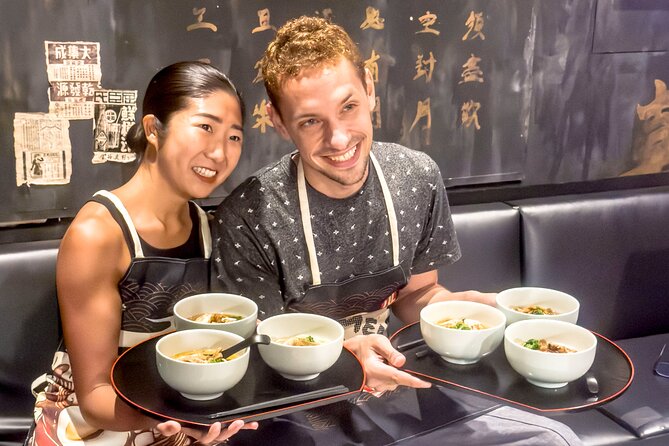
- Build three mini bowls: tonkotsu, shoyu, and miso, finished and plated by you
- English instruction with attentive support in a small group
- Chef-style control: you adjust flavors and learn what changes the taste
- Take-home recipe delivered digitally after the class
- Beginner-friendly workflow that moves step by step through ramen basics
Entering Ramen Dojo Tokyo: Why three styles in one class works
Tokyo is packed with ramen shops. But a class like this gives you something restaurants can’t: hands-on practice across different flavor directions. You’ll work through the core ramen workflow—noodle dough, noodle shaping, chicken chashu prep, and soup assembly—then taste the results as a set.
The big difference is the goal. Instead of one bowl, you’re making a triple lineup: miso, shoyu, tonkotsu. That side-by-side tasting matters because it trains your palate. You get to notice what changes when the base flavor shifts.
I also like the structure. The session is 90 minutes long, and it doesn’t feel like a tour that keeps you waiting. You check in, get briefed, and then you get to work.
You can also read our reviews of more tours and experiences in Tokyo.



Getting to Umekita Building near Shibuya Station (and what to plan for)
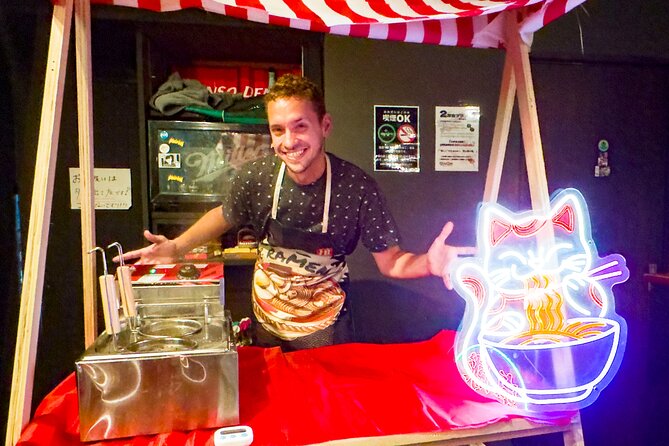
You’ll meet at Umekita Building, at the 7-11 in Maruyamachō, Shibuya. It’s about a 10-minute walk from Shibuya Station, so you’re not trapped in a far-flung neighborhood.
Bring your mobile ticket with you—this is a mobile-ticket experience. You should also plan to wear something you don’t mind getting a little flour or food on. They loan you an apron, which helps, but ramen is still ramen.
The class happens in one place and ends back at the same meeting point. That’s useful if you want to stack it with a Shibuya evening—no extra transit maze after you’re full.
The 90-minute schedule: what happens when (minute by minute)
The lesson follows a tight rhythm. Here’s the flow, in plain terms, so you know what you’re signing up for.
1) Check-in & briefing (10 min)
You’ll get the rundown and likely a quick orientation to the kitchen setup. This is where you learn how the class will move and what you’ll be doing yourself.
2) Chicken chashu prep (5 min)
You’ll start working with the chashu components. The goal here is to set you up for the finishing steps later.
3) Noodle making (20 min)
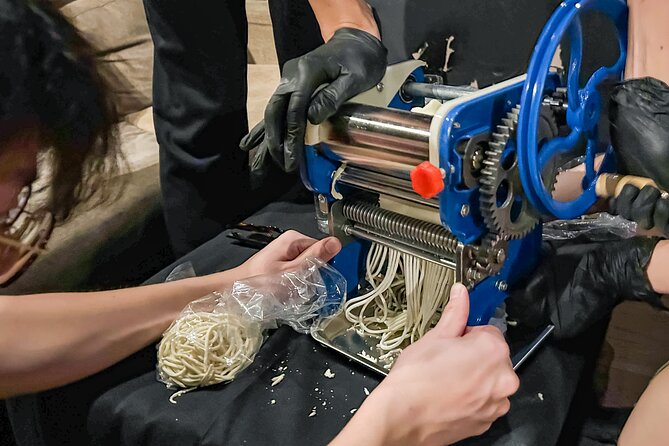
This is the star of the show. You knead the dough, use the professional machine, and cut noodles with a professional cutter.
4) Chicken chashu finishing (10 min)
You’ll finish the chashu step so it’s ready for plating and tasting.
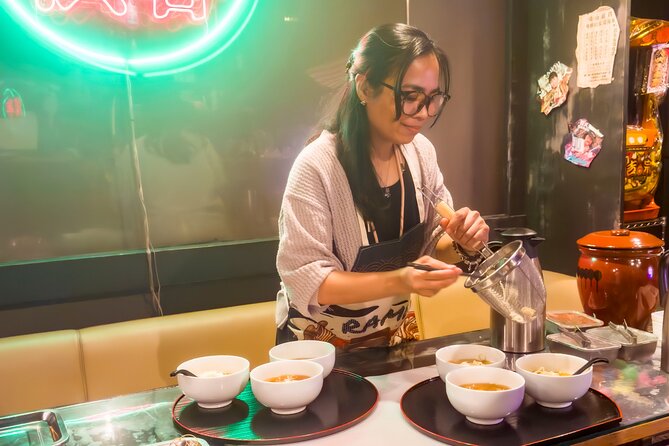
5) Boiling noodles / soup preparation (10 min)
This part ties the noodle work to the soup timeline. You’ll handle enough of the process to understand how ramen comes together.
6) Plating (5 min)
Three mini bowls get assembled. This is where you build the ramen lineup that you’ll taste and photograph.
7) Tasting / photo time (30 min)
You sit down, eat your three bowls, and have time for photos. That time matters because you’re comparing flavor differences while everything is fresh.
Noodle making with the pros: fresh ramen starts with your hands
The class gives you practical noodle-making experience, not just a one-time demonstration. You’ll knead the dough, push it through the noodle machine, and cut the noodles with the professional cutter.
Why this is valuable: ramen noodles aren’t complicated in theory, but they are hard to get right when you’re guessing at thickness and consistency. Doing it with guidance once means you learn what good feels like. Then you can repeat it at home with the digital recipe later.
I also like that the workshop is beginner-friendly. You don’t need to know Japanese cooking terms in advance. You just need patience for the process—because dough work takes a minute to get comfortable.
And yes, your noodles are part of the fun. There’s something satisfying about turning raw dough into ramen strands you’ll eat in the same sitting.
Chicken chashu prep and finishing: the protein that changes everything
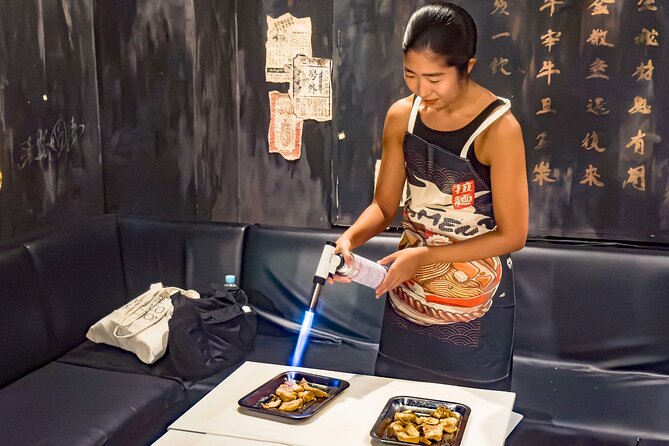
Ramen lives or dies with balance, and chashu is a big part of that. In this lesson you’ll prep chicken chashu early, then finish it later so it’s ready to pair with your noodles and soup.
Even if you don’t become a chashu expert in one session, you’ll learn the workflow: start the prep, then complete it after the noodles are in motion. That timing is how busy ramen kitchens manage food without everything falling behind.
The class also includes fine-tuning and assembly. That means you’re not just cooking components—you’re building the final ramen experience in front of you.






Soup work and flavor adjustment: what you can control (and what you might not)
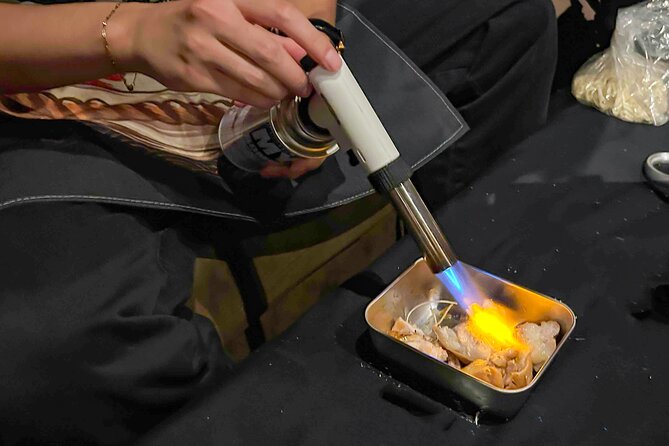
You’ll prepare soup and have a chance to adjust flavors to your preferred taste as part of the process. That’s one of the most useful parts for home cooks. Tokyo ramen can be amazing, but it also makes you wonder what you’re actually tasting.
This workshop focuses on making ramen three ways: tonkotsu, shoyu, miso. That implies you’ll handle different flavor directions rather than repeating the same base.
One practical note: a prior participant feedback mentioned they learned noodles well but wanted more broth detail. So if your main goal is mastering soup technique end-to-end, keep expectations grounded. You’ll get plenty of hands-on ramen-building, but it may not be a full broth chemistry seminar.
Tonkotsu vs shoyu vs miso: how to learn the differences by eating them
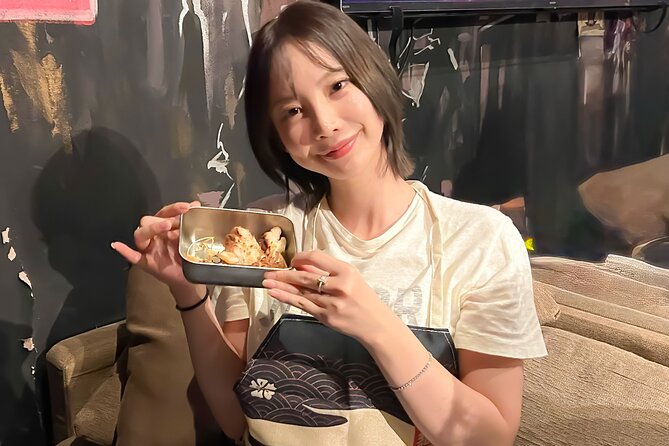
This is the heart of the class. You’ll taste three mini bowls—tonkotsu, shoyu, and miso—side by side in one session. That setup is perfect for learning because you can compare flavors while your palate is still “fresh.”
Here’s how I’d approach the tasting so it actually sticks:
- Start with the style that sounds most familiar to you (so you can anchor your expectations).
- Then compare the next bowl’s saltiness and richness right away.
- Finally, decide which one you’d want to cook again at home, based on what feels easiest to reproduce.
You’ll also have 30 minutes for tasting and photo time. That’s plenty of time to eat slowly and take notes in your head.
And for home cooking: the digital recipe they give you after class can help you recreate the version you liked most. It’s not just a souvenir—it’s a next step.
Small-group energy, English instruction, and real access to the instructor
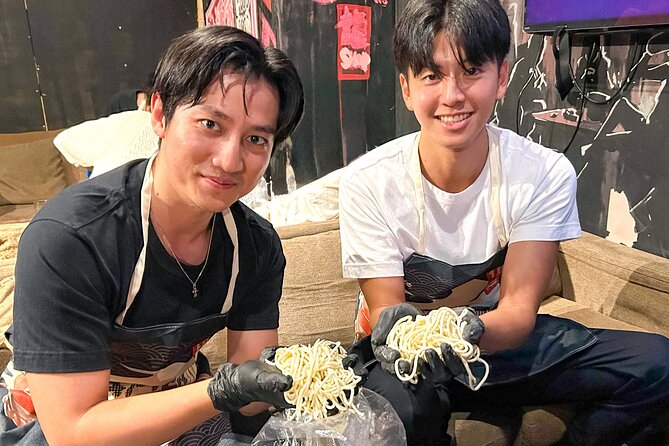
The class caps at a maximum of 8 people, which is a big deal in a hands-on kitchen. More people would mean more waiting. Here, you get time to ask questions while you’re working.
It’s conducted in English, with attentive support. That helps a lot because ramen is full of small technique cues—dough feel, noodle thickness, timing. When you can ask what to look for, you stop guessing.
If you’re coming with a friend, you’ll likely enjoy the shared mess and food. If you’re coming solo, the group size still keeps you from feeling like you’re on display.
What’s included: the value equation (and why $86.22 can make sense)
Price is $86.22 per person for this 90-minute experience. That’s not pocket change, especially in Tokyo where you can find ramen for much less.
But look at what’s included:
- Three mini bowls of ramen (tonkotsu/shoyu/miso)
- English-speaking instructor
- All ingredients
- Use of kitchen equipment (including the noodle machine and cutter)
- Apron loan
- Digital recipe after the class
So you’re paying for: instruction + equipment + ingredients + multiple tasting outcomes. If you only compare it to buying one ramen meal, it seems expensive. If you compare it to a learning experience that produces repeatable skills and three distinct styles of output, the value gets clearer.
Also, the time is efficient. Ninety minutes is enough to learn and eat without losing a full half-day.
Dietary needs and practical limits to check before you go
This experience has clear limits. It is not suitable for severe wheat (gluten), egg, or soy allergies, or celiac disease. It also isn’t suitable for severe airborne flour sensitivity, and it may not work for guests unable to use stairs.
Special dietary substitutes beyond the listed restrictions aren’t guaranteed. If you need strict vegan or religious compliance, you should expect it may not meet your needs.
So the best move is to evaluate your dietary requirements early. If your needs are complex, you’ll want to confirm fit before booking.
Where this class fits best in your Shibuya day
Because it ends where it starts, you can plan it cleanly. Do it earlier in your day and you’ll have energy for more exploring. Do it at dinner time and you’ll likely be full for the rest of the evening.
Shibuya itself is easy to access, and the meeting point near the 7-11 makes it simple to find. After the class, you can head right into the neighborhood with less planning stress.
Also, this is a great option if you’re a food person who doesn’t want only to eat. You’ll interact with the craft, then turn around and taste what you made.
Should you book Ramen Dojo Tokyo Make All 3?
Book it if you want a hands-on ramen skill in one focused session. You’ll learn noodle making with equipment, prep and finish chicken chashu, and taste three styles—tonkotsu, shoyu, and miso—so you can actually tell what you like and how to aim for it at home.
Skip it or adjust expectations if your priority is mastering broth techniques in extreme depth. The class does include soup preparation and flavor adjustment, but the noodle process gets a lot of attention.
Best fit: beginners who want guided cooking practice, food lovers who like comparing flavors, and anyone who’s curious whether they can reproduce restaurant ramen at home with the help of a recipe.
If that sounds like you, this is a fun way to spend 90 minutes in Tokyo—one that ends with real food, not just photos.
FAQ
How long is the ramen class?
The class is about 1 hour 30 minutes (about 90 minutes) total.
What ramen styles will I make and taste?
You’ll make and taste three styles: tonkotsu, shoyu, and miso.
Is the class taught in English?
Yes. The class is conducted in English with attentive instructor support.
How many people are in the group?
The class has a maximum group size of 8.
What food is included?
You’ll get three mini bowls of ramen to taste, one for each style.
What’s included in the cost?
The price includes ingredients, the use of kitchen equipment, an apron loan, and the tasting of your ramen. You also receive a digital recipe after the class.
What should I bring?
You should bring your mobile ticket. The rest is handled in the kitchen setup, and you’ll get an apron.
Where does the class start and end?
It starts at Umekita Building, 7-11 Maruyamachō, Shibuya, Tokyo, and it ends back at the same meeting point.
Is it suitable for gluten or soy allergies?
It is not suitable for severe wheat (gluten), egg, or soy allergies, or for celiac disease. It also isn’t suitable for severe airborne flour sensitivity.
Can I cancel for a full refund?
Yes, you can cancel for a full refund if you cancel at least 24 hours in advance. If you cancel less than 24 hours before the start time, the amount you paid will not be refunded.