REVIEW · TOKYO
Full Day Private Tokyo Tour for Wheelchair Users
Book on Viator →Operated by アウテック · Bookable on Viator
A Tokyo day without the wheelchair stress.
This private tour is built for wheelchair users, using a private vehicle so you can skip the train-and-transfer puzzle. I like the fact that you’re not stuck in a one-size-fits-all route either, and guides such as Umi, Roberto, and Gen focus on what you actually want to do during the day.
Two things I really like: the air-conditioned private transport (handy in summer) and the practical onboard extras—snacks, bottled water, and Wi-Fi. One consideration: the day is fast-paced by design, with several sights viewed from the car or in shorter stops, so you’ll want to plan for extra time at places that need it—especially at gardens and temple grounds where paths can vary.
In This Review
- Key points that make this tour work in real life
- A wheelchair-friendly Tokyo day, minus the transit headache
- Price and value: $731.60 per group can be a smart spread
- Where the day starts: Tokyo Station pickup and an easy landing
- Your day’s route: from Tsukiji’s outer market to Shibuya’s crossroads
- Stop 1: Tsukiji Jogai Market (about 1 hour, free)
- Stop 2: Hama Rikyu Gardens (about 1 hour, admission not included)
- Stop 3: Ginza (about 1 hour, free, sightseeing mostly by car)
- Stop 4: Imperial Palace (about 30 minutes, free, car window)
- Stop 5: National Diet Building (about 30 minutes, free, car window)
- Stop 6: Senso-ji Temple (about 1 hour, free)
- Stop 7: Omotesando (about 30 minutes, free, mostly car window)
- Stop 8: Harajuku (about 30 minutes, free)
- Stop 9: Meiji Jingu Shrine (about 1 hour, free)
- Stop 10: Shibuya Crossing (about 30 minutes, free, car window)
- Stop 11: Daikanyama (about 30 minutes, free)
- What the guide support really changes (Umi, Roberto, and Gen)
- Wi-Fi, snacks, and air-conditioning: the comfort trio that keeps you moving
- Accessibility reality check: ask the right questions for the smoothest day
- Who should book this wheelchair-friendly private Tokyo tour?
- Should you book? My practical decision checklist
- FAQ
- How long is the full day private Tokyo tour?
- How many people are in a group?
- Where do we meet and where does the tour end?
- Is pickup included?
- Is Wi-Fi available during the tour?
- Are snacks and bottled water included?
- Is lunch or dinner included?
- What attractions are included during the day?
- Is free cancellation available?
Key points that make this tour work in real life
- Private door-to-meet pickup from Tokyo Station area means less wrangling before you even start seeing sights
- Car-window sightseeing for major landmarks reduces walking time while still getting the Tokyo wow-factor
- Tsukiji Jogai Market keeps the outer-market vibe alive after the main market moved to Toyosu in 2018
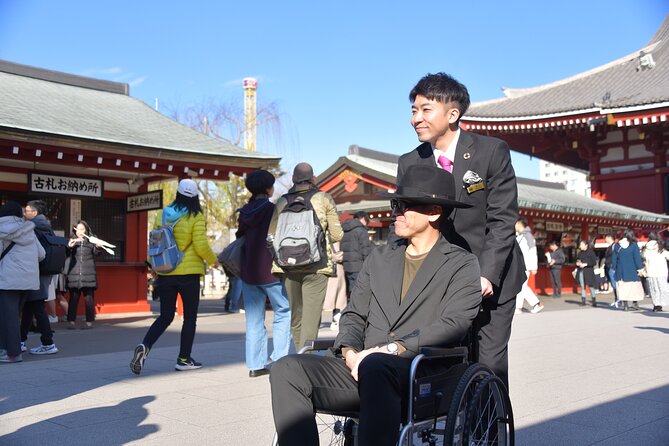
- Guides help with mobility equipment, including handling a mobility scooter during the day
- Wi-Fi plus snacks and bottled water keeps the ride comfortable and helps you stay oriented
A wheelchair-friendly Tokyo day, minus the transit headache
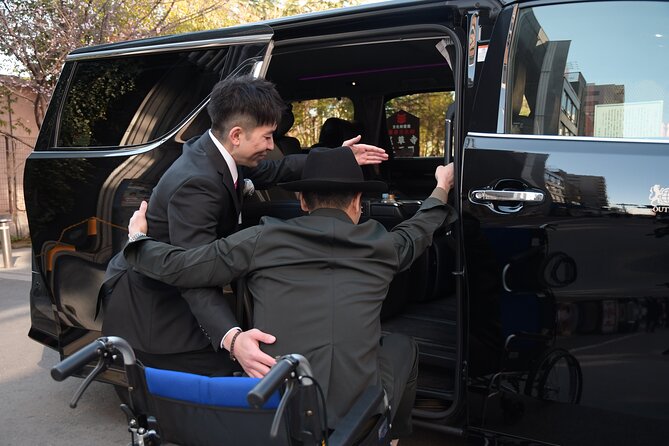
Tokyo is gorgeous, but it can be exhausting when the plan involves stations, stairs, and last-minute route changes. This tour keeps you in one private vehicle for the day, with a guide riding along so navigation is handled for you. You also get that rare luxury: your schedule can shift based on what feels right that day, not what the city’s transit map allows.
The “designed for accessibility” part matters most because it changes the whole rhythm of the sightseeing. Instead of spending energy figuring out how to move between neighborhoods, you spend energy actually looking at Tokyo—markets, shrines, architecture, and people-watching.
And yes, the comfort piece isn’t small. On a hot day, a guide like Umi (with Roberto in one example) can help you stay comfortable and focused, even down to managing mobility equipment during stops.
You can also read our reviews of more private tours in Tokyo

Price and value: $731.60 per group can be a smart spread
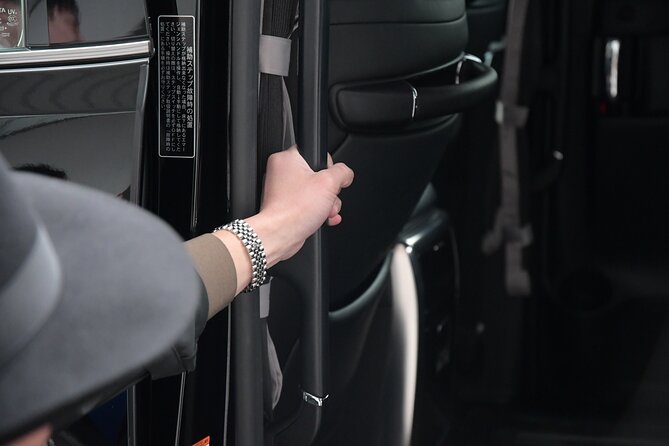
At $731.60 per group (up to 9 people) for about 8 hours, the value depends on your group size. If you’re traveling with family or friends, the per-person cost can drop quickly compared to paying individually for a guide and private transport.
Even if you’re a smaller group, you’re paying for something that’s hard to DIY when accessibility is part of the equation: a private vehicle, a guide who can tailor your day, and a route that aims you toward wheelchair-considerate stops. That’s a big deal in Tokyo, where “getting there” can become the whole day.
Think of it this way: you’re not just buying sightseeing tickets. You’re buying time, comfort, and a lower-stress way to move through multiple districts in one day.
Where the day starts: Tokyo Station pickup and an easy landing
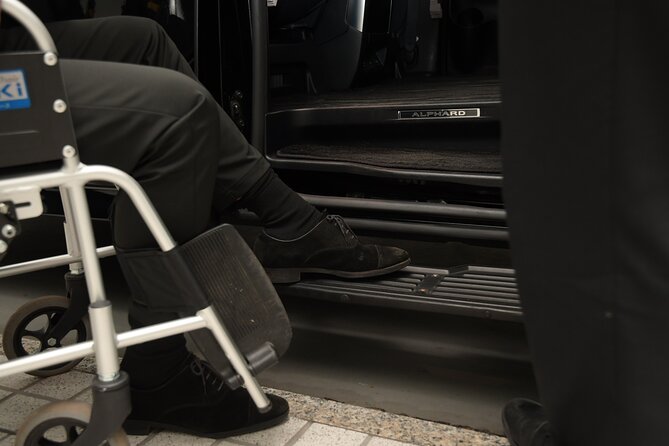
The meeting point is Tokyo Station (1 Chome-9 Marunouchi, Chiyoda City). The tour also ends back at the meeting point, so you’re not stuck figuring out where to reposition at the end of a long day.
Starting from Tokyo Station is practical. It’s a central hub, and it reduces the chance you’ll lose time commuting before your tour even begins. For a wheelchair user, that matters even more, since it’s one less chain of transfers and navigation tasks.
The tour runs during the morning window on the dates listed (opening hours shown as 7:00 AM–2:00 PM for the specified date ranges). That means you can choose a start time that fits the weather and your energy level.
Your day’s route: from Tsukiji’s outer market to Shibuya’s crossroads
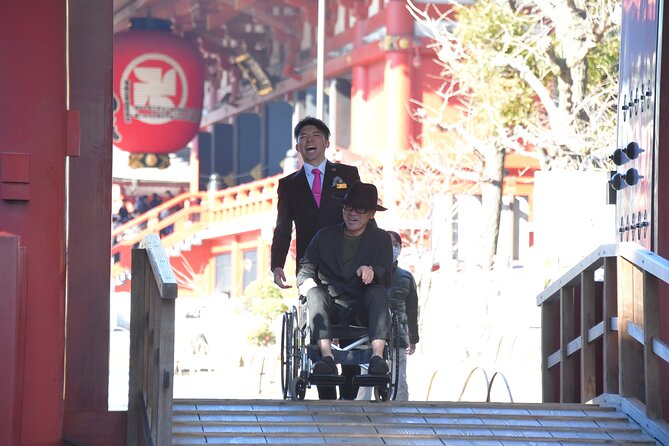
This is an all-day sampler of Tokyo with a mix of traditional and modern neighborhoods. Some stops are walk-and-explore style, while others are timed for visibility with shorter time on-site, including viewpoints from the vehicle.
Stop 1: Tsukiji Jogai Market (about 1 hour, free)
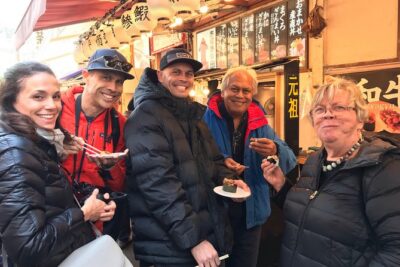
Tsukiji is one of those names that still makes people perk up, even though the main market shifted in 2018 to Toyosu. Here, you’re going to the outer market, which keeps that classic shopping-and-snacking feel alive.
For your day, I like Tsukiji at the start because it sets the tone fast: food stalls, small shops, and plenty of interesting items without needing to commit to an all-day market marathon. You can usually graze, take photos, and decide how much you want to linger.
Accessibility note to keep in mind: markets are often busy and can have uneven surfaces. Use the guide’s expertise to choose the smoothest paths and decide what feels comfortable.
You can also read our reviews of more tours and experiences in Tokyo

Stop 2: Hama Rikyu Gardens (about 1 hour, admission not included)
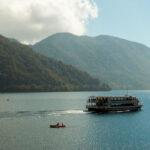
Hama Rikyu Gardens is a change of pace—quiet, scenic, and historically layered. The area served as a residence for a feudal lord and even as duck hunting grounds between the 17th and 19th centuries before it became a garden.
I’d treat this as your “reset” stop. After Tsukiji’s energy, the garden gives you space to slow down and enjoy Tokyo’s green moments.
One consideration: since this is a garden, paths and footing may vary. Ask your guide how long you can stay comfortably and where the smoothest routes are for your specific chair or mobility device.
Stop 3: Ginza (about 1 hour, free, sightseeing mostly by car)
Ginza is upscale Tokyo—boutiques, galleries, craft shops, and architecture that feels designed to be photographed. This stop is primarily a car-window experience, which is useful if you want the look of a district without burning energy on longer walking loops.
If you like seeing how Tokyo presents itself—clean streets, big-brand storefronts, and modern design—Ginza is a strong contrast to the older neighborhoods later.
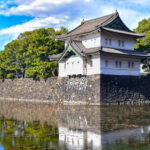
Stop 4: Imperial Palace (about 30 minutes, free, car window)
The Imperial Palace grounds are tied to major chapters of Japan’s power story. It used to be the castle of the Tokugawa shogun family (from 1603 to 1868), then became the Imperial Palace when political power returned to the Emperor Meiji.
This is brief here, but you still get the big landmarks and context without a long time commitment. If you’d rather slow down, a private guide can sometimes adjust the timing based on what fits you.
Stop 5: National Diet Building (about 30 minutes, free, car window)
The National Diet building is one of the rare Tokyo structures that survived the 1945 air raids. Built in 1936, it’s a major symbol of Japan’s government, and it’s easy to appreciate even from the road when you’re moving along efficiently.
Again, the short duration is intentional. It keeps your day balanced so you’re not overloading on walking while still seeing big-name Tokyo landmarks.
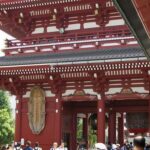
Stop 6: Senso-ji Temple (about 1 hour, free)
Senso-ji is one of Tokyo’s best-known temples and the oldest temple in the city. The story goes back to Asakusa, with the name appearing in history in 628 after a Kannon statue was caught by two fishermen.
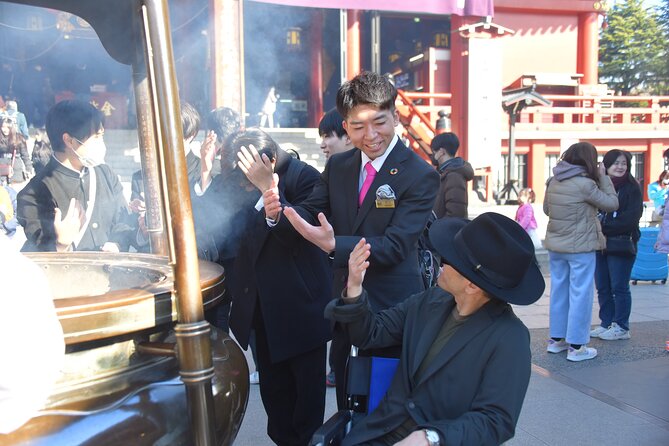
This is your classic Tokyo spiritual stop—incense atmosphere, temple energy, and photo-worthy details. With about an hour, you get enough time to see the main sights without it turning into a full-day commitment.
Accessibility consideration: temple streets and approaches can be crowded or uneven. Your guide can help you time it and choose a comfortable route.
Stop 7: Omotesando (about 30 minutes, free, mostly car window)
Omotesando is architecture-forward. It’s known for buildings designed by leading architects, and it also has a strong fashion identity with major brand presence.
This is a “spot the designs” stop—quick, visual, and helpful if you like seeing how modern Tokyo styles itself.
Stop 8: Harajuku (about 30 minutes, free)
Harajuku gives you a hit of youth culture: unique fashion, bold designs, and a street-level feeling that’s very much Tokyo.
This is another short stop, which works because you can soak up the scene, take a few key looks, and move on before the day wears you down.
Stop 9: Meiji Jingu Shrine (about 1 hour, free)
Meiji Jingu is a calmer moment. It’s a pleasant break from busy streets, and the atmosphere can feel like you’re stepping into a different pace.
One detail I like here: on Saturdays and Sundays, you might be able to see a traditional Japanese wedding ceremony. That’s the kind of bonus moment that can make a day feel special without requiring extra planning.
Accessibility consideration: shrine grounds can be spacious, but paths vary. Your guide is the best person to ask where your route will feel easiest.
Stop 10: Shibuya Crossing (about 30 minutes, free, car window)
Shibuya Crossing is famous for a reason. It’s described as the busiest intersection in the world, and even a quick look gives you a real sense of Tokyo’s scale and energy.
Since this stop can be viewed from the vehicle, you can enjoy the landmark without the strain of navigating heavy foot traffic yourself.
Stop 11: Daikanyama (about 30 minutes, free)
Daikanyama is a gentler-feeling Tokyo district. It’s filled with boutiques and cafes, and it’s often described as less hectic than more famous nearby areas like Shibuya.
I like ending the day with this kind of vibe because it’s where you can mentally unwind. It’s also a good area to spot the “Tokyo style” people talk about—without the feeling that you’re trapped in the biggest crowd magnets.
What the guide support really changes (Umi, Roberto, and Gen)
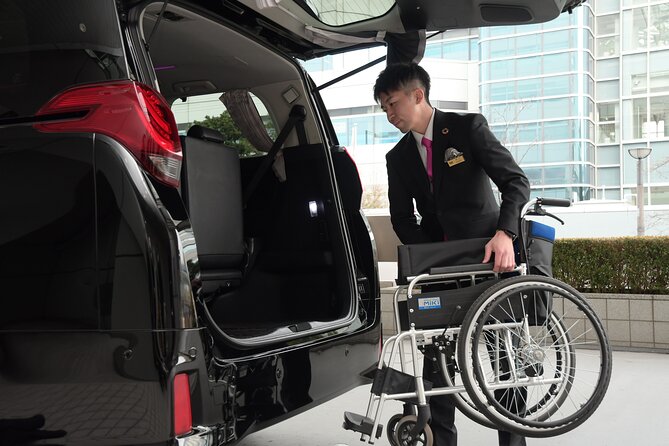
The strongest praise here isn’t just about knowing Tokyo. It’s about how the guides handle the human part of the day.
In one example, Umi (with Roberto) made sure to keep people cool on a hot day and actively asked what experiences mattered most. That matters because a private accessible tour works best when it isn’t locked into a script. You shouldn’t have to choose between comfort and seeing the sights—you should be able to do both.
Another example involved Gen, who customized the tour and kept things kind and flexible. If you’ve got specific interests—food first, architecture focus, shopping time, temple time—this kind of responsiveness is the difference between a decent day and a great day.
And there’s the practical support piece: Umi and Roberto handled a mobility scooter during the day. Even if your setup is simpler, it’s a good sign that the staff doesn’t treat equipment as an afterthought.
Wi-Fi, snacks, and air-conditioning: the comfort trio that keeps you moving
This isn’t just a “ride with a guide” situation. The vehicle includes air-conditioning, bottled water, snacks, and Wi-Fi.
In Tokyo, that combo helps for three reasons:
- You can cool down fast before you reach the next stop
- You won’t burn energy hunting for quick food breaks
- You can stay online to check directions, read a map, or manage accessibility needs for your day
It’s also a great safety net when you don’t want to guess how long a neighborhood stop will take. If you’re waiting between sights, having Wi-Fi can keep you feeling less cut off and more in control.
Accessibility reality check: ask the right questions for the smoothest day
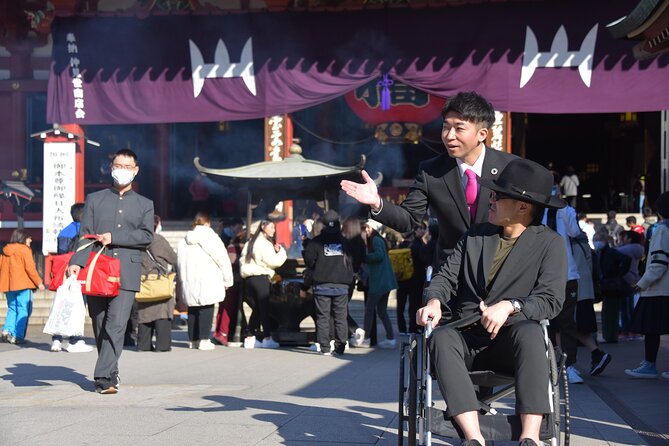
Even with a tour designed for wheelchair users and private transport, Tokyo’s public places can still vary. Gardens and temple grounds may have different surfaces, and crowded areas can affect how easy it is to get around.
Here’s what I’d suggest you ask your guide before you start (or as early as possible):
- Which stops are easiest for my mobility setup on that specific day
- Where you’ll have the most comfortable routes within each area
- Whether any portions are best viewed by car to reduce fatigue
- How the guide plans to handle transfers or device positioning during stops
This tour’s flexibility helps. The goal is to remove the guesswork, not pretend every street is identical.
Who should book this wheelchair-friendly private Tokyo tour?
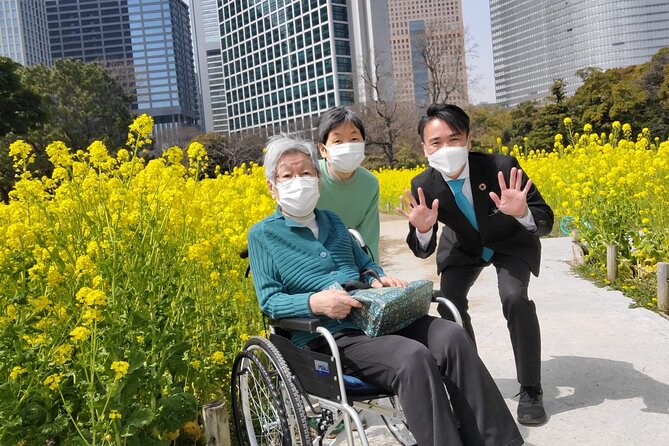
This is a great fit if:
- You want to see a lot of Tokyo in one day without relying on trains or buses
- You’d rather spend energy on sights than on logistics
- You want a route shaped around your preferences and pacing
- Your group includes someone who uses a wheelchair and you want a private transport setup
It might not be the best fit if you prefer slow, deep walking sessions in only one or two neighborhoods. This is a sampler day with short-to-medium stop times, plus car-window viewing at several landmarks.
Should you book? My practical decision checklist
Book this tour if you want maximum Tokyo coverage with minimum transit hassle. It’s especially worth it when accessibility makes DIY navigation stressful, and when you want a guide who can adapt the day to your interests.
Skip it (or consider a different style of tour) if your priority is staying in one place for a long time, or if you want fewer car rides and more extended time at fewer stops.
If you’re balancing comfort, pacing, and seeing Tokyo’s big-name contrasts—market energy, garden calm, temple atmosphere, and modern districts—this private accessible day is a very reasonable way to do it.
FAQ
How long is the full day private Tokyo tour?
It runs for about 8 hours.
How many people are in a group?
The tour is priced per group and can accommodate up to 9 people.
Where do we meet and where does the tour end?
You meet at Tokyo Station (1 Chome-9 Marunouchi, Chiyoda City, Tokyo 100-0005, Japan). The tour ends back at the same meeting point.
Is pickup included?
Pickup is offered.
Is Wi-Fi available during the tour?
Yes. Wi-Fi is available on board the vehicle.
Are snacks and bottled water included?
Yes. Snacks and bottled water are included.
Is lunch or dinner included?
No. Lunch and dinner are not included.
What attractions are included during the day?
The day includes stops such as Tsukiji Jogai Market, Hama Rikyu Gardens, Ginza, the Imperial Palace area, the National Diet Building area, Senso-ji Temple, Omotesando, Harajuku, Meiji Jingu Shrine, Shibuya Crossing, and Daikanyama.
Is free cancellation available?
Yes. You can cancel up to 24 hours in advance for a full refund.