REVIEW · TOKYO
Asakusa: Japanese kitchen knife store visits after history tour
Book on Viator →Operated by Arumachi · Bookable on Viator
A river, a temple, and a knife shop in one morning. This is an Asakusa tour that pairs Senso-ji area storytelling with real help choosing Japanese kitchen knives.
I like that it’s a small group (max 8), so you actually get time with the guide, not just a rush past the sights. I also like the end goal: you’re shopping for kitchen tools right where local chefs and home cooks shop in daily life.
One thing to consider: if your main goal is shopping only, the early history walk may feel long. The good news is the pace and focus can lean toward knives if that’s what you care about most.
In This Review
- Key points before you go
- Value and what your $78.18 actually buys
- Where it starts (and why getting there matters)
- Sumida Park: the history opener that sets the tone
- The Asakusa Culture Tourist Information Center viewpoint stop
- Kaminarimon and Nakamise: gates and the approach to Senso-ji
- Hozomon and Senso-ji: the main temple moment, explained
- Denboin Garden: a calmer shift after the main sights
- Kappabashi Street: where you go from stories to sharp decisions
- How to shop smart in an hour
- Budget note
- Guides, headsets, and why small groups matter here
- Tickets, timing, and what’s likely free
- Who should book this and who should skip it
- Should you book this Asakusa history + knife tour?
- FAQ
- How much does the Asakusa history and Japanese kitchen knife tour cost?
- How long is the tour?
- What is the group size limit?
- Are headsets included?
- Where do I meet for the tour?
- Where does the tour end?
- Is hotel pickup or drop-off included?
- Which parts have admission fees?
- What time does the tour start?
- What’s the cancellation policy?
Key points before you go
- Sumida Park ties into Senso-ji’s origin story, including a 1400-year connection to the river.
- Max 8 people keeps the visit personal and makes it easier for the guide to answer questions.
- Headsets are included for groups of 3 or more, so you can hear the guide even in busier streets.
- You pass the major Senso-ji gate sequence (Kaminarimon, Nakamise area, Hozomon, Senso-ji itself).
- You get an Asakusa viewpoint stop at the Culture Tourist Information Center’s observation deck.
- Kappabashi Street is the knife target zone, with many stores that sell kitchen knives for restaurant operators.
Value and what your $78.18 actually buys
This tour runs about 3 hours 30 minutes and costs $78.18 per person. For Tokyo, that’s not a budget price, but it can be good value because you’re getting two things at once: guided cultural context and targeted shopping help.
The history portion isn’t just name-drops. You move through the Senso-ji approach step-by-step, starting in the Sumida area and working toward the main temple complex. Then the tour shifts to practical shopping at Kappabashi Street, the famous kitchenware strip. You’re not left to interpret knife jargon on your own. The guides are the key value here, and they seem to be the kind of people who can explain both the why of the area and the how of choosing tools.
Also, the format matters. With mobile tickets and a small group size, the visit tends to feel more like a focused neighborhood walk than a big bus excursion. If you hate being herded, this setup is a plus.
You can also read our reviews of more historical tours in Tokyo


Where it starts (and why getting there matters)
You meet at 2-chōme-20-6 Kaminarimon, Taito City, Tokyo 111-0034 at 9:30am. The route ends at Kappashi Dougugai Kitchen Town, 3-chōme-18-2 Matsugaya, Taito City, Tokyo 110-0036.
There’s no hotel pickup/dropoff, so plan on reaching the meeting point by public transit. The good part: the meeting location is in the Kaminarimon/Senso-ji zone, which is a naturally easy area to navigate once you’re there.
Timing is also part of the value. Starting in the morning means you get the temple area and shopping street experience before the day fully cranks up. You also avoid the classic late-start problem: rushing through the gates and then regretting not asking about knives earlier.
Sumida Park: the history opener that sets the tone
Stop 1 is Sumida Park, about 15 minutes. The story you’re given here is specific: this river area has been one of Tokyo’s important rivers, and the tale links Senso-ji’s origins back roughly 1400 years. It’s a neat way to start because you’re not yet trapped inside temple crowds. You’re building the “why” before the “where.”
Why this stop works: It gives you a frame for what you’re about to see. When you later hear about Senso-ji, it’s not just a postcard. It has a location-based origin story.
Potential drawback: This is a quick stop. If you’re craving deep temple-and-history immersion before anything else, you may wish the tour started a bit later or spent more time here. Still, the short duration keeps the schedule moving toward the knives.
The Asakusa Culture Tourist Information Center viewpoint stop
Stop 2 is Asakusa Culture Tourist Information Center for about 30 minutes. It includes a visit to the open terrace observation deck on the top floor, where you can get a view over the Asakusa/Senso-ji area.
This is one of those stops that can feel optional on paper, but it helps. You see the neighborhood from above, and suddenly the street layout makes more sense when you’re back down walking. It’s also a good break point in a morning that starts early and covers a lot of ground.
Kaminarimon and Nakamise: gates and the approach to Senso-ji
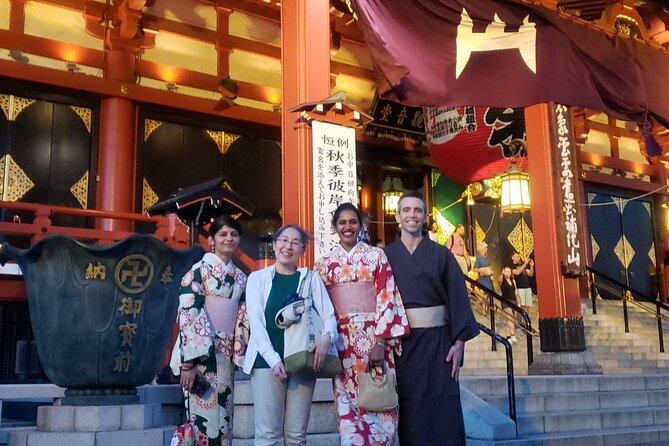
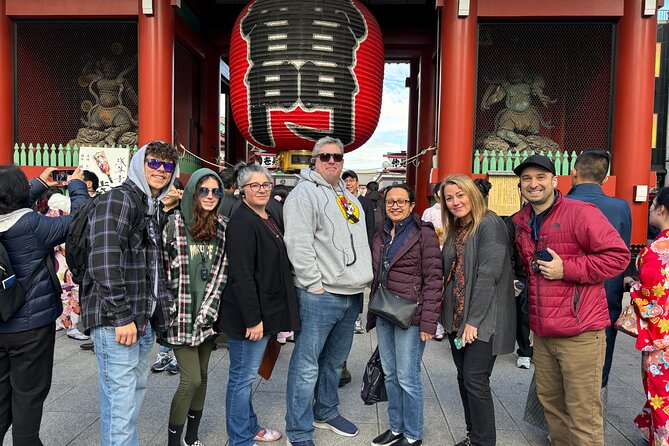
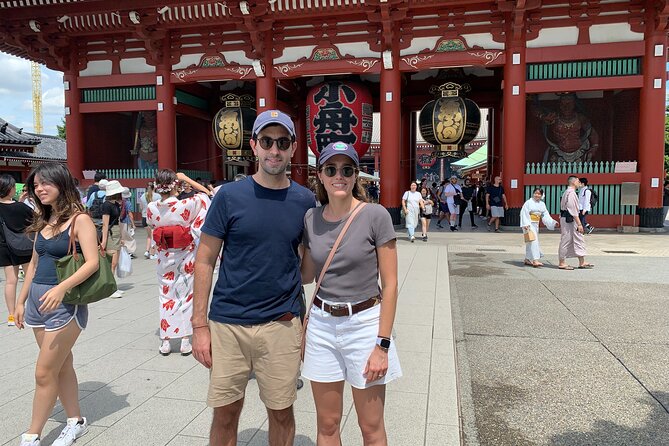
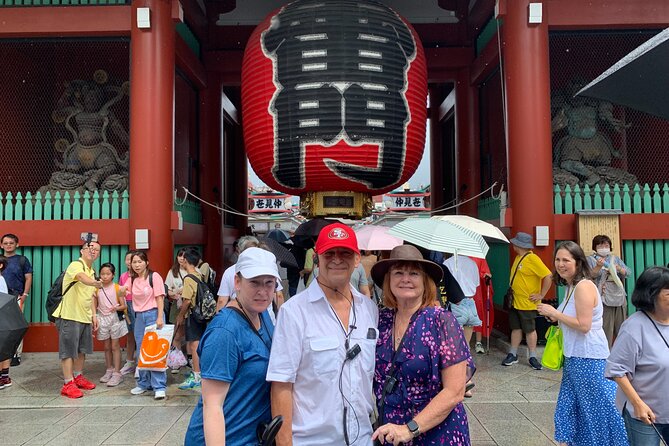
Stop 3 is Kaminarimon (Thunder Gate), about 15 minutes. The headline detail is the giant red lantern hanging under the gate. This gate is essentially the entrance into the Senso-ji world, so it works as your first “big landmark moment.”
Stop 4 is Nakamise Shopping Street for about 15 minutes. The vibe you get here is described as friendly and welcoming, not solemn. It’s the classic approach street to Senso-ji, with shops along the way.
What I like about this pairing: A gate is a visual marker, and a street is the human layer. You get both the iconography and the everyday commerce that supports the tourist experience. It makes Senso-ji feel like part of a living neighborhood rather than a sealed-off monument.
What to watch for: Since Nakamise is shopping-focused, you’ll probably see items that tempt you early. Keep your eye on the tour’s end goal—Kappabashi is where the kitchen knives shopping is concentrated—so you don’t overspend in a different lane.
You can also read our reviews of more shopping tours in Tokyo


Hozomon and Senso-ji: the main temple moment, explained
Stop 5 is Hozomon (“Treasure-House Gate”) for about 15 minutes. It’s the inner of two large entrance gates leading to Senso-ji. The gate is two stories, and the upper level houses what’s described as many of the temple’s key elements.
Stop 6 is Senso-ji Temple itself, about 15 minutes. It’s described as Tokyo’s oldest temple and one of its most significant. You’ll also hear about the five-story pagoda nearby and a detail about Buddha’s ashes associated with the Sri Lanka government and Buddhist society for goodwill.
Stop 7 is Asakusa Shrine, about 15 minutes. It’s a Shinto shrine right next to Senso-ji. The “mystery” focus here is the coexistence of these two religious identities in the same premises.
Why these stops feel worth it even in short doses: The tour doesn’t just say “look at the gate.” It gives a reason for the sequence: gate-to-gate, temple-to-shrine. That helps you read the complex quickly without feeling lost. In a place this well-known, that’s actually a big deal—otherwise you just snap photos and move on.
Denboin Garden: a calmer shift after the main sights
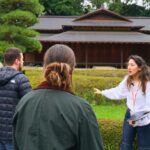
Stop 8 is Sensō-ji Denboin Garden, about 30 minutes, and it’s a change of pace. After the main temple magnitude, you shift into the Rokku area (described as a traditional entertainment district). Then, within the garden experience, you walk through a progression described as going from the Meiji period to the present day, with stops along the way.
What I like here: It breaks the morning into two moods: big landmark viewing, then a quieter, more curated atmosphere. If you’re someone who gets temple-fatigue, this garden time helps.
Time reality check: It’s still only 30 minutes, so expect to be guided through the highlights rather than to wander for hours.
Kappabashi Street: where you go from stories to sharp decisions
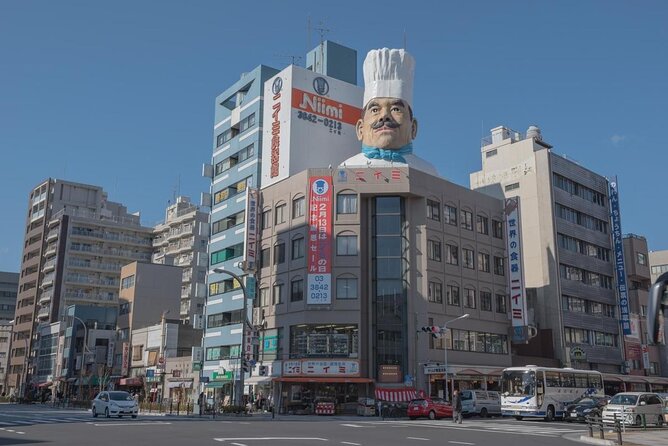
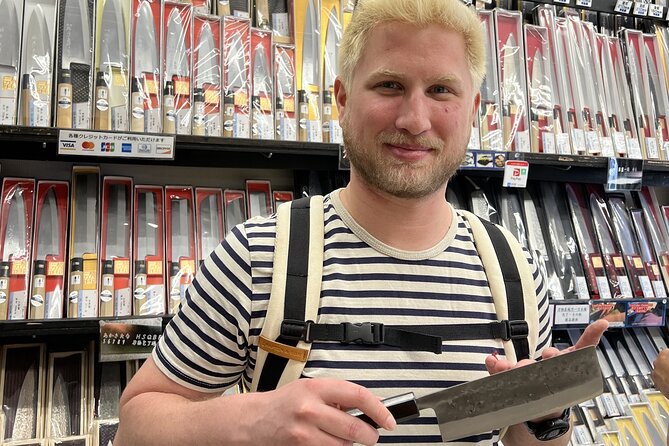
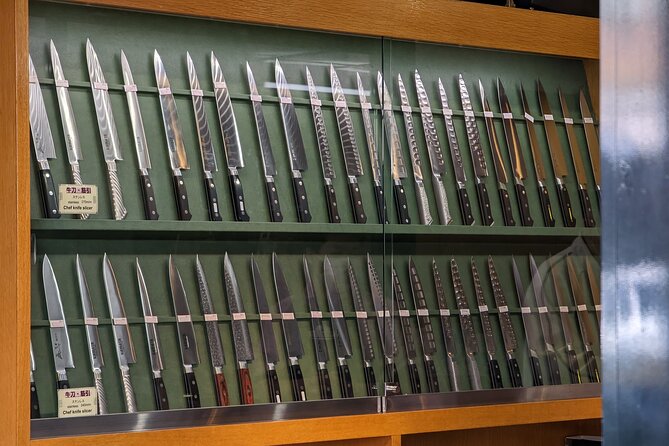
Stop 9 is Kappabashi Street (Kappabashi Dogugai), about 1 hour. This is the shopping heart of the tour. The area is lined with stores selling kitchen equipment, including kitchen knives for restaurant operators.
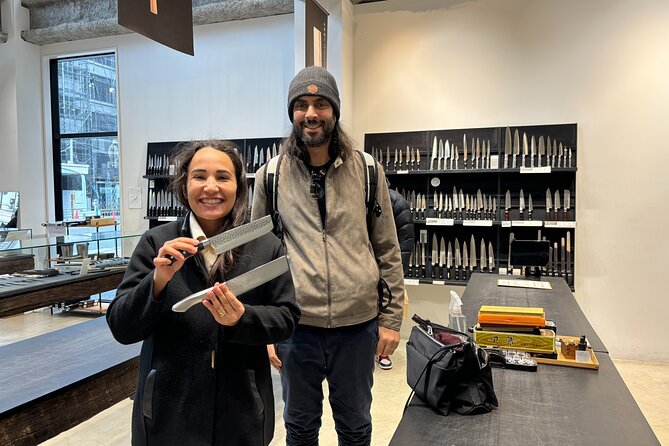
This is also where the guide support matters most. The tour description makes it clear you’ll shop with help, and the human factor shows up in how people talk about their guide while choosing knives. Names you may hear mentioned include Kay, Sue, Amy, and Akiko—and the pattern is consistent: they help you connect what you see to what you’ll actually use.
How to shop smart in an hour
With only about an hour, don’t show up deciding in the moment from scratch. I suggest you do a quick self-check before you arrive:
- What tasks do you cook most (veg prep, slicing meat, general all-purpose work)?
- Do you want a gift, or something you’ll use at home?
- Are you aiming for a single great knife or multiple smaller ones?
Then use the guide’s questions as your compass. Even if you don’t know knife terminology, you can describe what you cook and what kind of cutting you want to make easier. A good guide can translate that into what to look for.
Budget note
Knife shopping can spiral quickly because every shop feels like it has the perfect option. The tour gives you a focused runway, which helps. Still, decide ahead of time what you want to spend so the excitement doesn’t do the math for you.
Guides, headsets, and why small groups matter here
This is capped at 8 travelers. For groups of 3 or more, the tour includes headsets so you can hear the guide even at a distance. In practice, that matters on temple approach streets where people change pace constantly.
The guide quality also seems to be a core part of the experience. People have described guides as flexible when interest differs. For example, if knives are your priority, the tour can tilt so the history walk isn’t longer than it needs to be.
That flexibility is where small groups pay off. Big groups often run on schedule alone. Here, the tour can still work for a slow question or a fast comparison.
Tickets, timing, and what’s likely free
Most of the listed stops are described as having free admission. The one exception called out is Sumida Park, which notes an admission ticket is not included.
Plan on covering any itemized costs that apply at specific stops. For the rest, you’re mainly paying for the guide time and the organized walking/shopping flow.
Who should book this and who should skip it
Book this tour if:
- You like walking history but also want a practical payoff at the end.
- You’re interested in Japanese kitchen knives and want real help choosing.
- You want to see the Senso-ji area in an ordered way without guessing what to pay attention to.
- You’re going with someone who likes sights and someone who likes shopping, and you want both sides handled.
Skip it (or consider another option) if:
- You want a pure shopping trip with minimal walking.
- You’re not interested in the Senso-ji/Asakusa area at all and only want knives. In that case, the history part may feel like extra time.
Should you book this Asakusa history + knife tour?
If you’re the type of person who loves a place with a story and then wants to bring home something useful, I think it’s a smart booking. The combination is the whole point: Senso-ji and Asakusa context first, then Kappabashi knife shopping with guidance.
My call is especially clear if you don’t yet feel confident choosing knives on your own. Paying for a guide’s help inside the shopping zone is often the difference between buying something and buying something you’ll actually enjoy using.
If you’re strictly “knife first, everything else optional,” check whether you’ll be comfortable with the walking sequence before the shopping window.
If you do book, it’s easy to stay relaxed about timing: you’re not doing this with hotel pickup, and you start at 9:30am, so make sure you can reach the Kaminarimon meeting point without stress.
FAQ
How much does the Asakusa history and Japanese kitchen knife tour cost?
The price is listed as $78.18 per person.
How long is the tour?
The duration is approximately 3 hours 30 minutes.
What is the group size limit?
The tour has a maximum of 8 travelers.
Are headsets included?
Yes. Headsets are included for groups of 3 or more so you can hear the guide clearly.
Where do I meet for the tour?
The start point is 2-chōme-20-6 Kaminarimon, Taito City, Tokyo 111-0034, Japan.
Where does the tour end?
The tour ends at Kappabashi Dougugai Kitchen Town, 3-chōme-18-2 Matsugaya, Taito City, Tokyo 110-0036, Japan.
Is hotel pickup or drop-off included?
No. Hotel pickup / dropoff is not included.
Which parts have admission fees?
Sumida Park notes that an admission ticket is not included. The other listed stops are shown as free admission.
What time does the tour start?
The tour starts at 9:30am.
What’s the cancellation policy?
There’s free cancellation. You can cancel up to 24 hours in advance for a full refund. If you cancel less than 24 hours before the start time, the amount is not refunded.