REVIEW · TOKYO
Mt. Fuji, Hakone Full-Day Private Tour with English Driver Guide
Book on Viator →Operated by NIHON HORIZON TOUR · Bookable on Viator
Fuji day trips live or die by timing. This one packs the best chances for close views plus classic Hakone scenery in a private vehicle. I like that it is customizable—your English driver can nudge the day toward what you care about. One thing to keep in mind: it is a long day, and when weather turns or a viewpoint is shut, you may have to adjust fast.
The biggest wins for me are the hassle-free hotel pickup/drop-off and the way you move between sights without wrestling taxis or trains. I also like the mix: a big Fuji moment at the Subaru Line 5th Station, then the Fuji Five Lakes area, and later Hakone’s volcanic and lakeside stops. The drawback? Some experiences are “in and out” (think 30–60 minutes each), and the “guide” experience can vary from truly chatty, walked-around guidance to more of a chauffeur style.
In This Review
- Key things you’ll notice on this Mt. Fuji and Hakone day
- Why this private Fuji-and-Hakone route feels different than a DIY day
- Hotel pickup and the English-speaking driver: what to expect
- 10 hours of stops: how the day flows and how to handle it
- Stop 1: Mt. Fuji Subaru Line 5th Station (the big Fuji moment)
- Stop 2: Lake Kawaguchiko and the Fuji Five Lakes gateway
- Stop 3: Ensoleille ship cruise and the Kachi-kachi view option
- Stop 4: Oshino Hakkai ponds (quiet water, dramatic geology)
- Stop 5: Owakudani and Kurotamago black eggs
- Stop 6: Lake Ashinoko and the Hakone Shrine torii gate
- Stop 7: Kitaguchi Hongu Fuji Sengen Jinja Shrine (a Mount Fuji spiritual stop)
- Stop 8: Arakurayama Sengen Park and the Chureito Pagoda outlook
- Stop 9: Saiko Iyashi no Sato Nenba (traditional village time)
- Stop 10 & 11: Fuji-Q Highland (admission included) and second Chureito timing
- Stop 12: Hakone Shrine (a classic finale)
- Price and logistics: what you’re paying for (and what costs extra)
- Weather reality check: when Fuji is cloudy, you still need a plan
- Should you book this Mt. Fuji and Hakone private day trip?
- FAQ
- What is the duration of this tour?
- How many people can be in a private group?
- Is hotel pickup included?
- Where do you get dropped off at the end of the tour?
- Is the tour ticket for Mt. Fuji 5th Station included?
- Are ropeway and ship cruise tickets included?
- Is lunch included?
- Is Fuji-Q Highland admission included?
- What happens if the weather is poor?
- Can I cancel for a full refund?
Key things you’ll notice on this Mt. Fuji and Hakone day
- Hotel pickup and drop-off in the Tokyo area, in a comfortable air-conditioned car
- A flexible route where your driver steers the order based on your interests and conditions
- Fuji Five Lakes highlights like Lake Kawaguchiko and Oshino Hakkai ponds
- Hakone’s signature geothermal stops including Owakudani and Lake Ashi
- Classic Fuji photo viewpoints such as Arakurayama Sengen Park and Chureito Pagoda
- Extra ticket planning needed: 5th Station and several activities cost extra
Why this private Fuji-and-Hakone route feels different than a DIY day
A good Mt. Fuji day trip has two jobs: get you to the right spots fast, and keep the schedule workable. This tour does both by using a single private vehicle for the whole day and building around common Fuji viewpoints—so you are not hopping between transport systems while everyone is tired and hungry.
At the same time, it does not pretend to be effortless. You’re still doing a lot in 10 hours (approx.), with multiple stops designed for maximum variety rather than long, slow hangouts. That’s great if you want photos, scenery, and a tasting platter of the Fuji/Hakone region. If you prefer one area deeply—one lake, one town—this may feel rushed.
You can also read our reviews of more guided tours in Tokyo
Hotel pickup and the English-speaking driver: what to expect
The tour includes pickup from the Tokyo area (you send your pickup address), and you also get a drop-off at Tokyo or in the Mt. Fuji/Hakone area after the day. That sounds simple, but it matters. In practice, you remove the “first-mile” problem—showing up on time at transit hubs, translating ticket types, and coordinating bags.
You also get an English-speaking driver/guide. In the best cases, the driver adds real value: help with timing, recommendations for what to prioritize, and practical tips for moving through stops quickly. I’ve seen guide names like Hassan, Hussain, Nomi, Rana, Prince, Ali Zain, Adeel, Sunny, and Mani tied to strong experiences—especially when they push an early start or help you find the best angles when conditions shift.
Here’s the one watch-out: a few reports describe “driver more than guide,” with limited explaining while the group handles each stop independently. That doesn’t mean the trip fails—it just means your experience depends heavily on the specific person driving. If you want more narration and walking guidance, mention that early (before you depart) and ask for a short plan at each stop.
10 hours of stops: how the day flows and how to handle it
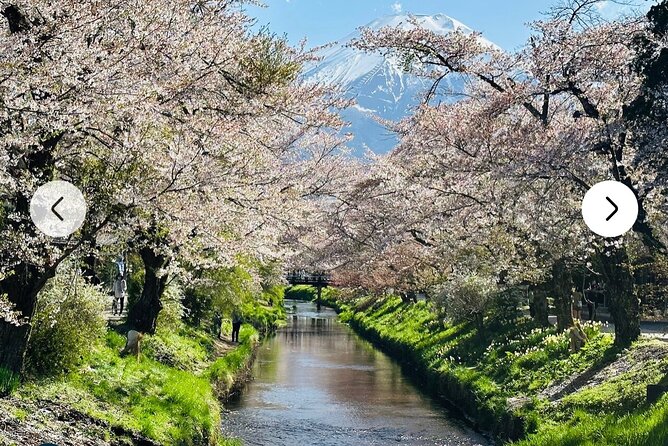
This is a 10-hour full-day loop, built around quick, high-impact stops. The exact order you experience is shaped by your driver and conditions, but the route typically covers:
- Mt. Fuji Subaru Line 5th Station
- Lake Kawaguchiko
- A boat ride and/or the ropeway up to Kachi-kachi Mountain (depending on choices)
- Oshino Hakkai
- Owakudani and Kurotamago black eggs
- Lake Ashi and Hakone Shrine torii views
- Kitaguchi Hongu Fuji Sengen Shrine
- Arakurayama Sengen Park and Chureito Pagoda
- Saiko Iyashi no Sato Nenba (traditional village)
- Fuji-Q Highland (admission included)
- Hakone Shrine
Each stop is roughly 15 to 60 minutes (depending on the place), with some free-entry sites and some paid ones. The smart way to enjoy this is to arrive with priorities: if Fuji visibility is your #1 goal, keep your expectations flexible and be ready to move quickly when your driver says conditions look good.
Stop 1: Mt. Fuji Subaru Line 5th Station (the big Fuji moment)
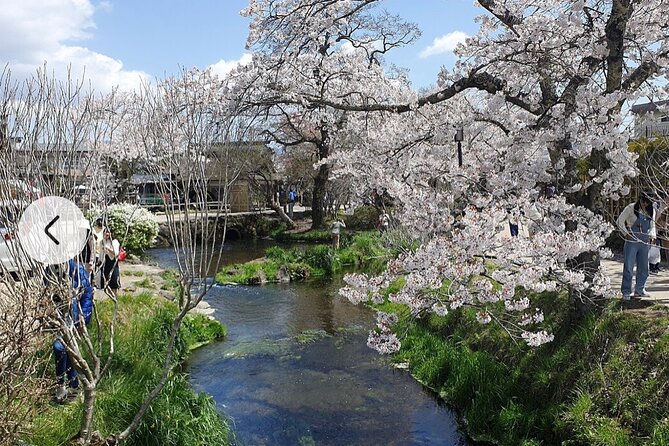
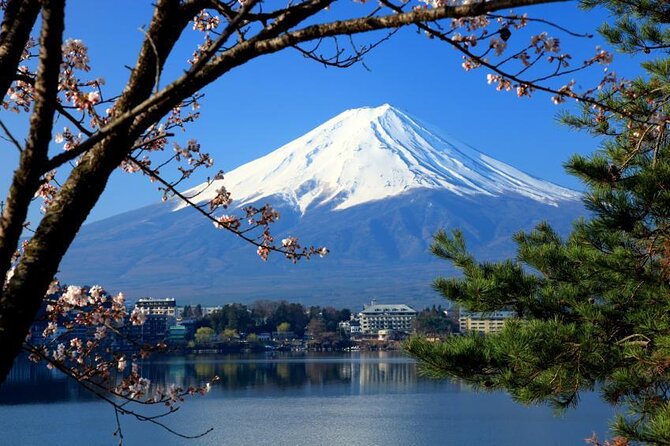
The Subaru Line 5th Station sits around 2,300 meters above sea level, and when the weather cooperates you can get a close view of Mt. Fuji. This is also a key spot for climbers heading higher, which gives it a real “you are near the mountain” energy.
What I like about starting here is that it frames the whole day. After you’ve seen Fuji from near the hiking road, the lakeside views later feel earned, not repetitive. There are usually plenty of souvenir shops too, so it’s an easy place to grab small snacks or a charm without needing a plan.
The consideration: rain and clouds can steal the show. Even if you do everything right, Fuji can hide. Also, the 5th Station entrance fee is not included (¥2,100 per person), so check that you understand what you’ll pay on-site.
Tip I’d use: If you care about Fuji views, dress for cool air and be ready for sudden weather changes.
Stop 2: Lake Kawaguchiko and the Fuji Five Lakes gateway
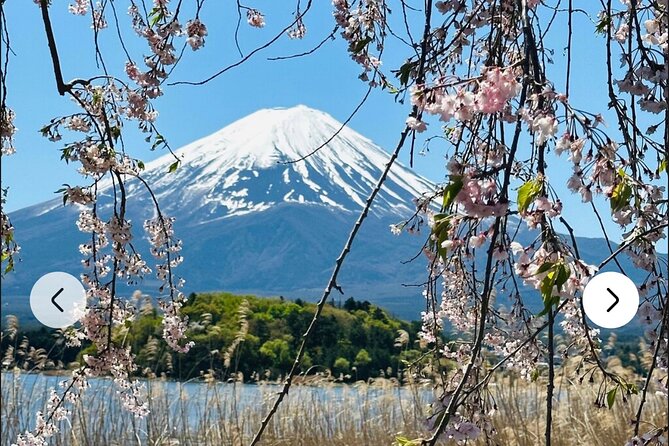
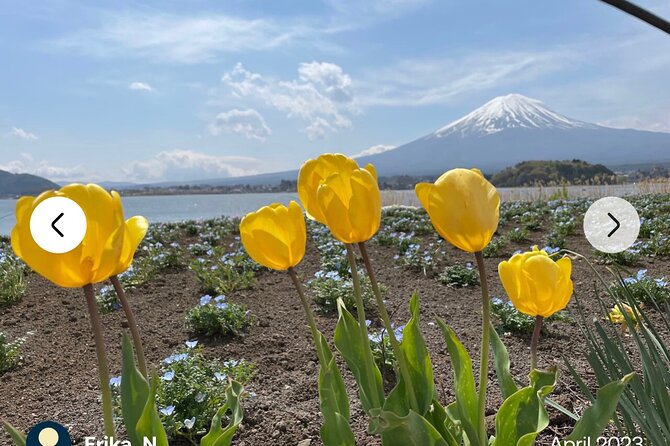
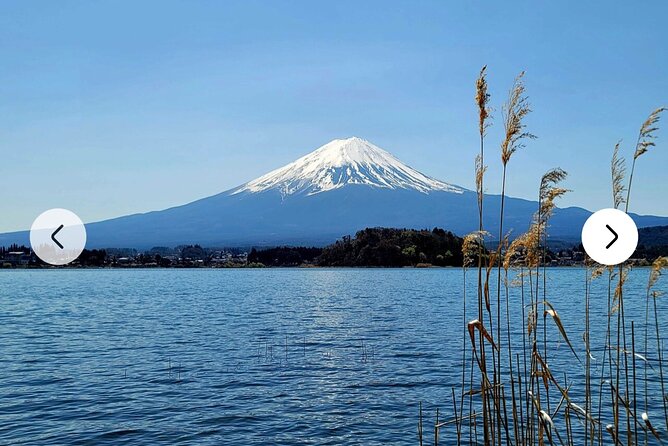
Lake Kawaguchiko is one of the gateways to the Fuji Five Lakes region. It’s also where you get that classic “Fuji across the water” vibe—when visibility is good.
This is where the day gains rhythm. You’re not just looking at one point—you’re moving through a whole lakeside area designed for views and activities. The tour builds in time for things like a ship cruise and the Mt. Fuji Panoramic Ropeway up to Kachi-kachi Mountain. Both are great options if you want more than flat photos.
The trade-off: many of the activities here are not included. The package notes an extra $15 per person for ropeway/boat-style activities. You should decide what you want in advance so you don’t end up burning time negotiating at the pier or ticket counter.
You can also read our reviews of more private tours in Tokyo

Stop 3: Ensoleille ship cruise and the Kachi-kachi view option
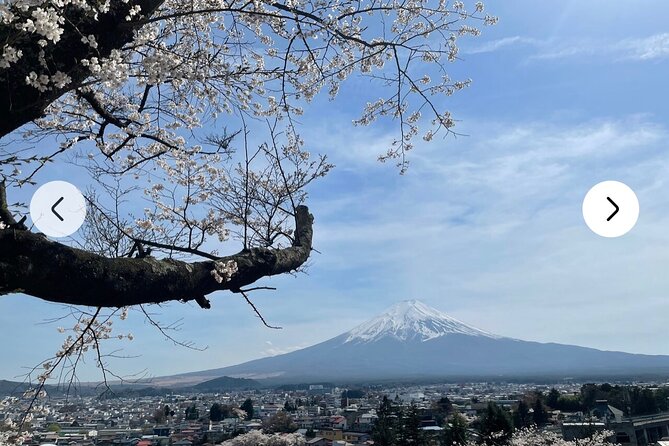
The itinerary lists a specific boat experience at Kawaguchiko (Ensoleille Excursion Ship Pleasure Boat). The basic idea is simple: you get a different angle of Fuji and the lakeside scenery by being out on the water.
Then comes the ropeway up toward Kachi-kachi Mountain for close views from above. If Fuji is clear, the ropeway can feel like a “best angle” shortcut. If the weather is less cooperative, you may still enjoy the ride, just with lower odds of a perfect summit view.
Practical advice: If you’ve got limited energy, pick one—boat or ropeway—rather than trying to do everything at top speed. The tour gives you time windows, but not unlimited hours.
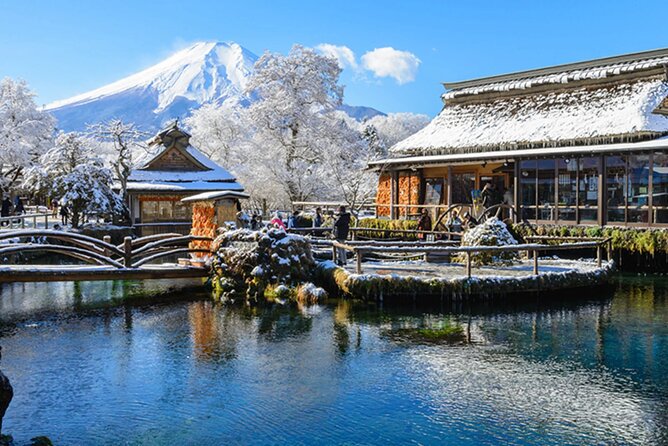
Stop 4: Oshino Hakkai ponds (quiet water, dramatic geology)
Oshino Hakkai is famous for eight ponds fed by snowmelt, remnants of a former sixth lake. The ponds are a strong contrast to the busy view spots: fewer thrill rides, more slow observation.
Why I like it: it’s a place where you can actually pause. You also get a better sense of why this region looks the way it does—water systems fed by mountain snow and volcanic geography.
This stop is listed as free admission, which helps. You still want to treat it like a timed stop, though. If you linger too long here, it eats into time at later places that may have longer lines or travel segments.
Stop 5: Owakudani and Kurotamago black eggs
Owakudani is Hakone’s volcanic zone, known for steaming vents. It’s an in-your-face reminder that this region is alive with geothermal activity.
The classic touch is the “black eggs” at Kurotamago Kan—eggs boiled in sulfurous waters. You’ll smell the sulfur before you see it, so don’t be surprised. Even if you skip the egg, the vents and the setting are the point.
This part is listed as free admission. Still, you should budget your money for food if you want to taste the local snack.
Stop 6: Lake Ashinoko and the Hakone Shrine torii gate
Lake Ashi (Ashinoko) is where Hakone’s lakeside scenery takes over. A highlight here is the Hakone Shrine’s red torii gate along the shore, often called the “Gate of Peace.”
I like Lake Ashi because it turns the day into something calmer. You’ve hit volcanic heat and crowds of photo stops; now you’re dealing with open water, gentle views, and a sense of space.
This stop is marked as free in the notes. Timing-wise, it’s usually quick—so keep your photos simple: wide shots first, then a few close compositions if you’re lucky with light.
Stop 7: Kitaguchi Hongu Fuji Sengen Jinja Shrine (a Mount Fuji spiritual stop)
This shrine is part of the Mount Fuji UNESCO World Heritage area context, and it enshrines the deity of volcanoes, including Mount Fuji specifically. It’s also one of about 1,300 Asama shrines in Japan devoted to this volcanic worship tradition.
I like having at least one shrine stop in a day like this. It grounds the Fuji views in something cultural, not just scenic postcards. Plus, shrine grounds often give you a breather from climbing in and out of vehicles.
The stop is not listed as free in the snippet, but the overall notes say admission varies by site. Plan to pay only if the staff asks for a fee.
Stop 8: Arakurayama Sengen Park and the Chureito Pagoda outlook
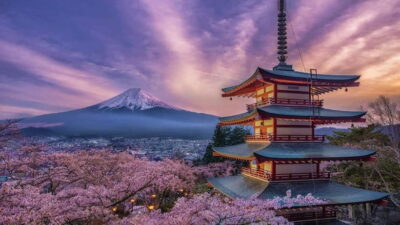
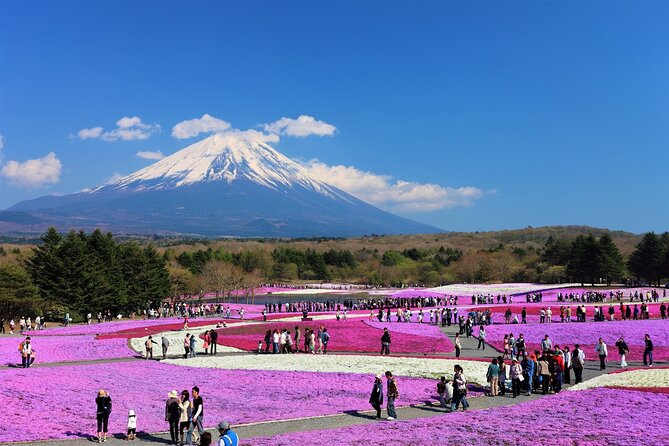
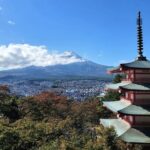
Arakurayama Sengen Park is known for a famous panoramic composition: the Chureito Pagoda with Mt. Fuji in the distance and Fujiyoshida below.
This is one of those stops where you either get the shot or you accept it as a scenic background layer. If Fuji is hidden by weather, the pagoda still works as a landmark. If Fuji appears, you suddenly understand why it’s photographed so often.
Time here is listed as about 1 hour. That’s helpful because you can shift your angle and wait a few minutes for clouds to move.
Chureito Pagoda itself is listed as free, and it is connected to Arakura Sengen Shrine.
Stop 9: Saiko Iyashi no Sato Nenba (traditional village time)
Saiko Iyashi-no-Sato Nenba is a reconstructed traditional Japanese village on the shores of Lake Saiko. It features over 20 restored thatched-roof buildings.
This is the “slow down and look” stop. You get a different kind of travel value here: understanding rural architecture and everyday-life style in a region shaped by mountain weather and lakes.
The admission is listed as not included. Since the snippet doesn’t give a price, you’ll want to treat this as a potential on-site payment and confirm when you book.
Stop 10 & 11: Fuji-Q Highland (admission included) and second Chureito timing
Fuji-Q Highland is a major amusement park near the Fuji Five Lakes area and is famous for roller coasters. This stop is listed with admission included in the package.
I like that the tour doesn’t force every minute into “look at Fuji.” If you’ve got teens or anyone who wants energy instead of temples, this is your break. Even if you do just a couple rides, it can change the tone of the day from sightseeing marathon to a fun stop.
If you’re traveling as a couple focused on photos, you may spend the time differently here—maybe a walk-through and quick ride rather than going full theme-park mode.
Stop 12: Hakone Shrine (a classic finale)
Hakone Shrine is a historic site, with origins reaching back to 757. It’s known for travelers praying there, and it ties together the “Hakone as a place of pilgrimage” vibe with the lake and geothermal region you’ve seen earlier.
This is a short stop (listed at 15 minutes), which makes it a good wrap-up: you get the atmosphere without turning the last hour into a drawn-out detour.
Price and logistics: what you’re paying for (and what costs extra)
The price is $495.51 per group for up to 7 people. That’s the big value lever. If you fill the car, the cost per person can drop a lot compared with booking individual rides or trying to coordinate multiple taxi trips.
What you get included:
- Air-conditioned private vehicle
- Highway toll tax
- Gasoline
- Pickup and drop-off included
- English-speaking driver/guide
- Mobile ticket
- Fuji-Q Highland admission (not every stop)
What costs extra:
- Mt. Fuji 5th Station fee: ¥2,100 per person
- Ropeway/ship-style activities: noted as $15 per person
- Lunch and dinner (not included)
There’s also a note about overtime: ¥5,000 per extra hour after 10 hours, including hotel-to-hotel time. That means if you plan to do lots of extra shopping or you get stuck in traffic, you may want to keep an eye on the clock.
My practical advice for value: If Fuji visibility is likely (season and forecast), you’re paying for fewer headaches and better timing than DIY. If the day turns rainy and Fuji is mostly hidden, you may feel the cost more—because part of the “product” is the view.
Weather reality check: when Fuji is cloudy, you still need a plan
This experience is explicitly weather-dependent. When it is canceled due to poor weather, you’re offered another date or a full refund.
When it is not fully canceled but visibility is poor, you still get a meaningful day. Places like Oshino Hakkai and the volcanic zone at Owakudani work even when Fuji is not at its peak. But the emotional “main character” of Mt. Fuji may not show, and that’s a risk you can’t erase with a perfect itinerary.
One smart move is asking your driver early if they think the best Fuji timing is at the 5th Station or later at a viewpoint like Arakurayama/Chureito. In past experiences with guides like Rana, Hassan, and others, starting early has often helped people dodge traffic and maximize the chance of a clear moment.
Should you book this Mt. Fuji and Hakone private day trip?
Book it if:
- You want a private day with hotel pickup and the freedom to adjust stops
- You care about seeing several regions in one go: Fuji Five Lakes + Hakone geothermal + classic pagoda viewpoints
- You’re traveling as a family or small group where the per-person cost makes sense
Skip or reconsider if:
- You want a long, deeply guided walking tour where the guide explains everything at each stop. Some drivers focus more on transport than interpretation.
- You dislike timed stops and prefer fewer places with more time inside each.
- You’re sensitive to weather-based disappointment. Clouds can limit the payoff of the Fuji highlights.
If you book, I’d do two things: confirm your pickup details clearly the day before, and tell your driver what matters most (Fuji views vs culture stops vs amusement park). That simple step can turn a “good itinerary” into a genuinely smooth day.
FAQ
What is the duration of this tour?
The tour runs for about 10 hours.
How many people can be in a private group?
It is for up to 7 people per group.
Is hotel pickup included?
Yes. Pickup is offered from the Tokyo area.
Where do you get dropped off at the end of the tour?
You can be dropped back in the Tokyo area or dropped off in the Mt. Fuji or Hakone area, depending on your preference.
Is the tour ticket for Mt. Fuji 5th Station included?
No. Mt. Fuji 5th Station entrance fee is ¥2,100 per person and is not included.
Are ropeway and ship cruise tickets included?
No. Ropeway and ship cruise activities are listed as not included (with an additional cost noted as $15 per person).
Is lunch included?
No. Lunch, dinner, food, and drinks are not included.
Is Fuji-Q Highland admission included?
Yes. Fuji-Q Highland admission is included.
What happens if the weather is poor?
This experience requires good weather. If it’s canceled due to poor weather, you’ll be offered a different date or a full refund.
Can I cancel for a full refund?
Yes. You can cancel up to 24 hours in advance for a full refund.