REVIEW · TOKYO
Tokyo Tsukiji Food & Culture 6hr Private Tour with Licensed Guide
Book on Viator →Operated by Japan Guide Agency · Bookable on Viator
Your map can stay in your pocket. This private 6-hour walk links Toyosu Market and Tsukiji Fish Market with classic Asakusa culture and shopping, led by a licensed local English-speaking guide and a customizable itinerary of 3–4 stops. I like the calm, focused pace, because Tsukiji-area streets can feel like a seafood maze when you’re on your own. One thing to consider: it’s a walking tour, and some stops have extra admission fees and you’ll cover lunch and transportation.
On real days, weather and crowd flow matter. A guide named Taka is praised for rainy-day problem solving and even coaching chopstick technique during the day, which is the kind of small help that makes market food feel easier.
In This Review
- Quick hits from this Tsukiji to Asakusa private tour
- Tsukiji to Asakusa: a food day with fewer decisions
- Price and logistics: is $154.84 per person good value?
- How the tour day flows (and why the pacing feels right)
- Toyosu Market: modern wholesale energy on a man-made island
- Tsukiji Fish Market: morning seafood chaos, explained
- Ameyoko Shopping Street: casual shopping with street-food potential
- Senso-ji Temple and Kaminarimon: the culture anchor
- Nakamise Shopping Street: snacks and souvenirs before and after the temple
- Kappabashi Street (Kappabashi Dogugai): kitchen tools shopping you’ll actually enjoy
- Tsukishima Monjya Street: if you want your Tokyo snack weird (in a good way)
- Yanaka Ginza Shopping Street: the older Tokyo pace
- Rain, crowds, and comfort: how to set yourself up for a smooth day
- Who should book this private Tsukiji food and culture tour?
- Should you book it? My practical take
- FAQ
- How long is the Tsukiji Food & Culture private tour?
- Is this a private tour or a group tour?
- Can I customize which stops we visit?
- Where do we meet the guide?
- Is pickup included?
- Are market or attraction tickets included?
- Does the price include lunch?
- Are transportation fees included?
- What about kitchen-tool shopping and souvenirs?
- What if it rains or I need to cancel?
Quick hits from this Tsukiji to Asakusa private tour
- A licensed guide who walks with you, not behind you through the Tsukiji–Asakusa zone
- Pick 3–4 stops from the list, so your day matches your food mood
- Toyosu + Tsukiji gives you both modern market energy and the classic seafood scene
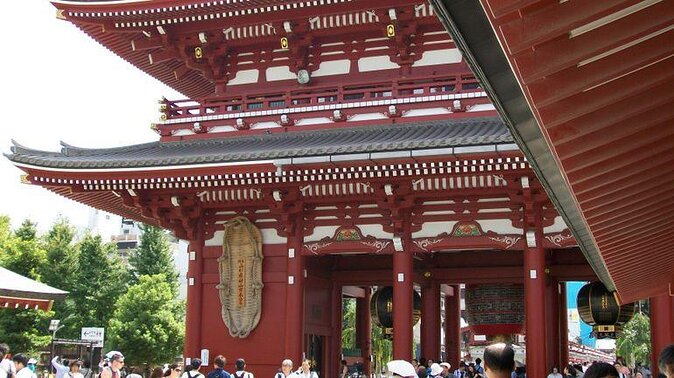
- Asakusa culture on foot at Senso-ji, Kaminarimon, and Nakamise shopping street
- Kappabashi street for kitchen tools if you love food gear as much as food
- Budget note: several entrance fees and lunch are not included
Tsukiji to Asakusa: a food day with fewer decisions
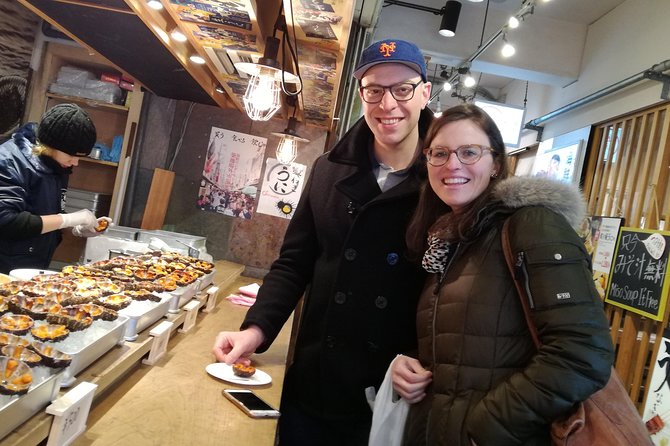
Tokyo food days can go two ways: you either plan every minute, or you wander and hope. This tour sits in the nicer middle. You still get to choose your mix of food, shopping, and culture, but you don’t have to figure out routes, timing, or what order makes sense.
Because it’s private, you also avoid the common frustration of splitting attention with other people. Your guide can adjust on the spot—where lines are moving, what looks best to try, and how to get through the crowds without feeling stressed.
The schedule is built around short, purposeful blocks. Even though it’s 6 hours, you’re typically choosing 3–4 sites, which leaves room for snacks, photos, and real conversation instead of sprinting between landmarks.
You can also read our reviews of more food & drink experiences in Tokyo


Price and logistics: is $154.84 per person good value?
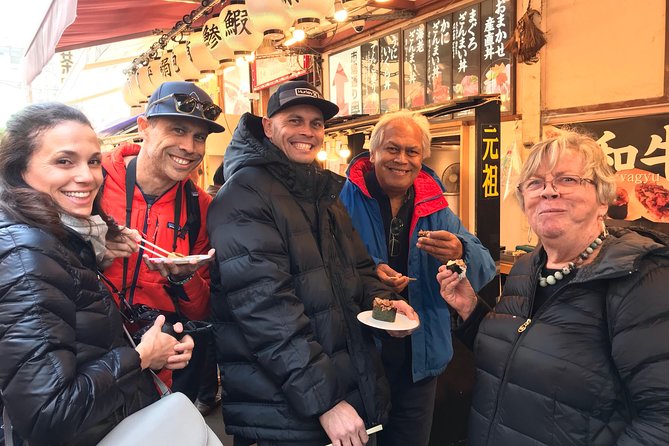
At $154.84 per person for roughly 6 hours, you’re paying mainly for two things: a licensed local guide and a low-friction route through some of Tokyo’s most intense areas.
If you were to self-tour, you’d still spend time. Tsukiji and Asakusa are not “easy” neighborhoods to navigate smoothly, especially when you’re trying to time market activity and street food without getting turned around. Paying for a private guide is value when you want to skip the learning curve.
Just be honest about the tradeoffs. You’ll cover transportation fees and lunch, and entrance fees aren’t always included. Toyosu Market is specifically called out as having an admission ticket you pay separately, and Tsukishima Monjya Street also notes admission not included.
How the tour day flows (and why the pacing feels right)
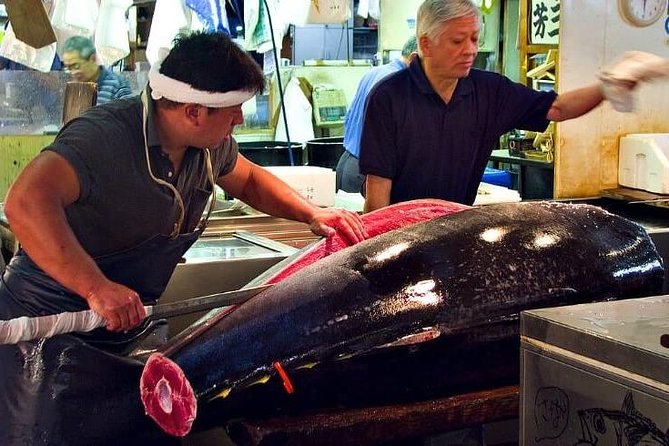
This is a walking tour, and the plan works best if you’re comfortable on your feet for several hours. You’ll meet your guide within a designated Tokyo area on foot. For the Tsukiji Fish Market portion, the meeting point is set at Tsukiji Honganji Temple, just outside the market’s main gate, in the morning.
Once you’re moving, the stops are short but meaningful:
- market time to understand what you’re looking at
- street time to snack and shop without guesswork
- temple and shopping-street time to anchor the day in Asakusa’s culture
Because your itinerary is flexible, you can also pick the parts you care about most. Love seafood? Lean into Tsukiji and Toyosu. Like shopping and food tools? Give Kappabashi more time. Want classic Tokyo landmarks? Keep Senso-ji and Nakamise in the mix.
Toyosu Market: modern wholesale energy on a man-made island
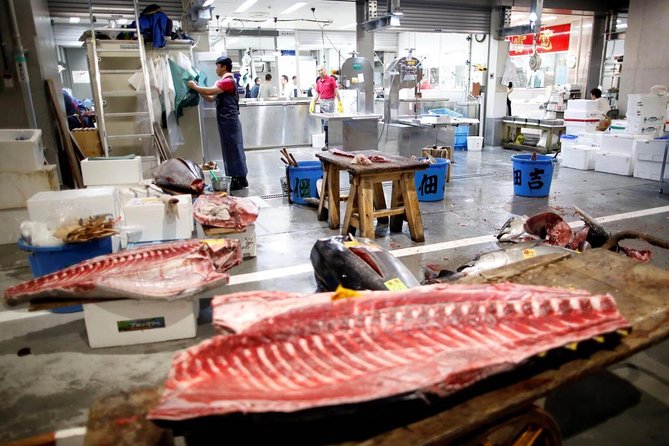
Toyosu Market is the one that feels like Tokyo’s “new chapter.” It opened on October 11, 2018, and it operates on the man-made island of Toyosu in Tokyo Bay. That context matters because it shapes the vibe: this is about the systems behind the seafood world, not just seafood viewing.
You’ll spend about 2 hours here, and you should plan that admission is not included, so check your total day budget. Still, it’s a strong start because it sets you up with market context before you head into Tsukiji’s more famous maze-like scene.
What I like about starting at Toyosu is that it gives you a framework. Even if you only taste a few things later, you’ll understand the “why” behind what you’re seeing.
Tsukiji Fish Market: morning seafood chaos, explained
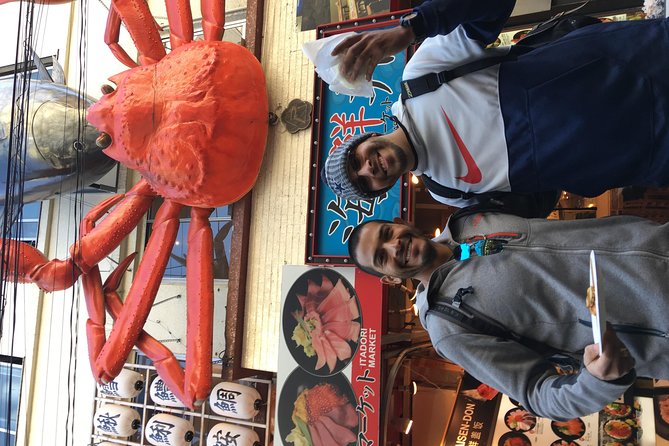
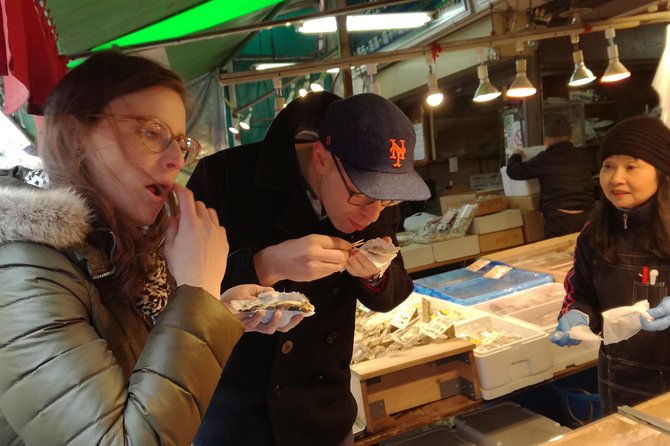
Tsukiji Fish Market is the iconic stop, and your guide’s job here is the difference between random wandering and smart wandering. You meet at Tsukiji Honganji Temple, right outside the market’s main gate, and then you move into the seafood-heavy corridors.
This portion is about 1 hour, and the important practical note: admission is free for this stop. That makes the value equation easier.
Expect a lot of visual intensity. Seafood stalls, different species, vendors, and the overall rhythm of the morning market all blend together fast. This is where a licensed guide helps you connect what you see with what you eat. Even if you don’t plan a big “shopping for food” strategy, you’ll come away with better instincts for ordering snacks and choosing what looks freshest.
You can also read our reviews of more tours and experiences in Tokyo
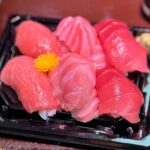
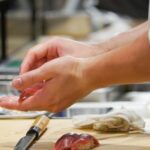


Ameyoko Shopping Street: casual shopping with street-food potential
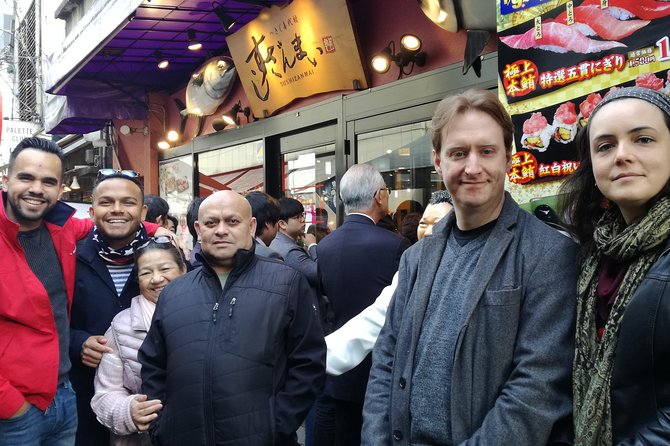
If you want Tokyo energy without it turning into a museum stop, Ameyoko Shopping Street fits. It’s built for browsing—deals, variety, and plenty of everyday shopping character.
You’ll spend about 30 minutes here. Admission is free, so this is an easy win to add if you like souvenir shopping that feels less polished than the big department-store scene.
The downside? This is a busy shopping street, so it works best if you’re comfortable moving with foot traffic. If you prefer slower, quieter strolls, you might want to keep Ameyoko shorter by focusing on one pocket of what you’re looking for (snacks, small gifts, or just street atmosphere).
Senso-ji Temple and Kaminarimon: the culture anchor
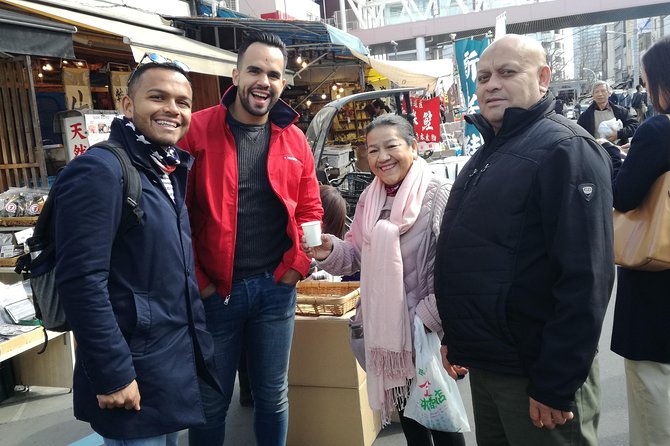
Asakusa can be all shopping and snacks—so it’s smart this tour includes the cultural anchor: Senso-ji Temple. This temple goes back about 1,300 years, and it’s famous for Kaminarimon, the big red lantern gate that screams Asakusa from a distance.
You’ll spend about 30 minutes at Senso-ji, with admission noted as free. That makes it a practical landmark stop: not expensive, not complicated, and perfect for photos and orientation in the area.
The consideration is simply crowds. This is one of Tokyo’s most famous temple precincts, and that means busy footpaths. A guide helps you pick the right angles and timing so you’re not just standing in a line of people.
Nakamise Shopping Street: snacks and souvenirs before and after the temple
Nakamise is the approach lane, running around 250 meters up to Senso-ji, packed with shops selling traditional souvenirs and snacks. You’ll spend about 30 minutes, and admission is free.
I like Nakamise because it’s both functional and fun. You can treat it like a “starter pack” for Asakusa: small gifts, edible souvenirs, and the classic experience of walking up to a major temple while tasting the area.
If you want a practical takeaway, it’s also a great place for food-adjacent items. One guide named Taka is specifically praised for coaching chopstick practice, and Nakamise is the kind of place where you can pick up chopsticks and try to get it right before the day ends.
Kappabashi Street (Kappabashi Dogugai): kitchen tools shopping you’ll actually enjoy
Kappabashi is where Tokyo turns nerdy in the best way. This shopping street is known for stores selling what restaurant operators need—kitchen tools, tableware, and food gear—right between Ueno and Asakusa.
You’ll spend about 30 minutes, and admission is free. Since this is more shop-focused than sightseeing-focused, it’s ideal if you want a souvenir that’s useful once you get home.
The practical drawback: the range can be overwhelming. If you walk in with no plan, you can spend money you didn’t mean to. I recommend deciding in advance if you’re hunting for one type of item (like chopsticks, small serving tools, or kitchen accessories) instead of browsing everything.
Tsukishima Monjya Street: if you want your Tokyo snack weird (in a good way)
Monjayaki is the star of Tsukishima Monjya Street, and it has a reputation for looking unappealing. The description is spot-on: it’s a liquid-y, hot dish, and once you move past the looks, the flavor and texture do the convincing.
You’ll spend about 30 minutes, and admission is noted as not included. That means you should expect extra cost if you want to actually eat here.
This stop is worth it if you like trying foods that aren’t “safe tourist choices.” If you’re picky about textures or you’re not in a snack mood, you can swap it out for one of the Asakusa shopping or cultural blocks.
Yanaka Ginza Shopping Street: the older Tokyo pace
Yanaka Ginza is one of those places that slows you down. It keeps the old town “Shitamachi” atmosphere, and it’s known as one of Tokyo’s better shopping streets for a quieter feel.
You’ll spend about 30 minutes, and admission is free. This makes it a nice balance after the market intensity and Asakusa crowds.
I like adding Yanaka Ginza when I want my day to feel less like a checklist. It gives you a more local neighborhood vibe, and you can browse at a human pace.
Rain, crowds, and comfort: how to set yourself up for a smooth day
A big reason I’d choose a private food tour in this area is simple: weather and crowd flow change everything. One guide named Taka is highlighted for doing exactly that—handling a rainy day with smart adjustments and keeping the day fun.
Still, don’t count on magic. You’ll be walking. Wear shoes you can handle for hours, bring a small umbrella or rain shell, and plan for wet streets where lines may slow down.
Also, think about eating pace. Market and street food days can tempt you to buy everything. If you only want a few bites, tell your guide early so you don’t end up with a backpack full of food you didn’t plan to carry.
Who should book this private Tsukiji food and culture tour?
This tour is a strong fit if you:
- want a private, English-speaking guide to handle the Tsukiji and Asakusa navigation stress
- like market structure (Toyosu) plus classic seafood chaos (Tsukiji)
- want to mix temple culture with real shopping streets
- enjoy snack hopping, not just museum-style sightseeing
It may not be your best choice if you hate walking or you want a super “all-inclusive” price with no extra admissions or lunch costs.
Should you book it? My practical take
If you’re visiting Tokyo and only have one day for this corner of the city, this is one of the smarter ways to do it. The value comes from having a licensed guide keep the day moving, especially in places that can feel like controlled chaos on your own.
Book it if you want a guided mix of food, market context, and Asakusa culture with the freedom to pick your stops. Skip it if you want a cheaper day without a guide, or if you plan to do long walking with frequent breaks elsewhere.
FAQ
How long is the Tsukiji Food & Culture private tour?
It’s about 6 hours.
Is this a private tour or a group tour?
It’s private. Only your group participates.
Can I customize which stops we visit?
Yes. You choose 3–4 sites from the itinerary list.
Where do we meet the guide?
You meet on foot within a designated Tokyo area. For the Tsukiji Fish Market portion, the meeting point is Tsukiji Honganji Temple, just outside the market’s main gate, in the morning.
Is pickup included?
Pickup is offered, and the tour is described as a walking tour with pickup on foot.
Are market or attraction tickets included?
Not all of them. Toyosu Market admission is not included, and Tsukishima Monjya Street notes admission not included. Tsukiji Fish Market and the other listed Asakusa shopping/temple stops are marked as free.
Does the price include lunch?
No. Lunch is not included.
Are transportation fees included?
No. Transportation fees are not included.
What about kitchen-tool shopping and souvenirs?
You can include Kappabashi Street, which is known for shops selling items restaurant operators use. Admission is free for the stop, but any purchases are, of course, your own expense.
What if it rains or I need to cancel?
The tour allows free cancellation up to 24 hours before the start time for a full refund.
If you want, tell me your hotel area and whether you prefer more markets or more temple/shopping, and I’ll suggest a solid 3–4 stop mix from the list.