REVIEW · TOKYO
Authentic Pure Gold Kintsugi Workshop with Master Taku in Tokyo
Book on Viator →Operated by Beauty of Japan · Bookable on Viator
A broken plate turned into a work of art. This kintsugi workshop in Tokyo is hands-on, calm, and genuinely different from the usual sightseeing circuit. I like that you leave with a piece you assembled yourself, not a store-bought souvenir, and I also like the focus on authentic materials: real natural lacquer (urushi) and pure gold powder under Master Taku’s guidance. One thing to consider is that this is a workshop, so it’s quieter than a typical tour and you’ll want to be ready to sit and concentrate for about 2 hours.
You’ll meet at TNCA Minami-Aoyama Studio in Minato, near public transit, and you’ll keep the plate you use during the lesson. There’s also a small group size (maximum 5), which makes a big difference here because kintsugi can be detail work, and you’ll get help as you go.
In This Review
- Key Things I’d Plan Around
- Tokyo Kintsugi With Master Taku: What It Really Feels Like
- The Workshop Flow: From Philosophy to Pure Gold Lacquer
- Your Three Kintsugi Options (And How to Choose)
- Option A: Shuurushi Kannyuuzome Kintsugi
- Option B: Black & Gold Shikkokurai
- Option C: Yobitugi (Highest Technique)
- What You Actually Take Home
- Meeting Point and Getting There (Without Stress)
- Instructor Quality: Why This Workshop Keeps Getting 5-Star Feedback
- Time and Pace: Does 90–110 Minutes Feel Too Short?
- Price: Is $142.60 Worth It?
- Who Should Book This (And Who Might Skip It)
- Practical Tips Before You Go
- Should You Book This Kintsugi Workshop?
- FAQ
- How long is the kintsugi workshop?
- How much does it cost?
- What’s included in the price?
- What do I take home?
- What materials are used for the authentic kintsugi?
- Are there different project options?
- Where does the workshop take place?
- Is transportation provided?
- Is food and drink included?
- Can I cancel or change my booking?
- What’s the group size?
Key Things I’d Plan Around
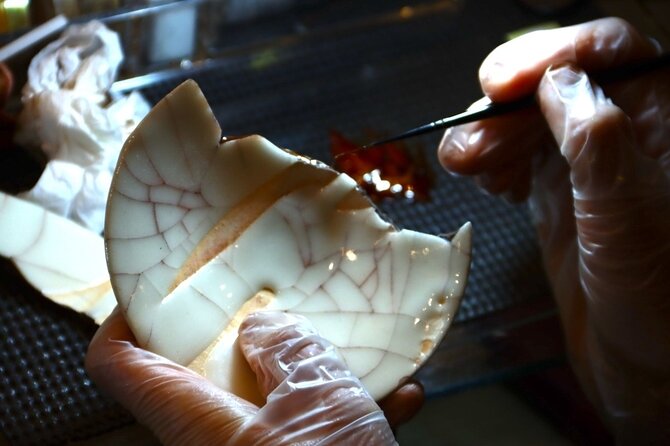
- Pure gold kintsugi with real urushi: you’re not doing a simplified craft demo.
- Small group (max 5): more hands-on guidance, less waiting.
- Options for your starting piece and style: choose between natural lacquer and gold, black-and-gold, or a higher-tech decoration approach.
- You take the repaired plate home the same day.
- Wabi-sabi framing: the lesson isn’t only technique, it’s meaning (Wabi + Sabi-feeling).
Tokyo Kintsugi With Master Taku: What It Really Feels Like
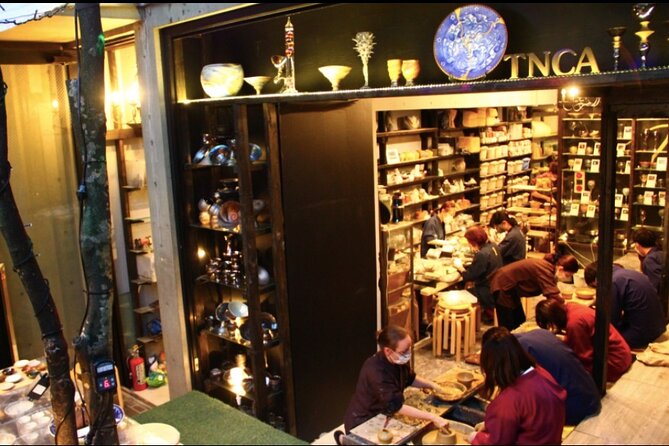
This workshop is the kind of Tokyo activity that resets your brain. While many city tours stack sight after sight, kintsugi asks you to slow down and focus on one thing: repairing a break on purpose. You’re working with materials that come from Japanese tradition, and you’re guided by a ceramist who runs a studio in Omotesando, an area known for fashion and design energy.
The best part is how personal the result feels. Even if your break isn’t dramatic, the process turns it into a visible story. The gold line doesn’t hide the damage. It highlights it. That mindset is right in the studio motto Master Taku teaches through the work: Even more beautiful and more robust than before it broke.
And because the group stays small, it doesn’t feel like you’re being herded through steps. You can ask questions. You can get corrections. You can move at a pace that actually helps.
You can also read our reviews of more tours and experiences in Tokyo


The Workshop Flow: From Philosophy to Pure Gold Lacquer
The session runs about 2 hours (approx.), and you’ll start by getting oriented to what kintsugi is aiming for: imperfect beauty with meaning. The workshop is built around wabi-sabi, the Japanese idea that imperfection and impermanence can be part of the beauty.
You’ll learn the “essence” approach first, then move into doing. The pottery piece you’ll use is hand-crafted by Master Taku, and it’s prepared with materials designed to create a “Sabi-feeling.” In plain terms, that means the vessel and lacquer approach are chosen so the restoration doesn’t look brand-new and artificial.
Then you get to the core lesson: authentic kintsugi using real urushi lacquer and pure gold powder. This is where the workshop earns its authenticity. You’re not just picking a decorative style; you’re using the technique itself, step by step, with a master artist explaining what you’re doing and why.
Your Three Kintsugi Options (And How to Choose)
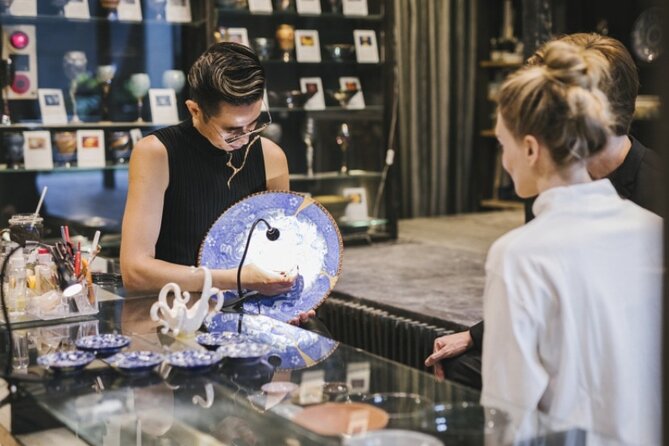
You don’t just pick a color. You pick a style of restoration based on what you want your finished piece to communicate.
Option A: Shuurushi Kannyuuzome Kintsugi
This is the classic “natural lacquer and pure gold” route. It uses real natural lacquer and pure gold, and the lesson time is about 110 minutes.
If you want the most straightforward authentic experience, this is usually the best fit. It aligns with the workshop’s theme—traditional kintsugi with a strong focus on Wabi-sabi feeling.
Option B: Black & Gold Shikkokurai
If you want a cooler, more graphic look, choose black-and-gold kintsugi. The method is the same as Option A, but your visual outcome shifts. The time is about 90 minutes.
This is a great choice if you’re the type who likes contrast and clean lines. The gold detail against a dark base can look more modern while still staying in the kintsugi philosophy.






Option C: Yobitugi (Highest Technique)
This option is about adding decoration and different materials to the missing parts, described as the highest technique among Kintsugi techniques. It takes about 90 minutes.
Choose this if you want a more creative and embellished outcome. It’s also a nice option if you enjoy the idea of making the break area feel intentional, not just repaired.
What You Actually Take Home
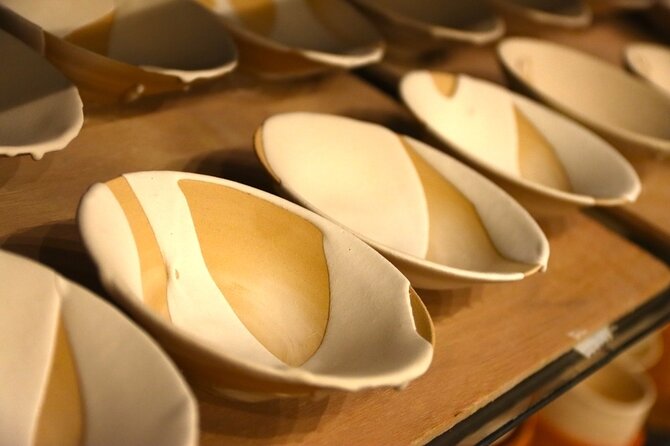
You’ll use a plate in the lesson and then take it home the same day. That matters for value, because you’re paying for a finished souvenir you helped create—something you can’t really replicate by buying a ready-made item.
The plate you use is also part of the “experience package.” It isn’t generic craftware. It’s described as pottery crafted by Master Taku and prepared with the selected materials used in the workshop process.
So yes, you end up with a souvenir. But more importantly, you’ll have a practical record of the process in a form you can hold.
Meeting Point and Getting There (Without Stress)
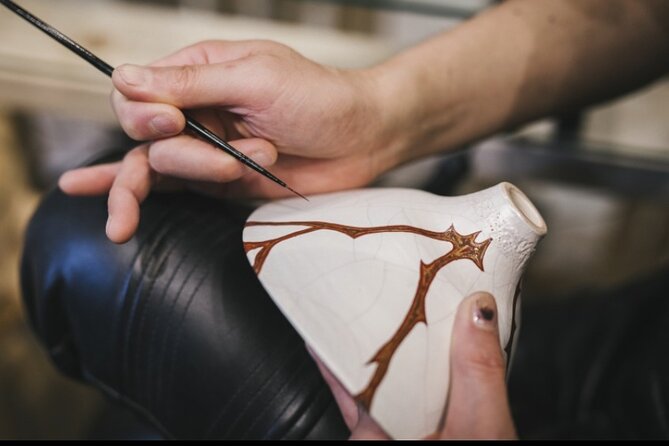
The workshop meets at TNCA Minami-Aoyama Studio, 3-chōme-8-2 Minamiaoyama, Minato City, Tokyo 107-0062, Japan, and it ends back at the meeting point.
You’re told it’s near public transportation, which is the kind of detail I care about in Tokyo. This is a small studio environment, so showing up on time matters—not because there’s a huge rush, but because hands-on craft work depends on everyone starting together.
One note from the experience style: the studio expects punctuality, but the tone is welcoming. Even when people arrive late, Master Taku is described as gracious and patient.
Instructor Quality: Why This Workshop Keeps Getting 5-Star Feedback
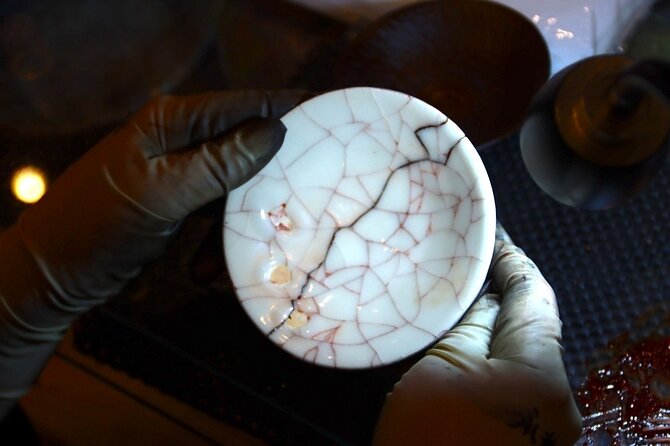
This is the kind of class where the teacher quality really shows. Master Taku is the named master artist, and the workshop is built around his approach and instruction.
The vibe in the reviews centers on a few repeated themes:
- Clear step-by-step guidance
- Patience during the hands-on repair work
- A calm demeanor that keeps you from feeling rushed
- English support (at least some sessions are described as having strong English from the sensei)
There’s also mention of assistance from someone named Junko during at least one class, which is another practical point: it helps when there’s more than one person guiding you, especially if you’re trying to learn a technique with real lacquer and gold powder.
Time and Pace: Does 90–110 Minutes Feel Too Short?
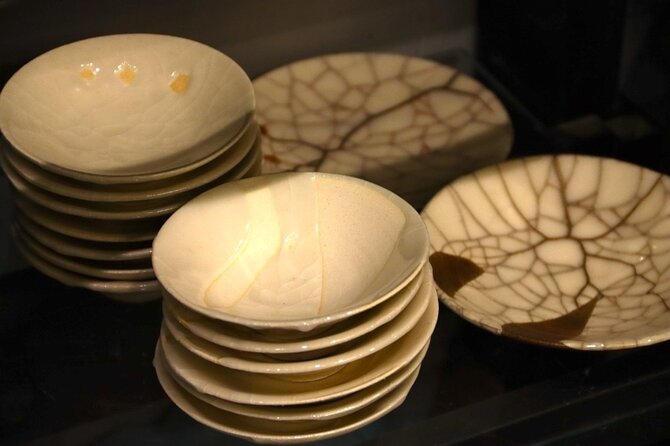
It doesn’t feel like filler. The time varies by option:
- Option A is about 110 minutes
- Option B about 90 minutes
- Option C about 90 minutes
For craft work, that’s a sensible range. Kintsugi isn’t complicated math, but it is detail work, and you need time for careful steps. The instruction is described as good pacing, and the end result fits within the session window.
If you’re the kind of person who usually takes photos nonstop, you might feel tempted to rush the steps mentally. I’d treat this as one of your “no-scrolling, just making” hours in Tokyo.
Price: Is $142.60 Worth It?
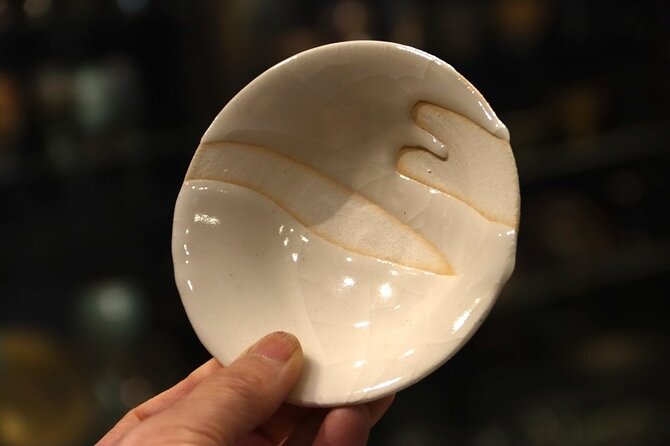
At $142.60 per person, this isn’t the cheapest “do a thing” activity in Tokyo. But it’s also not paying for a lecture and a tiny craft. You’re paying for:
- a small-group workshop (max 5)
- authentic materials (real urushi lacquer + pure gold powder)
- the plate you use and take home
- all necessary equipment
- the lesson fee (taxes and handling included)
The key value driver here is that you walk away with a meaningful, handmade object you constructed yourself. If you’re going to buy a souvenir anyway, this competes with the cost of a high-end item and wins because your plate has a story.
If you’re budget-tight, pick the option that matches your goals: Option A gives the most classic natural lacquer-and-gold experience, while Options B or C can still deliver an impressive visual outcome in less time.
Who Should Book This (And Who Might Skip It)
This workshop is a strong match for:
- you want one memorable non-sightseeing activity in Tokyo
- you like crafts, design, ceramics, or cultural process
- you want a unique souvenir that’s personal
- you appreciate the idea of repairing instead of discarding
It might be less ideal if:
- you hate sitting still and following careful steps
- you want something purely social and high-energy
- you need a tour with lots of walking and moving around (this is a studio session)
For families, it can also be a good option because the instruction is described as patient and supportive, and kids can often enjoy the making. Still, this is hands-on with materials, so you’ll want to be there with the right mindset.
Practical Tips Before You Go
You’ll have the best experience if you treat this like a calm studio appointment.
- Arrive a few minutes early at the studio address so you don’t feel behind.
- Wear something comfortable. Lacquer-and-craft sessions are hands-on, and you’ll be concentrating.
- Choose your option based on the look you want: classic gold-and-natural lacquer (A), black-and-gold contrast (B), or a more decorative approach with missing-part embellishment (C).
- If you’re carrying your plate home, plan a safe way to transport it. The workshop says you take it home on the day, so you’ll want to keep it protected.
Should You Book This Kintsugi Workshop?
If you want a Tokyo experience that’s creative, meaningful, and actually hands-on, I think this is an easy yes. The big reason is the combination of authentic technique (real urushi and pure gold powder) with a studio atmosphere that supports learning, not just watching. Add in the small group and the fact that you take your finished plate home the same day, and it becomes a very fair value.
If you’re hoping for a fast, photo-optimized activity, this won’t be that. But if you want one hour or two where you focus, make something real, and learn why kintsugi means more than decoration, book it and choose the option that matches your taste.
FAQ
How long is the kintsugi workshop?
The workshop lasts about 2 hours (approx.). Different options run for about 90 minutes or about 110 minutes.
How much does it cost?
The price is $142.60 per person.
What’s included in the price?
All taxes, fees, and handling charges are included. You also get all necessary equipment, the plate you use for the lesson, and the lesson fee.
What do I take home?
You take home the plate you use during the workshop, and it’s taken home on the day of the class.
What materials are used for the authentic kintsugi?
The workshop teaches authentic kintsugi using real urushi lacquer and pure gold powder.
Are there different project options?
Yes. There are three options:
A uses natural lacquer and pure gold, B uses a black-and-gold style, and C is yobitugi with additional decorations and materials for missing parts.
Where does the workshop take place?
It meets at TNCA Minami-Aoyama Studio, 3-chōme-8-2 Minamiaoyama, Minato City, Tokyo 107-0062, Japan, and ends back at the meeting point.
Is transportation provided?
No. Hotel pickup and drop-off are not included.
Is food and drink included?
No. Food and drinks are not included.
Can I cancel or change my booking?
This experience is non-refundable and cannot be changed for any reason. If the minimum traveler count isn’t met and it’s canceled, you’ll be offered a different date/experience or a full refund.
What’s the group size?
The class has a maximum of 5 travelers, keeping it small for more personalized attention.