REVIEW · TOKYO
Japanese Speaking Experience Meet the locals Friend Cafe Shibuya
Book on Viator →Operated by Welcome Tokyo · Bookable on Viator
Language practice, without the awkwardness.
This Japanese-speaking experience in Shibuya is a structured English-and-Japanese language exchange held at a pub in the Shibuya Bowling Cafe complex, where you meet locals and other internationals and rotate partners on a timer. It’s a simple 2-hour plan for a night out, not a long classroom session.
Two things I like a lot: the built-in rotation rhythm (English, then Japanese, with breaks to change seats) does the hard work for you. And it’s genuinely beginner-friendly—you can join even if your Japanese is limited, because the format is designed to keep the conversation flowing.
One thing to consider: it’s an over-18 pub setting, and the venue is on B1F, so expect a more bar-style atmosphere and plan to buy at least one drink since alcohol and food aren’t included.
In This Review
- Key takeaways before you go
- Why Shibuya’s pub language exchange feels easy
- Price and what’s actually included (and not)
- Meeting at Shibuya Bowling Cafe: what to expect on arrival
- The 2-hour schedule: English, Japanese, then rotate again
- Topic cards and how to actually use them
- Meeting locals without needing perfect Japanese
- The pub atmosphere: social, but manage expectations
- Who this is best for (and who might want a different plan)
- Getting more out of it: my practical game plan
- Should you book it? My take on the value
- FAQ
- How long is the language exchange in Shibuya?
- Where is the meeting point?
- Is the experience only for adults?
- Do I need to speak Japanese to join?
- What languages do we practice during the event?
- Are drinks included in the ticket price?
- How are conversations organized?
- What’s the maximum group size?
- Can I cancel and get a refund?
Key takeaways before you go
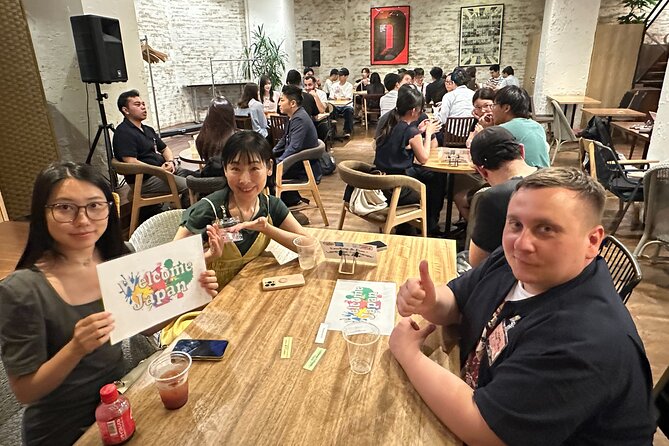
- 15-minute English and 15-minute Japanese blocks keep the practice specific and fair
- Staff-run seat changes mean you’ll talk more than once with multiple people
- Small groups (3–4 people) mix Japanese and foreigners, so it’s not all one culture circle
- Topic cards (and guided prompts) give you something to say right away
- Over-18-only pub vibe in Shibuya makes it easy to roll into the rest of your evening
- Max 20 participants keeps it social without turning into a huge crowd situation
Why Shibuya’s pub language exchange feels easy
Shibuya can be intimidating, especially when you’re trying to be brave with language. This setup helps. You’re not walking in cold to a random conversation. You’re joining a small, hosted group where the event itself controls the pace.
The biggest practical advantage is that the evening is structured, not open-ended. You know you’ll have English time and Japanese time. You know you’ll switch seats. You know you’ll get prompts to start talking. That removes the biggest mental load for language learners: wondering what to say, or when to speak.
I also like that the event is social in a very Tokyo way: people come out, meet others, and practice in a low-pressure format. The pub setting matters here. It’s not a stiff language class, and it isn’t a formal exchange where everyone sits quietly. You’re in a place built for conversation.
One extra detail from the reviews that matches what the event is trying to do: hosts keep the mood light. You might meet a host like Candice or Rikiya, and you’ll see the same theme in their approach—getting people relaxed fast so talking doesn’t feel like a test.
You can also read our reviews of more tours and experiences in Tokyo.



Price and what’s actually included (and not)
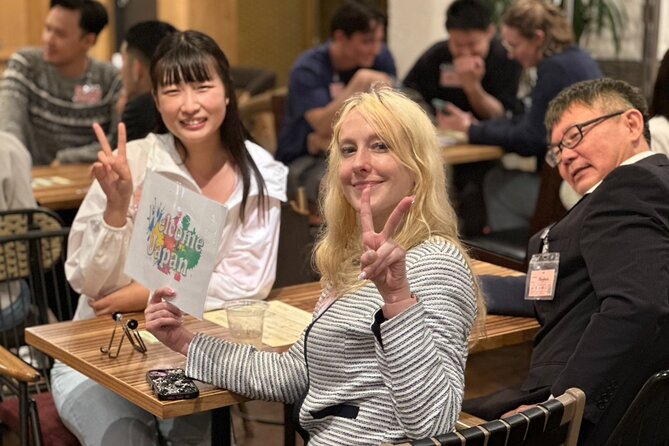
The ticket is $29.00 per person for about 2 hours, and the price includes all fees and taxes. That matters because in Tokyo, it’s common to run into add-on costs once you’re there. Here, you’re paying up front for the hosted language exchange.
What’s not included is the obvious part: alcoholic beverages and food. You’ll buy a drink at the bar when you arrive. The event guidance is clear that you should get at least one drink. So your real budget should include that extra purchase, depending on what you order.
Is $29 a good value? For me, yes, if you want value in the right way. You’re not just getting “people to talk to.” You’re getting:
- staff organizing small groups
- seat rotations so you don’t get stuck with one partner all night
- topic prompts to start conversations
- a schedule that forces both languages to happen
If you’ve ever paid for language lessons, you know the price goes up fast when you move from solo practice to real interaction. This is closer to “guided practice with company” than a true teaching fee, and it tends to work well for travelers who learn by doing.
Meeting at Shibuya Bowling Cafe: what to expect on arrival
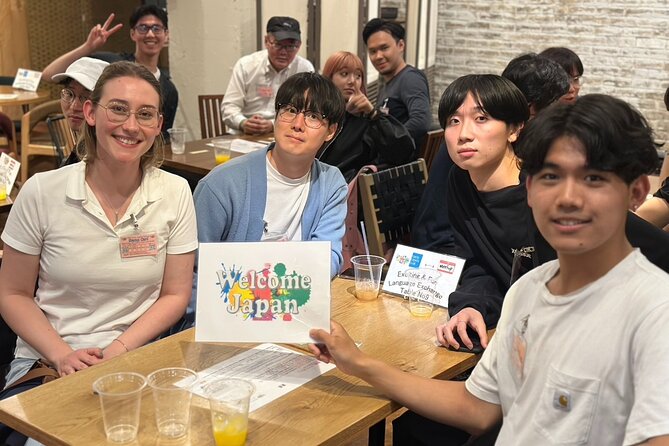
You meet at Shibuya Bowling Cafe Shibuya EST, 1-chōme-14-14 Shibuya, Tokyo, and the event location is on B1F. It’s a useful pick because Shibuya is well connected. The event notes it’s near public transportation, so you’re not hunting down a remote location after a busy day.
Here’s how the start usually feels once you get there:
- Check in at reception
- Buy your drink from the bar/store (alcohol not included in the ticket)
- Take your seat and get ready for the conversation flow
The timing detail is worth respecting: reception starts with a 10-minute starting time. In plain terms, show up a little early. If you arrive right at the start, you’ll spend your first conversation beat getting settled instead of actually talking.
If you’re concerned about not knowing Japanese, don’t be. The event is designed so that conversation can still happen without perfect skills. Think of it as bilingual hangouts with structure.
The 2-hour schedule: English, Japanese, then rotate again
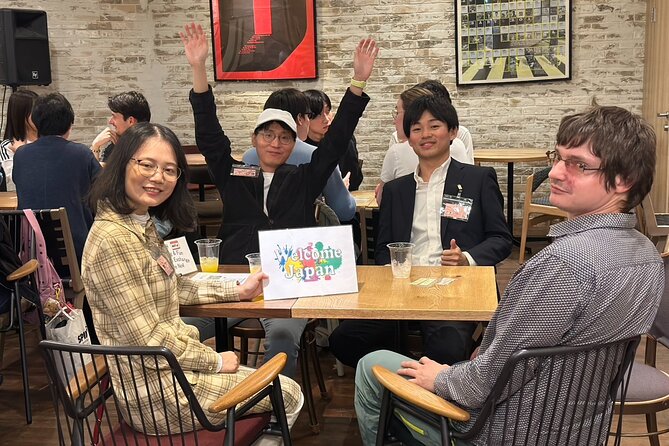
This language exchange runs for about 2 hours, and it’s built around a repeating cycle:
- 15 minutes of English conversation
- 15 minutes of Japanese conversation
- short breaks for changing seats
The staff doesn’t just tell you to find someone new. They actively manage it. That’s a big deal. You’re not scrambling to swap partners yourself, and you’re less likely to end up talking to the same confident person for the entire night.
A typical flow looks like this:
- You start with an English conversation round
- Then you switch to Japanese
- There’s a 5-minute break while you change seats
- You continue with another English round, then another Japanese round
- More seat changes happen after the breaks
- The night ends with a closing group photo
Even if the exact order of the last rounds feels a bit flexible, the core rhythm is stable: alternating languages and rotating partners. That’s what helps your practice stay balanced.
One more detail that makes it work: the host team prepares a seat per person plus topic cards. Translation: you don’t have to guess how the night should run. You get prompts, and you get time.
Topic cards and how to actually use them
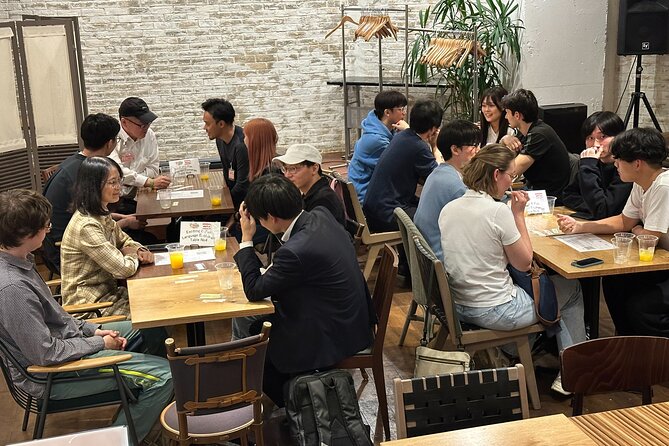
Topic cards sound simple, but they solve a real travel problem: awkward first sentences. When you sit down with someone new, your brain goes blank. A card hands you a starting point so you can focus on speaking instead of performing.
Here’s how I’d use them to get more out of the event:
- Pick the card quickly and start with something you can say
- If your Japanese is limited, use English first, then try a shorter Japanese response
- Ask the other person to explain or recommend something related to the topic
The event also splits you into small groups of 3–4 people, with a mix that includes Japanese and foreign participants. That gives you a social cushion. You’re not under pressure to carry a full conversation alone.
Some reviews note that the setup may include easy switching prompts (people reference language switching devices). Even if your specific table uses cards only, the goal is the same: remove friction so you can talk in both languages.






Meeting locals without needing perfect Japanese
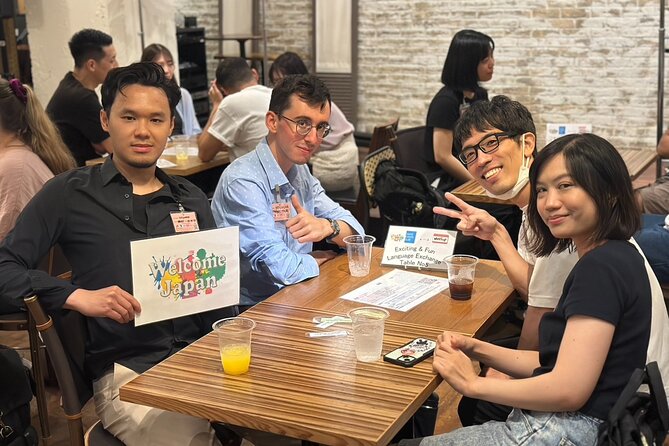
If you’re learning Japanese, the biggest win isn’t grammar. It’s getting your mouth moving in real time. This format does that by making speaking the default, and by changing partners often enough that your practice doesn’t get stale.
Beginner learners are specifically welcome. That doesn’t mean everyone speaks slowly. It means the structure and topic guidance makes it easier to participate anyway.
If you’re the stronger English speaker, you’ll also like the balance. This isn’t a one-way “foreigners ask locals everything” vibe. The evening alternates languages, so you get a chance to practice explaining ideas in English while you also hear English from other people who are trying to learn Japanese (or build confidence).
And because groups include locals and internationals, you’re likely to meet a range of personalities. You might end up hearing about daily life, travel routines, or small cultural habits that you wouldn’t catch by asking scripted questions.
The pub atmosphere: social, but manage expectations
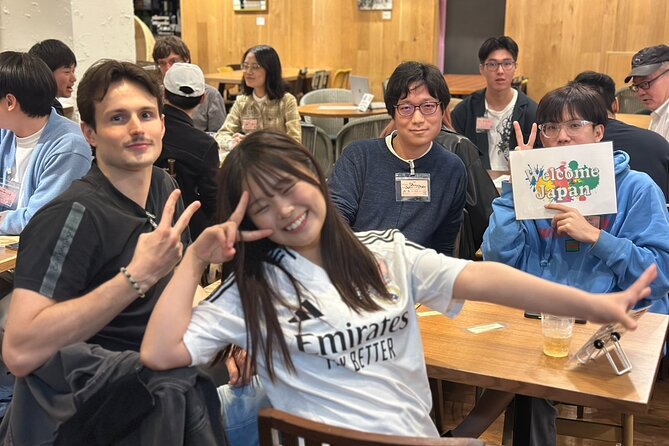
Let’s be honest: a pub is louder than a classroom. The location is on B1F, and it’s in a bar setting, so your conversation might compete with music or general chatter. That doesn’t ruin the event, but it changes how you should participate.
Practical advice:
- Keep your answers shorter at first, then build as you feel the flow
- If someone looks stuck, don’t interrogate—switch to a new question from the topic card
- Don’t wait until you’re perfect. The point is practice, not a performance
Also, since this is over-18 only, you’ll be with adult participants, which usually makes the tone more relaxed. You’re meeting for conversation, not a daytime activity.
If you’re sensitive to noise, arrive ready to use the rotation schedule to your advantage. You’re changing partners every cycle, so you won’t have to “survive” one tough conversation for too long.
Who this is best for (and who might want a different plan)
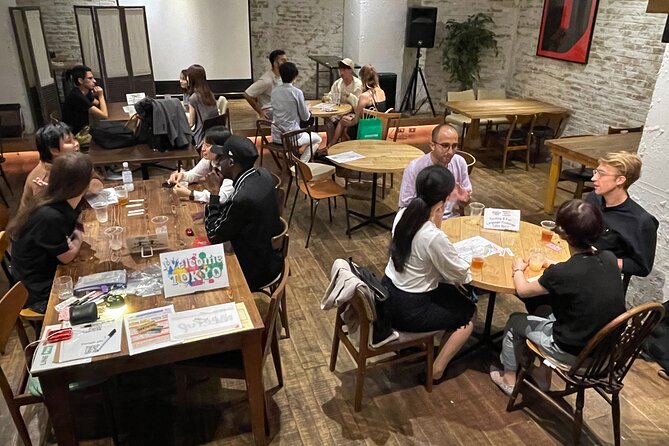
This is a strong fit if you want:
- beginner Japanese conversation without a tutor price tag
- a social night out in Shibuya that doesn’t require planning
- a way to meet people fast when your Japanese is still forming
- a low-pressure setting where the host keeps the structure moving
It’s also a good option if you’re traveling solo. The seat-per-person setup and seat rotations mean you’re not left hoping someone will include you.
You might want a different kind of activity if:
- you don’t enjoy loud, bar-style environments
- you’re not willing to buy a drink (it’s expected, and not included)
- you want something strictly sightseeing or culture-tour themed
Getting more out of it: my practical game plan
You’ll have the best night if you treat this like practice sessions with friends, not like an interview.
Here’s a simple approach that works well:
- Before the event, pick 2–3 easy topics you can discuss in Japanese (food, travel, where you’re from, hobbies)
- During English time, use full sentences so your partner can understand you easily
- During Japanese time, aim for short, clear phrases and repeat what you need to
- After each seat change, restart fresh. Don’t worry about repetition. That’s the design
Also, since the event can be a standalone activity or the start of a bigger night out, decide what you want after. Shibuya has plenty of options. If you want to keep going, this meetup is a great warm-up so you’re already talking to people before you move on.
Should you book it? My take on the value
I think this is worth booking if you want a structured way to practice Japanese and English with a group that’s small enough to feel human. The value is in the format: rotating seats, mixed groups, topic prompts, and a real schedule for both languages.
If you’re excited about meeting locals in Shibuya but worried about being lost or ignored, this event tackles that with host support and tight pacing. On the other hand, if pub noise stresses you out, or you want a sightseeing-focused evening, you might prefer something else.
Overall: it’s a straightforward, friendly way to turn language learning into a social night. Put it on your calendar, plan to buy a drink, and go in ready to talk—even if your Japanese is still a work in progress.
FAQ
How long is the language exchange in Shibuya?
It runs for about 2 hours.
Where is the meeting point?
You meet at Shibuya Bowling Cafe Shibuya EST, 1-chōme-14-14 Shibuya, Tokyo. The event is on B1F.
Is the experience only for adults?
Yes. It is over-18 only and located in a pub.
Do I need to speak Japanese to join?
No. Beginner Japanese learners are welcome, and it doesn’t matter if you can’t speak Japanese to participate.
What languages do we practice during the event?
You’ll do alternating conversation in English and Japanese.
Are drinks included in the ticket price?
No. Alcoholic beverages are not included. You should buy at least one drink when you arrive.
How are conversations organized?
Staff prepare seats and topic cards, split attendees into small groups of about 3–4 people, and then change seats so you can speak with more than a couple of people during the night.
What’s the maximum group size?
The experience has a maximum of 20 travelers.
Can I cancel and get a refund?
Yes. You can cancel up to 24 hours in advance for a full refund. If you cancel less than 24 hours before the start time, you won’t receive a refund.