REVIEW · TOKYO
Hop-On Hop-Off Tokyo Bus by Skyhop Bus
Book on Viator →Operated by Trevopedia Wonders · Bookable on Viator
Tokyo rolls past your window in minutes.
Skyhop’s Hop-On Hop-Off Tokyo Bus is a classic way to see a lot fast: you ride an open-top double-decker and jump off around major neighborhoods, then hop back on when you want to keep moving. Routes connect big-ticket icons like Tokyo Tower, Ginza, Asakusa, Ueno, Akihabara, Skytree, Shinjuku, and Shibuya-area landmarks.
What I like most is the practical freedom. The ticket is 1 or 2-day unlimited hop-on hop-off across the routes during your valid time, so you’re not locked into one fixed sight list. You also get WiFi on board, which sounds small until you’re trying to re-plan on the fly when you’re wandering between stops.
One drawback to plan around: the on-board experience is not perfectly consistent. Some people report unclear or missing audio and service hiccups like late buses or limited staff support, so build a little wiggle room into your day.
In This Review
- Key things to know before you ride
- The big picture: what this Skyhop bus is really good at
- Price and value: is $48.99 a deal or a gamble?
- How the routes actually work for your day
- Route one: Tokyo Tower → Zojo-ji area → Fuji TV → Teleport → Ginza
- Tokyo Tower
- Tokyo Prince Hotel / Zojo-ji Temple area
- Fuji Television Network, Inc.
- Tokyo Teleport Station
- Ginza Capital Hotel Akane (Ginza)
- Route two: Kōdemmacho → Ryōgoku → Skytree → Asakusa → Ueno → Akihabara → Shin-Nihombashi
- Kōdemmacho Sta.
- Ryōgoku / Edo-Tokyo Museum area
- Tokyo Skytree Station
- Asakusa-Hanakawado
- Asakusa-Kotobukichō
- Ueno Station
- Ueno-Matsuzakaya (Ueno-Matsuzakaya Department Store)
- Akihabara (Suehirocho)
- Shin-Nihombashi Station
- Route three: Shinjuku Gyoen → JR Shinjuku → Shinjuku West → Shibuya-area city hall side → back toward Tokyo Tower
- Shinjuku Gyoen National Garden
- JR Shinjuku Station Southeast Exit Plaza
- Shinjuku Station West
- Shibuya City Hall Hatsudai Branch
- Tokyo Tower (again)
- The on-board experience: views, WiFi, and the narration situation
- Getting your ticket to work: voucher exchange and real-world friction
- Rain, timing, and how to avoid a frustrating day
- Who this bus suits best (and who should skip it)
- So, should you book Hop-On Hop-Off Tokyo Bus by Skyhop?
- FAQ
- What’s the duration of the Hop-On Hop-Off Tokyo Bus?
- How much does it cost?
- Can I use the ticket on all routes?
- Is WiFi included?
- Do I get rain gear?
- Where can I exchange my voucher for the real ticket?
- How long is the ticket valid?
- Is it refundable if I cancel?
- Is it near public transportation?
Key things to know before you ride
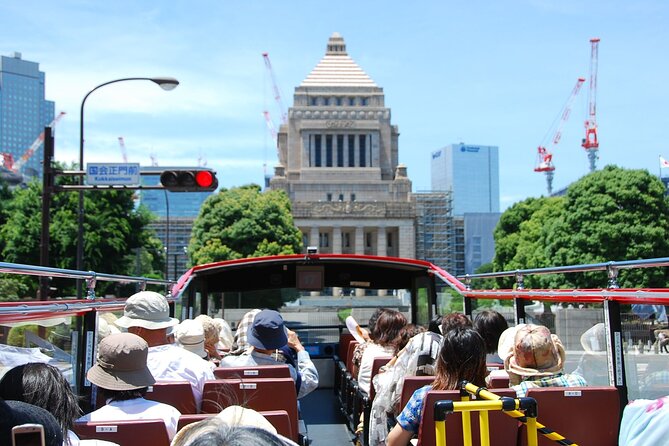
- Open-top views from a double-decker make it an easy “first Tokyo day” move.
- Multiple routes with different neighborhoods help you cover Tokyo Tower, Asakusa/Ueno/Akihabara, and Shinjuku/Shibuya-area sights without complex transfers.
- Audio can be unreliable—if you can’t hear the narration, ask what’s needed and how the system works.
- Ticket acceptance can be messy with some third-party vouchers—double-check your voucher will be honored by the operator you’re boarding.
- Some stops mean short walks because drop-offs can be restricted.
- Rainy-season comfort is included with a poncho/raincoat option, and weather cancellations are handled with date changes or refunds.
The big picture: what this Skyhop bus is really good at
If you’re coming to Tokyo for the first time, your biggest challenge is usually not seeing sights—it’s figuring out the order. This hop-on hop-off setup solves that by giving you a guided loop feel without forcing you into a strict schedule.
The bus focuses on “recognizable Tokyo,” which is exactly what you want early on. You can bounce between skyline landmarks (Tokyo Tower), traditional-feeling streets (Asakusa), major shopping districts (Ginza and Akihabara), and big city parks/gardens (Shinjuku Gyoen) without spending hours studying maps.
The value part is this: the ticket isn’t just transportation. It’s time management. If you’ve got a day that will include shopping, snacks, and random photo stops, hop-on hop-off keeps you from losing hours to transit planning.
At $48.99 per person for the experience, it makes sense when you’ll actually use the bus more than once—especially if you pick a 2-day option so you can spread neighborhoods out instead of cramming everything into one long sprint.
You can also read our reviews of more tours and experiences in Tokyo.



Price and value: is $48.99 a deal or a gamble?
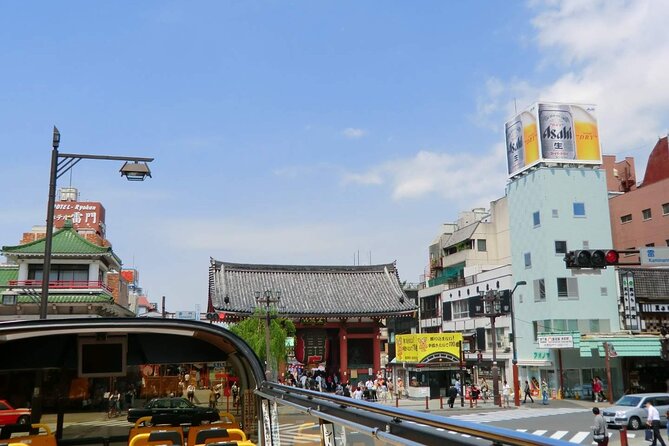
Let’s be honest: you’re paying for convenience, not for a premium guided tour. For the money, you’re buying:
- a route-based way to cover multiple neighborhoods
- open-top sightlines from the bus
- onboard extras like WiFi
- unlimited hop-on hop-off within your valid time (1 or 2 days)
- poncho/raincoat during rainy season (helpful in Japan when weather flips fast)
So when does it feel worth it?
- When you plan to hop off at several areas, then re-board later.
- When you’re okay with walking a bit from stops to attractions.
- When you can accept that audio narration and staff support may vary.
When is it not worth it?
- If you want a perfectly timed, tightly narrated tour with guaranteed staff flow.
- If you’re sensitive to delays and long waits between buses.
- If you’re unsure about ticket acceptance through your booking channel.
My practical advice: this is a great tool for getting oriented. It’s not the place to build your entire day around one exact moment.
How the routes actually work for your day
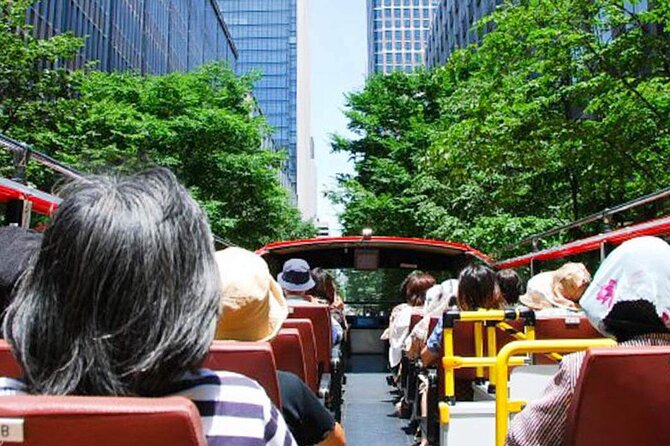
You can use the ticket on all routes within the valid time, and you can use it for two consecutive days starting from the first day you ride until the last bus of the next day. That’s important because Tokyo eats time. If you’re doing shopping, museums, or just standing in lines, two days can turn this from “quick overview” into “real sightseeing.”
In plain terms, you’ll be choosing between three neighborhood styles:
- a route that leans Tokyo Tower, Ginza, and waterfront/teleport/Odaiba-area access
- an east-and-north loop hitting Skytree, Asakusa, Ueno, Akihabara, and Edo/Tokyo Museum territory
- a west/south loop built around Shinjuku and the Shibuya-side city scene, ending back toward Tokyo Tower
You’ll get the most out of it if you treat each route like a neighborhood mission, not a single ride.
Route one: Tokyo Tower → Zojo-ji area → Fuji TV → Teleport → Ginza
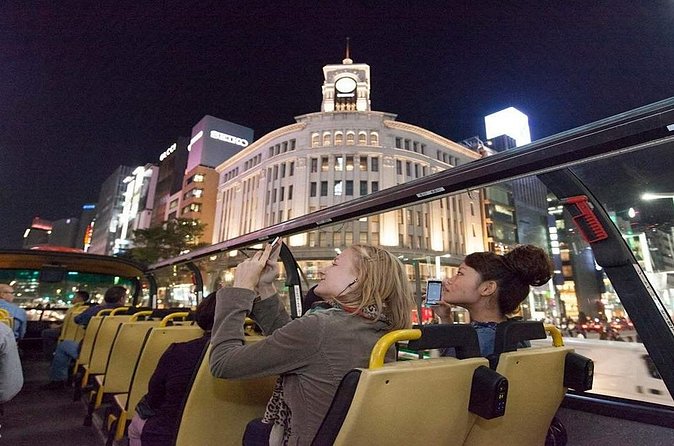
This line is Tokyo in postcard form: tall landmarks, media/urban landmarks, and shopping districts. If you want skyline views with minimal “where is this?” stress, this is the route to start with.
Tokyo Tower
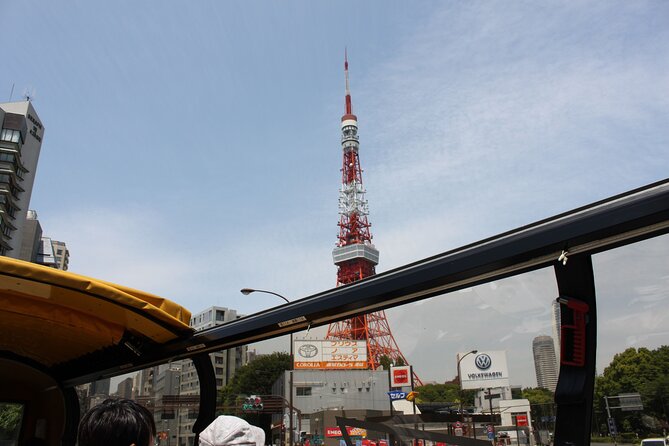
Tokyo Tower is the centerpiece here. Even if you don’t go up, it’s a strong orientation point. It also gives you a clear mental map for where you are in the city when you start walking and switching plans.





Tokyo Prince Hotel / Zojo-ji Temple area
Zojo-ji is one of those classic Tokyo contrasts: a temple presence near a major city landmark zone. This stop is a good bridge between modern skyline views and a more traditional Tokyo moment.
Fuji Television Network, Inc.
This stop fits the “modern Tokyo” mood. It’s also useful if you’re curious about how Japan’s media world shows up in the city layout.
Tokyo Teleport Station
Teleport in name, waterfront access in vibe. This is the kind of stop that can help you reach Tokyo Bay-area attractions without you having to stitch together transit segments.
Ginza Capital Hotel Akane (Ginza)
Ginza is shopping, dining, and expensive-but-fun window browsing. If you want to end your day with a light walk and a meal near major department stores and polished streets, this is the kind of stop you use.
Best use for this route: early afternoon to evening, when you want skyline + shopping without committing to long museum hours.
Route two: Kōdemmacho → Ryōgoku → Skytree → Asakusa → Ueno → Akihabara → Shin-Nihombashi
This is the route that gives you the most “Tokyo feeling per hour.” It strings together the big-name sights people come for: Skytree, Asakusa, Ueno, Akihabara, and the museum district around Ryōgoku.
Kōdemmacho Sta.
This is a start point that places you close to the action without being too far outside central areas. If you plan to roam on foot before you board again, a station stop like this can work well.
Ryōgoku / Edo-Tokyo Museum area
Ryōgoku is tied to Edo-style Tokyo. The Edo-Tokyo Museum area is a solid choice if you want history-style context. Even if museums aren’t your thing, Ryōgoku’s vibe helps you feel the city beyond just “tall buildings.”
Tokyo Skytree Station
Skytree is the kind of landmark you can’t help noticing. Use this stop if you want views, photo time, or a full visit. It’s also a great mid-day hop because it’s a strong anchor for your next plans.
Asakusa-Hanakawado
This is one of the Asakusa-area stops. Asakusa is where you’ll likely want to spend time walking near the historic streets, and it’s a convenient launch point for classic sights like Senso-ji Temple.
Asakusa-Kotobukichō
Another Asakusa stop, which matters because it lets you choose where you want to wander instead of backingtrack. If you’re doing street snacks, souvenir browsing, and temple-area photos, multiple Asakusa stops can save time.
Ueno Station
Ueno is a mega-sight hub. If you want museums, parks, and a chance to slow down, this is your pivot point.
Ueno-Matsuzakaya (Ueno-Matsuzakaya Department Store)
Shopping and strolling near a major department store district is a nice way to balance out museum-heavy days. When your feet are tired from sightseeing, having a department store area right on the route helps you “reset” without losing your place.
Akihabara (Suehirocho)
Akihabara is a magnet for electronics, anime culture, and street-level chaos. This stop is perfect if you want to zoom in, browse, then escape back to your route when you’ve had enough.
Shin-Nihombashi Station
This is a strong utility stop. It can help you reposition toward central areas if you’re tired and want a shorter commute back to your hotel.
Best use for this route: when you want the most variety—history + temples + museums + shopping—in one continuous sweep.
Route three: Shinjuku Gyoen → JR Shinjuku → Shinjuku West → Shibuya-area city hall side → back toward Tokyo Tower
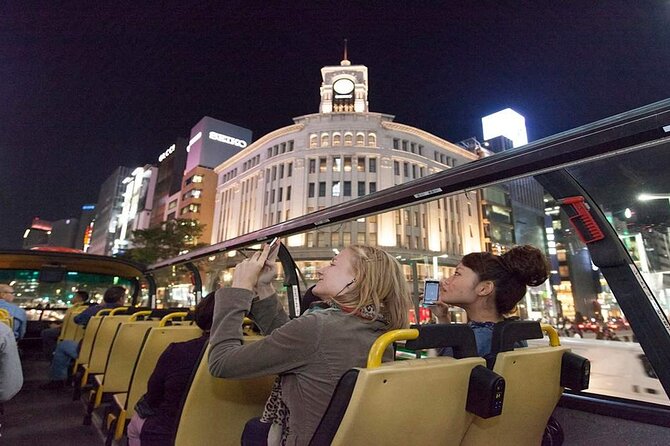
This is the route for city energy. It’s built around Shinjuku and the Shibuya-side urban scene, plus a garden stop, and it loops you back toward Tokyo Tower.
Shinjuku Gyoen National Garden
This is your reset button. If your day starts feeling too concrete, use this stop for breathing space. It’s also a great place to go when you want a slower pace and a change in scenery.
JR Shinjuku Station Southeast Exit Plaza
Shinjuku is where Tokyo feels like it’s moving. A station-centered stop makes it easier to connect to other transit plans if you decide you don’t want to stay on the bus.
Shinjuku Station West
West-side Shinjuku can feel different from the southeast side, so having two Shinjuku stops helps you choose the neighborhood vibe you’re after.
Shibuya City Hall Hatsudai Branch
This is a quieter-but-useful reference point near Shibuya. If you want to reach the Shibuya area without getting stuck in confusing transfers, stops like this help.
Tokyo Tower (again)
Ending up back at Tokyo Tower gives you continuity. If you started your day there, you can use this as a convenient way to return without rebuilding your whole plan.
Best use for this route: mid-afternoon through evening, when neighborhoods are busiest and you want to soak in Tokyo’s big-city feel.
The on-board experience: views, WiFi, and the narration situation
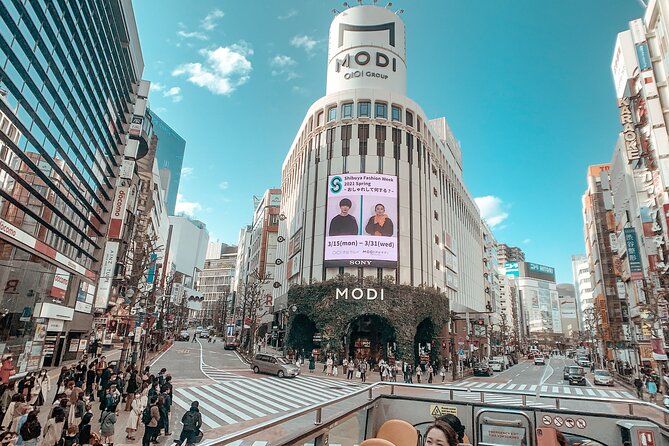
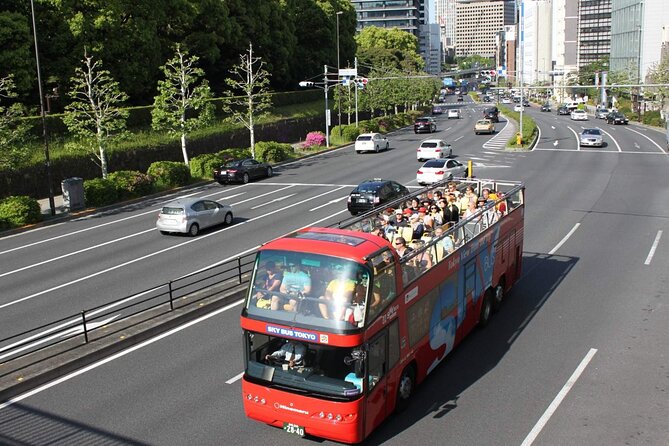
The bus itself is the headline. Open-top seating means you’ll catch wider angles for skyline shots, and it also keeps the experience from feeling boxed in.
WiFi onboard is genuinely useful for hop-on hop-off style travel. You’ll often be making quick choices: which station stop you want next, where a short walk goes, and how long it takes to get from the stop to the exact entrance you want.
Now the part to plan around: narration and audio consistency. Some people report:
- audio that’s unclear or hard to follow
- periods with no audio
- odd audio behavior that makes it harder to treat the commentary as a reliable guide
So what do you do with that?
- Don’t assume the narration will always be perfect.
- If there’s an audio system and you’re not hearing it, ask staff how it works and whether you need earphones.
- Keep your own map/notes ready so you’re not stuck waiting for the guide to tell you what you’re looking at.
Getting your ticket to work: voucher exchange and real-world friction
You can exchange your voucher for the actual ticket at:
- the Marunouchi ticket counter (Skybus Ticket Center on the 1st floor of Marunouchi Mitsubishi Building), or
- any Sky Hop Bus stops
The key move is simple: show your Voucher, then staff will guide you to exchange it for the real ticket. You can also redeem your voucher for a bus ticket at bus stops along the route.
The big practical warning is ticket compatibility. Multiple reports describe issues when vouchers came from a third-party reseller and weren’t accepted by the operator at the stop, forcing people to buy again. That doesn’t mean the experience is doomed, but it does mean you should be careful with where you buy and what voucher form you hold.
My advice: if you’re booking through any reseller, verify before travel that the voucher is honored for boarding by the Skyhop bus operation at the stop.
Rain, timing, and how to avoid a frustrating day
The included poncho/raincoat during rainy season is a thoughtful touch. Tokyo weather can shift quickly, and when it rains, you’ll be standing at stops more than you’d like.
There’s also weather logic in the background: if the experience is canceled due to poor weather, you should be offered a different date or a full refund. That’s the right kind of safety net.
But timing is the other practical risk. Some reports mention buses being late and long waits between swaps. For that reason:
- Don’t schedule a must-do appointment immediately after a bus hop.
- Build in buffer time, especially if you’re trying to “fit everything” on day one.
- If one route is running poorly, switch plans instead of waiting all day.
Who this bus suits best (and who should skip it)
This hop-on-hop-off bus is a great fit if you:
- want an easy way to get oriented in Tokyo
- like to wander on foot once you get close
- want skyline and neighborhood variety without complex planning
- are the type who enjoys flexibility more than strict itineraries
It may not be the best match if you:
- need guaranteed narration accuracy every time
- rely on staff to sort problems quickly
- are only doing one stop and want maximum certainty with minimum waiting
If you’re traveling solo or as a couple, you’ll likely find the flexibility worth the spend. If you’re traveling with people who get stressed by delays, add buffer time.
So, should you book Hop-On Hop-Off Tokyo Bus by Skyhop?
I’d book it when you’re using it for what it’s best at: fast orientation and neighborhood hopping. The open-top ride plus the route coverage (Tokyo Tower, Asakusa/Ueno/Akihabara, Skytree, Shinjuku) is a strong “first Tokyo sweep.”
I would hesitate only if:
- you’re booking through a third-party voucher and you’re not sure it will be accepted at the stop
- you expect a flawless, guided, narrated tour experience with perfect timing
If you do book, go in with smart expectations: treat it as flexible transportation with partial guidance, not a scripted tour. Do that, and you’ll have a fun day of Tokyo without the usual logistics headache.
FAQ
What’s the duration of the Hop-On Hop-Off Tokyo Bus?
The tour duration is listed as approximately 1 hour 57 minutes.
How much does it cost?
The price is $48.99 per person.
Can I use the ticket on all routes?
Yes. The ticket can be used on all routes within the valid time.
Is WiFi included?
Yes. WiFi is included on board.
Do I get rain gear?
During rainy season, a poncho/raincoat is included.
Where can I exchange my voucher for the real ticket?
You can exchange your voucher at the Marunouchi ticket counter (Skybus Ticket Center on the 1st floor of Marunouchi Mitsubishi Building) or at any Sky Hop Bus stop.
How long is the ticket valid?
You can use it for two consecutive days from the first day of use to the last bus of the next day.
Is it refundable if I cancel?
This experience is non-refundable and cannot be changed for any reason. If canceled due to poor weather, you’ll be offered a different date or a full refund.
Is it near public transportation?
Yes. It’s listed as near public transportation.