REVIEW · TOKYO
Tokyo Portrait Tour with a Professional Photographer
Book on Viator →Operated by Travel Japan Together · Bookable on Viator
Tokyo at night is a camera cheat code. This small-group portrait tour pairs a pro photographer with iconic stops like Shibuya Crossing and Shinjuku’s neon lanes, so you get photos that actually look like you were there. If you’ve seen guide names like Smita or Kei Okamoto pop up in past sessions, it’s because the focus stays on posing, pacing, and storytelling, not just walking around.
One thing to think about: this is a late-evening night shoot, starting at 8:30 pm, so it’s not the easiest fit for early risers or families trying to keep a strict bedtime.
In This Review
- Key highlights at a glance
- A night portrait tour that turns Tokyo lights into your souvenir
- Where you start in Shibuya (and how the timing works)
- KITKAT Chocolatory at Miyashita Park: rooftop neon with an easy Shibuya setup
- Shibuya Crossing: getting a real shot without losing your mind
- Omoide Yokocho izakaya lanes: lantern photos and local-feeling streets
- Kabukicho: neon layers, bars-and-clubs energy, and photo variety
- Shinjuku Golden Gai: the 300-bar alley finish and a strong final set
- Price and value: what $92.47 buys you in real terms
- Who this tour is best for (and who should think twice)
- What you should do before you meet your guide
- Should you book Tokyo Portrait Tour with a Professional Photographer?
- FAQ
- How long is the Tokyo Portrait Tour?
- What time does the tour start?
- How many people are in the group?
- Where do we meet and where does the tour end?
- What locations will we visit during the tour?
- Are any entrance fees included?
- What happens to the photos after the tour?
- Is there a cancellation deadline?
Key highlights at a glance
- Small group, maximum 6 people for more attention and less waiting around
- Professional photographer + guided posing so you’re not guessing what to do
- Edited photos sent after the tour for a real souvenir you’ll want to post
- Shibuya to Shinjuku by train makes the night feel efficient
- Neon-focused locations from rooftop views to Golden Gai alley lights
- Mobile ticket so you can show up with less fuss
A night portrait tour that turns Tokyo lights into your souvenir
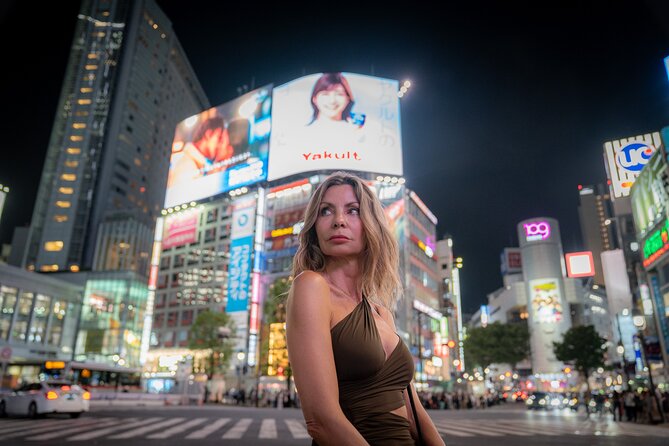
Tokyo photography can go two ways: you either take great city shots that leave you out of the frame, or you chase selfies while the rest of the city keeps moving. This tour targets the middle ground. You’re guided to photogenic backdrops, and you’re also given direction for posing so the result looks intentional.
The format matters. With a maximum of 6 travelers, it doesn’t feel like you’re standing behind a crowd, hoping your turn comes. You get more chances to reset your pose, look at the angles, and actually enjoy the moment instead of being rushed through it.
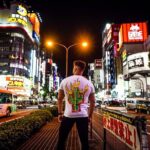
You’ll also get more than “camera work.” The stops are chosen for atmosphere: neon signage in Shibuya, the dramatic crosswalk energy, the lantern-lit izakaya streets around Shinjuku, and the tight, bar-lined lanes of Golden Gai. The tour is basically a guided route through Tokyo’s night personality.
Possible drawback: because it runs at night, it’s less about daytime sightseeing and more about photography and short, efficient stops. If you’re looking for long cultural explanations, you might want something longer and daytime-based.
You can also read our reviews of more photography tours in Tokyo

Where you start in Shibuya (and how the timing works)
You meet at Yamashita Honki Udon – Shibuya Center Street 21-7 Udagawachō, Shibuya. Start time is 8:30 pm, and the tour ends in Shinjuku Golden-Gai (Kabukicho area) at the street level in the Golden Gai 1-chome zone.
The whole experience is about 1 hour 30 minutes, which is compact for multiple neighborhoods. The schedule is paced with short photo blocks: around 15–20 minutes at most stops, plus quick transit. That speed is part of the value. In one session, you cover big-name Tokyo scenes plus a couple of quieter-feeling side streets.
Most stops are listed with free admission, except the Omoide Yokocho segment, which notes that admission is not included. In practical terms, that’s the one place where you might need to cover your own access if you’re staying strictly within what’s prepaid.
One more plus for practical travelers: this is run with a mobile ticket, and the meeting points are near public transportation.
KITKAT Chocolatory at Miyashita Park: rooftop neon with an easy Shibuya setup
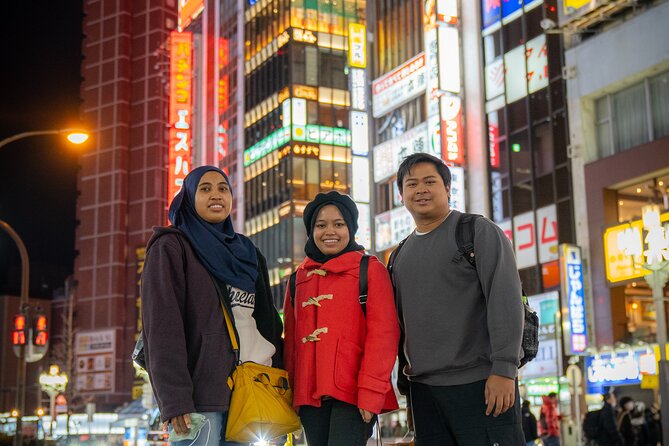
The first photo stop is KITKAT Chocolatory at Miyashita Park in Shibuya, with a rooftop area to explore. This is a smart opening move. Instead of dropping you straight into the loudest street-level chaos, you start with neon, crowds, and elevated views.
What I like about this as a first stop is the reset effect. The lighting is already flashy, so the photographer can work on angles quickly. You can also enjoy a view that shows Shibuya as more than just a single street corner.
Expect about 15 minutes here. Admission is listed as free for this part of the stop, so it’s a no-stress way to get rolling. If you’re someone who worries about not knowing where to stand in photos, this kind of structured start helps you relax fast.
Small consideration: since it’s a popular area, it can be crowded. The upside is that the energy reads well in photos. The downside is that you’ll want to follow the guide’s positioning closely so you don’t fight for space.
Shibuya Crossing: getting a real shot without losing your mind
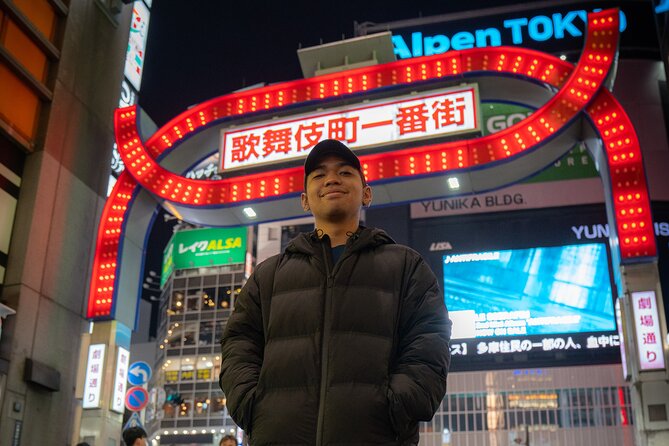
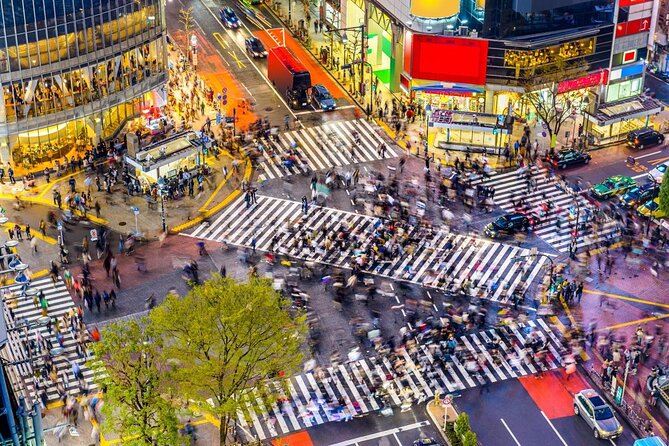
Next up: Shibuya Crossing. This is the stop most people picture when they think Tokyo at night. The crossing’s appeal is visual drama—streams of people, layered signage, and the sense that the city is in motion.
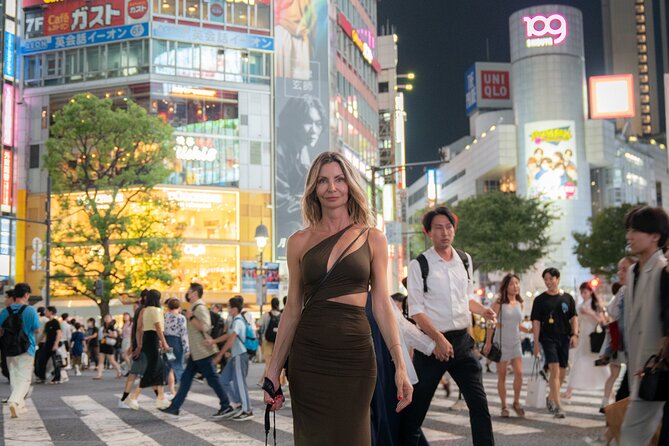
The tour gives you about 15 minutes here, and it’s framed as a place to take memorable photos and soak up the atmosphere. With a pro photographer directing you, the key difference is that you’re not just getting “in the way” shots. You’re guided to pose and frame so you look like part of the scene rather than a bystander.
This is also where small-group size really shows. Crowds are crowds, but in a group of 6 you’re less likely to be blocked for long stretches. You can reset your stance, try a few variations, and move when the photographer tells you to.
One thing to remember: the crossing is famous for a reason. There’s a lot happening. If you hate standing and waiting, you may find a portion of this stop to be more about timing than about movement. But that’s also why the images can turn out so good.
Omoide Yokocho izakaya lanes: lantern photos and local-feeling streets
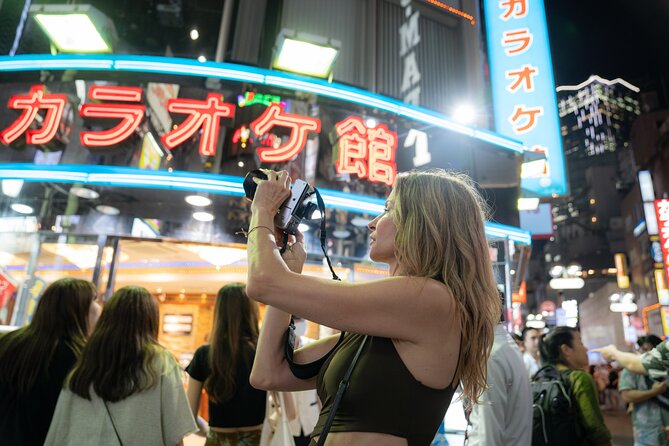
After Shibuya, you head toward Shinjuku by train, noted as about 5 minutes. Then you land in Omoide Yokocho, a tight lane packed with local izakaya energy.
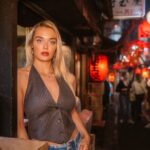
This stop works for portrait photos because it changes the look from wide neon signage to lantern-lit, street-level details. Instead of only capturing big-city spectacle, you’re getting that warm, character-heavy Tokyo vibe.
You’ll spend around 20 minutes here. The guide takes photos using the area’s lighting and atmosphere, and it’s designed for shots that feel intimate even though you’re in a busy city.
Important practical note: the segment lists admission as not included. The tour doesn’t tell you the cost details here, so if you’re budgeting tightly, consider reserving a little extra for any charges tied to that stop.
Also, this is a nice contrast point. Shibuya is all about the big look. Omoide Yokocho is more about texture. Together, they create variety in your photo set.




Kabukicho: neon layers, bars-and-clubs energy, and photo variety
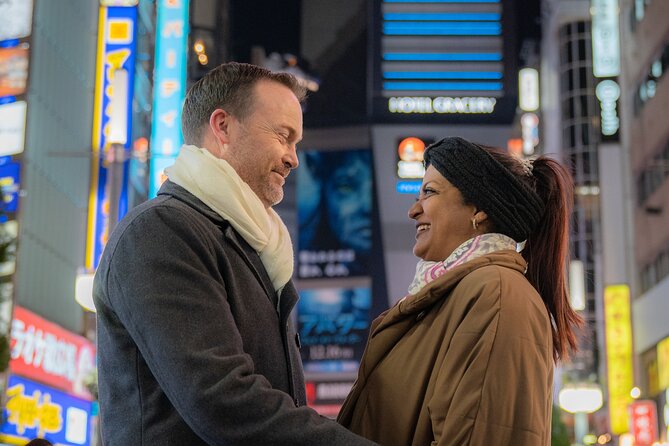
Then you move into Kabukicho, the nightlife zone known for bars and clubs. The tour’s approach here is photo-focused: you’re set up to take pictures with the area’s neon building lights and different night atmospheres.
You get about 15 minutes in this area. Why that matters: it’s long enough to try a few setups, but short enough that you don’t feel stuck in one spot while the night keeps moving around you.
Kabukicho can be visually busy, which is both the challenge and the benefit. The lights are everywhere, and a pro photographer is useful because they can help you control what’s in the frame. That’s how you get photos that look stylish instead of chaotic.
Another point in your favor: the tour keeps the flow moving from stop to stop, so you’re not stuck trying to figure out the best angles on your own. You get direction, you get repositioned, and you move on.
Shinjuku Golden Gai: the 300-bar alley finish and a strong final set
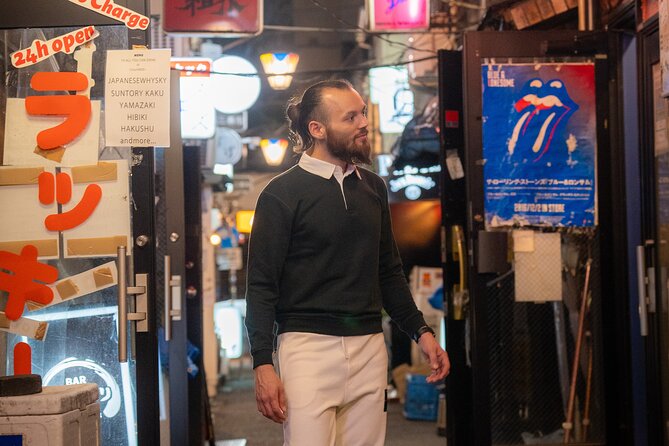
The tour ends at Shinjuku Golden Gai in Kabukicho. This is a tight network of alleys with around 300 bars, and it’s especially good for night portraits because the lighting is close, layered, and story-like.
You’ll spend around 10 minutes here. It’s a short finisher, but that often works well. By the time you reach Golden Gai, you’ve already learned the rhythm: where to stand, how to pose, and how to let the photographer guide your position.
The tour is designed to finish with photos in the street and then wrap up. Ending here also makes sense logistically. Golden Gai is a nightlife destination, so if you want to continue exploring after your shoot, you’re already in the right zone.
If you’re choosing this tour for one reason, I’d pick this stop. Golden Gai’s alley look gives you portraits that feel distinct from the typical “big Tokyo landmark” photos.
Price and value: what $92.47 buys you in real terms
At $92.47 per person, you’re paying for a pro-guided portrait session plus editing afterward. For Tokyo, that’s not cheap, but it also isn’t just paying for a location checklist.
Here’s what you’re really buying:
- A pro photographer who helps you with posing and framing
- A planned route through high-impact photo locations
- A small-group setting that improves your odds of getting good shots
- Photos edited and sent after the tour, so you don’t leave with only blurry phone images
The value improves further because most stops are listed with free admission. The one exception is Omoide Yokocho, where admission is not included, so factor that into your personal budget.
One scheduling tip: it’s often booked about 18 days in advance on average, which suggests demand for weekend and peak-night slots. If you want your preferred date, don’t wait until the last minute.
And if you’re a solo traveler or a couple, this becomes even more cost-effective. Without a photographer, you’d likely spend time swapping phones, asking strangers, and still hoping for good lighting at the exact moment. Here, you’re paying to skip the awkward part and maximize keeper photos.
Who this tour is best for (and who should think twice)
This tour is built for people who want themselves in the photo set, not just Tokyo behind them. That’s why it’s a strong fit for:
- Solo travelers who want portraits without depending on chance
- Couples who want night shots in iconic areas without juggling the camera
- Anyone who values photos as a souvenir, not just a memory
It’s also a good fit if you like structured wandering. The tour gives a clear route, set time blocks, and someone to guide you through each location.
Think twice if:
- You want a slow, scenic, daytime walkthrough
- You’re uncomfortable with night crowds and standing briefly at photo points
- You prefer tours that include more neighborhood time for shopping, food, or long cultural context
Also note the policy that children need to be accompanied by adults, and the tour lists that most travelers can participate.
What you should do before you meet your guide
Even without extra instructions listed, you can prepare in a way that helps your photos come out better.
- Show up a few minutes early so you can start cleanly at 8:30 pm.
- Wear something you can move in while posing. Night portraits often require small stance adjustments.
- Pay attention when the photographer explains how they want you framed. The best images usually come from following those cues closely.
If you’re booking and planning your evening, keep in mind you’ll start in Shibuya and end in Shinjuku Golden-Gai. So your next steps after the tour will naturally be around Kabukicho.
Should you book Tokyo Portrait Tour with a Professional Photographer?
Book it if you want a high-keeper photo souvenir with a pro guiding you through Tokyo’s most photo-friendly night stops. The combination of small group size, iconic lighting locations, and edited photos sent after the tour is the real draw. It’s also a solid pick for solo travelers who want to avoid the whole stranger-photo gamble.
Skip it if your main goal is daytime sightseeing, long neighborhood exploration, or hands-off wandering. This is a tight 90-minute night shoot, not a full evening activity with lots of free time.
If you’re on the fence, use this quick test: if you’d be disappointed leaving Tokyo with only city snapshots and no photos of you in the frame, this is the kind of tour that fixes that problem fast.
FAQ
How long is the Tokyo Portrait Tour?
The tour lasts about 1 hour 30 minutes.
What time does the tour start?
The start time is 8:30 pm.
How many people are in the group?
The tour has a maximum of 6 travelers.
Where do we meet and where does the tour end?
You start at Yamashita Honki Udon – Shibuya Center Street (Shibuya). The tour ends in Shinjuku Golden-Gai, in the Kabukicho area.
What locations will we visit during the tour?
You’ll photograph scenes including KITKAT Chocolatory Miyashita Park and Shibuya Crossing in Shibuya, then Omoide Yokocho, Kabukicho, and Shinjuku Golden Gai.
Are any entrance fees included?
Most stops are listed as free admission, but the Omoide Yokocho stop indicates admission is not included.
What happens to the photos after the tour?
You’ll pose for photos during the tour, and the photos are edited after and sent to you.
Is there a cancellation deadline?
Yes. Free cancellation is available up to 24 hours before the experience start time for a full refund.