REVIEW · TOKYO
Asakusa: Kitchen knife store visits after history tour
Book on GetYourGuide →Operated by Arumachi, Inc. · Bookable on GetYourGuide
Japanese knives look simple—until you see them up close. This Asakusa tour strings together the big temple sights and a focused shopping walk on Kappabashi Street, with an expert guide who keeps you moving and informed, plus included Japanese sweet snacks. I especially like how the guide gets you to the right shops without you doing homework, and how the help stays candid and neutral instead of just cheering the sales pitch. The one drawback to plan for: you may want to buy something, so it helps to go with a budget and extra patience for walking in rain or shine.
In my kind of travel, small groups matter. This one is limited to 8 people, and for groups of 3 or more you use an earphone system, so you can hear the guide even when shops and crowds get loud. I also love that the experience starts with context, so when you get to the knife stores, you’re not just looking at products—you’re learning how the area earns its reputation and what to ask about while you shop.
In This Review
- Key highlights worth your attention
- Why this Asakusa history-to-knife tour feels more useful
- Meeting at Burger King: quick start, easy orientation
- Asakusa Pier and the early walk: getting your bearings in 15 minutes
- Kaminarimon and Nakamise: gate photos plus real street context
- Hōzōmon Gate and the Sensō-ji Temple stop that actually sticks
- The switch to Kappabashi Street: where shopping stops feeling random
- How long is enough for knife shopping?
- What makes the guide system worth paying attention to
- Duration and pacing: 210 minutes that don’t drag
- Price, value, and who this tour is really for
- FAQ
- FAQ
- How long is the Asakusa history and kitchen knife store tour?
- Where do I meet the guide?
- Is the tour in English?
- Do we get help hearing the guide during the walk?
- Does the tour include snacks?
- Is hotel pickup included?
- Should you book this Asakusa knife shopping tour?
Key highlights worth your attention
- History first, shopping second so the knife stop actually makes sense
- English-speaking certified guide who helps translate and steer your choices
- Earphone guide system for groups of 3+ for clearer commentary on the move
- Sensō-ji plus major Asakusa gates and streets along the way
- Kappabashi Street focused on knives and restaurant-ready kitchen tools
- Included Japanese sweet snacks during the walk
Why this Asakusa history-to-knife tour feels more useful
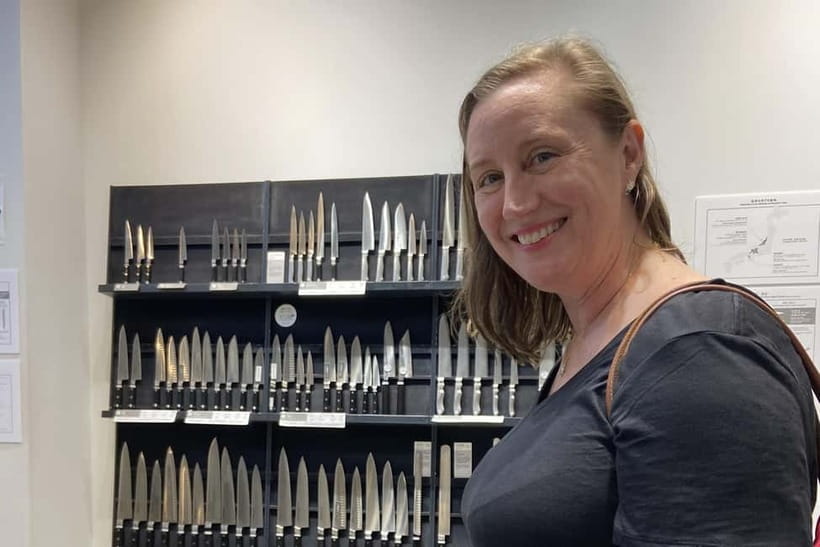
Asakusa is one of those places where you can wander for hours and still feel like you missed the point. This tour fixes that. You get the landmark sequence—temple sights, classic gate views, and the shopping street energy—then you move on to Kappabashi, where the whole area is built around equipment for cooks and restaurants.
That matters because knife shopping in Japan is not just retail therapy. It’s about craftsmanship, materials, and fit. When you arrive at the right stores with a guide who can explain what you’re looking at and help you compare options, you waste less time and second-guessing.
Price-wise, $77 per person isn’t cheap compared to a casual walk. But you’re paying for an English live guide, small-group pacing (up to 8 people), and the benefit of being directed to the best places without prior planning. If you plan to buy even one serious item—like a knife you’ll actually use at home—the value usually starts to pencil out faster than you’d expect.
You can also read our reviews of more historical tours in Tokyo

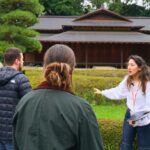

Meeting at Burger King: quick start, easy orientation
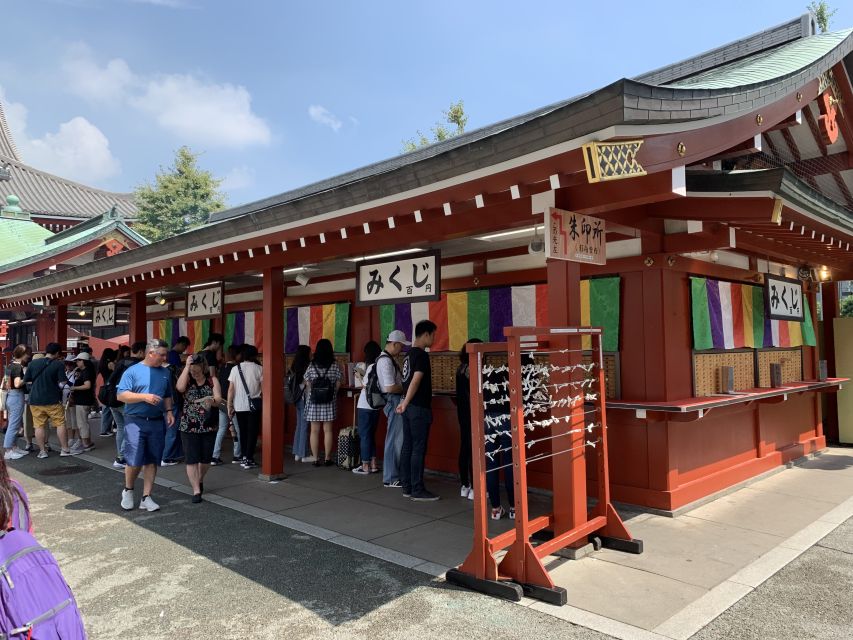
The meeting point is simple and easy to find: in front of a Burger King next to Exit 4 of Asakusa Station (Ginza line, G19). You step outside when you reach Exit 4, then meet your guide there.
Why I like this setup: it prevents the usual start-of-tour chaos. You’re not hunting for a hidden address deep in side streets. And since the tour includes a lot of short walking segments, starting clean and on time helps you actually enjoy each sight instead of constantly checking the clock.
Also, this tour runs rain or shine. That sounds obvious, but it affects how you pack. Wear shoes you trust on wet pavement, and bring a light layer you won’t regret halfway through.
Asakusa Pier and the early walk: getting your bearings in 15 minutes
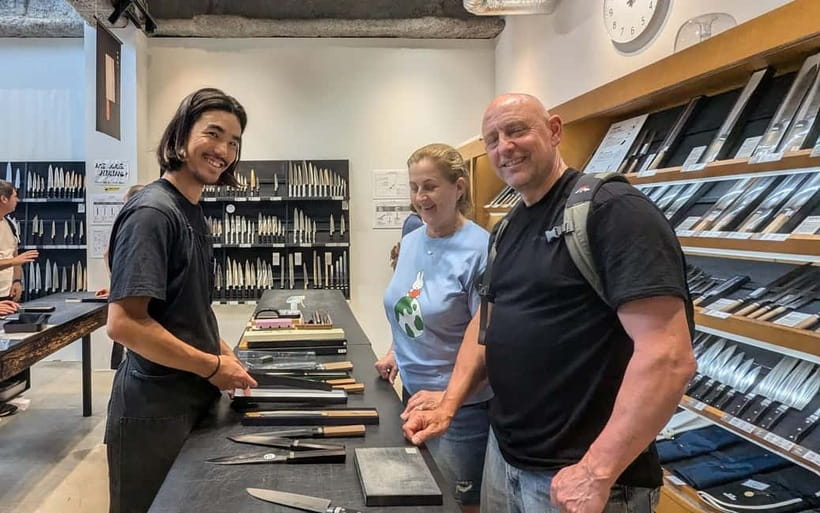
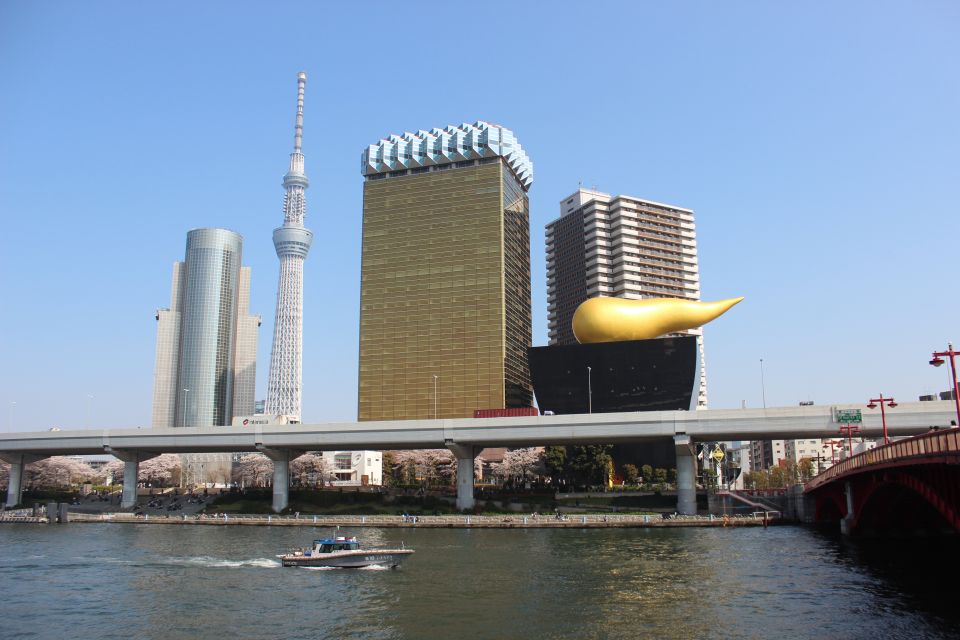
Before you hit the big photo stops, the tour starts at Tokyo Cruise Asakusa Pier for a short guided sightseeing walk. It’s not a long sit-down history lecture. It’s more like a warm-up: you start seeing the river-area rhythm of Asakusa and you get the basic story that ties the neighborhood together.
The next brief stop is the Asakusa Culture Tourist Information Center. This part is small but practical. You’re essentially getting a map in human form: where you are, what you’re about to see, and what to pay attention to. It’s the kind of stop that can feel optional on your own, but on a guide-led route it helps you read the area faster.
Kaminarimon and Nakamise: gate photos plus real street context
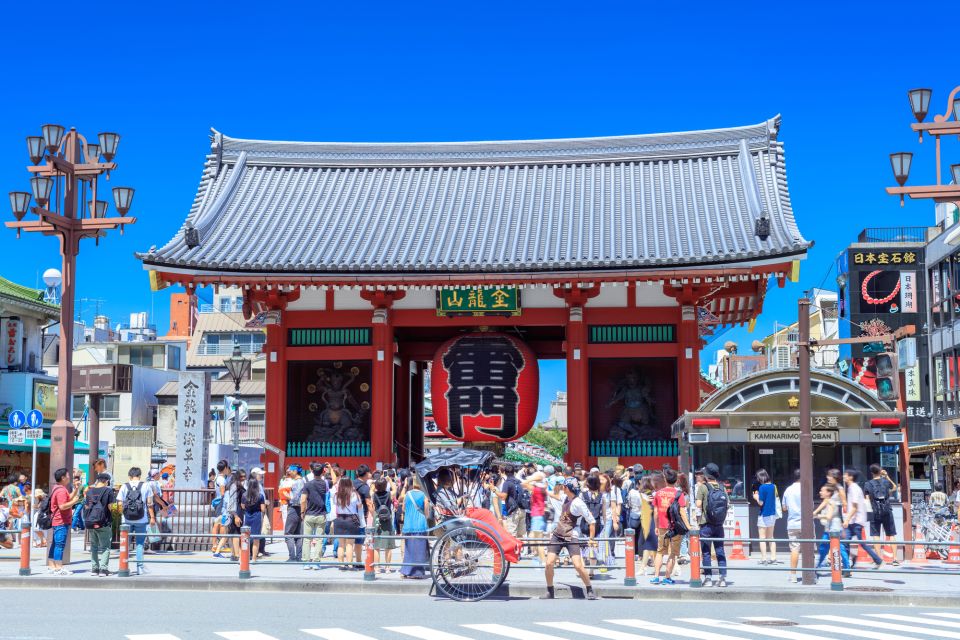
Then you reach Kaminarimon, the big thunder gate that frames the entry feel of Asakusa. This is one of those landmarks where, on your own, you might just snap photos and move on. With a guide, you understand what you’re looking at and why this gate matters in the flow of the neighborhood.
After that comes Nakamise Shopping Street, where the pace slows just enough for browsing. Nakamise is the pre-temple shopping strip: crowded in a classic way, with lots of snack and souvenir energy. Your guide leads the route for the timing and sight flow, so you’re not stuck in the wrong crowd loop.
One thing I find helpful here: you can taste and snack while still staying oriented. Since Japanese sweets are part of the experience later too, you can treat this as part of the broader food-and-culture rhythm rather than random eating without a plan.
Hōzōmon Gate and the Sensō-ji Temple stop that actually sticks
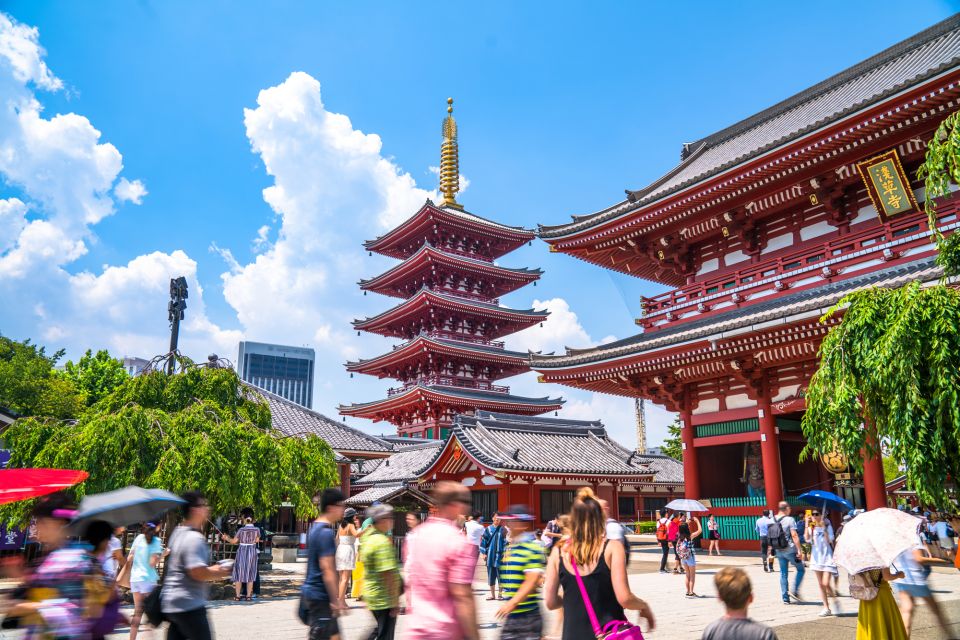
From Nakamise, you pass through the Hōzōmon Gate. This is a key checkpoint because it’s where the scene visually shifts from street-shopping to temple approach. If you’ve ever felt like temples in travel photos look flat, this is the moment where they start feeling three-dimensional.
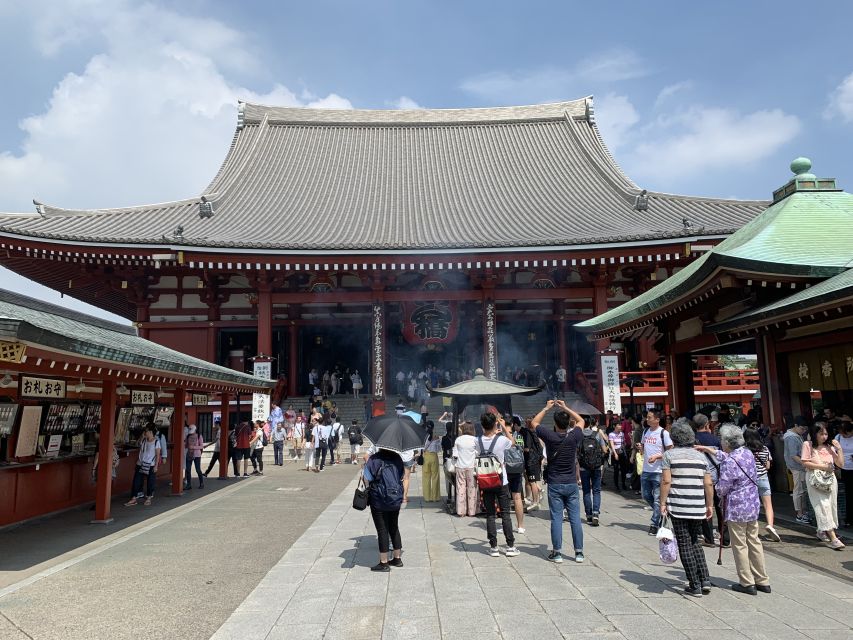
Then you get to Sensō-ji Temple. The tour includes guided sightseeing here, so you’re not only seeing the buildings and crowds—you’re picking up the why. Sensō-ji is described as the oldest temple in Tokyo, and that age shows in how people move through the space. Even if you’re not the type to study religion, it still lands as living culture: visitors come for the sights, locals come for daily rhythms, and the whole area is built around respectful flow.
Practical tip: this portion is very walk-and-look. If you’re wearing new shoes, don’t. Your feet will tell you the truth.
You can also read our reviews of more shopping tours in Tokyo


The switch to Kappabashi Street: where shopping stops feeling random
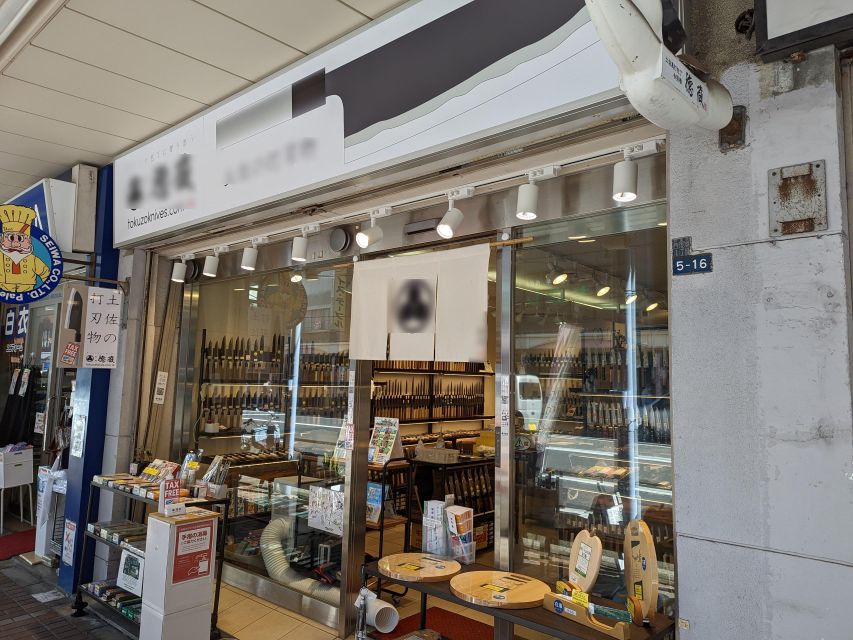
After the temple segment, the tour transitions to Kappabashi Street, right next to Asakusa. This is the reason people book if they’re even slightly curious about Japanese kitchen tools.
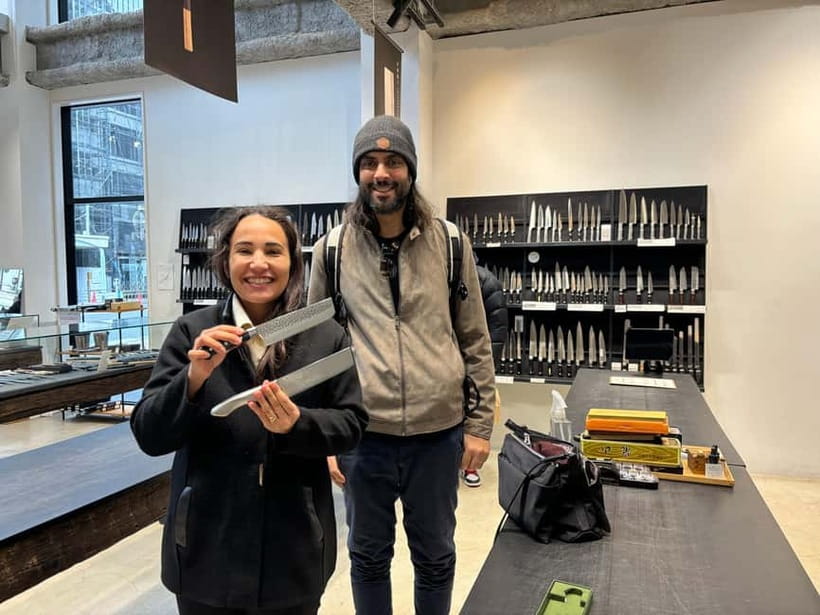
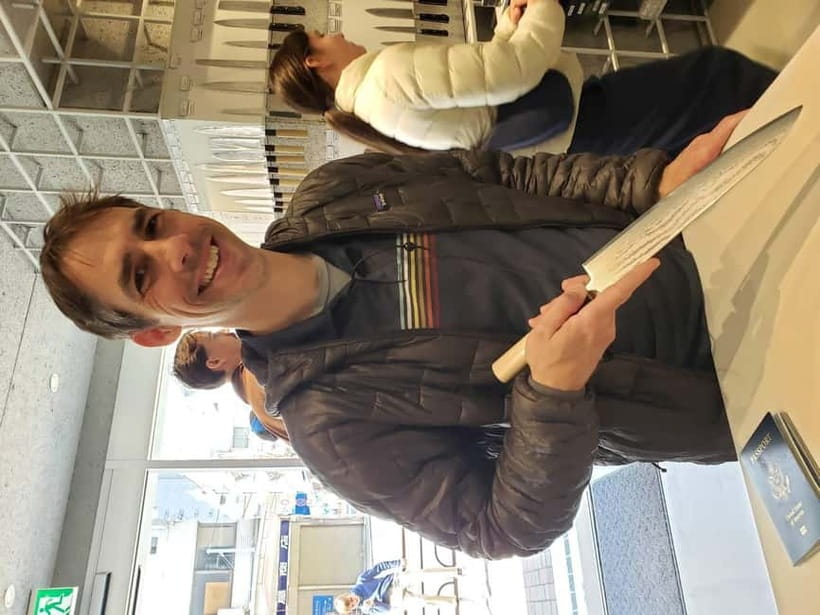
Kappabashi is lined with dozens of shops that serve restaurant operators, not just tourists. That changes the atmosphere. You’re not only scanning trinkets. You’re walking through a focused corridor of equipment: knives are the main star, and the stores tend to carry a wide lineup so you have real options to compare.
This is also where the guide support becomes the biggest value. The tour is designed so you go to the right stores without prior research or wandering. On your own, you might find a knife shop, talk to a clerk without context, and leave with a souvenir instead of a useful purchase. With a guide, you can translate and ask smarter questions, and the help comes with candid, neutral feedback about what’s being sold and how to think about it.
If you’ve got a shopping goal, this is how I’d frame it:
- Decide what you want your knife to do at home (general prep versus very specific tasks).
- Prioritize comfort and fit, not just sharpness hype.
- Use the guide to compare options, especially if the staff is pushing certain models hard.
I also like that the guide helps you shop without making it feel like you’re being hustled. One guide, Machiko, is specifically praised for excellent English and going above and beyond with translating and helping people buy what they wanted. That kind of support matters when the sales pitches start moving fast.
How long is enough for knife shopping?
The Kappabashi Street portion is about one hour. That sounds short until you remember you’re with a small group and you’re not trying to visit every shop on the street. It’s long enough to step into a few stores, see the main product range, compare prices and sizes, and still feel like you can ask questions.
If you want to be thorough—like comparing multiple knives and adding extras—plan to move with intention. Bring any questions you already have, and don’t wait until the last 10 minutes to start asking.
What makes the guide system worth paying attention to
Included in the tour is an English-speaking certified guide. And for groups of 3 or more, you use a headset/earphone guide system so you can clearly listen from a distance.
This matters more than it sounds. In Asakusa and on Nakamise, you’re dealing with noise: footsteps, shop calls, crowd chatter, and camera clicks. Without the system, you lose parts of the story. With it, you can stay present and actually connect what you see—gates, streets, temple approach—with what the guide is explaining.
Reviews also point to strong English performance and real effort in helping people communicate and purchase. One guide went past the scheduled time to help with buying, which tells me the team understands that the shopping portion is the payoff, not a side quest.
Duration and pacing: 210 minutes that don’t drag
The total duration is 210 minutes. That’s long enough for a proper temple-route experience plus a serious shopping segment, but not so long that you feel trapped.
The pacing is built from short guided walks between recognizable stops: quick segments to get to the major sights, then a fuller guided feel where it counts, especially around Nakamise and the temple, and finally the dedicated shopping hour on Kappabashi.
A small-group limit of 8 participants also helps here. You’re not lost in a mass, and the guide can actually keep track of who needs help translating or who is ready to move on.
Price, value, and who this tour is really for
At $77 per person, you’re paying for three things: guidance, time saved, and shopping support.
If you only want photos of temples, you could do Asakusa on your own. But if you want the knives experience to go beyond browsing, the guide support is the value engine.
This tour is best for:
- People who like specific shopping goals, especially kitchen knives
- Food-focused travelers who want culture plus practical gear shopping
- First-timers in Asakusa who prefer a guided route over guessing your way through streets
- Anyone who wants an easy English-speaking experience with built-in interpretation
It may be less ideal for:
- People who don’t want to shop or don’t want to spend money on items in the stores
- Anyone who hates walking and can’t handle rain-or-shine outdoor time
FAQ
FAQ
How long is the Asakusa history and kitchen knife store tour?
The tour lasts about 210 minutes.
Where do I meet the guide?
Meet in front of Burger King next to Exit 4 of Asakusa Subway Station (G19, Ginza line). Step outside when you reach Exit 4.
Is the tour in English?
Yes. The live tour guide is English, and the audio guide included is also in English.
Do we get help hearing the guide during the walk?
Yes. For groups of 3 or more, the tour provides a headset/earphone guide system so you can hear clearly from a distance.
Does the tour include snacks?
Yes. A selection of Japanese sweet snacks is included.
Is hotel pickup included?
No. Hotel pickup or dropoff is not included.
Should you book this Asakusa knife shopping tour?
I’d book it if your goal includes more than just seeing Asakusa. If you want to understand what you’re walking through and then shop on Kappabashi with real help, this is one of the smarter ways to do it: small group, English guidance, a structured route, and a full hour in the knife-focused shopping street.
Skip it if you’re not interested in shopping for kitchen knives or you know you want a totally unstructured day. Otherwise, this is a solid mix of temple sightseeing and practical, hands-on buying support—exactly the kind of combo that makes the extra cost feel reasonable.