REVIEW · TOKYO
Tsukiji Fish Market Guided Tour and Sushi Making with Pro Chef
Book on Viator →Operated by Japan Wonder Travel · Bookable on Viator
Tsukiji has a way of speeding up your appetite. This 4-hour walk-and-class combo takes you through the Tsukiji outer market with a guide, then into a pro-led sushi lesson where you make multiple nigiri and a roll, finishing with lunch. I love that it ties the market sights to what you’ll actually learn in class, and I also love that you don’t just watch—you prepare sushi with step-by-step help. One drawback: the sushi classroom is on the third floor with stairs only, so it’s not ideal if stairs are a problem.
You’ll start at a temple, then move into the food-focused lanes of Tsukiji’s market area. Along the way, you get context for how seafood moves from fishing to distribution to the counter, which makes the whole Tokyo food experience feel less random and more understandable.
In This Review
- Key takeaways before you go
- Why This Tour Starts at Tsukiji Honganji-Temple (and why it matters)
- Walking the Outer Market: seafood you can actually picture on your plate
- Tsukiji Jogai Market and Nippon Fish Port: scale, distribution, and how product moves
- The sushi classroom: making 5 nigiri plus a roll with a pro
- Lunch on your timeline: what you make plus what the chef makes
- Price and logistics: is $104.13 good value for what you get?
- Who should book this (and who should skip it)
- Should You Book the Tsukiji Fish Market and Sushi Making Tour?
- FAQ
- Where does the tour start?
- How long is the experience?
- What will I make in the sushi class?
- What’s included with the lunch?
- Is this tour in the inner Tsukiji market?
- What if I have dietary restrictions or allergies?
- What should I wear?
- Where is the sushi classroom located?
Key takeaways before you go
- Outer Tsukiji, not the moved inner market: you’ll focus on the parts still lively for shopping and mini-wholesale.
- Hands-on class with structure: make 5 nigiri types plus a rolled type, then eat what you made.
- Lunch is included: your sushi plus the chef’s sushi, paired with dashi soup and green tea.
- Pro instruction in a traditional setting: the class happens in a classroom in a local building inside the market area.
- Small-group feel (max 22): enough to feel guided without total chaos.
Why This Tour Starts at Tsukiji Honganji-Temple (and why it matters)
I like tours that teach you how to behave, not just where to stand. Starting at Tsukiji Hongan-ji Temple does exactly that. You begin in a calmer pocket of the area, where a guide can explain Japanese customs around Buddhist spaces—simple things like how to approach, pause, and observe respectfully. It’s not a long detour. It’s more like a cultural warm-up that sets the tone for the rest of the morning.
This start also helps you connect Tsukiji to Japan beyond seafood. Markets aren’t isolated; people build daily life around food, tradition, and ritual. In this case, you get that sense right away instead of treating Tsukiji like a theme park.
One thing to watch: the meeting spot is at the main gate of Tsukiji Honganji-Temple and they leave on time. If you wander in using Google Maps, it can steer you to the wrong side of the property—so aim for the front gate and arrive early enough to find the guide holding a sign.
You can also read our reviews of more guided tours in Tokyo
Walking the Outer Market: seafood you can actually picture on your plate
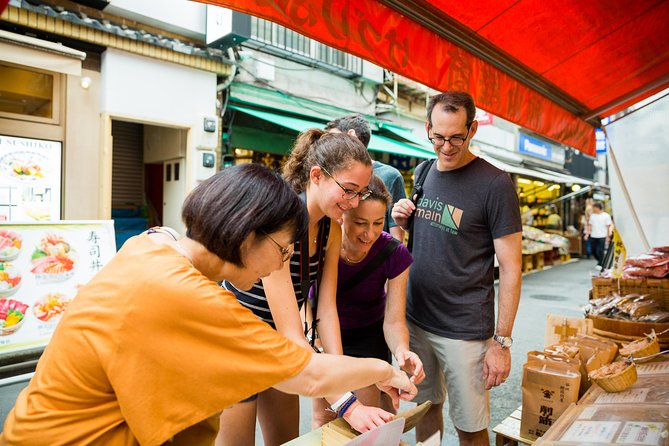
This is where the tour earns its keep. The walk through Tsukiji Fish Market focuses on the outer areas—still active for browsing, snacks, and specialty shopping—rather than the inner wholesale operations that shifted to Toyosu after 2018. Translation: you’re not trying to sprint through an industrial zone. You’re seeing how seafood culture shows up for everyday buying and for visitors looking to understand what they’re looking at.
Your guide leads you to highlight areas and shares context on Japanese history and food culture. You’ll likely notice how ingredients are displayed, how tools are used, and how different product types come together in Japanese cooking. That matters because sushi isn’t just raw fish. It’s rice handling, cutting technique, seasoning, and timing.
A practical note from the way the class is structured: you’ll learn enough basics in the market portion to make your later sushi work feel logical. When you understand what you’re handling—fish type, preparation mindset, and why certain flavor pairings work—you’ll get more out of the hands-on part.
If you’re the type who expected nonstop food tasting at every stop, adjust your expectations. This tour centers on learning and preparation, with time to buy food from stalls if you want. Some people love being guided to good spots; others feel the snack opportunity isn’t as extensive as the title implies. If you want a tasting-heavy itinerary, you may want to look for a different format.
Tsukiji Jogai Market and Nippon Fish Port: scale, distribution, and how product moves
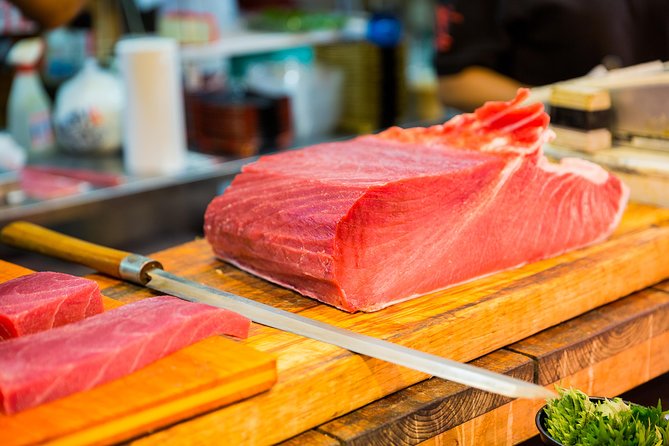
The itinerary continues through more Tsukiji market sections, including Tsukiji Jogai Market and Tsukiji Nippon Fish Port Market. Even without fancy storytelling, these stops help you grasp scale. Tsukiji is famous because it isn’t one shop—it’s an ecosystem. You’re walking through lanes that connect display, processing, and distribution.
This is also where you start seeing how Japan treats seafood as a serious product category. The tour’s focus on how items are caught, distributed, and sold can be eye-opening if you’ve only encountered seafood as something shrink-wrapped at home. Here, you get the sense of where choices begin: what arrives, how it’s handled, and how it becomes dinner.
What I’d call the main value of these segments is mental clarity. By the time you sit down for sushi training, you’re not thinking, Okay, fish. You’re thinking, Okay, fish types and handling matter, and that’s why the chef’s instructions will be so specific.
The sushi classroom: making 5 nigiri plus a roll with a pro
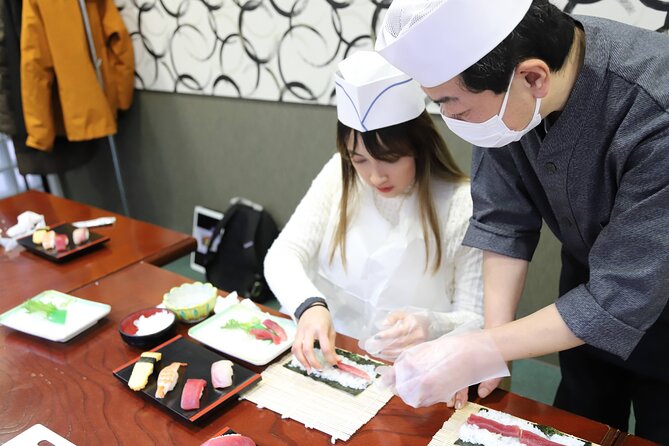
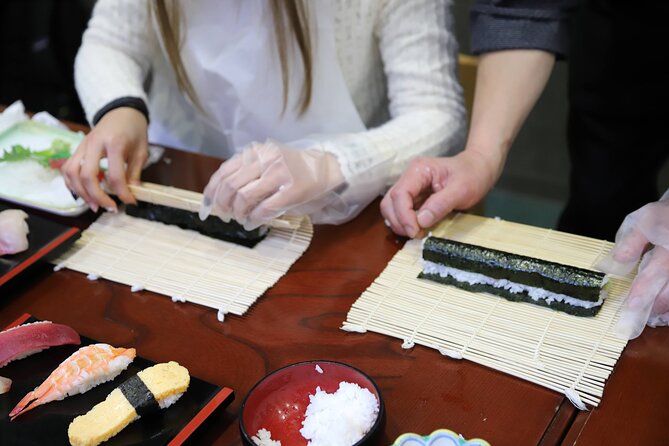
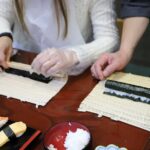
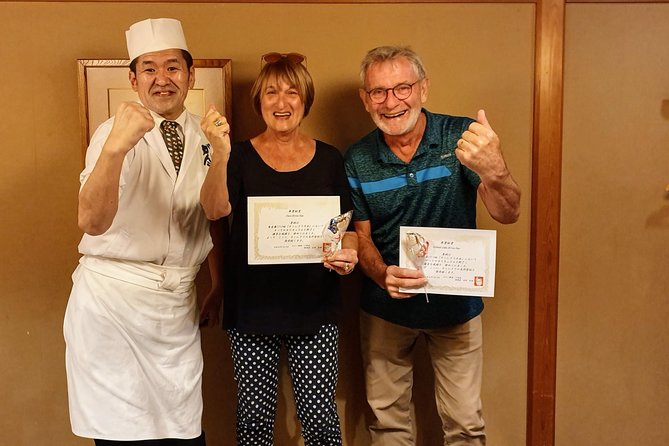
Now for the part most people actually remember. You head to a Japanese-style classroom in a hidden local building in the market area. You’ll learn in a step-by-step way from a sushi chef, and you’ll make 5 types of nigiri plus one rolled type.
This class format is what makes the experience feel worth it. You’re not only learning technique; you’re practicing the small moves that separate average sushi-from-the-store from sushi made with intention. You also get a clearer view of what chefs do before you ever order: fish preparation, rice timing, and the subtle ways wasabi is handled.
Here are a few practical realities based on how the class operates:
- Expect stairs. The classroom is on the third floor with stairs only. Plan accordingly.
- Expect a hands-on setup with tables where you can work. Many people comment on having enough room at the stations.
- Expect instruction that works even if you’re new. This tour is designed for beginners who want to understand the baseline, not just advanced sushi nerds.
One more thing: sometimes the sushi-making venue can shift to places like Asakusa or Yotsuya depending on availability, and the end point can be Tsukiji or Shinjuku depending on the date. That’s not a dealbreaker, but it does mean you shouldn’t book a strict appointment right after the tour without leaving buffer time.
Lunch on your timeline: what you make plus what the chef makes
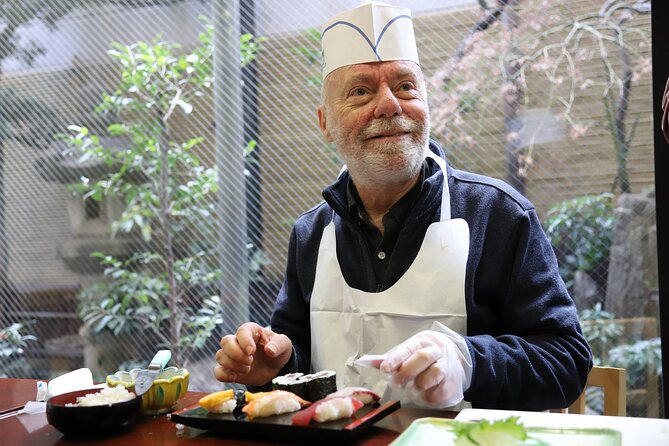
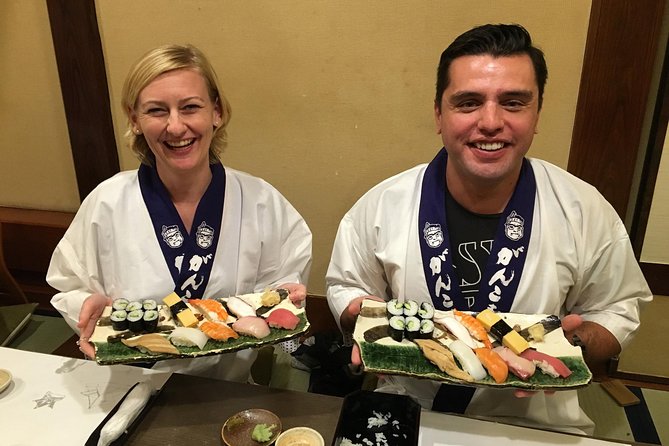
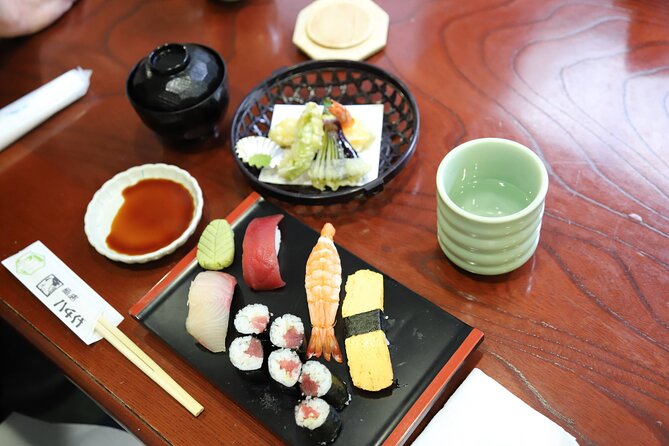
At the end, you get to eat your creations. You’ll enjoy your sushi alongside sushi prepared by the sushi master. The pairing includes wasabi, and you’re also served traditional dashi soup plus fine green tea.
This is one of those “small” inclusions that actually changes the whole feel of the class. Lunch isn’t just an add-on. It’s the proof of concept. You make the pieces, then taste how they should come together—rice texture, fish flavor, and the way wasabi and broth support each bite.
If you’re planning hydration, bring a practical mindset. The experience includes cold green tea, but you might also want water if you know you’ll get thirsty while standing and walking. That’s the kind of small prep that saves your afternoon from a mild dehydration spiral.
You can also read our reviews of more shopping tours in Tokyo

Price and logistics: is $104.13 good value for what you get?
At $104.13 per person for about 4 hours, value depends on what you want most: market context, hands-on sushi practice, or tasting. If you’re looking for a sushi class where you leave with actual technique you can attempt again at home, this price can make sense. You’re getting:
- A guided walk through outer Tsukiji market sections
- A pro chef-led class
- 5 nigiri types + a roll
- Lunch including dashi soup and green tea
Also consider group size: it caps at 22 travelers, which usually keeps the class experience from turning into a chaotic demo where you never touch anything.
Where value can feel shaky is if you expected a heavier emphasis on browsing and tasting at a wide variety of stalls, or if your expectation was a full-on chef-led walkthrough of the inner wholesale operations (the inner market moved to Toyosu years ago). Some people feel the market portion is better understood as context-building for the class, not a food festival.
My practical take: book this when you want sushi basics plus Tsukiji context in a single package, and when you’re okay with buying extra snacks only if you choose to.
Who should book this (and who should skip it)
This tour fits best if:
- You’re a sushi beginner who wants step-by-step technique instead of vague tips
- You want to understand the “from catch to counter” story, not just pose near seafood
- You’re traveling with kids or family and want a structured, fun experience that’s not purely walking
- You want a short, efficient Tokyo food experience without needing half a day
It may not be ideal if:
- You need vegetarian, halal, gluten-free, or other dietary accommodation. This experience does not accommodate vegetarian, halal, gluten-free requests, or kosher requests. Allergy requests might be tried, but it’s not guaranteed.
- You have trouble with stairs due to the classroom location on the third floor.
- You need total free time for shopping. The class and guided walk control the schedule.
- You’re seeking an inner-market-only, wholesale-operations view.
Should You Book the Tsukiji Fish Market and Sushi Making Tour?
If you want a Tokyo food experience that teaches you something practical—how nigiri is made and how to think about seafood before you eat—it’s a strong yes. The mix of outer Tsukiji market context plus a pro-led sushi workshop keeps it focused, and the included lunch makes it feel like a complete meal, not a snack-and-leave situation.
But if your top goal is nonstop tasting, or if you’re counting on inner-market access, you’ll probably feel a bit frustrated. Also check your dietary needs early, especially if you’re avoiding certain foods.
If you can handle stairs and you’re happy learning-and-making, you’ll likely walk away with both a better understanding of Japanese seafood culture and sushi skills you can actually try again.
FAQ
Where does the tour start?
It meets at the main gate of Tsukiji Honganji-Temple at 3-chōme-15-1 Tsukiji, Chuo City, Tokyo 104-8435, Japan.
How long is the experience?
It runs about 4 hours (approx.).
What will I make in the sushi class?
You will learn to make 5 types of nigiri sushi and a rolled type.
What’s included with the lunch?
You eat your sushi plus sushi from the sushi master. You’ll also be served dashi soup and green tea.
Is this tour in the inner Tsukiji market?
No. The inner market moved to Toyosu after 6th Oct 2018, so this tour visits the outer market and a mini wholesale area.
What if I have dietary restrictions or allergies?
The experience does not accommodate vegetarian, halal, gluten-free requests, or kosher requests. You can share allergy details, though accommodation may not always be possible.
What should I wear?
Wear comfortable walking shoes. It’s mainly a walking tour.
Where is the sushi classroom located?
The classroom is in a Japanese traditional building and is on the third floor, with only stairs. The sushi-making venue can sometimes be held in Asakusa or Yotsuya depending on availability, and the tour end point may vary.
![[Self-Drive] Tokyo & Daikoku Custom Car Driving Tour - Shibuya Crossing: Scramble Chaos, With You in Control](https://e.thetokyoexplorer.com/wp-content/uploads/self-drive-tokyo-daikoku-custom-car-driving-tour-400x400.jpg)